Charlotte Ranchettes: Acreage and Country Living Near Punta Gorda
Charlotte Ranchettes is a rural acreage area east of Interstate 75 near Bermont Road in unincorporated Charlotte County, with Punta Gorda 33982 addresses. Unlike a conventional master-planned neighborhood, Charlotte Ranchettes is defined by larger parcels, agricultural zoning on many properties, private wells and septic systems, unpaved roads, and room for uses such as horses, barns, workshops, gardens, and other rural improvements when permitted. Current properties range from individual 1.25-acre lots to combined parcels of 2.5, 5, or more acres. Buyers should evaluate zoning, access, drainage, flood risk, environmental conditions, utilities, and buildability for the specific parcel before purchasing.
Quick Answers About Charlotte Ranchettes
Where is Charlotte Ranchettes?
Charlotte Ranchettes is east of Interstate 75 near Bermont Road in unincorporated Charlotte County. Properties use Punta Gorda 33982 addresses, while the rural location places the neighborhood outside the denser residential areas surrounding downtown Punta Gorda.
How large are properties in Charlotte Ranchettes?
Individual 1.25-acre parcels are common, and adjoining parcels are frequently combined into 2.5, 3.75, 5, or larger holdings. Current listings include both existing homes and unimproved acreage.
Is there an HOA in Charlotte Ranchettes?
Many current Charlotte Ranchettes listings report no homeowners association and no annual HOA fee. That does not eliminate county zoning, building codes, environmental regulations, easements, road agreements, or possible parcel-specific title restrictions, all of which should be verified before purchasing.
Can you have horses in Charlotte Ranchettes?
Horses and other agricultural uses are documented on AG-zoned Charlotte Ranchettes properties, and current listings regularly identify horse-property potential. The number and type of animals, setbacks, shelters, fencing, manure management, and other requirements should be confirmed with Charlotte County for the specific parcel.
Do Charlotte Ranchettes properties have city water and sewer?
Many properties rely on private wells and septic systems rather than centralized water and sewer. Vacant-land listings frequently specify that a well and septic system will be required. Buyers should verify utilities, well feasibility, septic suitability, electrical service, and internet availability for the individual property.
Are the roads paved?
Many interior roads in Charlotte Ranchettes are unpaved dirt or gravel roads and can be privately maintained. Road surface, legal access, easements, maintenance responsibility, and seasonal conditions should be investigated for the specific property.
Is Charlotte Ranchettes in a flood zone?
Flood zones vary by parcel. Several current listings report FEMA Zone X, but that should never be applied to the entire neighborhood. Buyers should check the current flood map, drainage conditions, wetlands, elevation information, and property-specific insurance requirements before purchasing.
Charlotte Ranchettes Is Rural Punta Gorda Living
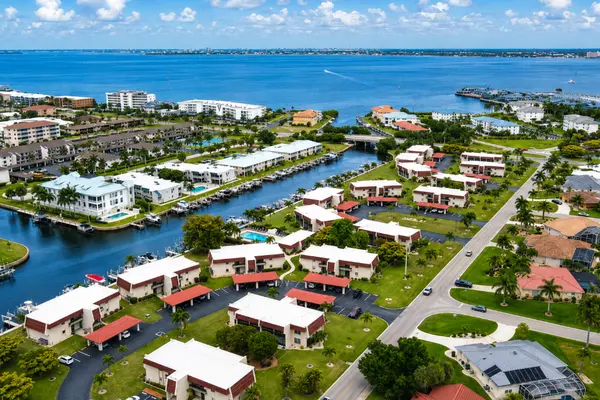
Charlotte Ranchettes offers a side of the Punta Gorda area that looks very different from waterfront neighborhoods, condominium communities, and newer master-planned developments.
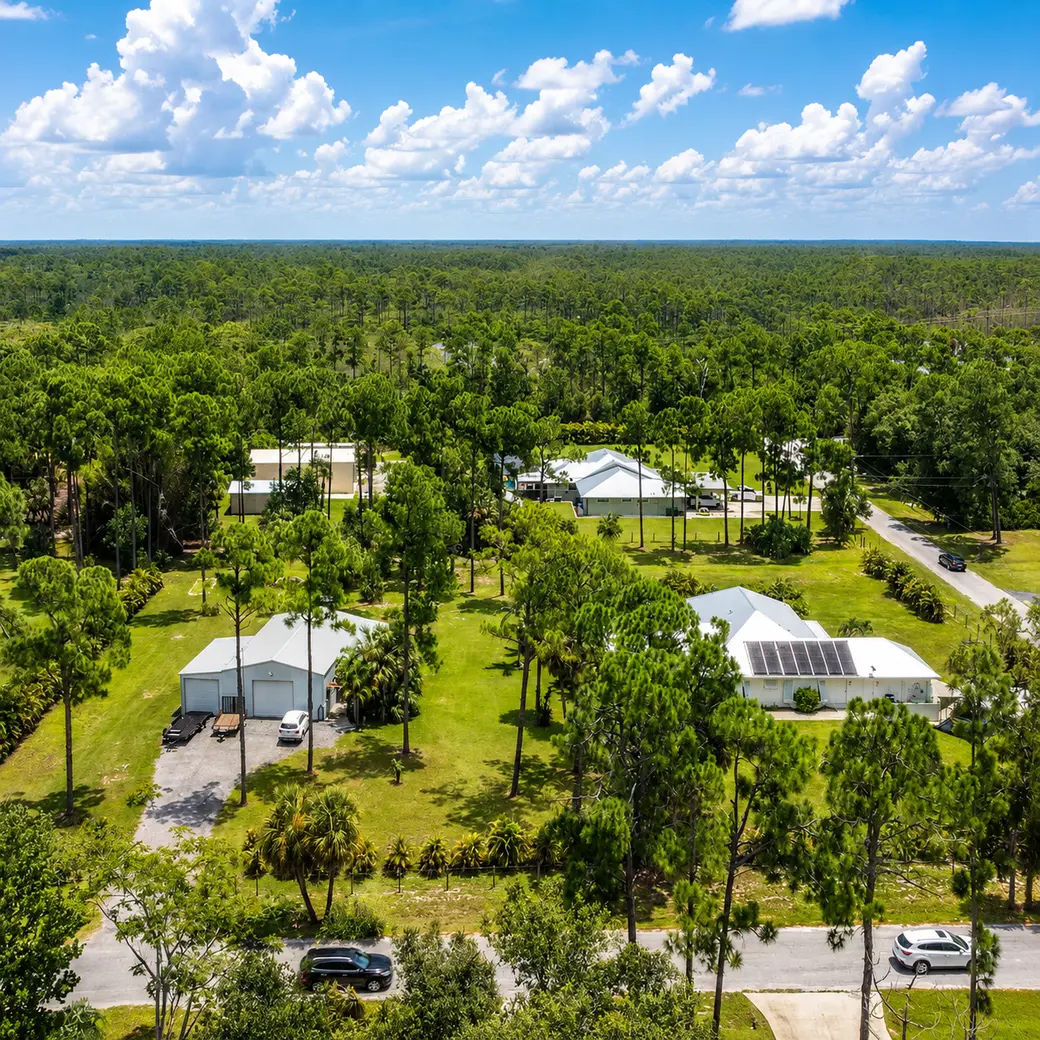
Instead of closely spaced homes and shared amenities, buyers encounter acreage, pastures, mature vegetation, barns, workshops, fenced areas, ponds, horses, livestock, recreational vehicles, and homes positioned well back from the road.
The neighborhood is east of Interstate 75 and close to Bermont Road, providing a rural setting while maintaining road access toward Punta Gorda, Interstate 75, Punta Gorda Airport, and other parts of Charlotte County.
For buyers comparing this rural setting with the city's waterfront neighborhoods, explore the broader Punta Gorda real estate market.
How Much Land Can You Find in Charlotte Ranchettes?
One of the defining characteristics of Charlotte Ranchettes is the prevalence of 1.25-acre platted parcels.
A historical Punta Gorda Airport appraisal described Charlotte Ranchettes as an area with homes on approximately 1.25 to 5-acre sites. Current listings continue to show that range, along with larger combined holdings.
| Current Acreage Example | How It May Appear |
|---|---|
| 1.25 acres | Common individual platted parcel |
| 2.5 acres | Often two adjoining 1.25-acre parcels or an equivalent holding |
| 3.75 to approximately 4 acres | Multiple parcels or irregular combined acreage |
| 5 acres | Larger holding, sometimes composed of four 1.25-acre parcels |
A larger advertised acreage does not necessarily mean it is one indivisible building parcel. Conversely, several adjoining lots do not automatically mean each can support a separate residence. Buyers considering construction or subdivision should verify legal lot status, frontage, access, setbacks, zoning, environmental constraints, septic suitability, and permitting with Charlotte County and appropriate professionals.
Agricultural Zoning Creates Different Possibilities
Many Charlotte Ranchettes properties are zoned AG, which Charlotte County identifies as its Agriculture district.
The county zoning code describes the purpose of AG zoning as accommodating agriculture, very-low-density residential development, rural recreation, and other rural uses. The code also specifically recognizes that agricultural activities can involve noise, odors, dust, equipment, and other characteristics different from conventional suburban neighborhoods.
That rural land-use framework is a major reason buyers consider Charlotte Ranchettes, but agricultural zoning should never be interpreted as permission to do anything desired on a parcel.
Every intended use should be verified against the current zoning code and the specific property's zoning, acreage, setbacks, environmental conditions, permits, easements, and other applicable requirements before purchase or construction.
Can You Keep Horses and Livestock?
Equestrian and livestock potential is one of Charlotte Ranchettes' most recognizable features. Current AG-zoned listings specifically identify horses and livestock as permitted or contemplated uses, and existing properties can include fencing, barns, pastures, ponds, and other agricultural improvements.
The amount of land needed and the improvements required depend on the intended animals and use. Buyers should investigate:
- Current parcel zoning
- Permitted animal types and quantities
- Required setbacks
- Barn and shelter requirements
- Fencing
- Pasture condition
- Water supply
- Drainage and low areas
- Feed and equipment storage
- Manure and waste management
- Access for trailers and agricultural equipment
Buyers planning an equestrian or livestock use should verify their specific plans with Charlotte County and appropriate agricultural, veterinary, fencing, well, septic, construction, and other qualified professionals.
Barns, Workshops and Outbuildings Can Be Part of the Appeal
Acreage also creates room for improvements that can be difficult to accommodate in conventional residential subdivisions.
Current Charlotte Ranchettes listings market space for barns, workshops, RV garages, equipment storage, and other accessory structures. One current five-acre AG-zoned offering specifically states that accessory buildings may be constructed before the primary residence under applicable rules.
That statement should not be generalized to every property or every proposed structure. Size, height, setbacks, use, electrical service, plumbing, occupancy, construction type, and permitting can affect what is allowed.
A buyer planning a large workshop, barn, detached garage, guest structure, or agricultural building should have the proposed use reviewed by Charlotte County and appropriate design and construction professionals before relying on the land for that purpose.
No HOA Does Not Mean No Rules
Many current Charlotte Ranchettes properties report no HOA, which is an important distinction from much of Southwest Florida's newer residential inventory.
For some buyers, that means avoiding recurring HOA assessments and architectural-review procedures. It does not mean the property is unregulated.
Properties can still be affected by:
- Charlotte County zoning
- Building codes
- Environmental regulations
- Floodplain regulations
- Septic requirements
- Well regulations
- Drainage requirements
- Recorded easements
- Private-road agreements
- Possible private covenants or title restrictions affecting an individual parcel
Questions about legal restrictions, easements, title rights, or permitted uses should be reviewed with the appropriate county department, title professional, surveyor, and qualified Florida real estate attorney.
Private Roads Deserve Careful Due Diligence
Road conditions are a meaningful part of buying in Charlotte Ranchettes. Current property listings identify private roads, privately maintained roads, dirt surfaces, and gravel surfaces throughout the area.
That is very different from buying on a conventional county-maintained paved street.
Before purchasing, buyers should determine:
- Whether legal access is recorded
- Who owns the road
- Who is responsible for maintenance
- Whether a written road-maintenance agreement exists
- Current road condition
- Drainage after heavy rain
- Access for construction vehicles
- Access for horse trailers, RVs, or equipment
- Whether road conditions affect lender requirements
Charlotte County's GIS resources include road-maintenance information, but legal access and maintenance obligations should also be confirmed through survey, title, recorded documents, and the appropriate professionals.
Wells and Septic Systems Are Common
Rural acreage often means greater responsibility for private infrastructure. Current Charlotte Ranchettes listings frequently identify private wells and septic systems or state that a well and septic system will be required for construction.
For an existing home, buyers should consider evaluating the well's condition, equipment, water quality, flow, treatment equipment, and available records. The septic system's age, location, condition, capacity, permits, and maintenance history also deserve review.
For vacant land, do not assume that an advertised acreage automatically supports the planned house, barn, pool, driveway, and septic system in the desired locations. A qualified septic professional, well contractor, surveyor, engineer, builder, and applicable government agencies can help evaluate the site before construction decisions are made.
Vacant Land Requires More Investigation Than the Lot Size Suggests
Charlotte Ranchettes regularly offers vacant land, including individual 1.25-acre lots and larger combinations. Acreage alone, however, does not establish buildability.
A vacant-land buyer should investigate:
- Legal parcel status
- Survey and boundaries
- Zoning
- Future land-use designation
- Building setbacks
- Legal and physical road access
- Easements
- Flood zone
- Wetlands
- Drainage
- Protected-species considerations
- Septic suitability
- Well requirements
- Electrical availability
- Clearing and fill requirements
- Impact and permitting fees
A parcel marketed as "buildable" should still be independently evaluated for the buyer's specific proposed home and improvements.
Flood Zone X Does Not Mean Zero Flood Risk
Several current Charlotte Ranchettes properties are marketed as being in FEMA Flood Zone X. That can be relevant to construction, insurance, and financing, but it should not be interpreted as meaning a property cannot flood.
Charlotte County specifically advises that flooding can occur throughout the county, including outside FEMA's mapped high-risk Special Flood Hazard Areas. Heavy rainfall, hurricanes, tropical systems, drainage conditions, nearby waterways, and upstream rainfall can all contribute to flooding.
Use Charlotte County's flood information and property lookup resources and FEMA mapping to investigate the specific parcel. Buyers should also obtain property-specific insurance quotes rather than assuming flood or homeowners insurance costs from the map designation alone.
Environmental Conditions Can Affect Rural Acreage
Undeveloped acreage deserves environmental review before a buyer clears land or finalizes a construction plan.
Charlotte County maintains GIS information for environmental and development considerations. The county also operates a Florida scrub-jay Habitat Conservation Plan and advises property owners to determine whether their parcel falls within the applicable plan area.
Depending on the parcel, issues can include:
- Wetlands
- Scrub-jay habitat requirements
- Gopher tortoises or other protected species
- Drainage features
- Ponds and low areas
- Clearing restrictions
- Required environmental permits or mitigation
The Charlotte County Scrub-Jay Habitat Conservation Plan and Charlotte County GIS are useful starting points. A parcel-specific environmental evaluation may still be appropriate before purchasing or clearing land.
Existing Homes Range From Older Ranches to New Construction
Charlotte Ranchettes is not tied to one builder or architectural period. A Punta Gorda Airport appraisal described homes in the area as predominantly ranch-style residences dating from the early 1970s through contemporary construction.
Current inventory continues that pattern, with older homes, renovated properties, and new construction appearing alongside vacant land.
A rural-property inspection may need to extend beyond the house itself. Depending on the property, buyers may need to evaluate:
- Main residence
- Roof and storm protection
- Well and water-treatment equipment
- Septic system
- Barns and accessory structures
- Electrical service to outbuildings
- Fencing and gates
- Ponds and drainage
- Driveways and private roads
- Permits for additions and accessory structures
Inspection findings should be reviewed with the appropriate licensed inspector, well contractor, septic professional, electrician, engineer, contractor, or other qualified tradesperson before the buyer makes a decision.
Country Living Comes With Different Maintenance Responsibilities
The additional space of an acreage property can create opportunities, but it also changes the maintenance equation.
Depending on the property, an owner may be responsible for mowing or pasture management, fencing, gates, tree maintenance, drainage, ponds, private-road contributions, well equipment, water treatment, septic service, barns, workshops, and other improvements that do not exist in a conventional suburban property.
Buyers should budget for the actual improvements on the property rather than comparing ownership costs solely by purchase price or the absence of an HOA fee.
What Is Nearby Charlotte Ranchettes?
Charlotte Ranchettes provides a rural setting while remaining within the broader Punta Gorda area. Bermont Road connects toward U.S. 17 and Interstate 75, providing access to shopping, services, Punta Gorda Airport, and downtown Punta Gorda.
Nearby rural recreation includes Prairie Creek Preserve, a Charlotte County preserve with nature trails, horse trails, paddling, birding, and natural habitat.
When buyers want restaurants, waterfront parks, events, or boating, central Punta Gorda and Charlotte Harbor provide a very different set of activities. Learn more in Punta Gorda, Florida: Historic Downtown, Boating and Waterfront Living.
Charlotte Ranchettes Buyer Checklist
Acreage purchases can involve more due diligence than conventional subdivision homes. Before buying in Charlotte Ranchettes, consider verifying:
- Exact acreage and legal description
- Number of platted parcels
- Current zoning
- Future land-use designation
- Permitted use for the buyer's plans
- Horse or livestock requirements if applicable
- Accessory-building requirements
- Survey and boundary lines
- Recorded easements
- Legal road access
- Road ownership and maintenance responsibility
- Road condition during wet weather
- Flood zone and elevation
- Drainage and standing-water conditions
- Wetlands
- Scrub-jay and other protected-species considerations
- Existing well condition or well feasibility
- Existing septic condition or septic feasibility
- Electrical availability and capacity
- Internet availability if important
- Permits for existing structures
- Fencing and gate condition
- Barn and workshop condition
- Property-specific homeowners and flood insurance
- Lender requirements for acreage and private roads
- Title restrictions or covenants
Is Charlotte Ranchettes Right for Your Punta Gorda Search?
Charlotte Ranchettes serves a very different buyer than a gated golf community or waterfront condominium. Its appeal is the land itself and the flexibility that rural acreage can provide.
Buyers can find room for larger homesites, horses, gardens, barns, workshops, equipment, RVs, boats, and other improvements when allowed by the specific property's zoning and regulations. The absence of a conventional HOA on many properties can also appeal to buyers who prefer a less structured residential setting.
The tradeoff is greater individual responsibility. Private roads, wells, septic systems, drainage, acreage maintenance, environmental review, fencing, outbuildings, and rural utilities require more property-specific investigation than buyers may encounter in a typical planned community.
For buyers who want land near Punta Gorda, Charlotte Ranchettes can offer something increasingly difficult to duplicate: meaningful acreage and an agricultural setting within driving distance of the city's services, waterfront, airport, and Interstate 75.
Explore Charlotte Ranchettes With Hunt Brothers Realty
Hunt Brothers Realty can help buyers compare existing homes, vacant acreage, horse properties, and larger land opportunities throughout the Punta Gorda area.
Browse current Charlotte Ranchettes homes and land for sale, explore additional Punta Gorda real estate, or contact Hunt Brothers Realty to discuss current acreage opportunities.
This article is provided for general informational and educational purposes only and is not individualized legal, financial, tax, insurance, lending, agricultural, environmental, zoning, permitting, inspection, engineering, construction, title, survey, well, septic, or other professional advice. Zoning, permitted uses, animal allowances, buildability, flood conditions, environmental requirements, road access, easements, utilities, wells, septic systems, insurance, and property characteristics can vary substantially by parcel. Buyers should verify material property-specific information with Charlotte County, a licensed real estate professional, qualified Florida real estate attorney, title professional, surveyor, lender, licensed insurance professional, environmental consultant, engineer, home inspector, well contractor, septic professional, builder, or other appropriate qualified professional before purchasing or planning improvements.
Sources
- Charlotte County Geographic Information Systems
- Charlotte County GIS Layer Information
- Charlotte County Flood Information
- Charlotte County Scrub-Jay Habitat Conservation Plan
- Charlotte County Species Permitting
- Charlotte County, Prairie Creek Preserve
- Punta Gorda Airport Property Appraisal, Charlotte Ranchettes Market-Area Description
- Hunt Brothers Realty, 7058 Grove Boulevard Charlotte Ranchettes Listing
- Hunt Brothers Realty, Charlotte Ranchettes
- Hunt Brothers Realty, Punta Gorda Real Estate
- Hunt Brothers Realty, Punta Gorda, Florida: Historic Downtown, Boating and Waterfront Living
Contact Hunt Brothers Realty
46 N. Washington Blvd, Ste 3, Sarasota, FL 34236
Phone: (941) 388-7017
Email: info@huntbrothersrealty.com
Website: HuntBrothersRealty.com
Categories
- All Blogs 2232
- Anna Maria Island 86
- Bird Key 4
- Bradenton 237
- Buying a Home 1284
- Casey Key 2
- Clearwater 11
- Condos & HOA Living 1203
- Ellenton 6
- Englewood 12
- First Time Homebuyers 1395
- Foreclosures 5
- Home Selling 7
- Homeownership 1421
- Lakewood Ranch 25
- Lido Key 28
- Longboat Key 80
- Luxury/Waterfront Properties 1362
- Market Updates & Trends 880
- Mortgages & Financing 64
- Move-Up Buyers 25
- Neighborhood Guides 997
- New Construction 37
- Palmetto 3
- Parrish 6
- Port Charlotte 11
- Punta Gorda 57
- Real Estate Investing 1278
- Relocation to Florida 1316
- Safety Harbor 3
- Sarasota 93
- Sarasota - Downtown 165
- Selling a Home 146
- Siesta Key 92
- St. Petersburg 8
- Tierra Verde 5
- Vacation & Second Homes 1472
- Venice 209
- Wellen Park 20
Recent Posts