Questions to Ask Before Buying a Home Near the Coast
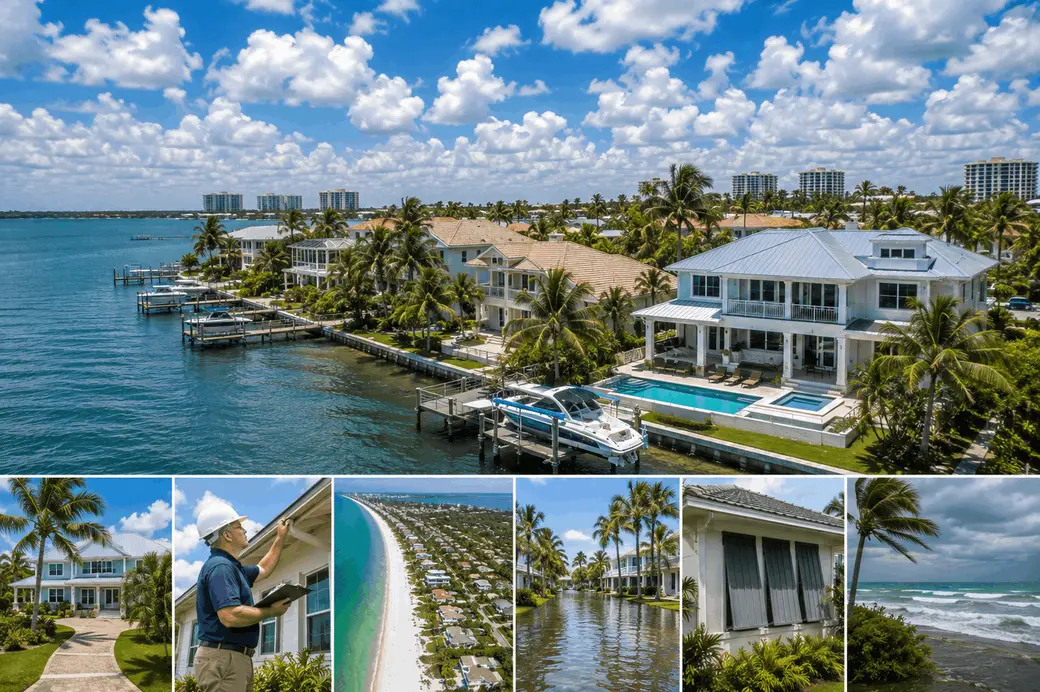
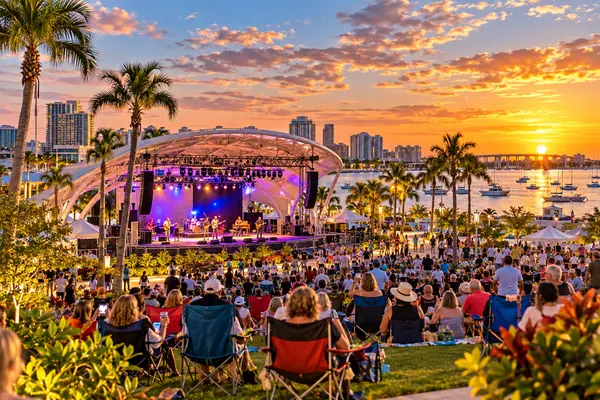
Living near Florida's Gulf Coast can mean morning walks near the water, boating weekends, warm winters and easy access to some of Sarasota's best-known beaches. But buying a coastal home also requires a different kind of due diligence.
Flood exposure, wind protection, insurance, roof condition, drainage and salt-air maintenance can all affect what a coastal property costs to own. If the home is directly on the water, seawalls, docks and lifts add another layer to the evaluation.
Before buying Sarasota coastal real estate with Hunt Brothers Realty, these are the questions worth asking about the property—not after closing, but while you still have time to investigate the answers.
1. What Flood Zone Is the Property In?
Start with the property's current FEMA flood-zone designation. Do not make assumptions based only on how close the house appears to be to the Gulf, bay or a canal.
Sarasota County's current FEMA Flood Insurance Rate Maps became effective in March 2024. Depending on the location, a property may fall within an A, AE, VE or another flood-zone designation, while other properties may be in Zone X.
The designation matters, but it should not be the end of your investigation. Flood risk can change over time, and properties outside federally designated high-risk zones can still experience flooding.
2. What Is the Home's Elevation?
Two homes in the same coastal neighborhood can have very different flood characteristics because of elevation, construction and exact location.
Ask whether an elevation certificate is available and determine how the structure's relevant elevations compare with the applicable Base Flood Elevation when that information applies to the property.
Elevation can be especially important when comparing older coastal homes with newer construction designed under more recent flood-related requirements.
3. Is the Home in a Hurricane Evacuation Zone?
Flood zones and hurricane evacuation zones are not the same thing.
A flood zone is associated with flood risk and insurance considerations. Evacuation levels are used by emergency officials when deciding which areas should evacuate because of storm-surge and hurricane threats.
Ask for both. Knowing the evacuation level helps you understand what living in the home may require when a significant storm approaches.
4. Has the Property Flooded Before?
A map provides important information, but a property's actual history can add another dimension.
Ask about known prior flooding, storm damage and insurance claims when that information is available. If repairs were made after a storm, investigate what was damaged, how the work was completed and whether required permits were obtained.
A history of flooding does not automatically make a property unsuitable, but buyers need enough information to evaluate the risk and price the ownership costs appropriately.
5. What Will Homeowners Insurance Actually Cost?
Do not estimate coastal insurance using a statewide average or what you currently pay on another property.
Insurance is property specific. Location, construction, roof characteristics, wind-mitigation features, hurricane protection and other factors can affect premiums and insurability.
Obtain quotes for the actual house while you are still within the appropriate contract timelines. The premium on one coastal home may differ considerably from another property only a short distance away.
6. Do I Need Separate Flood Insurance?
Do not assume your standard homeowners policy covers flooding. Sarasota County advises property owners that most homeowners insurance does not cover flood damage.
Whether flood insurance is required can depend on the property's flood-zone designation and financing. Even when a lender does not require it, a buyer may decide that flood coverage makes sense based on the property's overall risk.
7. What Is the Hurricane Deductible?
The annual insurance premium is not the only number that matters. Buyers should understand the deductibles that would apply if the home sustained hurricane-related damage.
Ask the insurance professional to explain the proposed policy's hurricane deductible and how much you could potentially be responsible for paying out of pocket after a covered loss.
8. How Old Is the Roof?
Roof age deserves particular attention when buying in coastal Florida.
Ask when the roof was installed, what material was used, whether the work was permitted and what documentation is available. Have the roof's current condition evaluated during your inspection process.
A roof that looks acceptable during a quick showing can still influence future maintenance planning and insurance decisions.
9. What Wind-Mitigation Features Does the Home Have?
Ask whether the home has documented wind-mitigation features and obtain the available inspection report.
Features worth investigating include roof-to-wall connections, roof-deck attachment, roof geometry and protection for exterior openings. These characteristics can influence how a home performs during high winds and may affect insurance pricing.
10. Are the Windows and Doors Impact Rated?
Do not assume that newer-looking windows automatically provide hurricane protection.
Ask whether the windows, sliding glass doors, exterior doors and garage door are impact rated. If they are not, determine whether the home has an approved shutter or other opening-protection system and whether all necessary components are present and usable.
11. How Does Water Drain Around the Property?
Not every coastal water problem comes directly from the Gulf or bay. Heavy rainfall and inadequate drainage can also create problems.
Look at grading, gutters, downspouts, swales, drains and the relationship between the house and surrounding lots and streets. Ask whether water has historically pooled in the yard, garage, driveway or street.
12. Are There Signs of Moisture or Water Intrusion?
Coastal homes live in a warm, humid environment, making moisture investigation an important part of a professional inspection.
Look for staining, damaged drywall, deteriorated trim, unusual odors and evidence of previous repairs. If concerns appear, further evaluation may be appropriate before the inspection period ends.
13. How Is Salt Air Affecting the Home?
Salt air is part of coastal living, but it can be hard on exterior materials and mechanical equipment.
Pay attention to air-conditioning equipment, exterior fasteners, railings, doors, screens, light fixtures and other exposed metal components. Homes directly on the Gulf or bay may require a more aggressive maintenance schedule than properties farther inland.
14. If It Is Waterfront, What Condition Is the Seawall In?
For a canal, bay or Intracoastal property, the seawall can be one of the most important—and potentially expensive—components of the purchase.
Ask about age, maintenance history, previous repairs and responsibility for replacement. Look for cracking, movement, erosion or soil loss and consider a specialist evaluation when appropriate.
For more waterfront-specific considerations, read Hunt Brothers Realty's Buyer’s Guide to Waterfront Homes on Florida's Gulf Coast.
15. What Condition Are the Dock and Boat Lift In?
A beautiful dock is not automatically a functional dock for your needs.
Inspect pilings, decking, electrical service, water connections and the boat lift. Confirm the lift's capacity and determine whether it is appropriate for the boat you own or intend to purchase.
Ask for permits and maintenance records for major waterfront improvements whenever they are available.
16. Can My Boat Actually Reach Open Water?
Waterfront does not necessarily mean unrestricted boating access.
Investigate water depth, tides, fixed bridges, bridge clearances, canal width and the route to open water. A property may have a dock yet still be unsuitable for a particular vessel.
Buyers with boating as a major priority should evaluate the water access as carefully as they evaluate the house.
17. Were Renovations and Additions Properly Permitted?
Coastal homes are frequently renovated over decades. Ask whether additions, roof replacements, window installations, electrical work, plumbing changes, pool construction and waterfront improvements were completed with required permits.
Permit history can help establish what work was performed and whether final inspections were recorded. Unpermitted work can complicate insurance, future renovations and resale.
18. What Will This Home Really Cost to Maintain?
The purchase price tells only part of the coastal-home affordability story.
Build a realistic ownership budget that considers homeowners insurance, flood coverage when applicable, property taxes, HOA fees, pool maintenance, landscaping, pest control, HVAC servicing and routine exterior maintenance.
For waterfront homes, also consider long-term seawall, dock and lift maintenance. The best comparison between two homes is often total ownership cost rather than asking price alone.
19. What Would Happen to the Property During a Major Storm?
No one can predict exactly how a particular house will perform in a future hurricane, but buyers can investigate the factors that influence risk.
Consider elevation, storm-surge exposure, wind protection, roof construction, drainage and the home's position relative to open water. Sarasota County warns that storm surge can travel miles inland, so this question is relevant beyond homes directly on the beach.
20. Am I Buying the Coastal Lifestyle I Actually Want?
The final question is less technical but just as important.
Do you want to walk to the beach? Keep a boat behind the house? Watch sunsets over the Gulf? Live on a barrier island? Or would you rather live several miles inland and drive to the coast when you want it?
Those choices can lead to very different properties, insurance considerations, maintenance obligations and price points. The goal is not simply to get as close to the water as your budget allows. It is to choose the coastal lifestyle that makes sense for the way you intend to live.
Coastal Home Buying Checklist
- Flood zone: Verify the current property-specific designation.
- Elevation: Review available elevation information and certificates.
- Evacuation level: Know the property's hurricane evacuation designation.
- Flood history: Ask about known previous flooding and storm damage.
- Homeowners insurance: Obtain a quote for the actual property.
- Flood insurance: Determine requirements and available coverage.
- Deductibles: Understand hurricane and other applicable deductibles.
- Roof: Verify age, condition, permits and documentation.
- Wind mitigation: Review the home's documented wind-resistant features.
- Opening protection: Verify impact windows, doors or approved shutters.
- Drainage: Investigate how water moves around the property.
- Moisture: Look for signs of current or previous water intrusion.
- Permits: Review permits for major improvements.
- Seawall: For waterfront homes, evaluate condition and expected maintenance.
- Dock and lift: Confirm condition, permits and suitability.
- Boating access: Investigate depth, tides, bridges and route to open water.
- Ownership costs: Budget beyond principal and interest.
Frequently Asked Questions About Buying Near the Sarasota Coast
Is every home near the Sarasota coast in a high-risk flood zone?
No. Flood designations vary significantly by exact property. Verify the current FEMA information by address rather than assuming an entire neighborhood has the same designation.
Does Zone X mean a home cannot flood?
No. Sarasota County notes that even properties in Zone X can experience flooding. A flood-zone designation should be considered alongside elevation, drainage, storm history and other property-specific factors.
Are flood zones and evacuation zones the same?
No. Sarasota County specifically distinguishes FEMA flood maps from hurricane evacuation levels. Buyers should check both for the property they are considering.
Does homeowners insurance cover flooding?
Typically not. Sarasota County advises that most homeowners insurance does not cover flood damage, which is why buyers should investigate separate flood coverage.
Should I get an insurance quote before buying?
Yes. Obtaining property-specific homeowners and applicable flood-insurance information early can help you understand the true cost of ownership before important purchase-contract deadlines pass.
What extra inspections should waterfront buyers consider?
Depending on the property, buyers may want specialist evaluations of seawalls, docks, boat lifts and other waterfront infrastructure in addition to a standard home inspection. The appropriate inspections depend on the individual property.
Look Beyond the View
A Gulf sunset can make it easy to fall in love with a property. The buying decision still needs to work when the weather changes and the bills arrive.
The strongest coastal purchase is one where the buyer understands the view and the vulnerability, the lifestyle and the maintenance, and the purchase price and the long-term ownership costs.
Doing that work before closing makes it easier to compare Sarasota and Gulf Coast homes based on the complete ownership picture.
Explore Sarasota Coastal Real Estate with Hunt Brothers Realty
Buying near the coast is about more than choosing a neighborhood and negotiating a price. The right search should also account for flood exposure, insurance, construction, storm protection, waterfront infrastructure and the way you intend to use the property.
Explore Sarasota real estate with Hunt Brothers Realty, browse Sarasota-area communities, search homes for sale, explore condos for sale, read our guide to Gulf Coast waterfront homes, or contact Hunt Brothers Realty for help evaluating a coastal property.
Sources
- Hunt Brothers Realty
- Hunt Brothers Realty: A Buyer's Guide to Waterfront Homes on Florida's Gulf Coast
- Sarasota County: Flood Maps
- Sarasota County: Flood Protection
- Sarasota County: Storm Surge
- FEMA: Flood Maps and Flood Risk
Hunt Brothers Realty
46 N Washington Blvd, Ste #3, Sarasota, Florida 34236
Phone: (941) 388-7017
Email: info@huntbrothersrealty.com
Website: HuntBrothersRealty.com
Categories
- All Blogs 1849
- Anna Maria Island 82
- Bird Key 4
- Bradenton 234
- Buying a Home 925
- Casey Key 2
- Clearwater 8
- Condos & HOA Living 835
- Ellenton 5
- Englewood 8
- First Time Homebuyers 1028
- Foreclosures 3
- Homeownership 1046
- Lakewood Ranch 19
- Lido Key 27
- Longboat Key 77
- Luxury/Waterfront Properties 984
- Market Updates & Trends 532
- Mortgages & Financing 38
- Move-Up Buyers 20
- Neighborhood Guides 670
- New Construction 29
- Palmetto 3
- Parrish 6
- Port Charlotte 10
- Punta Gorda 14
- Real Estate Investing 903
- Relocation to Florida 950
- Safety Harbor 2
- Sarasota 60
- Sarasota - Downtown 155
- Selling a Home 141
- Siesta Key 88
- St. Petersburg 6
- Tierra Verde 4
- Vacation & Second Homes 1096
- Venice 51
- Wellen Park 8
Recent Posts