Waterfront Home Maintenance: What Owners Should Expect
Owning a waterfront home in Sarasota can mean stepping outside to water views, keeping a boat behind the house and enjoying a coastal lifestyle that is difficult to duplicate inland. But waterfront ownership also introduces maintenance responsibilities that buyers should understand before closing.
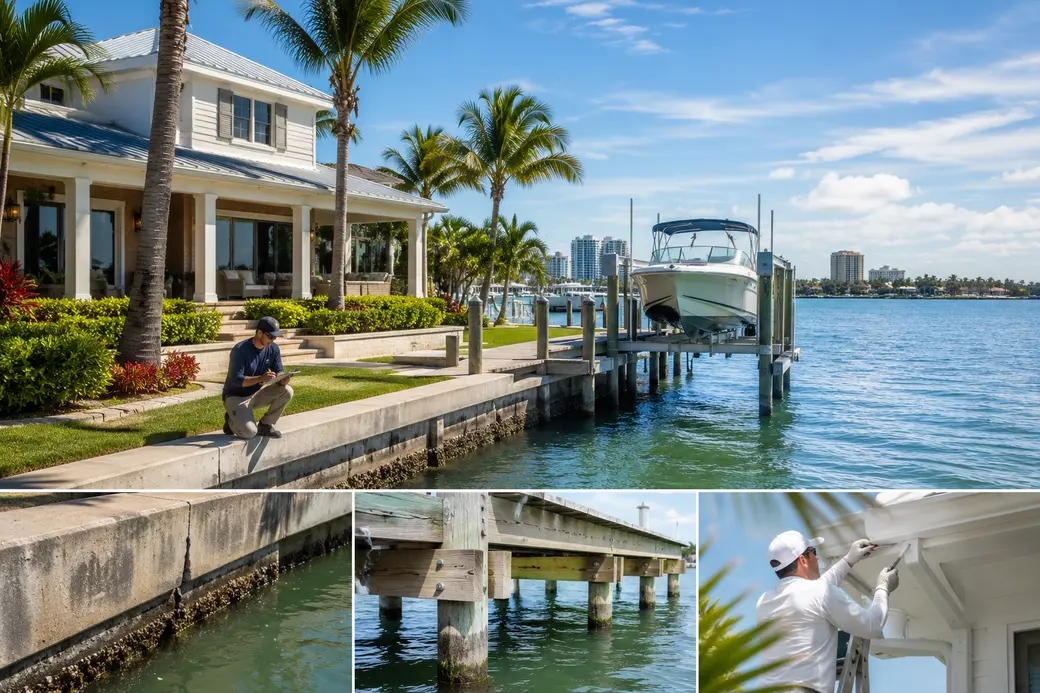
A waterfront property is not simply a conventional house with a better view. Depending on the property, an owner may also be responsible for a seawall, dock, pilings, boat lift, shoreline, outdoor electrical equipment and other components continually exposed to water, sun, humidity and salt. Buyers exploring Sarasota waterfront real estate should factor those systems into both inspections and long-term ownership costs.
Quick Answers About Maintaining a Waterfront Home
Does a waterfront home require more maintenance?
Generally, yes. The house itself requires normal Florida maintenance, but waterfront properties can add seawalls, docks, boat lifts, pilings and shoreline conditions to the list. Saltwater and coastal exposure can also accelerate deterioration of some exterior metals, finishes and mechanical components.
What is the biggest maintenance item on a waterfront property?
There is no single answer for every property, but the seawall or shoreline stabilization system can be one of the most important components to understand. Its condition can affect the usable yard, dock area and shoreline itself. A buyer should know what type of seawall exists, its condition, whether repairs have been made and whether there are visible signs that deserve professional evaluation.
Should a buyer inspect the seawall and dock?
Yes, these components deserve specific attention. Hunt Brothers Realty's standard real estate transaction disclosure recommends that buyers obtain the inspections they desire and specifically identifies dock and seawall inspections among the potential inspections for a property.
Can a homeowner simply change a dock or seawall?
Do not assume so. Waterfront construction can involve state and local permitting requirements. Florida's Environmental Resource Permitting program regulates many activities affecting surface waters, wetlands and submerged lands, and Florida DEP provides specific permitting and exemption procedures for single-family docks. Owners should determine which approvals apply before beginning work.
Can homeowners trim mangroves along their property?
Mangroves are protected under Florida law, and trimming or alteration can be regulated. Some homeowner activities qualify for exemptions under specific conditions, while other work requires a professional mangrove trimmer or permit. Owners should check current Florida Department of Environmental Protection mangrove requirements before trimming or removing vegetation.
Start with the Seawall or Shoreline
For many waterfront homes, the shoreline is one of the first places an owner should monitor. Some properties have concrete seawalls or other engineered shoreline stabilization, while others may have a more natural shoreline.
The important point is that owners should not treat the edge of the property as an afterthought. Conditions there can affect landscaping, docks, drainage and long-term maintenance planning.
What should owners watch for around a seawall?
- Visible cracking: Changes in concrete or other structural components deserve attention.
- Soil loss: Depressions or voids behind a seawall can be a reason to call a qualified professional.
- Movement: Sections that appear to lean, shift or separate should be evaluated.
- Cap condition: Cracking or deterioration along the seawall cap may require maintenance.
- Drainage: Owners should understand how water drains from the property and whether changes are occurring near the shoreline.
- Previous repairs: Know what work has been completed, when it was done and whether permits or engineering documentation are available where applicable.
A visual observation is not a substitute for a professional inspection. Waterfront buyers should consider specialists familiar with the type of shoreline structure installed at the property.
Dock Maintenance Is Part of Waterfront Ownership
A private dock is one of the great advantages of a boating property, but it is also an outdoor structure exposed around the clock. Sun, water, wind, marine growth and storms can all affect its components over time.
Owners should periodically look at decking, fasteners, railings, pilings, ladders, electrical components and the connections between different portions of the structure. Loose boards, deteriorating hardware or movement should be addressed before small problems become larger ones.
Do dock repairs require permits?
Requirements depend on the project. Florida DEP maintains procedures for determining whether certain single-family dock projects qualify for exemptions, including some new docks, repairs or replacements and boat-lift additions. Owners should verify the current requirements for their specific project rather than assuming that maintenance or replacement is automatically exempt.
Boat Lifts Need Their Own Maintenance Plan
A boat lift adds convenience and can keep a vessel out of the water when it is not being used, but the lift itself is another mechanical system that needs attention.
Cables, pulleys, motors, switches, bunks, brackets and electrical components should be monitored and serviced according to the equipment manufacturer's requirements and recommendations from qualified marine contractors.
Buyers should also verify that the existing lift is appropriate for the boat they intend to keep at the property. A beautiful waterfront home does not automatically mean its existing lift, water depth or dock configuration will work for a particular vessel.
Salt Air Changes Exterior Maintenance
The closer a home is to saltwater, the more important corrosion awareness becomes. Salt exposure can be hard on metal components, especially when combined with Florida's humidity and intense sun.
Exterior hardware, railings, fasteners, light fixtures, gates, outdoor furniture, garage components and mechanical equipment should be checked regularly. Owners may also need to clean or rinse certain surfaces more frequently and follow manufacturer recommendations for coastal environments.
Pay particular attention to outdoor HVAC equipment
Outdoor air-conditioning equipment lives in one of the property's harshest environments. Routine professional HVAC maintenance becomes particularly important near the coast, and owners should follow the equipment manufacturer's recommendations concerning cleaning and corrosion protection.
There is also an important flood-zone consideration. Sarasota County notes that exterior appliances such as HVAC equipment in flood-hazard areas may have to meet elevation requirements when replaced after flood damage. That makes the location and elevation of mechanical equipment worth understanding before a loss occurs.
Waterfront Electrical Systems Deserve Special Attention
Docks and boat lifts often involve electrical equipment in close proximity to water. This is not an area for casual do-it-yourself repairs.
Owners should use appropriately licensed professionals to evaluate waterfront electrical systems and should address damaged outlets, wiring, enclosures, switches, lighting and lift equipment promptly. Electrical components should comply with applicable codes and be suitable for their environment.
Storm Preparation Becomes a Waterfront Routine
Florida homeowners already need a storm plan. Waterfront homeowners have additional components to consider.
Before hurricane season and when a specific storm threatens, owners should follow official emergency guidance and the recommendations applicable to their property, dock, lift and vessel. Loose outdoor objects, waterfront furniture and marine equipment can become hazards in severe weather.
After a storm, inspect the property carefully before assuming everything survived simply because the house appears intact. Docks, lifts, seawalls, landscaping, electrical systems and shoreline areas can experience damage separately from the residence.
Know Your Flood Zone Before You Buy
Waterfront does not automatically tell you everything about a property's flood risk. Buyers should determine the flood-zone designation for the specific property and understand applicable elevation information and insurance requirements.
Sarasota County directs residents to the FEMA Flood Map Service Center and the county's Flood Zone Locator for flood-zone information. Buyers can also work with their insurance professional and other qualified advisors to understand property-specific considerations.
Beachfront Property Can Add Another Layer of Regulation
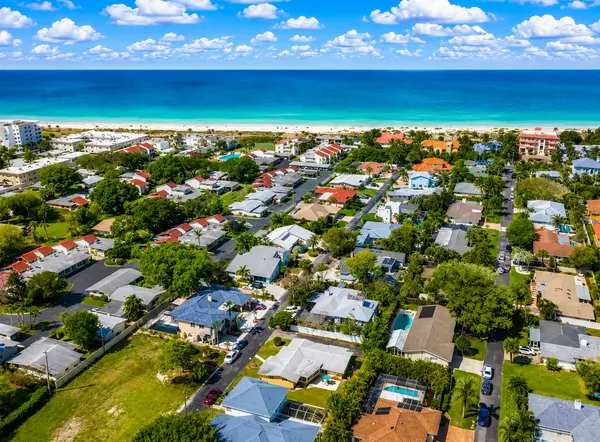
A home directly on the Gulf can involve different considerations from a canal or bayfront property. Florida maintains a Coastal Construction Control Line, commonly called the CCCL, and construction or repairs in regulated coastal areas may be subject to additional requirements.
Florida DEP specifically provides guidance for purchasers and real estate professionals to determine whether beachfront property is seaward of the CCCL. Buyers considering direct Gulf frontage should understand this issue before planning additions, exterior work or post-storm reconstruction.
Mangroves Are Not Ordinary Landscaping
A waterfront buyer may look at mangroves and immediately imagine trimming them to improve the view. Florida law makes this more complicated than trimming a hedge.
Florida DEP regulates mangrove trimming and alteration. Some homeowner trimming is exempt when specific conditions are met, while other situations require a professional mangrove trimmer or permit. DEP also addresses special circumstances involving mangroves interfering with docks or seawalls.
The practical rule for owners is simple: determine what is legally permitted before cutting.
Water Depth and Boat Access Are Ownership Issues Too
Waterfront maintenance is only part of evaluating a boating home. Buyers also need to know whether the property works for the way they intend to use the water.
- Water depth: Confirm conditions relevant to the vessel you plan to use.
- Bridge clearance: Determine whether fixed bridges stand between the property and open water.
- Dock configuration: Make sure the dock can accommodate the intended vessel.
- Lift capacity: Verify the equipment rather than assuming the existing lift is adequate.
- Navigation: Understand the route from the property to the bay, Intracoastal Waterway or Gulf.
- Permits: Review available documentation for docks, lifts and significant shoreline work.
Insurance Should Be Investigated Early
Insurance should be part of the waterfront buying process rather than something left until the final days before closing. Property characteristics, location, flood exposure, construction, roof, elevation and other factors can affect coverage and cost.
Obtain property-specific quotes and ask exactly what is and is not covered. Do not assume the seller's current premium predicts what a new owner will pay, and do not assume every waterfront component is covered in the same way as the residence itself.
What Should Waterfront Buyers Inspect?
A general home inspection remains important, but waterfront buyers may want additional specialists depending on the property. Hunt Brothers Realty's transaction disclosure specifically advises buyers that potential inspections can include home, roof, pool, mold, termite, plumbing, electrical, HVAC, structural, dock, seawall and soil inspections.
- Home: Overall condition and major building systems.
- Roof: Age, condition and available permit history.
- Seawall or shoreline: Condition and signs of movement, deterioration or soil loss.
- Dock: Pilings, decking, fasteners, structure and electrical components.
- Boat lift: Capacity, mechanical condition and electrical system.
- Pool: Equipment, surface and structural condition where applicable.
- HVAC: Age, operation and condition in the coastal environment.
- Electrical: Pay particular attention to outdoor and dockside systems.
- Plumbing: Supply, drains, water heater and visible piping.
- Survey: Review property boundaries, easements and potential encroachments.
A Simple Waterfront Maintenance Calendar
Throughout the year
- Watch for visible changes around the seawall and shoreline.
- Check dock decking, hardware and railings.
- Monitor lift operation and unusual sounds or movement.
- Look for corrosion on exterior metal components.
- Keep drainage paths clear and monitor areas where water collects.
Before hurricane season
- Review the household storm plan.
- Review the plan for the boat and marine equipment.
- Inspect exterior areas for loose or vulnerable items.
- Know how outdoor furniture and equipment will be secured.
- Review insurance information and important property records.
After major storms
- Inspect the dock and shoreline before normal use resumes.
- Look for seawall movement or new soil loss.
- Have questionable electrical equipment evaluated before using it.
- Check the boat lift and its supporting components.
- Photograph damage and contact the appropriate professionals when repairs are needed.
Can You Reduce Waterfront Maintenance?
You cannot eliminate exposure to Florida's waterfront environment, but proactive ownership can make maintenance more manageable. Regular inspections allow owners to identify changes early, while proper materials and qualified contractors can help repairs withstand the environment for which they are intended.
Keeping organized records is also valuable. Save permits, surveys, engineering documents, inspection reports, seawall repairs, dock work, lift service records, roof permits and invoices for major improvements. Those records can be useful during future maintenance and eventually when the property is sold.
Is Waterfront Ownership Worth the Extra Maintenance?
For the right owner, absolutely. The question is not whether waterfront homes require maintenance. They do. The better question is whether the lifestyle is worth maintaining.
A boater who can walk out the back door and be underway within minutes may place tremendous value on a private dock. Another buyer may care more about an uninterrupted bay or Gulf view. Someone else may prefer a waterfront condominium because the association handles more exterior responsibilities.
Understanding the maintenance before purchasing makes it much easier to choose the waterfront lifestyle that fits both your expectations and your budget.
Questions to Ask Before Buying a Waterfront Home
- What type of seawall or shoreline does the property have?
- When was the seawall last inspected or repaired?
- Are permits available for previous waterfront improvements?
- What is the condition of the dock?
- What is the boat lift's capacity and age?
- Does the water depth work for my boat?
- Are there bridges between the property and open water?
- What is the property's flood-zone designation?
- Are mangroves or other regulated shoreline features present?
- What insurance coverage and costs should I expect?
- Are there HOA or deed restrictions affecting boats, docks or lifts?
- What maintenance will I need to handle immediately after closing?
The Best Waterfront Home Is the One You Understand Before Buying
The water view may be what gets your attention, but the seawall, dock, lift, elevation, flood considerations and access to navigable water can determine whether a waterfront property actually works for you.
That is why waterfront buyers should look beyond kitchens, pools and sunsets. Understand the infrastructure that makes the waterfront lifestyle possible, inspect it carefully and budget for maintaining it after closing.
Explore Sarasota Waterfront Homes with Hunt Brothers Realty
Waterfront properties throughout Sarasota and Florida's Gulf Coast can vary dramatically. Direct Gulf frontage, Sarasota Bay, canals, the Intracoastal Waterway and other waterways offer different boating access, exposure, maintenance requirements and lifestyles.
Explore Hunt Brothers Realty, browse Sarasota-area communities, search single-family homes for sale, explore condos for sale, or contact Hunt Brothers Realty for help evaluating Sarasota waterfront properties.
Sources
- Florida Department of Environmental Protection: Environmental Resource Permitting
- Florida Department of Environmental Protection: Dock Permitting in Florida
- Florida Department of Environmental Protection: Mangroves
- Florida Department of Environmental Protection: Mangrove Frequently Asked Questions
- Sarasota County: Flood Zone and Stormwater Information
- Sarasota County: Building and Flood-Hazard Information
- Florida DEP: Coastal Construction Control Line Guidance
- Hunt Brothers Realty: Standard Disclosure for Real Estate Transactions
- Hunt Brothers Realty
Hunt Brothers Realty
46 N Washington Blvd, Ste #3, Sarasota, Florida 34236
Phone: (941) 388-7017
Email: info@huntbrothersrealty.com
Website: HuntBrothersRealty.com
Categories
- All Blogs 1869
- Anna Maria Island 82
- Bird Key 4
- Bradenton 234
- Buying a Home 944
- Casey Key 2
- Clearwater 8
- Condos & HOA Living 854
- Ellenton 5
- Englewood 9
- First Time Homebuyers 1047
- Foreclosures 3
- Homeownership 1066
- Lakewood Ranch 20
- Lido Key 27
- Longboat Key 77
- Luxury/Waterfront Properties 1004
- Market Updates & Trends 545
- Mortgages & Financing 38
- Move-Up Buyers 20
- Neighborhood Guides 684
- New Construction 29
- Palmetto 3
- Parrish 6
- Port Charlotte 10
- Punta Gorda 14
- Real Estate Investing 923
- Relocation to Florida 970
- Safety Harbor 2
- Sarasota 60
- Sarasota - Downtown 156
- Selling a Home 142
- Siesta Key 88
- St. Petersburg 6
- Tierra Verde 4
- Vacation & Second Homes 1116
- Venice 61
- Wellen Park 9
Recent Posts