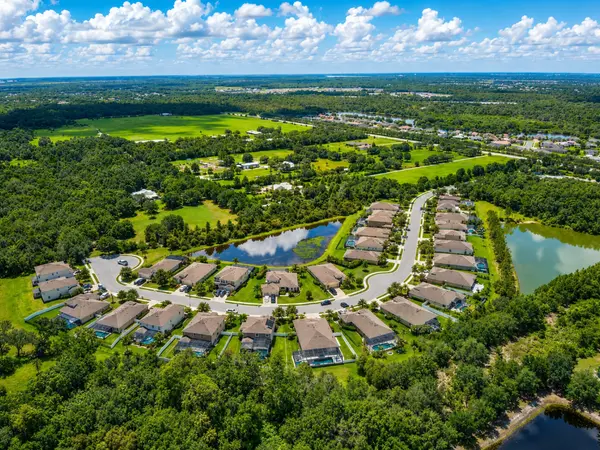
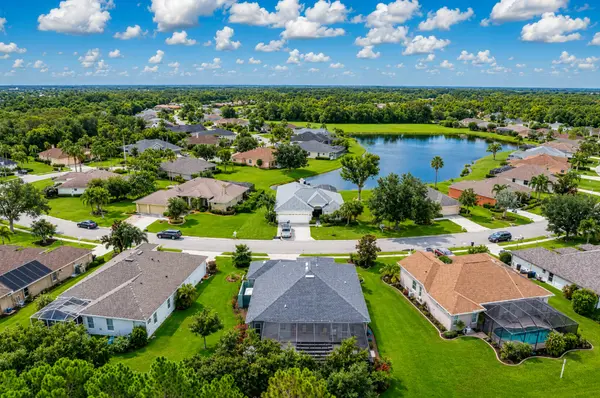
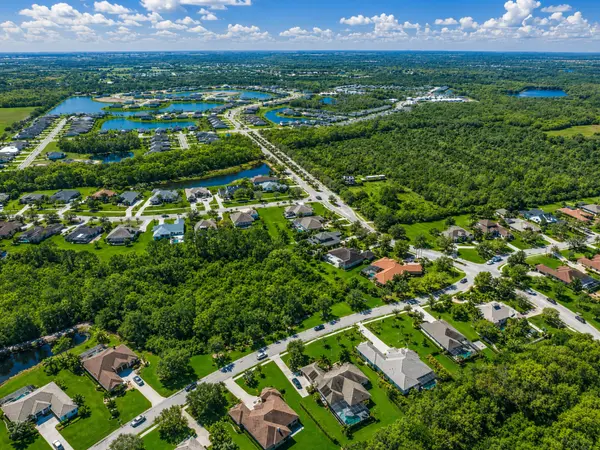
What Is a CDD Fee in Florida?
A CDD fee in Florida is a tax or assessment imposed by a Community Development District, a special-purpose local government created to help finance, operate and maintain certain community infrastructure and facilities. CDD assessments are common in some master-planned developments and may help pay for roads, stormwater systems, landscaping, recreational facilities and infrastructure-related debt. They are separate from homeowners association dues and often appear on a property's annual tax bill. Some CDD assessments include debt that may eventually be paid off, while ongoing operations and maintenance assessments can continue. Buyers should verify the exact CDD charges for the specific property before purchasing.
Quick Answers About CDD Fees in Florida
What does CDD stand for in Florida real estate?
CDD stands for Community Development District. It is a special-purpose local government operating under Chapter 190 of the Florida Statutes.
Is a CDD fee the same as an HOA fee?
No. A CDD is a governmental district, while an HOA is generally a private association. A Florida property can be subject to both CDD assessments and HOA dues, and each organization may have different responsibilities.
How much are CDD fees in Florida?
There is no standard statewide CDD amount. Assessments depend on the district, property, outstanding debt, annual operating budget and assessment methodology. Buyers should verify the exact annual amount assigned to the property rather than relying on a community-wide estimate.
Are CDD fees included in Florida property taxes?
CDD assessments are commonly collected on the annual property tax bill as non-ad valorem assessments. They are separate from the ad valorem property taxes calculated from taxable property value. Collection arrangements can vary, so buyers should check the actual tax bill and district records.
Do CDD fees ever go away?
A debt-service assessment associated with a particular bond issue may eventually end after the applicable obligation is satisfied. Operations and maintenance assessments can continue because the district may still maintain infrastructure, facilities and services.
Can CDD fees increase?
Yes. Operations and maintenance assessments can change as district budgets and expenses change. Buyers should review current assessments, recent budgets and available assessment history rather than assuming today's amount will remain unchanged.
Can you have both an HOA fee and a CDD fee?
Yes. This is common in some Florida master-planned communities. The HOA may administer community rules and private common property while the CDD finances or maintains different infrastructure and facilities.
Is buying a home with a CDD bad?
Not automatically. A CDD is a financing and governance structure, not a measure of whether a community is good or bad. Buyers should compare the assessment with the infrastructure, facilities, location, purchase price and total ownership costs of the property.
What Is a Community Development District?
A Community Development District is a special-purpose local government established under Florida law. The legal framework is found in Florida Statutes Chapter 190.
CDDs are frequently associated with newer master-planned developments because they provide a mechanism for financing and managing infrastructure needed to serve the district. Instead of requiring every eligible infrastructure expense to be incorporated into a developer's initial cost, a district may use bonds and assessments to finance qualifying improvements over time.
A CDD is not simply another name for an HOA. It is a governmental entity with statutory powers, public meetings, budgets, a governing board and authority to impose certain taxes, assessments, fees and charges under Florida law.
For a companion explanation, Hunt Brothers Realty's HOA vs. CDD guide explains the differences between these two common Florida community structures.
What Do CDD Fees Pay For?
CDD assessments can help finance, operate or maintain infrastructure and facilities authorized under Florida law. The actual responsibilities vary from one district to another.
Depending on the district, CDD-related expenses may involve:
- Stormwater management and drainage infrastructure
- Retention ponds and water-management facilities
- Certain roads and transportation improvements
- Landscaping and irrigation in district-maintained areas
- Parks and trails
- Recreational facilities
- Certain utility or water-related infrastructure
- District administration and professional services
- Principal and interest on applicable district bonds
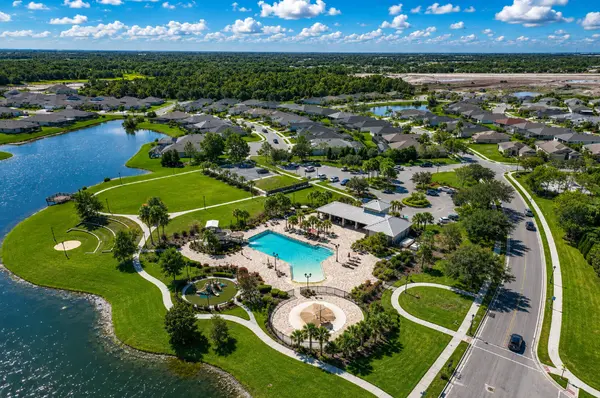
Not every CDD provides all of these services. A clubhouse or pool, for example, might be a CDD facility in one development and HOA property in another. Buyers should determine which organization owns and maintains each important community feature.
CDD Fees Often Have Two Important Components
1. Debt Service Assessments
A CDD may issue bonds to finance qualifying infrastructure and improvements. Debt service assessments imposed on benefiting properties can help repay principal and interest associated with those bonds.
This is the portion people often have in mind when they say that a CDD fee will eventually “expire.” A particular debt obligation can have a repayment schedule, but buyers should verify the actual bonds, assessment area, outstanding balance and scheduled maturity rather than assuming a standard term applies.
2. Operations and Maintenance Assessments
Operations and maintenance assessments, commonly abbreviated as O&M, support the district's ongoing responsibilities. These expenses may include landscaping, stormwater maintenance, recreational facilities, administration, repairs and other authorized district operations.
O&M assessments can continue even after a particular bond obligation has been repaid. Their amounts can also change as the district adopts new annual budgets.
CDD Fee vs. HOA Fee: What Is the Difference?
| Feature | CDD | HOA |
|---|---|---|
| Type of organization | Special-purpose local government | Private community association |
| Primary Florida framework | Chapter 190, Florida Statutes | Often Chapter 720 for homeowners associations, plus governing documents |
| Typical role | Authorized infrastructure, district facilities, financing and maintenance | Community rules, private common property and association services |
| Typical collection | Often through the annual property tax bill | Usually billed by the association or management company |
| Can the property have both? | Yes | Yes |
The responsibilities can overlap in appearance without actually being the same. A community might have landscaping funded by one organization and a pool operated by another. Review the actual district and association records rather than inferring responsibilities from the amenities you see during a tour.
Are CDD Fees Part of Your Property Tax Bill?
CDD assessments are frequently collected through a Florida property's annual tax bill. When collected this way, they commonly appear among the non-ad valorem assessments.
This distinction is important. Ad valorem property taxes are based on taxable property value, while a non-ad valorem CDD assessment is imposed according to the applicable district assessment structure.
A buyer reviewing only the home's estimated property taxes can therefore miss part of the annual ownership cost. Review the complete tax bill, including its non-ad valorem section, and confirm current charges with the district.
How Much Is a CDD Fee in Florida?
There is no useful statewide average that can tell a buyer what a particular home will owe. CDD assessments can vary substantially among districts and even among properties within the same larger development.
The amount may depend on factors such as:
- Outstanding infrastructure debt
- The district's adopted annual budget
- The property's assessment category
- The assessment methodology used by the district
- Facilities and infrastructure maintained by the district
- The particular bond series associated with the property
- Other authorized district assessments or charges
Even neighboring homes can potentially have different assessment obligations. Verify the exact parcel rather than using another listing's CDD amount as a substitute.
How Does a CDD Affect Your Monthly Housing Budget?
Even when the assessment is collected annually, converting it to a monthly equivalent can make home comparisons easier.
| Hypothetical Assessment | Amount |
|---|---|
| Debt service assessment | $1,200 annually |
| Operations and maintenance | $800 annually |
| Total hypothetical CDD | $2,000 annually |
| Monthly budgeting equivalent | Approximately $166.67 |
Important: These numbers are hypothetical and are not intended to represent a typical or current CDD assessment for any Florida community.
The monthly equivalent also does not mean the CDD sends a monthly bill. If the assessment is on the tax bill and property taxes are escrowed with a mortgage payment, the lender may collect an amount toward the annual obligation through escrow. Buyers should ask their mortgage professional how the specific assessment will be treated.
Do CDD Fees Eventually Expire?
Sometimes part of the assessment can end, but saying “the CDD expires” can be misleading.
If a property has a debt-service assessment tied to a particular bond issue, that debt may have a scheduled maturity. Once the applicable obligation has been satisfied, that particular debt assessment may no longer be required.
The district itself may continue operating. If it maintains stormwater systems, landscaping, roads, recreational facilities or other infrastructure, ongoing O&M assessments can remain necessary.
The better question is therefore: Which portion of this property's CDD assessment is debt service, what obligation does it support, and which assessments are expected to continue?
Can You Pay Off a CDD Early?
Certain districts and bond structures may allow a property owner to prepay some outstanding debt assessments. That does not mean every CDD charge can be permanently eliminated.
A debt prepayment may require an official calculation from the district and may differ from simply adding up future annual installments. Ongoing O&M assessments can still apply after eligible debt has been prepaid.
Before paying anything, request an official payoff or prepayment statement and written clarification of exactly which obligations would remain. Legal questions involving assessment liens, payoff rights or title should be reviewed with a qualified Florida real estate attorney or title professional.
Can CDD Assessments Increase After You Buy?
Buyers should not assume the current annual assessment is permanently fixed. A district has continuing expenses, and its board adopts budgets to fund authorized responsibilities.
Maintenance needs, repairs, insurance, utilities, landscaping, staffing, administration and other expenses can change. Florida law also provides districts with authority for certain rates, fees and charges for district facilities and services, subject to applicable requirements.
Review several years of budgets and assessment information when available. Historical charges can provide useful context, although they do not guarantee future assessments.
Who Runs a Florida CDD?
Florida CDDs are governed by boards of supervisors. Section 190.006 of the Florida Statutes establishes the framework for selecting board members.
Governance can evolve as a development grows. Landowner voting can play an important role during portions of a district's development, while qualifying districts can transition toward resident-elector representation under the statutory framework.
Because a CDD is a governmental entity, buyers can often review public budgets, meeting materials, financial information and assessment documents directly through the district.
Are CDD Fees Common in New Construction Communities?
Buyers frequently encounter CDDs when researching newer Florida master-planned developments, but not every new community has one. Infrastructure can be financed and maintained through different arrangements.
This is why a builder's advertised home price should not be treated as the complete cost comparison. A buyer may also need to account for CDD assessments, HOA dues, property taxes, insurance, optional upgrades, homesite premiums and other community-specific costs.
Hunt Brothers Realty's Florida new construction buyer guide explains why CDD verification should be part of the due-diligence process when comparing new homes.
CDD Fees in Lakewood Ranch, Wellen Park and Southwest Florida
CDD assessments are particularly relevant when comparing some master-planned communities in Southwest Florida. Buyers researching Lakewood Ranch, Wellen Park, Venice, Parrish, Sarasota, Nokomis, North Port and surrounding areas may encounter properties with very different district structures.
Do not assume that every property within a large master-planned area has the same CDD assessment. A development may contain multiple districts, assessment areas, bond series or neighborhoods with different obligations.
For example, buyers exploring Lakewood Ranch homes should verify the village, district and exact parcel rather than assuming one CDD figure applies throughout Lakewood Ranch.
Similarly, Hunt Brothers Realty's Wellen Park CDD vs. HOA guide explains why buyers should separate district assessments from association dues when comparing newer Florida communities.
How Do You Find Out Whether a Home Has a CDD?
1. Review the Real Estate Listing
The listing may identify a CDD or provide an annual assessment amount. Treat that information as a starting point and independently verify material charges.
2. Check the Complete Property Tax Bill
Review the non-ad valorem assessment section rather than looking only at property taxes based on taxable value. Identify any district-related charges and determine what they represent.
3. Identify the Official District
Determine the official CDD name and confirm that the exact parcel is within its boundaries. Do not rely only on the broader community name.
4. Request the Current Assessment Breakdown
Ask the district for the current debt-service assessment, O&M assessment, applicable bond information, adopted budget and any other relevant charges.
5. Confirm the Numbers Before Closing
Have the appropriate title or closing professional confirm transaction-related assessment obligations. If financing the purchase, ask the mortgage professional how recurring CDD assessments will be treated when calculating housing expenses and escrow requirements.
What Should You Ask Before Buying a Home With CDD Fees?
- What is the official name of the Community Development District?
- Is this exact property located within the district?
- What is the current total annual CDD assessment?
- How much is debt service?
- How much is operations and maintenance?
- Are other district charges applicable?
- What facilities and infrastructure does the district own or maintain?
- What bonds are associated with the property?
- Does any debt-related assessment have a scheduled maturity?
- Can eligible debt assessments be prepaid?
- How have O&M assessments changed in recent years?
- Are additional assessments or major projects being considered?
- How are the assessments collected?
- Does the property also have HOA or condominium assessments?
- Are there separate club, amenity or membership fees?
- How will the CDD affect the property's total annual ownership cost?
Additional Questions About Florida CDD Fees
Do all new construction communities have CDD fees?
No. Some new Florida communities are located within CDDs and others are not. Verify the exact property rather than assuming that new construction automatically means a CDD.
Are CDD fees tax deductible?
Do not assume a CDD assessment is deductible simply because it appears on a property tax bill. Tax treatment depends on the nature of the charge and the taxpayer's circumstances. Consult a qualified tax professional or CPA regarding the specific assessment.
Does a CDD fee cover homeowners insurance?
A buyer should not assume that CDD assessments provide insurance for an individual residence. Obtain property-specific homeowners and flood insurance information from a qualified insurance professional.
Do CDD fees affect mortgage qualification?
Recurring property-related obligations can be relevant to a lender's evaluation of housing expenses and loan eligibility. Ask a qualified mortgage professional how the specific CDD assessment will be treated under the loan program you are considering.
Are CDD fees the same for every home in a community?
Not necessarily. Assessment methodology, property category, district boundaries, bond series and assessment areas can create differences. Verify the exact parcel's current obligations.
What happens if a CDD assessment is not paid?
Unpaid assessments can have significant legal and financial consequences, including collection and lien-related issues under applicable law. Owners facing delinquent assessments should contact the district and obtain appropriate legal guidance rather than relying on general information.
Does Florida require disclosure of a CDD?
Florida law contains specific Community Development District disclosure provisions. For example, Section 190.048 addresses a conspicuous disclosure in contracts for the initial sale of parcels or residential units within an established district. Disclosure obligations can depend on the transaction, so contract or legal questions should be reviewed with a qualified Florida real estate attorney.
Are CDD Fees Good or Bad for Florida Homebuyers?
A CDD should not automatically eliminate a property from consideration, and the absence of a CDD does not automatically make another property less expensive to own. Communities finance and maintain infrastructure in different ways.
A home with a CDD might have infrastructure or facilities that matter to the buyer. A home without one may have higher HOA dues, different maintenance responsibilities or other ownership expenses. The useful comparison is the complete package.
Add together the purchase price, financing, property taxes, CDD assessments, HOA or condominium fees, insurance, maintenance and any separate club or amenity expenses. Then compare what each community actually provides.
The Bottom Line on CDD Fees in Florida
A CDD fee is a tax or assessment associated with a Florida Community Development District. These governmental districts can help finance and maintain infrastructure and facilities within their boundaries.
CDD assessments are separate from HOA dues and frequently appear on the annual property tax bill. A property's assessment may include debt service as well as ongoing operations and maintenance, which is why paying off one bond-related component does not necessarily eliminate future CDD charges.
Before buying, identify the exact district, review the current tax bill, obtain the assessment breakdown and include the CDD in your total ownership budget. Hunt Brothers Realty can help buyers compare community costs when evaluating homes across Florida's Gulf Coast. Read the complete Florida HOA vs. CDD guide, review what to know before buying new construction in Florida, explore Hunt Brothers Realty community guides, or contact Hunt Brothers Realty to discuss a specific community.
Informational notice: This article provides general real estate and educational information and is not individualized legal, financial, tax, lending, title or other professional advice. CDD assessments, bond obligations, collection methods, payoff rights, tax treatment and financing implications vary by district, property and individual circumstances. Buyers should verify current property-specific information with the Community Development District, applicable county records, a qualified mortgage professional, title or closing professional, tax professional or CPA, and a Florida real estate attorney when appropriate before making a purchasing or financial decision.
Sources
- Florida Legislature, Chapter 190, Community Development Districts
- Florida Legislature, Section 190.006, Board of Supervisors
- Florida Legislature, Section 190.021, Taxes and Non-Ad Valorem Assessments
- Florida Legislature, Section 190.022, Special Assessments
- Florida Legislature, Section 190.035, District Fees and Charges
- Florida Legislature, Section 190.048, Required Disclosure to Purchaser
- Hunt Brothers Realty, What Is a CDD Fee in Florida?
- Hunt Brothers Realty, HOA vs. CDD in Florida
- Hunt Brothers Realty, CDD vs. HOA Fees in Wellen Park
- Hunt Brothers Realty, Buying New Construction in Florida
Hunt Brothers Realty
Hunt Brothers Realty
46 N. Washington Blvd, Ste 3, Sarasota, FL 34236
Phone: (941) 388-7017
Email: info@huntbrothersrealty.com
Website: HuntBrothersRealty.com
Categories
- All Blogs 2473
- Anna Maria Island 88
- Bird Key 4
- Bradenton 239
- Buying a Home 1510
- Casey Key 2
- Clearwater 14
- Condos & HOA Living 1434
- Ellenton 6
- Englewood 13
- First Time Homebuyers 1625
- Foreclosures 4
- Home Selling 7
- Homeownership 1659
- Lakewood Ranch 29
- Lido Key 29
- Longboat Key 80
- Luxury/Waterfront Properties 1601
- Market Updates & Trends 1109
- Mortgages & Financing 73
- Move-Up Buyers 24
- Neighborhood Guides 1232
- New Construction 42
- Palmetto 4
- Parrish 19
- Port Charlotte 36
- Punta Gorda 164
- Real Estate Investing 1514
- Relocation to Florida 1547
- Safety Harbor 4
- Sarasota 109
- Sarasota - Downtown 168
- Selling a Home 146
- Siesta Key 93
- St. Petersburg 9
- Taxes and Homestead 3
- Tierra Verde 7
- Vacation & Second Homes 1707
- Venice 215
- Wellen Park 22
Recent Posts