What Should I Look for in a Roof Before Buying a Home?
Before buying a home, look beyond whether the roof simply appears new or old. Buyers should investigate its documented age, roofing material, visible condition, signs of leakage, prior repairs, permits, remaining useful life, wind-resistant features, and potential insurance implications. In Florida, the roof can have a particularly important effect on both future maintenance costs and property insurance underwriting. A general home inspection is an important starting point, but concerning conditions may justify evaluation by a qualified roofing contractor, engineer, or other appropriate professional before you make a final purchasing decision.
Quick Answers About What to Look for in a Roof Before Buying a Home
How Important Is the Roof When Buying a House?
The roof is one of the home's major building systems and can affect maintenance expenses, water intrusion risk, wind resistance, and insurance underwriting. Florida's Department of Financial Services notes that insurers may consider a roof's age, type, construction, and condition when evaluating a property for homeowners insurance.
How Do I Find Out How Old a Roof Is?
Ask for documentation rather than relying only on a seller's recollection or the roof's appearance. Depending on the property, useful records may include permits, contractor invoices, warranties, prior inspection reports, insurance documentation, and seller disclosures. Permit records can also help establish when permitted roofing work occurred, although the available records and level of detail vary by jurisdiction.
Should I Have the Roof Inspected Before Buying?
A qualified independent home inspection is an important part of evaluating a home's physical condition. If the inspector identifies roof concerns or cannot fully evaluate an area, buyers may want a separate assessment from a qualified roofing contractor, engineer, or other appropriate professional before making a decision.
Is an Older Roof Automatically a Problem in Florida?
No. Age is important, but condition, construction, remaining useful life, and the insurer's underwriting requirements also matter. Current Florida law provides certain protections based on roof age, but those protections do not guarantee that every property or roof will qualify for coverage with every insurer.
What Are Warning Signs of Roof Problems?
Potential warning signs can include missing or damaged roofing materials, deteriorated flashing, visible repairs, sagging areas, stains on ceilings or attic components, moisture damage, deteriorated roof penetrations, and evidence of prior leaks. These signs do not establish the cause or severity by themselves, so significant findings should be evaluated by an appropriate qualified professional.
Can a Roof Affect Homeowners Insurance in Florida?
Yes. Florida insurance regulators identify roof age, type, construction, condition, and wind-mitigation characteristics as factors that may be relevant to insurance underwriting or premiums. Buyers should obtain a property-specific insurance quote during the purchase process rather than assuming a home will be insurable at a particular price based on the roof alone.
What Is a Wind Mitigation Inspection?
A wind mitigation inspection documents certain construction features that may improve a home's resistance to wind damage. Depending on the home and insurer, qualifying features can affect available windstorm premium credits. It is different from a general home inspection and should not be treated as a substitute for evaluating the roof's overall condition.
Start With the Roof's Documented Age
One of the first questions to ask about any roof is straightforward: When was it installed?
Do not stop with an approximate answer such as "about ten years old." When possible, look for records that help establish what work was actually completed and when.
- Roofing permits
- Contractor invoices
- Product and workmanship warranties
- Prior inspection reports
- Seller disclosures
- Insurance or wind mitigation documentation
Documentation can also help distinguish a complete roof replacement from a repair or partial replacement. That distinction can matter when evaluating the roof's condition, future maintenance, and insurance.
Roof Age and Remaining Useful Life Are Not the Same Thing
A roof's installation date tells you its chronological age. It does not, by itself, tell you how long the roof will continue performing adequately.
Roof performance can be influenced by the roofing material, installation quality, maintenance, weather exposure, storm history, ventilation, flashing, penetrations, repairs, and other property-specific conditions.
That is why buyers should be cautious about generic statements such as "this type of roof always lasts X years." Manufacturer expectations and general lifespan ranges can provide context, but they cannot determine the remaining useful life of a particular roof.
If remaining roof life could materially affect your purchasing decision, ask an appropriately qualified inspector or roofing professional to evaluate the actual property.
Know What Type of Roof You Are Buying
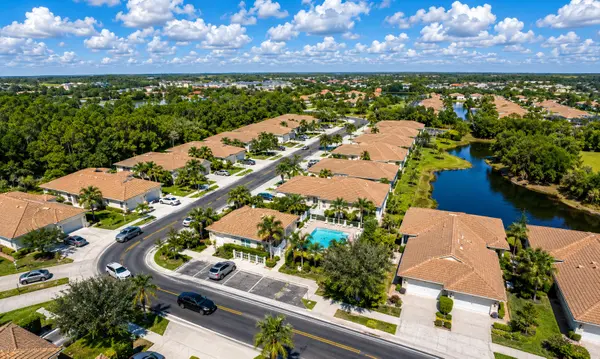
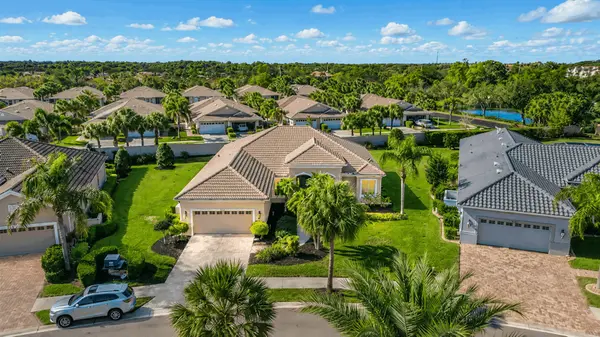
Florida Gulf Coast homes can have several types of roof coverings. Common examples include asphalt or architectural shingles, concrete or clay tile, and metal roofing systems.
The material matters, but the visible covering is only one part of the roofing system. A meaningful evaluation may also involve components such as:
- Roof deck
- Underlayment
- Flashing
- Valleys
- Roof-to-wall connections
- Vents and other penetrations
- Drip edges
- Gutters and drainage where applicable
A roof that looks attractive from the street can still have issues that are not apparent during a showing.
Look for Visible Signs of Deterioration
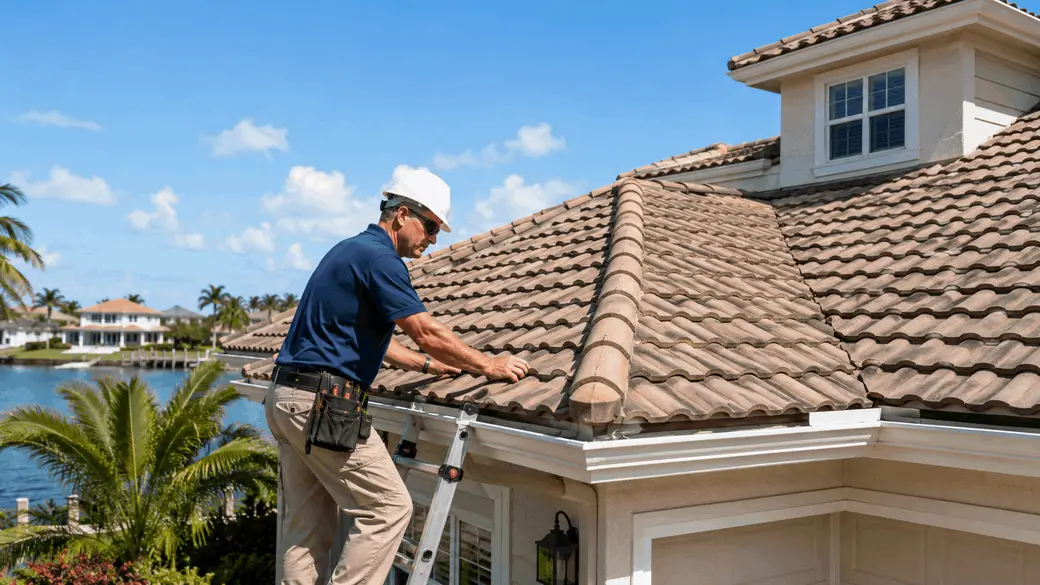
You do not need to climb onto a roof during a home showing to notice potential concerns. In fact, buyers should leave roof access and technical evaluation to qualified professionals using appropriate safety procedures.
From safe viewing areas, potential issues may include:
- Missing or visibly damaged shingles
- Cracked, broken, or displaced tiles
- Uneven or sagging roof areas
- Damaged or deteriorated flashing
- Multiple areas that appear to have been patched
- Visible deterioration around vents or other penetrations
- Vegetation or debris accumulation
- Drainage problems around gutters or roof edges
These observations are reasons to investigate further, not diagnoses. A qualified inspector or roofing professional should determine the nature and significance of any suspected defect.
Check Inside the House for Evidence of Roof Leaks
Some of the most useful clues about a roof can appear inside the home rather than on top of it.
Potential signs of moisture intrusion can include:
- Ceiling stains
- Discoloration around walls or windows
- Damaged drywall
- Staining on attic framing or roof decking
- Visible moisture
- Areas that appear recently repaired or repainted
A stain does not necessarily prove there is an active roof leak. It could relate to an older repaired leak, plumbing, condensation, an HVAC issue, or another moisture source. Conversely, the absence of visible staining does not prove that the roof has no problems.
Moisture findings should be evaluated by the appropriate qualified inspector, roofer, contractor, engineer, or other professional before a buyer relies on assumptions about the cause or required repair.
Ask About Previous Roof Leaks and Repairs
A repaired roof is not automatically a reason to reject a property. The more important questions involve what happened, how the problem was corrected, and whether documentation is available.
Useful questions can include:
- Has the roof leaked previously?
- What caused the leak?
- When was it repaired?
- Who performed the work?
- Was a permit required and obtained?
- Was only the roof covering repaired, or was damaged decking or other material replaced?
- Are invoices, warranties, photographs, or other records available?
- Have there been multiple repairs in the same area?
Questions involving required permits or whether previous work complied with applicable codes should be verified with the relevant local permitting authority or another appropriately qualified professional.
Do Not Confuse a Home Inspection With a Roof Certification
Different inspections serve different purposes. Buyers should understand what each report is intended to tell them.
The Consumer Financial Protection Bureau recommends obtaining an independent home inspection so buyers can better understand the physical condition of the property and identify major problems or the need for additional inspections.
A general home inspection can identify observable roof concerns, but it may not answer every question about remaining roof life, storm damage, structural conditions, repair specifications, or insurance eligibility. A roofing contractor, engineer, insurance inspector, or other specialist may evaluate the roof for a different purpose and under a different scope.
Before ordering an inspection, understand what it covers and whether the professional is qualified for the specific question you need answered.
Why Florida Buyers Should Consider Insurance Early
A roof should not be evaluated solely as a future maintenance expense. In Florida, it can also be relevant to homeowners insurance underwriting and premiums.
The Florida Department of Financial Services explains that insurers may review the age, type, and construction of a roof, along with the home's location, construction, claims history, and wind mitigation features when evaluating homeowners insurance.
For older properties, an insurer may request a 4-point inspection or a specialized roof inspection. Requirements vary by insurer and property.
The practical lesson for a buyer is simple: obtain property-specific insurance information before you become financially committed to assumptions about the home's ownership costs.
Insurance availability, underwriting requirements, coverage, deductibles, and premiums vary substantially by property and insurer. Buyers should obtain quotes and discuss the specific roof and property with a qualified Florida insurance professional before making a purchasing decision.
What Does Florida's 15-Year Roof Rule Actually Say?
Florida roof insurance rules are sometimes oversimplified into statements such as "insurance companies will not cover a 15-year-old roof." Current Florida law is more nuanced.
Under Florida Statute 627.7011, an insurer may not refuse to issue or renew a homeowners policy on a residential structure with a roof less than 15 years old solely because of the roof's age.
For a roof that is at least 15 years old, the statute requires the insurer to allow the homeowner to obtain an inspection by an authorized inspector before requiring roof replacement as a condition of issuance or renewal based solely on age. If that inspection indicates at least five years of useful life remaining, the insurer may not refuse to issue or renew the policy solely because of roof age.
That does not mean every older roof is guaranteed insurance coverage. Insurers may have other lawful underwriting criteria, and the statute itself does not eliminate those considerations. Buyers should discuss the actual property and roof with a qualified insurance agent rather than relying on a simplified age rule.
Ask Whether a Wind Mitigation Inspection Is Available
Florida buyers may also encounter a wind mitigation inspection. This is different from an inspection intended primarily to determine whether the roof is worn out or leaking.
A wind mitigation inspection documents qualifying construction characteristics associated with resistance to wind damage. Depending on the home, this can include roof-related characteristics and other protective features.
The Florida Department of Financial Services notes that qualifying hurricane-loss mitigation improvements may result in insurance premium discounts. Actual eligibility and premium effects depend on the property, inspection findings, insurer, and policy.
If a seller already has a wind mitigation report, a buyer can ask to review it, but should confirm with the prospective insurer whether it is acceptable and current for underwriting or premium purposes.
Look Beyond the Roof Covering to Wind-Resistance Features
For a Gulf Coast home, how the roofing system responds to high winds can be an important part of the evaluation.
Depending on the home and the scope of inspection, professionals may evaluate or document features involving:
- Roof covering
- Roof deck attachment
- Roof-to-wall attachment
- Roof geometry
- Secondary water resistance
- Opening protection elsewhere on the home
These are technical construction characteristics. Buyers should rely on appropriately qualified inspectors and insurance professionals to determine what features are present and whether they qualify for any particular insurance treatment.
Review Roof Permits and Documentation
Permit history can be a useful part of roof due diligence, particularly when a listing advertises a recent roof replacement.
Depending on the jurisdiction and available records, a permit search may help answer questions such as:
- Was a roofing permit issued?
- When was it issued?
- What work was described?
- Which contractor was associated with the permit?
- Does the available record indicate inspections or completion?
Permit records should be interpreted carefully. The absence or presence of a record does not, by itself, establish the present condition of the roof or resolve every code or permitting question. Questions about required permits, code compliance, open permits, or prior work should be verified with the applicable local government or permitting authority.
Ask Whether the Roof Has a Transferable Warranty
If the roof is relatively recent, ask whether warranty documentation is available. There may be separate warranties involving roofing materials and contractor workmanship.
Do not assume that a warranty automatically transfers to a new owner. Review the actual warranty terms and ask the manufacturer or contractor about transfer requirements, deadlines, exclusions, fees, and remaining coverage.
If the Roof Is Older, Estimate the Financial Impact Before Closing
An older roof does not automatically make a home a poor purchase. It does mean the buyer should understand the potential financial implications before deciding what the property is worth to them.
If an inspection indicates that significant repair or replacement may be approaching, obtain property-specific estimates from appropriately licensed roofing professionals. Costs can vary based on roof size, pitch, materials, access, decking condition, code requirements, disposal, labor, and other conditions that cannot be accurately determined from a general online estimate.
A buyer can then evaluate the roof in the context of the entire purchase rather than simply labeling the house as having an "old roof."
Can a Roof Problem Affect Financing?
Potentially. The Consumer Financial Protection Bureau notes that lenders may require major repairs, such as a new roof, to be addressed before closing in some circumstances, or may impose another requirement related to completing the repair.
Loan programs and property-condition requirements vary. Buyers should discuss any significant roof finding with their mortgage professional as early as possible rather than assuming it will have no effect on financing.
Should the Seller Replace an Older Roof Before Closing?
There is no universal answer. The appropriate approach depends on the purchase contract, inspection findings, financing, insurance requirements, market conditions, the seller's willingness to negotiate, and the buyer's priorities.
Depending on the circumstances and contractual rights, the parties may discuss repairs, replacement, credits, price, or other solutions. A buyer should not assume a particular remedy is automatically available.
A licensed real estate professional can help buyers understand the transaction process and negotiate within the scope of brokerage services. Questions about contractual rights, obligations, remedies, or legal consequences should be reviewed with a qualified Florida real estate attorney when appropriate.
Roof Checklist for Florida Home Buyers
| What to Check | Why It Matters |
|---|---|
| Documented roof age | Provides context for maintenance, inspection, and insurance questions |
| Roofing material | Affects maintenance, repair methods, and property-specific evaluation |
| Current condition | Helps identify defects or areas needing further professional evaluation |
| Leak history | May reveal previous water intrusion and repairs requiring further review |
| Permit history | Can help document when and what roofing work was performed |
| Inspection findings | Provides property-specific information about observable conditions |
| Wind mitigation features | May be relevant to wind resistance and insurance premium credits |
| Insurance quote | Shows how an insurer actually evaluates the specific property |
| Repair or replacement estimate | Helps quantify a significant anticipated expense when applicable |
| Warranty documentation | May identify remaining coverage and transfer requirements |
The Most Important Roof Question Is Not Simply "How Old Is It?"
Roof age is useful information, but buyers need a larger picture. A better set of questions is: What is the roof's documented history, what condition is it in today, what does a qualified inspection show, and how will the specific roof affect insurance and future ownership costs?
Those questions are especially important on Florida's Gulf Coast, where wind exposure, insurance underwriting, and storm-related construction features can make roof due diligence an important part of evaluating a home.
Buying a Home on Florida's Gulf Coast?
Hunt Brothers Realty helps buyers evaluate homes and communities throughout Sarasota and Florida's Gulf Coast. Roof age and condition are only part of the picture. Buyers may also need to evaluate insurance, flood considerations, association requirements, property condition, financing, and other ownership costs as part of their due diligence.
Buyers considering coastal property can review Hunt Brothers Realty's buyer's guide to waterfront homes on Florida's Gulf Coast. You can also explore Gulf Coast communities when comparing locations for your next home.
Informational notice: This article is provided for general informational and educational purposes only and is not individualized inspection, roofing, engineering, construction, insurance, legal, lending, financial, or other professional advice. Roof condition, remaining useful life, repair requirements, code compliance, insurance eligibility, premiums, and financing requirements are property-specific. Buyers should obtain an independent home inspection and, when appropriate, evaluations from qualified roofing contractors, engineers, insurance professionals, lenders, local permitting authorities, and other appropriate professionals before making a purchasing decision. Questions involving contractual rights or legal obligations should be reviewed with a qualified Florida real estate attorney.
Sources
- Consumer Financial Protection Bureau, Schedule a Home Inspection
- Florida Department of Financial Services, Purchasing Insurance
- Florida Department of Financial Services, Homeowners Insurance Overview
- Florida Department of Financial Services, Tips for Shopping for Homeowners Insurance
- Florida Department of Financial Services, Property Insurance Changes
- Florida Statute 627.7011, Homeowners' Policies and Roof Age Provisions
- Florida Statute 627.7018, Standards for Determining Risk of Coverage
- Hunt Brothers Realty, A Buyer's Guide to Waterfront Homes on Florida's Gulf Coast
- Hunt Brothers Realty, Explore Gulf Coast Communities
Contact Hunt Brothers Realty
46 N. Washington Blvd, Ste 3, Sarasota, FL 34236
Phone: (941) 388-7017
Email: info@huntbrothersrealty.com
Website: HuntBrothersRealty.com
Categories
- All Blogs 2030
- Anna Maria Island 84
- Bird Key 4
- Bradenton 236
- Buying a Home 1092
- Casey Key 2
- Clearwater 10
- Condos & HOA Living 1009
- Ellenton 5
- Englewood 9
- First Time Homebuyers 1200
- Foreclosures 3
- Home Selling 3
- Homeownership 1223
- Lakewood Ranch 24
- Lido Key 28
- Longboat Key 79
- Luxury/Waterfront Properties 1164
- Market Updates & Trends 691
- Mortgages & Financing 42
- Move-Up Buyers 21
- Neighborhood Guides 807
- New Construction 33
- Palmetto 3
- Parrish 6
- Port Charlotte 10
- Punta Gorda 17
- Real Estate Investing 1081
- Relocation to Florida 1123
- Safety Harbor 2
- Sarasota 76
- Sarasota - Downtown 160
- Selling a Home 144
- Siesta Key 90
- St. Petersburg 7
- Tierra Verde 5
- Vacation & Second Homes 1273
- Venice 142
- Wellen Park 13
Recent Posts