What Should I Look for When Buying an Older Home in Florida?
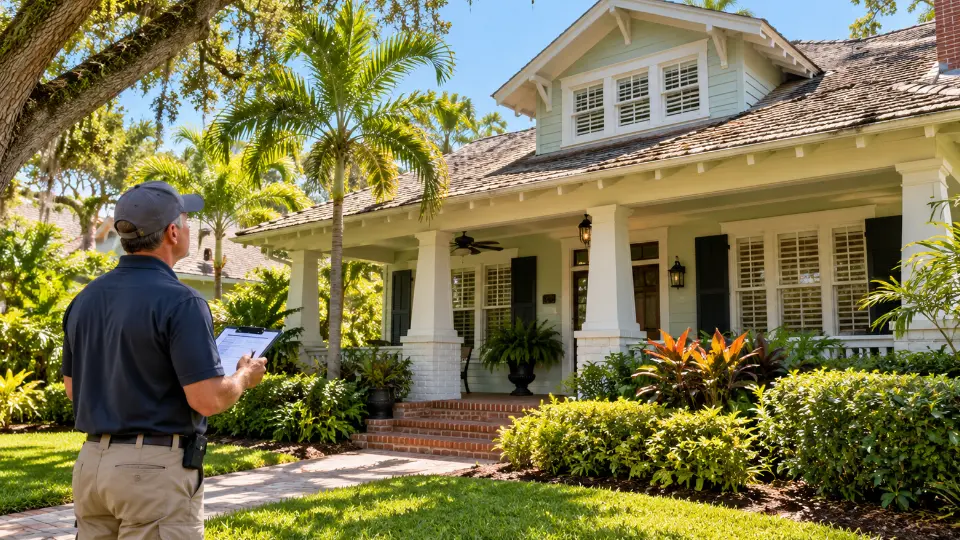
When buying an older home in Florida, look beyond architectural character and cosmetic updates. The most important questions often involve the roof, electrical system, plumbing, HVAC equipment, moisture history, termites, windows and doors, storm protection, permits, insurance eligibility, and flood exposure. Older does not automatically mean problematic, and a well-maintained home may have undergone substantial improvements. The key is determining what is original, what has been replaced, whether major work was properly documented, and how the property's present condition could affect insurance, financing, repairs, maintenance, and your total cost of ownership.
Quick Answers About Buying an Older Home in Florida
Are older homes harder to insure in Florida?
They can require additional insurance investigation, but age alone does not tell you whether a home is insurable. Florida insurers may evaluate the home's age and condition along with the roof, plumbing, electrical wiring, HVAC equipment, location, construction, and other underwriting factors. Obtain property-specific insurance quotes early rather than assuming coverage or cost based solely on the year built.
Will I need a 4-point inspection?
Possibly. An insurer may require a 4-point inspection when evaluating an older Florida home. It focuses on the roof, electrical system, plumbing, and HVAC system, but requirements vary by insurance company and property.
Is a 4-point inspection the same as a home inspection?
No. A 4-point inspection is limited to four major systems and is commonly used for insurance underwriting. A comprehensive buyer's home inspection evaluates a much broader range of visible property conditions. Buyers should not substitute one for the other.
What are the biggest concerns with an older Florida home?
Potentially expensive issues include roof condition, outdated or modified electrical components, aging plumbing, HVAC condition, water intrusion, termite damage, structural concerns, older windows and doors, drainage problems, and undocumented renovations. Which issues matter most depends on the individual property.
Should I check permits on an older home?
Yes, when records are available, permit research can help establish when major work was performed. Roof replacements, additions, electrical work, plumbing changes, HVAC installations, pools, window replacements, and other improvements may have associated permits. Questions about whether particular work required permits or complies with current requirements should be directed to the applicable local permitting authority and qualified professionals.
Should I have an older Florida home checked for termites?
Termite and other wood-destroying-organism due diligence can be particularly important in Florida. The Florida Department of Agriculture and Consumer Services recommends licensed pest-control professionals for termite inspection and treatment. Ask about previous treatment, warranties, damage, and available documentation.
Is an older Florida home necessarily a bad investment?
No. Age by itself does not determine condition, suitability, future costs, or value. Some older homes have been carefully maintained and substantially updated, while newer properties can also have defects. Evaluate the individual home, its documented improvements, inspection findings, ownership costs, location, and suitability for your needs.
Start With the Roof
For an older Florida home, the roof deserves early attention because its age, type, condition, installation history, and remaining useful life can affect both future maintenance and insurance underwriting.
Ask the seller for available documentation and investigate:
- When the roof was installed
- Roof covering material
- Available permits
- Invoices or warranties
- Previous leaks or repairs
- Storm-related damage and repairs
- Current visible condition
- Estimated remaining useful life when relevant to insurance
An older roof does not automatically make a home uninsurable. Florida's Department of Financial Services explains that an insurance company cannot refuse to issue or renew a homeowners policy solely because a roof is less than 15 years old. For a roof 15 years old or older, state law provides an opportunity for an authorized inspection before an insurer requires replacement, and an insurer may not refuse solely because of roof age when that inspection indicates at least five years of useful life.
That does not guarantee a particular property will qualify for coverage. Roof underwriting and overall insurance eligibility remain property-specific. Have roof condition evaluated by an appropriate inspector or roofing professional, and discuss the insurance implications with a qualified insurance agent before making a purchasing decision.
Understand Florida's 4-Point Inspection
Buyers of older Florida homes frequently encounter the term "4-point inspection." Hunt Brothers Realty's Florida 4-point inspection guide explains how this insurance-related inspection fits into the homebuying process.
A 4-point inspection focuses on:
- Roofing
- Electrical system
- Plumbing system
- HVAC system
Florida does not have one universal age at which every home automatically requires a 4-point inspection for every insurer. Requirements are established through insurance underwriting and can differ among carriers and properties.
Contact an insurance professional early and ask whether the specific home requires a 4-point inspection, which form the proposed insurer accepts, how recent the report must be, and whether additional documentation will be needed.
Do Not Substitute a 4-Point Inspection for a Full Home Inspection
A 4-point inspection has a narrow purpose. A comprehensive home inspection evaluates a much broader range of visible conditions and systems.
Florida Realtors notes that a home inspection may include areas such as the foundation, plumbing, electrical system, HVAC, and roof, while buyers should pay particular attention to potentially expensive items including the roof, windows, HVAC equipment, water heater, foundation, termite damage, and water damage.
A general inspection can also identify conditions that warrant specialized evaluation. For example, an inspector might recommend further review by an electrician, plumber, roofing contractor, structural engineer, HVAC professional, pest-control professional, or another specialist.
Inspection findings should be evaluated with the appropriate licensed inspector, contractor, engineer, or other qualified professional before the buyer makes a decision based on a technical property issue.
Look Closely at the Electrical System
Electrical systems deserve careful evaluation in an older home because components may have been installed, repaired, expanded, or partially updated at different times.
Questions to investigate include:
- What type of wiring is present?
- What electrical panels are installed?
- Has the electrical service been upgraded?
- Are there visible modifications or additions?
- Are permits available for major electrical work?
- Are appropriate GFCI and other protections present where required?
- Does the system adequately support the home's current equipment and intended use?
Florida's Department of Financial Services notes that insurers may consider electrical wiring and may use inspections to identify wiring or electrical panels they believe increase fire risk.
Do not diagnose electrical systems during a showing or rely solely on statements that a home has been "updated." Material electrical concerns should be evaluated by a qualified electrician, while insurance eligibility questions belong with the proposed insurance carrier or qualified agent.
Find Out What Plumbing Is Actually in the House
A renovated bathroom does not necessarily mean an older home's entire plumbing system has been replaced. Improvements may have occurred in stages, leaving a combination of original and newer components.
Ask about:
- Water-supply piping materials
- Drain and waste piping where accessible
- Previous repiping
- Whether updates were partial or comprehensive
- Past leaks
- Water heater age and condition
- Visible corrosion or deterioration
- Water pressure or drainage concerns
- Available permits, invoices, and warranties
If plumbing condition could materially affect your purchase, have it evaluated by a qualified plumber rather than assuming that visible renovations establish the condition of concealed piping.
Check the HVAC System and Moisture Management
Air conditioning is particularly important in Florida because it affects both comfort and indoor moisture management. An older home may have newer HVAC equipment, original ductwork, multiple additions, or equipment installed at different times.
Investigate the approximate age and condition of the equipment, maintenance history, visible ductwork, drainage, condensate lines, and whether additions or enclosed spaces are properly served by the system.
If system performance or remaining service life is important to the purchase, a qualified HVAC professional can provide a more focused evaluation than a general home or 4-point inspection.
Investigate Moisture and Previous Water Intrusion
Moisture deserves attention in any Florida property, particularly an older home that has experienced decades of heavy rain, tropical weather, plumbing repairs, roof maintenance, and humidity.
During due diligence, investigate conditions such as:
- Past roof leaks
- Plumbing leaks
- Window and door leakage
- Visible staining
- Unusual musty odors
- Soft or damaged building materials
- Drainage around the house
- Previous flooding
- Storm-related water intrusion
- Documentation of previous repairs
New paint or flooring should not be treated as evidence that an underlying moisture issue has been resolved. When an inspection raises a material moisture, mold, structural, or water-intrusion concern, have the condition evaluated by the appropriate qualified professional.
Pay Attention to Termites and Wood-Destroying Organisms
Florida's climate is highly favorable to termites. The Florida Department of Agriculture and Consumer Services identifies several types found in Florida, including drywood, dampwood, subterranean, and conehead termites.
Ask whether the property has a history of termite activity, previous treatment, repairs, or an existing pest-control warranty. Look for available documentation rather than relying only on a verbal statement that a house was treated years ago.
FDACS recommends using a licensed pest-control company for termite inspection and treatment. A qualified professional can determine whether observable evidence warrants additional investigation and explain treatment options when necessary.
Ask What Was Renovated, Not Just Whether the Home Was Renovated
The word "renovated" can describe anything from new paint and countertops to a comprehensive replacement of major building systems. Buyers should determine exactly what changed.
For major improvements, ask:
- What work was completed?
- When was it completed?
- Who performed the work?
- Were permits required?
- Are permits available?
- Are invoices or contracts available?
- Are warranties transferable?
- Was the entire system replaced or only part of it?
This is especially useful when a house has been expanded or reconfigured. An older Florida property may have enclosed porches, converted garages, additions, pools, accessory structures, or other changes completed over many years.
Permit requirements and the legal status of improvements are property-specific. Verify important questions with the applicable local permitting authority, qualified contractor, title professional, surveyor, or Florida real estate attorney as appropriate.
Review Windows, Doors, and Wind-Mitigation Features
Older Florida homes can vary substantially in storm-related improvements. Some retain older windows and doors, while others have impact-rated openings, shutters, roof upgrades, garage-door improvements, or other documented wind-mitigation features.
Ask whether a current wind mitigation report is available and whether supporting documentation exists for relevant improvements.
Florida's Department of Financial Services explains that a qualified wind mitigation inspection can document features that may qualify a property for insurance premium credits. The existence of a feature does not guarantee a particular discount, so review the report and proposed premium with the insurance professional quoting the property.
Research Insurance Before the End of Your Due-Diligence Period
Do not wait until immediately before closing to discover whether an older home presents an insurance issue.
Florida's Department of Financial Services explains that insurers may review factors such as the home's construction, year built, roof age and construction, location, wind-mitigation features, and prior insurance history. Insurers may also request documentation showing updates to plumbing, wiring, or HVAC systems.
Once you are seriously evaluating an older property, ask a qualified insurance professional:
- What information is needed to quote the home?
- Is a 4-point inspection required?
- Is a wind mitigation report useful or required?
- Does the roof documentation satisfy underwriting requirements?
- Do any electrical or plumbing conditions require further review?
- Are additional inspections required?
- What deductibles apply?
- What coverage is being quoted?
- Is separate flood coverage relevant?
Insurance availability, underwriting requirements, coverage, deductibles, exclusions, and premiums can vary substantially by property and carrier. Buyers should obtain property-specific quotes and review coverage with a qualified insurance professional before making a purchasing decision that depends on those costs.
Investigate Flood Exposure Even if the Home Is Not Waterfront
Flood due diligence should not be limited to houses directly on a canal, bay, river, or the Gulf. Heavy rainfall, drainage, elevation, nearby water, and mapped flood hazards can all be relevant to an individual property.
For older homes near Florida's Gulf Coast, Hunt Brothers Realty's coastal homebuyer due-diligence guide recommends investigating the current flood zone, elevation, known flooding, storm damage, drainage, insurance, and available documentation.
If the property is in a flood-prone or coastal location, ask whether an elevation certificate is available and investigate known flood or storm history. Flood maps describe mapped hazards, but they do not guarantee that a property will or will not flood.
Flood risk, elevation, coverage, and insurance requirements should be evaluated using current property-specific information from FEMA, local floodplain authorities, a qualified insurance professional, surveyor, lender, or other appropriate professional.
Check the Foundation, Structure, and Signs of Movement
Cracks do not all mean the same thing. Some may be cosmetic, while others may warrant additional investigation. The buyer's role is not to diagnose the cause during a showing.
Pay attention to observations such as significant cracking, uneven floors, doors or windows that do not operate normally, visible deterioration, moisture around structural components, or previous structural repairs. A home inspector can help identify conditions that deserve further review.
Questions about structural condition, movement, foundations, load-bearing modifications, or repair design should be evaluated by a licensed structural engineer or other appropriately qualified professional when necessary.
Find Out Whether the Home Uses Sewer, Septic, or a Well
Older Florida neighborhoods do not all have the same utility infrastructure. Depending on location, a home may use public water and sewer, a septic system, a private well, or some combination.
For septic properties, investigate the system's location, age, maintenance history, permits, and available inspection information. For wells, investigate the well and water system appropriate to the property's intended use. Also determine whether public utility connections or assessments affect the property.
Septic, well, water-quality, and utility questions should be reviewed with the applicable local authority and qualified inspectors or contractors before relying on the information for a purchase decision.
For Waterfront Older Homes, Inspect More Than the House
An older waterfront property may include major improvements outside the residence itself. Seawalls, docks, boat lifts, pilings, shoreline stabilization, electrical service at the dock, and drainage can materially affect future costs.
Investigate the age, condition, ownership responsibility, permits, previous repairs, and expected maintenance of these features. If boating is important, separately verify water depth, bridge clearance, channel access, and whether the existing dock and lift are suitable for the intended vessel.
Waterfront infrastructure and boating suitability should be evaluated with qualified marine contractors, inspectors, engineers, surveyors, permitting authorities, and other appropriate professionals rather than inferred from listing descriptions or photographs.
Estimate Repairs Before Deciding the Home Is a Bargain
A lower purchase price can become less attractive if an older property needs a roof, electrical work, plumbing updates, HVAC replacement, termite repairs, windows, drainage improvements, and cosmetic renovation soon after closing.
Separate potential work into three categories:
- Immediate repairs: Conditions requiring prompt correction.
- Near-term replacements: Major systems that remain functional but may be approaching replacement.
- Optional improvements: Changes driven primarily by personal preference.
If a repair estimate materially affects whether you will purchase the property, obtain estimates from appropriate licensed contractors or tradespeople rather than relying on a rough online number or informal assumption.
Older Does Not Automatically Mean Worse
Construction date should be treated as the beginning of your research, not the conclusion.
An older home may have a newer roof, updated plumbing and electrical systems, impact windows, modern HVAC equipment, extensive documented renovations, and years of careful maintenance. Another home of the same age may retain substantially more original components.
That is why buyers should avoid broad conclusions such as "1970s homes are bad" or "a renovated house has nothing left to worry about." Evaluate the actual property and its documentation.
Older Florida Home Buyer Checklist
- Verify the roof's age, condition, permits, and available documentation.
- Ask an insurance professional whether a 4-point inspection is required.
- Obtain a comprehensive buyer's home inspection.
- Review electrical wiring, panels, and documented upgrades.
- Identify plumbing materials and the extent of previous repiping.
- Review HVAC age, condition, and maintenance history.
- Investigate water intrusion and moisture concerns.
- Consider termite and wood-destroying-organism inspection.
- Research permits for major renovations and additions.
- Review windows, doors, shutters, and documented wind-mitigation features.
- Obtain property-specific homeowners insurance quotes.
- Investigate flood exposure and flood insurance when relevant.
- Review structural concerns with qualified professionals when needed.
- Determine whether the property uses sewer, septic, public water, or a well.
- Inspect seawalls, docks, and lifts when applicable.
- Estimate material repairs using qualified contractors.
- Review seller disclosures and available repair documentation.
- Investigate open permits or unresolved work when applicable.
- Calculate realistic insurance, maintenance, repair, and ownership costs.
Should You Buy an Older Home in Florida?
An older Florida home can be a strong choice when the property fits your needs and you understand its current condition, insurance picture, maintenance requirements, and future costs. Age alone should neither eliminate a house nor reassure you about it.
The most useful question is not simply, "How old is this house?" Ask what remains original, what has been replaced, what has been professionally evaluated, what documentation exists, and what material expenses may be approaching.
When those answers are combined with appropriate inspections, insurance research, permit review, and professional evaluations, buyers can compare an older property based on its actual condition rather than assumptions about its construction date.
Buying an Older Florida Home With Hunt Brothers Realty
Older homes can require more questions before closing, particularly when renovations, insurance, storm history, permits, coastal conditions, or aging building systems are involved. Hunt Brothers Realty can help buyers keep the real estate portions of that due-diligence process organized and identify property questions that deserve further investigation.
If you are considering an established home in Sarasota, Manatee County, Charlotte County, or elsewhere along Florida's Gulf Coast, contact Hunt Brothers Realty to discuss your home search and the property-specific questions that matter before making an offer.
This article is provided for general informational and educational purposes only. It is not individualized legal, financial, tax, insurance, lending, inspection, engineering, construction, title, permitting, or other professional advice. Property condition, insurance eligibility, flood exposure, permit history, repair requirements, financing, and ownership costs vary by property and buyer. Material findings should be verified with the appropriate licensed home inspector, insurance professional, mortgage lender, Florida real estate attorney, structural engineer, contractor or qualified tradesperson, pest-control professional, surveyor, title or closing professional, tax professional, local permitting authority, or other qualified professional before making a purchasing decision.
Sources
- Florida Department of Financial Services, Homeowners Insurance Overview
- Florida Office of the Insurance Consumer Advocate, Home Inspections and Insurance Resources
- Florida Department of Financial Services, Property Insurance Changes and Roof Age
- Florida Department of Agriculture and Consumer Services, Termites
- Florida Realtors, What Buyers Should Know About Home Inspections
- Florida Realtors, 15 Essential Questions for Smart House Hunting
- Hunt Brothers Realty, 4-Point Inspections in Florida: What Homebuyers Need to Know
- Hunt Brothers Realty, Questions to Ask Before Buying a Home Near the Coast
Hunt Brothers Realty
46 N. Washington Blvd, Ste 3, Sarasota, FL 34236
Phone: (941) 388-7017
Email: info@huntbrothersrealty.com
Website: HuntBrothersRealty.com
Categories
- All Blogs 2232
- Anna Maria Island 86
- Bird Key 4
- Bradenton 237
- Buying a Home 1284
- Casey Key 2
- Clearwater 11
- Condos & HOA Living 1203
- Ellenton 6
- Englewood 12
- First Time Homebuyers 1395
- Foreclosures 5
- Home Selling 7
- Homeownership 1421
- Lakewood Ranch 25
- Lido Key 28
- Longboat Key 80
- Luxury/Waterfront Properties 1362
- Market Updates & Trends 880
- Mortgages & Financing 64
- Move-Up Buyers 25
- Neighborhood Guides 997
- New Construction 37
- Palmetto 3
- Parrish 6
- Port Charlotte 11
- Punta Gorda 57
- Real Estate Investing 1278
- Relocation to Florida 1316
- Safety Harbor 3
- Sarasota 93
- Sarasota - Downtown 165
- Selling a Home 146
- Siesta Key 92
- St. Petersburg 8
- Tierra Verde 5
- Vacation & Second Homes 1472
- Venice 209
- Wellen Park 20
Recent Posts