4-Point Inspections in Florida: What Homebuyers Need to Know
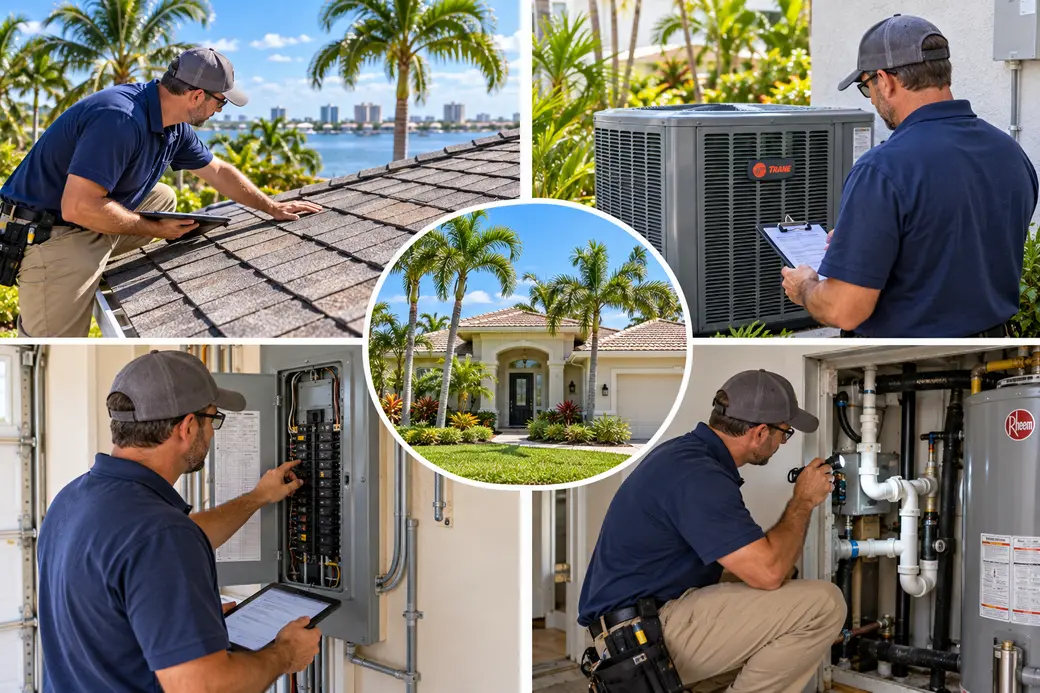
A 4-point inspection in Florida is primarily an insurance underwriting tool that examines four major areas of a home: the roof, electrical system, plumbing system and heating and air conditioning system. Buyers commonly encounter the requirement when trying to insure an older home, although requirements vary by insurance company and property. A 4-point inspection is not the same as a comprehensive home inspection, and passing one should not be interpreted as proof that the entire house is free of defects. If you are buying a home in Florida, it is wise to investigate insurance requirements early enough for inspection findings to become part of your purchasing decision.
Quick Answers About 4-Point Inspections in Florida
What does a Florida 4-point inspection cover?
A 4-point inspection focuses on the roof, electrical system, plumbing system and heating and air conditioning system. Florida's Department of Financial Services identifies these as the four primary areas insurers may request to have inspected when evaluating an older home.
Is a 4-point inspection required to buy a home in Florida?
There is not one universal 4-point inspection requirement that applies to every Florida home purchase. The requirement commonly comes from an insurance company's underwriting rules. Because a mortgage lender generally requires appropriate property insurance, an insurer's inspection requirement can become an important part of a financed purchase.
How old does a Florida home have to be before it needs a 4-point inspection?
There is no single age threshold used by every Florida insurance company. Florida DFS says an insurer may require a 4-point inspection when insuring an older home. Citizens Property Insurance Corporation currently requires one for applicable new applications involving properties more than 20 years old, but that is a Citizens underwriting requirement and should not be assumed to be the rule for every insurer.
Is a 4-point inspection the same as a regular home inspection?
No. A 4-point inspection has a narrow insurance-related purpose and focuses on four systems. A comprehensive buyer's home inspection can examine a much broader range of accessible components and conditions. Buyers should not use a 4-point inspection as a substitute for an appropriate home inspection.
Is a 4-point inspection the same as a wind mitigation inspection?
No. A 4-point inspection helps an insurer evaluate the roof, electrical, plumbing and HVAC systems for underwriting purposes. A wind mitigation inspection documents qualifying wind-resistant features and may support available windstorm premium credits. A Florida buyer may encounter both inspections on the same property.
Can a home fail a 4-point inspection?
It is more useful to think of the inspection as documenting conditions for the insurance company's underwriting review rather than as a simple universal pass-or-fail test. An insurer may find particular conditions unacceptable, request additional information or repairs, limit available coverage or decline to insure the property according to its underwriting guidelines.
Who should a buyer ask about 4-point requirements?
Ask the insurance professional who is quoting coverage for the specific property. Confirm whether a 4-point inspection is required, which form is acceptable, who may perform it, how recent the report must be and whether the insurer has concerns about particular systems or components.
Why Do Florida Insurance Companies Ask for 4-Point Inspections?
Homeowners insurance companies use underwriting guidelines to determine which properties they are willing to insure and on what terms. An older home may have systems that have been replaced, partially updated, repaired or altered over many years, so the construction date alone does not tell an insurer what is currently installed.
Florida DFS explains that insurers may consider factors including the age of the home and the age or condition of its roof, plumbing, electrical wiring and heating and air conditioning systems. An insurer may also ask for documentation showing updates to plumbing, wiring or HVAC equipment.
The 4-point report gives the insurer property-specific information that can be evaluated during underwriting.
What Does the Roof Portion of a 4-Point Inspection Look For?
The roof is one of the most important parts of Florida insurance underwriting. Florida DFS specifically notes that a 4-point inspection may examine the roof to determine its life expectancy.
Depending on the inspection form and insurer, the report may document information such as:
- Roof covering type
- Approximate age
- General condition
- Visible damage or deterioration
- Evidence of leaks when observable
- Estimated remaining useful life when required
- Photographs of the roof
Do not assume that a roof is acceptable to an insurer simply because it is not currently leaking. The insurance company ultimately determines whether the roof information satisfies its underwriting requirements.
Does an older roof automatically make a home uninsurable?
Not necessarily. Roof underwriting is property-specific and insurer-specific. The roof's material, age, condition, remaining useful life, documentation and the insurer's current guidelines can all matter. Buyers should obtain actual insurance quotes rather than assuming coverage will or will not be available based on roof age alone.
What Does the Electrical Portion Examine?
The electrical section provides information about the home's electrical system and observable conditions relevant to underwriting. Florida DFS notes that an insurer may use inspection information to identify wiring or electrical panel boxes it believes increase fire risk.
A 4-point report may document:
- Electrical service information
- Main panel and other applicable panels
- Wiring type
- Visible deficiencies
- Evidence of certain modifications or repairs
- Photographs required by the insurer's form
If an inspection identifies an electrical concern, buyers should have it evaluated by the appropriate qualified professional. A licensed electrician can address electrical condition and repair questions, while the insurance company or agent can explain whether the documented condition affects coverage eligibility.
What Does the Plumbing Portion Examine?
The plumbing portion helps document the type and condition of accessible plumbing components for insurance underwriting.
Depending on the property and inspection form, information may include:
- Supply piping materials
- Drain or waste piping information
- Water heater information
- Visible leaks or deficiencies
- Observable conditions beneath sinks and around plumbing fixtures
- Evidence of updates when identifiable
Plumbing deserves particular attention because an older home may have undergone renovations at different times. A remodeled kitchen or bathroom does not necessarily establish that the entire plumbing system was replaced.
What if the seller says the plumbing was updated?
Ask what was updated and whether documentation is available. An insurer may request evidence supporting plumbing, wiring or HVAC updates. Buyers should avoid treating a general statement such as "updated plumbing" as proof that every relevant component was replaced or will satisfy an insurer's underwriting requirements.
What Does the HVAC Portion Examine?
The fourth point is the home's heating and air conditioning system. In Florida, air conditioning is an important part of both comfort and moisture management, but the 4-point inspection remains an underwriting inspection rather than a complete HVAC performance evaluation.
The report may identify equipment type, approximate age, general condition and observable deficiencies. Citizens' current inspection requirements, for example, include documentation of HVAC or other heating equipment as part of its four-point process.
If the system's performance, condition or expected service life could materially affect the purchase, buyers should have those issues evaluated by a qualified HVAC professional rather than relying solely on the 4-point report.
A 4-Point Inspection Is Not a Full Home Inspection
This is one of the most important distinctions for Florida homebuyers.
A 4-point inspection is narrow. Its purpose is to provide information concerning four major systems, commonly for insurance underwriting. A comprehensive home inspection serves a broader buyer due-diligence purpose.
Depending on the property and inspection scope, a buyer's home inspection may evaluate additional accessible components involving the structure, exterior, interior, appliances, attic, windows, doors and other systems or conditions that are outside the limited four-point format.
A property can provide an insurance company with an acceptable 4-point report and still have defects, deferred maintenance or future expenses that matter to a buyer.
A 4-Point Inspection Is Also Different from a Wind Mitigation Inspection
Florida buyers often hear "4-point" and "wind mitigation" during the same insurance conversation, but they serve different purposes.
4-point inspection: Documents the roof, electrical, plumbing and HVAC systems for insurance underwriting.
Wind mitigation inspection: Documents qualifying wind-resistant construction and mitigation features. Florida DFS explains that policyholders may elect to obtain this inspection to determine what wind mitigation credits they may be entitled to receive on the windstorm portion of their homeowners premium.
The same inspection appointment may sometimes include both services, but the resulting reports and purposes are different. Ask the insurance professional which reports are needed for the property and which forms the proposed insurer will accept.
When Does a Florida Home Need a 4-Point Inspection?
There is no statewide rule saying every home automatically needs a 4-point inspection when it reaches one specific age. Insurance companies establish underwriting requirements, and those requirements can vary.
Florida DFS tells consumers that when insuring an older home, an insurer may require an inspection of the roof, plumbing, electrical wiring and heating and air systems.
Citizens provides a useful example of why buyers should verify the specific carrier's rules. As of 2026, Citizens requires a four-point inspection for applicable property owner, dwelling and mobile home applications involving properties more than 20 years old. Citizens' rule should not be generalized to every private insurance company in Florida.
Why should buyers ask about the requirement early?
Because an insurance issue discovered shortly before closing can create unnecessary pressure. If the insurer requires repairs, additional documentation or a different inspection, the buyer needs time to understand the issue and determine the available options.
Who Can Perform a 4-Point Inspection?
The answer depends partly on what the insurance company will accept. Buyers should confirm the insurer's requirements before ordering the inspection.
For example, Citizens requires its 4-point form to be completed and signed by a verifiable Florida-licensed professional. Its current guidance identifies examples including licensed home inspectors, general, residential or building contractors and building code inspectors, with certain other Florida-licensed professionals also acceptable under its requirements.
Do not assume that an inspection acceptable to one insurance company will automatically satisfy another. Confirm the professional qualifications and required form with the insurance agent or carrier first.
How Recent Does the 4-Point Inspection Need to Be?
This is another insurer-specific question. Buyers should not assume an older report supplied by a seller will automatically be acceptable for a new insurance application.
Citizens' current guidance states that, subject to specified exceptions, a 4-point report for a new-business application must generally be dated within the 12 months before the application is submitted. Another insurer may have different documentation requirements.
If the seller provides an existing report, send it to the insurance professional and ask whether the proposed carrier will accept it before relying on it.
What Happens If the Inspection Identifies a Problem?
An inspection finding does not have one automatic outcome. What happens next depends on the condition, insurance company, policy sought and transaction.
Possible next steps can include:
- Providing additional documentation
- Obtaining a specialized inspection
- Having a qualified professional evaluate the condition
- Completing repairs when appropriate
- Providing proof that a system was previously replaced or updated
- Obtaining quotes from other insurers
- Reevaluating the purchase if insurance availability or repair costs materially change the buyer's decision
Florida DFS warns that if an insurer requests a 4-point or specialized inspection and it is not provided, the company may refuse certain coverage or refuse to insure the property. The insurer ultimately makes its underwriting decision.
Can the Seller Just Fix Whatever the 4-Point Inspection Finds?
Sometimes a buyer and seller may agree to address an inspection issue, but the existence of a finding does not automatically obligate a seller to make a particular repair. Rights and obligations depend on the purchase contract and the facts of the transaction.
If work is completed, buyers should also determine what documentation the insurance company requires to confirm that the condition has been corrected. A receipt alone may not always answer the insurer's underwriting questions.
Questions about repair obligations, inspection rights or contractual remedies should be reviewed with the appropriate real estate professional and, when legal interpretation is required, a qualified Florida real estate attorney. Technical findings should be evaluated by the appropriate licensed inspector, contractor, electrician, plumber, HVAC professional, roofer or engineer.
Why Insurance Should Be Investigated During the Homebuying Process
A buyer can love a house and still discover that the insurance picture changes the ownership budget or requires additional work.
This is particularly important with older Florida homes because two properties of similar size and price can have very different roofs, electrical systems, plumbing histories, mitigation features and insurance options.
Hunt Brothers Realty's Florida home showing guide explains why buyers should notice major systems and visible property conditions during a showing without trying to perform the job of a licensed inspector.
What should you ask before making an offer on an older Florida home?
- How old is the roof?
- Is documentation available for the roof installation?
- Have the electrical system or panels been updated?
- What plumbing materials are present?
- Were plumbing updates partial or comprehensive?
- How old is the HVAC equipment?
- Are permits or invoices available for major improvements?
- Does an insurance professional expect a 4-point inspection?
- Is a recent 4-point report already available?
- Is a wind mitigation report available?
Seller information can help identify questions, but buyers should verify material conditions independently through the appropriate inspections, records and qualified professionals.
Older Sarasota Homes Can Require More Upfront Investigation
Sarasota offers housing from many different construction periods. Buyers considering established neighborhoods, including areas West of the Trail in Sarasota, may encounter homes that have been renovated or expanded over decades.
That history is not inherently negative. An older property may have substantial updates. The challenge is determining what was changed, when it was changed, what remains original and how those conditions affect inspections, insurance and the buyer's future maintenance plans.
This is one reason documentation matters. Roof permits, invoices, electrical updates, plumbing records, HVAC replacement information and inspection reports can help the buyer and insurance professional understand the property more accurately.
Coastal Homes May Have Additional Insurance Questions
A 4-point inspection does not answer every insurance question associated with a Sarasota coastal property. Buyers considering Siesta Key, Lido Key, Longboat Key or other coastal locations may also need to investigate flood information, wind mitigation features and property-specific insurance options.
Hunt Brothers Realty's questions to ask before buying a home near the coast provides a broader due-diligence framework for coastal buyers.
Insurance availability, coverage, deductibles and premiums can vary substantially by property. Buyers should obtain property-specific insurance quotes and review coverage with a qualified insurance professional before making a purchasing decision.
What If You Are Buying a Florida Condo?
Do not assume the insurance and inspection process for a condominium unit will be identical to purchasing a detached single-family home. The association may insure certain portions of the condominium property while the unit owner obtains separate coverage for applicable unit-level exposures.
Citizens, for example, states that its four-point inspection requirement is not applicable to condominium risks. Other insurers and policy situations can have their own requirements, so buyers should verify what applies to the specific unit and proposed insurance policy.
Condo buyers may also have separate due-diligence issues involving association insurance, reserves, assessments, applicable structural inspections and association documents. Those issues should be reviewed independently of any unit insurance inspection requirement.
Do Not Wait Until the Day Before Closing to Obtain Insurance
One of the most practical lessons for Florida buyers is to start the insurance conversation early.
Once you are seriously evaluating a property, ask a qualified insurance professional what information will be needed to quote and bind appropriate coverage. For an older home, that conversation may identify a need for a 4-point inspection, wind mitigation report, roof documentation or other property information.
Early investigation gives the buyer more time to evaluate the results, obtain additional professional opinions when needed and understand the property-specific premium before important contract deadlines or closing.
4-Point Inspection Checklist for Florida Homebuyers
- Contact an insurance professional early in the purchase process.
- Ask whether the specific property requires a 4-point inspection.
- Confirm which inspection form the proposed insurer accepts.
- Confirm who is qualified to perform and sign the inspection.
- Ask how recent the inspection report must be.
- Determine whether a seller-provided report is acceptable.
- Review the roof information carefully.
- Review electrical findings and panel information.
- Review plumbing materials and visible deficiencies.
- Review HVAC age and observable condition.
- Ask whether documentation of previous updates is needed.
- Have material deficiencies evaluated by the appropriate qualified tradesperson or professional.
- Obtain property-specific insurance quotes.
- Do not substitute the 4-point inspection for a comprehensive buyer's home inspection.
- Ask whether a wind mitigation inspection would also be useful.
- For coastal properties, investigate flood insurance and other property-specific coverage considerations separately.
- Address insurance questions before applicable purchase-contract deadlines whenever possible.
What Should Buyers Remember About 4-Point Inspections?
The most important point is that a Florida 4-point inspection is primarily about insurance underwriting, not determining whether you should buy the home.
It gives the insurance company information about four important areas of an older property: roof, electrical, plumbing and HVAC. That information can affect whether an insurer is willing to provide coverage and whether additional documentation or work is required.
For the buyer, the report is also a signal to ask better questions. If the roof has limited remaining useful life, the electrical system raises concerns or the plumbing shows deficiencies, investigate what those findings mean for insurance, repair costs and ownership before making a final decision.
Use the 4-point inspection for its intended purpose, combine it with appropriate buyer due diligence and let the qualified professionals in each field evaluate issues within their expertise.
Plan Your Florida Home Purchase with Hunt Brothers Realty
Buying a Florida home can involve more property-specific due diligence than buyers expect, particularly when insurance, inspections, older building systems or coastal conditions are involved. Hunt Brothers Realty can help coordinate the real estate portions of the purchase and keep important property questions visible as you move through the transaction. Review Hunt Brothers Realty's Florida buyer resources, explore Sarasota and Florida Gulf Coast communities, or contact Hunt Brothers Realty to discuss your home search.
Informational notice: This article provides general educational real estate information and is not individualized insurance, inspection, engineering, construction, legal, financial, lending or other professional advice. Insurance underwriting requirements, inspection forms, eligibility standards, premiums and coverage vary by insurer and property and can change. Buyers should verify current property-specific insurance requirements with a qualified insurance professional and have inspection findings evaluated by the appropriate Florida-licensed inspector, contractor, electrician, plumber, HVAC professional, roofer, engineer or other qualified specialist. Questions involving purchase-contract rights or legal obligations should be reviewed with a qualified Florida real estate attorney when individualized legal guidance is required.
Sources
- Florida Department of Financial Services, Homeowners Insurance Overview
- Florida Department of Financial Services, Homeowners Insurance and Four-Point Inspection Resources
- Florida Department of Financial Services, Purchasing Insurance
- Citizens Property Insurance Corporation, Property Inspection Requirements
- Citizens Property Insurance Corporation, Acceptable Age of a Four-Point Inspection Report
- Citizens Property Insurance Corporation, Who Can Complete a Four-Point Inspection Form?
- Hunt Brothers Realty, What to Look for During a Florida Home Showing
- Hunt Brothers Realty, Questions to Ask Before Buying a Home Near the Coast
- Hunt Brothers Realty, Living West of the Trail in Sarasota
Contact Hunt Brothers Realty
Hunt Brothers Realty
46 N. Washington Blvd, Ste 3
Sarasota, FL 34236
Phone: (941) 388-7017
Email: info@huntbrothersrealty.com
Website: HuntBrothersRealty.com
Categories
- All Blogs 1467
- Anna Maria Island 68
- Bird Key 3
- Bradenton 72
- Buying a Home 618
- Casey Key 2
- Clearwater 5
- Condos & HOA Living 524
- Ellenton 4
- Englewood 5
- First Time Homebuyers 692
- Foreclosures 3
- Homeownership 670
- Lakewood Ranch 15
- Lido Key 24
- Longboat Key 65
- Luxury/Waterfront Properties 607
- Market Updates & Trends 300
- Mortgages & Financing 30
- Move-Up Buyers 20
- Neighborhood Guides 449
- New Construction 24
- Palmetto 2
- Parrish 4
- Port Charlotte 7
- Punta Gorda 11
- Real Estate Investing 541
- Relocation to Florida 591
- Safety Harbor 2
- Sarasota - Downtown 126
- Selling a Home 136
- Siesta Key 87
- St. Petersburg 3
- Tierra Verde 4
- Vacation & Second Homes 725
- Venice 21
- Wellen Park 7
Recent Posts