Concrete Block or Wood Frame? What Florida Home Buyers Should Know
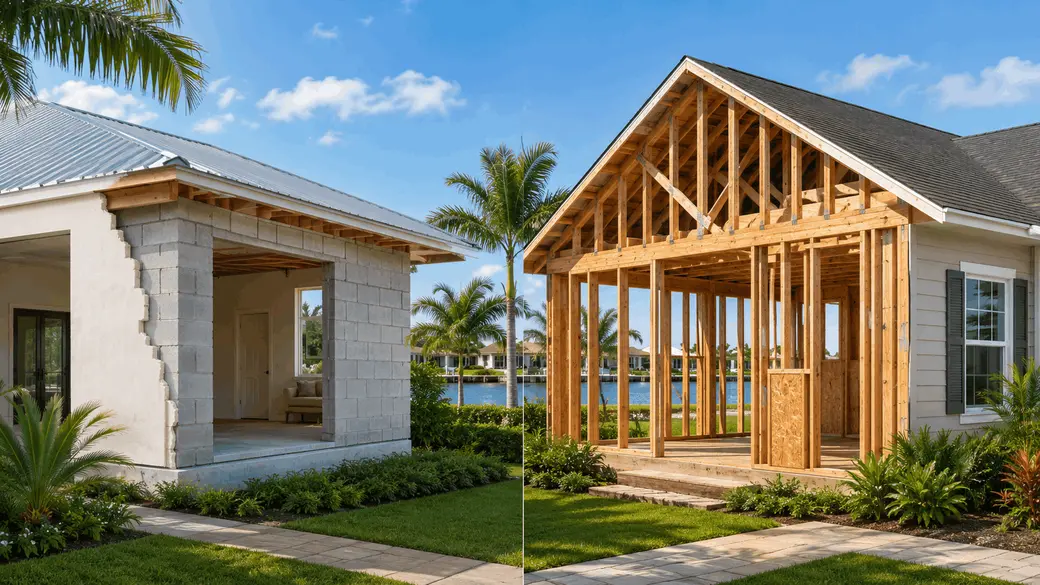
If you're buying a home in Florida, one of the first questions you should ask is: Is the home built with concrete block or wood frame construction? The answer can affect durability, insurance costs, maintenance, energy efficiency, and even resale value.
While both construction methods are common throughout Florida, each has advantages depending on the home's location, age, and intended use.
What Is Concrete Block Construction?
Concrete block construction, also called Concrete Masonry Unit (CMU) construction, uses hollow concrete blocks to build the exterior walls. According to the <a href="https://www.floridabuilding.org/">Florida Building Code</a>, concrete block is widely used throughout the state because of its strength and durability in Florida's climate.
Concrete block homes are especially common in:
- Lakewood Ranch
- Venice
- Bradenton
- North Port
- Coastal communities throughout Sarasota and Southwest Florida
What Is Wood Frame Construction?
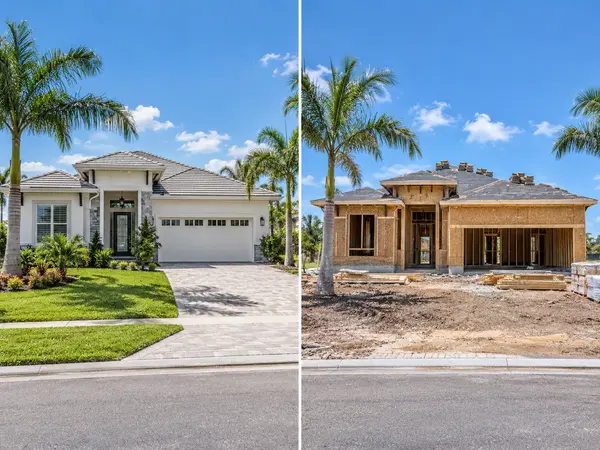
Wood frame homes use structural lumber to support the walls and roof. The exterior is then covered with materials such as stucco, fiber cement siding, brick veneer, or vinyl siding.
Wood frame construction is common in:
- Newer master-planned communities
- Two-story homes
- Some custom luxury homes
- Older Florida neighborhoods
Advances in engineering and building codes have made modern wood frame homes much stronger than many buyers expect.
Is Concrete Block Stronger Than Wood Frame?
In many situations, yes. Concrete block construction generally offers greater resistance to:
- Strong winds
- Moisture
- Rot
- Termites
- Fire
The quality of construction, age of the home, and ongoing maintenance are often just as important as the building material itself.
Which Type Performs Better During Hurricanes?
Both construction types can perform well when built to current Florida codes.
Concrete block homes typically provide:
- Greater wall strength
- Better resistance to flying debris
- Increased durability during severe weather
Wood frame homes rely on engineered connectors, hurricane straps, reinforced roof systems, and modern fastening methods that significantly improve storm resistance.
Regardless of construction type, buyers should evaluate:
- Roof age
- Roof attachment
- Impact-rated windows
- Hurricane shutters
- Garage door reinforcement
These features often have a greater impact on storm performance than wall construction alone.
Which Home Is More Energy Efficient?
Energy efficiency depends on several factors, including:
- Insulation
- Windows
- HVAC system
- Roof materials
- Air sealing
Concrete block naturally provides thermal mass, which can help regulate indoor temperatures.
Wood framing allows for thicker wall insulation in many cases, making it highly energy efficient when properly constructed.
The <a href="https://www.energy.gov/energysaver">U.S. Department of Energy</a> notes that insulation quality and proper air sealing usually have a larger impact on energy performance than the structural material itself.
Do Insurance Costs Differ?
Insurance premiums may vary based on several factors, including:
- Construction type
- Roof age
- Roof shape
- Wind mitigation features
- Home age
- Location
- Flood risk
Concrete block homes may qualify for certain insurance advantages depending on the property and insurer. However, there is no universal rule that block homes always cost less to insure.
A licensed insurance agent can provide the most accurate estimate for any specific property.
Which Construction Requires Less Maintenance?
Concrete block homes generally require less structural maintenance because they are resistant to:
- Rot
- Mold inside wall framing
- Termite damage
- Moisture intrusion into structural components
Wood frame homes require regular inspections for:
- Moisture
- Pest activity
- Exterior siding condition
- Caulking and sealing
Proper maintenance is important regardless of construction type.
Explore Homes Built to Fit Your Needs
Choosing between a concrete block and wood frame home isn't about finding a universally better option. It's about understanding how each construction type fits your priorities and the specific property you're considering.
If you're buying a home in Sarasota, Lakewood Ranch, Venice, Longboat Key, or anywhere along Florida's Gulf Coast, working with a knowledgeable local real estate professional can help you evaluate the full picture beyond the home's construction.
Hunt Brothers Realty
46 N Washington Blvd, Ste #3
Sarasota, Florida 34236
Phone: (941) 388-7017
Email: info@huntbrothersrealty.com
Categories
- All Blogs 1526
- Anna Maria Island 68
- Bird Key 3
- Bradenton 102
- Buying a Home 669
- Casey Key 2
- Clearwater 5
- Condos & HOA Living 575
- Ellenton 4
- Englewood 5
- First Time Homebuyers 748
- Foreclosures 3
- Homeownership 729
- Lakewood Ranch 15
- Lido Key 24
- Longboat Key 65
- Luxury/Waterfront Properties 666
- Market Updates & Trends 334
- Mortgages & Financing 33
- Move-Up Buyers 20
- Neighborhood Guides 486
- New Construction 26
- Palmetto 2
- Parrish 4
- Port Charlotte 7
- Punta Gorda 11
- Real Estate Investing 600
- Relocation to Florida 650
- Safety Harbor 2
- Sarasota - Downtown 133
- Selling a Home 136
- Siesta Key 87
- St. Petersburg 3
- Tierra Verde 4
- Vacation & Second Homes 782
- Venice 21
- Wellen Park 7
Recent Posts