Cul-de-Sac vs. Main Road: Which Location Is Better for Resale?
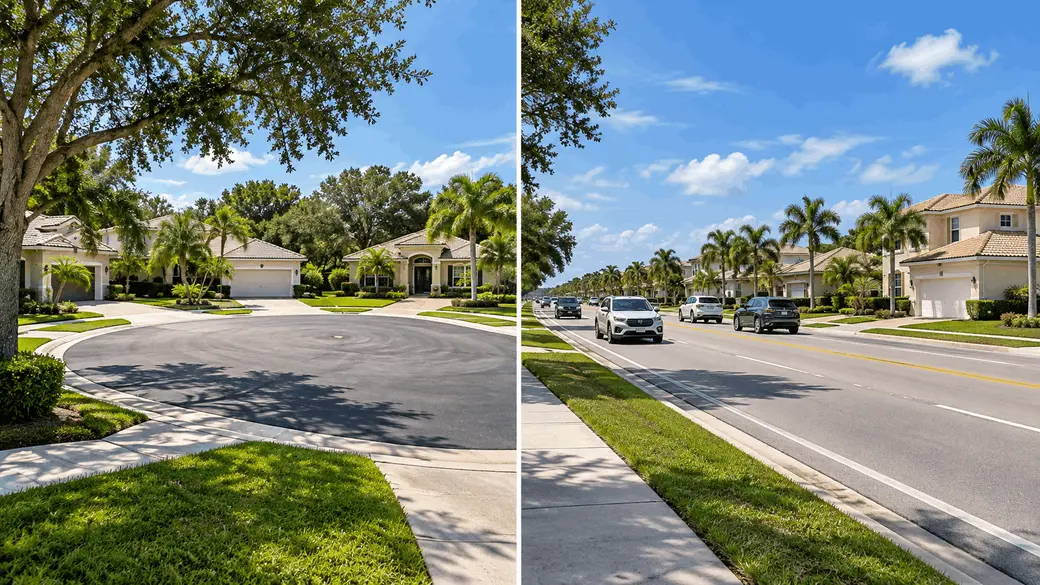
For resale, a cul-de-sac location can appeal to buyers who prefer less through traffic, while a home on a main road may offer convenient access but can face more buyer resistance if traffic, noise or driveway access are concerns. That does not mean every cul-de-sac home is worth more or every main-road home sells for less. Lot shape, street design, traffic intensity, home condition, neighborhood, view and comparable sales all matter. The best way to evaluate either location is to compare it with recent sales of homes facing similar road conditions in the same competitive market.
Quick Answers About Cul-de-Sac vs. Main Road Resale
Is a cul-de-sac usually better for resale?
A cul-de-sac can have broader appeal among buyers who prefer limited through traffic, but there is no universal resale premium. The specific lot, neighborhood and local buyer response determine whether the location produces a measurable value difference.
Does being on a main road lower a home's value?
It can affect marketability when buyers react negatively to traffic, road noise, headlights, driveway access or reduced separation from passing vehicles. The effect is not a fixed percentage and can range from minimal to meaningful depending on the road and local market.
Do appraisers consider whether a home is on a busy road?
Yes, when the location affects marketability or value. Fannie Mae appraisal guidance states that if a property fronts a street that is not typical for the community, the appraiser must address the effect of the location on value and marketability.
How much more is a cul-de-sac home worth?
There is no reliable nationwide percentage. A cul-de-sac premium, if one exists, should be demonstrated through recent comparable sales in the property's own market. Applying an arbitrary percentage can produce a misleading valuation.
Can a main-road home still be a good resale property?
Yes. A well-maintained home with an attractive lot, appropriate pricing and convenient access can still compete effectively. The important question is whether the purchase price already reflects the road exposure and how similar homes have performed when resold.
Is every cul-de-sac a low-traffic location?
Not necessarily. Traffic can still be influenced by the number of homes, nearby amenities, parking patterns and the road feeding the cul-de-sac. Buyers should visit the property at different times rather than relying on the street layout alone.
What matters most when comparing the two locations?
Look at actual traffic, noise, driveway access, lot shape, outdoor space, neighboring uses and recent comparable sales. A property-specific comparison is more useful than assuming one street type always wins.
Why Does Street Location Matter to Home Value?
Real estate value is influenced by both the house and its location. Buyers can renovate a kitchen, replace flooring or remodel a bathroom, but they cannot move the lot away from the road after closing.
Fannie Mae's appraisal guidance specifically identifies street patterns, including cul-de-sacs, as neighborhood characteristics. Its guidance also requires consideration of factors affecting a property's marketability and recognizes that an atypical street location can require specific analysis.
This is why two nearly identical houses in the same subdivision can sell differently. One might sit near the end of a lightly traveled residential street while another fronts a busier road. If buyers consistently react differently to those locations, the market can reflect that preference in price, marketing time or both.
What Are the Resale Advantages of a Cul-de-Sac?
The principal distinction of a true cul-de-sac is that it does not function as a through street. Vehicles generally enter because their destination is on that street, they are making a delivery or they need to turn around.
For buyers who prioritize limited passing traffic, that street pattern can be attractive. Less through traffic may also mean fewer passing headlights and a different outdoor environment than a house directly facing a heavily traveled road.
Some cul-de-sac lots can also have distinctive dimensions. Depending on where the property sits around the turnaround, the lot might widen toward the rear or offer a larger backyard than certain interior lots. That is not universal, so buyers should review the actual survey and lot dimensions rather than assuming every cul-de-sac property has extra land.
What Are the Potential Drawbacks of a Cul-de-Sac?
Cul-de-sac living has tradeoffs. Lots around the turnaround can have narrow street frontage or unusual shapes. Driveways may be positioned close together, and guest parking can become more complicated when several properties share limited curb space.
A house near the entrance to the cul-de-sac can also experience more vehicle movement than a property at the far end. Meanwhile, a property at the very end might have a larger backyard but an unusually shaped front lot or driveway configuration.
The term “cul-de-sac” therefore should not be treated as a valuation feature by itself. Buyers should evaluate the specific property's position within it.
What Are the Advantages of Buying on a Main Road?
A main-road location is not automatically undesirable. Depending on the community, it can provide straightforward access to shopping, employment corridors, community entrances and major transportation routes.
The purchase price can also matter. If buyers in the local market consistently discount a particular road location, purchasing the property at an appropriately adjusted price can be very different from paying the same amount as a comparable home on a more preferred interior street.
A home can also be technically located on a larger road without experiencing the conditions buyers associate with a heavily traveled arterial. Traffic volume, speed, road width, setbacks, landscaping and the location of the living and outdoor areas can substantially change the experience.
What Are the Resale Challenges of a Main-Road Home?
Traffic and noise are two of the most obvious considerations. Florida Department of Transportation guidance recognizes residences as noise-sensitive land uses when evaluating highway traffic noise. A residential property near significant traffic can therefore have an environmental characteristic that deserves investigation rather than being dismissed as merely cosmetic.
Buyers may also consider how easily they can enter and leave the driveway. Backing onto a high-volume road can feel different from exiting onto a quiet neighborhood street. A circular driveway, deeper setback or another driveway configuration may change that experience, but the specific property needs to be evaluated.
Other potential concerns include passing headlights, visibility from the road and the effect of traffic on outdoor living areas. These factors can narrow the buyer pool when purchasers have otherwise comparable interior-street alternatives available.
How Much Does a Busy Road Reduce Home Value?
There is no responsible universal percentage. A fixed statement such as “a busy road reduces value by 10%” ignores the actual market, road type, neighborhood and property.
Fannie Mae requires an appraiser to address the effect on value and marketability when a property's street frontage is not typical of the community. The appropriate adjustment therefore needs market support rather than an arbitrary rule.
One of the best forms of evidence is a set of comparable sales that exposes how buyers have reacted to similar locations. If homes along the same busy road repeatedly sell below otherwise similar interior homes, that can provide evidence of a market reaction. If little difference exists, the data may indicate that buyers in that particular market are less sensitive to the road.
How Should You Compare Similar Homes?
The cleanest comparison is not simply “cul-de-sac sale versus main-road sale.” The homes should be similar enough that the road location can be separated from other important differences.
Useful factors to compare include:
- Neighborhood or subdivision.
- Home size and floor plan.
- Lot size and shape.
- Construction age.
- Overall condition and renovations.
- Roof and major system ages.
- Garage configuration.
- Pool and outdoor living features.
- Water, golf, preserve or other views.
- Road exposure and traffic characteristics.
- Recent sale date and prevailing market conditions.
Fannie Mae's consumer appraisal guidance similarly identifies location, views, condition, property characteristics, recent comparable sales and market trends among factors that can affect appraised value.
Why Does the Exact Main Road Matter?
“Main road” can describe very different conditions. A neighborhood collector road carrying local residents is not necessarily comparable to a multilane arterial carrying substantial through traffic.
Before evaluating resale, consider the road's:
- Traffic volume.
- Typical vehicle speeds.
- Number of lanes.
- Truck or commercial traffic.
- Intersection proximity.
- Traffic signals or stop signs.
- Driveway access.
- Distance between the home and roadway.
- Landscaping, walls or other buffers.
- Location of bedrooms and outdoor living spaces relative to traffic.
The road's actual characteristics matter more than the label used in a listing.
Does a Cul-de-Sac Always Mean a Better Lot?
No. Cul-de-sac lots can be excellent, ordinary or awkward depending on their geometry. A pie-shaped lot may widen substantially toward the rear, but it may also have reduced frontage or place neighboring homes at unusual angles.
For a Florida buyer planning a pool, outdoor kitchen, fence, addition or accessory improvement, usable space can matter more than the total lot square footage. Easements, setbacks, drainage areas and association restrictions may further affect what can actually be built.
Buyers considering future improvements should review the survey and verify applicable requirements with the homeowners association, local permitting authority, surveyor, contractor or other appropriate professional before relying on the lot for a planned project.
Can Landscaping Reduce the Resale Impact of a Busy Road?
Landscaping can improve visual separation and the appearance of an outdoor area, but sellers should be careful about assuming that plants eliminate road noise or erase a market reaction to traffic.
Walls, setbacks, building orientation, windows and other physical characteristics can also influence how traffic is experienced. Florida Department of Transportation guidance treats highway traffic noise as a technical issue and evaluates potential noise mitigation through defined engineering procedures.
If road noise is a material concern, buyers should experience the property personally at different times and obtain appropriate professional evaluation when technical noise or construction mitigation advice is needed.
What About a Home That Backs Up to a Main Road?
A home can have an interior residential address while its backyard borders a larger road. Buyers should not overlook this distinction simply because the front entrance is on a quiet street.
For many Florida homes, the backyard contains the lanai, pool and primary outdoor living area. Road exposure behind the home can therefore be especially noticeable during outdoor use even when the interior remains relatively quiet.
Comparable sales should ideally reflect similar exposure. Comparing a home backing directly onto a busy corridor with a similar house backing onto a lake, preserve or interior residence without accounting for location can produce a misleading conclusion.
What If the Main Road Is Planned to Change?
Current road conditions are not always permanent. Road widening, intersection improvements, new developments and transportation projects can change traffic patterns over time.
A buyer concerned about a nearby road should investigate adopted or proposed transportation projects through the applicable city, county and Florida Department of Transportation resources. Plans can change, so a proposed project should not be treated as certain until its status is verified with the responsible government authority.
Which Location Is Easier to Sell?
When everything else is genuinely similar, a lightly traveled interior or cul-de-sac location may appeal to buyers who would reject significant road exposure. That can give the quieter location a larger potential buyer pool in some markets.
But resale depends on price as well as preference. A main-road property priced appropriately for its location may compete better than an interior property priced substantially above market.
Condition can also outweigh street differences. Fannie Mae appraisal guidance requires consideration of property condition and market reaction to physical or external characteristics. A renovated and carefully maintained main-road home can present a different value proposition from a cul-de-sac home needing substantial repairs.
Should You Avoid a Main-Road Home?
Not automatically. Instead, determine whether the property's price reflects the location and whether you personally find the road conditions acceptable.
A useful question is: if you notice the road enough to hesitate today, how many future buyers might have the same reaction when you eventually sell?
That does not provide a dollar adjustment, but it encourages buyers to think about resale before becoming emotionally committed to the house itself.
Should You Pay More for a Cul-de-Sac?
Only when the market and the property's characteristics support the difference. A seller may advertise a cul-de-sac as a premium feature, but marketing language does not establish market value.
Look at recent sales of comparable homes on cul-de-sacs, interior streets and larger roads. Then consider whether differences in sale prices are actually attributable to location or instead reflect pools, renovations, views, lot sizes, condition or other features.
When an appraisal is required, the licensed appraiser provides an independent opinion of market value using the relevant property and market evidence.
What Should Florida Buyers Check Before Choosing Either Location?
- Visit the property during morning and evening traffic periods.
- Spend time inside the home with doors and windows closed.
- Spend time on the lanai, patio and pool area when applicable.
- Observe vehicle speeds and traffic volume.
- Test the driveway entrance and exit under normal traffic conditions.
- Consider headlights and nighttime road activity.
- Review the survey, lot shape, easements and setbacks.
- Check nearby land uses and major intersections.
- Investigate planned road or development projects.
- Compare recent sales with similar road exposure.
- Review current active competition that future buyers may also consider.
- Evaluate whether the purchase price appropriately reflects the location.
What Should Sellers Know About Marketing a Main-Road Home?
Sellers cannot change the street, so pricing and presentation become especially important. Trying to price a main-road home exactly like a superior interior location without evidence can create resistance if buyers see quieter alternatives at the same price.
At the same time, sellers should not automatically assume a major discount is necessary. Recent local sales should demonstrate whether buyers have actually paid less for similar road exposure and, if so, approximately how the market reacted.
Marketing can appropriately emphasize legitimate strengths such as convenient access, updated windows, a deep setback, mature landscaping, attractive outdoor space or a well-designed driveway, provided those statements accurately describe the property.
What Should Sellers Know About Marketing a Cul-de-Sac Home?
A cul-de-sac can be highlighted as a physical street characteristic, but sellers should avoid unsupported promises about value or future appreciation. The listing can accurately describe limited through traffic when that is factually true.
If the lot provides additional benefits, such as a wider rear yard, larger outdoor area or distinctive view, those characteristics may be more meaningful to a buyer than the cul-de-sac label itself.
Cul-de-Sac vs. Main Road: Which One Wins?
If resale is the primary concern, a cul-de-sac or lightly traveled interior street can have an advantage when local buyers demonstrate a preference for less traffic and the property otherwise compares favorably with competing homes. But there is no automatic premium and no universal rule.
A main-road home can still be a sound residential purchase when the location works for the buyer, the property's strengths compensate for the road exposure and the purchase price reflects current market evidence.
The better resale location is ultimately the one the local market prefers at the price being paid. Instead of applying a generic cul-de-sac premium or busy-road discount, examine comparable sales and evaluate the exact street, lot and home.
Compare Florida Homes With Hunt Brothers Realty
Location differences can be easy to overlook when buyers focus on kitchens, pools and square footage. Hunt Brothers Realty can help buyers compare current listings, recent comparable sales and property-specific location characteristics before making an offer. Explore Florida Gulf Coast communities, compare available properties with the Hunt Brothers Realty map search, browse Hunt Brothers Realty, or contact Hunt Brothers Realty to discuss a specific property or home search.
This article is provided for general informational and educational purposes only and is not individualized financial, investment, appraisal, legal, inspection, engineering, construction or other professional advice. No street type or property location is guaranteed to produce stronger resale value or future appreciation. Buyers and sellers should evaluate current comparable sales and property-specific market conditions with a licensed real estate professional. When an independent valuation is required, rely on an appropriately licensed or certified appraiser. Questions involving road projects, access, easements, surveys, construction, noise mitigation or other specialized matters should be verified with the appropriate government authority or qualified professional before making a purchasing or property-improvement decision.
Sources
- Fannie Mae, Neighborhood Section of the Appraisal Report
- Fannie Mae, Site Section of the Appraisal Report
- Fannie Mae, Understanding Home Appraisals
- Fannie Mae, Improvements Section of the Appraisal Report
- Florida Department of Transportation, Highway Traffic Noise
Hunt Brothers Realty
46 N. Washington Blvd, Ste 3, Sarasota, FL 34236
Phone: (941) 388-7017
Email: info@huntbrothersrealty.com
Website: HuntBrothersRealty.com
Categories
- All Blogs 1426
- Anna Maria Island 66
- Bird Key 3
- Bradenton 53
- Buying a Home 580
- Casey Key 2
- Clearwater 5
- Condos & HOA Living 489
- Ellenton 4
- Englewood 5
- First Time Homebuyers 653
- Foreclosures 3
- Homeownership 629
- Lakewood Ranch 15
- Lido Key 24
- Longboat Key 65
- Luxury/Waterfront Properties 568
- Market Updates & Trends 283
- Mortgages & Financing 29
- Move-Up Buyers 20
- Neighborhood Guides 425
- New Construction 22
- Palmetto 2
- Parrish 4
- Port Charlotte 7
- Punta Gorda 11
- Real Estate Investing 501
- Relocation to Florida 551
- Safety Harbor 2
- Sarasota - Downtown 112
- Selling a Home 134
- Siesta Key 87
- St. Petersburg 3
- Tierra Verde 4
- Vacation & Second Homes 684
- Venice 20
- Wellen Park 7
Recent Posts