
What to Know About Condo Parking, Storage, and Guest Policies
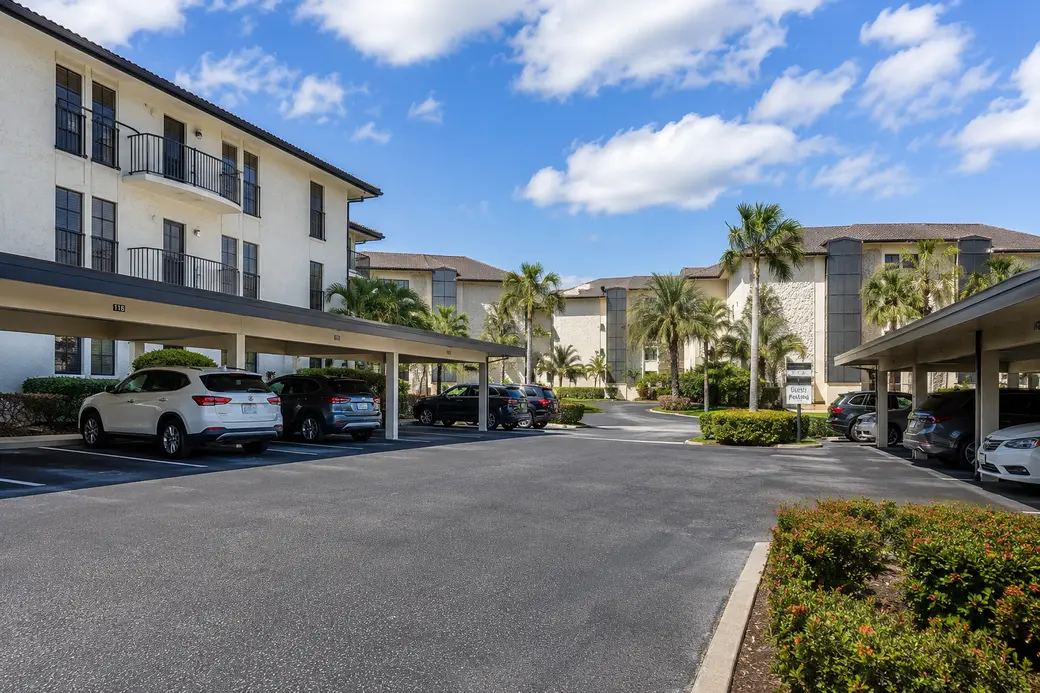
When buyers compare condominiums in Sarasota and throughout Southwest Florida, attention naturally goes to the residence itself, the view, amenities, monthly fees and location. But several less glamorous details can have a surprisingly large effect on everyday ownership: Where will you park? Where will you keep bicycles, beach equipment or seasonal belongings? Where can overnight guests leave their cars?
The answers vary considerably from one condominium to another. A residence might have a deeded garage, an assigned carport, an exclusive-use parking space or access to an unassigned parking area. Storage may be attached to the residence, located elsewhere in the building or subject to separate association procedures. Guest parking can range from plentiful to extremely limited.
For buyers exploring Sarasota and Southwest Florida condominium communities, these practical details deserve investigation before a purchase, not after moving day.
Quick Answers About Condo Parking, Storage, and Guest Rules
Does buying a condo automatically include a parking space?
Not necessarily. Parking arrangements vary by condominium. A parking space might be part of the unit, an exclusive-use or limited common element, an assigned association space or part of a general parking area. Buyers should verify exactly what parking rights accompany the specific residence and how those rights are documented.
Can a condo parking space be reassigned?
Possibly, but the answer depends on how the parking right is legally structured and what the condominium declaration permits. Florida law recognizes that declarations may provide exclusive rights to use portions of common elements and may establish procedures governing transfers of those rights. Buyers should not assume a space can be sold, exchanged or reassigned without reviewing the applicable documents.
Do condos usually have guest parking?
Many do, but the quantity and rules vary substantially. Some communities have clearly marked guest spaces, while others rely on unassigned parking or have only a small number of visitor spaces. Registration, permits, overnight restrictions or time limits may apply.
Is storage always included with a condo?
No. Some residences include private storage rooms or lockers, while others provide shared bicycle or recreational storage. Some have little additional storage beyond the residence itself. Buyers should verify the location, dimensions, legal status and permitted use of any storage represented as accompanying the condo.
Can condo associations regulate guests?
Condominium documents and reasonable association rules can establish procedures affecting guests and their use of association property. Depending on the community, this can involve parking registration, access procedures, amenity use and other requirements. Buyers should review the current governing documents and rules for the specific condominium.
Why Parking Deserves More Attention Than Buyers Often Give It
A parking space can look like a minor feature during a showing. Once you live in the condominium, however, its location and rules become part of your daily routine.
Consider two otherwise similar residences. One includes covered parking near the elevator, while another has an uncovered space farther from the building. That difference can become much more noticeable when carrying groceries during a summer thunderstorm or returning home during the hottest part of the afternoon.
Parking can be particularly important for buyers with two vehicles, larger vehicles, frequent visitors, mobility considerations or an electric vehicle. The practical question is not simply whether the community has parking. It is whether the parking arrangement works for the way the buyer expects to use the property.
What Does “Assigned Parking” Actually Mean?
The phrase “assigned parking” can describe different arrangements. That is why buyers should look beyond the listing description and determine the legal and practical nature of the space.
Florida condominium law provides that certain exclusive rights to use portions of the common elements may pass with a unit when those rights are established by the condominium declaration. The declaration can also govern whether and how certain limited common-element use rights may be transferred.
As a result, buyers may encounter several different parking structures:
- Parking included within the legal unit: The space or garage may legally form part of the condominium unit.
- Limited common element parking: A portion of the common elements may be reserved for the exclusive use of a particular residence.
- Assigned parking: The association may assign a particular space for an owner's use under the governing documents or association procedures.
- Unassigned parking: Owners may use available spaces without having one specific space reserved for them.
- Separate garage or parking interest: In some developments, parking rights can have a separate legal or contractual structure that should be investigated independently.
The terminology used in marketing does not determine the legal nature of the parking right. Buyers should verify the declaration, applicable amendments, survey or condominium exhibits, title information and association records when parking is important to the purchase.
Should Buyers Physically Inspect the Parking Space?
Yes. If a particular parking space is represented as accompanying the residence, buyers should locate it during their property evaluation rather than simply noting a space number on paper.
Look at how easily a vehicle can enter and exit the space. Columns, walls, adjacent vehicles and tight turning areas can make some garage spaces more challenging than others. Buyers with SUVs, pickup trucks or other larger vehicles should pay particular attention to width, length and garage clearance.
Also consider the walking route from the space to the residence. Is it covered? Is it near an elevator? Are stairs involved? These practical details can matter much more in everyday ownership than they appear to during a short showing.
What Should a Two-Car Household Verify?
A condominium advertised with one assigned parking space does not necessarily provide a permanent place for a second vehicle. This is one of the most important parking questions for couples and households that routinely keep multiple vehicles.
Ask whether residents can park a second vehicle in an unassigned area, whether additional spaces can be leased, whether there is a waiting list and whether guest spaces may ever be used for an owner's additional vehicle.
If reliable parking for two cars is essential, buyers should obtain confirmation of the applicable arrangement before purchasing rather than assuming an informal solution will continue after closing.
What Vehicle Restrictions Should Condo Buyers Check?
Condominium parking rules can address more than the number of cars. Depending on the governing documents and applicable law, a community may have requirements involving where vehicles can be parked, registration procedures and characteristics of vehicles permitted in particular parking areas.
Buyers may want to investigate rules concerning:
- Pickup trucks
- Commercial or work vehicles
- Oversized SUVs and trucks
- Motorcycles and scooters
- Recreational vehicles
- Trailers
- Boats or personal watercraft on trailers
- Vehicle covers
- Long-term vehicle storage
- Inoperable or unregistered vehicles
The fact that a particular vehicle is present during a showing does not establish that it complies with current rules. Buyers should review the applicable condominium documents and current written parking policies for the community.
What Should Electric Vehicle Owners Know?
Electric vehicle charging deserves separate attention because the existence of a parking space does not necessarily mean an owner can simply install a charger without following required procedures.
Florida condominium law contains specific provisions concerning an owner's ability to install an electric vehicle charging station within the boundaries of a limited common element or exclusively designated parking area. The law also establishes conditions involving installation, electricity metering, costs and other requirements.
An EV owner should verify the electrical capacity, physical installation route, association application procedures, permitting requirements, insurance considerations and responsibility for installation and future maintenance. A qualified electrician or contractor and the condominium association should evaluate property-specific installation questions before a buyer assumes a charger can be installed in a particular location.
Why Is Guest Parking Important?
Guest parking may receive almost no attention when a buyer tours an empty condominium on a weekday afternoon. The issue becomes more noticeable when family visits for a holiday, friends arrive for dinner or overnight guests stay during Southwest Florida's busy winter season.
Communities differ in both the amount of guest parking and how it is managed. A large development may have designated visitor areas throughout the property. A smaller coastal condominium built on a constrained site may have only a handful of spaces.
Buyers who frequently entertain should treat guest parking as an amenity worth evaluating, particularly in communities where public street parking is limited or unavailable.
What Guest Parking Rules Should Buyers Ask About?
A condominium may have guest spaces while still placing meaningful conditions on their use. Questions worth asking include:
- Are guest vehicles required to register?
- Does the owner need to notify a gatehouse or management office?
- Are physical or digital parking permits required?
- Is overnight guest parking permitted?
- Are there limits on consecutive nights?
- Can an owner use guest parking for a second vehicle?
- Are there different rules for tenants and their guests?
- Are oversized vehicles restricted?
- What happens when all visitor spaces are occupied?
- What enforcement or towing procedures apply?
The practical availability of guest parking can also vary by season and time of day. When visitor parking is important, buyers may benefit from observing the parking area during a busier evening or weekend rather than relying only on a midday showing.
How Do Guest Policies Go Beyond Parking?
Guest policies may also affect access to other association property. Depending on the community's governing documents and rules, guests may encounter procedures for entry, pool access, fitness facilities, recreational amenities, beach facilities or other common areas.
Florida condominium law also distinguishes certain use rights when a unit is leased. Under current law, when a unit is leased, the tenant generally receives use rights in association property and common elements otherwise readily available to unit owners, while the owner generally does not retain simultaneous use rights except as a guest unless the tenant waives those rights in writing. Associations may adopt rules addressing dual usage.
Owners planning to rent their condominium while also visiting the community should therefore review the current association rules carefully rather than assuming ownership automatically provides unrestricted simultaneous use of amenities.
Why Storage Can Be So Valuable in a Florida Condo
Storage can be particularly useful in condominiums because residents often have belongings associated with Florida's outdoor lifestyle. Beach chairs, umbrellas, golf equipment, bicycles, fishing equipment, luggage and seasonal decorations all require space.
For second-home owners, additional storage may be even more valuable. A secure storage area can allow owners to leave personal items in Florida rather than transporting them each time they travel between residences.
But the word “storage” in a listing can describe anything from a sizable private room to a small cage or locker. Buyers should see the actual space before assigning significant value to it.
What Should Buyers Verify About a Condo Storage Unit?
If a listing represents that additional storage accompanies the residence, buyers should identify exactly what that means.
- Location: Is the storage inside the residence, on the same floor, in the garage or in another building?
- Size: What are the actual dimensions?
- Legal status: Is the storage part of the unit, an exclusive-use area, a limited common element or association-controlled space?
- Assignment: Is a specific locker or room permanently associated with the residence?
- Access: What hours and security procedures apply?
- Permitted contents: What items may or may not be stored there?
- Environmental conditions: Is the area climate-controlled or exposed to heat and humidity?
- Insurance: What, if any, association coverage applies to stored personal property?
- Maintenance: Who is responsible for maintaining the space?
Florida law allows condominium declarations to allocate certain maintenance responsibilities involving limited common elements. Buyers should therefore review the declaration rather than assuming that the association is responsible for every storage or parking area outside the walls of the residence.
What Items May Be Prohibited in Condo Storage Areas?
Association rules, building requirements and fire-safety considerations can limit what owners place in storage areas. Buyers should not assume that a storage locker can be used for any household item simply because it is assigned to the residence.
If a buyer plans to store fuel, batteries, equipment, large recreational items or other potentially restricted materials, current rules should be reviewed first. Questions involving fire or building safety should be verified with the association and, when appropriate, the relevant fire-safety, building or other qualified authority.
What About Bicycle, Kayak, and Beach Equipment Storage?
Many Southwest Florida buyers expect to keep more than household belongings at their condominium. Bicycles, kayaks, paddleboards and beach equipment can require specialized storage, particularly in coastal communities where residents may not be permitted to leave these items on balconies, lanais, walkways or other common areas.
Some condominium communities provide dedicated bicycle rooms, kayak racks or recreational storage. Others have waiting lists, annual charges or limited availability. The presence of a kayak launch, for example, does not necessarily mean every owner is guaranteed a kayak storage space.
Buyers should verify availability, fees, dimensions and rules for the particular equipment they intend to keep at the property.
Do Parking and Storage Rights Automatically Transfer With the Condo?
Buyers should not assume that every space being used by the seller automatically transfers in the same way as the condominium residence. The answer depends on the legal nature of the parking or storage right and the condominium documents.
Florida Statutes §718.106 provides that an exclusive right to use portions of the common elements may pass as an appurtenance to a unit when provided by the declaration. The same section recognizes that transfers of limited common-element use rights must follow the procedures established in the declaration.
When a particular garage, parking space or storage area materially affects the purchase, buyers should have the applicable documents and title information reviewed by the appropriate title professional or qualified Florida real estate attorney to confirm the rights transferring with the residence.
Can Parking and Guest Rules Change After You Buy?
Some association rules and procedures can change over time, subject to the condominium documents and applicable Florida law. This is another reason buyers should distinguish between a legal property right established in recorded documents and an operating rule or current association practice.
For example, the legal status of an exclusive-use parking space may be established by the declaration, while guest registration procedures may be addressed in association rules that can be updated through applicable association processes.
Questions about whether a particular rule can be changed, enforced or applied to an owner involve legal interpretation and should be reviewed with a qualified Florida real estate attorney when material to a purchasing decision.
What Documents Should Condo Buyers Review?
A listing and seller disclosure can provide useful information, but buyers should review the current condominium records that establish or regulate parking, storage and guest use.
Depending on the property and transaction, relevant materials can include:
- Declaration of condominium and amendments
- Articles of incorporation
- Bylaws
- Current rules and regulations
- Condominium exhibits or surveys identifying parking or storage areas
- Parking assignment records
- Storage assignment records
- Guest and vehicle registration procedures
- Current fee schedules for additional parking or storage
- EV charging procedures, when relevant
Florida's condominium framework places significant importance on the declaration and other governing documents. The Florida Department of Business and Professional Regulation also publishes condominium forms and educational materials for owners and buyers.
A Practical Parking and Storage Checklist for Condo Showings
When touring a condominium, buyers can gather useful practical information before formal document review begins. Consider checking the following:
- Locate the actual parking space represented with the residence.
- Determine whether the space is covered, uncovered or inside a garage.
- Check the walking distance and route to the residence.
- Look for columns, walls or tight turning areas.
- Ask where a second household vehicle would park.
- Identify guest parking and ask about overnight procedures.
- Inspect the actual storage area.
- Ask where bicycles, kayaks or beach equipment may be kept.
- If you drive an EV, investigate charging options.
- Compare what you observe with the written association documents.
This practical review does not replace legal, title or association-document verification, but it can help buyers identify questions that deserve closer attention before closing.
Frequently Asked Questions About Condo Parking and Storage
Can I park a second car in condo guest parking?
That depends on the community's current rules. Some associations reserve guest spaces exclusively for visitors and prohibit owners from using them as permanent second-vehicle parking. Buyers with multiple vehicles should verify the written policy.
Can I install an EV charger at my Florida condo?
Florida law contains specific protections and requirements concerning EV charging stations within an owner's limited common element or exclusively designated parking area. Installation remains subject to statutory conditions and property-specific requirements. Buyers should review the current law, condominium procedures, electrical feasibility and permitting requirements with the appropriate qualified professionals before planning an installation.
Can I keep a bicycle on my condo balcony?
The answer depends on the condominium's current rules and the legal status of the balcony or lanai. Some communities restrict what can be stored or displayed on balconies. Buyers should verify the written rules rather than assuming outdoor storage is permitted.
Does my condo association insure belongings in my storage locker?
Buyers should not assume that association insurance covers personal belongings stored outside the residence. Coverage depends on the applicable policies and circumstances. Owners should review property-specific coverage with a qualified insurance professional.
Can guests use condo amenities?
Guest access depends on the condominium's governing documents and current rules. Communities may establish procedures involving registration, owner accompaniment, access credentials or use of particular facilities.
Should parking and storage be confirmed before closing?
Yes, particularly when either feature materially affects the purchase. Buyers should verify what rights transfer with the residence and whether the actual spaces match what has been represented. Title or legal questions should be reviewed with an appropriate title professional or qualified Florida real estate attorney.
The Bottom Line for Florida Condo Buyers
Parking, storage and guest policies rarely generate the excitement of a Gulf view, renovated kitchen or resort-style pool. Yet they are among the condominium details owners interact with most frequently.
A buyer should know where household vehicles will park, what happens when guests arrive, where personal belongings can be stored and which written rules govern those arrangements. Just as importantly, buyers should distinguish between a legal right attached to the residence and an association practice that may be subject to different rules or procedures.
A little investigation before closing can help determine whether the condominium works not only on paper, but also for everyday life.
Explore Sarasota Condominiums With Hunt Brothers Realty
Every condominium community has its own combination of parking, storage, amenities and association rules. Comparing those details alongside location, views, fees and property condition can help buyers identify communities that better match how they expect to use their Florida residence.
Hunt Brothers Realty can help buyers explore Sarasota-area condominium options and evaluate property-specific real estate considerations. Browse Sarasota and Southwest Florida condominium or visit HuntBrothersRealty.com for current real estate resources.
Informational notice: This article provides general real estate and condominium information and is not individualized legal, financial, tax, insurance, lending, inspection, engineering, title, association or other professional advice. Parking and storage rights, guest policies, vehicle restrictions, EV charging requirements and association procedures vary by condominium and can change. Buyers should review current condominium and title documents and verify property-specific questions with the condominium association and the appropriate licensed real estate professional, Florida real estate attorney, title professional, insurance professional, contractor or other qualified professional before making decisions requiring individualized guidance.
Sources
- Florida Senate, 2026 Florida Statutes §718.106, Condominium Parcels, Appurtenances, Possession and Enjoyment
- Florida Senate, 2026 Florida Statutes §718.113, Maintenance, Limited Common Elements and EV Charging
- Florida Senate, 2026 Florida Statutes §718.115, Common Expenses and Common Surplus
- Florida Senate, Florida Statutes §718.111, Association Powers and Management of Common Elements
- Florida Department of Business and Professional Regulation, Condominium Forms and Educational Publications
- Hunt Brothers Realty, Sarasota and Southwest Florida Community Guides
- Hunt Brothers Realty, Sarasota Real Estate Resources
Hunt Brothers Realty
46 N Washington Blvd, Ste #3
Sarasota, Florida 34236
Phone: (941) 388-7017
Email: info@huntbrothersrealty.com
Website: HuntBrothersRealty.com
Categories
- All Blogs 1990
- Anna Maria Island 83
- Bird Key 4
- Bradenton 235
- Buying a Home 1054
- Casey Key 2
- Clearwater 10
- Condos & HOA Living 969
- Ellenton 5
- Englewood 9
- First Time Homebuyers 1162
- Foreclosures 3
- Home Selling 2
- Homeownership 1184
- Lakewood Ranch 21
- Lido Key 27
- Longboat Key 78
- Luxury/Waterfront Properties 1125
- Market Updates & Trends 653
- Mortgages & Financing 42
- Move-Up Buyers 21
- Neighborhood Guides 771
- New Construction 32
- Palmetto 3
- Parrish 6
- Port Charlotte 10
- Punta Gorda 16
- Real Estate Investing 1042
- Relocation to Florida 1086
- Safety Harbor 2
- Sarasota 74
- Sarasota - Downtown 158
- Selling a Home 144
- Siesta Key 89
- St. Petersburg 7
- Tierra Verde 5
- Vacation & Second Homes 1233
- Venice 121
- Wellen Park 12
Recent Posts