Inspection Red Flags in Florida: Roof Age, Cast Iron Pipes, and Electrical Panels
A Florida home can look beautiful during a showing and still have expensive issues hiding behind the walls, beneath the floors or overhead.
That is why the inspection period can be one of the most important stages of buying a home.
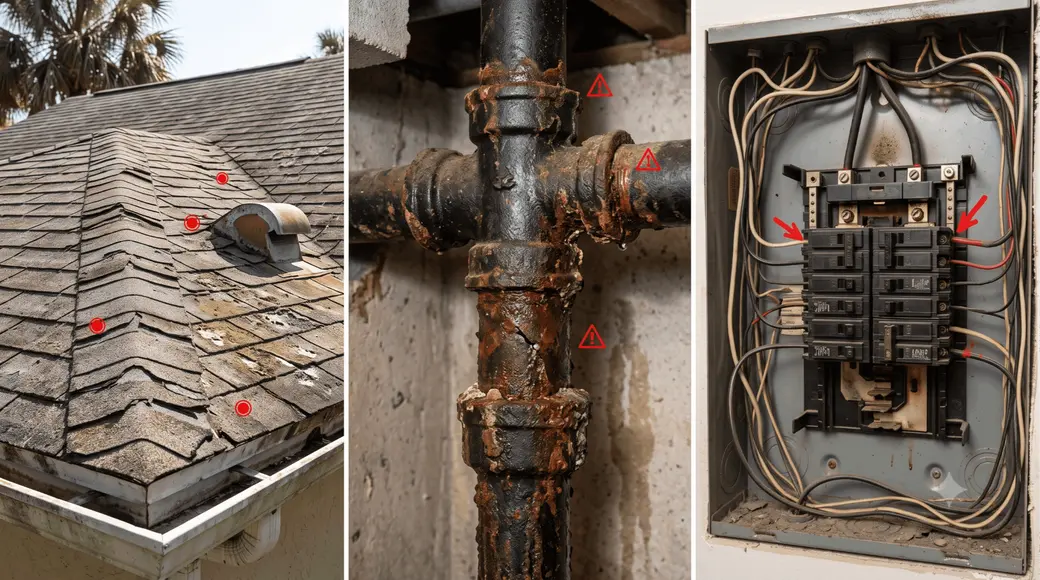
In Sarasota, Manatee County and throughout Florida, three items deserve particular attention when evaluating an older property: roof age, cast iron drain pipes and electrical panels.
These are not automatic reasons to walk away from a home. Plenty of older properties have been well maintained, updated correctly and remain excellent buying opportunities.
But these systems can affect more than future maintenance. Depending on their age and condition, they may influence repair budgets, negotiations and insurance underwriting.
For buyers exploring Sarasota and Manatee County real estate, understanding these issues before making an offer can prevent unpleasant surprises later.
Why Florida Home Inspections Require a Different Mindset
Every home requires maintenance, but Florida adds environmental and insurance considerations that can make certain components especially important.
Sun, heat, humidity, heavy rain and tropical weather can all affect a home's exterior systems. Meanwhile, Florida's insurance environment means that the condition of the roof, plumbing, electrical and HVAC systems may receive additional scrutiny when a buyer seeks coverage.
For that reason, buyers should think about inspections in two separate ways:
- What is the physical condition of the home?
- Could any of these conditions affect insurance availability or cost?
Those questions overlap, but they are not identical.
What Is a Four-Point Inspection in Florida?
Buyers of older Florida homes will frequently hear the term four-point inspection.
A four-point inspection is different from a comprehensive buyer's home inspection. It focuses on four major systems:
- Roof
- Electrical
- Plumbing
- Heating and cooling
Citizens Property Insurance Corporation currently requires a four-point inspection for certain new property insurance applications involving homes more than 20 years old. The inspection documents the age, type and condition of these major systems.
A buyer should not assume that passing a general home inspection automatically means a property will satisfy an insurer's underwriting requirements.
Red Flag #1: An Older Roof
Few inspection questions get a Florida buyer's attention faster than:
How old is the roof?
Roof age matters because buyers are evaluating several issues simultaneously: current condition, remaining useful life, potential replacement cost and possible insurance implications.
But age alone does not tell the entire story.
An Old Roof Is Not Automatically a Bad Roof
Roof material, installation quality, maintenance, storm exposure and current condition all matter.
Citizens' current guidelines illustrate why buyers should avoid simplistic rules. For Citizens underwriting, soft roofs such as shingles that are more than 25 years old and hard roofs such as tile, slate, clay, concrete or metal that are more than 50 years old require documentation showing at least five years of remaining useful life.
That is an underwriting guideline from one insurer, not a universal rule for every Florida insurance company.
What Should Buyers Look for During a Roof Inspection?
Potential warning signs can include:
- Missing or damaged roofing material
- Visible deterioration
- Evidence of active or previous leaks
- Moisture staining in the attic or ceilings
- Damaged flashing
- Improper repairs
- Limited remaining useful life
- Unclear installation or permit history
Ask for Documentation
If the seller says the roof was replaced recently, buyers should try to verify the date through available permits, invoices or other documentation.
The difference between "approximately ten years old" and a documented installation date can matter when an insurance agent is evaluating coverage options.
Red Flag #2: Cast Iron Drain Pipes
Plumbing can be more difficult to evaluate because some of the most important components are hidden.
That is particularly relevant when an older Florida home has cast iron drain lines.
A buyer may walk through a property, turn on faucets, flush toilets and see nothing obviously wrong. Yet portions of the drain system may run beneath the slab or underground, where deterioration cannot be evaluated simply by looking under a sink.
Why Does Cast Iron Plumbing Deserve Extra Attention?
Older cast iron drain systems can deteriorate over time. Depending on the particular system and its condition, an inspection may reveal corrosion, scaling, cracking, restricted flow or other deterioration.
The key point for a buyer is not that every cast iron system has failed.
The key point is that its condition may require more investigation than a standard visual inspection can provide.
Consider a Sewer Camera Inspection
When an older property has cast iron drain lines, buyers may want to discuss a sewer or drain-line camera inspection with the appropriate inspection or plumbing professional.
A camera inspection can provide information about portions of the system that otherwise cannot be seen during a normal walkthrough.
Depending on accessibility and conditions, a specialist may be able to identify deterioration, obstructions, damaged sections or evidence that portions of the system have already been replaced.
Find Out Whether the Home Was Repiped
"Repiped" can mean different things.
The supply plumbing may have been replaced while older drain lines remain. Or only a portion of the drain system may have been updated.
Citizens' current four-point inspection form specifically asks about the age of the drain piping system and whether it is original to the home, completely repiped or partially repiped.
That distinction is worth understanding before closing.
Red Flag #3: Older or Problematic Electrical Systems
Electrical systems are another area where a home can appear perfectly functional while an inspection reveals concerns.
Lights turning on and outlets working do not establish that the entire electrical system is safe, properly configured or acceptable to an insurer.
An inspection may consider the electrical service, panel, breakers, wiring type and visible hazards.
What Electrical Issues Can Trigger More Investigation?
Depending on the home, an inspector may identify issues such as:
- Older wiring types
- Improperly sized breakers
- Double-tapped breakers where not permitted
- Open knockouts
- Loose or damaged wiring
- Evidence of overheating
- Improper modifications
- Insufficient electrical capacity
- Panel or wiring conditions requiring evaluation by a licensed electrician
Citizens' four-point inspection process specifically requires documentation of the electrical system's age, type and condition, and its current form requires additional documentation when certain aluminum wiring remediation is involved.
The Panel Brand Is Only Part of the Story
Buyers sometimes hear that a particular electrical panel brand is automatically "bad."
That is too simplistic for a purchasing decision.
The better approach is to have the system evaluated by qualified professionals and ask the insurance agent whether the panel, wiring or other documented conditions create underwriting concerns for the specific carriers being considered.
Inspection Red Flag Does Not Mean Deal Breaker
The phrase "red flag" can sound more dramatic than it should.
In real estate, a red flag should often be interpreted as:
Stop, investigate and understand the financial consequences before proceeding.
A 20-year-old roof with documented remaining life may be manageable. Cast iron plumbing that has already been professionally evaluated may be different from an unknown original system. An electrical issue may have a straightforward repair.
The problem is buying without knowing.
Don't Wait Until After the Inspection to Think About Insurance
One of the smartest steps a Florida buyer can take is beginning the insurance conversation early.
Insurance companies have their own underwriting rules, and those rules can vary by carrier and change over time.
Before the inspection period expires, consider providing relevant inspection information to a qualified Florida insurance professional and asking:
- Is this roof acceptable to the carriers you are quoting?
- Does the roof need additional certification?
- Does the plumbing type create underwriting concerns?
- Does the electrical system require repairs?
- Will a four-point inspection be required?
- Could repairs materially change the insurance options or premium?
An inspector evaluates the property. An insurance professional evaluates available coverage. Buyers often need information from both.
The Inspection Timeline Matters
Discovering a potential problem is only useful if the buyer has enough time to investigate it.
If the general inspection identifies questionable cast iron pipes on the final day of an inspection period, arranging a specialist and evaluating the results may become difficult.
Scheduling inspections promptly after going under contract gives buyers more time to obtain specialist opinions, insurance information and repair estimates when necessary.
Other Florida Inspection Issues Worth Watching
Roofing, plumbing and electrical systems may receive much of the attention, but they should not become tunnel vision.
Depending on the property, buyers may also want to investigate:
- HVAC age and condition
- Water intrusion or moisture evidence
- Window and door condition
- Wind-mitigation features
- Foundation or structural concerns
- Termite or wood-destroying organism evidence
- Pool and pool-equipment condition
- Seawalls and docks on waterfront properties
- Drainage and grading
- Permit history for major renovations
For coastal properties, buyers should also review Questions to Ask Before Buying a Home Near the Coast and Buying Waterfront Property in Florida: 10 Things to Know Before You Buy.
How Inspection Findings Can Affect Negotiations
Inspection findings can become part of the negotiation, depending on the contract and circumstances.
The first step is determining the scope of the issue.
For example, "old plumbing" is vague. A camera inspection showing a specific damaged section, accompanied by a plumber's evaluation, provides much more useful information.
Likewise, "the roof is old" is different from documentation showing the roof has limited remaining useful life and may affect the buyer's insurance options.
Depending on the contract, inspection findings may lead buyers and sellers to discuss repairs, credits, price, closing terms or other solutions.
For more on negotiating in today's market, read August Negotiation Season: When Buyers Have Leverage in Sarasota and Manatee.
Questions to Ask Before Buying an Older Florida Home
When evaluating an older home, consider asking:
- When was the roof installed?
- Is there a permit or invoice documenting the roof replacement?
- What roofing material is installed?
- Has the home experienced roof leaks?
- What type of supply plumbing is present?
- What type of drain piping is present?
- Are any cast iron drain lines still in place?
- Was the home fully or partially repiped?
- Has a sewer camera inspection been completed?
- What electrical panel and wiring are installed?
- Have electrical upgrades been permitted?
- Will an insurer require a four-point inspection?
- What repairs could be required before coverage is issued?
The Most Important Inspection Question: What Will This Cost Me?
Inspection reports can be intimidating because they often contain pages of observations.
Not every observation deserves equal weight.
A better way to evaluate the report is to separate findings into categories:
- Safety issues
- Insurance or financing issues
- Immediate repairs
- Major future replacements
- Routine maintenance
- Cosmetic improvements
That approach helps buyers focus on the findings that can materially affect ownership rather than becoming overwhelmed by every small defect.
Older Florida Homes Can Still Be Excellent Purchases
Some of Sarasota's most desirable neighborhoods contain homes built decades ago.
Age itself should not be confused with poor condition.
An older home with a newer roof, updated plumbing, modern electrical system and documented improvements may present a very different ownership profile from a similar-age property where major systems remain original.
The goal of an inspection is not to find a perfect house. It is to understand the house you are buying.
Buying a Home in Sarasota or Manatee County?
Hunt Brothers Realty can help buyers navigate Sarasota and Manatee County homes for sale while considering the practical questions that go beyond location and asking price.
When evaluating an older property, that can include understanding inspection timelines, researching permit history, coordinating specialist evaluations and considering how major systems may affect the overall cost of ownership.
Continue your research with Sarasota real estate, Manatee County real estate, Siesta Key homes, Longboat Key real estate and Lakewood Ranch homes for sale.
Sources
- Hunt Brothers Realty
- Citizens Property Insurance Corporation — Inspections
- Citizens Property Insurance Corporation — When Is a Four-Point Inspection Needed?
- Citizens Property Insurance Corporation — Roof and Four-Point Inspection Form Updates
Contact Hunt Brothers Realty
46 N Washington Blvd, Ste #3, Sarasota, Florida 34236
Phone: (941) 388-7017
Email: info@huntbrothersrealty.com
Website: HuntBrothersRealty.com
Categories
- All Blogs 1526
- Anna Maria Island 68
- Bird Key 3
- Bradenton 102
- Buying a Home 669
- Casey Key 2
- Clearwater 5
- Condos & HOA Living 575
- Ellenton 4
- Englewood 5
- First Time Homebuyers 748
- Foreclosures 3
- Homeownership 729
- Lakewood Ranch 15
- Lido Key 24
- Longboat Key 65
- Luxury/Waterfront Properties 666
- Market Updates & Trends 334
- Mortgages & Financing 33
- Move-Up Buyers 20
- Neighborhood Guides 486
- New Construction 26
- Palmetto 2
- Parrish 4
- Port Charlotte 7
- Punta Gorda 11
- Real Estate Investing 600
- Relocation to Florida 650
- Safety Harbor 2
- Sarasota - Downtown 133
- Selling a Home 136
- Siesta Key 87
- St. Petersburg 3
- Tierra Verde 4
- Vacation & Second Homes 782
- Venice 21
- Wellen Park 7
Recent Posts