From Contract to Closing: The Roadmap
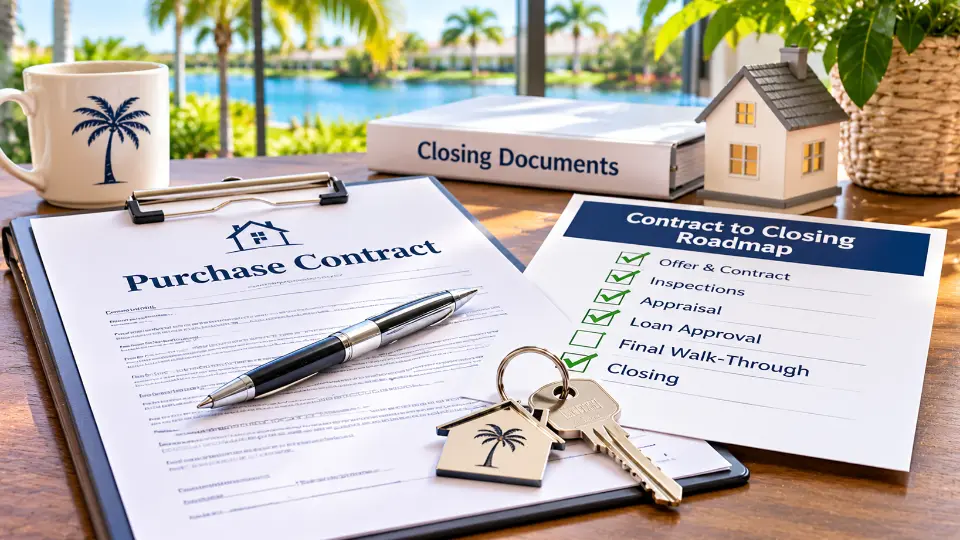
Once a Florida home goes under contract, the transaction moves into a deadline-driven process that commonly includes the escrow deposit, inspections, financing, appraisal, insurance, title work, association requirements, closing preparation and a final walk-through. The signed purchase contract determines the actual deadlines, responsibilities and rights of the buyer and seller. Some transactions move smoothly from one milestone to the next, while others require additional negotiations or professional review. Understanding the roadmap helps both buyers and sellers know what is happening, what comes next and which issues need attention before closing day.
Quick Answers About Going From Contract to Closing in Florida
What happens immediately after a Florida home goes under contract?
Contract deadlines begin to matter immediately. Depending on the agreement, the buyer may need to deliver an escrow deposit, schedule inspections, begin or continue the mortgage process and address insurance, association and other due-diligence requirements while title and closing work gets underway.
How long does it take to go from contract to closing?
There is no universal Florida contract-to-closing timeline. The closing date is established by the purchase contract, and the time required can depend on financing, inspections, appraisal, title work, insurance, association requirements and other transaction-specific factors.
Does the inspection happen before the appraisal?
Often, but not necessarily. Buyers commonly schedule inspections quickly because the inspection period has a contractual deadline. A lender's appraisal may occur during the same general period, and the exact sequencing can vary by transaction.
What happens if the inspection finds problems?
The answer depends on the purchase contract. Inspection provisions can create different rights and obligations, so buyers and sellers should not assume every inspection finding automatically requires a repair, price reduction or cancellation.
What happens if the appraisal is lower than the purchase price?
A low appraisal can affect a financed purchase, but it does not produce one automatic result. The parties' options depend on the financing provisions, any appraisal-related contract language, the lender's requirements and whether the parties negotiate a solution.
What does the title company or closing professional do?
The title and closing process can include title examination, preparation of applicable title insurance documents, coordination of payoffs and transaction figures, preparation or collection of closing documents, receipt of required funds and completion of the settlement and recording process.
What happens during the final walk-through?
The final walk-through allows the buyer to check the property shortly before closing. Under the current Florida Realtors/Florida Bar Residential Contract for Sale and Purchase, the walk-through can be used to confirm that included personal property remains, required maintenance has occurred, required repairs and replacements have been completed and other contractual obligations have been satisfied.
When does the buyer actually become the owner?
Ownership transfer is part of the closing process and should not be assumed merely because documents have been signed. The closing professional coordinates the required documents, funds, conveyance and recording procedures applicable to the transaction.
Step 1: The Contract Becomes the Transaction Roadmap
Once a binding purchase agreement is formed, the contract becomes the roadmap for the transaction. It establishes much more than the purchase price and closing date.
Depending on the agreement, important provisions can address:
- Escrow deposits
- Inspection periods and property condition
- Financing
- Appraisal-related provisions
- Title and title insurance
- Closing expenses
- Association matters
- Personal property included in the sale
- Property maintenance and agreed repairs
- Closing and possession
The exact contract matters. Florida transactions can use different forms and negotiated addenda, so a deadline or right found in one agreement should not automatically be assumed to exist in another.
Hunt Brothers Realty's Florida real estate buyer contracts guide provides additional context on inspection periods, appraisal issues, contingencies and closing. Questions requiring interpretation of contractual rights, obligations, default or termination should be reviewed with a qualified Florida real estate attorney.
Step 2: The Escrow Deposit Is Delivered
The buyer must deliver any required deposit according to the amount, deadline and instructions in the contract. This money is commonly called an escrow deposit, earnest money deposit or good-faith deposit.
The deposit is held by the designated escrow or closing agent rather than simply being handed to the seller. Additional deposits may also be required if the contract provides for them.
Buyers should treat deposit deadlines seriously. Sellers should also avoid assuming that escrow funds automatically become theirs if the transaction does not close. The disposition of a deposit depends on the contract, the circumstances and applicable law. Disputed escrow rights should be reviewed by the appropriate legal professional.
Step 3: The Buyer Conducts Inspections and Due Diligence
Inspections are commonly one of the first major milestones after a Florida home goes under contract. Buyers should schedule appropriate inspections promptly enough to evaluate the property and comply with contractual deadlines.
Depending on the home and transaction, due diligence may involve evaluation of:
- Roof and structural components
- Electrical and plumbing systems
- Heating and air-conditioning equipment
- Appliances and other accessible systems
- Pool and spa equipment when applicable
- Wood-destroying organisms when applicable
- Septic or well systems when applicable
- Docks, lifts and seawalls for waterfront property
- Permits and improvements when relevant to the transaction
The scope of a professional inspection depends on the service being performed. Significant findings may require further evaluation by an appropriately licensed contractor, structural engineer, electrician, roofer, plumber or other qualified professional before the buyer makes a decision.
Does an inspection automatically require the seller to make repairs?
No. The inspection report itself does not create one universal repair obligation. What happens after an inspection depends on the purchase contract. Different Florida contract forms can provide different rights and responsibilities, and negotiated language can also affect the outcome.
A buyer may have contractual options that differ substantially depending on the agreement being used. Buyers and sellers should therefore review the actual contract before assuming that an inspection finding requires a repair, credit, price adjustment or cancellation.
Step 4: Insurance Should Be Investigated Early
Florida buyers should investigate property-specific insurance availability and cost early in the contract period rather than waiting until closing approaches. Insurance can affect both the buyer's ownership budget and, for financed purchases, the lender's requirements.
Premiums and insurability can vary substantially based on the individual property, construction, roof, location, coverage, deductibles and insurer underwriting. Flood insurance is a separate consideration and should not be assumed to be included in a standard homeowners policy.
Buyers should obtain property-specific insurance quotes and review coverage, deductibles, exclusions and flood considerations with a qualified insurance professional before making a purchasing decision. A real estate professional can help coordinate transaction information but does not replace an insurance agent's property-specific coverage analysis.
Step 5: Financing Moves Through Underwriting
For a financed purchase, the buyer's mortgage process continues after the contract is signed. Preapproval is an important starting point, but it is not the same as final loan approval for a particular borrower and property.
Depending on the loan, the lender may review the buyer's income, employment, assets, credit, debts, source of funds and other financial information. The lender also evaluates property-related information needed for the mortgage.
Buyers should respond promptly to lender requests and avoid assuming that the mortgage is final simply because the initial application was approved. Questions about qualification, interest rates, loan programs, required reserves or underwriting should be addressed directly with a qualified mortgage lender or loan professional.
For a broader overview of the entire purchase process, Hunt Brothers Realty's 2026 Florida home buying process guide explains how financing, offers, inspections, insurance, title and closing fit together.
Step 6: The Lender May Order an Appraisal
A financed purchase commonly involves an appraisal as part of the lender's collateral and underwriting process. An appraisal is different from a home inspection. The inspection focuses on property condition within the inspector's scope, while the appraisal primarily serves the valuation and lending process.
The appraiser develops an opinion of value using the applicable appraisal process and property information. The buyer's lender uses that valuation as part of its mortgage decision.
What happens if the appraisal is low?
A low appraisal does not automatically mean the seller must lower the price or that every buyer can cancel. The effect depends on the financing provisions, any appraisal-related contract terms, lender requirements and the circumstances of the transaction.
Depending on those factors, the parties may sometimes negotiate, the buyer may have options under the contract, or the transaction may continue under its existing terms. Buyers should discuss financing consequences with their lender, while questions about contractual rights should be reviewed under the actual agreement and, when legal interpretation is needed, with a qualified Florida real estate attorney.
Step 7: Title Work Moves Forward
The title process examines ownership and matters affecting the property's title so the transaction can move toward the type of conveyance required by the contract. This work can uncover issues that need attention before closing.
Depending on the transaction, title-related work can involve:
- Reviewing the chain of title and public records
- Identifying mortgages and liens
- Identifying easements, restrictions or other recorded matters
- Preparing a title commitment when title insurance applies
- Obtaining seller mortgage payoff information
- Addressing title requirements before closing
Current Florida Realtors/Florida Bar residential contract forms contain specific title examination and cure procedures. Those procedures are contract-specific and can involve deadlines, notices and legal rights. Questions involving title defects, ownership, liens, probate, trusts or the legal effect of recorded documents should be handled with the title or closing professional and a qualified Florida real estate attorney when legal guidance is required.
Step 8: HOA or Condominium Requirements Are Addressed
Properties in a homeowners association or condominium can add another layer to the contract-to-closing process. The applicable requirements depend on the community, governing documents, purchase contract and Florida law.
Depending on the property, the transaction may involve association documents, financial information, estoppel information, buyer applications, transfer procedures, fees, assessments, leasing rules, pet restrictions or other community-specific requirements.
Buyers should review current association information carefully rather than relying only on a listing description. Questions involving the legal effect of governing documents, ownership rights, assessment obligations or association restrictions should be reviewed with a qualified Florida real estate attorney when individualized legal guidance is needed.
Step 9: The Seller Keeps the Property Ready for Closing
The seller's responsibilities do not end when the home goes under contract. The property must continue to be handled in accordance with the purchase agreement through closing.
Depending on the contract, seller responsibilities can include maintaining the property, providing required access, completing agreed repairs or replacements, addressing specified permit matters, responding to title requirements and preparing the property for the buyer's final walk-through.
The current Florida Realtors/Florida Bar Residential Contract for Sale and Purchase also contains provisions addressing repair standards and seller maintenance. Sellers should follow the agreement actually signed rather than relying on generalized assumptions about what a seller normally does.
Step 10: Closing Figures and Cash to Close Are Finalized
As closing approaches, buyers and sellers need accurate transaction-specific numbers rather than early estimates. The buyer needs to know the required cash to close, while the seller needs to understand the expected net proceeds.
Buyer expenses can include lender charges, appraisal and loan services, title and settlement costs, recording charges, applicable mortgage taxes, prepaid insurance and interest, initial escrow funding and association-related expenses. Hunt Brothers Realty's Florida homebuyer closing costs guide explains these categories in more detail.
Seller-side amounts can include mortgage or lien payoffs, documentary stamp tax on the deed when allocated to the seller, negotiated brokerage compensation, title or settlement expenses, association charges, concessions, prorations and other contract-specific adjustments. For more detail, see Hunt Brothers Realty's Florida seller closing costs guide.
There is no universal rule assigning every Florida closing expense to the same party in every transaction. The signed contract, financing, negotiated terms and applicable requirements determine the actual allocation.
Step 11: The Buyer Completes the Final Walk-Through
The final walk-through is the buyer's opportunity to check the property shortly before closing against the seller's applicable contractual obligations. It is not simply another general home inspection.
Under the current Florida Realtors/Florida Bar Residential Contract for Sale and Purchase, the buyer or buyer's representative may perform a walk-through on the day before closing or on closing day before closing, as specified by the buyer. Its stated purposes include confirming that included personal property remains at the property and verifying seller maintenance, required repairs and replacements, and other contractual obligations.
If the buyer identifies a significant issue, the appropriate response depends on the facts and contract. Buyers should communicate promptly with their real estate professional and obtain legal or other professional guidance when the issue requires interpretation of contractual rights or technical property evaluation.
Step 12: Closing Documents Are Signed
Closing brings together the documents, funds and transaction requirements necessary to complete the purchase and transfer. The exact documents differ depending on whether the purchase is financed, the property's ownership structure and other transaction details.
Under the current Florida Realtors/Florida Bar Residential Contract for Sale and Purchase, applicable seller closing documents can include the deed and other documents needed to transfer title, along with transaction-specific affidavits and assignments. A financed buyer will also have lender documents associated with the mortgage.
Closing does not necessarily require every party to sit around one table. The current contract form permits closing to be conducted through methods that can include mail, overnight courier or electronic means, depending on the transaction and closing arrangements.
Step 13: Funds, Payoffs and Recording Are Coordinated
The closing professional coordinates the financial and recording steps required to complete the transaction. This can include receipt of buyer and lender funds, payment of applicable seller obligations, mortgage and lien payoffs, transaction expenses and preparation of the deed for recording.
The Florida Department of Revenue confirms that deeds and other documents transferring an interest in Florida real property are subject to documentary stamp tax. For recorded documents, documentary stamp tax is generally paid to the county at recordation.
The closing professional should explain the settlement process and transaction-specific disbursement arrangements. Buyers and sellers should verify unexpected charges or changes before closing rather than assuming a figure is correct simply because it appears on a document.
Step 14: The Transaction Closes and Possession Follows the Agreement
Once the required closing conditions, documents and funds are satisfied, the transaction can be completed according to the closing arrangement. The seller receives net proceeds through the closing process after applicable payoffs, expenses, prorations and other deductions.
Buyers and sellers should also pay attention to possession. Do not assume that signing documents automatically answers when the buyer receives access or when the seller must vacate. Possession should follow the purchase contract and any separate written occupancy agreement.
If a seller remains in the property after closing under a negotiated arrangement, the parties should understand the written terms governing occupancy, responsibility and timing. Questions about legal rights or liabilities under post-closing occupancy arrangements should be reviewed with a qualified Florida real estate attorney.
What Can Delay a Florida Real Estate Closing?
A closing can be delayed when an unresolved issue prevents the parties from completing the transaction according to the contract. Some issues can be resolved with additional documentation or time, while others may create more significant contractual questions.
Potential sources of delay can include:
- Mortgage underwriting issues
- Appraisal issues
- Insurance difficulties
- Title defects or lien issues
- Unresolved inspection or repair matters
- Open or expired permits when relevant under the contract
- Association documentation or approval issues when applicable
- Problems obtaining required payoff information
- Last-minute changes to the buyer's financial circumstances
- Property damage before closing
- Missing documents or funds
A delay does not automatically create the same rights in every transaction. Florida Realtors notes that contractual time periods can be modified by properly executed agreement between the parties. When a deadline may be missed, buyers and sellers should address the issue before the deadline and obtain legal guidance when contractual interpretation or modification is required.
What Should Buyers Avoid Between Contract and Closing?
Financed buyers should be cautious about financial changes between contract and closing because the lender may continue evaluating the loan until the transaction is complete. Buyers should communicate with their lender before making decisions that could affect qualification.
Potential issues can include taking on new debt, financing major purchases, changing employment, moving substantial funds without documentation or failing to respond to lender requests. The effect of any change depends on the buyer's finances and loan program, so individualized guidance should come directly from the buyer's mortgage professional.
Buyers should also avoid allowing contractual deadlines to pass simply because another part of the transaction appears to be progressing well. Financing, inspections, title, insurance and association work can operate on separate timelines.
What Should Sellers Avoid Between Contract and Closing?
Sellers should avoid treating the transaction as finished before closing. They should continue maintaining the property, cooperate with contractual access requirements, complete agreed obligations and respond to title, association and closing requests.
Sellers should also be careful not to remove fixtures or personal property that the contract says will remain. If significant damage occurs or a new issue arises before closing, the appropriate transaction professionals should be notified promptly.
When a contractual dispute develops, a seller should not rely on general internet information to determine whether the buyer is in default, whether a deposit can be retained or whether the contract can be terminated. Those are property-specific legal questions for a qualified Florida real estate attorney.
A Simple Florida Contract-to-Closing Roadmap
The easiest way to understand the process is as a series of overlapping milestones rather than a rigid one-size-fits-all calendar. The actual contract determines which steps apply and when they must occur.
- Contract: Buyer and seller form a binding purchase agreement.
- Escrow: Required deposit funds are delivered according to the contract.
- Inspections: Buyer performs applicable property due diligence within contractual deadlines.
- Insurance: Buyer investigates property-specific coverage and cost.
- Financing: Lender continues underwriting when a mortgage is involved.
- Appraisal: Lender obtains a valuation when required.
- Title: Title and closing professionals complete applicable examination and preparation.
- Association: HOA or condominium requirements are addressed when applicable.
- Closing preparation: Payoffs, documents, funds and final figures are coordinated.
- Final walk-through: Buyer checks the property before closing as provided by the contract.
- Closing: Required documents and funds are completed and the conveyance process is finalized.
- Possession: Buyer receives possession according to the contractual arrangement.
Who Handles What During a Florida Real Estate Transaction?
A successful closing often involves several professionals with different responsibilities. Understanding those roles helps buyers and sellers direct questions to the person qualified to answer them.
- Real estate professional: Helps with property search or marketing, negotiations, transaction coordination and real estate brokerage matters.
- Mortgage lender or loan professional: Handles mortgage qualification, underwriting, loan requirements and financing questions.
- Home inspector: Evaluates property condition within the scope of the inspection.
- Insurance professional: Provides property-specific insurance quotes and coverage guidance.
- Appraiser: Develops an independent opinion of value for the applicable appraisal purpose.
- Title or closing professional: Handles applicable title, settlement, document, funding and closing functions.
- Real estate attorney: Provides legal advice concerning contracts, title, disputes, ownership and other legal matters.
- Contractor, engineer or other specialist: Evaluates technical property issues when additional expertise is needed.
- Tax professional or CPA: Addresses individualized tax consequences.
The Bottom Line: The Contract Controls the Road to Closing
From contract to closing, a Florida real estate transaction is a coordinated sequence of deadlines, due diligence, financing, title work and closing preparation. The major milestones are recognizable, but the details are not identical from one transaction to another.
Buyers should pay close attention to deposits, inspections, insurance, financing and the final amount needed to close. Sellers should maintain the property, satisfy their contractual obligations, address title and closing requests and understand their expected net proceeds.
For both sides, the most important roadmap is the signed purchase agreement. When a question moves beyond real estate brokerage into legal, lending, insurance, inspection, engineering, title or tax advice, the appropriate qualified professional should be involved before a decision is made.
Navigate Your Florida Closing With Hunt Brothers Realty
Hunt Brothers Realty helps buyers and sellers navigate Sarasota and Florida Gulf Coast real estate from the initial property search or listing strategy through negotiations, contract-to-closing coordination and the completed transaction.
Buyers can start with Hunt Brothers Realty's Florida home buying process guide, review the Florida buyer contracts guide and learn more about Florida homebuyer closing costs. Sellers can review Hunt Brothers Realty's Florida seller closing costs guide before evaluating expected net proceeds.
If you are planning to buy or sell in Sarasota, Lakewood Ranch, Venice, Siesta Key, Longboat Key or surrounding Florida Gulf Coast communities, contact Hunt Brothers Realty to discuss the real estate process and your property goals.
Informational notice: This article provides general real estate and educational information only and is not individualized legal, financial, tax, insurance, lending, inspection, engineering, construction, title, association or other professional advice. Contract rights, deadlines, deposits, financing, title obligations, closing requirements and remedies depend on the signed agreement, applicable law and transaction facts. Buyers and sellers should consult a qualified Florida real estate attorney for legal questions, a qualified lender for financing matters, an insurance professional for property-specific coverage, appropriate inspectors or technical professionals for property-condition issues, a title or closing professional for settlement matters, and a qualified tax professional for individual tax consequences.
Sources
- Florida Realtors and The Florida Bar, Residential Contract for Sale and Purchase
- Florida Realtors, Florida Real Estate Contract Laws
- Florida Department of Revenue, Documentary Stamp Tax
- Hunt Brothers Realty, How to Start the Home Buying Process in Florida
- Hunt Brothers Realty, Florida Homebuyer Closing Costs
- Hunt Brothers Realty, Florida Seller Closing Costs
Hunt Brothers Realty
46 N. Washington Blvd, Ste 3, Sarasota, FL 34236
Phone: (941) 388-7017
Email: info@huntbrothersrealty.com
Website: HuntBrothersRealty.com
Categories
- All Blogs 2734
- Anna Maria Island 93
- Bird Key 6
- Bradenton 243
- Buying a Home 1744
- Casey Key 4
- Clearwater 17
- Condos & HOA Living 1683
- Ellenton 9
- Englewood 16
- First Time Homebuyers 1869
- Foreclosures 4
- Home Selling 12
- Homeownership 1918
- Lakewood Ranch 38
- Lido Key 29
- Longboat Key 81
- Luxury/Waterfront Properties 1861
- Market Updates & Trends 1360
- Mortgages & Financing 91
- Move-Up Buyers 25
- Neighborhood Guides 1489
- New Construction 48
- Palmetto 4
- Parrish 39
- Port Charlotte 36
- Punta Gorda 165
- Real Estate Investing 1774
- Relocation to Florida 1802
- Safety Harbor 4
- Sarasota 178
- Sarasota - Downtown 177
- Selling a Home 149
- Siesta Key 95
- St. Petersburg 13
- Taxes and Homestead 7
- Tierra Verde 7
- Vacation & Second Homes 1967
- Venice 225
- Wellen Park 24
Recent Posts