How Boat Access Can Affect Waterfront Home Values
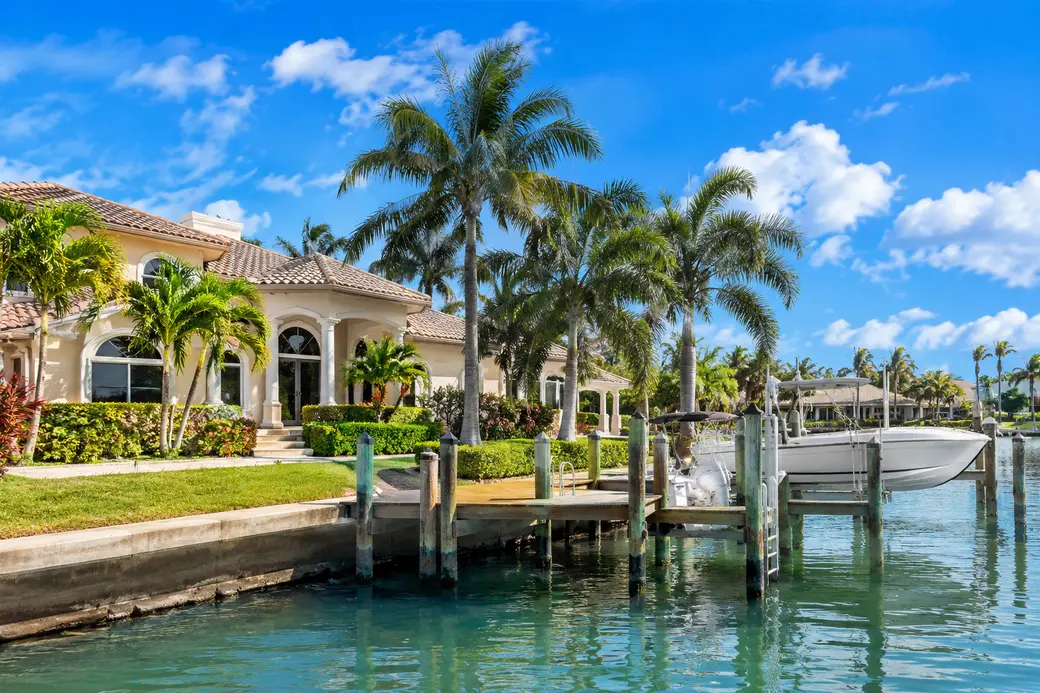
Two waterfront homes can have similar square footage, comparable renovations and nearly identical views, yet appeal to very different buyers because of one factor: what kind of boat can actually reach the property.
In Sarasota-area waterfront real estate, being "on the water" does not automatically mean having the same boating access. Water depth, fixed bridges, distance to open water, dock configuration, boat-lift capacity, canal width and navigational conditions can change how useful a waterfront property is to a boater. Those differences can influence buyer demand and, in turn, market value.
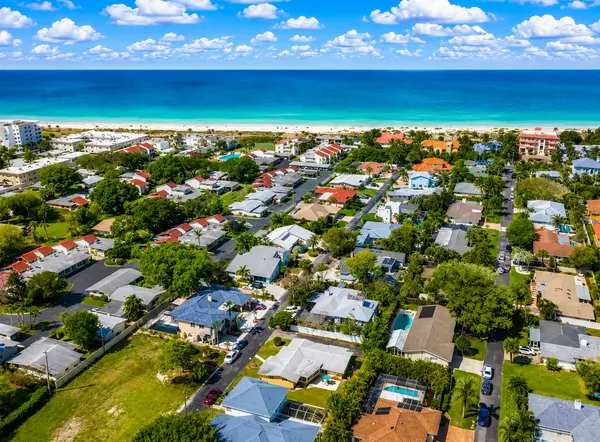
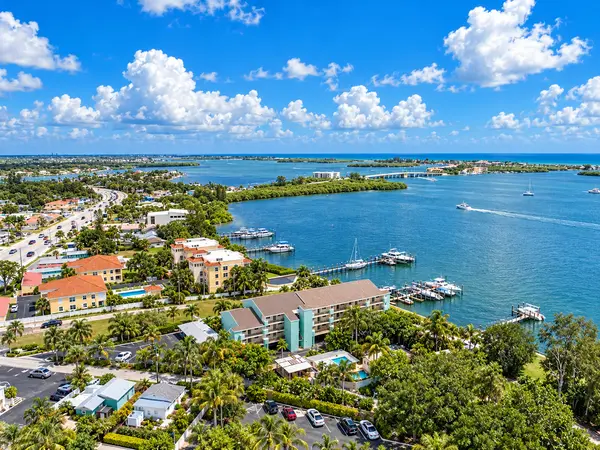
That distinction is visible in local communities. Country Club Shores on Longboat Key, for example, is defined in part by canal-front residences and boating access to Sarasota Bay. Other waterfront properties may provide exceptional views but limited or no practical boat access.
For buyers and sellers, the important question is therefore not simply, "Is this home waterfront?" A better question is, "What can a boater actually do from this property?"
Quick Answers About Boat Access and Waterfront Home Values
Does Better Boat Access Increase Waterfront Home Value?
It can. Among otherwise comparable waterfront properties, convenient navigable access can expand the number of boaters who consider a home practical for their needs. Unrestricted or less-restricted access, adequate water depth and useful docking infrastructure can therefore contribute to stronger buyer appeal. The actual value difference depends on the specific property, neighborhood, market conditions and comparable sales.
Why Do Fixed Bridges Matter?
A fixed bridge creates a vertical clearance limitation. Sailboats with masts are obvious examples, but powerboats with towers, T-tops, hardtops, radar equipment or other elevated components can also be affected. A property with no fixed bridges on the route to the intended boating destination can therefore work for a broader range of vessels than a comparable property behind a low bridge.
Does Water Depth Affect Waterfront Value?
Water depth can affect the usefulness of a waterfront property because different vessels require different draft. A canal that works well for a shallow-draft boat may not accommodate a larger cruiser or sailboat under the same tidal conditions. Buyers should verify depth for the actual route and vessel rather than relying on a general description such as "deep water."
Does Having a Private Dock Automatically Add Value?
A functional private dock can be attractive to boating buyers, but the dock should be evaluated together with the waterway. Dock condition, permitted configuration, slip dimensions, lift capacity, water depth and the route to the buyer's intended destination all matter. An impressive dock does not eliminate a restrictive bridge or shallow channel farther along the route.
What Does "No Fixed Bridges" Mean for a Buyer?
It generally means the route from the property toward the relevant open water does not require passing beneath a non-opening bridge. Buyers still need to investigate water depth, channel conditions, movable bridges, navigation restrictions and whether the route is suitable for their particular vessel.
Not All Waterfront Is Equally Boatable
Waterfront describes a property's relationship to water. It does not tell a buyer whether that water is navigable for the boat they intend to use.
A home might front Sarasota Bay, a residential canal, lagoon, lake, pond or other body of water. Each can provide a desirable view, but their boating usefulness can be completely different.
Even two saltwater canal homes in the same general area may not be interchangeable. One might provide a relatively straightforward route to Sarasota Bay, while another may have fixed bridges, shallower sections or a longer idle-speed journey between the backyard and open water.
This is why boat access becomes part of the real estate comparison rather than simply an amenity checkbox.
No Fixed Bridges Can Expand the Pool of Potential Boating Buyers
Bridge clearance is one of the most important distinctions between Sarasota waterfront properties.
A fixed bridge establishes a physical limit on the height of vessels that can travel beneath it. For a sailboat, the mast can make this limitation obvious. Powerboats can face the same problem when they have towers, T-tops, radar arches, outriggers or other equipment above the waterline.
From a real estate perspective, this affects the potential buyer pool. A waterfront property that works for both taller and shorter vessels may appeal to more boating buyers than one limited to vessels capable of clearing a particular bridge.
That does not mean every home behind a fixed bridge is inherently undesirable. A buyer with a shallow-profile center console, flats boat, skiff or other compatible vessel may find the access completely suitable. The restriction matters most in relation to the boats buyers want to use.
Water Depth Can Be Just as Important as Bridge Clearance
Clearance above the boat is only half of the navigational equation. There also needs to be enough water beneath it.
Boat draft refers to how far a vessel extends below the waterline. Different vessel designs have very different requirements. A shallow-draft fishing boat and a larger cruising vessel may therefore evaluate the same canal very differently.
Depth can also vary with tides, shoaling, dredging history and location within a canal or channel. A waterfront view from the backyard does not establish that a particular vessel can navigate the entire route safely under the conditions in which the owner expects to use it.
Buyers should obtain property- and vessel-specific information when draft is important. Appropriate verification may involve the property owner or association, local permitting authorities, marine contractors, surveyors, dock professionals or other qualified marine professionals depending on the issue.
Distance to Open Water Changes the Boating Experience
Two homes can both provide Gulf access while offering very different everyday boating experiences.
One property might provide a relatively short route from the dock to Sarasota Bay or a Gulf pass. Another could require a longer trip through residential canals, idle-speed areas, bridges or winding waterways before reaching the buyer's preferred boating area.
For someone who boats occasionally, that difference may have limited importance. For an owner who fishes offshore several mornings a week or frequently takes evening cruises, travel time from dock to destination may become a major lifestyle consideration.
The more closely a waterfront property matches how a boating buyer actually intends to use the water, the more compelling that access can become.
The Dock Is Part of the Value Equation
A private dock can add substantial practical appeal, but buyers should look beyond whether a dock merely exists.
Important questions include:
- Is the dock permitted?
- What are the usable dock and slip dimensions?
- What is the water depth alongside the dock?
- Is electrical service available?
- Is water service available?
- Is there a boat lift?
- What is the documented lift capacity?
- What is the dock's age and condition?
- Are repairs or replacement anticipated?
- Would a desired modification require government or association approval?
Sarasota County's Environmental Protection Division reviews permits for docks, boat lifts, personal-watercraft lifts, bulkheads and maintenance dredging under its Water and Navigation Control Authority process. New docks, dock modifications and dredging can therefore involve permitting requirements rather than simply being an owner's discretionary improvement.
Boat-Lift Capacity Can Matter to a Specific Buyer
A boat lift is useful only when it is appropriate for the vessel and properly installed, maintained and permitted.
A buyer who already owns a boat may immediately compare the vessel's weight, beam and configuration with the existing lift. If the equipment is incompatible, the buyer may need to investigate modification or replacement costs and whether the desired work can be approved.
Sellers should be careful about casually advertising lift capacity without documentation. Equipment specifications, permits, service records and invoices can be more useful to a serious boating buyer than a generalized marketing statement.
Canal Width and Turning Space Matter for Larger Boats
A boat may technically fit at a dock yet still be inconvenient to maneuver in the surrounding waterway.
Canal width, neighboring docks, pilings, moored vessels and turning space can affect the practical use of a waterfront lot. Larger boats generally create different maneuvering requirements from smaller vessels.
This is another reason a buyer should evaluate the waterfront from the water when boating is a major purchasing priority. A backyard showing demonstrates the view. It does not necessarily demonstrate how easily a specific vessel can approach, dock, turn and depart.
Seawall Condition Can Influence What Buyers Are Willing to Pay
Boating access and shoreline infrastructure are closely connected.
A property can have an excellent location and desirable boating route while still presenting concerns if the seawall, cap, tiebacks or related waterfront structures require significant work. Buyers may factor anticipated repair or replacement costs into their offers.
Visual appearance alone is not sufficient to determine structural condition or remaining service life. Waterfront infrastructure should be evaluated by the appropriate qualified inspector, marine contractor, engineer or other professional when its condition could materially affect a purchasing decision.
A Water View and Boat Access Are Different Real Estate Features
A property can have a spectacular water view without giving the owner a practical way to keep a boat there.
This distinction appears in both single-family homes and condominiums. A residence overlooking Sarasota Bay may have tremendous visual appeal, while another property nearby combines water views with a private dock or assigned slip.
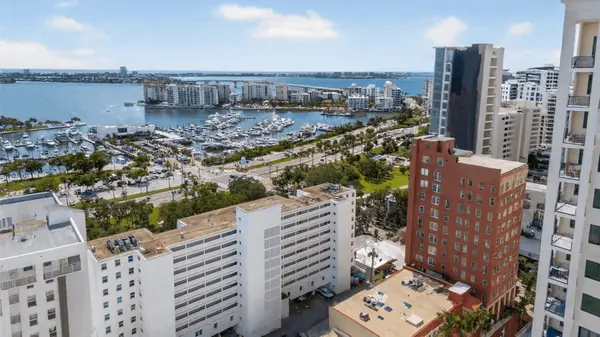
For example, Condo on the Bay in downtown Sarasota offers direct Sarasota Bay access and community boat docks. By contrast, some other waterfront-oriented condominiums emphasize elevated water views without providing the same boating infrastructure.
Neither feature is automatically more important. A non-boating buyer may prioritize a panoramic view. A serious boater may place considerably more weight on usable dockage and navigation.
Deeded, Assigned and Available Slips Are Not the Same Thing
Condominium and marina buyers need to understand exactly what boating right, if any, transfers with the residence.
A building may have a marina without every residence having an individual slip. A slip may be deeded, assigned, licensed, leased, association-controlled, subject to a waiting list or otherwise governed by community documents.
Hunt Brothers Realty's guide to SIX88 on Golden Gate Point, for example, distinguishes the building's Sarasota Bay marina facilities from the need to verify whether a particular residence actually includes a deeded boat slip.
Because a boating right can materially affect a buyer's decision, the exact legal status should be confirmed from current association documents, title information, marina agreements or other applicable records. Legal questions concerning ownership or transfer rights should be reviewed with a qualified Florida real estate attorney or appropriate title professional.
Country Club Shores Shows Why Boating Access Matters
Country Club Shores is a useful Sarasota-area example because boating is a central part of the neighborhood's identity.
Located on southern Longboat Key, the neighborhood contains canal-front single-family homes, many with private docks. The canal network connects residents with Sarasota Bay, making boat access an important consideration when buyers compare individual properties.
Even within a boating-oriented neighborhood, buyers should not assume every lot is identical. Waterfront width, dock configuration, lift equipment, canal position, depth, view orientation, home condition and lot characteristics can vary from property to property.
Hunt Brothers Realty's 524 Halyard Lane waterfront home guide provides a property-level example of how canal frontage and Sarasota Bay access can become part of the buying analysis.
Boat Access Can Change the Comparable-Sales Analysis
For valuation purposes, the closest house geographically is not always the most comparable waterfront property.
Consider two renovated canal homes of similar size. One has adequate water for the target buyer's boat, a suitable dock and a route without a restrictive fixed bridge. The other has similar interior finishes but sits behind a bridge that excludes that vessel.
To a non-boater, the properties may appear relatively similar. To the buyer who already owns that boat, they solve completely different problems.
A useful waterfront market analysis should therefore examine not only living area, bedrooms, bathrooms, lot size and renovations, but also waterfront type and functional boating characteristics. The amount any individual feature contributes to market value should be established through relevant local comparable sales rather than a universal percentage or formula.
Boat Access Is Valuable Only to the Buyers Who Need It
Waterfront value is ultimately driven by the market, and different buyers prioritize different features.
A serious offshore angler may put considerable value on a short route to a Gulf pass. A sailboat owner may focus first on bridge clearance and depth. A kayak owner may care more about an easy launch and protected water. Someone who never plans to own a boat may prefer a broader view, newer house or better outdoor living area instead.
This is why sellers should avoid treating boating access as a generic premium. The strongest marketing explains exactly what the property offers so the right buyers can recognize its usefulness.
What Should Waterfront Sellers Document Before Listing?
Sellers can make a waterfront listing more useful by gathering accurate boating information before the property reaches the market.
- Dock and boat-lift permits
- Boat-lift manufacturer and documented capacity
- Dock and seawall repair records
- Recent marine-contractor invoices
- Available surveys showing waterfront dimensions
- Information about the boating route
- Known bridge locations along the route
- Association documents affecting docks or vessels, when applicable
- Relevant maintenance or dredging information
Sellers should avoid representing water depth, bridge clearance, navigability or vessel compatibility as guaranteed unless the claim can be appropriately supported. Conditions can change, and suitability depends on the specific boat.
If improvements are being considered before sale, Hunt Brothers Realty's guide to ROI renovations for coastal homes explains why property-specific market conditions should guide improvement decisions rather than assuming every project produces the same return.
What Should Waterfront Buyers Verify Before Making an Offer?
If boating is an important reason for buying the property, investigate the boating access before treating the home as a match.
- Water depth: Is the route suitable for the vessel's draft under expected conditions?
- Bridge clearance: Are there fixed bridges, and can the vessel safely clear them?
- Route: Where does the waterway lead, and how practical is the trip?
- Dock: Is it permitted, appropriately sized and in suitable condition?
- Lift: Is the documented capacity and configuration appropriate for the boat?
- Seawall: What is its current condition?
- Canal: Is there adequate width and maneuvering room?
- Dredging: Is there relevant maintenance or dredging history?
- Permitting: Can desired dock, lift or shoreline changes legally be made?
- Association rules: Do HOA or condominium documents restrict vessels, docks or lifts?
- Insurance: What property-specific coverage is available and at what cost?
- Flood exposure: What flood and storm considerations apply to the property?
A buyer's real estate professional can help identify relevant property and market information, but vessel suitability, structural condition, insurance, permitting and legal rights may require separate review by qualified marine professionals, inspectors, engineers, insurance professionals, surveyors, permitting authorities, attorneys, title professionals or other appropriate specialists.
Boat Access Factors Buyers and Sellers Should Compare
| Waterfront Factor | Why It Matters |
|---|---|
| Fixed bridges | Can limit vessel height and reduce the range of boats able to use the property |
| Water depth | Determines whether the route may accommodate a vessel's draft under relevant conditions |
| Distance to open water | Affects travel time and everyday boating convenience |
| Dock configuration | Determines how effectively the waterfront can accommodate the intended vessel |
| Boat lift | Capacity and configuration must match the vessel and applicable requirements |
| Canal width | Can influence docking and maneuverability, particularly for larger vessels |
| Seawall condition | Potential repair or replacement needs can affect ownership costs and buyer offers |
| Dock permits | Existing and proposed waterfront improvements may be subject to government approval |
| Slip rights | Deeded, assigned, leased and association-controlled slips create different ownership situations |
| Flood and insurance considerations | Can materially affect the overall cost and risk of waterfront ownership |
Should You Pay More for Better Boat Access?
The answer depends on whether the boating advantage is valuable to you and whether the market supports the price difference.
A buyer who owns a vessel that requires deeper water and unrestricted vertical clearance may reasonably narrow the search to properties that satisfy those requirements. Paying for a waterfront feature you will use frequently can be very different from paying for an amenity that has little relevance to your lifestyle.
The appropriate premium cannot be determined from a generic rule. Buyers should compare recent sales of properties with similar waterfront characteristics, physical condition and location. A licensed real estate professional can help evaluate relevant comparable sales, while an appraiser may be appropriate when a formal valuation is required.
What Is the Most Important Lesson About Waterfront Value?
The word "waterfront" is only the beginning of the valuation conversation.
A Sarasota waterfront home's value can reflect the interaction of location, view, waterfront width, boating route, bridge clearance, water depth, dock infrastructure, seawall condition, home quality, lot characteristics and current buyer demand.
For boating buyers, the most valuable waterfront may be the waterfront that works for the boat they actually own. For sellers, accurately documenting those characteristics can help distinguish a property from homes that look similar in photographs but provide a different experience on the water.
Explore Sarasota Waterfront Real Estate With Hunt Brothers Realty
Waterfront buyers often need to compare more than the house itself. Canal position, boating route, dock infrastructure and access to Sarasota Bay or the Gulf can be just as important as bedrooms, renovations and outdoor living space.
Hunt Brothers Realty can help buyers and sellers compare Sarasota-area waterfront properties using current market information and property-specific real estate considerations. Explore Sarasota Gulf Coast communities, review Country Club Shores waterfront homes, or contact Hunt Brothers Realty to discuss a waterfront property search or sale.
Informational notice: This article provides general real estate and educational information only. Water depth, bridge clearance, navigability, dock and lift suitability, seawall condition, permitting, flood exposure, insurance, title rights and vessel compatibility are property-specific and can change. Buyers and sellers should verify material boating and waterfront information with the appropriate qualified professionals before making a purchasing, selling, construction or financial decision. Depending on the issue, that may include a licensed real estate professional, marine contractor, structural engineer, surveyor, home inspector, insurance professional, local permitting authority, title professional, Florida real estate attorney or other qualified specialist.
Sources
- Sarasota County Environmental Protection, Environmental Permitting and Projects
- Hunt Brothers Realty, Country Club Shores
- Hunt Brothers Realty, 524 Halyard Lane Longboat Key Waterfront Home
- Hunt Brothers Realty, Condo on the Bay Waterfront Guide
- Hunt Brothers Realty, SIX88 Golden Gate Point Waterfront Guide
- Hunt Brothers Realty, ROI Renovations for Coastal Homes
Contact Hunt Brothers Realty
Categories
- All Blogs 1869
- Anna Maria Island 82
- Bird Key 4
- Bradenton 234
- Buying a Home 944
- Casey Key 2
- Clearwater 8
- Condos & HOA Living 854
- Ellenton 5
- Englewood 9
- First Time Homebuyers 1047
- Foreclosures 3
- Homeownership 1066
- Lakewood Ranch 20
- Lido Key 27
- Longboat Key 77
- Luxury/Waterfront Properties 1004
- Market Updates & Trends 545
- Mortgages & Financing 38
- Move-Up Buyers 20
- Neighborhood Guides 684
- New Construction 29
- Palmetto 3
- Parrish 6
- Port Charlotte 10
- Punta Gorda 14
- Real Estate Investing 923
- Relocation to Florida 970
- Safety Harbor 2
- Sarasota 60
- Sarasota - Downtown 156
- Selling a Home 142
- Siesta Key 88
- St. Petersburg 6
- Tierra Verde 4
- Vacation & Second Homes 1116
- Venice 61
- Wellen Park 9
Recent Posts