How Do I Know What My Florida Home Is Worth?
The best way to estimate what your Florida home is worth is to compare it with recent sales of genuinely similar properties and then adjust for current competition, location, condition, renovations, lot characteristics and features buyers value in your specific market. An online estimate or county tax value can provide another data point, but neither automatically establishes what a buyer would pay today. For homeowners considering a sale, a current comparative market analysis can help establish a realistic market-value range and potential listing strategy.
Quick Answers About What Your Florida Home Is Worth
What is the most accurate way to estimate my home's value?
Start with recent closed sales of properties that genuinely compete with your home. Location, property type, size, age, condition, renovations, lot, pool, garage, view, waterfront characteristics and association costs can all make one comparable more useful than another.
Is my Florida property appraiser value what my house is worth?
Not necessarily. Florida distinguishes just or market value, assessed value and taxable value for property-tax purposes. Assessment limitations and exemptions can make assessed or taxable value materially different from the price a buyer might pay in a current sale.
Can I trust an online home-value estimate?
Use an automated estimate as a starting point, not a final answer. An algorithm may not fully account for renovations, condition, views, waterfront access, association differences or other characteristics that can materially affect a Florida property's market position.
Does my neighbor's sale tell me what my home is worth?
Only if the neighbor's property is genuinely comparable. A home on the same street can still differ significantly because of size, condition, renovations, lot position, pool, view, garage, waterfront access or other features.
Is an asking price the same as market value?
No. An asking price is a seller's marketing decision. A closed sale provides stronger evidence of what a buyer and seller actually agreed upon, although the circumstances and characteristics of that sale still need to be compared with your property.
What is a comparative market analysis?
A comparative market analysis, commonly called a CMA, evaluates relevant sales and current competition to help estimate a property's likely market position. A CMA prepared by a real estate professional is not the same thing as a formal appraisal prepared by an appropriately licensed or certified appraiser.
How recent should comparable sales be?
More recent comparable sales are generally more useful when the market is changing. Florida real estate professionals interviewed by Florida Realtors in October 2026 specifically emphasized looking closely at sales from the previous 90 days, although the appropriate period depends on how many genuinely comparable transactions exist.
Do I need an appraisal before selling my Florida home?
Not every seller needs to obtain a pre-listing appraisal. A formal appraisal may be useful in certain situations, but sellers should discuss the purpose and circumstances with the appropriate real estate, appraisal, legal, tax or other qualified professional before deciding what valuation service they need.
Start With What Comparable Buyers Have Actually Paid
A home's value does not begin with what the owner paid, what the owner hopes to net or what another seller is asking. The most useful starting point is usually recent market evidence.
Florida Realtors explains that comparable sales focus on individual properties in a relatively small geographic area and evaluate features that can affect what buyers are willing to pay. Hunt Brothers Realty's Florida home negotiation guide similarly explains that an asking price is not automatically market value and that useful comparisons should account for characteristics such as location, size, age, condition, lot, amenities and property type.
The goal is not to find any nearby sale. It is to identify the sales that a reasonable buyer would view as realistic alternatives to your property.
What Makes a Good Comparable Sale?
No two homes are perfectly identical, but stronger comparables generally share important characteristics with the property being valued.
- Location: The same community, building or immediate competitive area can be more meaningful than a sale several neighborhoods away.
- Property type: Single-family homes should generally be compared with relevant single-family homes, while condos require building and association context.
- Living area: Major differences in size can reduce the usefulness of a comparison.
- Age and construction: Newer construction may compete differently from an older home, even at a similar size.
- Condition: A substantially renovated home may not be directly comparable with an original-condition property.
- Lot: Lot size, orientation, privacy, road exposure and views can affect buyer demand.
- Pool and outdoor living: These can influence how Florida buyers compare otherwise similar homes.
- Garage: Garage size and configuration can matter in some markets.
- Waterfront characteristics: Gulf, bay, river, lake, canal and non-waterfront properties should not be treated as equivalent simply because they are geographically close.
- Association structure: HOA or condominium fees, amenities and financial obligations can affect the competitive position of a property.
A useful analysis considers these differences together rather than applying a simplistic price-per-square-foot formula to every home.
Why Recent Sales Matter So Much in 2026
Real estate value is time-sensitive. A sale from a year ago may tell you something about the property's history, but it may not describe what buyers are willing to pay today.
In October 2026, Florida Realtors highlighted advice from Florida real estate professionals emphasizing recent comparable sales, including a focus on the prior 90 days when appropriate. The reasoning is straightforward: inventory, mortgage rates, buyer demand and competition can change enough that an older transaction may describe a different market.
That does not mean every analysis must use an exact 90-day cutoff. A unique waterfront property, luxury estate or home in a low-turnover neighborhood may require a broader search period because there may be very few truly comparable sales.
Hunt Brothers Realty's 2026 Florida home-price analysis explains why homeowners should focus on property-specific local evidence rather than assuming a statewide headline describes their home's value.
Closed Sales Tell Only Part of the Story
Closed sales help establish what buyers have recently paid. Current listings show what your home would compete against if it entered the market today.
Suppose comparable homes recently sold around one price range, but several attractive alternatives are currently listed below that range. A seller cannot ignore that new competition. Buyers will see those properties alongside yours.
A strong valuation review may therefore consider:
- Recent comparable closed sales
- Current competing listings
- Pending sales when reliable information is available
- Recent price reductions
- Days on market
- Listings that expired or failed to sell, when relevant
- Changes in inventory and buyer activity
Hunt Brothers Realty's guide to reasons buyers may be passing on a Florida home explains how current alternatives can influence buyer perceptions of value.
Your Neighbor's Home May Not Be Your Best Comparable
A nearby sale is useful only when the property is sufficiently similar. Florida neighborhoods can contain meaningful differences even within a few hundred feet.
One home might have a new roof, impact windows, renovated kitchen, three-car garage and private pool. Another might have original finishes, an older roof and no pool. Treating the two properties as equivalent because they share a street can produce a misleading estimate.
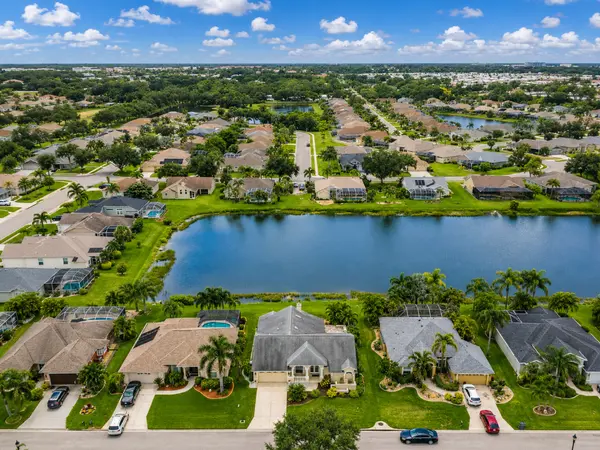
Location within the same community can also matter. Preserve views, lake frontage, golf-course position, road exposure, cul-de-sac placement and lot privacy can influence how buyers compare homes.
Florida Waterfront Homes Require More Specific Comparisons
Waterfront property is a good example of why geographic proximity alone is not enough. Two homes can both be described as waterfront while offering very different utility to buyers.
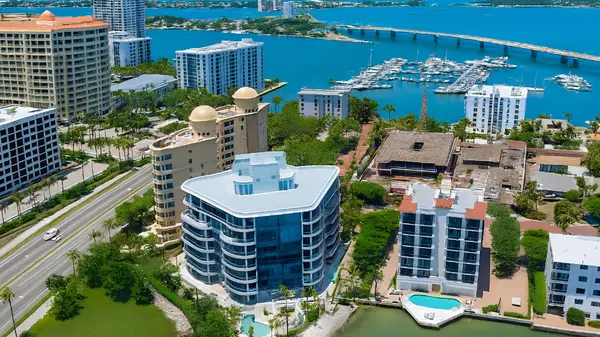
A Gulf-front property, open-bay property, navigable canal home, freshwater lake home and retention-pond property should not automatically be placed in the same valuation category.
For boating properties, buyers may care about water depth, tides, bridge clearance, dock configuration, lift capacity and route to open water. For coastal properties, beach access, elevation, shoreline improvements, insurance and storm exposure may affect buyer demand.
Explore Hunt Brothers Realty's Sarasota waterfront living guide for a closer look at how different waterfront settings compare.
Condo Values Depend on More Than the Unit
If you own a Florida condominium, evaluating the interior of your unit is only part of the valuation process. Buyers are also evaluating the building and association.
Two similarly sized condos in nearby buildings can compete very differently because of:
- Association fees
- Reserves and association finances
- Current or anticipated special assessments
- Building insurance
- Structural or major maintenance projects
- Age and condition of the building
- Floor and view
- Parking and storage
- Amenities
- Pet and leasing restrictions
For that reason, a condo several miles away with a similar square footage may be a weaker comparable than a recent sale within the same building.
How Much Value Do Renovations Add?
Renovations can affect marketability and value, but sellers should not assume every dollar spent on improvements creates an equal dollar increase in market value.
A buyer may value an updated kitchen, newer roof or impact-resistant windows, but the amount buyers are willing to pay depends on the market, quality and age of the improvement, competing properties and the home's overall condition.
The strongest evidence comes from the market itself. If renovated homes consistently sell differently from similar original-condition properties, those transactions can help show how buyers are responding to the improvements.
Does a New Roof Increase a Florida Home's Value?
A newer roof can improve a property's competitive position, particularly when buyers are comparing it with homes that may require significant near-term work. It can also be relevant to property-specific insurance considerations.
That does not mean a seller should automatically add the full cost of a roof replacement to the home's estimated value. Market response and comparable sales remain important.
Insurance availability, coverage and premiums can vary substantially by property. Owners considering improvements primarily for insurance reasons should verify potential effects with a qualified Florida insurance professional before making a financial decision.
Is Price Per Square Foot a Good Way to Value a Florida Home?
Price per square foot can be useful as a secondary comparison, but it should rarely be the entire valuation method.
Consider two 2,000-square-foot homes. One has been fully renovated, includes a pool and sits on a premium lakefront lot. The other needs substantial updating and backs to a busy road. Multiplying both properties by the same neighborhood price per square foot ignores characteristics buyers may consider important.
Price per square foot becomes more informative when the underlying homes are already highly comparable.
Your Florida Tax Value Is Not the Same as a Sale Price
Florida homeowners often look at their county property records and see several different values. Understanding the terminology is important.
The Florida Department of Revenue explains that Florida property appraisers establish property values annually as of January 1. Florida also distinguishes between just or market value, assessed value and taxable value.
- Just or market value: The property appraiser's market-value determination for property-tax purposes.
- Assessed value: The value after applicable assessment limitations or reductions.
- Taxable value: The assessed value after applicable exemptions and discounts are deducted.
Florida's Save Our Homes limitation can cause a qualifying homesteaded property's assessed value to differ significantly from its just value over time. That is one reason a longtime owner's assessed or taxable value should not be used as a prediction of the property's current sale price.
Questions about a particular assessment, exemption or property-tax calculation should be directed to the applicable county property appraiser or a qualified tax professional.
What Is the Difference Between a CMA and an Appraisal?
A comparative market analysis and a formal appraisal are not interchangeable.
A comparative market analysis is commonly prepared by a real estate professional to help a seller or buyer understand how a property compares with recent sales and current market competition. It can be particularly useful when developing a listing strategy.
An appraisal is a formal valuation performed by an appropriately credentialed appraiser for a particular purpose and effective date. Appraisals are commonly encountered in mortgage transactions but may also be obtained for other reasons.
Florida Realtors notes that a broker price opinion or CMA prepared by someone who is not appropriately licensed or certified as an appraiser cannot be called an appraisal.
If you require a formal valuation for lending, estate, litigation, tax, divorce or another specialized purpose, confirm the appropriate valuation requirements with the relevant lender, attorney, tax professional, appraiser or other qualified professional.
Why Online Home Estimates Can Be Wrong
Automated valuation tools can process large amounts of public and market data quickly. They can be useful for an initial reference point, particularly in neighborhoods with many similar properties and frequent sales.
Their limitations become more important when a property has characteristics that are difficult for an algorithm to interpret accurately.
For example, an automated model may not fully understand:
- The quality of a renovation
- Actual interior condition
- Whether a view is attractive or obstructed
- Differences between navigable and non-navigable waterfront
- A premium floor or orientation in a condo building
- The effect of a major association assessment
- Road noise or other micro-location differences
- The condition and utility of a dock, seawall or other specialized feature
The more unusual the property, the more important property-specific analysis becomes.
What You Paid for the Home Does Not Determine What It Is Worth Today
Your purchase price is an important part of your ownership history, but today's buyers are not deciding what to offer based on what you paid several years ago.
The market may have moved up or down since your purchase. The property may have been improved. Nearby inventory may have changed. Insurance, association costs or other ownership considerations may also influence how buyers evaluate competing properties today.
Similarly, the amount you need to net from a sale does not establish market value. Your mortgage balance, desired proceeds and future plans matter to your personal decision, but buyers compare your home with alternatives available in the current market.
Insurance and Flood Considerations Can Affect Buyer Demand
Florida buyers increasingly investigate the complete cost and insurability of a property rather than focusing solely on the purchase price. That can make property characteristics such as roof condition, construction type, wind-mitigation features and flood exposure relevant to marketability.
A seller should not attempt to predict another person's insurance premium or assume a particular feature guarantees coverage or savings. Insurance underwriting is property-specific.
Insurance availability, coverage, deductibles and premiums can vary substantially by property. Owners considering repairs or improvements because of insurance concerns should verify their options with a qualified insurance professional, while buyers should obtain property-specific quotes before making a purchasing decision.
How Do You Turn a Home Value Estimate Into a Listing Price?
Market value and listing strategy are related, but they are not exactly the same question.
A seller might establish a probable market-value range and then evaluate how the home should be positioned within current competition. The strategy may depend on inventory, recent sales, competing price points, condition, expected buyer pool and the seller's timing objectives.
Simply choosing the highest imaginable price can work against the seller if buyers see stronger alternatives at lower prices. Florida Realtors currently emphasizes the importance of realistic pricing based on current comparable evidence rather than relying on what a property might have commanded in an earlier market.
What Information Should I Gather Before Requesting a Home Valuation?
Accurate property information can improve the quality of a market analysis. Before discussing your home with a real estate professional, gather whatever records you reasonably have available.
- Approximate dates and details of major renovations
- Roof replacement information
- HVAC and water-heater age where known
- Window, door or storm-protection improvements
- Pool improvements
- Permitted additions or structural changes
- Survey if available
- Current HOA or condominium fees
- Known association assessments
- Waterfront improvements such as a dock, lift or seawall where applicable
- Information about parking or storage rights for a condominium
Property records, permits and association documents should be verified when they are material to pricing or marketing. Sellers should not rely solely on memory when a factual representation can be confirmed from current documentation.
Questions to Ask When Reviewing Your Florida Home's Value
- Which recent sales are the strongest comparables, and why?
- Which nearby sales look similar but are actually poor comparisons?
- How recent are the comparable sales?
- What homes would buyers compare with mine today?
- Have competing listings recently reduced their prices?
- How does my home's condition compare with recent sales?
- Which renovations appear relevant to buyer demand?
- How do my lot, view, pool, garage or waterfront characteristics compare?
- For a condo, how does my building compare with competing buildings?
- What is the likely market-value range rather than one unsupported exact number?
- How would the recommended listing strategy relate to that value range?
- What market changes would cause the pricing strategy to be reconsidered?
More Questions About Florida Home Values
Should I price my home based on what is currently for sale?
Current listings matter because they represent your competition, but asking prices do not prove market value. Recent closed sales generally provide stronger evidence of what buyers have actually paid, while active listings help show what choices buyers have today.
Should I use the highest sale in my neighborhood?
Only if that sale is genuinely comparable. The highest sale may have superior renovations, a premium lot, more living area, a pool, better waterfront characteristics or other advantages that your home does not share.
Does an appraisal guarantee what my home will sell for?
No valuation guarantees a future sale price. An appraisal provides a value opinion for a particular purpose and effective date, while an actual transaction depends on the market, buyers, negotiations, property condition and transaction terms.
Can my home's value change quickly?
It can. New comparable sales, additional competing inventory, changing buyer demand, price reductions and broader financing conditions can alter a property's market position. A valuation prepared months ago may need to be updated before a seller makes a current pricing decision.
Will I get back everything I spent renovating my home?
Not necessarily. Improvement cost and market value are different concepts. The best evidence is how buyers have responded to comparable renovated and non-renovated homes in the relevant market.
Can a real estate agent tell me exactly what my house will sell for?
A real estate professional can analyze current market evidence and help establish a reasonable pricing range and strategy, but no one can guarantee the final sale price before the market responds. Actual results depend on buyer demand, competition, negotiations, property condition and transaction terms.
The Best Home Value Estimate Uses Today's Local Market
If you want to know what your Florida home is worth, begin with today's local market rather than an old purchase price, a tax bill or a single online estimate. Recent comparable sales provide the foundation, while current listings show the competition buyers are evaluating right now.
Then account for the details that make your property different. Condition, renovations, location, lot, pool, garage, view, waterfront characteristics and association obligations can all influence how buyers compare one home with another.
The result is usually better expressed as a supported market-value range rather than a falsely precise number. From there, a seller can develop a listing strategy based on current competition and personal selling objectives.
If you are considering selling on Florida's Gulf Coast, contact Hunt Brothers Realty to discuss your property and current comparable market evidence. You can also explore Hunt Brothers Realty for current Florida real estate resources and local market information.
Informational notice: This article provides general real estate and educational information only. It is not a formal appraisal, individualized legal, financial, tax, insurance, lending, inspection, engineering or other professional advice, and it does not establish the value of any specific property. Home values and appropriate valuation methods depend on the property and purpose of the valuation. Owners should consult the appropriate licensed real estate professional, licensed or certified appraiser, tax professional, Florida real estate attorney, insurance professional or other qualified specialist when a decision requires individualized guidance.
Sources
- Hunt Brothers Realty, How Much Can You Negotiate on a Florida House?
- Hunt Brothers Realty, Are Florida Home Prices Going Up or Down in 2026?
- Hunt Brothers Realty, Reasons Buyers May Be Passing on Your Florida Home
- Florida Realtors, Comps vs. Market Research
- Florida Realtors, Florida Real Estate Experts Share Buying and Selling Tips
- Florida Realtors, Florida Laws and Federal Laws Regarding Appraisals
- Florida Department of Revenue, Property Tax Information for Taxpayers
- Florida Department of Revenue, County Property Appraiser and Local Officials Directory
Hunt Brothers Realty
Hunt Brothers Realty
46 N. Washington Blvd, Ste 3, Sarasota, FL 34236
Phone: (941) 388-7017
Email: info@huntbrothersrealty.com
Website: HuntBrothersRealty.com
Categories
- All Blogs 2513
- Anna Maria Island 90
- Bird Key 4
- Bradenton 240
- Buying a Home 1548
- Casey Key 2
- Clearwater 15
- Condos & HOA Living 1473
- Ellenton 6
- Englewood 14
- First Time Homebuyers 1664
- Foreclosures 4
- Home Selling 7
- Homeownership 1699
- Lakewood Ranch 32
- Lido Key 29
- Longboat Key 80
- Luxury/Waterfront Properties 1641
- Market Updates & Trends 1149
- Mortgages & Financing 77
- Move-Up Buyers 24
- Neighborhood Guides 1271
- New Construction 43
- Palmetto 4
- Parrish 33
- Port Charlotte 36
- Punta Gorda 164
- Real Estate Investing 1554
- Relocation to Florida 1587
- Safety Harbor 4
- Sarasota 119
- Sarasota - Downtown 168
- Selling a Home 146
- Siesta Key 93
- St. Petersburg 9
- Taxes and Homestead 3
- Tierra Verde 7
- Vacation & Second Homes 1747
- Venice 217
- Wellen Park 23
Recent Posts