Can You Negotiate the Price of a New Construction Home?
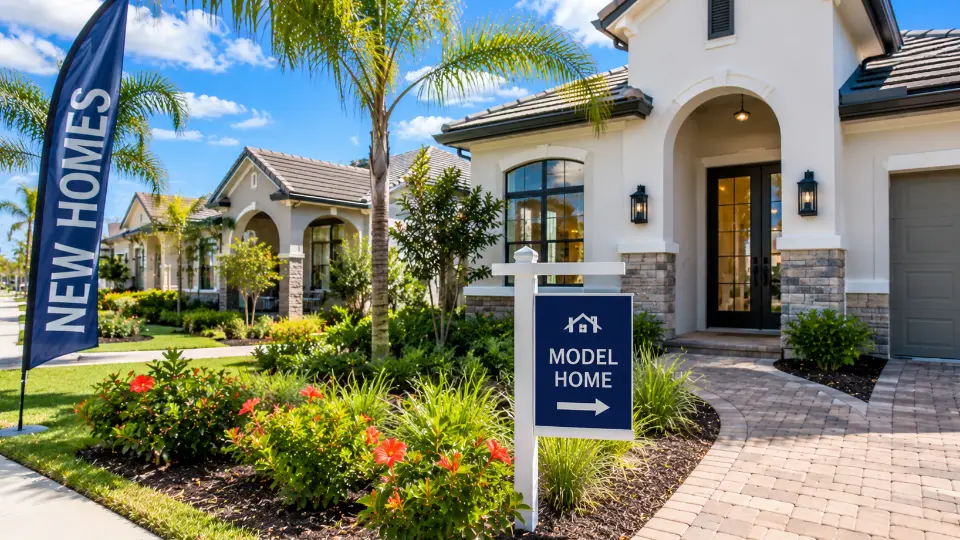
Yes, you can sometimes negotiate a new construction home, but the best opportunity may not be a simple reduction in the advertised price. Depending on the builder, property and market conditions, buyers may be able to negotiate a lower purchase price, closing-cost assistance, mortgage-rate incentives, upgrades, design credits or adjustments to a lot premium. Completed and nearly completed inventory homes can sometimes provide more flexibility than a home that has not yet been built. The key is to compare the entire transaction rather than focusing only on the builder's headline price.
Quick Answers About Negotiating New Construction
Can you negotiate the price of a new construction home?
Sometimes. Builders may negotiate the purchase price on selected homes, but they may also prefer to offer closing-cost credits, financing incentives, upgrades or other concessions. Flexibility depends on inventory, demand, construction stage and builder policy.
Why would a builder offer incentives instead of reducing the price?
Builders may want to preserve pricing within a community while still making a particular transaction more attractive. A closing-cost credit, financing incentive or upgrade allowance can provide value to a buyer without producing the same recorded sale-price reduction.
Are quick move-in homes easier to negotiate?
They can be. A completed or nearly completed home represents existing inventory for the builder, so selected quick move-in properties may receive price reductions or incentives. That does not mean every inventory home is negotiable, particularly when demand is strong.
Can you negotiate upgrades on a new home?
Sometimes. Depending on the construction stage and builder, negotiation may involve design-center credits, flooring, appliances, structural options or other upgrades. A completed inventory home usually provides less opportunity to change selections because many materials have already been installed.
Can a builder pay some of my closing costs?
Potentially. Closing-cost contributions are a common type of builder incentive, but the amount a buyer can use depends on the contract, actual eligible costs and applicable loan-program rules. Buyers should have a qualified mortgage professional confirm how a proposed credit can be applied.
Do I have to use the builder's lender to receive an incentive?
Not always, but some financing and closing-cost promotions are conditioned on using an affiliated or preferred lender or other provider. Compare the interest rate, loan fees, credits, cash required at closing and other loan terms rather than assuming the largest advertised incentive produces the lowest overall cost.
Should I use a real estate agent when buying new construction?
You are not generally required to use a real estate agent to buy from a builder. A buyer-side real estate professional can, however, help compare communities, pricing, competing inventory, incentives and transaction terms. Buyers should understand brokerage relationships and compensation before entering an agreement.
New Construction Negotiation Is About More Than the Base Price
One of the biggest mistakes buyers make is treating new construction exactly like a resale home. A homeowner selling one property and a builder selling dozens or hundreds of homes can have different priorities.
A resale seller may be primarily focused on the net proceeds from one transaction. A builder may also be considering pricing across an entire community, future sales, inventory levels, financing promotions and the pace at which completed homes are selling.
That means the question should not simply be, "How much will the builder take off the price?" A more useful question is, "What combination of price and incentives creates the best overall transaction for this specific buyer?"
Hunt Brothers Realty's guide to buying new construction in Florida explains additional issues buyers should evaluate before signing a builder contract.
What Can You Negotiate With a Home Builder?
Depending on the builder and property, the negotiation may involve several components rather than one discount.
- Purchase price: Selected homes may be eligible for a direct price reduction.
- Closing-cost contribution: The builder may contribute toward eligible buyer closing costs, subject to financing and contract requirements.
- Mortgage-rate incentive: Builder-affiliated lenders may offer temporary or permanent rate programs on qualifying transactions.
- Design credits: A buyer may receive an allowance toward eligible selections or upgrades.
- Lot premium: The builder may have some flexibility on the additional charge associated with a particular homesite.
- Structural or finish upgrades: Depending on construction stage, selected options may be included or discounted.
- Appliances or other features: Specific promotional packages may include appliances or other home features.
- Closing timeline: Timing can sometimes be part of the overall negotiation, particularly with completed inventory.
None of these items should be assumed to be negotiable. Builder programs can vary by community, floor plan, homesite and even individual inventory home.
Why Might a Builder Resist Cutting the Purchase Price?
Builders can have reasons to prefer incentives over an outright reduction in the recorded sale price. Recent sales can influence buyer expectations, future pricing discussions and appraisals of similar homes.
Imagine a builder has several similar homes remaining in a neighborhood. A substantial price reduction on one closing can become visible market evidence for buyers evaluating the remaining inventory. A concession structured through eligible closing costs or financing can affect the economics of one transaction differently.
This does not mean builders never reduce prices. Current Hunt Brothers Realty research confirms that selected inventory homes can receive price reductions, particularly when a builder wants to make a particular property more competitive. The important point is that purchase price is only one possible area of negotiation.
Quick Move-In Homes Can Create Different Negotiating Opportunities
A quick move-in home, sometimes called an inventory or spec home, is generally a property the builder has already started or completed without waiting for a specific buyer to select every component.
These homes can be particularly important when looking for negotiation opportunities. A builder carrying completed inventory may have more motivation to sell a particular residence than to discount a to-be-built home that has not yet created the same carrying considerations.
Look for signals such as:
- A completed home that has remained available
- Previous advertised price reductions
- Several similar inventory homes in the same community
- A floor plan with substantial competing inventory
- A builder advertising property-specific incentives
- A community approaching buildout
These factors can indicate potential leverage, but they do not guarantee a discount. The builder may already have incorporated its desired adjustment into the advertised price.
Builder Credit or Price Reduction: Which Is Better?
Neither is automatically better. They solve different problems.
A price reduction lowers the purchase price. For a financed buyer, however, a modest price reduction may produce a relatively small change in the monthly principal and interest payment because the reduction is spread across the loan term.
A builder credit may help cover eligible closing costs or, when permitted by the financing structure, contribute toward a mortgage-rate buydown. That can reduce the buyer's immediate cash requirement or change financing costs differently from a price reduction.
The detailed comparison in Hunt Brothers Realty's builder credits vs. price cuts guide explains why buyers should compare these incentives based on their actual financing and cash needs.
Do Not Evaluate a Mortgage Rate Incentive by the Headline Rate Alone
A builder may advertise a mortgage rate that looks substantially better than other available financing, but buyers need to understand how the offer works.
Ask whether the advertised rate is temporary or fixed for the full loan term. A temporary buydown may reduce the effective payment rate during the first one, two or several years before the payment reaches the underlying note rate. A permanent rate incentive works differently.
Buyers should compare:
- Interest rate
- Annual percentage rate when applicable
- Loan origination and lender fees
- Discount points
- Builder or lender credits
- Cash required at closing
- Monthly principal and interest
- How long any temporary rate lasts
- The payment after a temporary incentive expires
Financing incentives can have significant financial consequences. Buyers should compare written loan estimates and review the alternatives with a qualified mortgage professional before deciding which financing structure is appropriate for their circumstances.
Can You Negotiate a Lot Premium?
Potentially. Builders often charge different premiums for homesites based on factors such as size, orientation, water or preserve position, cul-de-sac location or other perceived advantages.
If several comparable homesites remain available, a buyer can ask whether the premium is negotiable or whether the builder can provide an offsetting incentive. The answer will depend on demand and builder policy.
Do not evaluate a homesite solely by its marketing description. Buyers should investigate drainage, easements, adjacent future development, road exposure, utilities, property boundaries and other site-specific issues with the appropriate qualified professionals before paying a substantial lot premium.
Can You Negotiate Design-Center Upgrades?
Sometimes, particularly when the buyer contracts early enough to make selections. A builder may offer a design allowance, promotional upgrade package or credit that can be applied to eligible options.
Before getting excited about a large upgrade allowance, ask what it can actually purchase. A credit may apply only to certain products or selections, and design-center pricing may differ from what a buyer expects based on retail renovation costs.
Also distinguish structural choices from cosmetic finishes. A larger garage, extended lanai, additional room or other structural option can be difficult or impractical to add later, while paint colors, fixtures and some flooring can generally be changed after ownership.
When Do Buyers Usually Have More Negotiating Leverage?
There is no calendar date that guarantees a better new-construction deal. Negotiating leverage is generally strongest when the builder has a reason to make a particular home more competitive.
Potentially favorable circumstances can include:
- Several completed homes are competing for buyers
- A specific inventory home has remained available
- The builder has already reduced a home's price
- The community has competing builders or nearby new-home communities
- Resale homes are providing strong competition
- The builder is actively advertising incentives on selected inventory
- The community or a particular construction phase is approaching completion
Builders may also use limited-time promotions, but buyers should avoid purchasing simply because an advertisement creates urgency. Verify the home's value and the complete economics of the offer independently of the promotional deadline.
Should You Make a Very Low Offer to a Builder?
There is no universal percentage that buyers should automatically subtract from a new home's asking price. A builder with multiple unsold completed homes may respond differently from a builder with a waiting list for a particular floor plan.
The better strategy is to understand the evidence. Compare the builder's recent sales, current inventory, price changes, competing communities and comparable resale properties where appropriate.
Hunt Brothers Realty's Florida home negotiation guide explains why a fixed percentage is generally less useful than property-specific market evidence.
Compare the Finished Price, Not the Advertised Base Price
A new home's advertised starting price may not resemble the amount a buyer ultimately pays. This is especially important when comparing new construction with resale homes.
Potential additions can include:
- Lot premium
- Structural options
- Design-center selections
- Appliance upgrades
- Pool and outdoor-living additions
- Window treatments
- Additional landscaping
- Closing costs not covered by an incentive
- HOA assessments
- CDD or other district assessments where applicable
The relevant comparison is the completed home and total ownership cost, not a builder's lowest advertised starting price. Hunt Brothers Realty's new construction vs. resale guide explains how these additional costs can change the comparison.
Do HOA and CDD Costs Matter When Negotiating?
Yes, because the purchase price is only one part of affordability. Many Florida new-construction communities have homeowners associations, and some properties are also within Community Development Districts.
An attractive builder incentive does not eliminate recurring HOA dues or applicable district assessments. A home with a larger incentive can still have a higher long-term ownership cost than a competing property.
Buyers considering communities with district assessments can review Hunt Brothers Realty's explanation of CDD fees in Florida. Current assessments should be verified for the individual property using the applicable district records and tax information.
Do You Still Need an Inspection on a Brand-New Home?
A new home can still have incomplete work, installation issues or construction defects. New does not mean an independent inspection has no value.
Depending on the construction stage and contractual access, buyers may consider inspections at different stages, including pre-drywall, before closing and before the expiration of an applicable builder warranty period.
The appropriate inspection scope depends on the property and construction stage. Inspection findings should be evaluated with qualified inspectors, contractors, engineers or other appropriate professionals, and the buyer's contractual rights regarding corrections should be reviewed under the specific builder agreement.
The Builder's Sales Representative Works for the Builder
A builder's onsite sales team can provide valuable information about floor plans, homesites, options, construction schedules and current promotions. Buyers should nevertheless understand the sales representative's role and which party that representative serves.
A separately engaged buyer-side real estate professional may help compare the builder's offering with competing new communities and resale properties, evaluate available incentives and assist with transaction milestones. Hunt Brothers Realty's guide to using a Realtor for new construction discusses this distinction in greater detail.
Builder policies regarding buyer-agent registration and compensation can vary. Buyers who want representation should clarify the process before or at the beginning of their interaction with a builder rather than assuming an agent can be added later under the same terms.
Builder Contracts Deserve Careful Review
New-construction transactions commonly use contracts prepared for the builder rather than the standard resale contract a buyer may have seen previously. The terms can address deposits, construction deadlines, permitted delays, material substitutions, inspections, financing, closing requirements, warranties, default and other important issues.
A negotiated incentive should therefore be documented in the written transaction documents. Buyers should not rely on an informal discussion about a credit, upgrade or other benefit if it is material to their decision.
Questions about contract rights, deposit risk, default provisions, completion obligations, warranty language or other legal issues should be reviewed with a qualified Florida real estate attorney before the buyer relies on a particular interpretation.
What Should You Ask Before Accepting a Builder Incentive?
- Is this incentive specific to this home or available throughout the community?
- Is the purchase price negotiable separately?
- Can multiple incentives be combined?
- Does the incentive require an affiliated lender or another provider?
- What happens to the incentive if I use my own lender?
- Is the advertised mortgage rate temporary or permanent?
- What loan fees or points are associated with that rate?
- How much of a closing-cost credit can my loan actually use?
- Can unused credit be applied elsewhere?
- Are design credits limited to specific options?
- Is there flexibility in the lot premium?
- What HOA, CDD or other assessments apply?
- Which amenities are complete and which are planned?
- What inspection access does the contract permit?
- What happens to my deposit under different cancellation or default scenarios?
- Is every negotiated item included in the written contract or addenda?
More Questions About Negotiating With a Builder
Will a builder negotiate if the market is slow?
Potentially. More unsold inventory and greater competition can increase a builder's motivation to offer attractive terms, but flexibility still varies by home and builder. A desirable floor plan or homesite can remain relatively firm even when other inventory is receiving incentives.
Can cash buyers negotiate more on new construction?
Not automatically. Cash removes mortgage approval as a transaction dependency, but a financed buyer using a builder-affiliated lender may qualify for incentives that are unavailable to a cash buyer. Compare the complete economics rather than assuming one payment method always creates more leverage.
Can you negotiate after signing the builder contract?
The buyer generally has substantially more leverage before entering the contract. Once a binding agreement is signed, changes depend on the contract and the builder's willingness to modify it. Buyers should understand the agreement before signing rather than expecting to renegotiate later.
Can you negotiate a model home?
Potentially. When a builder is ready to sell a model, the home may include extensive upgrades and furnishings, but buyers should clarify exactly what is included, the condition of the property and the builder's required closing or occupancy timeline. Model-home transactions can have terms that differ from ordinary inventory sales.
Should I buy new construction just because the builder offers a large incentive?
No. An incentive does not determine whether a property is a good fit or appropriately priced. Compare location, finished price, financing, HOA and district costs, insurance, property taxes, amenities and competing resale homes before deciding.
The Best New Construction Negotiation May Not Be a Price Cut
New construction is negotiable in some circumstances, but buyers should think beyond the sticker price. A builder may have limited flexibility on the advertised price while offering meaningful value through closing costs, financing, upgrades or a specific inventory-home incentive.
The strongest opportunity is usually property-specific. A completed home that has been available for an extended period can present a very different negotiation from a newly released homesite or popular floor plan with multiple interested buyers.
Most importantly, compare the entire transaction. The purchase price, lender incentives, loan costs, upgrades, lot premium, HOA dues, district assessments and future ownership expenses collectively determine whether the deal makes sense.
Hunt Brothers Realty can help buyers compare new construction with resale opportunities across Florida's Gulf Coast. Read our Florida new construction buyer's guide, review whether new construction is worth it in Florida, compare new construction vs. resale homes, or contact Hunt Brothers Realty before visiting new-home communities.
Informational notice: This article provides general real estate and educational information only and is not individualized legal, financial, tax, insurance, lending, inspection, engineering, construction, title or other professional advice. Builder prices, incentives, contracts, loan programs, HOA dues, district assessments and construction terms can change and vary by property. Buyers should verify all material terms in writing and consult the appropriate qualified real estate professional, mortgage professional, Florida real estate attorney, inspector, insurance professional, tax professional or other specialist when individualized guidance is required.
Sources
- Hunt Brothers Realty, Buying New Construction in Florida: What to Know
- Hunt Brothers Realty, Builder Credits vs. Price Cuts
- Hunt Brothers Realty, Is New Construction Worth It in Florida?
- Hunt Brothers Realty, New Construction vs. Resale Homes in Florida
- Hunt Brothers Realty, Should I Use a Realtor for New Construction in Florida?
- Hunt Brothers Realty, How Much Can You Negotiate on a Florida House?
Hunt Brothers Realty
Hunt Brothers Realty
46 N. Washington Blvd, Ste 3, Sarasota, FL 34236
Phone: (941) 388-7017
Email: info@huntbrothersrealty.com
Website: HuntBrothersRealty.com
Categories
- All Blogs 2513
- Anna Maria Island 90
- Bird Key 4
- Bradenton 240
- Buying a Home 1548
- Casey Key 2
- Clearwater 15
- Condos & HOA Living 1473
- Ellenton 6
- Englewood 14
- First Time Homebuyers 1664
- Foreclosures 4
- Home Selling 7
- Homeownership 1699
- Lakewood Ranch 32
- Lido Key 29
- Longboat Key 80
- Luxury/Waterfront Properties 1641
- Market Updates & Trends 1149
- Mortgages & Financing 77
- Move-Up Buyers 24
- Neighborhood Guides 1271
- New Construction 43
- Palmetto 4
- Parrish 33
- Port Charlotte 36
- Punta Gorda 164
- Real Estate Investing 1554
- Relocation to Florida 1587
- Safety Harbor 4
- Sarasota 119
- Sarasota - Downtown 168
- Selling a Home 146
- Siesta Key 93
- St. Petersburg 9
- Taxes and Homestead 3
- Tierra Verde 7
- Vacation & Second Homes 1747
- Venice 217
- Wellen Park 23
Recent Posts