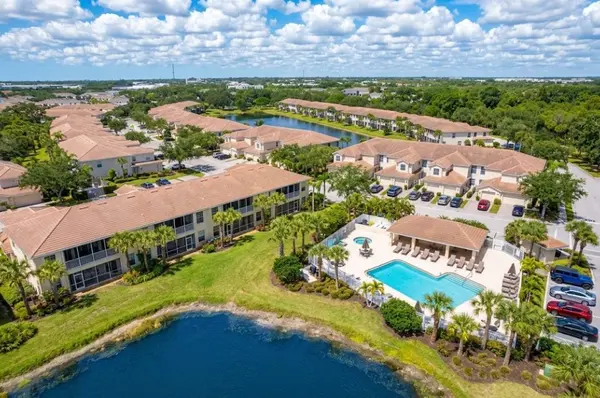
Price Improvement vs. Smart Pricing
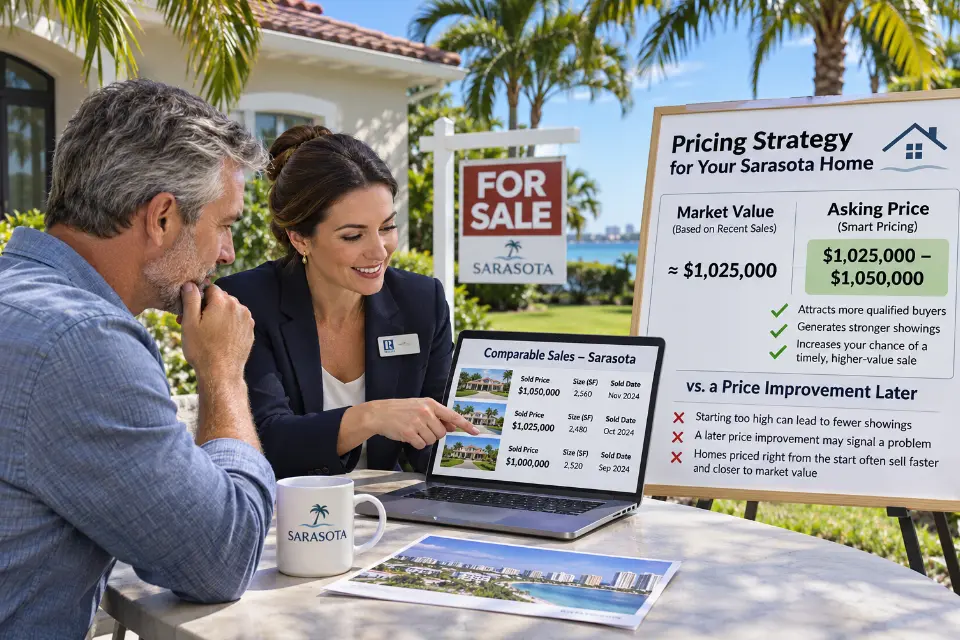
A price improvement and smart pricing are not the same strategy. A price improvement changes the asking price after a home is already on the market, usually in response to buyer activity, competing listings or updated market evidence. Smart pricing starts earlier by positioning the property against current comparable sales, active competition, condition, location and buyer demand. For Sarasota-area sellers, the objective is not simply to avoid price reductions. It is to establish and continually evaluate a price that makes sense for the property, the seller's goals and the market buyers are actually seeing.
Quick Answers About Price Improvements and Smart Pricing
What is a price improvement in real estate?
A price improvement is a reduction in a property's asking price after it has been listed for sale. It can be an appropriate response when market evidence indicates that the current price is not generating sufficient buyer interest or competitive offers.
What does smart pricing mean?
Smart pricing means selecting and evaluating a listing price using current comparable sales, active competition, property condition, location, market trends and the seller's objectives. It is a strategy based on evidence rather than simply choosing the highest possible asking price.
Does a price reduction mean the original price was wrong?
Not necessarily. Market conditions, competing inventory, financing conditions and buyer behavior can change after a home is listed. A price adjustment can be a rational response to new information, although repeated reductions can also indicate that the property began too far above the market.
Should sellers price high to leave room to negotiate?
Pricing above the evidence simply to create negotiating room can reduce buyer interest if competing homes appear to offer better value. Whether a particular property should include negotiating room depends on its market segment, competition, condition and the seller's priorities.
How quickly should sellers react to weak buyer interest?
There is no universal number of days that applies to every home. Sellers should evaluate showing activity, online engagement, buyer and agent feedback, new competing listings, pending sales and recent closings against the normal pace for their specific price range and property type.
Can better marketing solve an incorrect price?
Strong marketing can improve a home's exposure and presentation, but it cannot guarantee that buyers will accept a price unsupported by the market. Price, condition, presentation, exposure and competition work together.
Who determines a home's final listing price?
The seller makes the final decision on the asking price. A licensed real estate professional can provide comparable sales, competitive market information and a recommended pricing strategy to help the seller make an informed decision.
What Is the Difference Between a Price Improvement and Smart Pricing?
The primary difference is timing and purpose. Smart pricing is the broader process of positioning a property based on available market evidence. A price improvement is one possible adjustment within that process after the home has entered the market.
The National Association of Realtors consumer guide to pricing a home identifies property size, location, amenities, condition and current market conditions among the factors that can influence a recommended asking price. Comparable sales are another important part of the analysis.
Smart pricing does not mean selecting a deliberately low price, nor does it guarantee a particular sale price or number of days on market. It means establishing a defensible position based on the evidence available at the time and remaining willing to reassess that position when meaningful new information emerges.
Why Can Starting Too High Create Problems for a Seller?
Starting substantially above competing properties can make a home easier for buyers to eliminate during the first stage of their search. Today's buyers can compare asking prices, photos, features, location and competing inventory quickly, which means an ambitious price is often viewed in the context of alternatives rather than in isolation.
An overpriced listing may still receive online views, but views do not necessarily translate into showings or offers. If buyers consistently choose competing homes, the seller may eventually need to adjust the price after accumulating additional market time.
National Association of Realtors research has emphasized the relationship between longer market time and eventual price reductions. The practical lesson is not that every home must sell immediately, but that sellers should pay attention when the market repeatedly provides evidence that the property's current positioning is not competitive.
Why Is the First Listing Price So Important?
A new listing enters the market with no accumulated market time and gives interested buyers a fresh opportunity to evaluate it. That initial exposure is valuable because buyers already searching in the price range may see the property shortly after it becomes available.
The initial asking price also determines which buyers are likely to encounter the home in searches. Search ranges can matter. A property priced just above a commonly used search threshold may compete for a different audience than the same property positioned below that threshold.
That does not mean there is one mathematically perfect listing price. Real estate is heterogeneous, and buyers can assign different value to renovations, views, lot position, architecture and other features. The objective is to select a price range that can be supported by relevant market evidence while accounting for the home's individual characteristics.
What Does the 2026 Florida Market Say About Pricing?
Florida's 2026 housing data illustrates why sellers should avoid simplistic statewide conclusions. According to Florida Realtors' third-quarter 2026 market report, the statewide median sale price for single-family homes was $420,000, up 2.4% from the third quarter of 2025. Single-family inventory stood at a 4.4-month supply.
Florida single-family properties that sold during the quarter received a median 96.0% of their original list price, and the median time to contract was 47 days. Those statewide figures show that negotiation remains part of many transactions even while statewide prices have remained relatively stable.
The condominium and townhouse market tells a different story. Florida had a 7.7-month supply of condo and townhouse inventory in the third quarter of 2026, with a statewide median sale price of $295,000. This difference demonstrates why a Sarasota condominium should not automatically be priced using the same assumptions as a detached single-family home.
Why Does Local Sarasota Competition Matter More Than a National Headline?
A buyer considering a Sarasota home is usually comparing it with a relatively small set of realistic alternatives, not every home in Florida or the United States. Those competing properties can have a greater effect on pricing strategy than a national housing headline.
Even within Sarasota County, market conditions can differ by property type, community, price range and location. Waterfront property, downtown condominiums, Palmer Ranch homes, barrier-island residences and suburban single-family homes can have different buyer pools and competitive conditions.
Florida Realtors has also noted that the North Port-Bradenton-Sarasota metropolitan area can have a mismatch between the homes available and the price ranges local households can afford. For sellers, this is another reason that the number of competing listings alone does not tell the entire pricing story. The price and characteristics of that inventory matter too.
Which Comparable Sales Matter Most When Pricing a Home?
Useful comparable sales are generally properties that buyers would reasonably consider alternatives to the subject property. Location, property type, size, condition, age, view, lot characteristics, amenities and timing of the sale can all affect how useful a comparable is.
Recency matters because markets change. Florida Realtors highlighted advice in October 2026 emphasizing recent comparable sales when evaluating current value rather than relying heavily on transactions from much earlier market conditions.
Closed sales provide evidence of prices buyers and sellers actually agreed upon, but active and pending listings provide additional information. Active listings show the competition a seller faces today. Pending properties can provide evidence that buyers are responding to certain homes and price positions, although the final sale terms may not yet be public.
What Does Buyer Activity Tell a Seller About Price?
Buyer activity becomes a new source of information after a property is listed. Showing volume, repeat showings, inquiries, open-house activity, agent feedback and offers can help a seller evaluate how the market is responding to the combination of price, condition, presentation and location.
Very little showing activity can suggest that buyers are finding more attractive alternatives before visiting the property. Regular showings without offers may indicate a different issue, including price, condition, presentation or competition. Multiple offers can indicate another type of market response.
None of these signals should be interpreted mechanically. A luxury waterfront residence and an entry-level condominium can have dramatically different normal showing patterns. Sellers should compare their results with the expected activity for similar properties in the same market segment.
When Can a Price Improvement Be a Smart Move?
A price improvement can be part of smart pricing when new market evidence supports an adjustment. The important question is not whether the seller has reduced the price, but whether the new price materially improves the home's competitive position.
Examples of information that may justify reevaluating the asking price include:
- Comparable homes have recently closed below the assumptions used for the original price.
- New competing listings offer buyers stronger value at similar prices.
- Competing homes are going under contract while the subject property receives limited interest.
- Showing activity is materially weaker than comparable listings normally receive.
- Consistent buyer feedback identifies price relative to condition or features as an obstacle.
- Financing or broader market conditions have changed the purchasing power of likely buyers.
- The seller's timing or transaction priorities have changed.
A price improvement should therefore be evaluated strategically. A small reduction that leaves the property competing against exactly the same alternatives may produce a different result from an adjustment that reaches a new search range or clearly changes the home's value proposition.
Is One Meaningful Price Adjustment Better Than Repeated Small Reductions?
Sometimes, but the correct adjustment depends on the property and current evidence. The objective of a reduction should be to reposition the home, not simply to create a notification that the price changed.
The National Association of Realtors has reported that real estate professionals often look for price adjustments substantial enough to change buyer response when a listing begins to linger. However, no percentage should be applied automatically to every property. A reduction should be based on the competitive market position of the individual home.
Repeated small reductions can leave a home following the market rather than repositioning within it. On the other hand, an unnecessarily large reduction can give up negotiating room without evidence that such a change was required. A current comparative market analysis can help sellers evaluate the available options.
Can Sellers Use Concessions Instead of Lowering the Price?
Seller concessions can sometimes address a buyer concern without changing the asking price, but they are not interchangeable with price in every transaction. Depending on the circumstances, sellers may consider contributions toward certain closing costs, repairs or other negotiated terms.
Financing rules can limit the type or amount of concessions available to a particular buyer. A concession may also have a different effect on a buyer's immediate cash requirements than a price reduction.
Sellers should review the real estate implications with their licensed real estate professional. Buyers and sellers should consult the appropriate mortgage lender, tax professional, attorney or other qualified professional when a decision depends on financing, tax or legal consequences specific to the transaction.
Why Doesn't the Seller's Purchase Price Determine Today's Market Value?
What an owner paid for a property is part of the property's history, but current buyers make decisions based on today's alternatives and market conditions. The seller's original purchase price, renovation spending or desired net proceeds do not by themselves establish what another buyer will pay today.
Renovations can influence marketability and value, but improvement cost and resale contribution are not necessarily identical. Some improvements may be particularly valuable to the next buyer, while others reflect the current owner's personal preferences.
Tax basis, capital gains and the tax treatment of improvements are separate issues from listing-price strategy. Sellers with questions about their potential tax consequences should consult a qualified tax professional or CPA regarding their specific circumstances.
What Should Sarasota Sellers Review Before Changing Their Price?
Before changing a listing price, sellers should review what has changed since the property first entered the market. A decision based only on elapsed days can overlook useful information about competing listings and actual buyer response.
- Recent comparable closed sales
- New competing listings
- Comparable properties that recently went pending
- Listings that reduced their prices
- Showing volume and repeat showings
- Buyer and showing-agent feedback
- Online engagement compared with similar properties
- Property condition and presentation
- Current financing and affordability conditions
- The seller's desired timing and other transaction priorities
A licensed real estate professional can use current MLS information and property-specific analysis to help a seller interpret these factors. The appropriate strategy can differ significantly by neighborhood, property type and price range.
Is the Goal to Avoid Every Price Improvement?
No. The goal is to make informed pricing decisions as market evidence develops. A seller who refuses to adjust despite meaningful changes in competition may be no more strategic than a seller who reduces the price without understanding why.
Smart pricing is an ongoing process. It starts before the listing goes live, continues as buyers respond and can include a price improvement when the evidence supports one.
For Sarasota sellers, the strongest strategy is property-specific. A downtown condominium, Siesta Key waterfront residence, Palmer Ranch home and suburban single-family property can face very different competition even when they enter the market during the same week.
Build a Pricing Strategy With Hunt Brothers Realty
Pricing a Sarasota-area home requires more than choosing a number and waiting for the market to respond. Hunt Brothers Realty can help sellers evaluate current comparable sales, competing inventory, property characteristics and buyer activity to develop a property-specific listing strategy. Visit Hunt Brothers Realty or contact Hunt Brothers Realty to discuss selling a home in Sarasota and the surrounding Gulf Coast market.
Informational notice: This article provides general real estate information for educational purposes and is not an individualized valuation, appraisal, financial, tax, legal, lending or other professional recommendation. The appropriate listing price and pricing strategy depend on the individual property, current comparable sales, competition, market conditions and the seller's objectives. Sellers should review property-specific pricing with a licensed real estate professional. Tax, legal, financing and appraisal questions should be reviewed with the appropriate qualified tax professional, attorney, lender or licensed appraiser when individualized guidance is required.
Sources
- National Association of Realtors, Consumer Guide: What Goes Into Pricing Your Home
- National Association of Realtors, Listing Price Reduction: How to Navigate It With Buyers and Sellers
- Florida Realtors, Florida Housing Market September and Third Quarter 2026
- Florida Realtors, Florida Homes Reach Contract Faster in Q3 2026
- Florida Realtors, Florida Real Estate Experts Share Buying and Selling Tips
- Florida Realtors, Florida Markets Show Housing Mismatch Despite More Inventory
Hunt Brothers Realty
46 N. Washington Blvd, Ste 3, Sarasota, FL 34236
Phone: (941) 388-7017
Email: info@huntbrothersrealty.com
Website: HuntBrothersRealty.com
Categories
- All Blogs 2654
- Anna Maria Island 92
- Bird Key 5
- Bradenton 242
- Buying a Home 1675
- Casey Key 3
- Clearwater 16
- Condos & HOA Living 1603
- Ellenton 8
- Englewood 15
- First Time Homebuyers 1795
- Foreclosures 4
- Home Selling 10
- Homeownership 1840
- Lakewood Ranch 36
- Lido Key 29
- Longboat Key 81
- Luxury/Waterfront Properties 1781
- Market Updates & Trends 1283
- Mortgages & Financing 85
- Move-Up Buyers 24
- Neighborhood Guides 1410
- New Construction 46
- Palmetto 4
- Parrish 38
- Port Charlotte 36
- Punta Gorda 165
- Real Estate Investing 1694
- Relocation to Florida 1722
- Safety Harbor 4
- Sarasota 157
- Sarasota - Downtown 175
- Selling a Home 149
- Siesta Key 94
- St. Petersburg 11
- Taxes and Homestead 3
- Tierra Verde 7
- Vacation & Second Homes 1888
- Venice 225
- Wellen Park 24
Recent Posts