Should I Buy a House With Solar Panels?
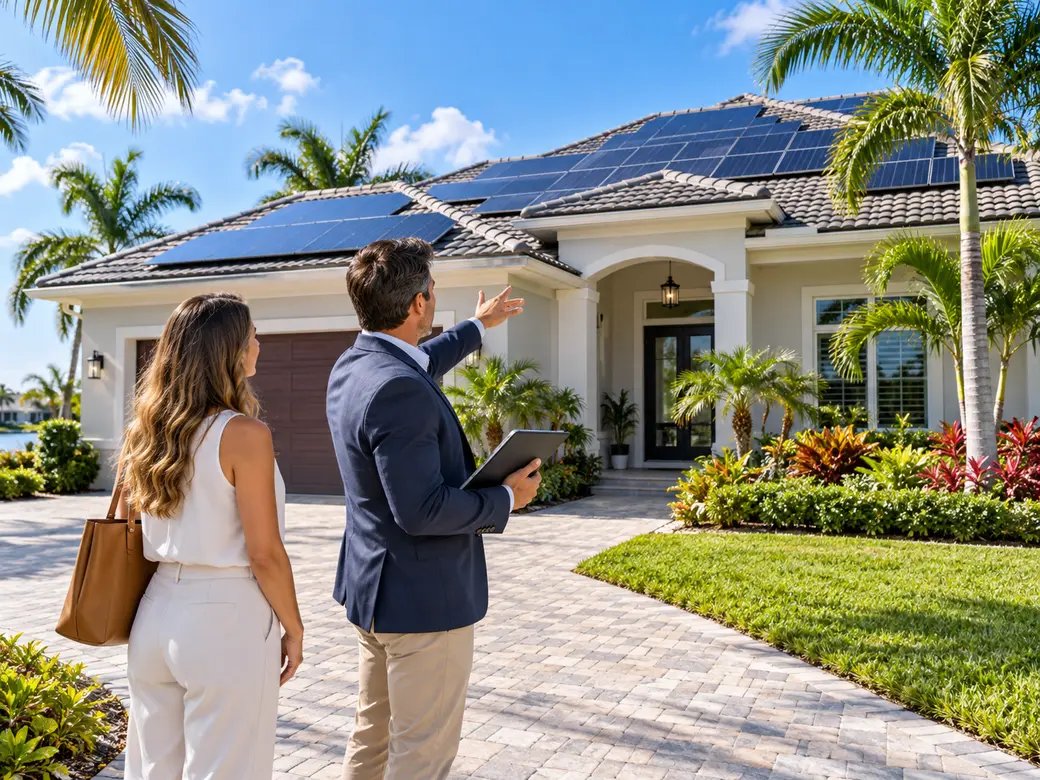
A house with solar panels can be a reasonable purchase, but the panels should be investigated as carefully as the roof, mortgage and insurance. The most important question is whether the solar system is owned outright, financed separately, leased or subject to a power purchase agreement. That distinction can affect your mortgage qualification, closing process, monthly expenses, appraised value and future ability to replace the roof. Florida buyers should also verify the system's age, production history, warranties, permits, utility interconnection, insurance treatment and any payoff or transfer requirements before deciding what the solar equipment is worth to them.
Solar panels should not automatically make a home more or less attractive. A paid-off system on a sound roof with clear documentation presents a very different ownership situation from a long-term solar lease, an outstanding equipment loan or panels installed over a roof nearing replacement. Hunt Brothers Realty's Florida property-readiness guide explains why buyers and sellers should identify solar ownership, financing and transfer requirements early in a transaction.
Quick Answers About Buying a House With Solar Panels
Is It Better if the Solar Panels Are Owned Outright?
Owned and fully paid solar panels are generally simpler to evaluate because there is no separate lease or solar debt to transfer to the buyer. The buyer should still verify ownership, warranties, permits, utility interconnection, equipment condition and the relationship between the solar system and the roof.
Can I Buy a House With a Solar Loan?
Potentially, but the loan documents matter. A solar obligation may need to be paid off, may affect mortgage underwriting or may require another approved arrangement. Do not assume a buyer can simply take over the seller's solar loan. The mortgage lender, title professional and solar lender should review the actual agreement.
What If the Solar Panels Are Leased?
A leased system requires review of the lease, monthly payment, remaining term, escalation provisions, maintenance responsibilities, transfer process and end-of-term options. Mortgage underwriting can also treat leased solar differently from owned equipment.
Do Solar Panels Increase a Home's Appraised Value?
Not automatically. Fannie Mae permits qualifying owned solar equipment to be considered under normal appraisal requirements, but leased panels and equipment subject to certain third-party ownership arrangements cannot simply be added to the home's value. Market evidence and the ownership structure matter.
Can Solar Panels Affect Homeowners Insurance in Florida?
Yes. Florida's Department of Financial Services specifically advises consumers that installing rooftop solar may affect future insurance premiums or coverage requirements. Buyers should obtain a property-specific quote and confirm how the insurer will treat the existing system before closing.
What if the Roof Needs Replacement?
Roof replacement may require the solar equipment to be professionally removed and later reinstalled. Buyers should investigate who can perform that work, what it may cost, whether warranties are affected and whether roof replacement is likely during their expected ownership period.
Will Solar Panels Eliminate My Electric Bill?
Do not assume so. Actual utility costs depend on system production, household electricity use, utility charges, interconnection terms and current rate structures. Review historical production and utility records for the specific property rather than relying on a marketing estimate.
The First Question: Who Actually Owns the Solar Panels?
Solar ownership is the starting point for almost every other question. Current Fannie Mae solar-property guidance identifies several common structures:
- Panels owned outright by the homeowner
- Panels purchased with separate financing
- Third-party leased solar equipment
- Power purchase agreements
Those arrangements can look almost identical from the street but create very different legal and financial obligations. The listing description should therefore be treated as the beginning of the investigation, not the final answer.
Ask the seller for the actual purchase agreement, loan documents, lease or power purchase agreement and available warranty information. The mortgage lender and closing professional should also determine whether title records or Uniform Commercial Code filings affect the transaction.
What Does It Mean if the Solar Panels Are Owned and Paid Off?
A paid-off system usually creates fewer transaction complications because there is no ongoing solar lease or separate solar-payment obligation for the buyer to assume. Under Fannie Mae guidance, when the borrower will own the panels and they have been paid in full, standard requirements concerning appraisal, title and insurance generally apply.
Paid off does not mean due diligence is finished. Buyers should still investigate:
- Who purchased and installed the system
- Installation date
- Panel and inverter specifications
- Permits and final inspection records
- Remaining equipment warranties
- Whether warranties transfer to a new owner
- Historical energy production
- Utility interconnection documentation
- Maintenance or service history
- Roof age at the time of installation
- Any history of roof leakage or panel removal
An inspector, roofing professional, solar contractor, electrician or other qualified specialist may be appropriate depending on the condition or question being investigated.
What if the Seller Still Owes Money on the Solar Panels?
An outstanding solar loan can materially affect the transaction. Buyers should determine whether the obligation will be paid in full by the seller, whether an assumption is even permitted, how the loan is secured and whether any filing appears in the property or personal-property records.
Fannie Mae requires mortgage lenders to investigate the solar financing structure. Depending on how separately financed panels are collateralized, the lender may need to include the solar obligation in the buyer's debt-to-income calculation and review title or Uniform Commercial Code filings.
Do Not Assume the Solar Loan Transfers Automatically
A statement such as "the buyer can just take over the solar payment" should be verified against the actual loan documents and financing requirements. A solar lender may impose credit qualification, assumption conditions or payoff requirements, while the buyer's mortgage lender may have its own requirements for the property to qualify.
Questions about payoff, lien priority, transfer obligations or the legal effect of recorded financing should be reviewed with the applicable solar lender, mortgage lender, title professional and a qualified Florida real estate attorney when legal interpretation is needed.
What if the Home Has PACE Financing?
PACE financing deserves separate attention because it can be repaid through a property-related assessment rather than operating like an ordinary unsecured consumer loan. Hunt Brothers Realty's seller-readiness guidance specifically recommends identifying PACE and other financed improvements before going under contract.
For mortgages intended for sale to Fannie Mae, a property with solar equipment financed through a PACE obligation is not eligible if that PACE loan remains unpaid. Fannie Mae requires it to be paid in full before or at closing.
Other mortgage programs can have their own requirements. Buyers should therefore identify any PACE assessment early enough for the lender and closing professional to determine what must happen before closing.
What if the Solar System Is Leased?
A leased system means the homeowner does not own the solar equipment outright. The buyer may be asked to assume the remaining lease, subject to the solar company's terms and the buyer's financing.
Before agreeing to a transfer, investigate:
- Current monthly lease payment
- Remaining lease term
- Whether payments increase over time
- Transfer requirements and fees
- Buyer credit requirements
- Maintenance responsibilities
- Production guarantees, if any
- Insurance responsibilities
- Roof-removal and reinstallation provisions
- Buyout options
- End-of-term options
- Equipment-removal obligations
A Lease Can Also Affect Mortgage Underwriting
Fannie Mae requires certain solar lease payments to be considered when calculating the borrower's debt-to-income ratio, subject to specific exceptions. Leased panels also cannot simply be included as property value in the appraisal because the homeowner does not own the equipment.
Have the mortgage lender review the lease before relying on a preapproval amount that was calculated without the solar obligation.
What Is a Solar Power Purchase Agreement?
Under a power purchase agreement, a third party generally owns the solar equipment and the homeowner pays for electricity generated by the system according to the contract. It is therefore different from simply owning panels that reduce electricity purchased from the utility.
Review the remaining contract term, energy-pricing formula, escalation provisions, transfer requirements, maintenance duties and end-of-contract options. Fannie Mae guidance permits certain power purchase payments that are based solely on energy generated to be excluded from the borrower's debt-to-income calculation, but other property and documentation requirements still apply.
The buyer's mortgage professional should make the underwriting determination for the actual agreement rather than relying on a general description of how power purchase agreements usually work.
Do Solar Panels Add Value to a Florida Home?
Solar equipment may contribute value in some transactions, but there is no universal formula saying that a solar system adds a specific dollar amount or percentage to a home. The system's ownership, condition, age, production and local market evidence all matter.
Current Fannie Mae rules illustrate the importance of ownership. Owned systems can potentially contribute to appraised value when supported under normal appraisal requirements. Leased panels and certain third-party-owned systems cannot simply be treated as assets belonging to the homeowner.
A buyer should therefore avoid paying an automatic premium simply because a listing advertises solar. Review comparable sales, the solar documents and the complete ownership costs when deciding what price the property supports.
How Does the Roof Affect the Solar Decision?
The roof and solar system should be evaluated together. Florida's Department of Financial Services specifically requires solar sellers and lessors to disclose that consumers should consider the age and remaining life of the roof because roof replacement may require solar removal and reinstallation.
Ask:
- How old is the roof?
- Was the roof replaced before or after the solar installation?
- Were roof penetrations properly permitted and flashed?
- Has the roof leaked since solar installation?
- Who is authorized to remove and reinstall the panels?
- How would panel removal affect equipment or workmanship warranties?
- Who pays for removal and reinstallation?
- Would a roof replacement require new permits or electrical work?
Hunt Brothers Realty's guide to what to look for in a roof before buying a home explains why roof condition, permits, remaining service life and insurance should be investigated separately from the home's cosmetic appearance.
Should I Have the Solar System Inspected?
A standard home inspection may identify visible conditions involving the roof, electrical equipment and accessible solar components, but buyers should not assume that every general home inspector performs a complete solar-performance or photovoltaic-system evaluation.
Depending on the system, further evaluation may include:
- Panel condition
- Mounting and visible roof penetrations
- Inverter condition
- Visible electrical equipment
- Disconnects and labeling
- Monitoring equipment
- Battery storage when present
- Historical system output
- Evidence of nonfunctioning panels or equipment
Material findings should be evaluated with an appropriately qualified solar contractor, electrician, roofing contractor, engineer or other specialist before the buyer makes a purchasing decision.
Can Solar Panels Affect Florida Homeowners Insurance?
Yes. The Florida Department of Financial Services specifically warns consumers that installing distributed solar equipment may affect future insurance premiums and that owners should confirm whether coverage needs to be modified.
For a buyer of an existing solar home, that makes an early insurance quote important. The seller's policy does not guarantee the buyer will receive the same premium, coverage or underwriting treatment.
Hunt Brothers Realty recommends beginning property-specific insurance research early in the transaction. The guide to shopping for Florida homeowners insurance explains why buyers should investigate the roof, electrical system, storm-protection characteristics and other underwriting issues before important contract deadlines expire.
Insurance availability, coverage, exclusions, deductibles and premiums can vary substantially by property and insurer. Buyers should have the specific solar system and roof reviewed with a qualified insurance professional before making a purchasing decision.
Will I Receive Credit for the Electricity the Solar System Produces?
Florida law recognizes net metering for customer-owned renewable generation, but buyers should verify the exact utility arrangement for the home rather than assuming all solar production is credited in the same way.
Florida Statute 366.91 defines net metering as a billing methodology allowing qualifying customer-owned renewable generation to offset electricity consumed on site. Utility-specific interconnection agreements, billing practices, fixed charges and other requirements can still affect the actual financial result.
Ask for Actual Utility and Production Records
Instead of relying on a statement that the seller's electric bill is "$20 per month," request available utility statements and solar-production records over a meaningful period. Household electricity use can change dramatically from one owner to another, so the seller's bill should not be treated as a prediction of your future bill.
Also ask the utility or solar provider what steps are required to transfer or establish the interconnection account in the buyer's name.
What Florida Tax Rules Apply to Residential Solar?
Florida provides favorable state tax treatment for qualifying solar-energy equipment, although buyers should distinguish incentives that apply when equipment is purchased from those affecting an already installed system.
The Florida Department of Revenue identifies a sales-and-use-tax exemption for qualifying solar energy systems and specified components. That exemption is most directly relevant to acquiring qualifying equipment rather than determining the value of an existing home purchase.
Florida's renewable-energy property-assessment statute also provides that, for residential real property, the portion of just value attributable to a qualifying renewable-energy source device is not considered in determining assessed value under the statute.
Tax consequences depend on the owner, property and current law. Buyers should have property-tax or income-tax questions reviewed with the appropriate county property appraiser, qualified tax professional or CPA rather than assuming a particular tax benefit will apply to their individual transaction.
Can an HOA Prohibit Solar Panels in Florida?
Florida law significantly limits the ability of deed restrictions and similar private covenants to prohibit renewable-energy devices. Florida Statute 163.04 provides that deed restrictions, covenants and similar agreements may not prohibit or have the effect of prohibiting solar collectors and other renewable-energy devices.
That does not mean every association-related solar question is automatically resolved. Buyers purchasing an existing solar home should verify that applicable association approvals were obtained and review the governing documents for any lawful installation, maintenance or architectural requirements that affect the property.
Questions concerning the legal effect of HOA restrictions or statutory rights should be reviewed with a qualified Florida real estate attorney.
What Warranties Should I Ask for?
Solar warranties can apply to different components and services, so a statement that the system "has a 25-year warranty" may not tell the buyer enough. Ask for the actual documents and determine which warranties remain in force and whether they transfer.
Potential warranty categories include:
- Panel product warranty
- Panel production or performance warranty
- Inverter warranty
- Battery warranty when applicable
- Installation or workmanship warranty
- Roof-penetration warranty
- Monitoring equipment warranty
Confirm whether the installer remains in business, whether a new owner must register the transfer, and whether panel removal by another contractor could affect warranty coverage.
What if the Home Has Solar Batteries?
Battery storage creates another set of questions because the battery has its own ownership, age, warranty, capacity and installation requirements. Do not assume a solar-equipped home will provide electricity during an outage unless the system specifically includes functioning storage and is configured to provide backup power.
Ask about:
- Battery ownership
- Installation date
- Usable storage capacity
- Remaining warranty
- Whether the battery has been replaced
- Backup circuits or whole-home configuration
- Maintenance and monitoring
- Permits and electrical documentation
- Insurance treatment
Electrical and battery-condition questions should be evaluated by appropriately qualified professionals.
Can Solar Panels Complicate the Appraisal or Mortgage?
They can when ownership or financing is unclear. A lender needs to know whether the solar equipment belongs to the homeowner, is collateral for another debt or is owned by a third party.
Fannie Mae specifically instructs lenders to determine solar ownership and financing, review relevant credit and title information, and provide the appraiser with accurate ownership information. If documentation is insufficient, the lender may not be able to treat the panels as contributing value without additional evidence concerning ownership and collateral filings.
This is why solar documentation should ideally be reviewed before a buyer removes important financing or due-diligence protections. Mortgage requirements vary by loan program and lender, so the buyer's mortgage professional should determine what applies to the actual transaction.
How Should I Compare the Solar Payment With the Utility Savings?
When a solar lease or loan remains, compare the complete solar obligation with actual historical energy production and utility expenses. A low utility bill does not necessarily mean low total energy cost if the homeowner also makes a substantial monthly solar payment.
For example, look at:
- Monthly utility charges
- Monthly solar loan or lease payment
- Annual payment increases, if any
- System production by month and year
- Household electricity consumption
- Utility fixed charges
- Maintenance expenses
- Future inverter, battery or equipment replacement
Energy costs and future utility rates cannot be predicted with certainty. Buyers needing individualized financial analysis should review the actual contract and household usage assumptions with appropriate qualified professionals.
What Documents Should I Request Before Buying a Solar Home?
A well-documented solar system is much easier to evaluate than one where ownership, installation and performance records are missing. Depending on the property, request available copies of:
- Original solar purchase agreement
- Loan agreement and current payoff information, if financed
- Lease or power purchase agreement, if applicable
- Transfer instructions
- Installation contract
- Permits and final inspection records
- Panel, inverter and battery specifications
- Warranties
- Service and repair records
- Historical solar-production reports
- Recent utility bills
- Utility interconnection or net-metering documentation
- Roof installation or replacement records
- Insurance information relating to the system when available
- Applicable HOA approval records
The absence of a particular record does not automatically mean the home is unsuitable. It means the buyer may need additional verification before relying on assumptions about the equipment or financial obligations.
A Practical Solar Homebuyer Checklist
Before deciding how solar affects the value of a house to you, try to answer these questions:
- Who owns the solar equipment? Confirm whether the seller owns it, owes money on it or leases it.
- What financial obligation remains? Obtain payoff, lease or power purchase agreement information.
- Can the obligation legally and practically transfer? Verify with the solar provider, lender and closing professional.
- How will my mortgage lender treat it? Determine any effect on debt-to-income ratio, title, appraisal or eligibility.
- How old is the roof? Consider whether panel removal may be required during your expected ownership period.
- What does the insurance company say? Obtain a property-specific quote that includes the existing system.
- Is the equipment functioning? Review production history and consider a qualified solar-system evaluation.
- Are permits and approvals available? Check solar, electrical, roof and association documentation as applicable.
- What warranties remain? Verify transferability and service requirements.
- What does the utility agreement provide? Confirm interconnection and current billing treatment.
- Does the solar arrangement make financial sense to me? Compare total costs rather than only the electric bill.
Frequently Asked Questions About Buying a Home With Solar Panels
Should I Avoid a House With Leased Solar?
A lease by itself does not determine whether the house fits your needs. Review the remaining term, payment structure, transfer process, mortgage treatment and total economics before deciding how the lease affects the property's value to you.
Should the Seller Pay Off the Solar Loan Before Closing?
That may be one possible transaction structure, but the correct approach depends on the solar loan, purchase contract, mortgage requirements and negotiations between the parties. Obtain a current payoff and have the lender and closing professional determine what is required.
Can I Ask for a Price Reduction Because Solar Is Leased?
A buyer can negotiate price and terms, but whether a lower price is supported depends on comparable sales, the lease obligation, property condition, competition and seller motivation. Analyze the complete property rather than applying an automatic discount to every leased-solar home.
Can Solar Panels Cause Roof Leaks?
Roof penetrations and installation details deserve inspection, but the presence of solar panels does not establish that a roof leaks. Ask an appropriate inspector or roofing professional to evaluate visible conditions and investigate any evidence of moisture or prior repairs.
What Happens to Solar Panels During a Hurricane?
Performance during a storm depends on the specific equipment, installation, mounting, building conditions and severity of the event. Buyers should verify permits and installation documentation and discuss storm damage coverage with their insurance professional rather than assuming that the presence of solar creates or eliminates a particular storm risk.
Do Solar Panels Work During a Power Outage?
Do not assume they do. Many grid-connected solar systems are designed to shut down when the electrical grid is offline unless the property has compatible battery storage and equipment configured for backup operation. Verify the actual system design.
Will a Solar Warranty Cover Roof Removal and Reinstallation?
Not necessarily. Equipment, production and workmanship warranties can cover different things. Review the actual contract to determine whether removal and reinstallation for roof work is covered or remains the homeowner's expense.
Can Solar Make a Home Harder to Sell Later?
Future resale depends on market conditions, the home's overall characteristics and the solar arrangement at that time. Unclear ownership, difficult transfer terms or substantial remaining obligations can create additional transaction questions, while a clearly documented owned system presents a different situation. Future resale outcomes cannot be guaranteed.
Should You Buy a House With Solar Panels?
Solar panels should be evaluated as one part of the property rather than as an automatic benefit or warning sign. A paid-off, properly documented system installed on a sound roof can create a very different buying experience from a leased system with escalating payments or a financed installation that creates mortgage and title complications.
Before deciding, identify who owns the panels, determine whether any obligation survives closing, review the roof, obtain an insurance quote, confirm mortgage eligibility, examine utility and production records and investigate warranties and permits. Once those facts are clear, you can evaluate the home using the same question that applies to any major property feature: Does the complete ownership arrangement make sense for the price you are being asked to pay?
Evaluate Florida Homes With Solar With Hunt Brothers Realty
Hunt Brothers Realty helps Florida Gulf Coast buyers identify property-specific questions involving solar financing, roofs, insurance, inspections and other ownership considerations before making an offer. Explore the Florida Buyer Resource Center, review what to look for in a roof before buying, learn when to start shopping for Florida homeowners insurance, or contact Hunt Brothers Realty when you are evaluating a home with solar equipment.
Informational notice: This article provides general real estate and educational information only and is not individualized legal, financial, tax, insurance, lending, appraisal, electrical, roofing, engineering, solar-system or title advice. Solar ownership, financing, transfer rights, utility agreements, insurance, warranties, mortgage eligibility and tax treatment vary by property and transaction. Buyers should have financing reviewed by a qualified mortgage professional, insurance reviewed by a qualified insurance agent, equipment and roof conditions evaluated by the appropriate inspectors and contractors, title and lien questions reviewed by a qualified title professional, tax questions reviewed by a CPA or other qualified tax professional, and contract or legal questions reviewed by a qualified Florida real estate attorney before making a purchasing decision.
Sources
- Fannie Mae, Special Property Eligibility Considerations for Properties With Solar Panels
- Florida Department of Financial Services, Distributed Energy System and Property Insurance Consumer Information
- Florida Legislature, Section 163.04, Renewable Energy Devices and Private Restrictions
- Florida Legislature, Section 366.91, Renewable Energy and Net Metering
- Florida Legislature, Section 193.624, Assessment of Renewable Energy Source Devices
- Florida Department of Revenue, Solar Energy Systems Sales Tax Exemption
- Hunt Brothers Realty, Florida Property Readiness and Solar Financing
- Hunt Brothers Realty, What to Look for in a Roof Before Buying a Home
- Hunt Brothers Realty, When Florida Homebuyers Should Shop for Insurance
Contact Hunt Brothers Realty
Hunt Brothers Realty
46 N. Washington Blvd, Ste 3
Sarasota, FL 34236
Phone: (941) 388-7017
Email: info@huntbrothersrealty.com
Website: HuntBrothersRealty.com
Categories
- All Blogs 1706
- Anna Maria Island 81
- Bird Key 3
- Bradenton 190
- Buying a Home 826
- Casey Key 2
- Clearwater 6
- Condos & HOA Living 726
- Ellenton 4
- Englewood 5
- First Time Homebuyers 912
- Foreclosures 3
- Homeownership 907
- Lakewood Ranch 16
- Lido Key 27
- Longboat Key 76
- Luxury/Waterfront Properties 844
- Market Updates & Trends 440
- Mortgages & Financing 37
- Move-Up Buyers 20
- Neighborhood Guides 585
- New Construction 28
- Palmetto 2
- Parrish 5
- Port Charlotte 9
- Punta Gorda 13
- Real Estate Investing 774
- Relocation to Florida 823
- Safety Harbor 2
- Sarasota 35
- Sarasota - Downtown 146
- Selling a Home 140
- Siesta Key 88
- St. Petersburg 4
- Tierra Verde 4
- Vacation & Second Homes 959
- Venice 22
- Wellen Park 7
Recent Posts