Should I Replace My Roof Before Selling?
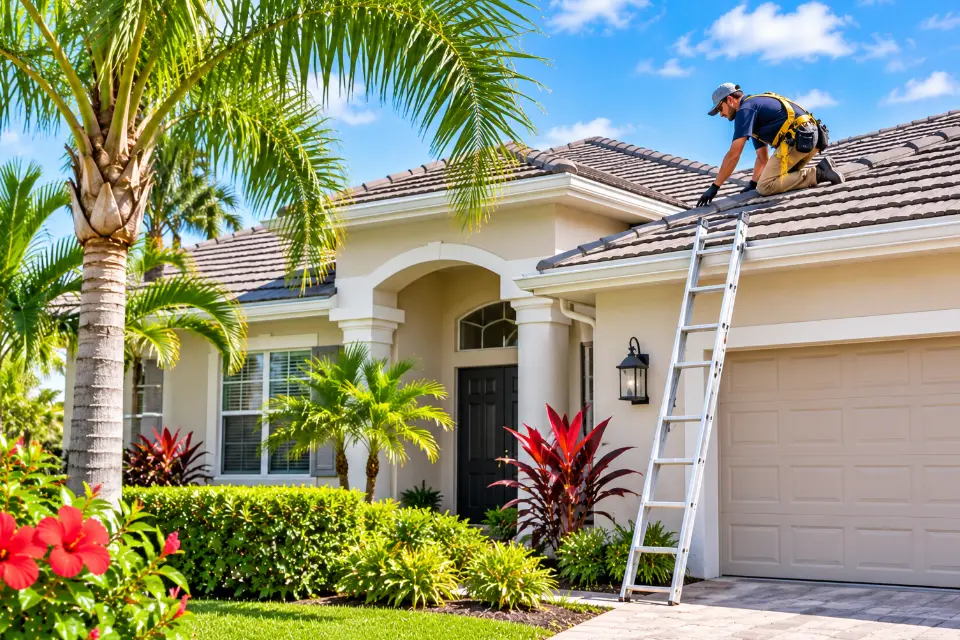
You should not automatically replace your roof before selling a Florida home. Start by determining its actual age, condition, remaining useful life, permit history and whether it is likely to create insurance, inspection or buyer concerns. A roof with active leaks or significant deterioration may justify repair or replacement before listing, while an older roof that remains in acceptable condition may call for a different strategy. Because Florida insurance underwriting can materially affect a buyer's ability and willingness to complete a purchase, sellers should evaluate the roof with qualified roofing and insurance professionals before spending thousands of dollars on replacement.
Quick Answers About Replacing a Roof Before Selling
Do I have to replace an old roof before selling my Florida home?
No. Roof age alone does not automatically require a seller to replace a roof before listing a Florida home. Condition, remaining useful life, insurance considerations, buyer expectations and the terms of the eventual contract all matter.
Does a 15-year-old roof automatically need replacement in Florida?
No. Florida's insurance rules do not create a universal rule requiring replacement at 15 years. If a roof is at least 15 years old, an insurer must allow an authorized inspection before requiring replacement solely because of age, and the insurer cannot refuse coverage solely because of roof age when the inspection shows at least five years of useful life remaining.
Can an older roof make a Florida home harder to sell?
It can. Buyers may consider near-term replacement costs, while insurers may evaluate the roof's age, type and condition during underwriting. A roof issue can therefore affect negotiations even when the roof is not actively leaking.
Should I get my roof inspected before listing?
It can be useful when the roof's condition or remaining life is uncertain. A qualified evaluation can give the seller better information before deciding between repair, replacement, pricing for the condition or listing without roof work.
Will replacing the roof increase my sale price by the full replacement cost?
Do not assume so. A new roof can remove a buyer objection and may improve marketability, but that does not guarantee dollar-for-dollar recovery of the replacement cost. Sellers should compare the cost with local competing listings, comparable sales and likely buyer concerns.
Can I sell my home as is with an older roof?
An as-is sale can be possible, but it does not make known material defects or applicable disclosure obligations disappear. The roof's condition may still influence inspections, insurance, financing, negotiations and the price buyers are willing to offer.
Can I offer a roof credit instead of replacing it?
Sometimes, but a credit does not solve every problem. If the buyer cannot obtain acceptable insurance or financing with the existing roof, simply reducing the price or offering a credit may not address the obstacle. The feasibility of any credit also depends on the contract and, when applicable, lender requirements.
When Should You Seriously Consider Replacing the Roof Before Selling?
Replacement deserves serious consideration when a qualified evaluation identifies significant deterioration, active leakage, widespread damage or insufficient remaining useful life. In those situations, the roof can become more than a cosmetic buyer objection.
Hunt Brothers Realty's guide to repairs before selling a Florida home recommends prioritizing significant defects and functional problems before cosmetic improvements. Roof problems, active leaks and water intrusion belong near the top of that evaluation because they can concern buyers, inspectors and insurers.
Replacement may also become strategically important when credible property-specific insurance information indicates the existing roof will materially restrict the likely buyer pool. That determination should come from actual roofing and insurance information, not from a generalized assumption about roof age.
When Might You Not Need to Replace the Roof?
You may not need replacement when the roof is functioning properly, has acceptable remaining useful life and does not present significant defects. An older roof and a failed roof are not the same thing.
Documentation can be valuable in this situation. Sellers should organize available permits, invoices, warranties, repair records, inspection reports and information about when the roof was installed. Accurate documentation can help buyers and their professionals understand what they are evaluating.
A seller may also decide not to replace a roof when the home's price and marketing strategy appropriately reflect its condition. That approach should be based on the actual market and property rather than an assumption that every buyer will view the roof the same way.
What Does Florida's 15-Year Roof Rule Actually Mean?
Florida does not have a rule saying every roof must be replaced when it turns 15 years old. The 15-year threshold relates to protections involving homeowners insurance underwriting based solely on roof age.
According to the Florida Department of Financial Services, an insurance company cannot refuse to issue or renew a homeowners insurance policy on a home with a roof less than 15 years old solely because of the roof's age.
For a roof that is at least 15 years old, the insurer must allow the homeowner to obtain a roof inspection from an authorized inspector before requiring roof replacement as a condition of issuing or renewing the policy based solely on age. If that inspection indicates at least five years of useful life remaining, the insurer may not refuse to issue or renew solely because of roof age.
That protection should not be interpreted as a guarantee that every insurer must accept every older roof. Insurers have broader underwriting criteria, and condition, roof type and other characteristics of the property can matter. Sellers and buyers should obtain property-specific guidance from a licensed insurance professional.
Why Does the Roof Matter So Much to Florida Home Buyers?
The roof can affect both the physical condition of the home and the buyer's insurance process. Florida's Department of Financial Services says homeowners insurers may consider the age, type and construction of the roof when determining eligibility and premiums.
For older homes, an insurer may request a four-point inspection covering the roof, plumbing, electrical and HVAC systems. The Department also notes that insurers sometimes request a specialized roof inspection to determine life expectancy.
This is why sellers should be careful with statements such as "the roof is insurable" or "insurance will not be a problem." Insurance availability, underwriting, coverage and premiums are property-specific and insurer-specific. The buyer should verify those matters with a qualified insurance professional.
Does Citizens Have Its Own Roof Requirements?
Yes. Citizens Property Insurance Corporation has its own current inspection and eligibility requirements, which should not be confused with a universal rule applying to every Florida insurer.
Citizens currently states that roofs older than 25 years for shingle and similar "soft" roofing, or 50 years for tile, slate, clay, concrete or metal "hard" roofing, require documentation showing at least five years of remaining useful life. A Florida-licensed inspector must inspect the roof for visible damage or deterioration.
Citizens further states that when such a roof has less than five years of remaining useful life, the property owner must provide proof of a full roof replacement before a Citizens policy is written. Sellers should verify the current requirements directly with Citizens and the buyer's insurance professional because eligibility requirements can change.
Should You Get a Roof Inspection Before Listing?
A roof evaluation can be useful when the roof's condition or remaining useful life is unclear, particularly if the roof is older or has a history of repairs or leakage. The purpose is to gather information before making an expensive decision.
An appropriate roofing professional can evaluate visible conditions and advise on repair or replacement from a roofing perspective. Insurance documentation may require a particular inspection form or an inspector meeting specific qualifications, so sellers should not assume that every roof evaluation will satisfy every insurer.
If the goal is specifically to understand insurance implications for prospective buyers, involve a qualified insurance professional as well. A roofer evaluates roofing, while an insurance professional can explain current underwriting considerations and available coverage options.
What Roof Problems Should Sellers Address Before Listing?
Active leakage, visible damage and significant deterioration deserve prompt evaluation. These issues can create concerns beyond the roofing material itself because water intrusion may affect ceilings, walls, insulation or other building components.
Conditions worth professional evaluation can include:
- Active roof leaks or evidence of recent leakage
- Missing or visibly damaged roofing material
- Deteriorated flashing or roof penetrations
- Damaged fascia or soffit
- Visible deterioration or movement
- Interior staining or moisture potentially related to the roof
- Prior repairs for which documentation is incomplete
- Uncertainty about installation date or permit history
Do not simply paint over evidence of leakage without identifying the source. If moisture or damage is present, the underlying cause and extent should be evaluated by the appropriate licensed roofer, inspector, contractor or other qualified professional.
Is Repair Better Than Full Roof Replacement?
Repair can be more appropriate when a qualified roofing professional determines that a localized problem can be properly corrected and the overall roof remains serviceable. Full replacement is not automatically the correct response to every roof defect.
The decision should consider the nature of the defect, overall roof condition, remaining useful life, repair history, expected buyer concerns and insurance implications. A small repair on an otherwise sound roof is a very different situation from repeatedly repairing a roof with widespread deterioration.
Have the scope of work determined by an appropriately licensed roofing professional. Sellers should also retain invoices, permits and other available documentation for completed work.
Will a New Roof Help My Home Sell?
A new roof can remove an important objection for some buyers and may reduce uncertainty surrounding near-term roof replacement. Florida Realtors has also noted that roof age can influence buyer perception, insurance considerations and financing-related issues.
That does not mean every seller should install one. A roof replacement is a major expense, and a seller should not assume that the sale price will increase by the exact amount spent.
The more useful question is whether replacement materially changes the home's position against competing listings. Compare similar homes, recent sales and current buyer expectations with a licensed real estate professional before treating a new roof as an automatic pre-listing investment.
Will You Get the Full Cost of a New Roof Back?
There is no guarantee that a seller will recover the full cost of roof replacement through a higher sale price. The financial result depends on the home, local market, competing inventory, replacement cost, buyer pool and what the property would likely sell for with the existing roof.
A new roof may create value by reducing an obstacle rather than by adding an equal dollar amount to the sale price. For example, eliminating a significant insurance or inspection concern could make the property easier for more buyers to consider, but the effect cannot be predicted without property-specific market analysis.
Sellers should compare estimated replacement cost with the likely market effect and their own timing and financial priorities. A licensed real estate professional can help evaluate comparable properties, while tax consequences or other individualized financial questions should be reviewed with an appropriate tax or financial professional.
Can You Sell With an Older Roof and Adjust the Price?
Yes, pricing for an older roof can be a viable strategy when the property's condition, buyer pool and insurance realities support it. The important distinction is that a lower price does not necessarily solve an insurance or financing obstacle.
Suppose buyers reasonably expect to replace the roof after closing. They may account for that expense in their offers. That can still be workable if they can obtain the insurance and financing needed to complete the transaction with the existing roof.
If the roof prevents a particular buyer from obtaining acceptable insurance or satisfying a lender requirement, however, a price reduction alone may not resolve the transaction. Sellers should understand that distinction before choosing a pricing-only strategy.
Should You Offer a Roof Credit Instead?
A negotiated credit can sometimes allow the buyer to handle roof work after closing, but it is not a universal substitute for replacement. Credits are subject to the transaction structure, contract terms and, when financing is involved, applicable lender limitations.
The buyer still needs to solve any insurance issue that exists before closing. If acceptable coverage cannot be obtained with the current roof, money intended for future replacement may not solve the immediate problem.
Before promising a credit, sellers should review the proposed structure with their licensed real estate professional. The buyer should verify lender and insurance requirements with the appropriate loan and insurance professionals, and legal questions involving contract obligations should be directed to a qualified Florida real estate attorney.
Can You Sell a Florida Home As Is With an Old Roof?
A Florida home can potentially be marketed and contracted for sale in its existing condition, including with an older roof. "As is," however, should not be interpreted to mean that roof condition no longer matters or that applicable disclosure obligations disappear.
The buyer may still conduct inspections under the applicable contract, investigate insurance and financing, and evaluate whether the property's condition fits the purchase. The exact rights and obligations depend on the contract and circumstances.
Questions about what a seller must disclose, contract repair obligations, inspection rights or other legal issues should be reviewed with a qualified Florida real estate attorney rather than inferred from the phrase "as is."
What Roof Information Should You Gather Before Listing?
Gather accurate roof information before deciding what to spend. Better documentation can help you, your real estate professional and prospective buyers distinguish an older functioning roof from one with unresolved problems.
- Roof installation date
- Available permit records
- Roofing material and system type
- Invoices and warranties
- Repair and maintenance history
- Known leak or water-intrusion history
- Available roof or four-point inspection reports
- Available wind-mitigation documentation
- Any professional assessment of remaining useful life
Florida Realtors' residential seller disclosure materials specifically ask about roof age, leaks, repairs, replacement work and known defects. Sellers should answer disclosure questions accurately based on their knowledge and obtain legal guidance when they are uncertain about their disclosure obligations.
Should You Replace the Roof Before Taking Listing Photos?
Only if replacement is already the appropriate property strategy. Do not rush into a major roofing project merely to improve listing photos before understanding the roof's actual condition and market impact.
If replacement makes sense, completing the work before photography can allow the listing to accurately present the new roof from the beginning. Keep permits, invoices, warranty information and other documentation organized so the improvement can be described accurately.
If replacement does not make financial or strategic sense, focus on accurate pricing and disclosure rather than trying to make an older roof appear newer than it is.
What Should You Do Before Deciding?
Use a short evidence-based process before approving a roof replacement. The goal is to determine whether replacement solves a real selling obstacle and whether the expected benefit justifies the cost.
- Confirm the roof's age. Locate permits, invoices and installation records where available.
- Evaluate its condition. Have questionable conditions reviewed by an appropriately qualified roofing professional.
- Understand insurance implications. Ask a qualified insurance professional how the property's roof characteristics may affect prospective coverage rather than relying on general rules.
- Study the market. Compare your home with competing listings and recent relevant sales, including how roof age and condition differ.
- Price the alternatives. Obtain appropriate estimates if repair or replacement is being considered.
- Choose the listing strategy. Compare replacement, targeted repair, pricing for the existing condition or another negotiated approach with your real estate professional.
Should You Replace Your Roof Before Selling?
Replace the roof before selling when the actual condition, remaining useful life and property-specific market or insurance implications make replacement the most practical way to remove a material obstacle. Do not replace it solely because someone tells you every Florida roof must be replaced at a particular age.
A sound older roof with useful life remaining can call for a different strategy than a leaking or substantially deteriorated roof. Likewise, a seller with a short timeline may make a different financial decision from one who has time to complete replacement before listing.
The best decision starts with facts: roof documentation, professional condition information, insurance considerations, replacement cost and the current market for the specific home.
Plan Your Florida Home Sale With Hunt Brothers Realty
Hunt Brothers Realty helps sellers evaluate pre-listing decisions in the context of the actual property and current market rather than automatically recommending expensive upgrades. Review HBR's guide to what to fix before selling your home, then contact Hunt Brothers Realty to discuss how your roof, property condition, pricing and competing inventory may affect your selling strategy.
Informational notice: This article provides general real estate and educational information only. It is not individualized roofing, construction, inspection, engineering, insurance, lending, financial, tax, legal or other professional advice. Roof condition and remaining useful life should be evaluated by appropriately qualified roofing or inspection professionals. Insurance availability, eligibility, coverage and premiums should be verified with a qualified insurance professional for the specific property. Contract rights, disclosure obligations and other legal questions should be reviewed with a qualified Florida real estate attorney. Sellers should obtain property-specific information before deciding whether to repair, replace or sell with an existing roof.
Sources
- Hunt Brothers Realty, What Should I Fix Before Selling My Home?
- Florida Department of Financial Services, Property Insurance Changes
- Florida Department of Financial Services, Homeowners Insurance Overview
- Citizens Property Insurance Corporation, Inspections and Older Roof Requirements
- Florida Realtors, How a New Roof Can Boost a Home Sale
Hunt Brothers Realty
46 N. Washington Blvd, Ste 3, Sarasota, FL 34236
Phone: (941) 388-7017
Email: info@huntbrothersrealty.com
Website: HuntBrothersRealty.com
Categories
- All Blogs 2674
- Anna Maria Island 92
- Bird Key 6
- Bradenton 242
- Buying a Home 1692
- Casey Key 3
- Clearwater 16
- Condos & HOA Living 1623
- Ellenton 9
- Englewood 15
- First Time Homebuyers 1813
- Foreclosures 4
- Home Selling 10
- Homeownership 1860
- Lakewood Ranch 36
- Lido Key 29
- Longboat Key 81
- Luxury/Waterfront Properties 1801
- Market Updates & Trends 1302
- Mortgages & Financing 85
- Move-Up Buyers 24
- Neighborhood Guides 1429
- New Construction 47
- Palmetto 4
- Parrish 38
- Port Charlotte 36
- Punta Gorda 165
- Real Estate Investing 1714
- Relocation to Florida 1742
- Safety Harbor 4
- Sarasota 160
- Sarasota - Downtown 175
- Selling a Home 149
- Siesta Key 94
- St. Petersburg 11
- Taxes and Homestead 3
- Tierra Verde 7
- Vacation & Second Homes 1908
- Venice 225
- Wellen Park 24
Recent Posts