Think You Need a Huge Down Payment to Buy a Home? That May Not Be the Case.
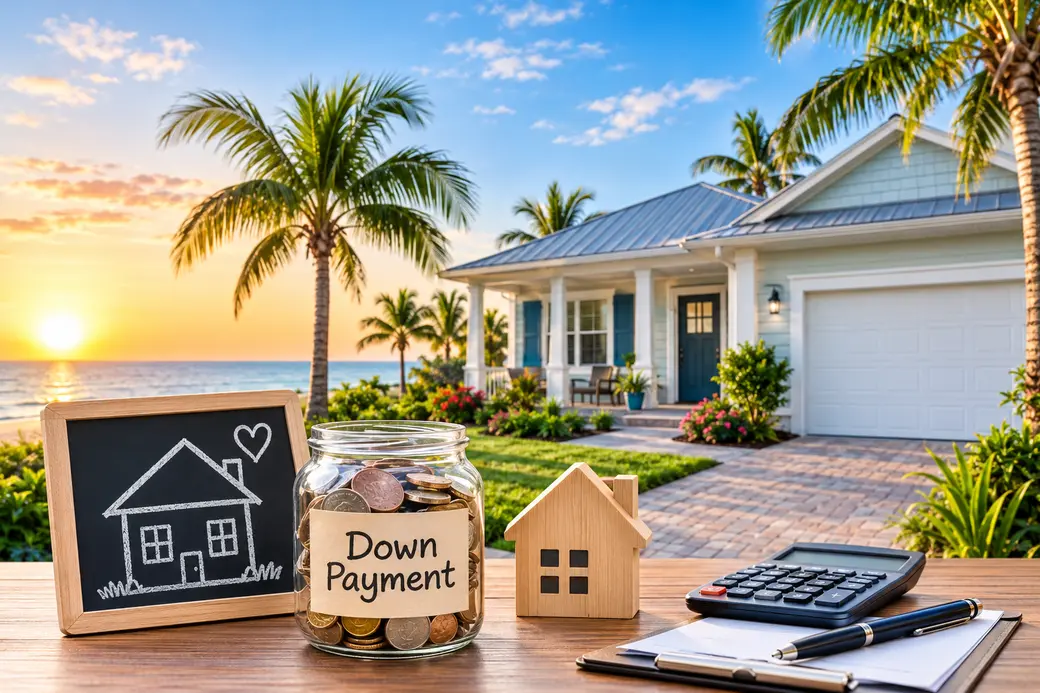
You may not need a 20% down payment to buy a home. Depending on your finances and eligibility, some mortgage programs allow qualified buyers to purchase with substantially less upfront, including FHA financing with a minimum required investment of 3.5% and VA financing that can require no down payment in qualifying circumstances. Florida buyers may also have access to state or local programs that help with down payments and closing costs. The right option depends on your credit, income, debts, savings, property, occupancy plans, and loan program, so the best starting point is determining what you actually qualify for before assuming homeownership is out of reach.
Quick Answers About Down Payments When Buying a Home
Do you need 20% down to buy a home?
No. A 20% down payment is not a universal requirement for purchasing a home. Qualified buyers may have access to conventional, FHA, VA, and other financing options requiring substantially less, although individual lender and loan requirements apply.
Can you buy a home with 3.5% down?
FHA-insured financing can allow qualified borrowers to purchase with a minimum required investment of 3.5% of the adjusted value. FHA financing has additional borrower, property, mortgage insurance, and underwriting requirements that should be reviewed with an FHA-approved lender.
Can you buy a home with no down payment?
Some eligible borrowers may qualify for a VA-backed purchase loan without a down payment. VA explains that it generally does not require a down payment when the purchase price does not exceed the property's reasonable value, although lender requirements and circumstances involving entitlement or value can affect the transaction.
Are there low-down-payment conventional mortgages?
Yes. Some conventional mortgage programs are designed for qualified buyers with down payments below 20%. Eligibility, mortgage insurance, income restrictions, occupancy requirements, credit standards, and other terms vary by program and lender.
Does Florida offer down payment assistance?
Yes. The Florida Housing Finance Corporation Homebuyer Program offers eligible borrowers first-mortgage options and programs that can assist with down payment and closing costs. Eligibility and funding availability apply, and assistance may take the form of a second mortgage rather than free money.
Is your down payment the same as your total cash needed to close?
No. Your down payment is only one component of the money involved in purchasing a home. Depending on the transaction, buyers may also need funds for closing costs, prepaid expenses, inspections, insurance, escrow funding, and other expenses.
Should you wait until you have 20% saved?
Not automatically. Waiting may be appropriate for some buyers, while others may qualify for financing that makes purchasing sooner possible. The decision should be based on your total monthly payment, emergency savings, closing costs, financial goals, and the terms of the mortgage available to you.
Where Did the 20% Down Payment Idea Come From?
Twenty percent is an important number in mortgage conversations, but it should not be confused with a universal minimum down payment. On some conventional mortgages, reaching 20% equity can affect private mortgage insurance requirements. A larger down payment can also reduce the amount borrowed and, all else being equal, lower the principal-and-interest portion of a monthly mortgage payment.
But those benefits do not mean every buyer must save 20% before purchasing. Multiple financing programs exist with lower upfront requirements, which is why buyers should investigate their actual options rather than relying on a rule of thumb.
How Much Is 20% in Real Dollars?
The difference between a 20% down payment and a lower-down-payment option becomes clearer when expressed in dollars. On a $400,000 purchase, 20% equals $80,000. A 5% down payment would equal $20,000, while 3.5% would equal $14,000.
Those examples illustrate down payment amounts only. They do not represent the total cash required to purchase the property, and they do not mean every borrower qualifies for a particular percentage. Loan costs, prepaid items, insurance, taxes, inspections, escrow requirements, and other transaction expenses also need to be considered.
Can an FHA Loan Reduce the Down Payment?
Yes. FHA-insured financing can provide a lower-down-payment path for qualified borrowers. The U.S. Department of Housing and Urban Development states that the borrower must generally make a minimum required investment of at least 3.5% of the property's adjusted value.
An FHA loan is not automatically the best or least expensive choice for every buyer. Mortgage insurance, property requirements, loan limits, borrower qualifications, interest rates, and the total monthly payment should be compared with conventional and other available financing.
For buyers exploring Sarasota-area and Florida Gulf Coast communities, knowing the financing range before touring homes can make the property search much more productive.
Can Eligible Veterans Buy With No Down Payment?
VA-backed home loans can provide a no-down-payment option for eligible borrowers in qualifying transactions. According to the U.S. Department of Veterans Affairs, VA generally does not require a down payment when the purchase price or cost does not exceed the property's reasonable value.
There are important exceptions. A down payment can be required in certain situations, including when a purchase price exceeds VA's reasonable value or when a borrower has less than full entitlement available and other requirements come into play. The lender still evaluates the borrower's finances and determines whether the loan can be approved.
Eligible service members and veterans should discuss their Certificate of Eligibility, entitlement, funding fee status, occupancy requirements, and overall loan structure with an experienced VA lender rather than assuming every purchase will require zero cash at closing.
What About Low-Down-Payment Conventional Loans?
Conventional financing can also provide options below the traditional 20% benchmark. Programs such as Fannie Mae HomeReady and Freddie Mac Home Possible are designed to expand access to conventional mortgage financing for eligible borrowers.
Conventional loan requirements vary. Credit profile, debt-to-income ratio, income, occupancy, property type, loan amount, mortgage insurance, reserves, and lender guidelines can all affect eligibility and cost. A buyer should compare actual loan scenarios rather than selecting a mortgage solely because it advertises a low minimum down payment.
Are There Down Payment Assistance Programs in Florida?
Yes. Florida has state and local programs that may reduce the upfront financial barrier for eligible homebuyers. The Florida Housing Finance Corporation offers a Homebuyer Program through participating lenders, with eligible borrowers potentially able to combine a qualifying first mortgage with down payment and closing cost assistance.
Florida Housing currently describes multiple assistance structures, including deferred second mortgages and other second-mortgage programs. Some assistance must eventually be repaid, while certain programs may have forgiveness provisions subject to their specific terms. Income limits, purchase-price limits, credit requirements, homebuyer education, first-time-buyer rules, participating lender requirements, funding availability, and other conditions can apply.
What about local assistance programs?
Local governments may also offer assistance through Florida's State Housing Initiatives Partnership, commonly called SHIP. Florida Housing states that SHIP funds can be used for eligible activities that include down payment, mortgage, and closing cost assistance, with individual local governments administering their own housing assistance plans.
Because funding and eligibility can change, buyers should check the current Florida SHIP program information and the applicable local housing office before counting assistance toward a purchase.
What About Florida Hometown Heroes?
The Florida Hometown Heroes Housing Program is another program buyers may hear about when researching down payment assistance. For the 2026 program, Florida Housing identifies qualifying occupational groups that include certain healthcare workers, school staff, first responders, public safety or court employees, child care workers, qualifying military members, and certain veterans employed by Florida-based employers.
Program availability requires special attention. Florida Housing reported that the available funding for the 2025-2026 Hometown Heroes funding cycle had been fully committed. Buyers should therefore check current funding status and program rules directly with Florida Housing and an approved participating lender rather than assuming assistance is presently available.
Is Down Payment Assistance Free Money?
Not necessarily. This is one of the most important details for buyers to understand. Down payment assistance can be structured as a deferred second mortgage, an amortizing second mortgage, a forgivable second mortgage, or another form of assistance, depending on the program.
A deferred loan may become payable when you sell, refinance, transfer the property, pay off the first mortgage, or stop occupying the home as required by the program. A forgivable program may require you to satisfy occupancy and time requirements before the balance is fully forgiven. Read the current program documents carefully so you understand both the immediate benefit and future obligation.
How Much Cash Do You Actually Need to Buy?
Your down payment and your total cash needed for a home purchase are not the same number. Buyers should build a budget that considers the entire transaction rather than saving only for a percentage of the purchase price.
- Down payment: The portion of the purchase price you are contributing rather than financing.
- Lender and loan costs: These vary by lender and mortgage program.
- Inspection expenses: Buyers may choose or need inspections appropriate to the property.
- Appraisal: An appraisal may be required as part of mortgage financing.
- Insurance: Florida buyers should investigate homeowners, flood, wind-related, and other applicable coverage early in the process.
- Prepaid and escrow items: Taxes, insurance, interest, and required escrow funding can affect the amount due at closing.
- Moving and immediate repairs: Keeping funds available after closing can be important for expenses that arise once you own the property.
Is Putting More Money Down Always Better?
Not always. A larger down payment reduces the amount financed and can improve the economics of a mortgage in several ways, but putting every available dollar into the purchase can leave a buyer with too little cash after closing.
Homeownership brings ongoing expenses. HVAC systems need service, appliances eventually fail, insurance premiums can change, and unexpected repairs happen. Buyers should compare the benefits of a larger down payment with the value of maintaining appropriate emergency savings and financial flexibility.
Why Does Preapproval Matter Before You Start Shopping?
A conversation with a qualified lender can replace assumptions with actual numbers. Instead of guessing that you need 20% down, you can learn which loan programs may fit your circumstances, what monthly payment range is realistic, and approximately how much cash you may need for the transaction.
That information also helps focus your real estate search. Whether you are comparing Sarasota, Venice, Englewood, Lakewood Ranch, or another Gulf Coast location, understanding your financing can help you evaluate homes based on a realistic purchase budget rather than an online asking price alone. Buyers can begin exploring locations through the Hunt Brothers Realty community directory.
What Should Florida Buyers Ask a Lender?
Do not stop at asking, “What is the minimum down payment?” A useful mortgage comparison considers both the cash required upfront and the long-term cost of the loan.
- Which mortgage programs do I qualify for?
- What is the minimum down payment for each option?
- What would my estimated total monthly housing payment be?
- Does the loan require mortgage insurance, and how is it calculated?
- How much should I expect to pay in closing costs and prepaid expenses?
- Could I qualify for state or local down payment assistance?
- If assistance is offered, is it repayable, deferred, or forgivable?
- How would putting more money down change my interest rate, payment, and total loan cost?
- How much cash should I retain after closing?
The Bottom Line: Do Not Let the 20% Myth Stop Your Home Search
A 20% down payment can be beneficial, but it is not the universal price of admission to homeownership. Qualified buyers may have conventional, FHA, VA, state, or local options that reduce the amount of money needed upfront.
The more useful question is not “Do I have 20% saved?” It is “What financing options do I qualify for, what will they cost, and which one fits my overall budget?” Getting those answers can tell you whether buying is realistic now, what you may need to save, and which price range makes sense.
Start Your Gulf Coast Home Search with Hunt Brothers Realty
If a large down payment has been keeping you from exploring homeownership, consider finding out what your actual options are before ruling yourself out. Hunt Brothers Realty can help you explore properties throughout Florida's Gulf Coast and connect the home search with the financing questions you should be asking.
Explore Hunt Brothers Realty's Gulf Coast communities, search current single-family homes for sale, or contact Hunt Brothers Realty to discuss your home search.
Sources
- Hunt Brothers Realty: Think You Need a Huge Down Payment to Buy?
- U.S. Department of Housing and Urban Development
- U.S. Department of Veterans Affairs: VA Home Loans
- Fannie Mae: HomeReady Mortgage
- Freddie Mac: Home Possible
- Florida Housing Finance Corporation: Homebuyer Program
- Florida Housing Finance Corporation: SHIP Program
- Florida Housing Finance Corporation: Hometown Heroes Program
Hunt Brothers Realty
46 N Washington Blvd, Ste #3, Sarasota, Florida 34236
Phone: (941) 388-7017
Email: info@huntbrothersrealty.com
Website: HuntBrothersRealty.com
Categories
- All Blogs 1626
- Anna Maria Island 77
- Bird Key 3
- Bradenton 155
- Buying a Home 759
- Casey Key 2
- Clearwater 5
- Condos & HOA Living 667
- Ellenton 4
- Englewood 5
- First Time Homebuyers 840
- Foreclosures 3
- Homeownership 829
- Lakewood Ranch 15
- Lido Key 25
- Longboat Key 74
- Luxury/Waterfront Properties 766
- Market Updates & Trends 402
- Mortgages & Financing 34
- Move-Up Buyers 20
- Neighborhood Guides 550
- New Construction 27
- Palmetto 2
- Parrish 4
- Port Charlotte 7
- Punta Gorda 11
- Real Estate Investing 698
- Relocation to Florida 749
- Safety Harbor 2
- Sarasota 24
- Sarasota - Downtown 141
- Selling a Home 138
- Siesta Key 87
- St. Petersburg 3
- Tierra Verde 4
- Vacation & Second Homes 879
- Venice 21
- Wellen Park 7
Recent Posts