What Parking Questions Should I Ask Before Buying a Condo?
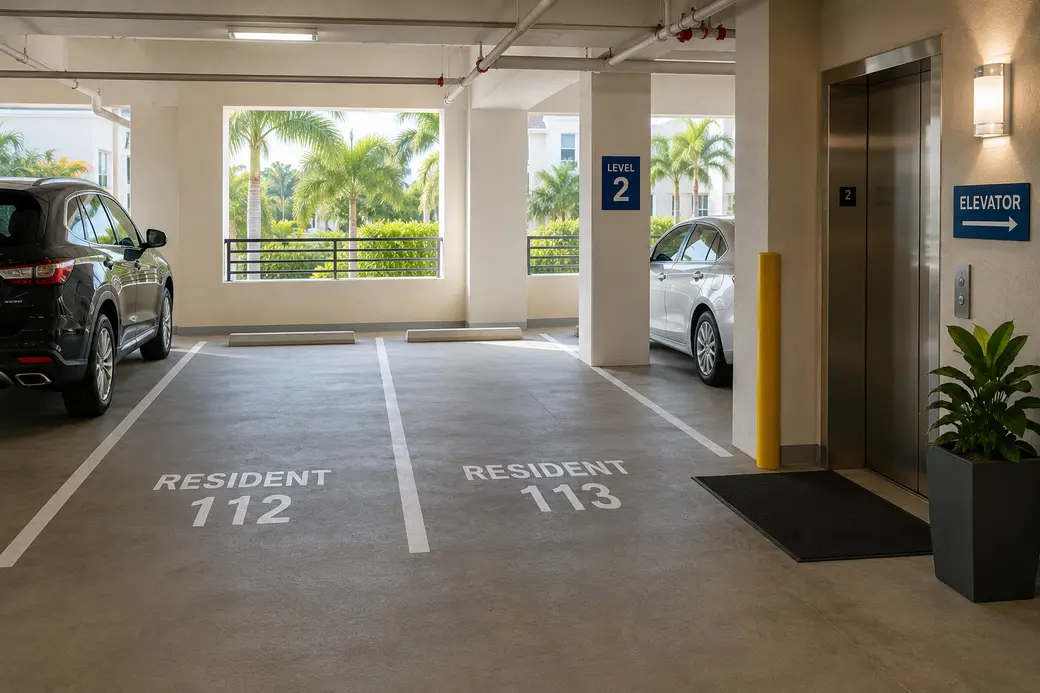
Before buying a condo, ask exactly how many parking spaces come with the residence, where they are located, whether they are legally part of the unit, limited common elements, assigned spaces, or another type of parking right, and whether those rights transfer when you buy. Also investigate second-car parking, guest parking, vehicle restrictions, EV charging, garage clearance, accessibility, security, fees, and towing rules. Do not rely only on the listing description. Parking rights and restrictions should be verified through the current condominium documents, association records, and appropriate title or legal review before you purchase.
Parking can seem like a minor detail when a condo has a beautiful view, renovated interior, or exceptional location. Once you live there, however, the trip from your vehicle to your front door becomes part of everyday life. Hunt Brothers Realty's guide to Florida condo parking, storage, and guest policies explains why buyers should investigate these practical details before closing rather than after moving in.
Quick Answers About Condo Parking
Does buying a condo automatically include a parking space?
No. Parking arrangements vary by condominium and sometimes by individual residence within the same building. A condo may include a garage, an exclusive-use or limited common element space, an association-assigned space, access to unassigned parking, or another arrangement that should be verified before purchase.
What does assigned parking actually mean?
The phrase "assigned parking" by itself does not explain the legal nature of the parking right. The association might assign a space administratively, or the residence may have an exclusive right to use a particular portion of the common elements under the condominium declaration. Buyers should determine exactly how the space is documented and whether the right transfers with the unit.
Can I assume my second car can use guest parking?
No. Some condominium communities prohibit owners from using guest spaces for additional household vehicles. If your household has two cars, verify where both vehicles can legally and practically park before purchasing the condo.
Can a condo association restrict certain vehicles?
Condominium documents and applicable rules can regulate parking and vehicle use. Depending on the community, buyers may encounter rules affecting commercial vehicles, recreational vehicles, motorcycles, trailers, oversized vehicles, vehicle registration, overnight parking, or other parking matters. Review the current rules for the specific condominium rather than assuming policies are similar across buildings.
Can I install an EV charger at a Florida condo?
Florida law provides protections for qualifying EV charging installations within a unit owner's limited common element or exclusively designated parking area, subject to statutory requirements involving installation, electrical use, costs, safety, insurance, and other conditions. Buyers should still verify the legal status of their parking area, electrical capacity, association procedures, permitting requirements, and installation feasibility before assuming a charger can be installed.
Should I physically inspect my parking space before buying?
Yes. Locate the actual space and evaluate its width, length, access, columns, walls, turning room, overhead clearance, distance from the elevator or residence, and exposure to weather. A parking space that works well for a compact car may feel very different with a large SUV or pickup.
Where should I verify the condo's parking rules?
Review the current declaration of condominium and amendments, bylaws, rules and regulations, applicable exhibits or surveys, parking assignment records, and other relevant association records. Questions involving ownership, title, easements, transfer rights, or interpretation of condominium documents should be reviewed with a qualified Florida real estate attorney or appropriate title professional.
1. How Many Parking Spaces Actually Come With the Condo?
Start with the most basic question, then insist on a precise answer. If the listing says "two parking spaces," determine exactly what that means for the specific residence.
Ask whether the condo comes with:
- One or more specific parking spaces
- A private garage
- Covered or uncovered parking
- Unassigned resident parking
- Access to additional spaces on a first-come basis
- A separately leased or separately documented parking interest
For a two-car household, "one assigned space plus available parking" deserves additional investigation. Available parking is not necessarily guaranteed parking.
2. Is the Parking Space Deeded, Assigned, or a Limited Common Element?
This is one of the most important questions because everyday phrases such as "deeded" and "assigned" can be used loosely in real estate conversations. Buyers need to know what the governing and title documents actually establish.
Under Florida Statute 718.106, a condominium unit can carry an exclusive right to use a portion of the common elements when provided by the declaration. The declaration can also address whether and how certain use rights may be transferred.
Depending on the condominium, parking may be structured as:
- Part of the legal unit: The garage or parking area may be included within the condominium unit's legal boundaries.
- Limited common element or exclusive-use parking: The space may remain part of the common elements while a particular residence has exclusive use rights.
- Association-assigned parking: The association may assign spaces under the condominium documents or established procedures.
- Unassigned parking: Owners may park in available resident spaces without a particular space being reserved for them.
- Another documented arrangement: Some developments can have parking rights or garage interests that require separate review.
The important point is not the terminology used in the listing. It is what rights you will actually acquire at closing.
3. Does the Exact Parking Space Transfer With the Condo?
Seeing the seller use space 214 does not automatically establish that you will have the same right after closing. Verify the parking assignment or exclusive-use right against the condominium documents and other appropriate records.
Useful questions include:
- Is this exact space associated with the residence?
- What document establishes that right?
- Does the right automatically transfer with the unit?
- Can the association reassign the space?
- Can an owner exchange spaces with another owner?
- Can a parking right be separately sold, leased, or transferred?
The answers depend on the condominium's legal documents and the nature of the parking right. Questions involving ownership or transfer rights should be verified through appropriate title and legal review.
4. Where Is the Parking Space Located?
Two units in the same condominium can have dramatically different parking experiences. One space might be beside the elevator in a covered garage. Another might be on an upper garage level, outside, or considerably farther from the residence.
Walk the actual route you would use from the space to the condo. Consider:
- Distance to the elevator or stairs
- Whether the route is covered
- Ease of carrying groceries and luggage
- Garage ramps and turning areas
- Lighting and visibility
- Building access between the parking area and residence
- Accessibility considerations important to your household
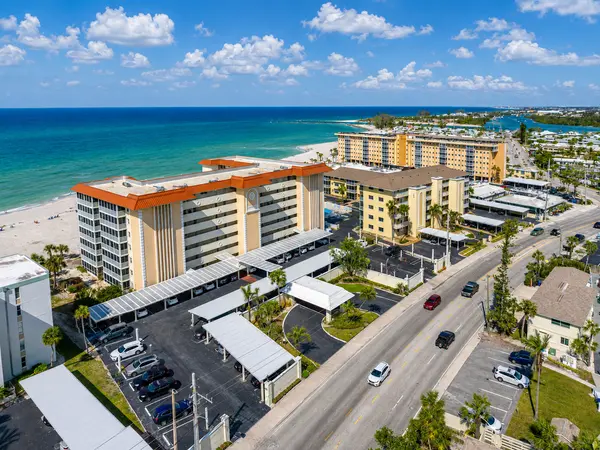
In Southwest Florida, covered parking can also make a noticeable difference during intense sun and summer thunderstorms. Parking location deserves consideration when comparing otherwise similar condos.
5. Will My Vehicle Actually Fit?
Do not assume that every legal parking space is equally practical for every vehicle. Older condominium garages can have columns, walls, ramps, tight turns, or overhead restrictions that matter to owners of larger vehicles.
If you drive a large SUV, pickup, sports car with low clearance, or another vehicle with unusual dimensions, investigate:
- Space width and length
- Garage entrance height
- Overhead clearance within the garage
- Turning radius around columns and walls
- Ramp angles
- Ability to open doors comfortably when adjacent spaces are occupied
If vehicle fit is essential, physically evaluate the space rather than relying solely on dimensions supplied by someone else.
6. Where Does a Second Household Vehicle Park?
This question can eliminate a condominium from consideration quickly for a two-car household. One assigned parking space does not necessarily mean the second vehicle can use visitor parking indefinitely.
Ask:
- Does the residence include a second space?
- Can residents use unassigned parking?
- Can an additional space be leased?
- Is there a waiting list for additional parking?
- What does an additional space currently cost, if available?
- Can an owner keep a second vehicle in guest parking?
- Is off-site or public parking realistically available nearby?
If two permanent parking spaces are important to you, treat that as a purchase requirement and verify both spaces before closing.
7. How Much Guest Parking Is Really Available?
A condominium can technically have guest parking while still making visitor parking difficult in practice. Ten guest spaces may sound adequate until you discover they serve a large building or are regularly full during peak season.
Ask how many visitor spaces are available and whether guests must register. Find out whether overnight parking is permitted, whether there are time limits, and what happens when all guest spaces are occupied.
If you regularly entertain or have family staying with you, guest parking can be a meaningful lifestyle consideration. Consider observing the property on an evening or weekend, when practical, rather than judging parking availability only during a quiet weekday showing.
8. What Are the Guest Parking Rules?
Visitor parking rules can be just as important as the number of spaces. Depending on the condominium, guests may need a parking permit, gate authorization, registration with management, or another form of approval.
Questions worth asking include:
- Do visitors need a parking pass?
- How does a guest register?
- Is overnight guest parking permitted?
- Are there limits on consecutive nights?
- Are tenant guest-parking rules different from owner rules?
- Can guests leave vehicles while the owner is away?
- Are oversized guest vehicles permitted?
- What happens when visitor parking is full?
- What are the towing or enforcement procedures?
9. Are There Restrictions on the Type of Vehicle I Can Park?
Buyers should not assume that owning a legal vehicle means it can be parked anywhere within a private condominium community. Review current condominium rules for restrictions that affect your present vehicles and anything you expect to own in the future.
Depending on the community, questions may involve:
- Pickup trucks
- Commercial or company vehicles
- Motorcycles or scooters
- Vans
- Oversized SUVs
- Recreational vehicles
- Trailers
- Boats or watercraft trailers
- Vehicles with commercial lettering or equipment
The current governing documents and association rules should be reviewed for the specific condominium. If the meaning or enforceability of a restriction is important to your purchase, obtain appropriate legal guidance rather than relying on an informal interpretation.
10. Can I Charge an Electric Vehicle?
EV ownership adds another layer to condo parking due diligence. A building may already have shared charging stations, allow individual charging equipment, have an established application procedure, or be evaluating future infrastructure.
Current Florida Statute 718.113 addresses an owner's installation of an electric vehicle charging station within qualifying limited common element or exclusively designated parking areas. The statute includes requirements addressing matters such as electrical metering, installation and operating costs, safety, insurance, maintenance, and removal.
Before buying specifically because you expect to install a charger, verify:
- The legal status of the parking area
- Whether shared charging already exists
- Available electrical capacity
- The physical route for electrical installation
- Association application and architectural procedures
- Permitting requirements
- Metering and electricity costs
- Insurance requirements
- Installation, maintenance, and removal responsibilities
Have a qualified licensed electrical contractor or engineer evaluate property-specific electrical and installation questions. Legal questions involving statutory rights or condominium-document requirements should be reviewed with a qualified Florida real estate attorney.
11. Is the Parking Area Secure and Protected From the Weather?
Parking can range from an open surface lot to a secured private garage. Consider which arrangement fits your priorities rather than assuming one is automatically better.
When touring the property, observe:
- Garage doors or controlled gates
- Access-control procedures
- Lighting
- Pedestrian access to the building
- Whether parking is covered or exposed
- Drainage and visible condition of the parking area
- Management procedures for unauthorized vehicles
Security systems and access procedures can change, and no parking arrangement eliminates the risk of theft or property damage. Verify current procedures directly with the association or management when they materially affect your decision.
12. Are There Separate Parking Fees or Future Garage Expenses?
Determine whether your regular condominium assessment covers the parking facility or whether there are separate fees for parking, additional spaces, garage access devices, EV charging, valet services, or other parking-related items.
Parking structures themselves can also represent substantial common property. When a condominium has a large garage, buyers should review the association's financial and property-condition information appropriate to that building, including applicable budgets, reserve information, inspection reports, planned projects, and assessments.
Hunt Brothers Realty's guide to evaluating the financial health of a condo association explains why buyers should consider the condition and funding of shared property rather than evaluating only the individual residence.
What Parking Documents Should Condo Buyers Review?
A listing, parking placard, seller statement, or painted space number can provide useful information, but buyers should review the current records that actually establish and regulate parking rights.
Depending on the condominium and transaction, relevant materials can include:
- Declaration of condominium and amendments
- Articles of incorporation
- Bylaws
- Current rules and regulations
- Condominium exhibits, surveys, or plans showing parking areas
- Parking assignment records
- Vehicle and guest registration procedures
- Current parking-related fee schedules
- EV charging procedures when relevant
- Association meeting minutes discussing parking or garage issues
The Florida Department of Business and Professional Regulation explains that condominium association official records include the declaration and amendments, bylaws, current rules, meeting minutes, insurance policies, accounting records, contracts, applicable inspection reports, and other records relating to association operations.
For 2026, DBPR also notes that Florida condominium associations managing 25 or more units, excluding timeshares, are required to maintain a website or mobile application containing specified association records. Access requirements and the particular records available should be verified with the association.
Parking Is Especially Important When Comparing Downtown Condos
In a suburban setting, finding an alternative place to park may sometimes be relatively easy. In a dense downtown or coastal location, parking can be much more constrained. That makes the exact parking arrangement a meaningful part of comparing residences.
Hunt Brothers Realty's guide to Downtown Sarasota condo living recommends verifying how many spaces transfer with the residence, whether they are assigned or deeded, their locations, and the applicable guest-parking rules.
When comparing Downtown Sarasota condos, consider parking alongside association finances, insurance, storage, building condition, rental rules, pet policies, and amenities rather than treating it as an afterthought.
What About Parking at Coastal Condos?
Coastal condominiums can create additional practical questions because some properties occupy constrained sites where parking is limited. Buyers may encounter covered carports, surface parking, elevated garages, private garages, or other configurations depending on the building.
If you are considering a coastal residence, investigate parking alongside broader building and property issues. Hunt Brothers Realty's guide to buying a condo with a view in Sarasota emphasizes reviewing parking and storage rights together with association finances, insurance, inspections, assessments, rental rules, and other condominium due-diligence information.
A Practical Condo Parking Checklist for Your Showing
When touring the condo, do not stop at the residence itself. Ask to see the actual parking area and evaluate it as part of the showing.
- Locate the exact parking space represented with the residence.
- Confirm how many spaces are represented as transferring with the condo.
- Check whether each space is covered, uncovered, or enclosed.
- Walk from the space to the residence.
- Look for columns, walls, ramps, and tight turns.
- Check garage height if you drive a taller vehicle.
- Determine where a second household vehicle would park.
- Locate the guest parking.
- Ask about overnight guest procedures.
- Ask about vehicle restrictions that could affect you.
- Investigate EV charging if it matters to you.
- Compare what you observe with the written condominium documents.
Hunt Brothers Realty's guide to what to bring to a home showing also recommends that condo buyers pay attention to the route from parking to the unit, elevators, hallways, storage, common areas, and other shared-property features.
Do Not Rely on the Listing Alone
A listing may say "one assigned space," "two-car garage," or "plenty of guest parking." Those descriptions are useful starting points, but they should not be the end of your investigation.
Before purchasing, verify the exact parking rights associated with the residence and review the current rules that affect how you intend to use the property. If a particular parking arrangement is essential to your decision, make sure your due diligence addresses that issue before applicable contractual deadlines expire.
Questions involving title, ownership, limited common elements, easements, transferability, interpretation of condominium documents, contractual rights, or other legal matters should be reviewed with a qualified Florida real estate attorney or other appropriate legal or title professional.
The Bottom Line on Condo Parking
The best parking question is not simply, "Does this condo have parking?" Ask what parking rights come with the specific residence, how those rights are documented, where the spaces are located, whether your vehicles fit, where guests and second cars can park, what restrictions apply, and whether the arrangement works for your everyday life.
A parking issue that seems insignificant during a 30-minute showing can become a daily frustration after closing. Conversely, a well-located covered space, private garage, reliable second-car arrangement, or practical EV solution can add meaningful convenience to condominium ownership.
Looking for a Condo on Florida's Gulf Coast?
Parking is only one part of condo due diligence. Buyers should also investigate association finances, reserves, assessments, insurance, applicable structural information, storage, rental restrictions, pet policies, maintenance responsibilities, and the condition of the individual residence. Contact Hunt Brothers Realty to discuss your Sarasota and Florida Gulf Coast condo search and the real estate considerations involved in comparing buildings and individual residences.
Informational notice: This article is provided for general real estate and educational purposes only and is not individualized legal, title, association, electrical, engineering, insurance, or other professional advice. Parking rights, assignments, transferability, vehicle restrictions, guest rules, EV charging requirements, fees, and association procedures vary by condominium and can change. Buyers should review the current governing documents and applicable records for the specific residence and verify material questions with the condominium association, qualified title professional, Florida real estate attorney, licensed electrical contractor, engineer, insurance professional, or other appropriate professional before making a purchasing decision.
Sources
- Florida Statute 718.106, Condominium Parcels, Appurtenances, Possession and Enjoyment
- Florida Statute 718.113, Condominium Property and Electric Vehicle Charging Provisions
- Florida Department of Business and Professional Regulation, Condominium and Cooperative FAQs
- Florida Department of Business and Professional Regulation, Condominium Forms and Publications
- Hunt Brothers Realty, Florida Condo Parking, Storage & Guest Policies
- Hunt Brothers Realty, Downtown Sarasota Condo Living
- Hunt Brothers Realty, Best Downtown Sarasota Condos Buyer Guide
- Hunt Brothers Realty, Buying a Condo With a View in Sarasota
- Hunt Brothers Realty, How to Tell If a Condo Association Is Financially Healthy
Contact Hunt Brothers Realty
Hunt Brothers Realty
46 N. Washington Blvd, Ste 3
Sarasota, FL 34236
Phone: (941) 388-7017
Email: info@huntbrothersrealty.com
Website: HuntBrothersRealty.com
Categories
- All Blogs 2152
- Anna Maria Island 86
- Bird Key 4
- Bradenton 236
- Buying a Home 1211
- Casey Key 2
- Clearwater 11
- Condos & HOA Living 1127
- Ellenton 6
- Englewood 11
- First Time Homebuyers 1320
- Foreclosures 5
- Home Selling 6
- Homeownership 1344
- Lakewood Ranch 25
- Lido Key 28
- Longboat Key 80
- Luxury/Waterfront Properties 1283
- Market Updates & Trends 804
- Mortgages & Financing 51
- Move-Up Buyers 23
- Neighborhood Guides 919
- New Construction 36
- Palmetto 3
- Parrish 6
- Port Charlotte 10
- Punta Gorda 17
- Real Estate Investing 1200
- Relocation to Florida 1239
- Safety Harbor 3
- Sarasota 86
- Sarasota - Downtown 163
- Selling a Home 146
- Siesta Key 92
- St. Petersburg 8
- Tierra Verde 5
- Vacation & Second Homes 1393
- Venice 209
- Wellen Park 20
Recent Posts