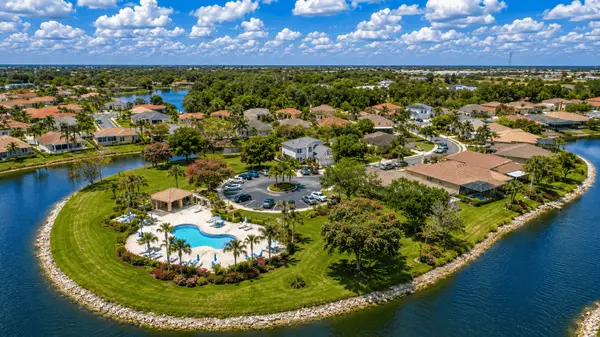
Condo vs. Townhome vs. Single-Family Home: Which Fits Your 2026 Lifestyle and Budget?
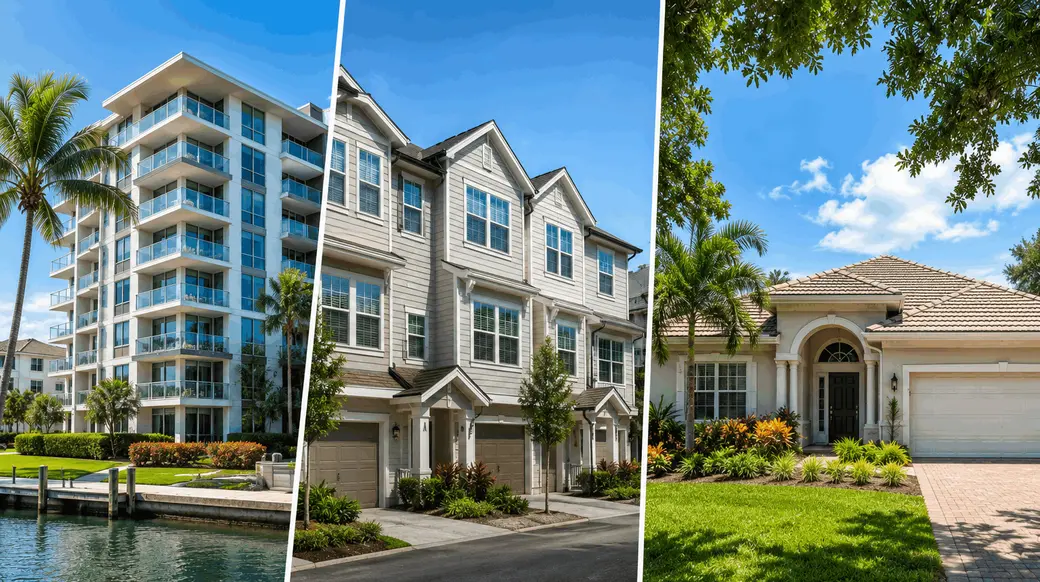
Choosing between a condo, townhome, and single-family home in 2026 comes down to more than purchase price. Condos can offer lower-maintenance living and shared amenities, townhomes can provide a middle ground between condominium convenience and house-like space, and single-family homes generally offer greater control over the property and outdoor areas. For Florida buyers, the best choice depends on total monthly and annual costs, insurance, association fees, maintenance responsibilities, financing, location, and how much control you want over your home. The legal form of ownership matters too, especially because a townhome's architecture does not necessarily tell you whether it is legally a condominium or fee-simple property.
Quick Answers About Condos, Townhomes, and Single-Family Homes
Which home type usually requires the least exterior maintenance?
A condominium often places more exterior and common-area maintenance responsibility with the association, making it attractive to buyers who want a lower-maintenance lifestyle. Exactly what the association maintains depends on the condominium declaration and other governing documents, so buyers should verify responsibilities before purchasing.
Is a townhome always legally different from a condo?
No. "Townhome" often describes an architectural style rather than a specific legal ownership structure. A townhouse-style residence may be condominium ownership or fee-simple ownership, so buyers should confirm the legal description, association structure, insurance responsibilities, and governing documents for the specific property.
Does a single-family home always mean no HOA?
No. Many single-family homes are located in communities with homeowners associations. An HOA may maintain shared amenities or common areas and enforce community rules, so buyers should include HOA dues and restrictions when comparing total ownership costs.
Which option gives an owner the most control?
A single-family home without restrictive association rules generally gives an owner more control over the structure and land than condominium ownership. Greater control also means greater responsibility for maintenance, repairs, insurance, landscaping, and major systems.
Are condos necessarily the least expensive option?
No. A condo can have a lower purchase price than some detached homes, but buyers need to consider condominium fees, assessments, property taxes, insurance, financing, and what those fees include. A lower purchase price does not automatically produce a lower total cost of ownership.
What is especially important for Florida condo buyers in 2026?
Buyers of applicable Florida condominiums should pay close attention to milestone inspections, Structural Integrity Reserve Studies, reserve funding, assessments, insurance, and building condition. Florida's current condominium requirements make association-level due diligence particularly important in 2026.
What is the best way to compare the three options?
Compare total ownership cost and responsibility, not simply listing prices. Mortgage payments, property taxes, insurance, association fees, expected maintenance, potential assessments, utilities, parking, amenities, and future repair responsibilities should all be considered.
What Is the Basic Difference Between a Condo, Townhome, and Single-Family Home?
The biggest difference is not simply how the homes look. It is what you own, what you share, and what you are responsible for maintaining.
- Condo: You typically own an individual unit while sharing ownership or rights in common elements. An association manages specified common property and expenses.
- Townhome: This usually describes a multilevel attached home, often sharing one or more walls. The underlying legal ownership may be condominium or fee simple, which affects maintenance, insurance, financing, and association responsibilities.
- Single-family home: You generally own the detached house and its parcel of land, subject to deed restrictions, easements, local regulations, and HOA requirements when applicable.
This is why buyers should avoid choosing solely by property label. The ownership documents can matter just as much as the floor plan.
Which Property Type Fits a Lower-Maintenance Lifestyle?
Condominiums frequently offer the lowest level of direct exterior maintenance because the association may handle roofs, building exteriors, landscaping, pools, elevators, common areas, and other shared elements. The precise division of responsibility varies by condominium, however, and owners remain responsible for whatever the governing documents assign to the individual unit.
Townhomes occupy a broad middle ground. In some communities, the association handles landscaping, exterior painting, roofs, or shared amenities. In others, owners have substantially more individual responsibility. A townhome buyer should never infer maintenance responsibilities from appearance alone.
With a detached single-family home, owners commonly assume responsibility for the roof, exterior, landscaping, plumbing, electrical systems, HVAC equipment, driveway, pool, and other property components unless an association or service arrangement provides otherwise.
Takeaway: Less hands-on maintenance does not mean maintenance is free. In a condo or HOA community, part of that expense may simply move from individual repair bills into recurring association fees and potential assessments.
Which Option Fits Your 2026 Budget?
The property with the lowest asking price is not necessarily the least expensive property to own. A useful 2026 budget comparison should estimate the complete monthly and annual housing expense for each property under consideration.
Depending on the property, that calculation can include:
- Mortgage principal and interest
- Property taxes
- Homeowners or condominium-unit insurance
- Flood insurance when applicable or required
- Condo or HOA fees
- Private mortgage insurance when applicable
- Utilities
- Routine maintenance
- Major repair and replacement reserves
- Known or potential association assessments
Fannie Mae's homeownership guidance similarly identifies mortgage payments, property taxes, insurance, HOA or condo fees, utilities, and property maintenance among the ongoing costs buyers may need to consider.
Are Condo and HOA Fees Really an Extra Cost?
Association fees are an additional required expense, but comparing them with a home that has no fee requires understanding what the fee pays for. Depending on the community, dues may fund common-area maintenance, landscaping, amenities, management, building insurance, reserves, water, sewer, trash service, security-related services, or other shared expenses.
Fannie Mae notes that HOA fees vary widely and that buyers should examine association financial statements and reserve accounts. It also cautions homeowners to incorporate association fees into their budgets because fees can increase over time. You can review Fannie Mae's HOA guidance for additional context.
A useful comparison therefore asks two questions: "How much is the fee?" and "What expenses would I otherwise pay myself?"
Why Is Buying a Florida Condo Different in 2026?
Florida condominium buyers in 2026 should understand the state's building-safety and reserve requirements because they can affect association budgets, fees, assessments, and buyer due diligence. These requirements do not apply identically to every condominium building, so the first step is determining which rules apply to the specific property.
The Florida Department of Business and Professional Regulation explains that residential condominium buildings of three or more habitable stories can be subject to milestone inspection requirements based on building age. A milestone inspection examines an aging building to determine whether substantial structural deterioration exists.
Florida also requires Structural Integrity Reserve Studies, commonly called SIRS, for applicable residential condominium buildings. A SIRS evaluates specified structural components, their remaining useful lives, anticipated repair or replacement costs, and a reserve funding plan. The state's current guidance explains that existing unit-owner-controlled associations subject to SIRS generally had a December 31, 2025 deadline, with a specific 2026 provision for associations coordinating a SIRS with a milestone inspection due on or before December 31, 2026.
The practical buyer question is not simply, "Does this building have a SIRS?" Buyers should review what the study found, the recommended funding schedule, how the association plans to fund required work, whether assessments or financing are involved, and what other building projects are anticipated.
Does Financing Differ for Condos?
It can. When financing a condominium, the lender may need to evaluate not only the borrower and individual unit but also the condominium project. Project condition, insurance, financial stability, ownership characteristics, and other eligibility requirements can affect financing.
Fannie Mae's condominium project eligibility resources include project-review and property-insurance requirements for lenders. This is one reason a buyer considering a condo should discuss the specific project with a lender early in the process rather than assuming financing will work exactly like financing a detached home.
Townhomes require another important distinction. A fee-simple townhouse and a townhouse legally organized as a condominium may be treated differently during financing and insurance review. Confirm the property's legal ownership structure before comparing loan options.
How Does Insurance Change the Comparison?
Insurance responsibilities can differ substantially among condos, townhomes, and detached homes. A condominium association may maintain a master policy covering specified common elements and portions of the building, while the unit owner needs separate coverage for responsibilities assigned to the unit. A detached homeowner typically insures the home directly, subject to the policy's terms and exclusions.
For a townhome, the answer depends heavily on its legal structure and governing documents. Buyers should determine what the association's policy covers, what the individual owner must insure, the applicable deductibles, and how loss assessments may be handled.
In coastal Florida, obtain property-specific insurance information before finalizing your budget. Do not assume that two similarly priced homes will have similar insurance costs simply because they are located near one another.
Which Home Type Offers More Privacy and Outdoor Space?
A detached single-family home commonly offers the greatest separation from neighboring residences and the most individually controlled outdoor space. Lot size, setbacks, landscaping, pools, patios, fences, and neighborhood rules can still vary considerably.
Townhomes commonly share walls but can provide private entrances, garages, patios, courtyards, or limited yard areas. This can make them an appealing middle option for buyers who want more separation and house-like living without assuming all the exterior responsibilities of some detached homes.
Condominiums vary dramatically. A high-rise condo may emphasize views, balconies, shared amenities, and convenience, while a low-rise or villa-style condominium can feel quite different. Buyers should compare the actual property rather than relying on stereotypes about a particular ownership type.
Which Property Type Offers the Most Amenities?
Condominium and master-planned communities often concentrate shared amenities in ways that would be expensive for an individual homeowner to replicate. Depending on the property, those amenities can include swimming pools, fitness centers, clubhouses, tennis or pickleball courts, security features, marinas, beach access, elevators, and shared social spaces.
Many townhome and single-family communities also provide substantial amenity packages through an HOA. The key budgeting question is whether you expect to use the amenities enough to justify the recurring cost and whether the association is adequately funding their long-term maintenance.
How Much Do Association Rules Matter?
Association rules can materially affect how you use a property. Condominiums and HOA communities may regulate rentals, pets, parking, exterior modifications, vehicles, use of amenities, and other matters permitted by applicable law and the governing documents.
This matters especially for buyers planning to rent a property, keep multiple vehicles, renovate extensively, or make exterior changes. Read current governing documents before purchasing rather than assuming the rules will accommodate your plans.
A detached home can provide more autonomy, but a single-family community with an HOA can still have detailed architectural and use restrictions. Property type alone does not determine the amount of regulation.
What About Florida Property Taxes and Homestead Benefits?
Property taxes should be estimated for the specific property and buyer rather than copied from the seller's current tax bill. Florida exemptions and assessment limitations can affect taxable value differently depending on eligibility and ownership history.
The Florida Department of Revenue explains that qualifying owners who make a Florida property their permanent residence may be eligible for homestead exemption, which can reduce taxable value by as much as $50,000. The state's Save Our Homes assessment limitation and portability rules may also be relevant to qualifying homeowners.
These benefits are based on eligibility, not whether the residence happens to be a condo, townhome, or detached house. Buyers should consult the appropriate county property appraiser and tax professionals about their circumstances.
Which Option Fits a Second-Home Lifestyle?
A condo can be attractive to second-home buyers who prefer association-managed common areas and less direct exterior maintenance. In Sarasota-area coastal communities, condominium living can also combine that convenience with amenities such as pools, beach access, fitness facilities, security features, or boating amenities, depending on the community.
A townhome can provide additional interior separation, a private garage, and a more house-like layout while retaining some shared maintenance. A detached home may appeal to buyers who want a private pool, larger outdoor area, greater storage, or more control over the property.
Second-home buyers should also investigate property-management needs, insurance, storm preparation, association rules, rental restrictions, and who will monitor the residence when it is unoccupied.
How Should Sarasota-Area Buyers Narrow the Choice?
Start with location and lifestyle, then compare ownership structures within the areas that fit your priorities. Sarasota and the surrounding Gulf Coast offer everything from downtown condominiums and barrier-island residences to attached communities and detached homes in suburban, golf, boating, and master-planned settings.
Hunt Brothers Realty's Gulf Coast community guide can help buyers compare areas including Sarasota, Longboat Key, Siesta Key, Lido Key, Lakewood Ranch, Palmer Ranch, Venice, and other communities before narrowing the search to a particular property type.
For example, a buyer prioritizing walkability and condominium convenience may evaluate downtown Sarasota differently from someone prioritizing Gulf access on a barrier island or additional land and garage space farther inland. The best property type depends partly on where you want to live.
A Practical 2026 Buyer Checklist
Before deciding between a condo, townhome, and single-family home, compare each property using the same questions:
- What exactly will I own?
- What maintenance will I personally handle?
- What does the association maintain?
- What are the monthly or quarterly association fees?
- What expenses are included in those fees?
- What insurance policies will I need?
- What are the estimated property taxes after purchase?
- Are there current or pending assessments?
- How well funded are association reserves?
- What major repairs or replacements are anticipated?
- What rental, pet, parking, and renovation rules apply?
- Does the property qualify for my intended financing?
- How much private outdoor space and storage do I need?
- Will I actually use the amenities I am paying for?
- What is my realistic total annual ownership cost?
Frequently Asked Questions
Is a condo better than a house for someone who travels frequently?
A condo may reduce some exterior maintenance responsibilities, which can be useful for owners who are away frequently. Buyers still need a plan for unit maintenance, storm preparation, insurance requirements, inspections, and any responsibilities assigned to the owner by the association documents.
Can a townhome have both an HOA fee and substantial owner maintenance?
Yes. An HOA fee does not automatically mean the association maintains the roof, exterior, landscaping, or other major components. Buyers should read the governing documents to determine exactly which costs belong to the association and which remain with the homeowner.
Should I avoid a condo because of special assessments?
The possibility of an assessment is one factor to evaluate, not a reason by itself to reject condominium ownership. Review current assessments, reserve funding, financial statements, inspection reports, planned capital projects, and the association's overall financial position to understand the specific risk.
Which property type is best for resale?
No property type can be guaranteed to outperform another. Location, condition, supply and demand, association finances, insurance costs, property features, market conditions, and buyer preferences can all influence future resale. Purchase decisions should not rely on promised appreciation or returns.
Which Home Type Is Right for You in 2026?
A condo can make sense when lower direct maintenance and shared amenities matter more than maximum control. A townhome can offer a useful middle ground, particularly for buyers seeking an attached, house-like layout. A single-family home can provide greater independence, outdoor space, and control while placing more maintenance responsibility directly on the owner.
The strongest comparison is property-specific. Instead of asking which category is universally cheapest or best, calculate the complete cost and responsibilities of the actual homes you are considering. That approach makes association fees, insurance, maintenance, reserves, taxes, financing, location, and lifestyle part of the same decision.
Compare Sarasota-Area Homes With Hunt Brothers Realty
If you are deciding between a condo, townhome, and single-family home, Hunt Brothers Realty can help you compare properties based on both lifestyle and total ownership considerations. Start by exploring Sarasota-area and Gulf Coast communities, browse Sarasota-area real estate, or contact Hunt Brothers Realty to discuss the type of home that fits your 2026 search.
Sources
- Florida Department of Business and Professional Regulation, Condominium Inspections and Structural Integrity Reserve Studies
- Florida Department of Business and Professional Regulation, Condominium and Cooperative FAQs
- Fannie Mae, What to Know When Buying a Condo
- Fannie Mae, What You Need to Know About Your Homeowners Association
- Fannie Mae, Condo, Co-op, and PUD Eligibility
- Florida Department of Revenue, Property Tax Exemptions and Benefits
- Hunt Brothers Realty, Explore Gulf Coast Communities
Hunt Brothers Realty
46 N Washington Blvd Ste 3, Sarasota, Florida 34236
Phone: (941) 388-7017
Email: info@huntbrothersrealty.com
Website: HuntBrothersRealty.com
Categories
- All Blogs 1686
- Anna Maria Island 80
- Bird Key 3
- Bradenton 182
- Buying a Home 808
- Casey Key 2
- Clearwater 6
- Condos & HOA Living 713
- Ellenton 4
- Englewood 5
- First Time Homebuyers 894
- Foreclosures 3
- Homeownership 887
- Lakewood Ranch 16
- Lido Key 27
- Longboat Key 76
- Luxury/Waterfront Properties 824
- Market Updates & Trends 433
- Mortgages & Financing 36
- Move-Up Buyers 20
- Neighborhood Guides 573
- New Construction 27
- Palmetto 2
- Parrish 5
- Port Charlotte 9
- Punta Gorda 13
- Real Estate Investing 754
- Relocation to Florida 803
- Safety Harbor 2
- Sarasota 35
- Sarasota - Downtown 146
- Selling a Home 139
- Siesta Key 88
- St. Petersburg 4
- Tierra Verde 4
- Vacation & Second Homes 939
- Venice 22
- Wellen Park 7
Recent Posts