Do You Need Flood Insurance in Florida?
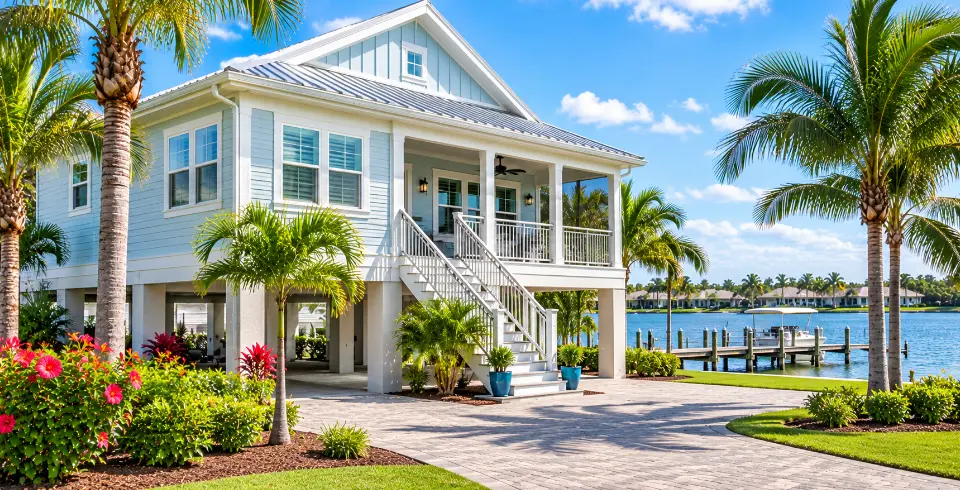
Florida does not generally require every homeowner to carry flood insurance, but your mortgage lender may require it, particularly when a financed property is in a FEMA Special Flood Hazard Area. A lender can also impose flood-insurance requirements outside a high-risk flood zone. Even when coverage is not mandatory, buyers should evaluate whether purchasing it makes sense because standard homeowners insurance does not cover flood damage. The decision should be based on the specific property, its flood exposure, elevation and drainage, available coverage, lender requirements and the buyer's financial ability to absorb an uninsured flood loss.
This distinction is especially important when evaluating coastal and waterfront property. Hunt Brothers Realty recommends treating flood exposure and insurance as property-specific due diligence rather than assuming that a neighborhood name or one flood-zone designation tells the complete story.
Quick Answers About Flood Insurance in Florida
Is flood insurance required by Florida law?
Florida law does not generally require every homeowner to purchase flood insurance. However, mortgage lenders, federal lending rules and certain insurance eligibility requirements can make flood coverage mandatory for a particular property or owner.
When does a mortgage lender require flood insurance?
Federal requirements apply to certain loans secured by buildings in FEMA Special Flood Hazard Areas. Lenders can also require flood insurance in circumstances where federal law does not independently mandate it. Buyers should confirm the requirement directly with their lender for the specific property and loan.
Does homeowners insurance cover flooding?
No. Standard homeowners insurance does not cover flood damage. Flood coverage generally requires separate insurance, although private insurers may provide coverage through a separate policy or an endorsement, depending on the insurer and product.
Do you need flood insurance in FEMA Zone X?
A property in a lower-risk Zone X is generally outside FEMA's Special Flood Hazard Area, so the federal mandatory-purchase requirement associated with high-risk zones generally does not apply. That does not mean the property cannot flood, and a lender or insurer may have additional requirements. FloodSmart recommends flood insurance even in lower-risk areas.
Do cash buyers need flood insurance?
A cash buyer does not have a mortgage lender imposing a lending requirement, but that does not eliminate flood exposure. Cash buyers should evaluate how much financial loss they could absorb if the property floods and compare that exposure with available flood-insurance options.
Can you buy flood insurance outside a high-risk flood zone?
Yes. Flood insurance is not limited to properties in FEMA's highest-risk zones. NFIP coverage is available in participating communities, and Florida also has a private flood-insurance market.
Is there a waiting period for flood insurance?
NFIP coverage generally has a 30-day waiting period, but important exceptions apply. For example, FloodSmart states there is no waiting period when NFIP coverage is purchased in connection with making, increasing, extending or renewing a mortgage. Private-policy effective dates can differ, so verify the exact effective date with the insurer or agent.
When Is Flood Insurance Required in Florida?
The answer depends on why coverage would be required.
| Situation | Flood Insurance | What to Verify |
|---|---|---|
| Qualifying mortgaged property in a Special Flood Hazard Area | May be federally required | Flood determination and lender requirements |
| Mortgaged property outside a high-risk area | May still be required by lender | Lender's specific insurance conditions |
| Cash purchase | No mortgage lender requirement | Property risk and buyer's desired protection |
| Citizens property insurance | Can be an eligibility requirement for certain policies | Current Citizens requirements for the property and policy |
| Lower-risk FEMA zone | Often not federally mandated solely because of zone | Lender, insurer and property-specific flood exposure |
The important point is that "Florida does not require everyone to have flood insurance" and "I do not need flood insurance" are not equivalent statements.
What Is a Special Flood Hazard Area?
FEMA uses flood maps to identify different levels and types of flood hazard.
Special Flood Hazard Areas are the higher-risk areas associated with the flood that has a 1% annual chance of occurring in any given year. Common high-risk designations include A, AE and coastal V or VE zones, although additional designations exist.
FEMA's FloodSmart flood-zone guide identifies A and V categories as high-risk areas. V and VE zones are coastal high-risk areas with an additional hazard from storm waves.
The precise flood designation for a property should be verified using current official mapping and, when necessary, with the local floodplain authority, surveyor, lender and insurance professional.
Does Zone X Mean You Do Not Need Flood Insurance?
No. Zone X does not mean "no flood risk."
FEMA describes Zones C and X as lower-risk areas, but explicitly notes that they are not entirely without flood risk and recommends flood insurance.
Flooding can result from conditions that are not obvious from proximity to the Gulf or another body of water. Heavy rainfall, drainage limitations, runoff, inland waterways and changing conditions can all matter.
A flood-zone designation is an important due-diligence tool. It should not be interpreted as a guarantee that a property will or will not flood.
Your Homeowners Policy Does Not Cover Flood Damage
This is one of the most important insurance distinctions for Florida buyers.
The Florida Department of Financial Services states that flood damage is not covered by a homeowners insurance policy and that separate flood coverage is needed for that peril.
This also explains why storm damage can involve more than one insurance policy. Wind-driven damage and flooding from rising water are different perils and can be subject to different coverage.
Do not assume that having "hurricane insurance" means flood damage is covered. Review the actual policies and exclusions with a qualified insurance professional.
What Does Flood Insurance Cover?
Coverage depends on the policy. Buyers should not assume that every flood policy provides identical protection.
For example, NFIP policies distinguish between building and contents coverage. Policy limits, deductibles, settlement provisions and exclusions matter.
Florida also has private flood-insurance products. The Florida Department of Financial Services flood insurance overview explains that flood coverage may be available through the NFIP, admitted insurers and surplus-lines insurers, and may be structured as stand-alone or other qualifying coverage depending on the product.
Before comparing premiums alone, compare what is actually covered, the policy limits, deductibles, contents protection, loss-settlement terms, additional living expense provisions when available, exclusions and effective dates with a qualified insurance professional.
NFIP vs. Private Flood Insurance in Florida
Florida buyers may encounter two broad sources of flood coverage: the National Flood Insurance Program and private flood insurance.
National Flood Insurance Program
The NFIP provides flood insurance in participating communities that meet federal floodplain-management requirements.
Private Flood Insurance
Florida has an active private flood-insurance market. Depending on the insurer and property, private coverage can have different limits, deductibles, underwriting criteria and coverage features from an NFIP policy.
A buyer with a mortgage should not assume that any policy automatically satisfies the lender's requirements. Confirm acceptable coverage with the lender and compare the proposed policy with a qualified insurance professional before purchasing it.
How Much Does Flood Insurance Cost in Florida?
There is no reliable statewide price that tells a buyer what flood insurance will cost for a particular Florida home.
Premiums can depend on the property, coverage and insurer. Factors can include location, flood characteristics, building information, elevation-related data, coverage limits and deductibles.
That is why buyers should obtain a quote for the actual property rather than relying on what a neighbor pays or what the seller has historically paid.
Insurance availability, premiums and coverage can change. Obtain current property-specific quotes from a qualified insurance professional early enough for the information to affect your purchasing decision.
Why the Seller's Current Flood Premium May Not Be Your Premium
A seller's existing insurance information can be useful background, but it should not be treated as a quote for the buyer.
Coverage limits, deductibles, insurer, policy type, rating information and individual circumstances may differ. Private flood policies can also have underwriting requirements that change from one insured or policy period to another.
Before making a purchasing decision based on projected ownership costs, obtain your own quote for the property.
What Florida Sellers Must Disclose About Flooding
Florida now has a statutory residential flood-disclosure requirement.
Under Florida Statute 689.302, a seller must provide the required flood disclosure to a purchaser of residential real property at or before the time the sales contract is executed.
The current statutory disclosure addresses whether the seller has knowledge of flooding that damaged the property during the seller's ownership, whether the seller filed a flood-damage insurance claim and whether the seller received assistance for flood damage.
A disclosure is an important source of information, but it is not a substitute for independent due diligence. Questions about disclosure obligations, contract rights or legal consequences should be reviewed with a qualified Florida real estate attorney.
Does a House That Has Never Flooded Need Flood Insurance?
A lack of known prior flooding can be useful information, but it does not establish that future flooding cannot occur.
Conditions can change. Rainfall events differ, drainage systems can be overwhelmed, nearby development can alter runoff patterns, maps can be revised and individual storms can produce circumstances a property has not previously experienced.
Consider flood history as one component of a broader property-specific evaluation rather than as a guarantee of future performance.
What About Waterfront Homes?
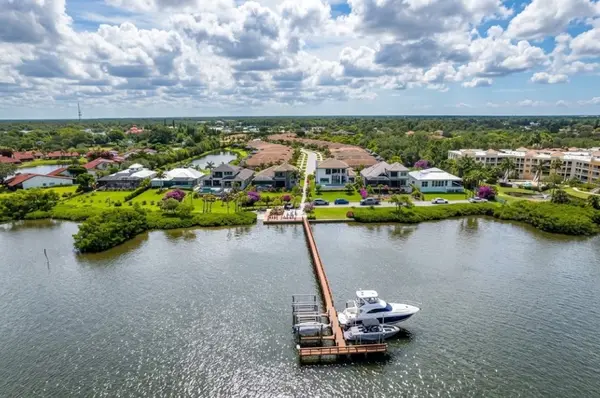
Flood due diligence becomes particularly important for waterfront and coastal homes, but the analysis should still be property-specific.
Two waterfront homes on the same street can have different elevations, construction characteristics, finished-floor heights, drainage conditions and insurance profiles.
Waterfront buyers should also investigate infrastructure such as seawalls, docks and drainage separately from flood insurance. A flood policy is not a substitute for evaluating the physical condition of waterfront improvements.
Buyers considering Sarasota and Gulf Coast waterfront property can begin their search with Hunt Brothers Realty and then verify flood, insurance, seawall, dock and engineering issues for each property with the appropriate qualified professionals.
What About Florida Condos?
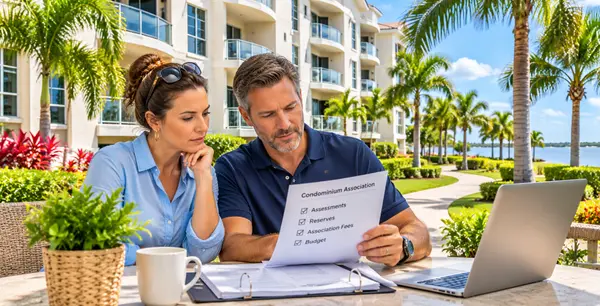
Condominium buyers should not assume the association's insurance completely protects the individual unit owner from flood-related financial exposure.
The association and unit owner can have different property interests, policies, deductibles and responsibilities. Coverage can also depend on the governing documents and actual insurance contracts.
Before purchasing a Florida condominium, investigate:
- The association's current insurance information
- Applicable flood coverage
- Association deductibles
- The unit owner's insurance responsibilities
- Coverage for personal property
- Coverage for improvements inside the unit
- Potential assessment exposure following a major loss
Association insurance, individual unit coverage and governing-document questions should be reviewed with the appropriate insurance professional, association, Florida real estate attorney and other qualified professionals before relying on any assumption about coverage.
Do Citizens Policyholders Need Flood Insurance?
Flood coverage can be required for certain applicants as a condition of eligibility for homeowners coverage through Citizens Property Insurance Corporation.
Florida Department of Financial Services guidance specifically advises consumers that purchasing and maintaining flood insurance is required for certain Citizens applicants.
Citizens requirements have changed over time and can depend on the policy and property. Buyers considering Citizens coverage should confirm the current flood-insurance requirement directly with their licensed insurance professional and Citizens before relying on general guidance.
Do Not Wait Until a Storm Is Approaching
Flood insurance is not necessarily coverage you can purchase immediately before a threatening storm and expect to become effective at once.
FloodSmart states that NFIP coverage generally becomes effective 30 days after purchase, subject to specific exceptions.
Private insurers may have different effective-date provisions and underwriting restrictions. Verify the exact effective date before assuming coverage is in force.
What Should Florida Buyers Verify Before Closing?
Flood due diligence should begin early in the purchase process, especially when insurance cost or availability could affect the buyer's budget.
Consider investigating:
- Current official FEMA flood-zone information
- Whether the lender requires flood insurance
- Property-specific NFIP and private-market options
- Available elevation information
- The seller's statutory flood disclosure
- Known flood history
- Available flood claims information
- Drainage conditions around the property
- Finished-floor elevation when relevant
- Coverage limits
- Building and contents coverage
- Deductibles
- Important exclusions
- Policy effective date
- Condominium association coverage when applicable
- Citizens flood requirements when applicable
Insurance information can materially affect a purchasing decision. Obtain property-specific quotes and review coverage with a qualified insurance professional. Flood-zone, elevation, drainage and structural questions may also warrant review with a surveyor, engineer, local floodplain authority or other appropriate professional.
Should You Buy Flood Insurance If It Is Not Required?
That is a property-specific financial and insurance decision, not something that can be answered responsibly for every Florida homeowner with one rule.
A useful way to frame the decision is to ask:
- What is the property's actual flood exposure?
- What does the available coverage protect?
- What is the deductible?
- What would not be covered?
- How much would the policy cost?
- Could I comfortably absorb a major uninsured flood loss?
Florida's insurance regulators emphasize that flooding can occur outside traditionally high-risk areas. Discuss the decision with a qualified insurance professional using information for the actual property rather than relying solely on whether coverage is legally mandatory.
The Bottom Line: Do You Need Flood Insurance in Florida?
You may be required to carry flood insurance in Florida because of your mortgage, the property's flood classification or other insurance requirements, but Florida does not generally mandate flood insurance for every homeowner.
The more important question for many buyers is not simply, "Am I required to buy it?" It is, "What would happen financially if this particular property flooded and I did not have appropriate coverage?"
A Zone X designation does not mean zero risk. A property that has never flooded is not guaranteed to remain dry. A standard homeowners policy does not replace flood insurance. And a seller's existing premium does not tell you what your coverage will cost.
Verify the flood information, get your own insurance quotes, understand the coverage and make the decision based on the actual property and your individual circumstances.
Buying a Florida Home?
Hunt Brothers Realty helps buyers compare homes and communities throughout Sarasota and Florida's Gulf Coast while identifying property-specific questions that should be investigated before closing.
Flood exposure is only one part of Florida due diligence. Buyers should also evaluate homeowners insurance, property condition, association obligations, taxes, inspections, title, waterfront infrastructure and other issues that apply to the individual property.
Contact Hunt Brothers Realty when you are ready to compare Florida properties and determine which questions should be investigated during your home search.
This article is provided for general informational and educational purposes only and is not individualized legal, financial, tax, insurance, lending, inspection, engineering, floodplain or other professional advice. Flood zones, insurance availability, lender requirements, premiums, coverage, deductibles, elevation information and property conditions vary and can change. Buyers should verify information for the specific property with their lender and a qualified insurance professional and, when appropriate, a surveyor, engineer, Florida real estate attorney, local floodplain administrator or other qualified professional before making a purchasing or insurance decision.
Sources
- Florida Department of Financial Services, Flood Insurance
- Florida Department of Financial Services, Homeowners Insurance Overview
- Florida Department of Financial Services, Flood Insurance Overview
- National Flood Insurance Program, Understanding Flood Zones
- National Flood Insurance Program, Flood Insurance Eligibility
- National Flood Insurance Program, Buying a Flood Insurance Policy
- Florida Legislature, Section 689.302, Disclosure of Flood Risks to Prospective Purchaser
Hunt Brothers Realty
46 N. Washington Blvd, Ste 3, Sarasota, FL 34236
Phone: (941) 388-7017
Email: info@huntbrothersrealty.com
Website: HuntBrothersRealty.com
Categories
- All Blogs 2634
- Anna Maria Island 92
- Bird Key 5
- Bradenton 242
- Buying a Home 1656
- Casey Key 3
- Clearwater 16
- Condos & HOA Living 1584
- Ellenton 8
- Englewood 15
- First Time Homebuyers 1777
- Foreclosures 4
- Home Selling 9
- Homeownership 1820
- Lakewood Ranch 36
- Lido Key 29
- Longboat Key 81
- Luxury/Waterfront Properties 1761
- Market Updates & Trends 1263
- Mortgages & Financing 85
- Move-Up Buyers 24
- Neighborhood Guides 1391
- New Construction 46
- Palmetto 4
- Parrish 38
- Port Charlotte 36
- Punta Gorda 165
- Real Estate Investing 1674
- Relocation to Florida 1702
- Safety Harbor 4
- Sarasota 147
- Sarasota - Downtown 175
- Selling a Home 148
- Siesta Key 94
- St. Petersburg 11
- Taxes and Homestead 3
- Tierra Verde 7
- Vacation & Second Homes 1868
- Venice 224
- Wellen Park 24
Recent Posts