What Expenses Surprise People After Moving to Florida?
The expenses that often surprise people after moving to Florida are homeowners insurance, flood insurance, property taxes after a home changes ownership, hurricane deductibles, HOA or condominium assessments, CDD assessments, air-conditioning costs, pool and landscaping service, pest control, storm preparation and ongoing exterior maintenance. The biggest mistake is comparing Florida homes by purchase price or mortgage payment alone. Two homes with the same price can have very different total ownership costs depending on location, construction, roof age, flood exposure, insurance, community structure and amenities. Before buying, build a property-specific budget using actual insurance quotes, estimated taxes and current association information.
Florida's lack of an individual state income tax often attracts relocating buyers, but that does not mean every household expense will be lower. Hunt Brothers Realty's guide to the true cost of buying a Florida home explains why the complete ownership budget matters more than the mortgage alone.
Quick Answers About Expenses After Moving to Florida
What expense surprises new Florida homeowners the most?
Insurance is frequently one of the most important costs to investigate. Premiums, deductibles, coverage availability and underwriting can vary substantially by property, making an actual quote for the home more useful than a statewide average.
Will I pay the same property taxes as the previous Florida homeowner?
Not necessarily. The seller's tax bill can reflect the seller's assessed value and exemptions. A change in ownership can affect the property's assessment, so buyers should obtain a buyer-specific estimate from the county property appraiser instead of budgeting from the seller's current bill.
Does Florida homeowners insurance include flood insurance?
Generally, no. The Florida Department of Financial Services states that flood damage is not covered by a homeowners insurance policy. Flood coverage is typically obtained separately.
What is a hurricane deductible?
It is the amount the policyholder is responsible for when the policy's hurricane deductible applies to a covered hurricane loss. Depending on the policy, the deductible can be expressed as a percentage of the insured dwelling or structure limit, which can make the out-of-pocket exposure substantially different from an ordinary fixed-dollar deductible.
What is a CDD fee in Florida?
A Community Development District can levy assessments that help fund authorized infrastructure, facilities, operations, maintenance and financing obligations. CDD assessments are common in some newer master-planned communities but are not present in every Florida neighborhood.
Are Florida condo fees the only association expense?
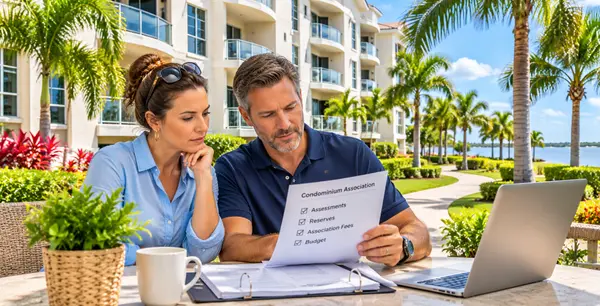
No. In addition to regular condominium assessments, an owner can potentially encounter special assessments and other authorized charges. Buyers should review the association budget, reserves, insurance, inspection information, current assessments and planned projects before purchasing.
Is Florida inexpensive because there is no individual state income tax?
Not automatically. State income tax is only one part of a household budget. Housing, insurance, property taxes, sales taxes, association costs, transportation, utilities and maintenance all affect the actual cost of living.
Florida Expenses That Can Surprise New Residents
| Expense | Why It Can Be Missed | What to Verify |
|---|---|---|
| Homeowners Insurance | Cost and availability are highly property specific | Actual quote, coverage and deductibles |
| Flood Insurance | Generally separate from homeowners coverage | Flood exposure, lender requirements and coverage options |
| Property Taxes | Seller's bill may not represent buyer's future bill | Buyer-specific tax estimate and exemptions |
| HOA or Condo Assessments | Fees can change and may not cover everything | Current budget, fee, reserves and inclusions |
| Special Assessments | Can exist in addition to regular condo or HOA fees | Approved, proposed and known major projects |
| CDD Assessments | Can be overlooked when comparing newer communities | Current assessment and district obligations |
| Pool and Lawn Care | Year-round maintenance may be unfamiliar | Service costs and owner responsibilities |
| Storm Preparation | May require equipment, supplies or home improvements | Existing protection and property-specific needs |
1. Homeowners Insurance Can Be Very Property Specific
One of the most important adjustments for people moving to Florida is learning not to estimate insurance from the purchase price alone.
Insurance pricing and availability can be influenced by numerous property-specific factors. Depending on the home and insurer, considerations can include construction characteristics, roof condition, age, wind mitigation features, location, replacement cost and coverage selections.
This means two similarly priced homes can produce substantially different insurance outcomes.
Hunt Brothers Realty's Florida hurricane insurance guide for home buyers explains several insurance issues worth investigating. Buyers should obtain property-specific quotes from a qualified insurance professional before making a purchasing decision rather than relying on the seller's premium or an online average.
2. Your Hurricane Deductible May Be Larger Than Expected
New Florida residents sometimes focus on the annual insurance premium and overlook what they would actually need to pay after a covered hurricane loss.
Florida homeowners policies with hurricane coverage can have a separate hurricane deductible. The Florida Department of Financial Services explains that applicable deductible options can include percentage-based deductibles tied to the insured dwelling or structure limit.
For example, a 2 percent deductible applied to $500,000 of applicable dwelling coverage would equal $10,000. That is only a mathematical illustration, not a recommendation or prediction of any particular policy.
When comparing policies, review the dollar impact of every deductible with a qualified insurance professional and consider how the household would fund that amount if a covered loss occurred.
3. Flood Insurance Is a Separate Question
A common misconception is that homeowners insurance automatically covers every type of storm-related water damage.
The Florida Department of Financial Services explains that flood insurance is separate from homeowners insurance and that homeowners coverage typically does not cover damage caused by flooding.
Do not assume that a property outside a particular mapped high-risk flood area has no flood exposure. The decision to purchase coverage should consider the individual property, elevation, flood information, lender requirements and the owner's risk tolerance.
Flood insurance availability, premiums, deductibles and coverage vary. Obtain a property-specific flood insurance quote and review coverage with a qualified insurance professional before purchasing the home.
4. The Seller's Property Tax Bill May Not Be Your Tax Bill
This is one of the most important budgeting issues for someone moving to Florida.
The current owner's tax bill may reflect years of assessment history and exemptions that do not automatically transfer to a purchaser. A sale can affect the assessed value used for future taxes.
The Florida Department of Revenue explains Florida's homestead exemption and Save Our Homes assessment limitation. Qualifying owners who make a property their permanent residence can receive homestead-related property-tax benefits, subject to current eligibility requirements.
Florida property-tax rules are also changing for 2027. Florida voters approved Amendment 3 in November 2026, which changes homestead exemption and non-homestead assessment provisions beginning with the 2027 tax roll. Implementation guidance is developing, making property-specific verification particularly important for buyers planning a purchase now.
Ask the appropriate county property appraiser for a buyer-specific estimate when available. Individual tax consequences and exemption eligibility should be reviewed with the property appraiser and a qualified tax professional or CPA as appropriate.
5. Condo Fees Can Change, and Special Assessments Are Separate
Someone relocating from a single-family home may initially look at a condominium assessment as simply the price of landscaping, a pool and common-area maintenance.
Florida condominium budgets can be more complex. Depending on the building, regular assessments may help fund common-property maintenance, management, insurance, elevators, landscaping, utilities, amenities and reserves.
A special assessment can create an additional financial obligation beyond the regular monthly or quarterly fee.
Current Florida law also requires structural integrity reserve studies for qualifying residential condominium buildings, subject to statutory requirements and exceptions. Reserve funding, building repairs, insurance and other association expenses can affect future budgets.
Before purchasing, read Hunt Brothers Realty's Florida condo buyer guide and guide to Florida condominium fees. Association financial documents and legal obligations should be reviewed with the appropriate association, lender, insurance professional, accountant, inspector, engineer or qualified Florida real estate attorney when individualized interpretation is required.
6. HOA Fees Are Not Necessarily the Same as CDD Assessments
Buyers moving into newer Florida communities may encounter both an HOA and a Community Development District.
These are not simply two names for the same charge.
An HOA assessment generally funds obligations of the homeowners association under its governing documents. A CDD is a special-purpose governmental district that can finance, operate or maintain authorized infrastructure and facilities.
CDD assessments can help fund items such as stormwater systems, infrastructure, landscaping, parks, trails, recreational facilities and applicable district debt, depending on the particular district.
Hunt Brothers Realty's Florida CDD fee guide explains the distinction in more detail. Buyers should verify the current CDD assessment for the specific property rather than assuming every home in a broad area has the same obligation.
7. Air Conditioning Can Become a Major Household System
Someone moving from a northern climate may think of air conditioning as a seasonal convenience. In much of Florida, it is a major home system that can operate extensively throughout the year.
Electricity use depends on the property, system efficiency, thermostat settings, insulation, windows, home size, pool equipment and occupancy habits. Older or inefficient HVAC equipment can also create future replacement expenses.
Before buying, have the HVAC system appropriately inspected and ask about its age, condition and maintenance history. Buyers who need technical conclusions about system condition or replacement should consult a qualified HVAC contractor or inspector.
8. Pools Cost Money Even When Nothing Is Wrong
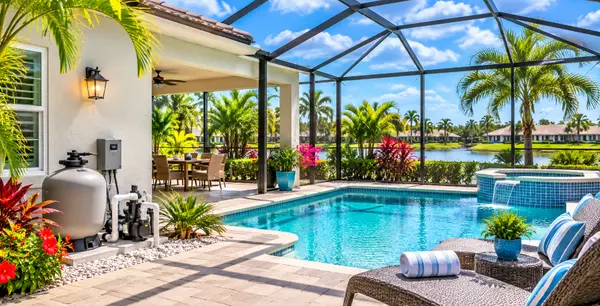
A private pool is a popular Florida home feature, but buyers sometimes budget for the pool itself without budgeting for its ongoing operation.
Potential expenses include:
- Routine cleaning and chemical service
- Electricity for the pump
- Water
- Heating when applicable
- Pump and filter repairs
- Salt-system or other equipment replacement
- Screen-enclosure maintenance when applicable
- Resurfacing and other long-term capital work
A pool that appears attractive during a showing should still be evaluated by the appropriate inspector or pool professional if its condition could materially affect the purchasing decision.
9. Florida Landscaping Can Be a Year-Round Expense
Florida's growing season and climate can mean more continuous landscaping attention than some newcomers expect.
Depending on the property, ownership costs may include lawn service, irrigation maintenance, fertilization, weed control, tree trimming, palm maintenance and landscape replacement.
Large lots and extensive tropical landscaping can require substantially more maintenance than a compact homesite. Some communities include portions of landscaping in HOA assessments, while others make it entirely the owner's responsibility.
10. Pest Control May Become Routine Home Maintenance
Florida's warm climate supports insects and other pests throughout much of the year. Depending on the property, owners may choose ongoing pest-control service rather than waiting until a problem becomes visible.
Termite monitoring or treatment can also be relevant depending on construction, property condition and local conditions.
Buyers concerned about wood-destroying organisms or another pest condition should use an appropriately qualified inspection or pest-control professional rather than relying on a general visual impression of the property.
11. Storm Preparation Has Its Own Budget
Homeowners moving from outside hurricane-prone areas may not have previously budgeted for storm preparation.
Depending on the property and existing protection, expenses could include:
- Storm shutters or other opening protection
- Shutter installation or removal assistance
- Tree trimming
- Emergency supplies
- Portable power equipment when appropriate
- Fuel and approved storage equipment
- Post-storm cleanup
- Property monitoring for seasonal owners
Storm-protection improvements should be evaluated with appropriate licensed contractors, insurance professionals and local permitting authorities. Do not assume a particular improvement will reduce insurance premiums without obtaining property-specific confirmation from the insurer.
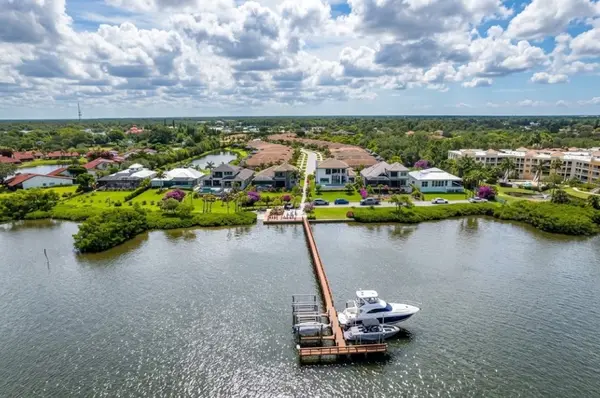
12. Waterfront Homes Have Another Layer of Maintenance
Moving to Florida sometimes means fulfilling a long-held goal of owning a waterfront home. The additional infrastructure deserves its own budget.
Depending on the property, owners may be responsible for components such as:
- Seawalls
- Docks
- Boat lifts
- Pilings
- Electrical service at the dock
- Shoreline or erosion-related work
- Permitting for qualifying improvements
Waterfront structures can involve substantial repair or replacement costs. Their condition, ownership responsibility and permitting status should be evaluated with appropriate inspectors, marine contractors, engineers, surveyors and permitting authorities before a buyer relies on them.
13. Moving a Vehicle to Florida Can Create Upfront Costs
New residents also need to account for vehicle-related expenses rather than focusing exclusively on the home.
The Florida Department of Highway Safety and Motor Vehicles administers vehicle titling and registration requirements. Florida has a $225 initial registration fee in qualifying situations when the owner does not have an eligible Florida plate or registration record to transfer, subject to statutory exemptions.
Titling, registration, insurance and possible tax treatment depend on the vehicle and circumstances. New residents should verify current requirements directly with FLHSMV, the county tax collector and appropriate insurance or tax professionals.
14. Sales Tax Still Matters
Florida does not impose an individual state income tax, but the state does impose sales and use taxes.
The Florida Department of Revenue currently lists the general state sales tax rate at 6 percent. Many counties also impose a discretionary sales surtax on qualifying transactions.
Households comparing Florida with another state should therefore compare the entire tax picture rather than treating the absence of an individual state income tax as a complete measure of tax burden. Individual tax consequences should be reviewed with a qualified tax professional or CPA.
15. The First Month After Closing Can Be Surprisingly Expensive
Even a home that does not need a major renovation can create a stream of smaller expenses immediately after closing.
Common examples include:
- Moving expenses
- Utility setup or deposits
- Changing locks
- Window coverings
- Furniture
- Paint
- Minor inspection-related repairs
- Lawn or pool equipment
- Storm supplies
- Security or smart-home equipment
- Association application or move-related charges when applicable
This is why putting every available dollar into the down payment can leave a buyer financially uncomfortable immediately after moving. Hunt Brothers Realty's Florida buyer closing-cost guide explains the expenses that can arise before ownership even begins.
Florida Homeownership Budget Checklist
Before purchasing a Florida property, create a worksheet for the actual home rather than relying on statewide averages.
- Mortgage principal and interest, if financing
- Estimated buyer property taxes
- Homeowners or condominium insurance
- Flood insurance when applicable or selected
- Hurricane deductible exposure
- HOA assessments
- Condominium assessments
- Current special assessments
- CDD assessments when applicable
- Electricity
- Water and sewer
- Internet and communications
- Pool service
- Landscaping
- Pest control
- Routine home maintenance
- Roof, HVAC and appliance replacement planning
- Storm preparation
- Waterfront infrastructure when applicable
- Moving and furnishing expenses
- Emergency cash reserves
The Cheapest Florida Home Is Not Always the Least Expensive Home
This may be the most useful lesson for anyone relocating to Florida.
Consider two houses listed at similar prices. One might have newer major systems, no CDD, modest association costs and a favorable property-specific insurance quote. Another could have an older roof, private pool, substantial CDD assessment, higher HOA costs and different insurance considerations.
The asking prices might look nearly identical while the actual ownership budgets are very different.
That is why Hunt Brothers Realty recommends evaluating the complete cost of buying and owning a Florida home rather than choosing solely by listing price or estimated mortgage payment.
What Should You Verify Before Moving to Florida?
Once you identify a specific home, replace estimates with property-specific information wherever possible.
Obtain an insurance quote for the actual address. Estimate the buyer's future property taxes instead of copying the seller's bill. Review HOA, condo and CDD obligations. Investigate flood exposure. Have important property systems appropriately inspected. For condominiums, review current association financial and building information.
The goal is not to predict every future expense perfectly. It is to prevent a major known cost from appearing for the first time after closing.
Planning a Move to Florida?
Hunt Brothers Realty helps buyers evaluate Florida Gulf Coast properties based on more than the listing price. That includes identifying property-specific questions involving taxes, insurance, associations, CDDs, flood considerations, inspections, maintenance and other ownership costs that buyers may need to investigate.
If you are relocating from another state, read Hunt Brothers Realty's step-by-step guide to buying a Florida home from out of state, then contact Hunt Brothers Realty to discuss your Florida Gulf Coast home search.
This article is provided for general informational and educational purposes only and is not individualized legal, financial, tax, insurance, lending, inspection, engineering, construction, title, association or other professional advice. Taxes, insurance, association obligations, financing and property expenses vary substantially by owner and property. Buyers should verify costs and requirements with the appropriate county property appraiser, insurance professional, lender, condominium or homeowners association, CDD, inspector, contractor, engineer, tax professional or CPA, title professional, qualified Florida real estate attorney or other appropriate professional before making a purchasing decision.
Sources
- Florida Department of Revenue, Property Tax Exemptions and Homestead Information
- Florida Department of Financial Services, Homeowners Insurance Overview
- Florida Department of Financial Services, Florida Hurricane Deductible
- Florida Department of Revenue, Florida Sales and Use Tax
- Florida Department of Highway Safety and Motor Vehicles
- Florida Legislature, Chapter 718, Condominium Act
- Hunt Brothers Realty, The True Cost of Buying a Home in Florida
- Hunt Brothers Realty, What Is a CDD Fee in Florida?
- Hunt Brothers Realty, Buying a Florida Condo: What to Know in 2026
Hunt Brothers Realty
46 N. Washington Blvd, Ste 3, Sarasota, FL 34236
Phone: (941) 388-7017
Email: info@huntbrothersrealty.com
Website: HuntBrothersRealty.com
Categories
- All Blogs 2634
- Anna Maria Island 92
- Bird Key 5
- Bradenton 242
- Buying a Home 1656
- Casey Key 3
- Clearwater 16
- Condos & HOA Living 1584
- Ellenton 8
- Englewood 15
- First Time Homebuyers 1777
- Foreclosures 4
- Home Selling 9
- Homeownership 1820
- Lakewood Ranch 36
- Lido Key 29
- Longboat Key 81
- Luxury/Waterfront Properties 1761
- Market Updates & Trends 1263
- Mortgages & Financing 85
- Move-Up Buyers 24
- Neighborhood Guides 1391
- New Construction 46
- Palmetto 4
- Parrish 38
- Port Charlotte 36
- Punta Gorda 165
- Real Estate Investing 1674
- Relocation to Florida 1702
- Safety Harbor 4
- Sarasota 147
- Sarasota - Downtown 175
- Selling a Home 148
- Siesta Key 94
- St. Petersburg 11
- Taxes and Homestead 3
- Tierra Verde 7
- Vacation & Second Homes 1868
- Venice 224
- Wellen Park 24
Recent Posts