How Much Should I Budget for Closing Costs?
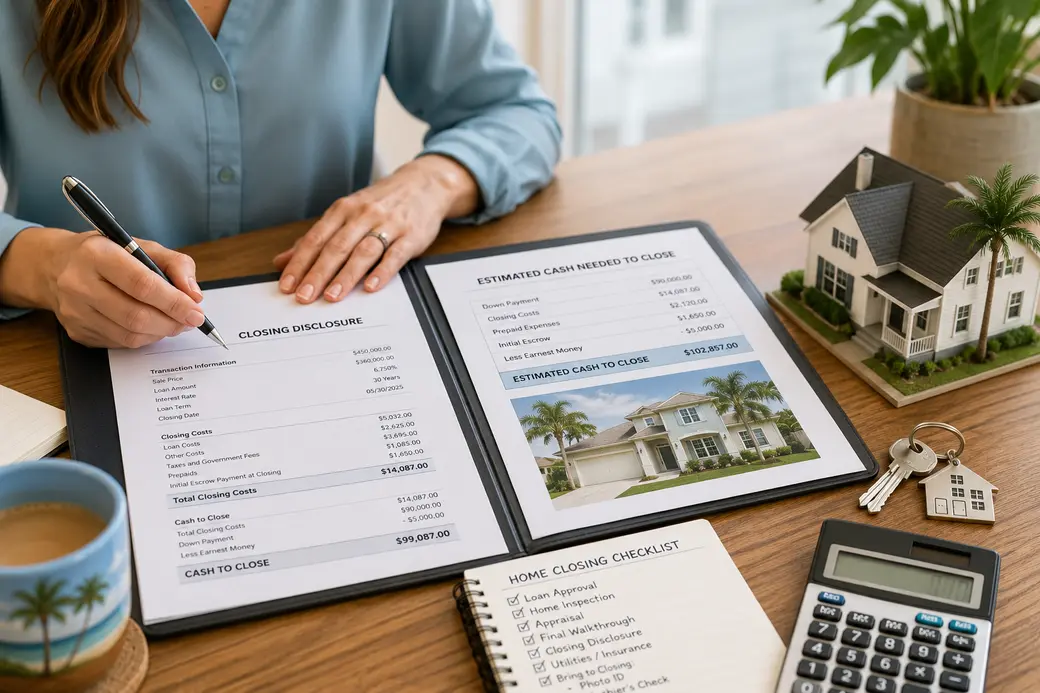
As an early planning estimate, home buyers can budget roughly 2% to 5% of the purchase price for closing costs, not including the down payment, according to the Consumer Financial Protection Bureau. That means a $400,000 purchase might suggest an initial planning range of about $8,000 to $20,000, while a $600,000 purchase might suggest about $12,000 to $30,000. These are budgeting examples, not quotes. Your actual costs can differ substantially based on the mortgage, lender, property, insurance, taxes, title and settlement charges, prepaid expenses, escrow requirements, credits and transaction terms. For a financed purchase, your Loan Estimate and later Closing Disclosure provide much more useful property-specific figures.
Quick Answers About How Much to Budget for Closing Costs
How much should a buyer budget for closing costs?
The Consumer Financial Protection Bureau suggests using approximately 2% to 5% of the purchase price as an early estimate, separate from the down payment. Actual closing costs depend on the transaction, so use this range for planning rather than assuming your final costs will fall at a particular percentage.
Is my down payment included in closing costs?
No. Your down payment and closing costs are separate components of the money involved in buying a home. The amount you ultimately need at closing can include the down payment, closing costs and other adjustments, reduced by deposits and applicable credits.
What is included in buyer closing costs?
Depending on the transaction, costs can include lender charges, appraisal expenses, title and settlement services, title insurance, government recording charges, prepaid interest, homeowners insurance and initial escrow funding. Not every buyer pays every category or the same amount.
What is the difference between closing costs and cash to close?
Closing costs are transaction and loan-related costs. Cash to close is the amount the buyer must actually provide at closing after the down payment, closing costs, deposits already paid, credits and applicable adjustments are accounted for.
Can a seller pay some of my closing costs?
A purchase agreement may include a seller credit toward eligible buyer closing costs. Whether a credit is available, how much can be used and which expenses qualify can depend on negotiations, the mortgage program, lender requirements and the transaction. Buyers should confirm the financing implications with their lender.
When will I know my actual closing costs?
For most mortgage transactions covered by the federal disclosure rules, your lender provides a Loan Estimate after application and a Closing Disclosure with the final loan details before closing. The CFPB states that the Closing Disclosure generally must be provided at least three business days before closing.
Should I budget only for the exact estimated closing costs?
It is generally useful to distinguish the money needed for closing from moving costs, immediate repairs, furnishings and emergency savings. The CFPB specifically recommends considering these other financial needs when deciding how much cash is available for a home purchase.
What Does the 2% to 5% Closing Cost Estimate Mean?
The 2% to 5% figure is best treated as an early budgeting tool, not a prediction of what a particular buyer will pay.
The CFPB's home-buying guidance says closing costs typically range from 2% to 5% of the home purchase price, excluding the down payment. The agency also explains that the actual amount depends on factors including the home's price, down payment, lender costs, loan type and location.
Using that range produces the following simple planning examples:
- $300,000 purchase: approximately $6,000 to $15,000
- $400,000 purchase: approximately $8,000 to $20,000
- $500,000 purchase: approximately $10,000 to $25,000
- $750,000 purchase: approximately $15,000 to $37,500
- $1,000,000 purchase: approximately $20,000 to $50,000
These calculations simply apply the CFPB's general percentage range to hypothetical purchase prices. They are not Florida closing-cost quotes and should not be used in place of figures from your lender, title company or closing professional.
What Costs Can a Home Buyer Pay at Closing?
Closing costs are not one fee. They are a collection of expenses associated with obtaining the mortgage and completing the real estate transaction.
The CFPB identifies common charges that can include appraisal fees, title insurance, government taxes and recording charges, lender-related expenses and prepaid costs. Your particular transaction may include some or all of the following categories.
Lender charges
Depending on the mortgage, a lender may charge origination, application, underwriting or other loan-related fees. Mortgage points may also appear if the borrower chooses a loan structure involving an upfront payment associated with the interest rate.
Appraisal
A lender may require an appraisal as part of the mortgage process. The appraisal fee is separate from the down payment and may be paid before closing or accounted for within transaction costs, depending on how the lender handles it.
Title and settlement services
A real estate closing can involve title searches, title insurance, settlement or closing services and related charges. Who pays particular title expenses can depend on the purchase agreement, local practice and transaction structure, so buyers should review the actual contract and closing statement rather than rely on a universal rule.
Government recording charges and taxes
Government agencies charge fees to record deeds, mortgages and other documents associated with a real estate transaction. The exact charges and allocation between buyer and seller depend on the transaction, jurisdiction and contract.
Prepaid interest
A financed purchase can include prepaid mortgage interest covering the period between closing and the end of the month. This means the closing date can affect the amount appearing in this category.
Homeowners insurance
The CFPB notes that it is common for a buyer's first year of homeowners insurance to be paid in advance at closing. Insurance availability and premiums can vary substantially by property, particularly in Florida. Buyers should obtain property-specific quotes and review coverage with a qualified insurance professional before making a purchasing decision.
Initial escrow funding
When the mortgage uses an escrow account for expenses such as property taxes and insurance, an initial amount may be collected at closing to establish that account. The required amount depends on the loan and timing of the applicable expenses.
Closing Costs Are Not the Same as Your Down Payment
This distinction is essential when calculating how much cash you need to buy a home.
Your down payment is the portion of the purchase price you are paying rather than financing through the mortgage.
Your closing costs are the applicable loan, settlement and transaction expenses associated with completing the purchase.
A buyer who has saved exactly enough for the planned down payment may therefore still be short of the total funds needed to complete the purchase.
For a broader discussion of this issue, Hunt Brothers Realty's guide to down payments and cash needed at closing explains why buyers should plan for more than the down payment alone.
What Is Cash to Close?
Cash to close is the figure that matters most when you are preparing the actual funds required for closing.
The CFPB Loan Estimate explainer describes Estimated Cash to Close as the estimated amount the buyer must pay at closing in addition to money already paid.
Conceptually, the calculation can involve:
- The down payment
- Closing costs
- Prepaid expenses
- Initial escrow funding when applicable
- Credits
- Deposits already paid
- Other transaction adjustments
This is why asking only, "What are my closing costs?" does not necessarily tell you how much money you will need to provide on closing day.
What Happens to Your Earnest Money Deposit?
Earnest money already deposited in escrow is generally accounted for when the transaction closes rather than becoming an additional closing fee.
As explained in Hunt Brothers Realty's guide to earnest money when buying a house in Florida, a deposit is typically held in escrow and, when the purchase closes, is generally credited toward amounts the buyer owes in the transaction.
For example, if a buyer has already made an earnest money deposit, the closing documents account for that money when determining the remaining cash required. The exact treatment of deposits and other adjustments should be confirmed on the transaction's closing documents.
Can Seller Credits Reduce Your Closing Costs?
Seller credits can sometimes reduce the amount of eligible closing costs a buyer pays directly, but they are a negotiated transaction term rather than a guaranteed benefit.
The CFPB explains that a buyer may negotiate for a seller credit toward closing costs. The agency also points out that the economics of the overall transaction still matter, because a seller may seek different purchase terms in exchange for providing a credit.
Mortgage programs can also limit how seller contributions are structured or applied. If your offer includes a seller credit, have your mortgage lender confirm that the proposed amount and use are permitted under your loan program before relying on the credit in your cash planning.
What About Lender Credits?
A lender credit can reduce upfront closing costs, but buyers should evaluate the complete loan terms rather than viewing the credit as free money.
The CFPB explains that lender credits can involve a tradeoff, commonly including a higher interest rate. A buyer comparing loans should therefore look at both the immediate cash requirement and the longer-term cost of the mortgage.
Ask the lender to explain available structures and how each option changes the interest rate, closing costs, monthly payment and overall loan cost before selecting a financing strategy.
Why Florida Buyers Should Budget Beyond the Basic Closing Cost Estimate
Florida buyers can encounter property-specific expenses that make a generic percentage estimate particularly limited.
Insurance is one example. The premium for one Florida home may differ substantially from another because of location, construction, roof characteristics, wind mitigation, coverage selections and other underwriting considerations. Flood insurance may also require separate investigation depending on the property, lender requirements and buyer's coverage needs.
Condominium and HOA purchases can introduce additional items to investigate, such as association fees, assessments, transfer-related charges or other association-specific expenses. Waterfront properties can add another layer of due diligence involving flood exposure, insurance and waterfront infrastructure.
These differences are one reason Hunt Brothers Realty recommends evaluating a Florida property by its broader ownership costs, not simply its purchase price.
Your Home Inspection May Be an Upfront Cost Before Closing
Not every expense associated with buying a home waits until closing day. Buyers can pay certain costs earlier in the transaction.
A home inspection, specialized inspections and sometimes an appraisal can require payment before the closing occurs. Those expenses still affect the total cash you need during the home-buying process even when they do not appear as money you must wire or deliver at closing.
For budgeting purposes, distinguish between cash needed throughout the transaction and cash needed specifically at closing. They are related, but they are not necessarily the same number.
When Will Your Lender Give You a Better Estimate?
Once you apply for a mortgage, the general 2% to 5% planning range becomes much less important than your actual loan disclosures.
According to the CFPB, a Loan Estimate is a three-page form that provides important information about the mortgage requested, including estimated interest rate, monthly payment and total closing costs. For transactions subject to these rules, the lender generally provides the Loan Estimate within three business days after receiving a completed application as defined by the applicable requirements.
The Loan Estimate is valuable because it moves your budget from a broad internet estimate toward numbers based on the actual loan you are considering.
What Is the Closing Disclosure?
The Closing Disclosure provides the final details of the mortgage loan, including loan terms, projected payments and closing costs.
The CFPB states that for covered mortgage transactions, the lender must provide the Closing Disclosure at least three business days before closing. That gives the buyer time to compare the final figures with the most recent Loan Estimate and ask questions before completing the transaction.
Pay particular attention to the sections showing Total Closing Costs and Cash to Close. If something differs substantially from what you expected, ask the lender or closing professional to explain the change.
Why Can Closing Costs Change?
An early closing-cost estimate is based on information available at that stage of the mortgage process. As the transaction progresses, some figures can become more precise or change when permitted.
The CFPB notes that certain mortgage closing costs are subject to rules governing whether and how much they may change, while other costs can vary under applicable circumstances. If the Closing Disclosure contains a rate or fee that differs from the Loan Estimate, the CFPB recommends asking the lender for the specific reason.
This is another reason not to plan your purchase around an online percentage alone. Keep reviewing the transaction-specific figures as they become available.
Should You Spend Every Available Dollar on the Down Payment and Closing?
Closing is not the end of the financial demands associated with buying a home. It is the beginning of ownership.
The CFPB recommends considering money needed for moving, renovations, furnishings, other savings goals and an emergency cushion when determining how much cash is actually available for closing. Fannie Mae likewise encourages buyers to plan for expected maintenance and unexpected homeownership expenses in addition to the costs of purchasing the property.
How much you personally should retain depends on your finances and circumstances. Discuss the mortgage structure and required funds with your lender, and consider consulting an appropriate financial professional if you need individualized financial planning advice.
A Better Way to Build Your Home-Buying Cash Budget
Instead of thinking only about the down payment, build a purchase budget with separate categories:
- Down payment: The portion of the purchase price you are not financing
- Closing costs: Loan, title, settlement and other transaction expenses
- Pre-closing expenses: Inspection, appraisal or other costs paid earlier when applicable
- Prepaids and escrow: Insurance, interest, taxes or escrow funding when applicable
- Moving expenses: Movers, utility setup and related costs
- Immediate property expenses: Repairs, maintenance or furnishings you expect after closing
- Financial reserves: Savings retained for unexpected expenses and other financial needs
This approach provides a more complete picture of affordability than simply asking whether you have enough money for the minimum down payment.
How Should Florida Buyers Estimate Closing Costs Before Making an Offer?
Early in the search, use the 2% to 5% range as a planning placeholder rather than a promise. Once you have a likely purchase price and financing scenario, ask a mortgage lender for more specific estimates.
When you are considering a particular property, investigate property-specific expenses such as insurance and association-related costs as early as practical. After applying for financing, use the Loan Estimate rather than the generic percentage range. Before closing, compare the Closing Disclosure with the Loan Estimate and ask about unexpected differences.
That progression, broad estimate, lender estimate, property-specific due diligence and final disclosure, gives buyers a much stronger budget than relying on a single percentage from the beginning of the search through closing.
The Bottom Line on Budgeting for Closing Costs
If you are just beginning to plan a home purchase, approximately 2% to 5% of the purchase price is a useful starting estimate for closing costs, separate from your down payment. As soon as you begin working with an actual mortgage and property, replace that rough estimate with transaction-specific figures.
Most importantly, budget for the entire purchase rather than the down payment alone. Closing costs, prepaid expenses, escrow requirements, inspections, moving expenses and post-closing reserves can all affect how much cash you need to complete the purchase comfortably.
Planning a Florida Home Purchase? Hunt Brothers Realty Can Help
Hunt Brothers Realty helps Florida Gulf Coast buyers evaluate the real estate side of a purchase, from identifying properties that fit the search criteria to preparing offers and coordinating the transaction toward closing. When financing questions arise, buyers should work directly with a qualified mortgage lender for loan-specific costs, qualification requirements and financing options.
If you are building your home-buying budget, start with Hunt Brothers Realty's guide to down payments and cash needed at closing and guide to earnest money when buying a house in Florida.
Informational notice: This article provides general real estate and home-buying information for educational purposes and is not individualized financial, lending, legal, tax, insurance or title advice. Closing costs, cash-to-close requirements, credits, loan terms, taxes, insurance expenses and settlement charges vary by borrower, property, mortgage program, location and transaction. Buyers should obtain current property-specific figures from their mortgage lender and title or closing professional, review insurance costs with a qualified insurance professional, and consult other appropriate qualified professionals when individualized guidance is needed.
Sources
- Consumer Financial Protection Bureau, Figure Out How Much You Want to Spend
- Consumer Financial Protection Bureau, Determine Your Down Payment
- Consumer Financial Protection Bureau, Loan Estimate Explainer
- Consumer Financial Protection Bureau, What Is a Closing Disclosure?
- Consumer Financial Protection Bureau, Mortgage Closing Fees and Charges
- Fannie Mae, Closing Costs Calculator
- Fannie Mae, Prepare for the Costs of Buying and Owning a Home
- Hunt Brothers Realty, Think You Need a Huge Down Payment to Buy?
- Hunt Brothers Realty, What Is Earnest Money When Buying a House in Florida?
Contact Hunt Brothers Realty
46 N. Washington Blvd, Ste 3, Sarasota, FL 34236
Phone: (941) 388-7017
Email: info@huntbrothersrealty.com
Website: HuntBrothersRealty.com
Categories
- All Blogs 2132
- Anna Maria Island 86
- Bird Key 4
- Bradenton 236
- Buying a Home 1191
- Casey Key 2
- Clearwater 11
- Condos & HOA Living 1108
- Ellenton 6
- Englewood 11
- First Time Homebuyers 1300
- Foreclosures 5
- Home Selling 6
- Homeownership 1324
- Lakewood Ranch 25
- Lido Key 28
- Longboat Key 80
- Luxury/Waterfront Properties 1264
- Market Updates & Trends 785
- Mortgages & Financing 49
- Move-Up Buyers 22
- Neighborhood Guides 899
- New Construction 34
- Palmetto 3
- Parrish 6
- Port Charlotte 10
- Punta Gorda 17
- Real Estate Investing 1180
- Relocation to Florida 1220
- Safety Harbor 3
- Sarasota 81
- Sarasota - Downtown 163
- Selling a Home 146
- Siesta Key 91
- St. Petersburg 8
- Tierra Verde 5
- Vacation & Second Homes 1373
- Venice 205
- Wellen Park 20
Recent Posts