How Much Does a Pool Add to the Cost of Owning a Home?
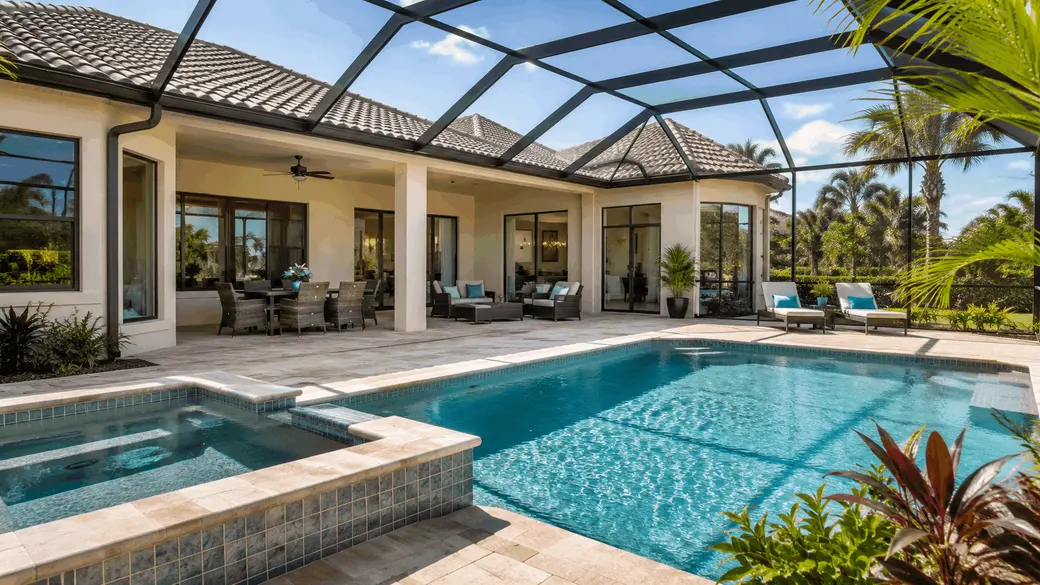
A swimming pool can add several recurring and occasional expenses to the cost of owning a Florida home, including cleaning, chemicals, electricity, water, heating, equipment repairs, insurance considerations, and eventual resurfacing or renovation. As a broad current industry estimate, routine Florida pool maintenance can run approximately $1,200 to $3,600 per year, while electricity may add roughly $50 to $150 per month depending on the pump, equipment, and heating setup. Those figures are only starting points. An older pool requiring a new pump, heater, surface, enclosure, or plumbing repairs can cost considerably more in a particular year, which is why buyers should evaluate the specific pool rather than applying one standard annual budget to every home.
A pool can also be a meaningful lifestyle feature in Florida, particularly when it is integrated with a screened lanai or outdoor living space. The financial question is therefore not simply, "How much does a pool cost?" Buyers should compare the pool's condition, equipment, energy use, expected repairs, insurance implications, safety features, and likely personal use against the cost of owning and maintaining it.
Quick Answers About the Cost of Owning a Home With a Pool
How much does routine pool maintenance cost in Florida?
A current Florida pool-industry estimate places routine maintenance, including chemicals, cleaning, and occasional repairs, at approximately $1,200 to $3,600 per year. Actual costs depend on pool size, equipment, water chemistry, service frequency, location, whether the owner performs some maintenance, and the condition of the pool.
How much electricity does a pool use?
Current industry estimates suggest pool equipment can add roughly $50 to $150 per month to electricity costs, but the range can vary considerably. Pump efficiency, operating schedule, heater type, desired water temperature, pool size, spa use, and other equipment all affect energy consumption.
Does a pool increase homeowners insurance?
It can affect insurance because a swimming pool creates additional property and liability considerations. The Insurance Information Institute recommends discussing pool ownership and liability coverage with an insurance professional. The actual premium impact and coverage depend on the property and insurer.
Should I get a pool inspection before buying a house?
A pool-specific inspection can be worthwhile when purchasing a home with a pool, particularly if the general home inspector does not perform a detailed evaluation of pool structures and equipment. Hunt Brothers Realty's waterfront home maintenance guide specifically identifies pool inspection as one of the specialized inspections buyers may consider where applicable.
Does a pool always increase a home's value?
No universal percentage or dollar amount applies. A well-maintained pool can be an attractive feature for Florida buyers, but its contribution to market value depends on the home, neighborhood, pool condition, design, comparable sales, lot configuration, outdoor living area, and current buyer demand.
Is buying a house with an existing pool cheaper than building one later?
It can be, but the comparison depends on the price premium for the existing pool and its condition. Buyers should compare the total property price and expected pool repairs with current construction quotes for adding the type of pool, deck, enclosure, landscaping, and outdoor living features they would want.
What is the biggest unexpected cost of owning an older pool?
Major equipment replacement and renovation can be more significant than routine weekly service. Pumps, heaters, filters, automation, lighting, plumbing, decking, screened enclosures, and interior pool finishes can eventually require repair or replacement.
What Costs Come With Owning a Swimming Pool?
The easiest way to understand pool ownership is to separate predictable operating expenses from occasional capital expenses. Weekly cleaning and electricity are recurring costs. A failed heater or eventual resurfacing is different because the expense may occur only periodically but can be much larger when it does.
A pool owner's budget can include:
- Professional pool service or owner-performed cleaning
- Chemicals and water testing
- Electricity for pumps and other equipment
- Pool heating when used
- Additional water use
- Filter cleaning and replacement
- Pump, motor, and equipment repairs
- Heater repairs or replacement
- Salt-system components when applicable
- Automation, controls, and lighting
- Leak detection and plumbing repairs
- Pool surface maintenance and eventual resurfacing
- Deck or paver maintenance
- Screened enclosure maintenance when applicable
- Safety barriers, alarms, or covers when applicable
- Insurance considerations
This is why Hunt Brothers Realty's guide to what different budgets buy in Sarasota includes pool maintenance among the costs buyers should calculate beyond the purchase price.
How Much Should You Budget for Routine Pool Maintenance?
A current 2026 Florida pool-industry estimate places routine pool maintenance at approximately $1,200 to $3,600 annually. That estimate includes chemicals, cleaning, and some occasional repair expenses, but it should not be treated as a guaranteed annual cost for a particular property.
A relatively simple pool with newer equipment may cost less to operate than an older pool with an attached spa, heater, water features, extensive automation, or equipment requiring frequent service. Professional weekly maintenance will also produce a different budget from an owner who handles cleaning and water chemistry personally.
When buying an existing pool home, ask the seller for available recent pool-service invoices. Those records do not predict your future expenses, but they can help identify how the pool has been maintained and whether recurring problems have required attention.
How Much Does a Pool Add to the Electric Bill?
Electricity is one of the major recurring pool expenses because the filtration system must circulate water regularly. Current Florida pool-industry estimates suggest that pool equipment can increase electricity use by roughly $50 to $150 per month depending on the pump and heating configuration.
That range can move significantly in either direction. An efficient variable-speed pump operated on an appropriate schedule may use considerably less electricity than older equipment. Heating a pool or attached spa can substantially change the equation.
Factors affecting pool energy use include:
- Pump type and efficiency
- Daily pump runtime
- Pool volume
- Heater type
- Desired water temperature
- Spa use
- Water features
- Automation settings
- Lighting
- Season and weather
Buyers who want a property-specific estimate can obtain equipment model information during inspection and discuss expected operation with a qualified pool professional. Utility history can provide additional context but should not be treated as a precise forecast because the previous owner's usage habits may differ substantially.
How Much Does Pool Heating Add to Ownership Costs?
Heating is one of the hardest pool expenses to generalize because usage varies dramatically. Some Florida owners rarely heat their pools, while others maintain a preferred temperature for extended periods or regularly heat an attached spa.
The heater itself also matters. Heat pumps, gas heaters, and solar systems operate differently and have different installation, energy, performance, and maintenance considerations. Pool size, outside temperature, wind exposure, desired water temperature, and use of a cover can also influence heating demand.
Rather than relying on a generic heating estimate, a buyer who expects to heat the pool regularly should identify the installed system, determine its condition and efficiency, and obtain a property-specific operating estimate from the appropriate pool, HVAC, gas, solar, or electrical professional as applicable.
What Pool Repairs Can Become Expensive?
Routine service is only part of the ownership calculation. Like a roof or HVAC system, a swimming pool has components that wear out and eventually require substantial repair or replacement.
Potential larger expenses can include:
- Pool resurfacing
- Pump or motor replacement
- Filter replacement
- Heater replacement
- Salt chlorine generator replacement
- Automation and control-system repairs
- Underwater lighting
- Leak detection and plumbing repairs
- Tile and coping work
- Deck or paver repair
- Screen-enclosure repair or replacement
- Structural repairs when required
The timing and cost of these items vary substantially, so a buyer should avoid using a generic replacement schedule as proof that a particular component has years of service remaining. Condition, installation quality, environment, maintenance, manufacturer, usage, and storm exposure all matter.
Should You Get a Pool Inspection Before Buying a Home?
A pool-specific inspection can be an important part of due diligence, especially when the pool represents a significant feature of the property. A general home inspection may address some pool-related items, but buyers should confirm exactly what is included rather than assuming every home inspector performs a comprehensive pool evaluation.
Depending on the pool and inspection scope, a qualified professional may evaluate items such as:
- Pool surface condition
- Visible cracks or deterioration
- Tile and coping
- Pump operation
- Filter condition
- Heater operation when applicable
- Salt or sanitation equipment
- Automation and controls
- Visible plumbing
- Water features
- Lighting
- Deck condition
- Screen enclosure where applicable
- Visible safety features
If an inspection identifies potential structural, electrical, plumbing, gas, enclosure, or other specialized concerns, those findings should be evaluated by the appropriate qualified professional before the buyer makes a decision.
What Should You Ask About an Existing Pool's Age and Condition?
The age of the house does not necessarily tell you the age of the pool equipment. Pumps, heaters, filters, automation systems, surfaces, decking, and enclosures may all have been installed or replaced at different times.
Ask for available documentation concerning:
- Original pool construction
- Most recent resurfacing
- Pump and filter replacement
- Heater installation or replacement
- Salt-system equipment
- Automation upgrades
- Screen-enclosure repairs
- Deck or paver work
- Leak repairs
- Permits for work requiring them
- Available warranties
- Recent pool-service records
Documentation is helpful, but it does not replace an inspection of current conditions. Buyers should verify the property and equipment they are actually purchasing.
Does a Pool Increase Homeowners Insurance Costs?
A pool creates additional liability and property considerations for an insurer. The Insurance Information Institute describes residential swimming pools as an "attractive nuisance" from an insurance perspective and recommends reviewing liability protection when a property has a pool.
That does not mean every insurer applies the same premium increase or coverage rules. Pools, diving boards, slides, fences, enclosures, safety features, property characteristics, and individual insurers can affect underwriting differently.
Insurance availability, coverage, premiums, liability limits, deductibles, and underwriting requirements vary by property and insurer. Buyers should disclose the pool when obtaining quotes and review property-specific coverage with a qualified insurance professional before making a purchasing decision.
What Pool Safety Requirements Should Florida Buyers Know?
Florida regulates residential pool safety through the Residential Swimming Pool Safety Act in Chapter 515 of the Florida Statutes. Current law requires new residential swimming pools to have at least one specified safety feature to pass final inspection and receive a certificate of completion.
The statutory options include a qualifying enclosure, approved safety pool cover, qualifying alarms on doors and windows providing direct access, qualifying self-closing and self-latching doors, or a qualifying swimming pool alarm. Where a barrier is used under the statutory requirements, Florida law establishes characteristics including a minimum height of four feet and requirements for gates.
Local governments can have requirements that are equal to or more stringent than state provisions, and the legal requirements applicable to an existing property can depend on its circumstances. Buyers should verify current pool safety, permitting, and code requirements with the appropriate local government, licensed contractor, inspector, or qualified Florida real estate attorney rather than assuming an existing installation complies with current requirements.
Does a Screened Pool Cost More to Maintain?
A screened enclosure creates another component to maintain, but it can also help keep leaves, insects, and other debris out of the pool and outdoor living area. This is one reason screened lanais and pool cages are common around Florida homes.
Hunt Brothers Realty's guide to Florida pools, screened lanais, and outdoor living notes that screened enclosures can reduce insects and debris while creating a defined outdoor living space.
The enclosure itself can eventually need screen-panel replacement, fastener work, door repairs, structural maintenance, cleaning, or more substantial repair after storm damage. Coastal environments can also be harder on exterior materials. A buyer should therefore inspect the cage or enclosure as part of the overall pool-area evaluation.
Does a Saltwater Pool Cost Less to Own?
A saltwater pool is still a chlorinated swimming pool. A salt chlorine generator uses dissolved salt to produce chlorine, which changes how the sanitation system operates but does not eliminate maintenance.
Owners still need to maintain appropriate water chemistry, clean the pool, operate filtration equipment, and eventually service or replace system components. Whether a salt system costs less over time depends on equipment, maintenance practices, component life, local service costs, and other property-specific factors.
Buyers should therefore evaluate the actual equipment and its condition rather than assuming the word "saltwater" automatically means lower operating costs.
Does a Pool Add to Property Taxes?
A pool can be part of the characteristics considered in a property's assessed value, but buyers should not assume that adding or purchasing a pool creates a universal dollar increase in property taxes. Florida property taxation depends on assessed value, exemptions, taxing authorities, ownership changes, and other property-specific factors.
A seller's current tax bill is also not necessarily a reliable prediction of what a buyer will pay after purchasing the home. Buyers who need a property-specific estimate should review county property records and consult the appropriate county property appraiser or qualified tax professional regarding their circumstances.
Does a Pool Add Value When You Sell the Home?
A pool can contribute to buyer appeal and market value, particularly in Florida, but there is no reliable universal formula stating that a pool adds a certain percentage to every house. Real estate value is determined in the context of the specific property and market.
Hunt Brothers Realty's Florida outdoor living guide identifies pools as a requested feature among many single-family home buyers, while also emphasizing that condition and design matter. Updated equipment, attractive decking, a screened lanai, integrated shade, and a pool that works with the home's architecture can present differently from a pool requiring immediate renovation.
Hunt Brothers Realty's guide to renovations for coastal homes similarly notes that usable pool and outdoor areas can appeal to buyers when they provide shade, seating, lighting, privacy, and convenient access from the home.
A licensed real estate professional can evaluate recent comparable sales to determine how buyers in a particular neighborhood appear to be valuing pool homes. That analysis is more useful than applying a national percentage to a specific Florida property.
Is It Better to Buy a Home With a Pool or Add One Later?
For buyers who know they want a pool, comparing existing pool homes with properties that have suitable lots for future construction can reveal the true cost difference. Buying an existing pool means purchasing the pool in its current condition. Building later provides more control over design but introduces construction cost, permitting, site work, timing, and potential disruption.
Before buying a home based on plans for a future pool, verify that the property can accommodate what you want. Lot dimensions, setbacks, easements, drainage, utilities, septic systems, association restrictions, access for construction equipment, environmental conditions, and local permitting requirements can all matter.
Obtain property-specific bids from appropriately licensed pool contractors and confirm feasibility with the applicable HOA and local permitting authority before making a purchase decision that depends on adding a pool. Florida consumers can use the Florida Department of Business and Professional Regulation license-verification resources to check regulated contractor licenses.
What Should Buyers Compare Between Two Pool Homes?
Two homes can both be advertised as having pools while presenting very different ownership costs. A recently renovated pool with efficient equipment should not be evaluated the same way as an older pool requiring multiple near-term projects.
Compare:
- Pool size and design
- Interior surface condition
- Pump type and age
- Filter condition
- Heater type, age, and condition
- Salt or sanitation system
- Automation and controls
- Spa and water features
- Decking and coping
- Screened enclosure
- Safety features
- Available permits and service records
- Expected insurance implications
- Likely near-term repairs
The less expensive home may not be the lower-cost choice if its pool requires substantial work shortly after closing.
How Should You Estimate the Total Cost of Owning a Pool Home?
Start with normal housing expenses, then add the pool as its own operating and capital-maintenance category. This provides a more realistic comparison between a pool home and a similar property without one.
Your ownership estimate might include:
- Mortgage payment when applicable
- Property taxes
- Homeowners insurance
- Flood insurance when applicable
- HOA fees when applicable
- Normal home maintenance
- Landscaping
- Pool cleaning and chemicals
- Pool electricity
- Pool heating
- Water
- A budget for pool equipment and future capital repairs
- Screen-enclosure maintenance when applicable
This total-cost approach is especially important for Florida coastal properties. Hunt Brothers Realty's questions to ask before buying a home near the coast identifies pool maintenance alongside taxes, insurance, association fees, landscaping, exterior maintenance, and other expenses that can affect the real annual cost of ownership.
Frequently Asked Questions About Pool Ownership Costs
Is a pool expensive to maintain in Florida?
It adds meaningful recurring expenses, but actual cost varies. A current Florida industry estimate places routine maintenance at roughly $1,200 to $3,600 per year, before considering potentially significant equipment replacement, renovation, heating, or enclosure work.
Does a pool increase the water bill?
Generally, some additional water use should be expected for filling, evaporation replacement, cleaning, and maintenance. The amount varies with pool size, weather, leaks, usage, maintenance practices, and whether a cover or other water-conservation measures are used.
Is a pool heater expensive to run?
It can be a significant operating expense, particularly when maintaining warmer water for extended periods. Cost depends on heater type, pool size, weather, temperature setting, utility rates, and frequency of use.
Should I ask the seller how much the pool costs each month?
Yes, available service and utility information can provide useful context, but it should not be treated as a guarantee of your costs. Your usage, heating preferences, service provider, utility rates, and future equipment condition may differ.
Should I buy a home with a pool if I will rarely use it?
That is primarily a lifestyle and financial decision. The pool will still require maintenance even when it is rarely used, so buyers should consider whether the outdoor setting, potential market appeal, and occasional use justify the ongoing cost for their circumstances.
Can an older pool make an otherwise affordable home expensive?
Potentially. If a pool needs resurfacing, new equipment, heater work, leak repair, decking, or enclosure repairs, those costs can materially change the buyer's near-term ownership budget. A property-specific inspection is the best way to identify visible conditions requiring further evaluation.
Is a Pool Worth the Additional Cost?
For buyers who expect to use a pool regularly, the additional ownership cost may support a significant part of the Florida lifestyle they want. A pool can create a private recreational area, complement a screened lanai, and extend the home's usable outdoor living space.
For buyers who expect little use, the same pool can feel more like another system requiring service, electricity, repairs, and eventual renovation. The answer is therefore personal, but the financial analysis should be objective.
Before purchasing, identify the pool's condition, obtain an appropriate inspection, understand the equipment, investigate insurance, review available permits and service records, and estimate both routine operating expenses and likely future capital costs. That provides a much more useful answer than relying on a single average annual pool-maintenance number.
Compare Florida Pool Homes With Hunt Brothers Realty
If a private pool and outdoor living space are priorities in your Florida home search, Hunt Brothers Realty can help you compare properties based on price, location, condition, pool features, outdoor living, association considerations, and other real estate factors. Buyers can also review Hunt Brothers Realty's guide to pools and Florida outdoor living, explore what different home budgets buy in Sarasota, or contact Hunt Brothers Realty to discuss your property search.
This article is provided for general informational and educational purposes and is not individualized financial, tax, insurance, legal, inspection, engineering, construction, contracting, or other professional advice. Pool operating expenses, repairs, insurance, safety requirements, property taxes, construction costs, and market value vary by property. Buyers should obtain property-specific inspections, insurance quotes, contractor estimates, permit information, and other professional guidance from appropriately qualified and licensed professionals before making a purchasing or improvement decision.
Sources
- Florida Legislature, Chapter 515, Residential Swimming Pool Safety Act
- Insurance Information Institute, Pool Safety and Insurance
- Florida Department of Business and Professional Regulation, How to Verify a License
- Florida Pools, 2026 Florida Pool Cost Guide
- Hunt Brothers Realty, Backyard Features That Sell in Florida: Pools, Screened Lanais and Smart Shade Design
- Hunt Brothers Realty, What Does $500K, $1M, or $2M Buy You in Sarasota?
- Hunt Brothers Realty, Waterfront Home Maintenance in Sarasota: Owner's Guide
- Hunt Brothers Realty, Questions to Ask Before Buying a Home Near the Coast
- Hunt Brothers Realty, ROI Renovations for Coastal Homes
Contact Hunt Brothers Realty
46 N. Washington Blvd, Ste 3
Sarasota, FL 34236
Phone: (941) 388-7017
Email: info@huntbrothersrealty.com
Website: HuntBrothersRealty.com
Categories
- All Blogs 2050
- Anna Maria Island 86
- Bird Key 4
- Bradenton 236
- Buying a Home 1111
- Casey Key 2
- Clearwater 11
- Condos & HOA Living 1029
- Ellenton 5
- Englewood 11
- First Time Homebuyers 1220
- Foreclosures 3
- Home Selling 3
- Homeownership 1243
- Lakewood Ranch 25
- Lido Key 28
- Longboat Key 80
- Luxury/Waterfront Properties 1184
- Market Updates & Trends 711
- Mortgages & Financing 42
- Move-Up Buyers 21
- Neighborhood Guides 825
- New Construction 34
- Palmetto 3
- Parrish 6
- Port Charlotte 10
- Punta Gorda 17
- Real Estate Investing 1101
- Relocation to Florida 1143
- Safety Harbor 2
- Sarasota 77
- Sarasota - Downtown 162
- Selling a Home 144
- Siesta Key 91
- St. Petersburg 8
- Tierra Verde 5
- Vacation & Second Homes 1293
- Venice 155
- Wellen Park 16
Recent Posts