How Do I Buy a Florida Home Before Moving to the State?
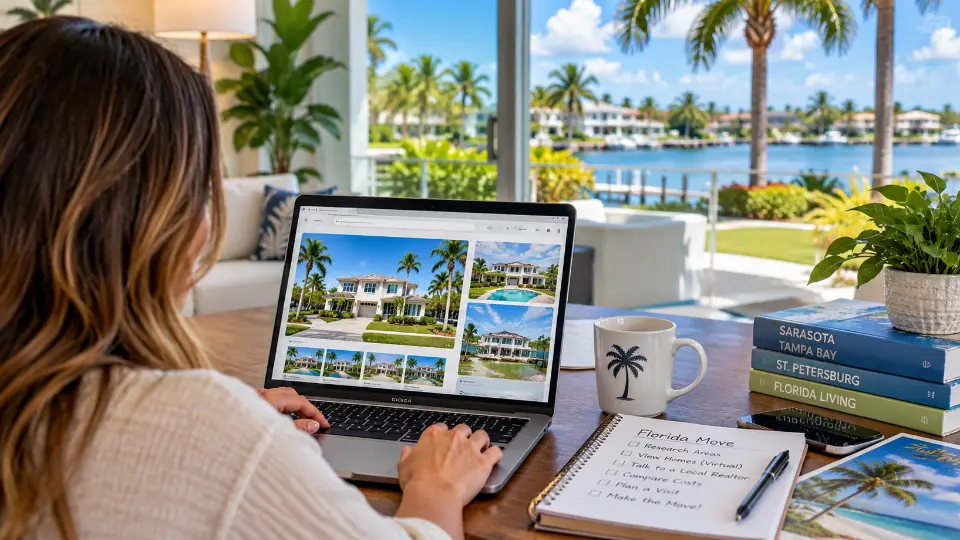
You can buy a Florida home before moving to the state by preparing financing, working with a Florida real estate professional, touring properties remotely or in person, making an offer electronically, coordinating inspections and insurance from a distance, and arranging closing with your lender and closing professional. The process can work well for relocating buyers, but remote purchasing makes property-specific due diligence especially important. Before committing to a home, investigate its physical condition, insurance costs, flood information, neighborhood location, association obligations, title matters and total ownership costs rather than relying only on photos, listing descriptions or virtual tours.
Quick Answers About Buying a Florida Home Before Moving
Can I buy a Florida house while living in another state?
Yes. Many parts of a Florida purchase can be coordinated while you live elsewhere, including property searches, video tours, electronic document review, inspections and communication with lenders and closing professionals. Whether every closing step can be completed remotely depends on the transaction, lender and closing requirements.
Should I get preapproved before looking at Florida homes?
If you plan to finance the purchase, getting preapproved before serious shopping can help establish a working price range and identify documentation or lending issues early. The Consumer Financial Protection Bureau notes that preapproval is not a guaranteed loan offer, so final approval still depends on underwriting and the property.
Can I tour Florida homes remotely?
Yes. Live video tours can help an out-of-state buyer evaluate floor plans, views, street conditions, exterior features and details that listing photos may not show. A virtual tour should supplement, not replace, professional inspections and other property-specific due diligence.
Can I make an offer without being in Florida?
A Florida purchase offer can often be prepared and signed electronically while the buyer is elsewhere. Contract terms, deposits, deadlines and contingencies can materially affect a buyer's rights and obligations, so transaction-specific questions should be reviewed with the appropriate real estate professional and, when legal advice is needed, a qualified Florida real estate attorney.
Should I get a home inspection if I cannot attend it?
A buyer can arrange an independent inspection without attending personally. Ask the inspector about reports, photographs, video and opportunities to discuss findings afterward. Significant findings may require further evaluation by an appropriate contractor, engineer or other qualified professional.
When should I investigate Florida homeowners insurance?
Start early, ideally while evaluating the specific property and before relevant contract deadlines expire. Insurance availability and premiums can vary substantially by home, roof, construction, location and other underwriting factors. Coastal and flood-exposed properties can require additional investigation.
Can I close on a Florida home remotely?
Remote closing may be possible, but buyers should confirm the process early with their lender and title or closing professional. Electronic signatures, notarization, original documents and lender requirements can vary, so do not assume that every transaction can be completed without an in-person step.
Can I claim Florida homestead exemption before I move?
Buying a Florida property alone does not automatically establish homestead eligibility. Florida Department of Revenue guidance ties homestead benefits to ownership and permanent residence requirements. Buyers should verify their circumstances and filing requirements with the county property appraiser and a qualified tax professional when appropriate.
What Is the Best Way to Start Buying a Florida Home From Out of State?
Start by defining the move before defining the house. Decide when you expect to relocate, whether the Florida property will initially be a primary residence, second home or other permitted use, and which location characteristics matter to your everyday life.
The Hunt Brothers Realty Florida Buyer Resource Center organizes information about Florida contracts, financing, relocation, lifestyle considerations and buyer representation for people preparing to purchase.
For an out-of-state buyer, useful questions at the beginning include:
- When do you expect to move to Florida?
- Will the property be your primary residence, second home or another permitted use?
- Are you financing the purchase or paying cash?
- Do you need the home immediately after closing?
- Which Florida Gulf Coast areas fit your location priorities?
- Do you prefer a house, condominium, villa or townhome?
- Are boating, beach access, golf, downtown access or lower-maintenance living priorities?
- Will you have pets, vehicles, boats or other needs affected by association rules?
- What monthly ownership cost fits your budget after taxes, insurance and association expenses are included?
Should I Get Mortgage Preapproval Before Starting My Florida Search?
If you plan to finance the purchase, preapproval is a useful early step. The Consumer Financial Protection Bureau explains that a preapproval letter indicates that a lender is tentatively willing to lend up to a specified amount based on assumptions and information reviewed by the lender. It is not a guaranteed loan offer.
Relocating buyers should tell the lender about the planned move rather than assuming a change in residence or employment will have no effect on financing. The lender may need to evaluate income, employment, assets, debts, occupancy plans and other underwriting factors.
If your employment situation will change when you relocate, discuss it with the lender before making an offer. Do not make assumptions about whether remote employment, a transfer, a new position, retirement income or another income arrangement will satisfy a particular loan program's requirements.
Financing eligibility and underwriting are borrower specific. Buyers should review their plans with a qualified mortgage lender or loan professional before relying on a particular loan amount, rate, down payment or closing timeline.
How Do I Choose a Florida Location Before I Live There?
Choose a location using objective criteria tied to your daily routine. A home can look ideal online while being poorly matched to the way you expect to live after relocating.
Consider factors such as:
- Distance to work or other recurring destinations
- Access to shopping, medical services and transportation corridors
- Beach, boating, golf, park or downtown access when those features matter to you
- Property type and maintenance responsibilities
- HOA or condominium restrictions
- Flood and coastal considerations
- Insurance availability and estimated premiums
- Current zoning and nearby land uses
- Property taxes and association costs
- Your own observations of traffic, noise and surrounding development
If possible, visit the areas you are seriously considering before making a final choice. When that is not practical, use live video, maps, official local-government information and property-specific research rather than relying solely on promotional neighborhood descriptions.
How Can I Tour Florida Homes Remotely?
A live video tour can provide more useful information than listing photos alone because the buyer can direct the person conducting the tour to examine specific areas in real time. Ask to see the entire property, not just the rooms emphasized in marketing photographs.
A useful remote tour can include:
- The street approaching the property
- Front, sides and rear of the home
- Neighboring properties and immediate surroundings
- Room-to-room flow
- Closets and storage areas
- Garage and driveway
- Electrical panel and visible mechanical equipment
- HVAC equipment and water heater when accessible
- Windows and doors
- Lanai, pool and outdoor areas
- Actual views from windows, balconies or patios
- Waterfront infrastructure when applicable
- Condominium hallways, parking, lobby and common areas when accessible
Video quality cannot establish structural condition, roof condition, moisture issues, insurability or other matters requiring professional evaluation. Treat the remote showing as part of the property-selection process, not as a substitute for due diligence.
Can I Make an Offer on a Florida Home Without Being There?
An out-of-state buyer can generally participate in preparing, reviewing and electronically signing a purchase offer without being physically present in Florida. The more important issue is understanding the contract before signing it.
Depending on the transaction and contract, important terms can include:
- Purchase price
- Escrow deposit requirements
- Financing provisions
- Inspection and due-diligence provisions
- Closing date
- Personal property included in the transaction
- Association-related provisions when applicable
- Title and survey provisions
- Other negotiated terms and deadlines
A purchase contract creates legal rights and obligations. A licensed real estate professional can assist within the scope of brokerage services, while questions requiring legal interpretation should be reviewed with a qualified Florida real estate attorney before a decision is made.
How Do I Handle a Florida Home Inspection From Another State?
Hire an independent qualified inspector and arrange the inspection within the applicable contract timeline. You do not necessarily need to be physically present for the inspection to occur.
Ask what the inspection covers, how the report will be delivered and whether you can discuss the findings by phone or video afterward. Depending on the property, additional evaluations may be appropriate for a pool, roof, seawall, dock, septic system, well, structure, HVAC system or other specialized component.
Older Florida homes can also present insurance-related inspection questions. Hunt Brothers Realty's Florida 4-point inspection guide for homebuyers explains why some insurers may request information about the roof, electrical, plumbing and HVAC systems.
A home inspection is not the same as an insurance inspection or engineering evaluation. Inspection findings should be evaluated with the appropriate licensed inspector, contractor, engineer or other qualified professional before the buyer makes a property-specific decision.
Why Should Out-of-State Buyers Investigate Florida Insurance Early?
Insurance can materially change the ownership cost of a Florida property, so do not wait until the end of the transaction to investigate it. A premium from another Florida property is not a reliable prediction of what you will pay for the home you are considering.
Property-specific factors can affect insurance availability, coverage and cost. Depending on the home and insurer, relevant information can include roof age and condition, construction, electrical and plumbing systems, HVAC equipment, storm-protection features, location and other underwriting considerations.
Insurance availability, coverage, exclusions, deductibles and premiums can vary substantially by property. Buyers should obtain property-specific quotes and review the proposed coverage with a qualified Florida insurance professional before important due-diligence deadlines expire.
What Should I Know About Flood Risk Before Buying in Florida?
Flood risk should be investigated for the specific property, particularly when buying near Florida's Gulf Coast, bays, rivers, canals or other low-lying areas. Do not assume that a home outside a higher-risk flood zone has no flood exposure.
Current Florida Statutes Section 689.302 requires a residential seller to provide a statutory flood disclosure to the purchaser at or before execution of the sales contract. The current disclosure addresses the seller's knowledge of damaging flooding during ownership, flood-related insurance claims and specified flood assistance.
The statute also expressly tells buyers that homeowners insurance does not include flood coverage and encourages discussion of separate flood insurance with an insurance agent. FEMA similarly explains that standard homeowners insurance generally does not cover flooding.
A seller's disclosure is one source of information, not a substitute for property-specific investigation. Buyers should review current flood information, obtain appropriate insurance quotes and seek professional evaluation when elevation, drainage or other site conditions could materially affect the purchase.
What If I Am Buying a Florida Condo Before I Move?
Remote condo buyers need to investigate the association as well as the individual unit. An attractive renovated interior does not tell you whether the association has significant planned projects, assessments, insurance issues or restrictions that conflict with your intended use.
Hunt Brothers Realty's guide to Florida condo documents buyers should review before closing identifies records worth investigating, including governing documents, budgets, financial statements, reserves, assessments, insurance information, meeting minutes and applicable structural inspection and reserve-study information.
You can also use the more detailed HBR guide to reading Florida condo documents before buying when comparing association finances, reserves, special assessments and current rules.
Legal questions about condominium documents should be reviewed with a qualified Florida real estate attorney. Insurance, structural, engineering, lending and financial issues should be directed to professionals qualified in those areas.
What If the Florida Home Is in an HOA Community?
Review the homeowners association before assuming the property fits your plans. HOA restrictions can affect leasing, pets, vehicles, boats, RVs, fences, exterior changes and other uses that may matter after you relocate.
Investigate current assessments, governing documents, architectural rules and known association obligations applicable to the property. If you are buying remotely because you plan to rent the home temporarily before moving, confirm that your intended rental arrangement is permitted before relying on that strategy.
How Should I Estimate Florida Property Taxes Before Moving?
Do not use the seller's current tax bill as a guaranteed estimate of your future property taxes. Florida Department of Revenue guidance explains that a change in ownership can affect the property's assessed value and that the prior owner's exemptions and Save Our Homes history do not simply transfer to the new buyer.
For homestead benefits, the Florida Department of Revenue states that an owner who makes the property a permanent residence may qualify for homestead exemption, subject to applicable requirements. Applications and supporting documentation are handled by the property appraiser in the county where the property is located.
A person buying before relocating should not assume that purchasing the property immediately creates Florida homestead status. Eligibility depends on the owner's specific circumstances and applicable requirements. Buyers should verify potential taxes with the county property appraiser and consult a qualified tax professional regarding individualized tax consequences.
Can I Complete the Florida Closing Without Traveling?
A remote closing may be possible, but the process should be confirmed early. The lender, title company, closing agent or attorney can explain which documents may be signed electronically and whether any documents require notarization, original signatures or another specific procedure.
If you are financing the purchase with a mortgage covered by the applicable federal disclosure rules, the Consumer Financial Protection Bureau states that you must receive the Closing Disclosure at least three business days before closing. Use that time to compare final loan terms and costs with your Loan Estimate and ask about discrepancies before signing.
The CFPB also recommends requesting other closing documents in advance, including the promissory note, mortgage and deed, so there is time to review them before closing. Questions involving the legal effect of a deed, ownership structure, title or other legal documents should be reviewed with an appropriate Florida real estate attorney or title professional.
How Can I Avoid Wire Fraud When Closing From Out of State?
Treat any email changing wire instructions as a potential fraud attempt until independently verified. Remote buyers can be especially dependent on email and electronic communication, making verification procedures important before sending closing funds.
The Consumer Financial Protection Bureau's mortgage closing scam guidance warns that criminals may impersonate real estate or settlement professionals and send fraudulent last-minute wiring changes.
Before transferring funds, independently contact the closing or title professional using a trusted phone number obtained separately from the email containing the instructions. Do not rely on a phone number or link contained in an unexpected message announcing new wiring information.
Should I Do a Final Walk-Through if I Am Not in Florida?
A final property review remains important even when the buyer cannot attend personally. The CFPB recommends inspecting the home before closing and confirming that agreed-upon repairs have been completed.
Depending on the transaction, a remote buyer may be able to arrange a live video walk-through or other property review. The goal is to confirm the home's observable condition near closing, not to repeat the professional inspection.
If something material appears different from what was expected, raise the issue promptly with the appropriate transaction professionals before closing rather than assuming it can be addressed afterward.
Should I Buy Before Moving or Rent in Florida First?
There is no universal answer. Buying before the move can reduce the need for temporary housing and allow a buyer to relocate directly into a purchased home, while renting first can provide more time to experience different locations before committing to a property.
Consider how certain you are about your preferred area, employment location, property type, maintenance preferences and long-term plans. A buyer who already knows the Gulf Coast well may approach the decision differently from someone who has spent little or no time in the communities under consideration.
Neither strategy guarantees a better financial outcome. Buyers should evaluate their housing plans, financing, transaction costs and individual financial circumstances with the appropriate real estate, lending, tax and financial professionals.
What Is a Practical Remote Florida Home-Buying Checklist?
A remote purchase becomes easier to manage when the major decisions are addressed in a deliberate sequence. The exact steps depend on the property and transaction, but this checklist provides a useful starting framework:
- Define your relocation date and intended property use.
- Identify Florida locations that fit your daily-life priorities.
- Discuss financing with a qualified lender if using a mortgage.
- Establish a realistic total housing budget, including taxes, insurance and association costs.
- Choose a Florida real estate professional and understand the representation agreement being used.
- Tour serious properties through detailed live video or in person.
- Review the purchase contract and important deadlines before signing.
- Send deposits only according to verified transaction instructions.
- Arrange an independent property inspection.
- Obtain additional specialist evaluations when findings warrant them.
- Investigate property-specific homeowners and flood insurance early.
- Review seller disclosures and available property records.
- Review HOA or condominium documents when applicable.
- Investigate title, survey and ownership questions with the appropriate professionals.
- Confirm your remote-closing procedure well before the closing date.
- Review your Closing Disclosure and other closing documents in advance.
- Independently verify wiring instructions before sending funds.
- Arrange a final walk-through or remote property review.
- Coordinate utilities, insurance effective dates, keys and property access.
- After establishing Florida permanent residence, investigate homestead eligibility and other relocation tasks that apply to your circumstances.
What Is the Biggest Mistake Remote Florida Buyers Should Avoid?
The biggest mistake is treating a remote purchase as primarily an online home-shopping exercise. Finding the property is only one part of the transaction. Insurance, inspection findings, flood information, association finances, ownership costs, contract deadlines, title matters and the surrounding location can be just as important as the home's photographs and finishes.
A strong remote process creates independent checkpoints. The real estate professional helps coordinate the transaction, the inspector evaluates the property within the inspection scope, the insurance professional evaluates coverage, the lender handles financing, and title, closing, legal, tax, engineering or other professionals address issues within their respective areas of expertise.
Can Hunt Brothers Realty Help With an Out-of-State Florida Home Search?
Hunt Brothers Realty works with buyers researching Florida Gulf Coast real estate and can help organize a property search around location, property type and lifestyle priorities. For a relocating buyer, the goal is to make the remote search more informative while identifying the property-specific questions that require further due diligence.
Start with the Florida Buyer Resource Center for information on purchasing, contracts, financing and relocation, or contact Hunt Brothers Realty to discuss the locations and property characteristics you are considering before your move.
This article is provided for general informational and educational purposes only and is not individualized legal, financial, tax, insurance, lending, inspection, engineering, construction, title, association, survey, permitting or other professional advice. Florida purchase contracts, loan requirements, insurance, flood considerations, property taxes, association obligations, closing procedures and remote-signing options vary by transaction and property. Buyers should verify material decisions with the appropriate licensed real estate professional, mortgage lender, insurance agent, Florida real estate attorney, tax professional, home inspector, engineer, contractor, title or closing professional, surveyor, association or government authority before relying on information for a specific purchase.
Sources
- Hunt Brothers Realty, Florida Buyer Resource Center
- Hunt Brothers Realty, 4-Point Inspections in Florida: Homebuyer Guide
- Hunt Brothers Realty, What Condo Documents Should Buyers Review Before Closing?
- Florida Legislature, Section 689.302, Disclosure of Flood Risks to Prospective Purchaser
- Florida Department of Revenue, Property Tax Exemptions and Homestead Information
- Consumer Financial Protection Bureau, Mortgage Preapproval Guidance
- Consumer Financial Protection Bureau, Closing on Your New Home
- Consumer Financial Protection Bureau, Reviewing Documents Before Closing
- Consumer Financial Protection Bureau, Mortgage Closing Scam Guidance
- FEMA, Flood Insurance Facts
Hunt Brothers Realty
46 N. Washington Blvd, Ste 3, Sarasota, FL 34236
Phone: (941) 388-7017
Email: info@huntbrothersrealty.com
Website: HuntBrothersRealty.com
Categories
- All Blogs 2291
- Anna Maria Island 87
- Bird Key 4
- Bradenton 237
- Buying a Home 1340
- Casey Key 2
- Clearwater 13
- Condos & HOA Living 1259
- Ellenton 6
- Englewood 12
- First Time Homebuyers 1452
- Foreclosures 5
- Home Selling 7
- Homeownership 1480
- Lakewood Ranch 25
- Lido Key 28
- Longboat Key 80
- Luxury/Waterfront Properties 1421
- Market Updates & Trends 935
- Mortgages & Financing 69
- Move-Up Buyers 25
- Neighborhood Guides 1053
- New Construction 39
- Palmetto 4
- Parrish 6
- Port Charlotte 12
- Punta Gorda 86
- Real Estate Investing 1336
- Relocation to Florida 1372
- Safety Harbor 4
- Sarasota 95
- Sarasota - Downtown 165
- Selling a Home 146
- Siesta Key 92
- St. Petersburg 8
- Tierra Verde 5
- Vacation & Second Homes 1531
- Venice 209
- Wellen Park 20
Recent Posts