How Do I Find Out if a Florida Home Is in a Flood Zone?
The fastest way to find out if a Florida home is in a mapped flood zone is to enter the property's exact address into the FEMA Flood Map Service Center. FEMA's current flood map can show whether the property is in a Special Flood Hazard Area and identify designations such as AE, VE, or X. But the flood-zone label should be only the beginning of a buyer's research. Elevation, prior flooding, drainage, storm surge exposure, insurance availability, and the location of the actual structure on the parcel can also matter. Before buying, verify the property-specific information with the appropriate insurance, surveying, lending, and local floodplain professionals.
Quick Answers About Florida Home Flood Zones
Where can I check a Florida home's flood zone?
Start with the FEMA Flood Map Service Center, which provides official flood hazard mapping searchable by address. Local county or municipal floodplain offices can also help buyers interpret current maps and local floodplain information.
What does Flood Zone AE mean in Florida?
Zone AE is a Special Flood Hazard Area associated with the 1-percent-annual-chance flood, sometimes called the base flood. Base Flood Elevations have been determined for Zone AE. A federally backed mortgage on a building in a Special Flood Hazard Area generally triggers a flood insurance requirement.
What does Flood Zone VE mean in Florida?
Zone VE is a high-risk coastal flood zone that includes additional hazards associated with storm waves. Buyers considering a property in Zone VE should investigate elevation, construction, insurance, and coastal flood requirements carefully with qualified professionals.
Does Flood Zone X mean a Florida home cannot flood?
No. Zone X does not mean "no flood risk." FEMA maps distinguish different levels of mapped risk, including shaded and unshaded Zone X areas, but properties outside a Special Flood Hazard Area can still experience flooding from heavy rainfall, drainage problems, storm surge, overflowing waterways, or other conditions.
Is a flood zone the same as a hurricane evacuation zone?
No. A FEMA flood zone describes mapped flood hazards and is used for floodplain management and insurance-related purposes. A hurricane evacuation zone is an emergency-management designation used to determine areas that may need to evacuate during particular storm conditions.
Does homeowners insurance cover flooding in Florida?
Standard homeowners insurance generally does not cover flood damage. Florida's statutory residential flood disclosure specifically advises buyers that homeowners insurance policies do not include coverage for flood damage and encourages buyers to discuss separate flood insurance with an insurance agent.
Should I get a flood insurance quote before making an offer?
Obtaining a property-specific quote early can give buyers useful information about coverage availability and potential ownership costs. Premiums can vary substantially by property, so discuss the exact address, structure, elevation information, and desired coverage with a qualified insurance professional.
Step 1: Search the Exact Address on FEMA's Flood Map
For most Florida buyers, the best starting point is FEMA's official mapping system.
- Go to the FEMA Flood Map Service Center.
- Enter the property's complete street address.
- Confirm that the map is showing the correct parcel and building location.
- Identify the flood-zone designation affecting the structure.
- Review the effective Flood Insurance Rate Map and related map information.
- Note any Base Flood Elevation information shown for the applicable area.
Do not stop at the color displayed on an online map. Confirm that you are looking at the correct property and determine where the actual building sits relative to mapped flood boundaries.
Step 2: Understand the Most Common Florida Flood Zones
FEMA's Flood Insurance Rate Maps use letters to identify different mapped flood hazards. Buyers along Florida's Gulf Coast frequently encounter designations in the A, V, and X categories.
| Flood Zone | General FEMA Classification | What Buyers Should Know |
|---|---|---|
| A / AE | Special Flood Hazard Area | High-risk area associated with the 1-percent-annual-chance flood. Zone AE has established Base Flood Elevations. |
| V / VE | Coastal Special Flood Hazard Area | High-risk coastal area with additional wave-related hazards. |
| X, shaded | Moderate mapped flood hazard | Generally includes areas between the 1-percent and 0.2-percent annual-chance flood limits or certain other moderate-hazard areas. |
| X, unshaded | Minimal mapped flood hazard | Outside the mapped Special Flood Hazard Area, but flooding is still possible. |
| D | Undetermined risk | Possible flood hazards exist, but sufficient analysis has not established the level of risk. |
FEMA provides additional explanations through the National Flood Insurance Program flood-zone guide.
What Is a Special Flood Hazard Area?
A Special Flood Hazard Area, commonly abbreviated SFHA, is the area subject to flooding from the flood event that has a 1-percent chance of being equaled or exceeded in any given year.
You may hear this called the "100-year floodplain," but that phrase can be misunderstood. It does not mean flooding happens only once every 100 years. The designation describes annual probability.
FEMA identifies flood zones beginning with A or V as Special Flood Hazard Areas.
What Does Zone AE Mean for a Florida Buyer?
Zone AE is common in many Florida coastal and low-lying areas. It is within the Special Flood Hazard Area, and FEMA has established a Base Flood Elevation for the mapped area.
If you are considering a Zone AE property, investigate more than the zone designation. Useful questions include:
- What is the applicable Base Flood Elevation?
- What is the building's elevation?
- Is an Elevation Certificate available?
- Has the property experienced previous flooding?
- What flood insurance is required by the lender?
- What would property-specific flood insurance cost?
- Are there enclosed areas below an elevated living level?
- Have flood mitigation improvements been completed?
A qualified insurance professional, surveyor, floodplain official, inspector, or engineer can help evaluate the property-specific information within the scope of that professional's expertise.
What Is Zone VE?
Zone VE is especially relevant to buyers considering beachfront, barrier-island, and other exposed coastal properties. FEMA classifies V and VE zones as high-risk coastal areas subject to additional hazards from storm waves.
Construction characteristics can be particularly important in these locations. Depending on the property, buyers may need to understand piling or foundation design, lower-level enclosures, breakaway walls, mechanical-equipment elevations, flood openings, and applicable floodplain requirements.
These are technical and insurance-sensitive issues. Buyers should have property-specific conditions evaluated by the appropriate surveyor, engineer, inspector, insurance professional, and local floodplain or permitting authority before making a purchasing decision.
Does Zone X Mean I Do Not Need to Worry About Flooding?
No. This is one of the most important flood-zone misconceptions for Florida buyers.
A property outside a mapped Special Flood Hazard Area can still flood. FEMA's National Flood Insurance Program emphasizes that every property has some level of flood risk.
Florida flooding can result from conditions such as:
- Extreme rainfall
- Poor or overwhelmed drainage
- Storm surge
- Overflowing waterways
- Ponding and surface-water accumulation
- Changes in surrounding development or drainage patterns
Hunt Brothers Realty also addresses this issue in its guide to buying or selling a Florida home after a hurricane. A home that avoided flooding during one storm is not guaranteed to avoid flooding during another, and a Zone X designation is not a guarantee against future flood damage.
Step 3: Check Whether an Elevation Certificate Is Available
A flood-zone map tells you about a mapped geographic hazard area. An Elevation Certificate provides building-specific elevation information.
Depending on the property, an Elevation Certificate can document information such as:
- Flood-zone designation
- Base Flood Elevation
- Building characteristics
- Elevation of specified floors
- Elevation of certain building equipment
Ask whether the seller has an existing Elevation Certificate. Local government records may also contain one in some cases. If accurate current elevation information is important and no usable certificate exists, a qualified surveyor can advise whether new elevation documentation should be obtained.
The National Flood Insurance Program also recommends documenting a home's elevation and provides additional information through its flood insurance homeowner checklist.
Step 4: Look at the Actual Building, Not Just the Parcel
Flood-zone boundaries do not necessarily follow property lines. A large parcel can potentially contain more than one mapped flood-zone designation.
The location of the building itself matters. FEMA flood determination documentation notes that if any part of a building is within the Special Flood Hazard Area, the building is considered to be within the SFHA for flood determination purposes.
If a flood boundary crosses the property or appears close to the house, obtain a professional determination rather than estimating the building's position from a small online map.
Step 5: Investigate the Home's Actual Flood History
The FEMA zone answers one question: what mapped flood hazard applies to the location? It does not tell you everything that has happened to the particular home.
Buyers should separately investigate whether the property has experienced flooding, water intrusion, or storm-related damage and what repairs or mitigation followed.
Potential sources of information can include:
- Florida's required seller flood disclosure
- Other seller disclosures
- Inspection findings
- Permit and repair records
- Available insurance information
- Elevation documentation
- Local government flood and drainage information
What Does Florida's Flood Disclosure Tell Buyers?
Florida Statute 689.302 requires a seller of residential real property to complete and provide a flood disclosure to the buyer at or before execution of the sales contract.
The statutory disclosure addresses whether the seller has knowledge of flooding that damaged the property during the seller's ownership, whether the seller filed an insurance claim relating to flood damage, and whether the seller received assistance for flood damage.
The statute's disclosure also tells buyers that homeowners insurance does not include coverage for flood damage and encourages buyers to discuss separate flood insurance with an insurance agent.
A seller disclosure is useful information, but it should not replace independent property research, inspections, flood-map review, insurance investigation, or other appropriate due diligence.
Step 6: Get a Property-Specific Flood Insurance Quote
Do not try to estimate a home's flood insurance premium based only on the words AE, VE, or X.
The National Flood Insurance Program explains that pricing can consider multiple property-specific factors. Flood-zone designation and elevation are relevant information, but they are not the only factors used to establish an NFIP premium.
Insurance availability, coverage, deductibles, exclusions, and premiums can vary substantially by property. Ask a qualified insurance professional for quotes based on the exact address and building before deciding whether the total ownership cost fits your budget.
You can also review flood insurance basics through FEMA's National Flood Insurance Program.
When Is Flood Insurance Required?
For buildings in high-risk Special Flood Hazard Areas, flood insurance requirements can apply when financing is through a federally regulated or insured lender. FEMA also explains that flood insurance is required for federally backed mortgages in participating communities when the property is in certain high-risk A or V zones.
Your lender determines the insurance requirements that apply to your particular loan. A property outside a lender-mandated flood zone can still carry flood risk, and a buyer can still investigate voluntary flood coverage.
Discuss loan-specific requirements with your mortgage professional and property-specific coverage with a qualified insurance agent.
Flood Zone vs. Evacuation Zone: They Are Not the Same
Florida buyers frequently confuse FEMA flood zones with hurricane evacuation zones.
| Designation | Primary Purpose |
|---|---|
| FEMA Flood Zone | Identifies mapped flood hazards for floodplain management and insurance-related purposes. |
| Evacuation Zone | Helps emergency-management officials identify areas that may need evacuation during hurricanes or other emergencies. |
A home can be outside a FEMA Special Flood Hazard Area and still be located within an evacuation zone. Buyers should check both designations independently through the appropriate official sources.
This distinction is particularly useful when comparing homes near Sarasota, Venice, Nokomis, Englewood, Punta Gorda, and other Gulf Coast locations. Hunt Brothers Realty discusses these considerations in its guide to living between Sarasota and Venice.
What About Florida Waterfront and Beach Homes?
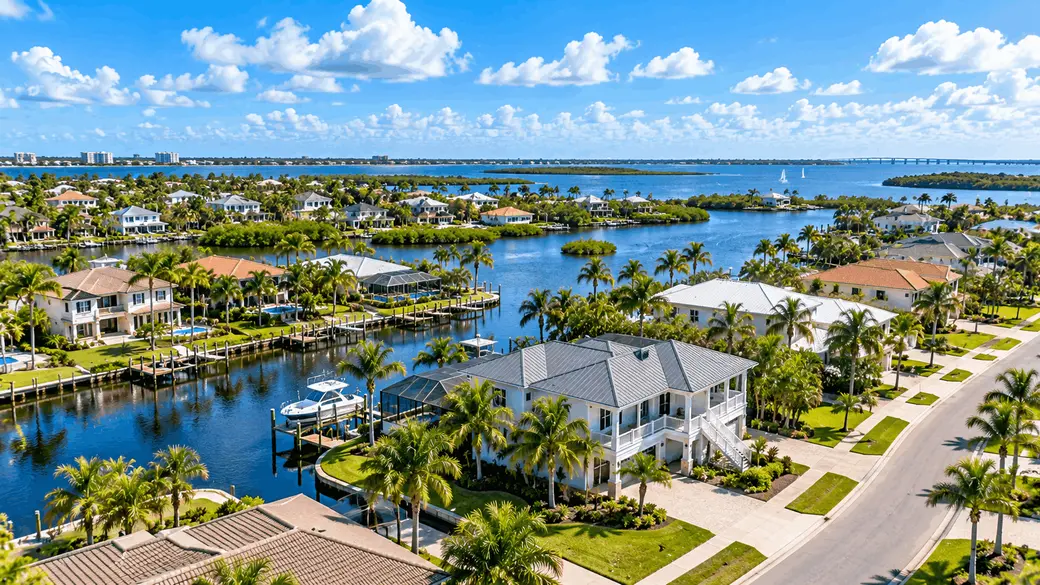
Waterfront location alone does not tell you a home's FEMA flood-zone designation, building elevation, or insurance cost. Two properties near the same body of water can have different elevations, construction characteristics, mapped zones, and insurance considerations.
Buyers considering coastal property should investigate:
- Current FEMA flood zone
- Base Flood Elevation, where applicable
- Building elevation
- Available Elevation Certificate
- Prior known flood history
- Storm surge exposure
- Drainage conditions
- Hurricane evacuation designation
- Property-specific insurance options
- Condition and configuration of lower-level spaces
For additional coastal due diligence, read Hunt Brothers Realty's guide to buying a home near the beach in Florida.
Can New Construction Still Be in a Flood Zone?
Yes. A newly constructed Florida home can still be located within a mapped flood hazard area.
Newer construction may have been designed under more recent building and floodplain requirements, but that does not eliminate flood exposure. Buyers should verify the same property-specific information they would investigate for an existing home.
Hunt Brothers Realty's Florida new-construction buyer guide explains why a brand-new home can still have flood exposure and why buyers should independently review flood information.
What if I Think FEMA's Flood Zone Is Wrong?
There are FEMA processes for requesting certain official map changes or determinations when supporting technical information shows that a property or structure has been incorrectly included in a mapped Special Flood Hazard Area.
These can include a Letter of Map Amendment or other Letter of Map Change procedures depending on the circumstances.
Do not assume that being physically elevated above nearby properties automatically changes the official flood designation. If a map determination appears questionable, consult FEMA, the local floodplain administrator, a qualified surveyor or engineer, and your lender or insurance professional as appropriate.
Florida Flood-Zone Checklist Before You Buy
Before making a final purchasing decision, consider verifying all of the following for the specific property:
- Current FEMA flood-zone designation
- Location of the actual building relative to flood-zone boundaries
- Effective FEMA map and any relevant pending map changes
- Applicable Base Flood Elevation
- Available Elevation Certificate or other elevation information
- Known prior flooding or water intrusion
- Seller's Florida flood disclosure
- Storm and flood-related repair history
- Relevant permit records
- Drainage and site conditions
- Hurricane evacuation zone
- Lender's flood insurance requirements
- Property-specific flood insurance quote
- Property-specific homeowners insurance quote
Should I Buy a Florida Home in a Flood Zone?
A flood-zone designation by itself does not determine whether a particular home is appropriate for a buyer. Florida includes many established coastal, waterfront, and inland communities with varying levels of mapped flood exposure.
The useful question is more specific: What is the flood and insurance profile of this particular property?
That analysis can include the FEMA zone, building elevation, construction, prior flood history, drainage, storm surge exposure, mitigation features, lender requirements, insurance availability, and insurance cost. Buyers should obtain qualified property-specific guidance before deciding how those factors affect their purchase.
The Bottom Line on Checking a Florida Flood Zone
Start with the FEMA Flood Map Service Center and search the home's exact address. Then determine where the structure sits on the map, identify the applicable flood-zone designation, review available elevation information, investigate prior flooding, and obtain property-specific insurance information.
Most importantly, remember that a flood map describes mapped risk. It does not promise that a home will flood, and it does not promise that a home outside a high-risk mapped zone will stay dry.
Research Florida Homes With Hunt Brothers Realty
Hunt Brothers Realty helps buyers evaluate homes and communities throughout Florida's Gulf Coast with attention to practical property considerations, including location, waterfront characteristics, association costs, CDD assessments, flood information, insurance considerations, and property-specific due diligence.
Flood exposure and insurance can vary substantially even between nearby homes. Before making a purchasing decision, verify the current information for the exact property rather than relying on a neighborhood-wide assumption or an older real estate listing.
This article is provided for general informational and educational purposes only and is not individualized insurance, legal, financial, lending, engineering, surveying, inspection, construction, or other professional advice. Flood maps and classifications can change, and flood-zone designations do not describe every potential flooding condition. Buyers should verify current property-specific flood information with FEMA and the appropriate local floodplain authority, obtain insurance quotes from a qualified insurance professional, confirm lender requirements with their mortgage professional, and consult qualified surveyors, inspectors, engineers, contractors, attorneys, or other professionals when those services are appropriate to the property.
Sources
- FEMA Flood Map Service Center
- National Flood Insurance Program, Flood Zones and Maps
- National Flood Insurance Program, What Is My Flood Zone?
- National Flood Insurance Program, Flood Insurance Basics
- Florida Statutes Section 689.302, Disclosure of Flood Risks to Prospective Purchaser
- Hunt Brothers Realty, Buying or Selling a Florida Home After a Hurricane
- Hunt Brothers Realty, Buying a Home Near the Beach in Florida
- Hunt Brothers Realty, Buying New Construction in Florida
Contact Hunt Brothers Realty
46 N. Washington Blvd, Ste 3, Sarasota, FL 34236
Phone: (941) 388-7017
Email: info@huntbrothersrealty.com
Website: HuntBrothersRealty.com
Categories
- All Blogs 2192
- Anna Maria Island 86
- Bird Key 4
- Bradenton 237
- Buying a Home 1249
- Casey Key 2
- Clearwater 11
- Condos & HOA Living 1163
- Ellenton 6
- Englewood 11
- First Time Homebuyers 1358
- Foreclosures 5
- Home Selling 6
- Homeownership 1383
- Lakewood Ranch 25
- Lido Key 28
- Longboat Key 80
- Luxury/Waterfront Properties 1323
- Market Updates & Trends 843
- Mortgages & Financing 59
- Move-Up Buyers 25
- Neighborhood Guides 958
- New Construction 37
- Palmetto 3
- Parrish 6
- Port Charlotte 10
- Punta Gorda 30
- Real Estate Investing 1240
- Relocation to Florida 1278
- Safety Harbor 3
- Sarasota 91
- Sarasota - Downtown 163
- Selling a Home 146
- Siesta Key 92
- St. Petersburg 8
- Tierra Verde 5
- Vacation & Second Homes 1432
- Venice 209
- Wellen Park 20
Recent Posts