Hurricane Season Lessons: What Buyers and Sellers Should Look For After Storms
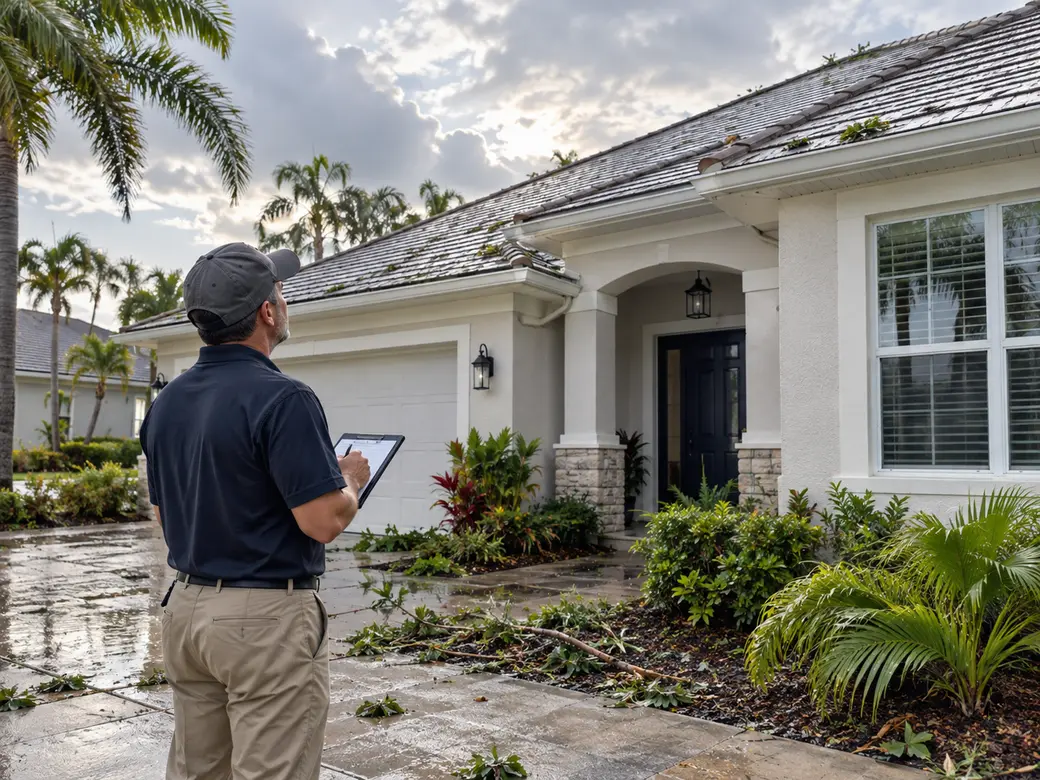
After a hurricane or major tropical storm, Florida real estate buyers and sellers should look beyond whether a property appears repaired. Roof damage, wind-driven rain, flooding, electrical problems, damaged windows and doors, drainage issues and unpermitted repairs can have consequences long after debris is removed. Buyers should investigate the property's storm history, permits, repair documentation, insurance considerations and physical condition with appropriate professionals. Sellers should organize records for completed work and avoid making unsupported claims about a home's condition. Along Florida's Gulf Coast, a strong post-storm evaluation combines documentation with property-specific inspection, insurance and permitting research.
Quick Answers About Buying or Selling After a Hurricane
Should Buyers Avoid Every Home That Had Hurricane Damage?
No. Prior storm damage does not by itself determine whether a property is suitable to purchase. What matters is what happened, how the damage was evaluated, who completed the repairs, whether required permits and inspections were obtained, the home's present condition and how the property's history affects insurance and future ownership.
What Should Buyers Look for First After a Storm?
Start with the roof, ceilings and walls, windows and exterior doors, electrical and mechanical systems, visible water intrusion, drainage and signs of previous flooding. Then compare what you see with seller disclosures, permits, invoices and other available repair documentation.
Should Buyers Check Permits for Hurricane Repairs?
Yes, when the work required permits. Roof replacement, windows, electrical work, plumbing and structural repairs are examples of projects that can involve permitting requirements. The applicable local building authority should be used to verify whether permits were required, issued and completed for the specific work.
Does a New Roof Mean the Home Is Fully Repaired?
No. A roof replacement answers only one part of the post-storm condition question. Water may have affected ceilings, insulation, walls, electrical components or other areas before the roof was repaired, so buyers should investigate the complete damage and repair history.
Should Insurance Be Investigated Before Making a Purchasing Decision?
Yes. Insurance availability, coverage, deductibles and premiums can vary substantially by property. Buyers should obtain property-specific insurance information and review the home, flood coverage when relevant and other appropriate coverage with a qualified Florida insurance professional before relying on insurance assumptions in a purchasing decision.
What Should Sellers Keep After Storm Repairs?
Useful records can include permits, final inspections, contractor invoices, warranties, photographs, engineering or inspection reports, product information and documentation of insurance-related repairs. Sellers should discuss disclosure obligations and transaction-specific questions with their real estate professional and a qualified Florida real estate attorney when legal guidance is needed.
Can a Home Look Fine and Still Have Storm-Related Problems?
Yes. Fresh paint, new flooring or a recently replaced roof cannot establish what happened behind walls, above ceilings or underneath finished surfaces. Documentation and appropriate professional inspections are particularly important when significant water, wind or structural damage has occurred.
Why Does Storm History Matter in Florida Real Estate?
A hurricane can affect different houses on the same street in very different ways. One home may lose a few roof shingles while another experiences roof failure, wind-driven rain, storm-surge flooding or prolonged water intrusion.
Distance from the Gulf does not tell the entire story either. Flooding can result from storm surge, heavy rainfall, overflowing waterways, drainage conditions and other factors. Wind damage can occur well inland.
That is why Hunt Brothers Realty's questions to ask before buying a home near the coast emphasizes property-specific flood exposure, elevation, insurance, storm protection, drainage, permits and prior repairs rather than making assumptions based only on location.
What Should Buyers Look for on the Roof After a Hurricane?
The roof is one of the first places buyers should investigate after significant storm exposure, but a visual glance from the driveway is not a roof inspection. Wind can damage shingles, tiles, flashing, vents, underlayment and other components, while falling debris can create localized damage that is difficult to see from ground level.
If the roof was repaired or replaced after a storm, buyers can investigate:
- The date of the repair or replacement
- Available permit records
- Contractor information
- Invoices and scope of work
- Product and material information
- Final inspection records when applicable
- Transferability of any applicable warranty
- Evidence of interior water intrusion before the repair
Roof condition and storm-resistance features can also affect insurance underwriting. Hunt Brothers Realty's guide to hurricane-resilient Florida home features explains why buyers should evaluate the roof as a system rather than focusing only on the visible roof covering.
What Are Signs of Previous Water Intrusion?
Water intrusion can be obvious, subtle or concealed by subsequent repairs. Buyers should avoid trying to diagnose moisture problems themselves and instead note conditions that deserve further professional evaluation.
Possible clues can include:
- Ceiling or wall staining
- Bubbling, peeling or mismatched paint
- Swollen baseboards or trim
- Warped flooring
- Damaged cabinetry
- Musty odors
- Recently replaced drywall in isolated areas
- Corrosion on electrical or mechanical components
- Water marks in garages, utility areas or lower walls
None of these observations proves the cause or extent of a moisture problem. A qualified inspector and, where appropriate, a contractor, engineer, indoor environmental professional or other specialist should evaluate material findings before a buyer makes a decision based on them.
How Is Flood Damage Different From Wind-Driven Rain?
Where the water came from can matter for repairs, insurance and future risk. Rain entering through storm-damaged roofing or windows is different from water rising into a structure from storm surge or another flood source.
Buyers should therefore ask more specific questions than whether the home had "water damage." Was water limited to a roof leak? Did water enter through doors or windows? Did floodwater rise through the structure? How high did it reach? Which materials were removed? Were electrical, plumbing, HVAC or built-in components affected?
Flood and homeowners insurance are also different forms of coverage. Buyers should review the actual property history and appropriate coverage with a qualified insurance professional rather than assuming one policy addresses every source of storm-related water damage.
Why Should Buyers Check Windows, Doors and the Garage Door?
Exterior openings are important components of a home's wind and water resistance. Buyers should investigate the condition and documentation for windows, exterior doors, sliding glass doors, shutters and garage doors, particularly when the seller states that these components are impact rated or recently replaced.
Useful documentation can include permits, product approvals, invoices and available inspection records. Labels or markings may also help qualified professionals identify installed products.
Do not assume that newer-looking windows are impact rated or that every opening has the same level of protection. Storm-protection claims should be verified before a buyer relies on them for safety, insurance or purchasing decisions.
Why Do Permits Matter After Hurricane Repairs?
Permit history can help buyers understand what work was performed and whether the applicable local permitting process was followed. Sarasota County, for example, maintains online permitting services and specifically provides a process for storm-related permits.
Florida post-storm guidance identifies work such as roof replacement, new windows, plumbing repairs and electrical repairs or rewiring as examples of work that can require licensed construction professionals. Local permit requirements depend on the work and jurisdiction, and some limited work may qualify for exemptions under current law.
Buyers should therefore avoid a blanket assumption that every repair required a permit or that no permit was needed. The appropriate question is whether the specific work required permits under the rules applicable at the time and place where it was completed. That should be verified with the local building or permitting authority.
How Can Buyers Verify the Contractor Who Completed Storm Repairs?
The Florida Department of Business and Professional Regulation maintains an online license search that allows consumers to verify professionals regulated by the department. Florida emergency-management guidance specifically encourages property owners to verify contractor licensing after disasters.
For a repaired property, useful records can include the contractor's business name, license information, written contract, invoices, permit records and warranties. The existence of an invoice alone does not establish that every aspect of the repair was completed correctly, which is why current inspection remains important.
Buyers or sellers hiring someone for new repair work can use the Florida DBPR license verification system to research applicable state licensing.
What Is the FEMA Substantial Damage Rule?
FEMA defines substantial damage generally as damage of any origin where the cost of restoring a structure to its pre-damage condition equals or exceeds 50 percent of the building's market value before the damage occurred. The concept is particularly important for buildings in regulated flood hazard areas because substantial damage can trigger floodplain compliance requirements.
The local community, not a home buyer, seller or insurance adjuster acting alone, determines whether a structure is substantially damaged for floodplain-management purposes. Local requirements can also be more restrictive than the federal minimum.
Sarasota County specifically tells property owners to be aware of substantial improvement, substantial damage and the 50 percent rule. Anyone evaluating a significantly damaged property in a flood hazard area should verify the property's status and applicable requirements directly with the local floodplain and building authorities before relying on assumptions about reconstruction or future improvements.
Should Buyers Recheck the Property's Flood Information After a Storm?
Yes. A property's actual storm experience can add useful context to mapped flood information. Buyers should investigate the current flood-zone designation, available elevation information, drainage conditions and known property-specific flooding or water intrusion.
A home that did not flood during one hurricane is not guaranteed to avoid flooding during a future event. Storm track, rainfall, surge, tide, drainage conditions and other factors vary from storm to storm.
Likewise, a home that previously experienced flooding should not be evaluated solely on that fact. Buyers should understand the source and depth of flooding, subsequent repairs or mitigation, current elevation and flood information, and available insurance before deciding how the history affects the purchase.
What Should Buyers Ask About Insurance Claims?
Buyers should investigate available information about prior storm damage, insurance claims and completed repairs when that information is material to the property. The goal is to understand what occurred and what work followed, not to assume that an insurance claim itself makes a property unsuitable.
A useful documentation trail can include:
- Seller disclosures available in the transaction
- Description of the storm damage
- Photographs before and after repair when available
- Contractor invoices
- Permit and inspection records
- Engineering or other professional reports when applicable
- Roof, window, door or equipment warranties
- Information concerning prior insurance-related repairs when available
Insurance underwriting practices and available information can vary. Buyers should discuss the specific property with a qualified insurance professional rather than assuming that the seller's prior coverage, premium or claim outcome will transfer to a new owner.
Why Should Buyers Get Insurance Quotes Early?
A home's asking price does not reveal its total ownership cost. Two similarly priced Florida homes can produce substantially different insurance results because of roof age, construction, wind mitigation, flood exposure, opening protection, prior property information and other underwriting factors.
After a major storm, that research becomes even more important. A buyer should not wait until the final days before closing to discover that assumptions about coverage, deductibles or premiums were unrealistic.
Property-specific quotes should be reviewed with a qualified insurance professional early enough for the buyer to understand how insurance affects affordability and any applicable financing requirements.
What Should Condo Buyers Look for After a Hurricane?
Condominium buyers have two levels of post-storm due diligence: the individual unit and the association-maintained building or community. A unit can look completely renovated while the association is still addressing roofs, elevators, exterior walls, common electrical systems, landscaping or other shared components.
Depending on the property, buyers may want to investigate:
- Damage to the individual unit
- Damage to association-maintained building components
- Completed and outstanding repairs
- Applicable permits
- Association insurance information
- Insurance deductibles and owner responsibilities
- Special assessments related to storm repairs
- Reserve funding
- Available engineering or inspection reports
- Unit-owner insurance requirements
Association responsibilities and financial obligations are governed by current documents and applicable law. Material legal, structural, engineering and insurance questions should be evaluated by the appropriate qualified professionals before a buyer relies on them.
What Should Waterfront Buyers Inspect After a Storm?
Waterfront homes add another layer of post-storm investigation. Damage may involve not only the residence but also seawalls, docks, pilings, boat lifts, electrical service at the dock, shoreline stabilization and other waterfront infrastructure.
A dock that looks intact from the patio may still deserve professional evaluation after substantial surge or wave action. Likewise, seawall movement, cracking or erosion can require specialized expertise beyond a standard home inspection.
Hunt Brothers Realty's questions to ask before buying a Florida waterfront home provides additional guidance on evaluating seawalls, docks, boat lifts, flood considerations and boating characteristics before an offer.
What Should Sellers Do Before Listing a Storm-Repaired Home?
A seller preparing a repaired property for market can make the transaction easier by organizing the documentation surrounding significant storm work. Buyers and their inspectors are likely to ask questions when they see a recent roof, new drywall, replacement windows or other major improvements following a hurricane.
Useful records may include:
- Permits and final inspection information
- Licensed contractor information
- Invoices and scopes of work
- Roof and product warranties
- Engineering reports when applicable
- Photos documenting damage and repair progress
- Receipts for replacement systems and equipment
- Association communications for condominium or HOA repairs
Sellers should provide accurate information and avoid characterizing a home as "hurricane-proof," "fully storm-proof" or guaranteed not to flood. Questions about what must legally be disclosed in a particular transaction should be reviewed with a licensed real estate professional and, when legal interpretation is needed, a qualified Florida real estate attorney.
Should Sellers Repair Everything Before Listing?
There is no universal answer. The appropriate strategy depends on the property's condition, the type and extent of damage, insurance and contractor timing, permitting, the seller's goals and current market conditions.
What sellers should avoid is covering visible damage simply to improve appearance without understanding the underlying cause. Painting over a water stain, for example, does not answer whether the source was repaired or whether concealed materials were affected.
Before deciding whether to repair, replace, disclose or sell a property in its present condition, sellers should discuss the real estate strategy with a licensed real estate professional and use qualified contractors, inspectors, engineers, insurance professionals and attorneys as appropriate to the underlying issues.
Why Is a Professional Inspection Still Important After Repairs?
Completed repairs do not eliminate the value of an independent inspection. A buyer's inspector evaluates current observable conditions, which can help identify items deserving additional investigation even when the seller has extensive repair documentation.
A general home inspection also may not be sufficient for every post-storm issue. Depending on the findings, a buyer may need specialized evaluation of the roof, structure, electrical system, plumbing, pool, seawall, dock, moisture conditions or other components.
Inspection findings should be evaluated with the appropriate licensed inspector, contractor, structural engineer or other qualified professional before a buyer makes a purchasing decision based on the condition of the property.
What Documents Should Buyers Request After Major Storm Repairs?
Not every document will exist for every property, but a well-documented repair history can help buyers and their professionals understand what happened after the storm.
Depending on the property, useful records can include:
- Available seller disclosure documents
- Building permits
- Permit status and final inspections
- Contractor names and license information
- Repair contracts and invoices
- Roof documentation
- Window and door product information
- Engineering or structural reports when applicable
- Elevation information when relevant
- Available photographs of storm damage and repairs
- Transferable warranties
- Association records for common-element repairs when applicable
Documentation should support, not replace, physical inspection and professional review.
What Are Some Post-Storm Red Flags Worth Investigating?
A red flag does not automatically mean a buyer should walk away. It means there is a question that deserves a satisfactory explanation or professional evaluation before the buyer relies on the property's apparent condition.
- Major recent repairs with little supporting documentation
- A new roof with unresolved interior staining
- Fresh drywall or paint concentrated along lower walls
- New flooring throughout a home known to have flooded
- Conflicting explanations of the depth or source of water intrusion
- Permits that appear open or incomplete
- Repairs performed by contractors whose required licensing cannot be verified
- Visible corrosion or moisture-related deterioration
- Association storm repairs without clear information about assessments or insurance
- Statements that insurance will be inexpensive without a property-specific quote
- Claims that a home cannot flood because it survived the last hurricane
What Are Positive Signs After a Home Has Been Repaired?
Good documentation can make post-storm due diligence much clearer. A seller who can explain what happened and provide permits, invoices, contractor information, photographs and warranties gives the buyer and the buyer's professionals more information to evaluate.
Other potentially useful signs include completed permit records, identifiable licensed contractors, clear documentation of materials used, available professional reports and a repair history that is consistent with the home's observable condition.
None of these guarantees future performance, but documentation can reduce uncertainty and give inspectors, insurers and other professionals better information to work with.
Frequently Asked Questions About Buying and Selling After Hurricanes
Is a Home With Previous Hurricane Damage Harder to Sell?
It depends on the property, extent of damage, quality and documentation of repairs, insurance considerations and market conditions. A well-documented repair history can give buyers more information to evaluate than unexplained work with missing records.
Should a Buyer Order an Inspection on a Newly Renovated Storm-Damaged Home?
An independent inspection can be particularly useful after significant storm repairs because new finishes do not establish the condition of concealed or underlying components. Additional specialists may be appropriate depending on the inspector's findings and the property's history.
Does a Permit Prove the Work Is Perfect?
No. Permit records are an important part of the documentation, but they are not a substitute for evaluating current property condition. Buyers should consider permits, inspections, repair documentation and their own due diligence together.
Does Zone X Mean a Florida Home Cannot Flood?
No. Flood maps describe levels of mapped flood risk, not guarantees that a particular property will or will not flood. Buyers should evaluate current flood information, elevation and drainage where relevant and discuss property-specific coverage with a qualified insurance professional.
Can Buyers Check Sarasota County Storm-Repair Permits?
Sarasota County provides an online permitting system that can be used to research permitting activity in its jurisdiction. Properties inside incorporated municipalities may use a different permitting authority, so buyers should identify the correct jurisdiction for the property before relying on a permit search.
Should Sellers Keep Before-and-After Photos?
Photos can be useful supporting documentation because they may help explain the nature of damage and repair work. They should be kept with permits, invoices, warranties and other available records rather than used as a substitute for required disclosures or professional documentation.
The Bottom Line After Hurricane Season
One of the most useful lessons after hurricane season is that the appearance of a home tells only part of its story. A freshly repaired property may be in excellent condition, or it may still contain unanswered questions about water intrusion, permits, structural components, association obligations or insurance.
For buyers, the strongest approach is to combine physical inspection with documentation. Investigate the roof, openings, interior water history, flood information, permits, contractor records, insurance and any waterfront or association components relevant to the property.
For sellers, organized repair records can make it easier to answer reasonable buyer questions. Permits, invoices, warranties, photographs and professional reports can help explain what occurred and what was done afterward.
Most importantly, neither side should turn a general rule of thumb into a property-specific conclusion. Inspection, structural, insurance, flood, permitting, legal and construction questions should be verified with the appropriate qualified professionals before a purchasing or selling decision depends on them.
Navigate Post-Storm Florida Real Estate With Hunt Brothers Realty
Hunt Brothers Realty helps buyers and sellers evaluate Gulf Coast real estate with property-specific questions in mind. Buyers can start with the questions to ask before buying a home near the coast, review hurricane-resilient Florida home features, explore the Buyer Resource Center, or contact Hunt Brothers Realty to discuss a Sarasota or Gulf Coast property search. Sellers considering a move after storm repairs can also contact Hunt Brothers Realty to discuss how a property's repair history and available documentation fit into the listing process.
Informational notice: This article provides general real estate information for educational purposes and is not individualized legal, financial, tax, insurance, lending, inspection, engineering, environmental, construction, title or permitting advice. Storm damage, flood exposure, substantial-damage determinations, building-code requirements, permits, insurance availability, coverage, claims, disclosure obligations and repair responsibilities vary by property and jurisdiction. Buyers and sellers should verify property-specific information with the applicable local government and use qualified Florida real estate professionals, real estate attorneys, insurance professionals, licensed inspectors, contractors, engineers, surveyors, lenders, tax professionals, title professionals and other appropriate specialists when individualized guidance is required.
Sources
- FEMA, Substantial Improvement and Substantial Damage Guidance
- Sarasota County, Flood Protection and Substantial Damage Information
- Sarasota County, Online and Storm-Related Permitting
- Sarasota County, Flood Maps and Floodplain Information
- Florida Department of Business and Professional Regulation, Verify a License
- Florida Division of Emergency Management, Post-Storm Contractor and Repair Guidance
- Hunt Brothers Realty, Questions to Ask Before Buying a Home Near the Coast
- Hunt Brothers Realty, What Makes a Florida Home Hurricane-Resilient?
Contact Hunt Brothers Realty
46 N. Washington Blvd, Ste 3, Sarasota, FL 34236
Phone: (941) 388-7017
Email: info@huntbrothersrealty.com
Website: HuntBrothersRealty.com
Categories
- All Blogs 1809
- Anna Maria Island 82
- Bird Key 4
- Bradenton 232
- Buying a Home 898
- Casey Key 2
- Clearwater 7
- Condos & HOA Living 803
- Ellenton 4
- Englewood 8
- First Time Homebuyers 998
- Foreclosures 3
- Homeownership 1006
- Lakewood Ranch 17
- Lido Key 27
- Longboat Key 77
- Luxury/Waterfront Properties 944
- Market Updates & Trends 495
- Mortgages & Financing 37
- Move-Up Buyers 20
- Neighborhood Guides 643
- New Construction 29
- Palmetto 3
- Parrish 6
- Port Charlotte 10
- Punta Gorda 14
- Real Estate Investing 870
- Relocation to Florida 918
- Safety Harbor 2
- Sarasota 56
- Sarasota - Downtown 154
- Selling a Home 140
- Siesta Key 88
- St. Petersburg 6
- Tierra Verde 4
- Vacation & Second Homes 1057
- Venice 32
- Wellen Park 8
Recent Posts