Is a Saltwater Pool Worth It in Florida?
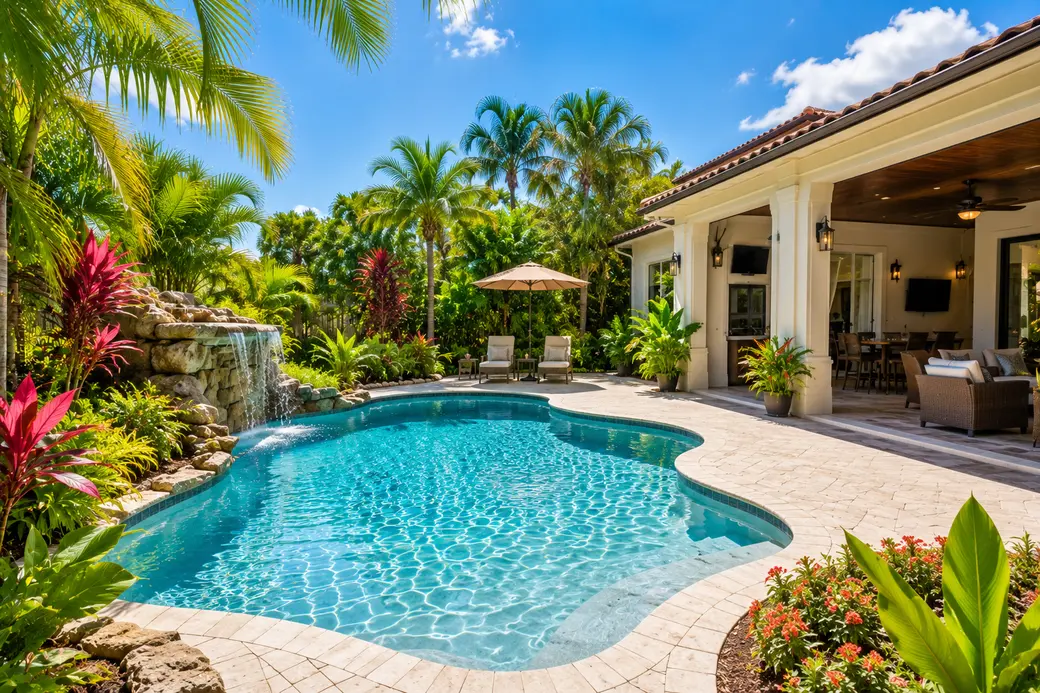
For many Florida homeowners, a swimming pool is not simply a backyard feature. It can become part of everyday life, particularly during the long stretches of warm weather that make outdoor living one of the attractions of owning a home in the state.
That leads to another decision: should the pool use a traditional chlorine system or a salt chlorine generator?
A saltwater pool can be appealing because the system continuously generates chlorine from salt dissolved in the pool water. But saltwater does not mean chlorine-free, and it does not mean maintenance-free. Buyers exploring Florida homes with Hunt Brothers Realty should understand the equipment, water chemistry, condition, and maintenance requirements of any pool before deciding how much value the feature adds for them.
Quick Answer: Is a Saltwater Pool Worth It in Florida?
It can be. A properly maintained saltwater pool can provide convenient chlorine generation and a swimming experience many owners prefer. For homeowners who use their pools frequently, those characteristics can make a salt system attractive.
The tradeoffs include the initial cost of the chlorine generator, eventual replacement of its electrolytic cell, continued water testing and chemical balancing, and potential corrosion or deterioration of materials that are not compatible with salt exposure.
Whether it is "worth it" therefore depends on the individual pool, equipment, surrounding materials, how often the pool is used, and the owner's maintenance preferences.
First, a Saltwater Pool Is Still a Chlorine Pool
One of the biggest misconceptions about saltwater pools is that they replace chlorine with salt. They do not.
A saltwater system uses a salt chlorine generator. Salt is dissolved in the pool water, and the system's electrolytic cell uses that salt as part of the process that produces chlorine. That chlorine provides the pool's ongoing sanitation.
So the more accurate comparison is not "salt versus chlorine." It is chlorine generated at the pool versus chlorine added through another method.
Saltwater Pool vs. Traditional Chlorine Pool
| Consideration | Saltwater Pool | Traditional Chlorine Pool |
|---|---|---|
| Sanitizer | Chlorine generated from dissolved salt | Chlorine supplied through another dosing method |
| Salt Chlorine Generator | Required | Not required |
| Routine Water Testing | Still required | Still required |
| Chlorine Production | Generated automatically while system operates | Depends on the chlorination method |
| Salt Level | Must be monitored within equipment specifications | No salt-generator operating range |
| Equipment Replacement | Electrolytic cell eventually requires replacement | Depends on chlorination equipment used |
| Corrosion Considerations | Salt compatibility deserves additional attention | Material and water-chemistry issues still matter |
Why Florida Homeowners Like Saltwater Pools
The main attraction is convenience. Instead of relying entirely on manually adding chlorine products, a properly operating salt chlorine generator produces chlorine as pool water circulates through the system.
Many swimmers also prefer the experience of swimming in a properly maintained saltwater pool. Because the system continuously generates sanitizer rather than relying entirely on periodic manual dosing, owners may find the routine appealing.
For a Florida homeowner who uses the pool throughout much of the year, reducing the need for routine manual chlorine addition can be particularly convenient.
Does a Saltwater Pool Feel Like the Ocean?
No. Residential saltwater pools operate at much lower salinity than seawater. The appropriate salt concentration depends on the specific chlorine-generator manufacturer and equipment.
Some swimmers can detect the salt in the water, while others barely notice it. The important point for ownership is that the salt concentration must remain within the operating range specified for the particular generator.
Saltwater Does Not Mean Maintenance-Free
This is the second major misconception about saltwater pools. The chlorine generator automates part of the sanitation process, but it does not eliminate pool maintenance.
Owners still need to monitor water chemistry, filtration, circulation, pool cleanliness, equipment condition, and the chlorine generator itself. Florida Department of Health standards for regulated public pools, for example, require testing of chlorine, pH, calcium hardness, and total alkalinity, with sodium chloride testing specifically required for pools using chlorine generators. :contentReference[oaicite:1]{index=1}
Residential pools are not necessarily governed by those same public-pool operating rules, but the standards illustrate an important principle: a chlorine generator does not replace proper water testing and chemical management.
Water Chemistry Still Matters
A salt system can generate chlorine automatically, but the pool still needs balanced water. Chlorine, pH, alkalinity, calcium hardness, stabilizer when applicable, and salt concentration can all be relevant to proper operation.
The Florida Department of Health's Sarasota County chemical standards for regulated pools identify pH, chlorine, alkalinity, calcium hardness, cyanuric acid, and total dissolved solids among the water-quality measurements that require attention. :contentReference[oaicite:2]{index=2}
The appropriate targets for a private residential pool should be based on the pool construction, equipment manufacturer's instructions, and recommendations of a qualified pool professional.
What Happens to the Salt?
Salt does not disappear from a pool in the same way water does through evaporation. However, the pool can lose salt when water leaves the system through splash-out, leaks, draining, filter-related water loss, or other removal and is replaced with fresh water.
Owners therefore need to monitor salinity and add salt when necessary according to the generator manufacturer's specifications rather than assuming that salt is a one-time addition.
The Salt Cell Is a Wear Item
A salt chlorine generator contains an electrolytic cell that produces chlorine as saltwater passes through it. That cell does not last indefinitely.
CDC technical guidance notes that electrolytic cells wear out and eventually require replacement. Cell life can be affected by operating hours, water chemistry, and calcium levels. Scale can also accumulate on the cell, requiring inspection and maintenance. :contentReference[oaicite:3]{index=3}
For a homeowner, this means the salt cell should be viewed as a future equipment expense, much like other pool components that eventually require repair or replacement.
Corrosion Is the Tradeoff Buyers Should Understand
Saltwater pools introduce another consideration: material compatibility.
Pentair's salt chlorine generator guidance specifically warns that salt is inherently corrosive and that adding salt can increase the likelihood of corrosion or deterioration of pool equipment and surfaces. The manufacturer recommends appropriate material selection, installation, use, care, and maintenance to minimize those risks. :contentReference[oaicite:4]{index=4}
That does not mean a saltwater pool will automatically damage everything around it. It means buyers should pay attention to the materials used in and around the pool and the condition of metal components, fixtures, heaters, fasteners, railings, equipment, stone, decking, and other exposed surfaces.
Compatibility varies by product and installation. Questions about corrosion, pool finishes, equipment compatibility, or existing deterioration should be evaluated by an experienced pool contractor, inspector, manufacturer, or other qualified professional.
Florida's Climate Makes Pool Equipment Condition Important
Florida pools can operate for much of the year, which can mean substantial operating hours for pumps, filters, heaters, automation equipment, and chlorine generators.
Heat, heavy rain, storms, vegetation, frequent swimming, and long periods of pool operation can also change maintenance demands. After major storms, pools may require cleaning, equipment checks, and water rebalancing. Florida health officials emphasize that pools affected by hurricanes or flooding should not be used until debris has been removed, filtration and treatment equipment are functioning, and water chemistry is properly balanced. :contentReference[oaicite:5]{index=5}
When purchasing a Florida home, the age and condition of the entire pool system can therefore matter more than whether the sanitation system happens to use salt.
What Does a Saltwater Pool Cost to Maintain?
There is no reliable universal annual figure for a Florida saltwater pool. Costs vary based on pool size, equipment, pump runtime, electricity rates, chemical needs, whether the owner performs maintenance or hires a service company, and whether equipment requires repair or replacement.
A salt system may reduce the amount of chlorine product an owner needs to purchase and manually add during ordinary operation, but that does not make sanitation free. The generator consumes electricity, the water still requires testing and balancing, and the cell and other equipment eventually require service or replacement.
Before converting an existing pool or buying a home with an older salt system, homeowners should obtain current equipment-specific estimates from qualified pool professionals rather than relying on generic online cost figures.
Is a Saltwater Pool Cheaper Than a Traditional Chlorine Pool?
It depends on the timeframe and the individual pool.
Saltwater systems have equipment costs that conventional chlorine setups may not have, particularly the chlorine generator and replaceable electrolytic cell. In exchange, owners generate chlorine from salt rather than depending entirely on purchased chlorine products for routine sanitation.
Actual savings depend on equipment life, chemical prices, electricity, maintenance practices, pool usage, and repair costs. For many homeowners, convenience may be a more meaningful reason to choose saltwater than expecting guaranteed long-term savings.
What Should You Inspect When Buying a Home With a Saltwater Pool?
A sparkling pool on showing day does not tell you the condition of the underlying equipment. Buyers should consider the pool and its systems part of the property's physical due diligence.
- Salt chlorine generator brand, model, and operating condition
- Age and condition of the salt cell
- Current salinity and water chemistry
- Pump and filter condition
- Pool heater condition, if equipped
- Automation and control equipment
- Pool surface condition
- Tile and coping condition
- Deck and surrounding surfaces
- Visible corrosion or deterioration around metal components
- Leaks or unexplained water loss
- Available service and maintenance records
Inspection findings should be evaluated with an appropriate qualified pool inspector, contractor, electrician, equipment manufacturer, or other professional before the buyer makes a purchasing decision.
Ask How Old the Salt Cell Is
When buying an existing home, knowing that the pool "has a salt system" is not enough. Ask about the age of the generator and particularly the electrolytic cell.
Because the cell is a wear component, a recently installed system and an older system approaching replacement can have very different near-term ownership costs. Service records, installation invoices, equipment labels, and a pool professional's inspection may help establish its condition.
Do not assume a cell has a particular number of years remaining based solely on its age. Operating hours, chemistry, scaling, equipment sizing, and maintenance can affect service life. :contentReference[oaicite:6]{index=6}
What If the Home Is Near the Gulf?
For coastal Florida properties, corrosion deserves attention whether the pool uses a salt system or not. Coastal air itself can expose exterior metals and equipment to salt, while a saltwater pool adds another potential source of salt exposure around the pool environment.
That makes material selection and maintenance especially worth investigating at homes on or near Siesta Key, Longboat Key, Lido Key, Casey Key, and other Gulf Coast locations.
Buyers should have signs of corrosion or deterioration evaluated by the appropriate qualified professional and verify that the pool equipment and surrounding materials are suitable for the installation.
Does a Saltwater Pool Add Value to a Florida Home?
A salt system can be an attractive feature for a buyer who specifically prefers that type of pool. But it should not be assumed to add a fixed dollar amount to a home's market value.
From a real estate perspective, the overall pool often matters more than the sanitation method alone. Size, design, condition, age, outdoor living space, screened enclosure, heater, spa, privacy, orientation, and the relationship between the pool and the home can all influence buyer appeal.
Market value is property-specific. Buyers and sellers seeking an opinion about how a pool affects a particular property's value should consult a licensed real estate professional or qualified appraiser familiar with the local market.
Should You Convert an Existing Chlorine Pool to Saltwater?
Many existing pools can potentially be converted to salt chlorination, but a conversion should not begin with simply installing a generator and adding salt.
Existing equipment, heaters, fittings, surfaces, decking, stone, metal components, electrical systems, plumbing, and other materials should be evaluated for compatibility. The generator must also be properly sized and installed for the pool.
Homeowners considering a conversion should have the existing pool evaluated by a qualified pool contractor and follow the equipment manufacturer's specifications. Depending on the scope of work and local requirements, permitting or electrical work may also be involved and should be verified with the applicable local authority and licensed professionals.
Pros and Cons of a Saltwater Pool in Florida
| Potential Advantages | Potential Tradeoffs |
|---|---|
| Automatically generates chlorine during normal operation | Requires salt chlorine generator equipment |
| Can reduce routine manual addition of chlorine products | Electrolytic cell eventually wears out |
| Swimming experience is preferred by many owners | Water chemistry still requires regular attention |
| Convenient for frequently used pools | Salt level must be monitored |
| Continuous chlorine generation can simplify routine sanitation | Salt can increase corrosion or deterioration risk for susceptible materials |
Questions to Ask When Buying a Florida Home With a Pool
- Is the pool saltwater or conventionally chlorinated?
- How old is the pool and its surface?
- How old are the pump, filter, heater, and automation equipment?
- How old is the salt chlorine generator and cell?
- Are maintenance or repair records available?
- Is there evidence of leaking, cracking, corrosion, scaling, or deterioration?
- Are the pool and surrounding materials compatible with the salt system?
- Is the pool heated, and what type of heater does it use?
- What does professional pool service currently cost for this property?
- Are any major pool components approaching repair or replacement?
Saltwater Pool Myths Worth Avoiding
Myth: Saltwater pools do not contain chlorine.
They do. The salt chlorine generator produces chlorine for sanitation.
Myth: You never need to test a saltwater pool.
Water chemistry still requires monitoring and adjustment.
Myth: Once you add salt, you never add it again.
Salt can leave the pool when water is removed through splash-out, draining, leaks, or other water loss.
Myth: Saltwater pools require no equipment replacement.
The electrolytic cell is a wear component and eventually requires replacement. :contentReference[oaicite:7]{index=7}
Myth: Saltwater automatically destroys pool equipment.
That is too broad. Salt can increase corrosion and deterioration risks for susceptible materials, but actual performance depends on material compatibility, installation, water chemistry, maintenance, and environmental conditions. :contentReference[oaicite:8]{index=8}
So, Is a Saltwater Pool Worth It?
For a Florida homeowner who uses the pool frequently and values automated chlorine generation, a saltwater system can be an attractive option. It can reduce routine handling and addition of chlorine products while providing a pool experience many owners enjoy.
But it should not be purchased on the assumption that it eliminates chlorine, eliminates maintenance, or guarantees lower ownership costs. The salt cell eventually wears out, water chemistry still matters, and salt compatibility deserves attention when evaluating equipment and surrounding materials.
If you are buying an existing Florida home, the condition of the pool is ultimately more important than the label attached to its sanitation system. A well-maintained conventional pool may be a much better asset than a neglected saltwater pool, and the reverse can also be true.
Looking for a Pool Home in Sarasota?
If a private pool is part of your Florida home search, Hunt Brothers Realty can help you compare Sarasota-area properties and evaluate the real estate considerations that come with different homes, neighborhoods, and outdoor living features.
You can also explore Sarasota-area communities as you compare locations and property types across Florida's Gulf Coast.
Informational notice: This article provides general real estate and homeownership information only. It is not individualized inspection, engineering, construction, electrical, insurance, financial, or other professional advice. Pool condition, equipment compatibility, maintenance requirements, repair costs, permitting requirements, and safety considerations vary by property. Buyers and homeowners should have property-specific pool, equipment, electrical, structural, and other concerns evaluated by the appropriate licensed inspectors, contractors, manufacturers, local authorities, or other qualified professionals before making a purchasing or modification decision.
Contact Hunt Brothers Realty
46 N. Washington Blvd, Ste 3
Sarasota, FL 34236
Phone: (941) 388-7017
Email: info@huntbrothersrealty.com
Website: HuntBrothersRealty.com
Categories
- All Blogs 1950
- Anna Maria Island 83
- Bird Key 4
- Bradenton 234
- Buying a Home 1020
- Casey Key 2
- Clearwater 9
- Condos & HOA Living 931
- Ellenton 5
- Englewood 9
- First Time Homebuyers 1124
- Foreclosures 3
- Home Selling 1
- Homeownership 1144
- Lakewood Ranch 20
- Lido Key 27
- Longboat Key 78
- Luxury/Waterfront Properties 1085
- Market Updates & Trends 614
- Mortgages & Financing 42
- Move-Up Buyers 20
- Neighborhood Guides 737
- New Construction 32
- Palmetto 3
- Parrish 6
- Port Charlotte 10
- Punta Gorda 15
- Real Estate Investing 1002
- Relocation to Florida 1046
- Safety Harbor 2
- Sarasota 71
- Sarasota - Downtown 157
- Selling a Home 143
- Siesta Key 89
- St. Petersburg 6
- Tierra Verde 5
- Vacation & Second Homes 1193
- Venice 96
- Wellen Park 10
Recent Posts