Selling Shouldn't Feel Like Guesswork

Selling a home should be a structured decision-making process, not a series of guesses about price, preparation, marketing or offers. A well-planned Sarasota home sale starts by understanding the property, current competition and the seller's priorities. From there, pricing, preparation, launch strategy, buyer response, negotiations and closing can be evaluated using actual information as it develops. No process can guarantee a particular price or timeline, but sellers can replace much of the uncertainty with a clear plan, current market evidence and qualified professional guidance when specialized questions arise.
Quick Answers About Selling a Home Without Guesswork
What should a seller do before choosing a listing price?
Start with current market evidence. Relevant closed sales, active competition, pending properties, condition, location, property features and the seller's objectives can help establish a defensible pricing strategy for the individual home.
Should every seller renovate before listing?
No. Some homes benefit from repairs, cleaning, decluttering or targeted cosmetic work, while other projects may not make sense before a sale. Sellers should evaluate improvements according to the property's condition, likely buyers, cost, timing and market competition.
How do sellers know whether their price is working?
Buyer response provides additional evidence after launch. Showing activity, inquiries, repeat visits, feedback, offers, new competing listings and recent pending or closed sales can help sellers evaluate whether the property's current positioning remains competitive.
Is the highest offer always the best offer?
No. Price is important, but financing, contingencies, deposits, requested concessions, closing timing and other terms can affect an offer. Sellers should evaluate the complete proposal against their own priorities.
Should sellers order a home inspection before listing?
A pre-listing inspection is not universally required. It can identify property issues before marketing begins, but whether one is appropriate depends on the home and seller's circumstances. Inspection findings and repair decisions should be reviewed with the appropriate qualified professionals.
How can a seller estimate what they will receive at closing?
A seller should distinguish the sale price from estimated net proceeds. Mortgage payoff amounts, negotiated credits, transaction expenses, taxes, association-related items and other closing adjustments can affect the amount ultimately received.
Can a real estate professional remove all uncertainty from a sale?
No one can eliminate market uncertainty or guarantee a result. A licensed real estate professional can help organize the process, provide market information, market the property, communicate buyer response and assist with the real estate aspects of offers and negotiations.
What Should Happen Before a Sarasota Home Goes on the Market?
The first stage should be information gathering, not simply choosing a list date. Sellers need to understand the property they are selling, current competition, likely preparation needs, estimated transaction costs and any timing requirements that could affect the sale.
The National Association of Realtors' guide to preparing a home for sale identifies cleaning, decluttering, curb appeal, possible repairs and staging among the issues sellers may evaluate before listing. None of those steps automatically makes sense for every property.
Sellers can also begin gathering documents that may become useful during the transaction, including information about significant improvements, permits when applicable, warranties, association documents and records relating to systems or appliances that will remain with the property.
How Should Sellers Think About the Listing Price?
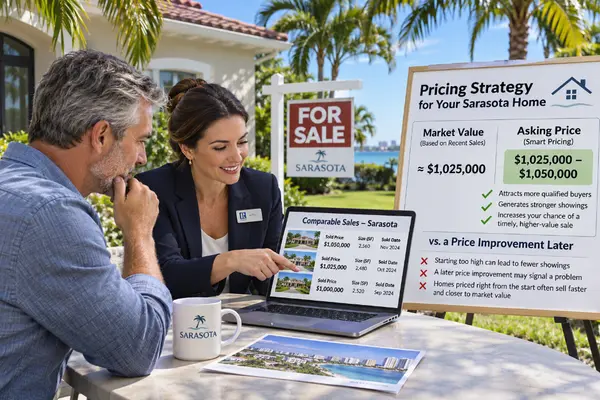
A listing price should be a market-positioning decision rather than a guess about the highest number a buyer might pay. Useful evidence can include relevant closed sales, active listings, pending properties, location, condition, improvements, lot characteristics, views and the competitive environment for that property type.
The National Association of Realtors' consumer guide to pricing a home explains that the seller has the final say on asking price while the real estate professional can provide market knowledge and a pricing recommendation.
Pricing is also not necessarily a one-time decision. Market evidence continues developing after launch. Sellers can review Hunt Brothers Realty's guide to Sarasota months of supply for context on how inventory can influence competition, while remembering that countywide statistics do not determine the appropriate price for an individual property.
Why Doesn't a Zestimate or Online Estimate Set the Selling Price?
An automated estimate can be one data point, but it does not replace a property-specific market analysis or an appraisal. Individual Sarasota homes can differ in condition, renovation quality, lot position, water access, views, association obligations and other characteristics that may not be fully reflected in an automated model.
The same principle applies to a neighbor's sale. A nearby transaction can be highly relevant, but only after examining how the properties compare. Square footage alone does not capture every feature that buyers may consider.
A real estate professional can prepare a comparative market analysis for listing purposes. When a formal opinion of value is required for lending, estate, legal or other specialized purposes, sellers should use the appropriate qualified professional, which may include a licensed or certified appraiser.
Which Repairs Should Be Completed Before Listing?
Sellers should prioritize repairs based on actual property condition and the likely effect on marketability rather than assuming every imperfection needs to be corrected. Safety issues, deferred maintenance and visible defects may deserve different consideration from purely cosmetic preferences.
A pre-sale inspection is one possible way to identify issues before buyers conduct their own due diligence. The National Association of Realtors notes that such an inspection is not required but may help a seller identify potential concerns and consider whether to address them before marketing.
Inspection findings should be evaluated with an appropriate licensed inspector, contractor, engineer or qualified tradesperson. Sellers should also discuss applicable property-disclosure obligations with their real estate professional and obtain legal advice from a qualified Florida real estate attorney when a disclosure question requires legal interpretation.
Does Every Improvement Increase a Home's Sale Price?
No. The cost of an improvement and its contribution to a home's market value are not necessarily the same. Some improvements may improve presentation or buyer interest without returning their entire cost at resale.
Before beginning a major project specifically for resale, sellers can compare the home's current condition with competing listings and recent sales. In some situations, cleaning, paint, landscaping, lighting or minor repairs may address the most visible issues without undertaking a large renovation immediately before selling.
Questions about permits, structural work, electrical systems, plumbing, roofing or other specialized improvements should be reviewed with the appropriate licensed contractor, engineer, tradesperson or local permitting authority. Tax treatment of capital improvements should be discussed with a qualified tax professional.
What Should a Listing Launch Include?
A listing launch should coordinate price, presentation, property information, photography and marketing rather than treating each as an unrelated task. The objective is to give buyers accurate information and a clear representation of the property when it becomes available.
Depending on the home and marketing plan, that can include professional photography, property descriptions, relevant feature information, brokerage marketing, online distribution, showing arrangements and communication with real estate professionals who may have interested buyers.
Marketing cannot guarantee an offer or compensate indefinitely for a price that buyers do not consider competitive. Price, condition, presentation, location, exposure and current alternatives all influence buyer response.
What Does the Current Sarasota Market Tell Sellers?
Current Sarasota data shows why sellers should evaluate property type rather than treating the local market as one uniform category. Hunt Brothers Realty's October 2026 Sarasota real estate market update, using the latest complete August 2026 local statistics available for that report, showed different conditions for detached homes and attached properties.
Sarasota County single-family homes had 3.7 months of supply and reached contract in a median 47 days during August 2026. Condos and townhomes had 5.2 months of supply and a median 83 days to contract. Single-family sellers received a median 94.7% of original list price, while condo and townhome sellers received a median 91.6%.
Those numbers are market context, not a forecast for an individual home. Neighborhood, price range, condition, waterfront status, association structure and competing inventory can produce very different results. Sellers should use the most current property-specific market analysis available when making pricing and timing decisions.
How Should Sellers Interpret Showings and Buyer Feedback?
Buyer activity becomes another source of evidence once the property is live. Showing volume, repeat visits, inquiries, feedback and offers can help reveal how buyers are responding to the home's current combination of price, condition and features.
Feedback should be evaluated for patterns rather than allowing one comment to drive a major decision. Several buyers identifying the same issue may be more meaningful than a single person's preference about paint color or decor.
New listings, pending sales and closed transactions also continue changing the competitive picture. Smart selling means reassessing the available evidence instead of assuming the market must eventually conform to the original plan.
When Should a Seller Consider a Price Improvement?
A price improvement can make sense when current evidence indicates that the home's existing position is not producing the desired buyer response. It should be considered as part of an overall pricing strategy rather than as an automatic reaction to a predetermined number of days on market.
Relevant evidence can include competing homes going under contract, new listings offering stronger value, consistent buyer feedback, limited showing activity or recent comparable sales that change the pricing analysis.
The goal is not to avoid every price adjustment. It is to make informed decisions based on the property's current competitive position. Sellers can review Hunt Brothers Realty's guide to price improvements versus smart pricing for a deeper discussion of this decision.
How Should Sellers Compare Multiple Offers?
Sellers should compare the complete terms of each offer rather than looking only at the headline price. The National Association of Realtors' guide to navigating multiple offers notes that financing, contingencies, closing timeline and earnest money can differ among proposals.
Depending on the transaction, sellers may also need to consider requested concessions, inspection provisions, appraisal-related terms, sale-of-property contingencies, personal property requests and other contract provisions.
A licensed real estate professional can help a seller compare the real estate and financial structure of offers. Questions about contractual rights, obligations, default remedies or other legal consequences should be reviewed with a qualified Florida real estate attorney when individualized legal guidance is needed.
What Happens After a Seller Accepts an Offer?
An accepted contract usually begins a new phase rather than ending the work. The transaction may involve deposits, inspections, financing, appraisal, title work, association matters, insurance, negotiated repairs and closing preparation depending on the contract and property.
Deadlines matter because contracts can establish specific periods for inspections, financing, association review and other obligations. Sellers should keep relevant documents available, respond to transaction requests promptly and avoid assuming that every accepted offer follows an identical path.
Questions about the meaning of a contract provision or a party's legal rights should be directed to a qualified Florida real estate attorney. Inspection findings should be evaluated with the appropriate inspector, contractor, engineer or other qualified professional when technical expertise is required.
How Should Sellers Handle Inspection Findings and Repair Requests?
Inspection findings should be evaluated according to the actual report, contract and property rather than through a universal rule about what sellers must repair. Depending on the transaction, an inspection may lead to additional evaluation, repair discussions, credits or other negotiations.
A seller considering a repair should understand the scope of the issue before authorizing work. Roof, structural, electrical, plumbing, HVAC, pool and other technical findings may require evaluation by licensed contractors, engineers or qualified tradespeople.
The contract determines the parties' legal rights and obligations, so legal questions about inspection provisions or proposed amendments should be reviewed with a qualified Florida real estate attorney when appropriate.
Why Should Sellers Focus on Net Proceeds Instead of Sale Price Alone?
The contract price and the seller's eventual net proceeds are different numbers. Mortgage payoffs, negotiated credits, transaction expenses, taxes, association-related amounts and other closing adjustments can affect what remains after the transaction closes.
For sellers with a mortgage, the Consumer Financial Protection Bureau explains that a mortgage payoff amount can differ from the current loan balance because it can include interest through the payoff date and other applicable amounts.
A title or closing professional can provide transaction-specific settlement information as the closing develops. Sellers who need to understand potential income-tax or capital-gains consequences should consult a qualified tax professional or CPA regarding their individual circumstances.
What Information Should Sellers Have Ready?
Organizing property information early can reduce last-minute searching once a transaction is underway. The documents relevant to an individual sale depend on the property, but sellers can begin by identifying records they already have.
- Information about major renovations and improvements
- Permits and contractor documentation when applicable
- Roof, HVAC, pool and other major-system records
- Transferable warranties when applicable
- Homeowners or condominium association information
- Survey and title-related documents already in the seller's possession
- Mortgage and home-equity loan information
- Information about items expected to remain with the property
- Relevant insurance and claim information when applicable
- Other property records requested by the professionals handling the transaction
Having a document does not determine whether it must be provided to another party. Disclosure, title and contract requirements can depend on the circumstances, so sellers should follow the guidance of their licensed real estate professional, title or closing professional and attorney when legal interpretation is needed.
What Should Sellers Know Before Closing?
Before closing, sellers should understand the remaining transaction requirements, expected proceeds, agreed property condition and the logistics for transferring possession. The closing or settlement process coordinates the financial and ownership transfer required to complete the transaction.
Sellers may need to coordinate final repairs, documentation, keys, access devices, utilities and other items required by the contract or closing process. The exact procedure can vary according to the transaction and closing professional.
Title, ownership, lien, deed and closing-document questions should be directed to the appropriate title or closing professional and, when legal advice is required, a qualified Florida real estate attorney. Sellers should review financial figures carefully and ask the appropriate professional about anything they do not understand before completing the transaction.
What Does a More Predictable Selling Process Look Like?
A more predictable selling process does not mean knowing the final result before the home is listed. It means knowing what information will guide each major decision and what happens next as the transaction progresses.
- Define the seller's timing, priorities and property-specific circumstances.
- Review current comparable sales and competing listings.
- Evaluate repairs, presentation and listing preparation.
- Establish an evidence-based pricing and marketing strategy.
- Launch the property with accurate information and appropriate presentation.
- Monitor buyer activity, feedback and changing competition.
- Compare offers using price and the complete set of proposed terms.
- Manage inspections, financing, appraisal, title and other contract milestones as applicable.
- Review estimated proceeds and prepare for closing.
- Complete the transaction according to the contract and closing requirements.
Unexpected issues can still arise. The advantage of a structured process is that sellers have a framework for evaluating those issues rather than making every decision from scratch.
Selling Should Be a Series of Informed Decisions, Not Guesses
No seller can control every part of the market. Buyers choose which homes to tour, competing properties enter and leave the market, inspections can uncover issues and financing can affect transactions. What sellers can control is how deliberately they prepare and respond.
A clear selling strategy connects preparation, pricing, marketing, feedback, negotiation and closing instead of treating them as isolated events. That creates a better foundation for making decisions when the market provides new information.
Build Your Sarasota Selling Plan With Hunt Brothers Realty
If you are considering selling a home in Sarasota or along Florida's Gulf Coast, Hunt Brothers Realty can help you evaluate current market competition, property positioning, preparation and the real estate steps involved in bringing the home to market. Review the latest Sarasota real estate market update, learn more about smart pricing and price improvements, or contact Hunt Brothers Realty to discuss a property-specific selling strategy.
Informational notice: This article provides general real estate information for educational purposes and is not individualized legal, financial, tax, insurance, lending, inspection, engineering, construction, title, appraisal, association or other professional advice. Pricing, disclosure requirements, contract rights, repair decisions, mortgage payoffs, taxes, insurance and closing obligations depend on the individual property and transaction. Sellers should work with a licensed real estate professional for property-specific real estate guidance and consult the appropriate attorney, CPA or tax professional, insurance agent, inspector, contractor, engineer, appraiser, lender, title or closing professional, or other qualified professional when individualized expertise is required.
Sources
- National Association of Realtors, Consumer Guide: Preparing to Sell Your Home
- National Association of Realtors, Consumer Guide: What Goes Into Pricing Your Home
- National Association of Realtors, Consumer Guide: Navigating Multiple Offers
- Consumer Financial Protection Bureau, Mortgage Payoff Amounts
- Hunt Brothers Realty, October 2026 Sarasota Real Estate Market Update
- Hunt Brothers Realty, Sarasota Months of Supply: What It Tells Buyers and Sellers
Hunt Brothers Realty
46 N. Washington Blvd, Ste 3, Sarasota, FL 34236
Phone: (941) 388-7017
Email: info@huntbrothersrealty.com
Website: HuntBrothersRealty.com
Categories
- All Blogs 2654
- Anna Maria Island 92
- Bird Key 5
- Bradenton 242
- Buying a Home 1675
- Casey Key 3
- Clearwater 16
- Condos & HOA Living 1603
- Ellenton 8
- Englewood 15
- First Time Homebuyers 1795
- Foreclosures 4
- Home Selling 10
- Homeownership 1840
- Lakewood Ranch 36
- Lido Key 29
- Longboat Key 81
- Luxury/Waterfront Properties 1781
- Market Updates & Trends 1283
- Mortgages & Financing 85
- Move-Up Buyers 24
- Neighborhood Guides 1410
- New Construction 46
- Palmetto 4
- Parrish 38
- Port Charlotte 36
- Punta Gorda 165
- Real Estate Investing 1694
- Relocation to Florida 1722
- Safety Harbor 4
- Sarasota 157
- Sarasota - Downtown 175
- Selling a Home 149
- Siesta Key 94
- St. Petersburg 11
- Taxes and Homestead 3
- Tierra Verde 7
- Vacation & Second Homes 1888
- Venice 225
- Wellen Park 24
Recent Posts