Should I Buy a Condo or a House?
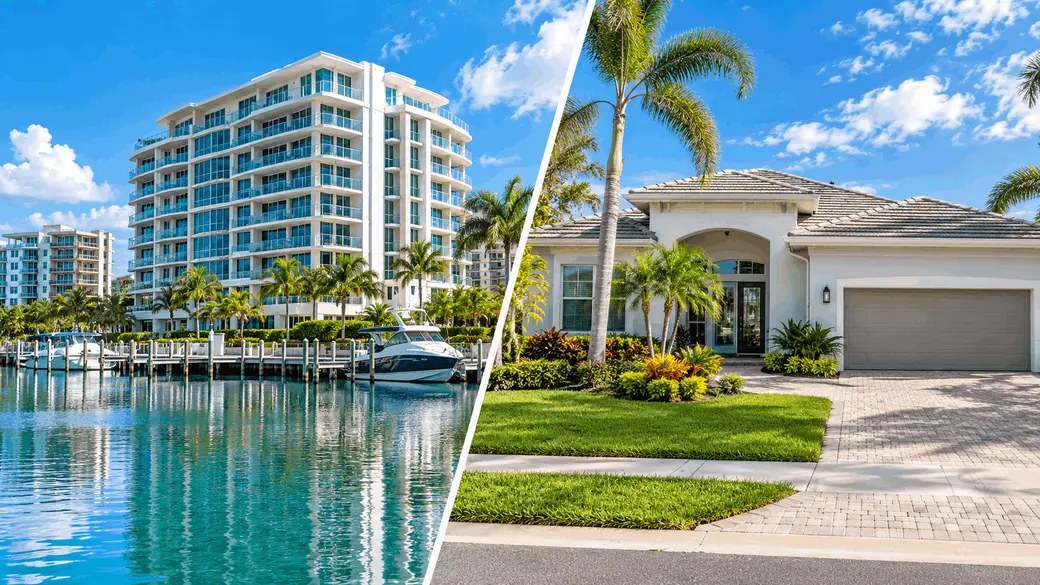
Choosing between a condo and a house usually comes down to maintenance, privacy, location, amenities, association obligations and total ownership costs. For buyers exploring Sarasota real estate, a condominium can offer lower direct exterior-maintenance responsibilities and access to locations such as Downtown Sarasota or the barrier islands. A single-family home can provide more privacy, outdoor space and control over the property, while placing more maintenance responsibility directly on the owner. Neither is automatically the better purchase. The better fit depends on how you want to live and what you want to manage after closing.
Quick Answers About Buying a Condo or a House
Is a condo cheaper than a house?
A condo may have a lower purchase price than a comparable detached home, but purchase price alone does not determine affordability. Condo assessments, special assessments, insurance, taxes and financing costs all affect the total cost of ownership. A house may have fewer association expenses but require the owner to pay directly for roofing, landscaping, exterior repairs and other maintenance.
Are condos easier to maintain?
They often require less direct exterior and common-area maintenance from the individual owner because specified responsibilities are handled collectively by the condominium association. Owners still have unit-specific responsibilities and pay assessments that help fund association obligations. Buyers should verify exactly what the association maintains before purchasing.
Does a house provide more privacy?
A detached single-family home generally provides greater physical separation from neighboring residences. It may also provide a private yard, driveway, garage or pool. Condominium living commonly involves shared walls, elevators, hallways, parking facilities or recreational areas, although the amount of shared space varies widely by property.
Do condo fees make condos a bad value?
Not necessarily. A condo assessment may pay for expenses that a homeowner would otherwise pay separately, such as common-building maintenance, landscaping, association insurance, management, amenities and reserve contributions. Buyers should compare what the fee actually covers instead of judging a condominium only by the monthly assessment.
Is a condo better for a seasonal Florida residence?
Some seasonal owners prefer condominiums because specified exterior and common-property maintenance is managed collectively. A house may still be the better fit for buyers who prioritize privacy, storage, outdoor space or greater control. Seasonal buyers should investigate insurance requirements, storm preparation, association rules and property-management needs for the specific residence.
Do condos have more rules than houses?
Condominium ownership typically includes a declaration, bylaws and association rules governing aspects of property use. A single-family home can also be subject to an HOA, deed restrictions and architectural requirements. Review the actual governing documents rather than assuming one property type provides complete freedom.
Which is better, a condo or a house in Sarasota?
Neither property type is universally better. Sarasota buyers should compare the actual properties based on location, total ownership costs, maintenance responsibilities, privacy, amenities, insurance, association obligations and how they intend to use the residence.
How Much Maintenance Do You Want to Handle?
Maintenance is one of the clearest differences between condominium and single-family ownership. With a detached house, the owner is generally responsible for more of the physical property. Depending on the home, that can include the roof, exterior walls, yard, irrigation, driveway, pool, pest control and major building systems.
Condo ownership distributes many common-property responsibilities through the association. That can appeal to buyers who travel frequently, own a seasonal residence or simply prefer not to spend as much time coordinating exterior maintenance.
Do not interpret terms such as "maintenance-free" to mean that the owner has no maintenance responsibilities or costs. The condominium declaration and related documents establish which components belong to the association and which remain the owner's responsibility. Review those documents carefully before relying on a maintenance assumption.
How Much Privacy and Outdoor Space Do You Want?
A detached home generally offers more physical separation from neighboring residences. Buyers may also gain a private yard, larger garage, driveway, pool, patio or other outdoor space that belongs specifically to the property.
A condominium may trade some of that private space for shared amenities and location. Depending on the community, residents may have access to pools, fitness facilities, clubrooms, security features, elevators, marina facilities or other shared spaces without personally maintaining each amenity.
The choice is not simply "more space versus less space." It is often a choice between private space and shared convenience.
Does Location Matter More Than Property Type?
For many Sarasota buyers, location can determine which property types are most practical. Buyers focused on Downtown Sarasota may encounter a strong selection of condominiums, while mainland residential neighborhoods can provide a broader selection of detached homes, villas and townhomes.
The barrier islands also provide both options. Buyers exploring Sarasota's Gulf Coast can compare condominiums and detached homes on or near Sarasota-area communities and barrier islands, then decide whether beach proximity, boating, downtown access, square footage or private outdoor space matters most.
A smaller condo in a preferred location may fit one buyer better than a larger house farther away. Another buyer may gladly trade proximity for more living space and a private yard. Start with how you want to use the location rather than choosing the property type first.
How Should You Compare Condo Fees With House Maintenance?
Do not compare a condominium's monthly assessment with a house's HOA fee as though they represent the same expense. They often pay for very different things.
Depending on the condominium, regular assessments may help fund:
- Common-building maintenance
- Exterior maintenance
- Association insurance
- Landscaping
- Management
- Elevators
- Shared recreational facilities
- Certain utilities or bundled services
- Reserve contributions for future work
A single-family homeowner may pay many similar costs independently rather than through one recurring association assessment. That can include lawn care, pool service, exterior painting, roof replacement and other repairs.
Hunt Brothers Realty's guide to what Florida condo fees can cover explains why the amount of the fee should be considered together with the services, insurance, maintenance obligations and reserves it supports.
What Should Condo Buyers Know About Reserves and Building Inspections?
Florida condominium buyers should evaluate more than the individual unit. The association's finances, reserves, building condition, insurance, assessments and applicable inspection requirements can materially affect ownership.
The Florida Department of Business and Professional Regulation explains that qualifying residential condominium buildings must comply with Structural Integrity Reserve Study requirements. A SIRS evaluates specified condominium components and provides a recommended reserve funding schedule. Florida law also requires milestone structural inspections for qualifying condominium and cooperative buildings when applicable.
These requirements do not mean every condo building has the same financial or physical condition. Before purchasing, buyers should obtain and review the association information applicable to the particular condominium, including available financial statements, budgets, reserve information, assessments, applicable engineering or inspection reports, meeting minutes and governing documents.
Reserve studies, structural reports and association finances can involve technical, legal and financial issues. Buyers should have material questions reviewed by the appropriate qualified inspector, engineer, insurance professional, lender, attorney, CPA or other professional before making a decision based on those documents.
Which Property Type Gives You More Control?
A detached house can provide greater direct control over maintenance, landscaping and improvements, particularly when the property is not governed by a highly restrictive HOA. That control still remains subject to zoning, permitting requirements, deed restrictions and any applicable association rules.
Condominium ownership involves shared governance. Association documents may regulate renovations, pets, rentals, parking, storage, use of common areas and other aspects of ownership. The specific rules can vary substantially from one condominium to another.
Buyers should review current condominium documents rather than rely on an MLS description, prior rule or general statement about what owners are permitted to do.
How Is Insurance Different for a Condo and a House?
The insurance structure is different because a condominium association typically carries coverage for specified association property while the unit owner obtains individual coverage appropriate for the unit and personal exposures. A detached homeowner generally insures the house and related property through an individual homeowners policy, subject to the policy's terms, exclusions and underwriting requirements.
The Florida Department of Financial Services identifies the HO-6 form as the condominium unit-owner policy commonly used for condo ownership. Condo buyers should understand both the association's insurance program and the coverage they may need individually.
Insurance availability, deductibles, coverage and premiums can vary substantially by property, building and insurer. Buyers should obtain property-specific insurance quotes and review the association policy, individual coverage needs and potential loss-assessment exposure with a qualified insurance professional before making a purchasing decision.
Is Financing a Condo Different From Financing a House?
It can be. With a condominium, a lender may evaluate not only the buyer and individual unit but also characteristics of the condominium project. Financing requirements can vary by loan program, lender and property.
A condo that appears affordable based on purchase price may not work with every financing option. Buyers planning to finance should discuss the specific building and loan program with a qualified mortgage professional early enough to identify project-level requirements before relying on a financing assumption.
Which Is Better for a Second Home?
A condominium can be attractive to some second-home buyers because common areas and specified exterior components are managed collectively. That can reduce the number of property tasks an owner needs to coordinate personally while away.
A detached house may be preferable when a buyer wants a private pool, larger outdoor area, additional storage, garage space or more separation from neighboring residences. The tradeoff is arranging ongoing property care and storm preparation when the residence is vacant.
Second-home buyers should also verify insurance requirements and any condominium or HOA rules affecting extended vacancy, rentals, guests and property access.
What Are the Special Considerations for Waterfront Properties?
Waterfront ownership creates another layer of comparison. A waterfront single-family home may give the owner direct responsibility for features such as a seawall, dock, boat lift or other waterfront infrastructure. Buyers may also need to investigate permitting, flood exposure, water access, bridge clearances and maintenance costs.
A waterfront condominium may shift certain waterfront components into association responsibility, but buyers should never assume that boat-slip rights, marina access or maintenance obligations are identical for every unit. Rights can be property-specific and should be verified through current condominium documents, title information and other appropriate records.
How Should You Compare the Total Cost of Ownership?
Purchase price is only one part of the comparison. Build a property-specific budget for each serious candidate so you can compare what ownership may actually require.
Depending on the property, investigate:
- Mortgage principal and interest when financing
- Property taxes
- Homeowners or condominium unit-owner insurance
- Flood insurance when applicable
- Condominium or HOA assessments
- Current or potential special assessments
- Utilities
- Interior maintenance
- Exterior maintenance
- Landscaping and pool care
- Near-term repairs or renovations
- Parking or storage costs when applicable
- Waterfront maintenance when applicable
Tax, insurance, financing and maintenance costs depend on the individual buyer and property. Obtain current property-specific information from the appropriate qualified professionals instead of relying only on averages or the previous owner's expenses.
A Condo May Fit Your Priorities If You Want
- Less direct responsibility for specified exterior and common-property maintenance
- Shared amenities
- A Downtown Sarasota, Gulf-front or other location where condominium living is common
- A smaller private footprint
- An ownership structure that may suit frequent travel or seasonal use
- Building services or common facilities you expect to use
The tradeoff is shared governance, association assessments, property-specific rules and the need to investigate the financial and physical condition of the broader condominium, not just the interior unit.
A House May Fit Your Priorities If You Want
- Greater physical separation from neighboring residences
- A private yard
- A private pool or larger outdoor-living area
- Additional garage or storage possibilities
- More direct control over property maintenance
- Greater flexibility for certain improvements, subject to applicable regulations and association restrictions
The tradeoff is that the owner typically assumes more direct responsibility for maintaining, repairing and insuring the property.
What Questions Should You Ask Before Choosing?
- Will this be my primary home, seasonal residence or second home?
- How much exterior maintenance do I realistically want to manage?
- How important are privacy, a yard, garage or private pool?
- Would I regularly use shared condominium amenities?
- Am I comfortable with condominium or HOA rules?
- What is the realistic total annual cost of each property?
- What insurance is available for each specific property?
- For a condo, what do the finances, reserves and assessments show?
- For a house, which major components may require repair or replacement?
- Which location best fits how I actually plan to live?
The Hunt Brothers Realty Florida Buyer Resource Center provides additional information for buyers comparing property types, locations, financing considerations and the Florida purchase process.
Should You Buy a Condo or a House in Sarasota?
Choose based on the ownership experience you want, not simply the label on the property. A Sarasota condo may provide convenient access to downtown, the Gulf Coast and shared amenities while reducing some direct maintenance responsibilities. A single-family home may provide more privacy, outdoor space and control while requiring more hands-on ownership.
Compare actual properties rather than stereotypes. Two condos can have very different financial positions, assessments, rules and maintenance obligations. Two houses can have very different roof ages, insurance costs, repair needs and ongoing maintenance expenses.
Hunt Brothers Realty also provides a more detailed Sarasota condo versus single-family home buyer guide for buyers who want to compare the two property types specifically within the Sarasota market.
Compare Sarasota Condos and Houses With Hunt Brothers Realty
Hunt Brothers Realty can help you compare Sarasota condos and single-family homes based on the location, property features and ownership structure that fit your search. Explore current Sarasota real estate, compare Florida Gulf Coast communities, or contact Hunt Brothers Realty to discuss the property types that match your priorities.
Informational notice: This article provides general educational real estate information and is not individualized legal, financial, tax, insurance, lending, inspection, engineering, association or other professional advice. Condominium documents, financing requirements, insurance availability, taxes, maintenance obligations and property conditions can vary substantially. Buyers should obtain property-specific information and consult the appropriate licensed real estate professional, lender, insurance agent, attorney, CPA, inspector, engineer or other qualified professional before making decisions that depend on individualized guidance.
Sources
- Florida Department of Business and Professional Regulation, Condominium Information and Resources
- Florida Department of Business and Professional Regulation, Condominium Inspections
- Florida Statutes, Chapter 718 Condominium Purchase Disclosures
- Florida Department of Financial Services, Homeowners Insurance Overview
- Hunt Brothers Realty, Condo vs. Single-Family Home in Sarasota
- Hunt Brothers Realty, Florida Condo Fees Guide
- Hunt Brothers Realty, Florida Buyer Resource Center
Contact Hunt Brothers Realty
46 N. Washington Blvd, Ste 3, Sarasota, FL 34236
Phone: (941) 388-7017
Email: info@huntbrothersrealty.com
Website: HuntBrothersRealty.com
Categories
- All Blogs 1686
- Anna Maria Island 80
- Bird Key 3
- Bradenton 182
- Buying a Home 808
- Casey Key 2
- Clearwater 6
- Condos & HOA Living 713
- Ellenton 4
- Englewood 5
- First Time Homebuyers 894
- Foreclosures 3
- Homeownership 887
- Lakewood Ranch 16
- Lido Key 27
- Longboat Key 76
- Luxury/Waterfront Properties 824
- Market Updates & Trends 433
- Mortgages & Financing 36
- Move-Up Buyers 20
- Neighborhood Guides 573
- New Construction 27
- Palmetto 2
- Parrish 5
- Port Charlotte 9
- Punta Gorda 13
- Real Estate Investing 754
- Relocation to Florida 803
- Safety Harbor 2
- Sarasota 35
- Sarasota - Downtown 146
- Selling a Home 139
- Siesta Key 88
- St. Petersburg 4
- Tierra Verde 4
- Vacation & Second Homes 939
- Venice 22
- Wellen Park 7
Recent Posts