What Is Sailboat Water in Florida Real Estate?
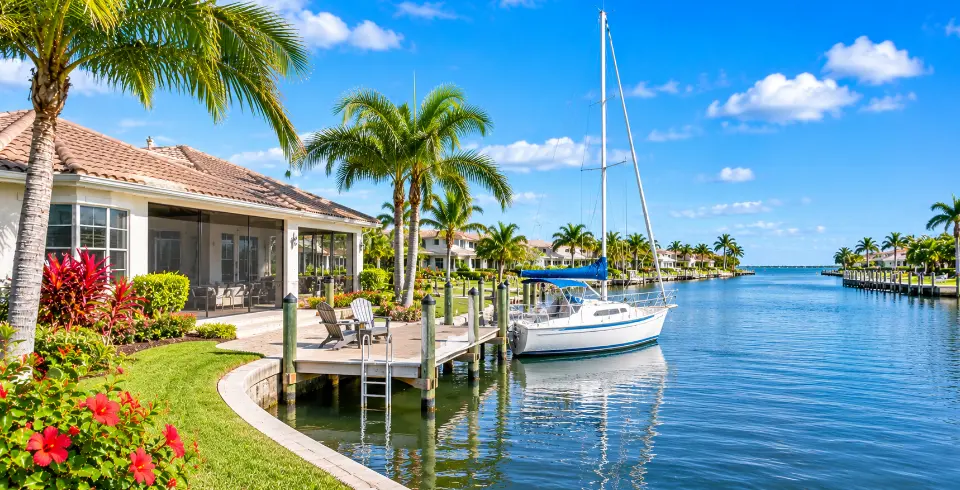
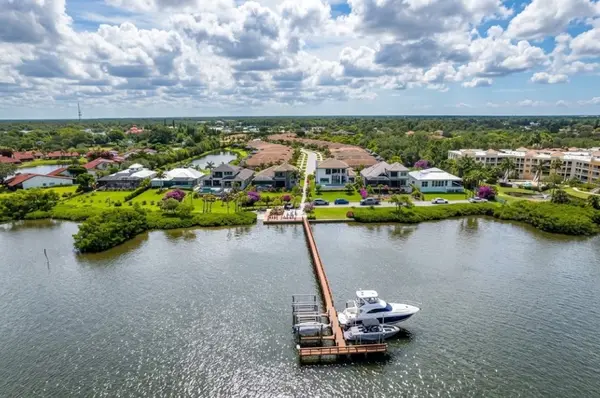
Sailboat water in Florida real estate generally describes waterfront property with a navigable route suitable for sailboats, most importantly without low fixed bridges blocking a vessel's mast, and with sufficient water depth for the intended boat. You may also see listings use terms such as "sailboat access," "no fixed bridges" or "deep-water access." These descriptions are useful starting points, but they do not guarantee that every sailboat or large powerboat can use the property. Buyers should verify the complete route, controlling depth, tides, dock dimensions, vessel draft and other navigational limitations before purchasing.
The distinction matters throughout Florida, particularly in canal-oriented boating markets such as Punta Gorda, Port Charlotte, Cape Coral and parts of the Sarasota region. Two waterfront homes can look similar from the backyard while providing dramatically different boating access.
Quick Answers About Sailboat Water in Florida Real Estate
What does sailboat water mean in a Florida real estate listing?
It generally means the waterfront property has boating access intended to accommodate sailboats, particularly a route without low fixed bridges restricting mast height. Adequate water depth is also important because sailboats can have substantial draft below the waterline.
Does sailboat water always mean there are no fixed bridges?
No-fixed-bridge access is normally one of the most important characteristics buyers associate with sailboat water. However, listing terminology should never substitute for checking the actual navigation route. A buyer should identify every bridge and other potential obstruction between the dock and the intended open water.
Does no fixed bridges mean any sailboat will fit?
No. Removing a fixed-bridge restriction addresses vessel height, but a boat can still be limited by water depth, channel width, dock dimensions, tides, shoaling, locks, lift capacity and other navigational conditions.
Is sailboat water the same as Gulf access?
Not necessarily. A home can have a navigable route toward the Gulf while that route includes a fixed bridge that prevents a tall sailboat from passing. Gulf access describes a destination or connection, while sailboat suitability depends on the physical route and the vessel.
Is sailboat water useful only for sailboat owners?
No. No-fixed-bridge access can also matter to larger powerboats with towers, flybridges, radar arches or other tall equipment. Water depth can also be important for larger motor yachts and cruising boats.
Does waterfront automatically mean sailboat access?
No. A waterfront home may front a lake, shallow canal, pond, bay, river or Gulf shoreline. It may have no navigable connection at all, or the boating route may have bridges, shallow areas or other restrictions.
What should I verify before buying a sailboat-water home?
Verify the complete boating route, bridge restrictions, water depth, tidal conditions, vessel draft and beam, dock dimensions, lift capacity, seawall condition, waterfront permits, ownership rights and association restrictions. If boating capability is material to the purchase, appropriate marine, title, inspection, engineering and permitting professionals should evaluate the property-specific issues.
Why Are Fixed Bridges So Important?
A fixed bridge does not open for boat traffic. Its vertical clearance therefore creates a maximum height for vessels traveling underneath it.
That can make a major difference for a sailboat because the mast may extend many feet above the water. A canal may be navigable by center consoles, flats boats and other low-profile powerboats while being unusable by a sailboat with a tall mast.
Height also matters to some powerboats. Sportfishing boats, motor yachts and vessels with towers, hardtops or radar equipment may require substantial vertical clearance.
This is why "no fixed bridges" can be an important waterfront real estate feature even when the buyer does not own a sailboat.
Does Sailboat Water Mean Deep Water?
Sufficient depth is essential for practical sailboat access, but buyers should not assume that the words "sailboat water" establish a particular number of feet.
A sailboat's keel extends below the hull. The required water depth therefore depends on the boat's draft, which is the vertical distance the vessel extends below the waterline.
A property can have no fixed bridges and still be unsuitable for a particular sailboat if the canal, dock or route becomes too shallow. Depth can also change with:
- Tides
- Shoaling and sediment
- Dredging history
- Storm effects
- Canal and channel maintenance
- Location within a canal system
Instead of asking only whether a property has "deep water," a boating buyer should determine the controlling depth at the dock and along the intended route under relevant tidal conditions, then compare that information with the actual vessel's draft.
Sailboat Water vs. Gulf Access vs. Waterfront: What Is the Difference?
| Term | What It Generally Tells You | What You Still Need to Verify |
|---|---|---|
| Waterfront | Property fronts a body of water | Whether the water is navigable and whether boating access exists |
| Water Access | Some form of access to water may exist | Private dock, community ramp, deeded slip, route and vessel restrictions |
| Gulf Access | A navigable route may ultimately connect toward Gulf waters | Bridges, locks, depth, travel time and vessel compatibility |
| No Fixed Bridges | The documented route does not include a non-opening bridge that creates a fixed height restriction | Depth, width, tides, route conditions and other restrictions |
| Sailboat Water | Generally indicates boating access intended to accommodate sailboats, often including no-fixed-bridge access | Actual depth, complete route and compatibility with the buyer's vessel |
| Deep Water | Suggests meaningful water depth | Actual measured depth, measurement reference, tides and route depth |
Is “Sailboat Water” an Official Guarantee?
Buyers should treat it as a useful property description, not a guarantee that their particular boat will work.
Florida's Stellar MLS listing system includes "Sailboat Water" and "Bridges-No Fixed Bridges" among its water-related property fields. The fact that they appear as separate listing characteristics is another reason buyers should investigate the underlying conditions rather than interpreting a single phrase too broadly.
A listing agent may accurately identify a route as sailboat water while a specific deep-draft vessel is still unsuitable because of depth or dock limitations. Conversely, a no-fixed-bridge property may work very well for a tall powerboat even though the owner has no interest in sailing.
Where Do Buyers Find Sailboat Water in Southwest Florida?
Sailboat-access properties occur in multiple Florida coastal markets, but Punta Gorda is particularly well known for canal-oriented boating real estate.
Hunt Brothers Realty's current Punta Gorda research documents numerous properties and condominium communities where current or historical property records identify sailboat-water access without fixed bridges toward Charlotte Harbor. Examples include Costa Bella, The Estuary at Punta Gorda Isles and Grand Bay.
Pirate Harbor in Punta Gorda is another notable example. Hunt Brothers Realty identifies it as a canal and harbor-front neighborhood with direct sailboat access toward Charlotte Harbor and the Gulf of Mexico without fixed bridges.
These examples demonstrate the type of access boating buyers seek, but they do not establish that every residence, dock or vessel has identical capabilities. Dock rights and navigation conditions must be checked for the specific property.
What About Sailboat and Boating Water Near Sarasota?
The Sarasota, Osprey and Nokomis coastline also includes canal, bay and Intracoastal-oriented homes where boating access is a major part of the property's appeal.
For example, South Creek in Osprey includes canal-front homes with access toward Little Sarasota Bay and the Intracoastal Waterway. Sorrento Shores also includes canal-front properties with Intracoastal boating access.
Farther south, Sorrento South in Nokomis includes canal-front homes with boating routes toward Dona Bay and the Gulf through Venice Inlet. The Inlets in Nokomis offers another waterfront setting with canal and bayfront homes.
Buyers should not assume that every waterfront property in these neighborhoods qualifies as sailboat water. The correct analysis begins with the exact address, dock and boating route.
Why Does Sailboat Access Matter to Property Value?
Boating access can be an important feature of waterfront property because restrictions determine which vessels can realistically use the home.
Imagine two otherwise similar canal-front homes:
- Home A: Navigable canal, but a low fixed bridge sits between the property and open water.
- Home B: Navigable route to open water with no fixed bridge restricting vessel height.
For a buyer with a tall sailboat or powerboat, Home A may simply not work. Home B therefore appeals to a different group of boating buyers.
That does not mean a universal price premium can be assigned to "sailboat water." Waterfront value also depends on location, views, canal width and depth, travel time to open water, dock and seawall condition, property condition, flood characteristics, insurance costs and current market conditions. A local real estate professional should evaluate comparable properties when market value is material to a decision.
How Much Does Travel Time to Open Water Matter?
A property can have excellent no-fixed-bridge access and still require a lengthy trip through canals before reaching a harbor, bay or Gulf route.
Travel time can be affected by:
- Distance through the canal system
- Minimum-wake and idle-speed zones
- Boat traffic
- Weather
- Tides and currents
- Temporary navigation conditions
Published phrases such as "minutes to open water" should therefore be treated as estimates rather than guarantees. Serious boating buyers should evaluate the actual route they expect to use.
The Dock Matters Just as Much as the Canal
Perfect water access is not very useful if the property's dock cannot safely accommodate the buyer's vessel.
A boating buyer should investigate:
- Dock dimensions
- Dock construction and condition
- Water depth alongside the dock
- Boat-lift capacity
- Lift configuration and condition
- Electricity and water service
- Pilings
- Permitting history
- Ownership and maintenance responsibility
- Association restrictions, when applicable
For condominium properties, the presence of docks behind the building does not automatically mean a particular unit owns or controls one. Buyers should determine whether a slip is deeded, assigned, a limited common element, available by waiting list or governed through another arrangement.
What Should Buyers Know About Seawalls?
Many Florida canal-front homes use seawalls, bulkheads, riprap or other shoreline stabilization. Their condition can be financially significant.
Visible cracking, movement, erosion, settlement behind the wall or deteriorated components can warrant additional professional evaluation. Buyers should also determine whether waterfront structures are privately maintained, association maintained or subject to another maintenance arrangement.
Seawall and shoreline conditions should be evaluated by an appropriately qualified marine contractor, engineer, inspector or other professional when those conditions are material to the purchase. Repair feasibility, permitting and cost should not be assumed from a visual inspection alone.
Can You Add or Replace a Dock or Boat Lift?
Possibly, but waterfront construction in Florida can involve state and local regulation.
The Florida Department of Environmental Protection's Environmental Resource Permitting program addresses many activities affecting land and water resources and provides processes applicable to certain single-family docks, dock repairs and boat lifts. Local requirements can also apply.
In Sarasota County, for example, the Environmental Protection Division reviews permits for docks, boat lifts, bulkheads, rock revetments and maintenance dredging under its Water and Navigation Control Authority program.
A buyer planning a new dock, larger lift, dredging or shoreline modification should confirm feasibility with the appropriate governmental agencies, association and qualified marine professionals before purchasing. Existing improvements should also be checked for applicable permits when that issue is material.
Does a Waterfront Condo Automatically Include a Boat Slip?
No. This is one of the most important distinctions in Florida waterfront condominium shopping.
A condominium can be located directly on a canal while individual residences have completely different boating rights. A particular unit might include a deeded slip, an assigned slip, a limited-common-element slip or no guaranteed dockage at all.
Hunt Brothers Realty's Costa Bella waterfront condo guide, for example, documents deeded slips with selected residences while emphasizing that slip dimensions, lift capacity, maintenance responsibility and transfer rights must be verified for the exact condominium being purchased.
Questions about legal ownership of a dock or slip should be confirmed through current title information and condominium documents, with a qualified title professional or Florida real estate attorney when individualized legal analysis is needed.
What About Flood Zones and Insurance?
Waterfront location makes flood and insurance research especially important, but buyers should avoid making assumptions based only on proximity to the water.
Flood-zone designation, elevation, building characteristics, storm protection, roof condition and numerous other property-specific factors can affect risk and insurance considerations.
Insurance availability, coverage and premiums can vary substantially by property. Buyers should obtain property-specific homeowners, wind and flood insurance information from qualified insurance professionals before making a purchasing decision. Flood-zone and elevation information should also be independently verified for the exact parcel.
10 Questions to Ask Before Buying a Sailboat-Water Home
- Are there any fixed bridges between this property and my intended open-water destination?
- What is the controlling water depth at the dock and along the route?
- How do tides affect usable depth?
- Will my boat's draft, beam and air draft work on this route?
- How long is the realistic trip to the bay, harbor, Intracoastal or Gulf route?
- What are the dock dimensions and condition?
- What is the boat lift's documented capacity and condition?
- Who owns and maintains the dock, lift and seawall?
- Are the existing waterfront improvements appropriately permitted?
- Are there HOA, condominium or governmental restrictions affecting my intended boat or waterfront improvements?
Should You Pay More for Sailboat Water?
That depends on whether you will actually benefit from the access.
A buyer with a tall-masted sailboat may consider no-fixed-bridge access essential. The same can be true for a buyer with a larger powerboat or plans to purchase one later.
A buyer with a shallow-draft flats boat or small center console may have far more choices. A lower-priced property behind a bridge might meet that buyer's boating needs perfectly.
The goal is not simply to buy the property with the most impressive waterfront terminology. It is to match the home, dock and waterway to the vessel and lifestyle you actually intend to use.
How Hunt Brothers Realty Helps Florida Waterfront Buyers
Hunt Brothers Realty helps buyers compare waterfront properties throughout Sarasota and Florida's Gulf Coast. For a boating buyer, that means looking beyond the word "waterfront" and evaluating the property's actual boating configuration.
Explore sailboat-access homes in Pirate Harbor, compare canal-front homes in South Creek, review Sorrento Shores waterfront homes, or contact Hunt Brothers Realty to discuss current waterfront opportunities.
This article is provided for general real estate and educational purposes only. It is not individualized legal, insurance, engineering, marine, permitting, inspection, title or financial advice. Boating suitability is vessel and property specific. Buyers whose purchase depends on water access should independently verify navigational conditions, depth, bridges, dock and lift suitability, seawall condition, permits, ownership rights, flood information and insurance with the appropriate marine professionals, inspectors, engineers, contractors, title professionals, insurance professionals, associations, governmental authorities and qualified Florida real estate attorney when individualized guidance is required.
Sources
- Hunt Brothers Realty, Costa Bella Punta Gorda Waterfront Condo Buyer Guide
- Hunt Brothers Realty, Estuary at Punta Gorda Isles Waterfront Condo Guide
- Hunt Brothers Realty, Pirate Harbor Homes for Sale
- Hunt Brothers Realty, Bird Key Waterfront Due Diligence
- Hunt Brothers Realty, South Creek Osprey
- Hunt Brothers Realty, Sorrento Shores Osprey
- Florida Department of Environmental Protection, Environmental Resource Permitting
- Sarasota County, Environmental Permitting and Shoreline Construction
Hunt Brothers Realty
46 N. Washington Blvd, Ste 3, Sarasota, FL 34236
Phone: (941) 388-7017
Email: info@huntbrothersrealty.com
Website: HuntBrothersRealty.com
Categories
- All Blogs 2634
- Anna Maria Island 92
- Bird Key 5
- Bradenton 242
- Buying a Home 1656
- Casey Key 3
- Clearwater 16
- Condos & HOA Living 1584
- Ellenton 8
- Englewood 15
- First Time Homebuyers 1777
- Foreclosures 4
- Home Selling 9
- Homeownership 1820
- Lakewood Ranch 36
- Lido Key 29
- Longboat Key 81
- Luxury/Waterfront Properties 1761
- Market Updates & Trends 1263
- Mortgages & Financing 85
- Move-Up Buyers 24
- Neighborhood Guides 1391
- New Construction 46
- Palmetto 4
- Parrish 38
- Port Charlotte 36
- Punta Gorda 165
- Real Estate Investing 1674
- Relocation to Florida 1702
- Safety Harbor 4
- Sarasota 147
- Sarasota - Downtown 175
- Selling a Home 148
- Siesta Key 94
- St. Petersburg 11
- Taxes and Homestead 3
- Tierra Verde 7
- Vacation & Second Homes 1868
- Venice 224
- Wellen Park 24
Recent Posts