Why Covered Outdoor Space Is Valuable in Florida
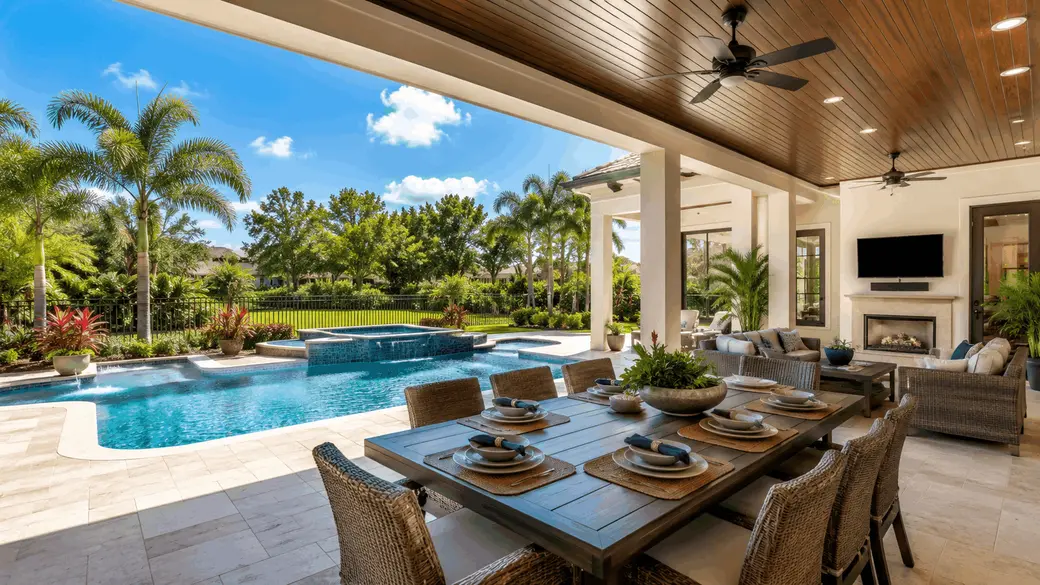
Covered outdoor space is valuable in Florida because it can make a patio, lanai or pool area more usable during bright sun and passing rain while creating a practical transition between indoor and outdoor living. In Sarasota and throughout Florida's Gulf Coast, a well-designed covered lanai can provide shade for dining, seating and entertaining without completely separating residents from the outdoors. For buyers, however, the quality of the space matters as much as its size, including the roof structure, screens, drainage, orientation, permits, storm considerations and relationship to the rest of the home.
Quick Answers About Covered Outdoor Space in Florida
Why Is a Covered Lanai Useful in Florida?
A covered lanai provides shade and overhead protection from rain, allowing an outdoor seating or dining area to remain useful in conditions that can make a completely uncovered patio less comfortable. It can also create a more natural extension of interior living areas into the backyard.
Is a Screened Lanai the Same as a Covered Lanai?
Not necessarily. A covered lanai has overhead protection, while screening refers to an enclosure around some or all of the outdoor area. A Florida home may have a roofed and screened lanai, an uncovered screened pool enclosure, a covered patio without screens, or a combination of these features.
Does Covered Outdoor Space Add Value to a Florida Home?
Covered outdoor space can contribute to buyer appeal and marketability when it is functional, attractive and appropriate for the home, but no specific increase in resale value should be assumed. Hunt Brothers Realty identifies functional shade and screened lanais among outdoor features that can influence how buyers evaluate Florida homes.
Is a Covered Lanai Counted as Interior Living Area?
Buyers should not assume that a covered patio or lanai is included in a home's conditioned living area simply because it is roofed or enclosed. How an area is classified can depend on its construction, conditioning, permits and applicable standards. Buyers should verify advertised square footage and permitted improvements using appropriate property records and qualified professionals when necessary.
Should a Florida Buyer Inspect a Lanai or Pool Enclosure?
Yes. Buyers should include significant outdoor structures in their property due diligence. Roof condition, structural connections, screens, enclosure framing, drainage, electrical components, pool equipment and signs of deterioration may require evaluation by the appropriate licensed inspector, contractor, engineer or other qualified professional.
Do You Need a Permit to Add Covered Outdoor Space in Florida?
Many construction projects involving patio covers, structural additions, enclosures and related building systems can require permits and code compliance. Requirements depend on the work and local jurisdiction. Before constructing or substantially modifying outdoor space, owners should confirm requirements with the applicable local permitting authority and qualified contractor or design professional.
What Makes Covered Outdoor Space Different in Florida?
Outdoor living is relevant in many housing markets, but Florida's climate makes shade and weather protection particularly practical. An uncovered terrace may look impressive in photographs, yet direct sun or a passing rain shower can quickly change how comfortably the area can be used.
A roofed lanai changes the equation. It creates a defined area where owners can arrange outdoor furniture, dining tables, televisions or other appropriate features with some overhead protection while retaining an open connection to the yard, pool or waterfront.
Hunt Brothers Realty's guide to Florida outdoor living upgrades explains why screened lanais, pools and thoughtful shade design can be meaningful considerations when evaluating a Florida backyard.
1. Shade Makes Outdoor Areas More Functional
One of the simplest advantages of a covered outdoor area is shade. A roof can reduce direct solar exposure over a seating or dining area and make the transition from the home's interior to the backyard more comfortable.
The orientation of the home also matters. A lanai receiving strong afternoon sun may perform differently from one facing another direction, and roof depth, ceiling height and surrounding landscaping can affect the amount of shade throughout the day.
What Should Buyers Look for When Evaluating Shade?
Visit the property at the time of day when you expect to use the outdoor area most. Observe how far the roof extends, where direct sunlight reaches the seating area and whether additional shade comes from landscaping, awnings or other features. A large patio is not necessarily highly usable if the portion you would actually occupy remains exposed during your preferred hours.
2. A Roof Provides Protection From Passing Rain
Covered outdoor space can remain useful when rain makes an uncovered patio inconvenient. That is particularly valuable when the lanai functions as the primary outdoor dining or seating area.
Roof coverage does not guarantee that the entire area will remain dry. Wind-driven rain can reach beneath a roof, and drainage, gutters, roof pitch and the depth of the covered section all influence performance. Buyers should evaluate the actual design rather than assuming that every covered patio provides the same level of weather protection.
3. Covered Space Can Extend the Way a Home Lives
A well-positioned lanai can function as an outdoor counterpart to the living room, kitchen or dining area. Large sliding or folding doors can strengthen that connection by creating a direct flow between conditioned interior space and the covered exterior area.
This relationship can be more important than raw patio square footage. A modest covered area immediately outside the kitchen may be more useful for everyday dining than a much larger uncovered terrace located away from the home's main living spaces.
What Creates Good Indoor-Outdoor Flow?
Look at door placement, changes in floor elevation, sightlines, proximity to the kitchen, furniture space and the route between the house and pool or backyard. Outdoor living tends to feel more integrated when the covered area is positioned as a natural continuation of rooms people already use frequently.
4. Covered Lanais Work Particularly Well With Florida Pools
A Florida pool area can include several distinct zones. The water and pool deck may occupy the open portion of the backyard, while a roofed lanai provides a shaded location for dining, conversation or relaxing nearby.
This arrangement gives owners a choice between sun and shade without leaving the pool environment. Homes with outdoor kitchens or televisions may also position those features beneath the covered portion for greater protection, subject to proper installation and applicable safety and building requirements.
Is a Bigger Pool Deck Better Than a Bigger Covered Lanai?
Neither is automatically better. Buyers who enjoy direct sun may prioritize open pool-deck space, while buyers who expect to dine or spend extended periods outdoors may place greater value on roof coverage. Many of the most functional designs provide both open and covered areas.
5. Screening Adds Another Layer of Practicality
Screening can make a Florida outdoor area more practical by reducing insects and debris while maintaining ventilation and outdoor views. Hunt Brothers Realty identifies screened lanais and pool enclosures as desirable outdoor-living features in Florida homes.
It is useful to distinguish the covered lanai from the larger screen enclosure. A pool cage may extend over an uncovered swimming pool and deck while connecting to a solid-roof lanai immediately behind the home. Those components serve different purposes even though they work together as one outdoor environment.
What Should You Inspect on a Screen Enclosure?
Look beyond torn screening. The enclosure's framing, fasteners, anchors, doors and overall condition can matter, particularly on older installations or properties exposed to coastal weather. Structural questions or signs of damage should be evaluated by the appropriate licensed contractor, inspector or engineer.
6. Outdoor Kitchens Become More Practical Under Cover
Outdoor kitchens can be useful additions to Florida lanais, particularly when grills, counters, sinks, refrigeration or storage are positioned within a thoughtfully designed covered area. Protection from direct sun and rain can improve the usability of both the workspace and nearby dining area.
Buyers should not evaluate an outdoor kitchen solely by its appearance. Gas, electrical, plumbing, ventilation, appliance clearances and fire-safety considerations can be important. Existing installations should be inspected when appropriate, and new work should be planned with qualified contractors and the applicable permitting authority.
7. Waterfront Homes Can Benefit From Shaded View Areas
For waterfront properties, outdoor space often plays another role: it provides a place to enjoy the view. A covered terrace overlooking Sarasota Bay, a canal, lake or the Gulf can create a shaded vantage point without requiring occupants to remain inside behind glass.
Buyers interested in this lifestyle can compare Sarasota areas for waterfront living and explore Bird Key real estate, where outdoor areas, pools, docks and water views can be important components of individual properties.
Waterfront exposure also creates additional maintenance considerations. Salt air, moisture, wind exposure and waterfront conditions can affect exterior materials and structures differently from inland properties, so condition should be evaluated on a property-specific basis.
8. Covered Balconies Matter for Florida Condo Buyers Too
Outdoor living is not limited to single-family homes. For condominium buyers, a covered balcony or terrace can become the primary private outdoor area, making its depth, orientation, view and protection important parts of the buying decision.
A balcony that is deep enough for a table and chairs can function very differently from a narrow balcony designed primarily for standing and views. Buyers should consider how they actually intend to use the space rather than judging it only from photographs.
Condominium rules can also affect what owners may place, install or modify on balconies and terraces. Association documents should be reviewed for restrictions involving grills, shutters, flooring, furniture, screens, alterations and other outdoor features.
Does Covered Outdoor Space Increase Home Value?
Covered outdoor space can positively influence buyer perception and marketability, particularly when it creates a functional extension of the home. However, there is no reliable rule stating that a covered lanai adds a specific percentage or dollar amount to a Florida property's market value.
Value can depend on the local market, property type, construction quality, size, condition, design, view, pool relationship and how the feature compares with competing homes. An attractive outdoor area can be an important differentiator without having a simple standalone value.
Sellers considering a major outdoor improvement primarily for resale should discuss current buyer expectations and comparable properties with a licensed real estate professional before assuming a particular project will produce a particular financial return.
What Makes a Covered Outdoor Area More Appealing to Buyers?
The most useful covered outdoor areas tend to combine sufficient space with a logical relationship to the home. Buyers are often evaluating whether the area can support real activities rather than merely whether a roof exists.
Features worth evaluating include:
- Enough depth for comfortable seating or dining
- Convenient access from the kitchen or main living area
- Useful shade during the times the area will be occupied
- Good sightlines toward the pool, yard, water or landscaping
- Appropriate lighting and ceiling fans
- Well-maintained roofing and structural components
- Functional drainage
- Screening when desired
- Adequate space for circulation around furniture
- Materials suitable for exterior exposure
These practical details can determine whether a large outdoor area becomes an integral part of everyday living or remains a feature that is used only occasionally.
What Should Buyers Inspect Before Paying a Premium for Outdoor Space?
A visually impressive lanai should still be treated as part of the home's physical structure. Buyers should investigate its condition, history and legal status just as they would other meaningful improvements.
Depending on the property, due diligence may include:
- Roof and ceiling condition
- Posts, beams and structural connections
- Screen-enclosure framing and fasteners
- Evidence of water intrusion
- Gutters and drainage
- Exterior electrical installations
- Outdoor kitchen utilities and equipment
- Pool and pool-equipment condition
- Permit history for additions or alterations
- Association approval when applicable
- Insurance considerations for the structure
Inspection findings and structural concerns should be evaluated with the appropriate licensed inspector, contractor, engineer or other qualified professional before a buyer makes a purchasing decision. Permit status and permitted use should be verified with the applicable local government or permitting authority when material to the purchase.
Why Wind Design and Construction Matter in Florida
Outdoor structures in Florida are not simply decorative features. Roofed patio structures, sunrooms and screen enclosures can be subject to building-code requirements addressing structural loads and other construction considerations. The Florida Building Commission identifies the 8th Edition (2023) Florida Building Code as the current code edition, effective December 31, 2023.
That does not mean a buyer can determine the structural adequacy of an existing lanai merely by knowing when it was built. Construction date, permits, alterations, materials, installation, maintenance, storm history and applicable code provisions can all matter. Structural questions should be evaluated by appropriately qualified professionals.
What About Insurance?
Buyers should not assume that every outdoor structure is treated identically for insurance purposes. Coverage for a screened enclosure, patio roof, outdoor kitchen, pool equipment or other exterior improvement can depend on the property and policy.
Insurance availability, coverage, exclusions, deductibles and premiums can vary substantially by property. Buyers should obtain property-specific quotes and ask a qualified insurance professional how significant outdoor structures and improvements would be treated before making a purchasing decision.
Covered Outdoor Space in Sarasota Homes
Sarasota-area buyers can encounter covered outdoor living in many forms. A mainland single-family home may have a screened pool and lanai, a luxury waterfront property may use a deep covered terrace to frame a Sarasota Bay view, and a barrier-island condominium may provide a covered balcony overlooking the Gulf of Mexico.
The feature should therefore be evaluated in the context of the property. Buyers considering Lido Key real estate may focus on balconies, terraces and Gulf or bay views, while buyers comparing larger mainland homes may prioritize screened pools, outdoor kitchens and covered entertaining areas.
Use Hunt Brothers Realty's Sarasota and Florida Gulf Coast community search to compare locations and property types based on the outdoor lifestyle and home features that matter to you.
Should Sellers Invest in Improving a Covered Lanai?
Sellers do not necessarily need to undertake a major renovation to improve an existing outdoor area. Cleaning surfaces, repairing damaged screens, addressing visible maintenance issues and presenting the space with an understandable purpose can help buyers see how the area functions.
More substantial projects require a different analysis. Adding a roof, changing an enclosure, building an outdoor kitchen or modifying structural components can involve permits, contractors, association approval and meaningful expense. Sellers should evaluate the likely market relevance of a project before assuming the improvement will be recovered through a higher sale price.
The Most Valuable Outdoor Space Is the Space You Will Actually Use
Square footage alone does not determine the usefulness of a Florida outdoor area. Shade, rain protection, orientation, privacy, screens, views, airflow and connection to the home's interior can matter just as much as overall dimensions.
For buyers, this means evaluating outdoor space as part of the home's everyday floor plan. Sit beneath the lanai. Look at where the sun falls. Walk from the kitchen to the outdoor dining area. Consider how the pool, yard or view relates to the covered section. Those observations can reveal far more than a listing's patio dimensions alone.
For sellers, a functional outdoor area can help communicate how the property supports Florida living. The goal is not simply to show that a home has a patio, but to demonstrate that the outdoor space is comfortable, useful and connected to the way the home is designed to be lived in.
Find Florida Homes With the Outdoor Space You Want
Hunt Brothers Realty can help buyers compare Sarasota and Florida Gulf Coast properties based on the features that shape everyday living, including covered lanais, pools, waterfront settings, balconies, outdoor kitchens and indoor-outdoor floor plans.
Explore Florida Gulf Coast communities, read more about Florida pools, screened lanais and smart shade design, or contact Hunt Brothers Realty for help finding homes whose outdoor spaces match the way you want to live.
Informational notice: This article provides general real estate and property information and is not individualized legal, insurance, inspection, engineering, construction, permitting, association or other professional advice. Outdoor structures, permits, building-code requirements, insurance coverage, structural condition and association restrictions are property specific. Buyers and owners should verify relevant information with the applicable local government, association and appropriate licensed real estate, insurance, inspection, engineering, contracting or other qualified professionals before making a purchase or improvement decision.
Sources
- Hunt Brothers Realty, Backyard Features That Sell in Florida: Pools, Screened Lanais, and Smart Shade Design
- Florida Building Commission, Florida Building Code Information
- Florida Department of Business and Professional Regulation, Building Codes and Standards FAQs
Contact Hunt Brothers Realty
46 N. Washington Blvd, Ste 3, Sarasota, FL 34236
Phone: (941) 388-7017
Email: info@huntbrothersrealty.com
Website: HuntBrothersRealty.com
Categories
- All Blogs 1950
- Anna Maria Island 83
- Bird Key 4
- Bradenton 234
- Buying a Home 1020
- Casey Key 2
- Clearwater 9
- Condos & HOA Living 931
- Ellenton 5
- Englewood 9
- First Time Homebuyers 1124
- Foreclosures 3
- Home Selling 1
- Homeownership 1144
- Lakewood Ranch 20
- Lido Key 27
- Longboat Key 78
- Luxury/Waterfront Properties 1085
- Market Updates & Trends 614
- Mortgages & Financing 42
- Move-Up Buyers 20
- Neighborhood Guides 737
- New Construction 32
- Palmetto 3
- Parrish 6
- Port Charlotte 10
- Punta Gorda 15
- Real Estate Investing 1002
- Relocation to Florida 1046
- Safety Harbor 2
- Sarasota 71
- Sarasota - Downtown 157
- Selling a Home 143
- Siesta Key 89
- St. Petersburg 6
- Tierra Verde 5
- Vacation & Second Homes 1193
- Venice 96
- Wellen Park 10
Recent Posts