Buying Waterfront Property in Florida: 10 Things to Know Before You Buy
Buying waterfront property in Florida requires more due diligence than evaluating the home itself. Buyers should investigate flood risk, insurance, seawall condition, dock permits, water depth, bridge restrictions, storm exposure, maintenance costs, association rules, and the property's actual type of water access before making an offer. These issues are especially important when comparing Florida Gulf Coast real estate in coastal markets such as Sarasota and the surrounding barrier islands. A beautiful water view can be valuable to your lifestyle, but the property's infrastructure, access, insurance profile, and ownership costs deserve equal attention.
Quick Answers About Buying Waterfront Property in Florida
What should you check first when buying a waterfront home?
Start by determining exactly what type of waterfront the property has and whether it matches your intended use. Direct Gulf frontage, bayfront property, canal frontage, lakefront property, and homes with navigable boating access can offer very different ownership experiences.
Do Florida waterfront buyers need to investigate flood risk?
Yes. Buyers should investigate the property's current flood zone, elevation, previous flooding information when available, and potential flood-insurance requirements. A flood-zone designation is only one part of evaluating a property's overall flood exposure.
Does homeowners insurance cover flooding?
Standard homeowners insurance does not include coverage for damage resulting from flooding. Florida law specifically advises residential buyers to discuss separate flood insurance with their insurance agent, so obtaining property-specific insurance information before the end of the applicable due-diligence period can be important.
Should a seawall be inspected before buying?
A waterfront buyer should evaluate the seawall or other shoreline stabilization when one is present. Its age, construction, visible condition, maintenance history, prior repairs, and responsibility for future work can materially affect the ownership budget.
Does an existing dock automatically mean it is permitted?
No. Buyers should independently verify available permits and approvals for docks, boat lifts, shoreline work, and related improvements. Florida environmental permitting can apply to docks and other waterfront activities, and requirements depend on the project and location.
Can every waterfront property accommodate the same boat?
No. Water depth, tides, dock dimensions, lift capacity, canal width, bridge clearance, fixed bridges, channel conditions, and the route to open water can all affect whether a particular boat is practical for a property.
Are waterfront ownership costs different from inland homes?
They can be. Insurance, seawall and dock maintenance, boat-lift service, exterior maintenance, association expenses, storm preparation, and other property-specific costs should be considered alongside the mortgage, taxes, and ordinary home maintenance.
1. What Type of Waterfront Are You Actually Buying?
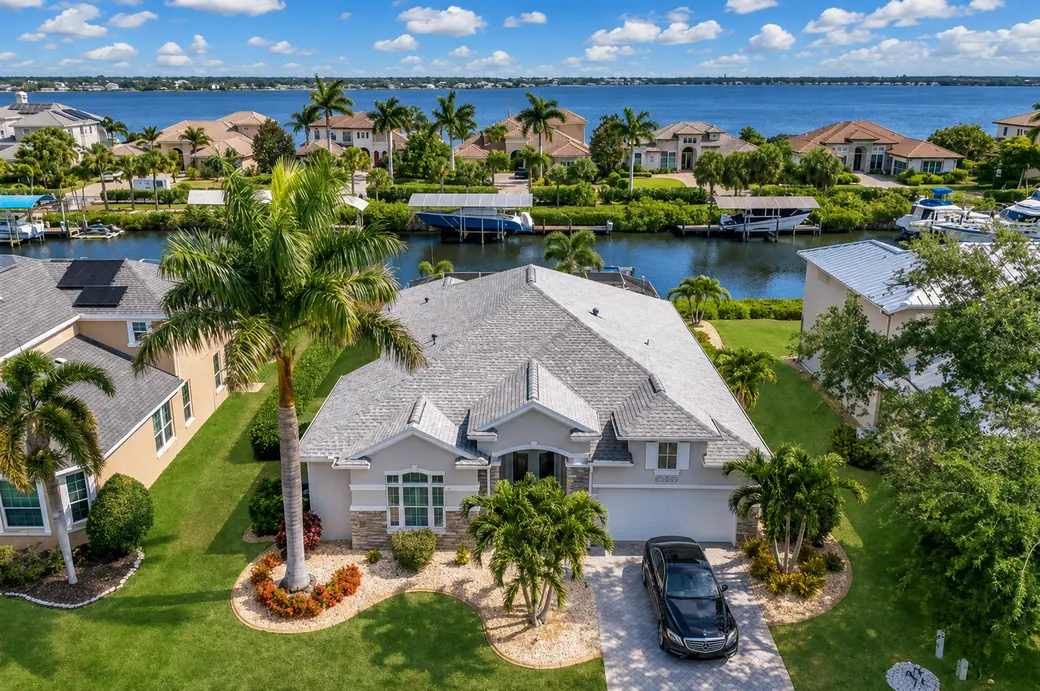
Not all Florida waterfront property provides the same access or lifestyle. A home directly on the Gulf of Mexico is fundamentally different from a Sarasota Bay residence, canal-front home, Intracoastal property, lakefront residence, or home overlooking water without navigable access.
If boating matters, determine whether the property provides practical access to the waterways you intend to use. Buyers considering Sarasota-area coastal property can start with Hunt Brothers Realty's guide to Florida Gulf Coast waterfront homes, seawalls, docks, and flood zones.
Buyer takeaway: Buy for the type of water access you will actually use, not simply for the word "waterfront" in a listing description.
2. What Flood Zone Is the Property In?
The property's current flood-zone designation is important, but buyers should not treat it as the complete measure of flood risk. Elevation, drainage, proximity to tidal water, building design, previous flooding information, and property-specific conditions can also matter.
Florida also requires a seller of residential real property to provide a statutory flood disclosure at or before execution of the sales contract. The disclosure addresses the seller's knowledge of flood damage during ownership, flood-related insurance claims, and flood assistance received. Buyers can review the current requirements through the Florida Legislature's flood-risk disclosure statute.
Buyer takeaway: A flood zone and a property's complete flood-risk profile are not the same thing. Investigate both.
3. What Will Flood, Wind, and Homeowners Insurance Cost?
Insurance should be investigated early because a property's coverage availability and premiums can affect the real cost of ownership. Do not assume that the seller's current premiums will equal what you will pay after purchasing the property.
Ask a licensed insurance professional for property-specific information concerning homeowners, wind, and flood coverage as applicable. Factors related to the individual structure and location can influence available coverage and pricing.
Hunt Brothers Realty's Florida home buyer resources also address insurance, inspections, property taxes, associations, contracts, financing, and other issues buyers may encounter during a Florida purchase.
4. What Condition Is the Seawall In?
If a property has a seawall, bulkhead, retaining structure, or other shoreline stabilization, its condition deserves specific attention. A general home inspection may not provide the specialized evaluation needed to understand waterfront infrastructure.
Depending on the property, buyers may want to investigate:
- Age and construction material
- Visible cracking, movement, leaning, separation, or deterioration
- Evidence of soil loss or washout
- Previous repairs or reinforcement
- Available permits, invoices, engineering information, or warranties
- Responsibility for maintenance and eventual replacement
For condominium or association-owned waterfront, determine whether the seawall is an owner responsibility, common element, association responsibility, or subject to another ownership arrangement. Current governing documents should be reviewed rather than assumptions made from the property's appearance.
5. Is the Dock Legal, Permitted, and in Good Condition?
An existing dock should be evaluated for both legal status and practical suitability. Buyers should investigate available records for the dock, boat lift, pilings, electrical service, water service, repairs, additions, and other waterfront improvements rather than assuming an existing structure has every approval required for its current configuration.
The Florida Department of Environmental Protection's dock-permitting guidance explains Florida's regulatory framework for dock projects. DEP also provides processes for certain single-family dock exemptions and permitting, but applicability depends on the specific project and location.
Buyer takeaway: The presence of a dock does not, by itself, establish its permit status or prove that future expansion will be allowed.
6. Will the Water Access Work for Your Boat?
A dock is useful only if the property and route to open water work for your vessel and boating plans. Buyers who already own a boat should investigate the entire route rather than evaluating only the dock behind the house.
Important questions can include:
- What is the water depth at the dock and along the route?
- How do tides affect usable depth?
- Are there fixed bridges?
- What bridge clearance applies to the intended route?
- Is the canal or waterway wide enough for comfortable maneuvering?
- Is the boat lift appropriately sized and rated for the vessel?
- Are there navigational or access restrictions that affect the intended use?
Do not rely solely on approximate descriptions of "deep water," "Gulf access," or "minutes to open water." Conditions and vessel requirements vary, so information important to your boat should be independently verified.
7. What Is the Property's Exposure to Salt, Wind, and Storms?
Florida waterfront property can experience demanding environmental conditions. Salt air, moisture, wind, sun, and storm exposure can affect exterior finishes, metal components, mechanical equipment, windows, doors, roofs, docks, railings, and other building systems.
Property condition should therefore be evaluated carefully, with qualified specialists brought in when the home, seawall, dock, roof, structure, electrical systems, or other components warrant specialized review. Buyers should also investigate available permits and documentation for significant improvements or storm-related repairs.
8. What Are the Real Annual Costs of Waterfront Ownership?
The purchase price is only one part of the waterfront budget. Buyers should develop a property-specific estimate of recurring expenses and potential capital projects before deciding what is affordable.
Depending on the property, costs may include:
- Homeowners insurance
- Flood and wind coverage as applicable
- Property taxes
- Association or condominium fees
- Dock and boat-lift maintenance
- Seawall inspection, repair, or replacement planning
- Pool and landscaping expenses
- Exterior maintenance associated with the coastal environment
- Storm preparation and post-storm maintenance
A waterfront home that fits the purchase budget can still be the wrong financial fit if major infrastructure or recurring ownership costs are overlooked.
9. Are There HOA, Condo, Rental, or Waterfront Restrictions?
Association rules and other property restrictions can affect how a waterfront residence may be used. Buyers considering a condominium, deed-restricted community, or shared marina should review current documents and verify the rights attached to the specific property.
Questions may include:
- Is a boat slip included with the property?
- Is the slip deeded, assigned, leased, or otherwise controlled?
- What vessel-size restrictions apply?
- Who maintains docks and seawalls?
- Are there current or anticipated assessments?
- What rental restrictions apply?
- Are there rules governing dock alterations or boat lifts?
- What association insurance and waterfront responsibilities exist?
Boat-slip rights should be independently verified rather than assumed from a listing description. The same principle applies to parking, storage, rental permissions, pet policies, and other rights that may be important to a particular buyer.
10. Does the Location Match the Waterfront Lifestyle You Want?
The best waterfront location depends on what you want to do once you own the property. Beach access, boating, fishing, open-water access, privacy, condominium amenities, proximity to dining, and access to downtown services can lead buyers toward very different Florida properties.
On Florida's Gulf Coast, buyers can compare everything from beachfront property to bayfront condominiums and canal-front single-family homes. For example, buyers prioritizing Gulf frontage can explore Siesta Key beachfront homes for sale, while boating-oriented buyers may place greater emphasis on protected canal or bay access.
The Hunt Brothers Realty Florida Gulf Coast real estate website provides access to communities and property searches across Sarasota and surrounding coastal markets.
What Should You Verify Before Making an Offer?
Before committing to a Florida waterfront property, identify the issues that matter to your intended use and obtain property-specific information. The appropriate due diligence will vary by location, structure, waterfront type, financing, association, and boating requirements.
- Current flood information and available elevation documentation
- Property-specific insurance options and estimated premiums
- Seawall condition and maintenance responsibility
- Dock and boat-lift condition, permits, and capacity
- Water depth and tidal considerations
- Bridge clearances and the complete boating route
- Relevant waterfront and renovation permits
- Association documents, fees, assessments, and restrictions when applicable
- Property condition and specialized inspection needs
- Realistic recurring and long-term ownership expenses
Is Buying Waterfront Property in Florida Worth It?
Waterfront property can provide a distinctive Florida lifestyle, but whether a particular home is right for you depends on far more than its view. The most informed buyers evaluate the residence and the waterfront as two interconnected parts of the same purchase.
A careful review of flood exposure, insurance, seawalls, docks, permits, boating access, association responsibilities, property condition, and long-term costs can reveal differences between waterfront homes that appear similar during a showing. That due diligence is particularly important for buyers relocating to Florida who may be encountering coastal ownership issues for the first time.
Explore Florida Gulf Coast Waterfront Real Estate
If you are considering waterfront property in Sarasota or elsewhere along Florida's Gulf Coast, Hunt Brothers Realty can help you compare properties based on the details that matter to your goals, from boating access and waterfront infrastructure to neighborhood location and current market conditions.
Start with the Hunt Brothers Realty Florida buyer resources, review the firm's Florida Gulf Coast waterfront home guide, or contact Hunt Brothers Realty to discuss the type of waterfront property you are looking for.
Sources
- Hunt Brothers Realty: A Buyer's Guide to Waterfront Homes on Florida's Gulf Coast
- Hunt Brothers Realty: Florida Buyer Resources
- Florida Legislature: Section 689.302, Disclosure of Flood Risks to Prospective Purchaser
- Florida Department of Environmental Protection: Dock Permitting in Florida
Contact Hunt Brothers Realty
46 N. Washington Blvd, Ste 3, Sarasota, FL 34236
Phone: (941) 388-7017
Email: info@huntbrothersrealty.com
Website: HuntBrothersRealty.com
Categories
- All Blogs 1789
- Anna Maria Island 82
- Bird Key 4
- Bradenton 228
- Buying a Home 882
- Casey Key 2
- Clearwater 7
- Condos & HOA Living 787
- Ellenton 4
- Englewood 7
- First Time Homebuyers 979
- Foreclosures 3
- Homeownership 986
- Lakewood Ranch 17
- Lido Key 27
- Longboat Key 77
- Luxury/Waterfront Properties 924
- Market Updates & Trends 479
- Mortgages & Financing 37
- Move-Up Buyers 20
- Neighborhood Guides 629
- New Construction 29
- Palmetto 3
- Parrish 6
- Port Charlotte 9
- Punta Gorda 14
- Real Estate Investing 850
- Relocation to Florida 898
- Safety Harbor 2
- Sarasota 51
- Sarasota - Downtown 152
- Selling a Home 140
- Siesta Key 88
- St. Petersburg 6
- Tierra Verde 4
- Vacation & Second Homes 1037
- Venice 26
- Wellen Park 8
Recent Posts