Should I Buy New Construction or a Resale Home in Florida?
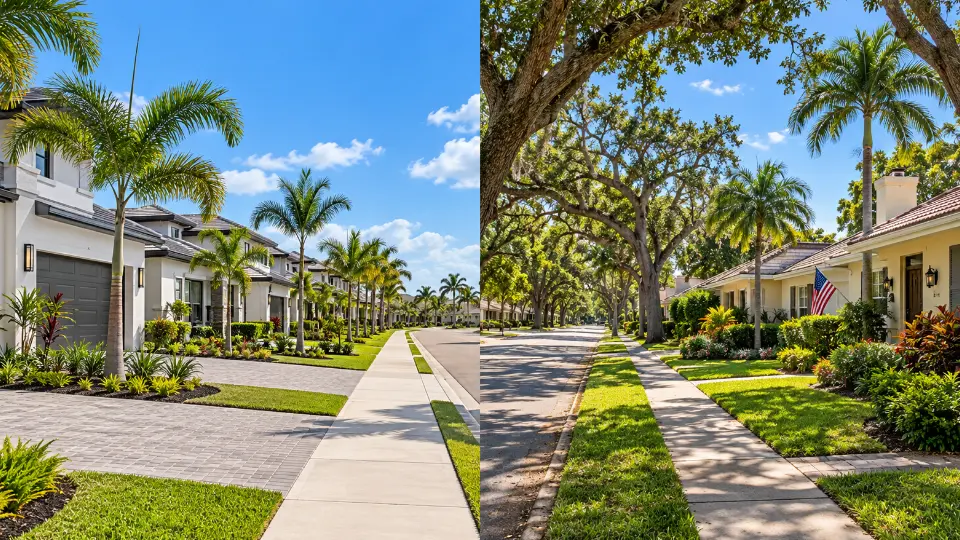
Neither new construction nor a resale home is automatically the better choice in Florida. New construction can offer newer roofs and building systems, contemporary floor plans, warranty protection, possible builder incentives and fewer immediate renovation projects. Resale homes can offer established neighborhoods, mature landscaping, completed amenities, more predictable surroundings and locations where little new construction remains. The most useful comparison is the total cost and condition of two actual properties, including purchase price, financing, insurance, taxes, HOA or CDD expenses, inspections, maintenance and location, rather than choosing based on the home's age alone.
Quick Answers About New Construction vs. Resale Homes in Florida
Is new construction better than a resale home in Florida?
Not necessarily. New construction may be preferable when you prioritize newer systems, modern layouts, available customization and builder warranty protection. A resale home may be preferable when location, an established neighborhood, mature landscaping, completed amenities or a particular architectural style matters more.
Is new construction cheaper than buying an existing Florida home?
Not automatically. A builder may advertise an attractive base price or offer financing and closing-cost incentives, but lot premiums, design options, appliances, window treatments, landscaping, HOA dues, CDD assessments and other expenses can change the comparison. Compare completed homes and total ownership costs rather than advertised prices alone.
Are new homes cheaper to insure in Florida?
A newer home may have characteristics that are favorable to an insurer, including a newer roof and modern wind-mitigation features, but lower premiums are not guaranteed. Florida insurers consider multiple property-specific underwriting factors, including construction, location, roof characteristics and available mitigation features. Obtain actual insurance quotes before choosing between homes.
Do I need an inspection on a brand-new Florida home?
An independent inspection is worth considering even for brand-new construction. New homes can have incomplete work, installation problems or workmanship concerns. Depending on the construction stage and contract, inspection opportunities may include pre-drywall, pre-closing and warranty-period inspections.
Do new Florida homes come with a builder warranty?
Florida law provides a mandatory one-year builder warranty for qualifying newly constructed single-family homes, duplexes, triplexes and quadruplexes that have not previously been occupied. The statutory warranty has specific coverage, exclusions and procedures, and qualifying express builder warranties can apply under the statute. Buyers should review the actual warranty documents and obtain legal guidance when contract or warranty rights matter.
What is the biggest advantage of buying a resale home?
A resale home lets you evaluate an existing property and neighborhood rather than relying as heavily on plans and projections. Streets, landscaping, neighboring development and community amenities are often already established, although the home's age and maintenance history require careful inspection.
What is the biggest advantage of buying new construction?
New construction gives buyers access to recently installed building systems and contemporary floor plans, and some homes allow selections involving finishes, lots or structural options. Buyers may also have access to builder incentives and warranty protection, but those benefits should be evaluated against the home's complete price and community expenses.
How Do New Construction and Resale Homes Compare?
The major differences involve condition, customization, location, purchase structure, maintenance, community maturity and total ownership costs. Neither category wins every comparison.
| Consideration | New Construction | Resale Home |
|---|---|---|
| Major systems | Recently installed, but defects can still occur | Age and remaining useful life vary |
| Customization | May be available before completion | Usually requires renovation after purchase |
| Neighborhood | May still be developing | Often more established |
| Closing timeline | Can vary with construction stage | Usually based on a negotiated closing date |
| Inspections | Independent inspections remain useful | Important for condition and aging systems |
| Warranty | Statutory and contractual protections may apply | Depends on remaining manufacturer warranties and transaction terms |
| Immediate maintenance | Often fewer age-related projects initially | Depends heavily on maintenance and renovation history |
| Community costs | May include HOA dues and CDD assessments | May include HOA, condo or other association expenses |
When Does New Construction Make More Sense?
New construction may make more sense when you prioritize recently installed systems, contemporary design, available customization and fewer immediate age-related replacement projects. It can also be attractive when a builder is offering competitive incentives on a completed or nearly completed home.
Potential advantages include:
- New roof, HVAC, plumbing and electrical systems
- Contemporary floor plans
- Current construction standards
- Possible design and finish selections
- Potential builder warranty protection
- Possible financing or closing-cost incentives
- Potentially fewer immediate renovation projects
- Newly developed community amenities in some neighborhoods
For a deeper review of the process, see Hunt Brothers Realty's guide to buying new construction in Florida and guide to deciding whether new construction is worth it.
When Does a Resale Home Make More Sense?
A resale home may make more sense when the location and established surroundings matter more than having a brand-new property. Existing homes can provide access to neighborhoods where developable land is limited, including locations closer to established downtowns, beaches, waterfront areas and mature residential districts.
Potential advantages include:
- Established neighborhood surroundings
- Mature trees and landscaping
- Completed roads and community amenities
- More information about the home's maintenance history
- Ability to see the exact finished property before contracting
- Existing window treatments, landscaping, pools or other improvements in some homes
- Potential access to locations with little remaining new construction
- A broader selection of architectural styles and lot configurations
The tradeoff is that existing systems have already accumulated age and use. The condition of the roof, HVAC, plumbing, electrical system, windows, appliances and other components should therefore be investigated carefully.
Is New Construction Really More Expensive?
The advertised price does not tell you whether a new home is more expensive than a resale. The useful comparison is the completed purchase price plus financing and recurring ownership costs for two reasonably comparable properties.
With new construction, ask what the advertised price actually includes. Additional costs can include:
- Lot premiums
- Structural options
- Design-center upgrades
- Appliance upgrades
- Pool or outdoor-living additions
- Window treatments
- Additional landscaping
- HOA expenses
- CDD assessments when applicable
- Closing costs not covered by an incentive
A resale home can have its own additional costs, particularly when the roof, HVAC system, windows, plumbing, electrical equipment, pool or interior finishes require near-term work. A lower purchase price can be less meaningful if substantial repairs or renovations follow immediately after closing.
How Should I Evaluate Builder Incentives?
Builder incentives can improve a new-construction offer, but an incentive should be evaluated as part of the entire transaction. A large advertised incentive does not automatically mean the new home has the lowest purchase or financing cost.
Depending on the builder and property, incentives may involve:
- Closing-cost contributions
- Mortgage-rate incentives
- Design or upgrade credits
- Price reductions on selected inventory
- Lot-premium adjustments
Some incentives may depend on using a builder-affiliated lender or title provider. Buyers should compare the complete loan terms, interest rate, fees, credits and cash required at closing with other available financing. Financing questions should be reviewed with a qualified mortgage professional before deciding which offer provides the better overall result.
Are New Homes Easier to Insure in Florida?
Newer construction can have insurance advantages, but buyers should never assume that a new home will automatically have a lower premium. Florida homeowners insurance is property-specific.
The Florida Department of Financial Services explains that homeowners insurers may review factors including the home's construction, year built, roof age and construction, location, square footage and qualifying wind-mitigation features.
For an older resale property, an insurer may request additional information about major systems. Florida consumer guidance notes that a four-point inspection may be required on an older home and generally addresses the roof, plumbing, electrical and heating or air-conditioning systems.
That does not mean an older home is necessarily difficult or expensive to insure. Renovations, roof replacement, construction type, wind-mitigation characteristics and location can materially affect the outcome.
Insurance availability, coverage and premiums can vary substantially by property. Obtain quotes for the actual new construction and resale homes you are comparing and review coverage with a qualified Florida insurance professional before making a purchasing decision.
Does New Construction Still Need a Home Inspection?
Yes, an independent inspection is worth considering on a new home. New construction can have incomplete work, installation problems, drainage concerns or workmanship issues even when required governmental inspections have occurred.
A building-code inspection, builder quality-control process, buyer's independent inspection and builder warranty do not serve identical purposes.
Depending on the contract, construction stage and builder's access policies, buyers may consider:
- Pre-drywall inspection: certain visible components can be reviewed before walls are enclosed
- Pre-closing inspection: the completed home can be evaluated for observable defects and unfinished items
- Warranty-period inspection: conditions that become apparent after occupancy can be evaluated before applicable warranty deadlines
Read Hunt Brothers Realty's guide to home inspections on brand-new houses for a closer look at these stages.
Inspection findings should be evaluated with the appropriate licensed inspector, contractor, engineer or other qualified professional before the buyer makes a decision.
What Warranty Does a New Florida Home Have?
Florida now has a statutory builder-warranty requirement for certain newly constructed homes. Under Florida Statutes Section 553.837, qualifying newly constructed single-family dwellings, duplexes, triplexes and quadruplexes that have not previously been occupied receive specified builder warranty protection for one year.
The statutory warranty addresses qualifying construction defects involving builder, subcontractor or supplier equipment, materials or workmanship that result in a material violation of the Florida Building Code. The statute also contains exclusions, provisions concerning manufacturer-covered appliances or equipment, transfer requirements during the initial year and rules for qualifying express written builder warranties.
A warranty should not be treated as a substitute for an inspection. Buyers should obtain and read the actual builder warranty, understand claim procedures and deadlines, and preserve relevant documents.
Questions involving the scope of a warranty, construction defects, contractual remedies or legal rights should be reviewed with a qualified Florida real estate or construction attorney rather than relying on general real estate information.
What Should I Know About Property Taxes on New Construction?
Do not estimate future property taxes from a tax bill that reflects only vacant land, an incomplete home or a previous assessment situation. Once construction is completed and the property is assessed accordingly, the taxable picture can change substantially.
The same caution applies to resale homes. A seller's current property-tax bill may reflect exemptions, assessment limitations or circumstances that will not transfer to the buyer in the same way.
For both new construction and resale, use the applicable county property appraiser's information to develop a property-specific estimate. Tax consequences depend on the individual owner and property, so buyers should consult the property appraiser and a qualified tax professional regarding their circumstances when needed.
What Is a CDD, and Why Does It Matter?
A Community Development District, commonly called a CDD, is a special-purpose local government structure that may finance and maintain certain community infrastructure and services. Some Florida master-planned communities have CDD assessments, while many others do not.
A CDD assessment is not automatically the same thing as an HOA fee. A property can potentially have both.
CDD assessments are especially important when comparing new master-planned construction with an established resale neighborhood. Verify:
- Whether the property is within a CDD
- The current assessment
- Whether debt and operating components apply
- How the assessment is collected
- Any available information about outstanding district debt
- What infrastructure or services the district supports
Verify current CDD information through the district, applicable public records and closing documentation. Do not rely solely on a sales presentation when calculating recurring ownership costs.
Is a Builder Contract Different From a Resale Contract?
It can be substantially different. Florida builders commonly use their own purchase agreements, while resale transactions frequently use standardized real estate contract forms. Buyers should not assume the deadlines, cancellation rights, financing provisions or remedies are identical.
A builder contract may address matters such as:
- Construction and completion timing
- Builder extension rights
- Deposit schedules
- Design-selection deadlines
- Substitution of materials
- Inspection access
- Financing deadlines
- Incentive requirements
- Closing procedures
- Warranty procedures
- Dispute-resolution provisions
Questions involving deposit rights, cancellation, delays, default, warranty language or other contract rights should be reviewed with a qualified Florida real estate attorney before the buyer relies on a particular interpretation.
Should I Use a Real Estate Agent When Buying From a Builder?
You are not generally required to use a real estate agent to purchase new construction, but a separately engaged real estate professional can help you compare the builder's offering with competing new construction and resale properties.
The builder's sales representative should not automatically be assumed to represent the buyer's interests. Buyers should understand each participant's role and the brokerage relationship that applies.
If you want to work with your own real estate professional, consider making contact before registering online or visiting a model home. Builder policies concerning outside agents, registration and compensation can vary, and some establish procedures beginning with the buyer's first contact.
Hunt Brothers Realty explains this issue in more detail in its guide to using a real estate professional when buying new construction in Florida.
Is New Construction More Energy Efficient?
New construction may incorporate newer windows, insulation, HVAC equipment, appliances and other components that can affect energy use, but lower utility bills should not be assumed without examining the actual home. Square footage, thermostat settings, pool equipment, household usage, orientation and equipment specifications all matter.
A renovated resale home may also contain newer windows, insulation, HVAC equipment and appliances. Compare actual specifications rather than using construction year as a substitute for energy-performance information.
Projected utility savings should be treated as estimates, not guaranteed outcomes.
Which Option Is Better if I Need to Move Soon?
A resale home or completed builder inventory home usually offers more timing certainty than a home that still needs to be constructed. A to-be-built home can involve a longer timeline and potential construction delays.
New construction itself falls into different categories. A completed quick move-in home is very different from choosing a homesite and building from the ground up.
Buyers coordinating another home sale, a lease expiration, employment relocation or temporary housing should examine the contract's completion provisions carefully. Construction schedules are not always guaranteed, and contractual rights involving delays should be reviewed before relying on a projected move-in date.
Does a New Community Have Any Disadvantages?
A developing community can involve construction activity, changing surroundings and amenities that are not yet complete. Buyers should distinguish between what exists today and what is proposed for the future.
Questions worth investigating include:
- How many homes remain to be built?
- Where are future phases located?
- Which amenities are already completed?
- Which amenities are proposed rather than completed?
- Who owns adjacent undeveloped land?
- Are future roads or commercial areas planned nearby?
- What HOA restrictions apply?
- Is there a CDD?
- Could future builder inventory compete with resale homes in the community?
Future amenities, development plans and property values should not be treated as guaranteed. Verify current approvals and plans through the appropriate developer, association and local government sources when those factors materially affect the purchase.
What Are the Risks of an Older Resale Home in Florida?
The principal concern with an older resale home is not age by itself, but the condition and remaining useful life of its components. A well-maintained older home can compare favorably with a poorly maintained newer property.
Depending on the property, buyers may need to investigate:
- Roof age and condition
- Electrical system
- Plumbing materials and condition
- HVAC age and performance
- Windows, doors and wind-mitigation features
- Moisture or water-intrusion evidence
- Termite or other wood-destroying organism concerns
- Previous renovations and permits
- Pool and equipment condition
- Drainage and site conditions
- Septic or well systems when applicable
- Flood and insurance considerations
An inspection provides information about observable conditions, but specialized concerns may require evaluation by qualified contractors, engineers, electricians, plumbers, roofers, pest professionals or other appropriate specialists.
Should I Buy a Quick Move-In Home or Build From the Ground Up?
A quick move-in home generally offers more certainty, while a to-be-built home can provide more selection opportunities. The better choice depends largely on timing and how much customization matters to you.
Quick move-in homes may already be complete or approaching completion. Buyers can see more of the actual home, move-in timing can be shorter, and builders sometimes offer incentives on selected inventory. The tradeoff is that most structural and design decisions may already have been made.
To-be-built homes can offer more opportunities to choose the homesite, floor plan and available finishes. The tradeoff is greater exposure to construction timing, selection deadlines, upgrade costs and the uncertainty of buying something that is not yet complete.
How Should I Compare a New Home With a Resale Home?
Compare the homes side by side using total costs and property-specific characteristics. Do not compare a builder's base price with a resale home's completed asking price without adjusting for what each property actually includes.
For each property, compare:
- Final negotiated purchase price
- Financing terms
- Closing costs and credits
- Property-tax estimate after purchase
- Property-specific insurance quotes
- Flood insurance considerations
- HOA, condominium or CDD expenses
- Expected near-term repairs or upgrades
- Roof and major-system condition
- Lot characteristics
- Location
- Floor plan
- Completed amenities
- Construction activity or future development
- Inspection findings
- Warranty coverage
Hunt Brothers Realty's Buyer Resource Center provides additional information for evaluating Florida homes and preparing for a purchase.
Which Buyers May Prefer New Construction?
New construction may be a stronger fit when your priorities center on the home itself being new and you are comfortable with the development process and total community costs.
It may deserve extra consideration if you prioritize:
- Recently installed major systems
- Modern floor plans
- Available customization
- Builder warranty protection
- Potential builder incentives
- New community amenities
- Less immediate age-related maintenance
Which Buyers May Prefer a Resale Home?
A resale home may be a stronger fit when location, established surroundings and the ability to evaluate the finished property matter more than having new construction.
It may deserve extra consideration if you prioritize:
- An established neighborhood
- Mature landscaping
- A specific existing location
- Larger or less standardized lots in some neighborhoods
- Completed community amenities
- Existing pools, landscaping or other improvements
- A particular architectural style
- A more conventional negotiated closing timeline
What Is the Best Way to Decide?
The best way to decide is to compare actual new construction and resale homes that satisfy the same core needs. A theoretical comparison is useful, but the decision becomes much clearer when you can compare specific properties, insurance quotes, taxes, association costs, financing terms and inspection information.
A new home with a competitive builder incentive may be the stronger choice in one community. A well-maintained resale home in a more desirable location may be the stronger choice somewhere else. Construction year alone does not determine which property offers the better fit.
The key is to compare what you are actually buying, what it will actually cost to own, and how well the property serves your priorities.
Compare Florida Homes With Hunt Brothers Realty
Hunt Brothers Realty can help buyers compare new construction and resale opportunities based on current market information, location, property characteristics and total ownership considerations. The goal is not to push one category of home, but to help identify the properties that best match the buyer's search criteria.
Before visiting a builder, you may also want to read Should I Use a Realtor When Buying New Construction in Florida? and What to Know Before Buying New Construction in Florida.
Visit the Hunt Brothers Realty Buyer Resource Center for additional home-buying information, or contact Hunt Brothers Realty to discuss new construction and resale options in your Florida home search.
This article is provided for general informational and educational purposes only and is not individualized legal, financial, tax, insurance, lending, inspection, engineering or construction advice. Builder contracts, incentives, warranties, taxes, insurance, association obligations, CDD assessments, financing and property conditions vary. Buyers should verify property-specific information and consult the appropriate qualified real estate professional, lender, insurance agent, Florida real estate attorney, tax professional, home inspector, contractor, engineer, association, district or local government authority before making decisions requiring individualized guidance.
Sources
- Florida Senate, 2026 Florida Statutes Section 553.837, Mandatory Builder Warranty
- Florida Senate, 2026 Florida Statutes Chapter 558, Construction Defects
- Florida Department of Financial Services, Purchasing Insurance
- Florida Department of Financial Services, Homeowners Insurance Overview
- Hunt Brothers Realty, What to Know Before Buying New Construction in Florida
- Hunt Brothers Realty, Is New Construction Worth It in Florida?
- Hunt Brothers Realty, Should I Get a Home Inspection on a Brand-New House?
- Hunt Brothers Realty, Should I Use a Realtor When Buying New Construction in Florida?
Hunt Brothers Realty
46 N. Washington Blvd, Ste 3, Sarasota, FL 34236
Phone: (941) 388-7017
Email: info@huntbrothersrealty.com
Website: HuntBrothersRealty.com
Categories
- All Blogs 2272
- Anna Maria Island 86
- Bird Key 4
- Bradenton 237
- Buying a Home 1321
- Casey Key 2
- Clearwater 12
- Condos & HOA Living 1241
- Ellenton 6
- Englewood 12
- First Time Homebuyers 1433
- Foreclosures 5
- Home Selling 7
- Homeownership 1461
- Lakewood Ranch 25
- Lido Key 28
- Longboat Key 80
- Luxury/Waterfront Properties 1402
- Market Updates & Trends 919
- Mortgages & Financing 68
- Move-Up Buyers 25
- Neighborhood Guides 1035
- New Construction 38
- Palmetto 3
- Parrish 6
- Port Charlotte 12
- Punta Gorda 81
- Real Estate Investing 1317
- Relocation to Florida 1354
- Safety Harbor 3
- Sarasota 95
- Sarasota - Downtown 165
- Selling a Home 146
- Siesta Key 92
- St. Petersburg 8
- Tierra Verde 5
- Vacation & Second Homes 1512
- Venice 209
- Wellen Park 20
Recent Posts