Is New Construction Worth It in Florida?
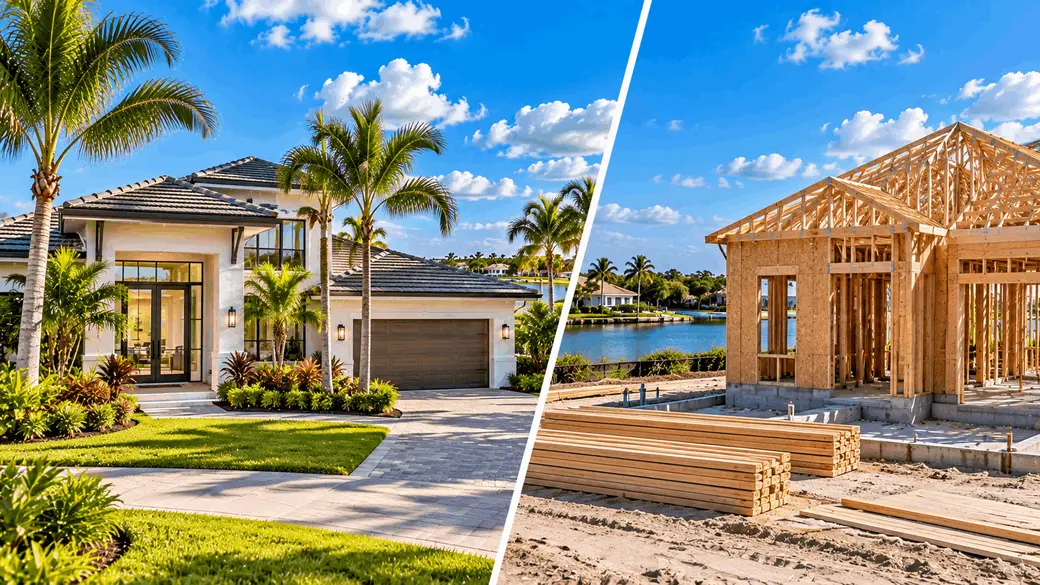
Is new construction worth it in Florida? For many buyers, the answer is yes, particularly when a new home offers modern construction, energy-efficient systems, a desirable floor plan, and competitive builder incentives. However, new construction is not automatically a better financial decision than purchasing an existing home. Upgrades, lot premiums, homeowners association fees, Community Development District assessments, insurance, and closing costs can significantly affect the total price. Buyers should also consider construction timelines, builder warranties, inspections, and future resale competition. The best choice depends on the property's location, construction quality, total ownership costs, and how well the home fits the buyer's long-term plans.
Quick Answers About Buying New Construction in Florida
Is buying a new construction home in Florida a good investment?
New construction can be a worthwhile purchase when the price, location, construction quality, and ongoing expenses align with the buyer's goals. However, appreciation is not guaranteed. Buyers should compare current new-home prices with recent resale transactions and consider how future construction in the same community could affect resale competition.
Is new construction cheaper than buying an existing home?
Not necessarily. Builders may offer mortgage-rate incentives, closing-cost contributions, or upgrade packages. However, lot premiums, optional features, landscaping, window treatments, and association expenses can increase the final cost. The appropriate comparison is the total cost of comparable homes, not simply their advertised prices.
Do new construction homes have lower insurance costs in Florida?
Some newer homes may qualify for favorable insurance pricing because of their construction characteristics and wind-mitigation features. However, premiums depend on the individual property, location, coverage, insurer, and other factors. Buyers should obtain property-specific quotes before purchasing.
Do you need a home inspection on new construction?
Yes, an independent inspection is generally worth considering. New homes can have workmanship issues, installation defects, or incomplete items. Depending on the construction stage, buyers may arrange pre-drywall, pre-closing, and warranty-period inspections with qualified professionals.
Can you negotiate with a Florida homebuilder?
Sometimes. Negotiating opportunities may include purchase price, closing-cost contributions, financing incentives, lot premiums, or upgrades. Builder flexibility depends on inventory, demand, construction stage, and company policies. All incentives should be documented in writing.
What are CDD fees on new construction homes?
A Community Development District, or CDD, is a special-purpose local government that may finance and maintain certain community infrastructure and services. Properties within a CDD may be subject to assessments in addition to property taxes and HOA fees. Not every new community has a CDD.
Is new construction better than resale in Florida?
Neither option is universally better. New construction may provide newer systems, modern layouts, and warranty protection. Resale homes may offer established neighborhoods, mature landscaping, completed amenities, and more opportunities to evaluate the property's history.
Why New Construction Is Attractive to Florida Homebuyers
New construction is an important part of Florida's residential real estate market, especially in growing areas of Sarasota, Manatee, Charlotte, and surrounding counties.
Communities throughout the greater Sarasota and Venice region offer a variety of newly built single-family homes, villas, townhomes, and condominiums.
For buyers relocating to Florida, purchasing a new home can simplify certain aspects of the moving process.
Instead of planning immediate renovations, buyers may be able to select a home with a contemporary layout, updated finishes, and recently installed equipment.
Some communities also offer resort-style amenities, including pools, fitness centers, walking trails, pickleball courts, clubhouses, and social gathering spaces.
However, buyers should distinguish between amenities that are already completed and those that are proposed or under construction.
The value of new construction depends on more than the appeal of a new home. It requires a careful comparison of purchase costs, ongoing expenses, and neighborhood characteristics.
7 Potential Advantages of Buying New Construction in Florida
1. Modern Building Standards
One of the most important potential advantages of new construction is that the home is built under the building-code requirements applicable to its permitted construction.
Florida's building standards address important construction considerations, including structural requirements, wind resistance, roofing, energy efficiency, and building systems.
The Florida Building Commission identifies December 31, 2023, as the effective date of the Florida Building Code, 8th Edition (2023).
The applicable code for an individual home depends on permitting and other regulatory details. Buyers should verify the relevant requirements with the local building department.
Newer construction standards can be beneficial, but they do not make a home hurricane-proof or eliminate the possibility of construction defects.
A qualified home inspector or engineer can help evaluate property-specific construction concerns.
2. New Roofing, HVAC, Plumbing, and Electrical Systems
New homes generally begin with recently installed major systems.
These may include:
- A newly installed roof
- Heating and air-conditioning equipment
- Electrical wiring and panels
- Plumbing supply and drainage systems
- Water heaters
- Windows and exterior doors
- Kitchen appliances, when included in the purchase
This may reduce the likelihood of certain age-related replacement expenses during the early years of ownership.
However, new equipment can still malfunction, and installation quality matters.
Buyers should review manufacturer warranties, maintenance requirements, and the builder's responsibilities for correcting defects.
3. Energy-Efficient Features
New construction homes may incorporate features designed to improve energy performance.
Depending on the builder and home, these can include:
- Energy-efficient windows
- Improved insulation
- Efficient air-conditioning equipment
- LED lighting
- Programmable or smart thermostats
- Energy-efficient appliances
These features may help reduce energy consumption compared with some older homes.
Actual utility costs depend on home size, insulation, equipment performance, thermostat settings, occupancy, and other factors.
Buyers should request available energy-performance information and avoid assuming that every new home will have lower utility bills than every resale property.
4. Contemporary Floor Plans
Many newly built Florida homes feature layouts designed around contemporary preferences.
Common features may include open kitchens, larger islands, flexible rooms, walk-in closets, spacious primary suites, and covered outdoor living areas.
Some floor plans also offer single-story living or configurations designed to accommodate changing household needs.
Buyers should evaluate the actual floor plan rather than assuming newer automatically means more functional.
An established home with a thoughtful layout may be equally suitable.
5. Opportunities for Personalization
Depending on the construction stage, buyers may be able to select certain finishes and features.
Options can include flooring, cabinetry, countertops, lighting, appliances, and structural upgrades.
The degree of customization varies significantly.
A completed inventory home may offer few changes, while a to-be-built home may provide a broader selection.
Customization can be attractive, but buyers should understand the cost of each upgrade before making selections.
6. Builder Incentives
Builders sometimes offer incentives to encourage purchases or reduce available inventory.
Potential incentives include:
- Closing-cost contributions
- Mortgage interest-rate buydowns
- Preferred-lender financing promotions
- Design-center credits
- Included appliance packages
- Lot-premium reductions
- Price adjustments on completed inventory homes
These incentives are not guaranteed and may change without notice.
Buyers should compare the total financing cost, loan terms, lender fees, and purchase price rather than evaluating an incentive in isolation.
A qualified mortgage professional can help determine whether a particular financing promotion is advantageous for the buyer's circumstances.
7. Builder Warranty Protection
New construction homes may provide warranty protections that are not typically available in the same form with older resale properties.
Under Florida Statutes Section 553.837, qualifying newly constructed homes are subject to a mandatory builder warranty addressing certain construction defects that result in material violations of the Florida Building Code.
The statutory provision generally establishes a one-year period beginning at the earlier of original conveyance or initial occupancy, subject to the law's terms and exceptions.
The statute also addresses circumstances involving qualifying express written warranties.
Importantly, this does not mean every cosmetic issue, appliance problem, or maintenance expense is covered.
Condominiums have separate statutory warranty provisions.
Buyers should obtain and review the actual warranty documents. Questions about coverage, enforceability, or construction-defect rights should be directed to a qualified Florida real estate or construction attorney.
7 Potential Disadvantages of Buying New Construction in Florida
1. The Advertised Base Price May Not Be the Final Price
One of the biggest mistakes buyers can make is assuming the advertised starting price represents the cost of the completed home they want.
A builder's base price may exclude desirable options or property-specific charges.
Potential additional expenses include:
- Lot premiums
- Structural modifications
- Upgraded flooring and cabinetry
- Premium countertops
- Appliance upgrades
- Screened lanais
- Pools and outdoor kitchens
- Window treatments
- Additional landscaping
- Closing costs and prepaid expenses
Buyers should request a detailed written breakdown of what is included and what costs extra.
2. HOA Fees and CDD Assessments
Many Florida new construction communities have homeowners associations.
HOA fees may support amenities, landscaping, common-area maintenance, private roads, or other services.
Some communities also have Community Development District assessments.
Under Florida Statutes Section 190.048, contracts for certain initial property sales within a CDD must include a disclosure concerning potential district taxes or assessments.
CDD assessments may be collected through the property tax bill, depending on the district and assessment structure.
Buyers should verify whether a property has HOA dues, CDD assessments, or both.
They should also review the current budget, any planned changes, and whether assessments include debt-service and operations components.
The presence of a CDD does not automatically make a community undesirable. The important issue is understanding what the assessments fund and how they affect total ownership costs.
3. Construction Delays
A home that is still under construction may not be completed on the originally anticipated date.
Weather, permitting, labor availability, material deliveries, inspections, and other factors can affect schedules.
Delays can create additional expenses for buyers who must coordinate moving dates, temporary housing, storage, or mortgage-rate locks.
Buyers should carefully review contract provisions addressing completion dates, delays, extensions, and remedies.
A Florida real estate attorney can explain how those provisions apply to a specific agreement.
4. Smaller Lots and Limited Mature Landscaping
Some new communities prioritize efficient land use and shared amenities.
As a result, certain neighborhoods may have smaller lots or homes positioned closer together than buyers expect.
New landscaping may also take time to mature.
By comparison, established Florida neighborhoods may offer mature trees, larger lots, and a more developed streetscape.
Lot size and privacy vary by community, so buyers should evaluate the actual property rather than relying on general assumptions.
5. Ongoing Construction Activity
Moving into a community before construction is complete may mean living near active building sites.
Construction vehicles, noise, dust, temporary road conditions, and unfinished landscaping may affect the early ownership experience.
Amenities may also open in phases.
Buyers should ask which portions of the development are complete, what remains planned, and whether future phases could affect views, traffic, or privacy.
6. Competition With Future Builder Inventory
A buyer who purchases early in a large development may eventually compete with the builder when selling.
For example, a builder may continue offering new homes, financing incentives, or promotional upgrades while existing owners are attempting to resell.
This can affect the competitive environment for resale listings.
The effect depends on market conditions, remaining inventory, the resale home's features, and the stage of community development.
Buyers should consider how long they expect to own the property and whether substantial future construction is planned nearby.
7. Builder Contracts May Differ From Standard Resale Contracts
New construction transactions often use contracts prepared by the builder.
These agreements may contain detailed provisions addressing deposits, construction changes, completion timelines, financing, inspections, warranty procedures, and dispute resolution.
Buyers should not assume the contract provides the same protections or deadlines as a familiar resale purchase agreement.
Before signing, buyers should consider having a qualified Florida real estate attorney review the agreement and explain its legal implications.
New Construction vs. Resale Homes in Florida
The decision between new construction and resale becomes easier when buyers compare specific features and ownership considerations.
| Consideration | New Construction | Resale Home |
|---|---|---|
| Major Systems | Recently installed, subject to workmanship and maintenance | Condition and remaining useful life vary |
| Floor Plans | Often contemporary layouts | Varies by age, design, and renovations |
| Customization | May be available before completion | Usually requires renovations |
| Neighborhood Character | May still be developing | Often more established |
| Landscaping | Often newly installed | May include mature landscaping |
| Warranty | Potential statutory and contractual builder protections | Depends on existing warranties and transaction terms |
| Closing Timeline | Quick for completed inventory, less predictable for unfinished homes | Typically based on negotiated contract dates |
| Additional Costs | Possible lot premiums, upgrades, HOA and CDD charges | Possible repairs, renovations, HOA and other assessments |
| Insurance | Depends on construction features, location, and insurer | Depends on condition, age, location, and insurer |
| Resale Competition | May compete with remaining builder inventory | Depends on neighborhood inventory and market conditions |
Neither category guarantees better construction quality, lower costs, or stronger appreciation.
The most useful comparison involves actual properties with similar locations, sizes, features, and ownership expenses.
How Much Does New Construction Really Cost in Florida?
The total cost of buying a new construction home can be substantially different from its advertised starting price.
A realistic comparison should account for the full transaction and the expected ongoing ownership expenses.
Purchase Price and Lot Premium
Builders may charge different prices for the same floor plan depending on the lot.
A waterfront, preserve-view, corner, or oversized lot may carry a premium.
Buyers should verify the lot's boundaries, easements, drainage features, and surrounding development plans.
A surveyor, title professional, or appropriate local authority can help address property-specific questions.
Upgrades and Options
Design-center selections can significantly increase the contract price.
Buyers should separate essential features from optional preferences.
They should also ask which upgrades must be completed by the builder and which, if permitted, could be installed after closing.
Any proposed post-closing work should be reviewed for permitting, warranty, and association implications.
Closing Costs and Financing
Closing expenses may include lender charges, title-related expenses, recording fees, prepaid insurance, escrow deposits, and other transaction costs.
The allocation of costs depends on the contract and financing arrangements.
Builder contributions may reduce some expenses, but buyers should compare written loan estimates from qualified lenders.
An incentive offered through a preferred lender should be evaluated alongside interest rates, fees, loan terms, and eligibility requirements.
Property Taxes
Buyers should be especially careful when reviewing property tax estimates for newly built homes.
A tax bill associated with vacant land or a partially completed property may not reflect the taxes assessed after the completed home is placed on the tax roll.
Florida property taxes depend on assessed value, exemptions, local millage rates, and other applicable factors.
Buyers should request a property-specific estimate from the appropriate county property appraiser or tax professional.
For Sarasota County properties, information is available through the Sarasota County Property Appraiser.
HOA, CDD, and Amenity Expenses
Monthly or annual community expenses can materially affect affordability.
Buyers should request written information about HOA dues, CDD assessments, amenity fees, and any additional community charges.
They should also ask whether the amounts are current, projected, or subject to adjustment as the community develops.
Insurance and Maintenance
Even a brand-new home requires insurance and ongoing maintenance.
Homeowners should plan for regular servicing of air-conditioning systems, landscaping, exterior maintenance, and eventual equipment replacement.
Insurance should be evaluated using quotes for the specific home, not general estimates based solely on its age.
An Example of Why the Base Price Is Only the Beginning
Consider a hypothetical new construction home advertised at $450,000.
The buyer selects a lot with a $15,000 premium and adds $25,000 in upgrades.
The resulting contract price becomes $490,000 before accounting for closing costs, prepaid expenses, and other ownership costs.
If the builder offers a $10,000 closing-cost contribution, that incentive may reduce eligible cash-to-close expenses, subject to the agreement and lender requirements.
It does not necessarily reduce the home's contract price or make every expense disappear.
This example is illustrative only and does not represent current pricing, incentives, or financing terms in any particular Florida community.
The lesson is straightforward: compare the complete written cost of the home, not just the number on the builder's advertisement.
Are New Construction Homes Better for Florida Hurricanes?
This is one of the most important questions for Florida buyers.
Modern construction may incorporate wind-resistant design features and building practices required by the applicable Florida Building Code.
Depending on the home, these may include engineered roof connections, approved roofing systems, impact-rated openings, or other protective features.
However, not every new home includes the same features.
Impact-resistant windows, for example, should not be assumed to be included unless confirmed in the construction specifications.
Building-code compliance also does not eliminate risks from flooding, storm surge, wind-driven rain, or other severe-weather impacts.
Buyers should verify:
- The applicable building-code edition
- Roof construction and fastening details
- Window and door specifications
- Wind-mitigation documentation
- Flood-zone designation
- Finished-floor elevation, when relevant
- Available homeowners and flood insurance coverage
Flood information can be reviewed through the FEMA Flood Map Service Center.
A qualified inspector, engineer, insurance professional, and local building authority can help evaluate the specific property.
Do You Need a Real Estate Agent When Buying From a Builder?
Buyers can often visit a builder's sales office directly, but it is important to understand the roles involved.
A builder's sales representative generally works for the builder.
A buyer may choose to work with a licensed real estate professional who represents the buyer's interests in the transaction.
A buyer's agent may assist with:
- Comparing builders and communities
- Reviewing current inventory and competing resale homes
- Understanding advertised incentives
- Evaluating neighborhood location and lot characteristics
- Coordinating transaction milestones
- Identifying questions for inspectors, lenders, attorneys, and insurance professionals
- Reviewing available market data and comparable sales
Builder policies regarding agent registration, representation, and compensation can vary.
Buyers who want representation should discuss those arrangements before visiting or registering with a builder.
A real estate agent can provide brokerage services, but legal contract interpretation should be handled by a qualified Florida real estate attorney.
Why Independent Inspections Matter for New Construction
A common misconception is that a newly built home does not need an independent inspection.
Even new homes can have installation issues, incomplete work, or defects that require correction.
Municipal building inspections serve an important regulatory purpose, but they are not a substitute for a buyer's independent property evaluation.
Pre-Drywall Inspection
When the builder permits access, a pre-drywall inspection can allow a qualified professional to evaluate certain visible framing, plumbing, electrical, and mechanical components before walls are enclosed.
The inspection's scope depends on the construction stage and the inspector's qualifications.
Pre-Closing Inspection
A pre-closing inspection may identify incomplete items, installation problems, or visible deficiencies before ownership transfers.
Buyers should clarify how inspection findings will be documented and addressed under the contract.
Warranty-Period Inspection
Some owners schedule another inspection before an applicable builder warranty expires.
This can help identify concerns that became apparent after occupancy.
The buyer should confirm the warranty's actual expiration date and the required process for submitting claims.
Inspection findings should be evaluated by appropriately qualified inspectors, contractors, engineers, or other professionals before decisions are made.
Should You Buy a Quick Move-In Home or Build From the Ground Up?
Florida builders commonly offer different purchase options.
Two broad categories are completed or nearly completed inventory homes and homes that have not yet been built.
Quick Move-In Homes
A quick move-in home is typically completed or approaching completion.
Potential advantages include a shorter waiting period and greater certainty about the home's actual finishes and location.
Builders may also offer incentives on selected inventory homes.
However, customization opportunities are usually limited.
To-Be-Built Homes
A to-be-built home may provide more opportunities to choose a floor plan, lot, and available finishes.
The tradeoff is a potentially longer and less predictable construction timeline.
Buyers should review deposit requirements, selection deadlines, construction schedules, financing arrangements, and contract provisions before committing.
The best option depends on the buyer's timing, budget, and desired level of customization.
Where Can Buyers Explore New Construction Near Sarasota and Venice?
The greater Sarasota and Venice area includes a range of new construction opportunities.
Buyers often research communities in and around Sarasota, Palmer Ranch, Venice, Nokomis, North Port, and Wellen Park.
These locations offer different combinations of proximity to beaches, shopping, employment centers, recreation, and established neighborhoods.
Wellen Park and the Greater Venice Area
Wellen Park is a major master-planned development in the greater Venice area.
Its neighborhoods and surrounding development have attracted buyers interested in newer homes, planned amenities, and access to the Venice region.
Buyers should evaluate each neighborhood separately because builders, property types, association obligations, and available amenities can differ.
Sarasota and Palmer Ranch
The Sarasota area offers a mixture of established communities, infill construction, and newer residential development.
Palmer Ranch is known for its planned residential setting and access to shopping, recreation, and Sarasota-area destinations.
Not every Palmer Ranch neighborhood is new construction, so buyers should verify which properties are currently being built or offered by developers.
Nokomis and North Port
Nokomis and North Port provide additional areas to explore.
Their locations, neighborhood patterns, and access to major roads differ from Venice Island and central Sarasota.
Buyers should compare commute times, flood exposure, nearby services, community restrictions, and the total cost of ownership.
For current opportunities throughout the region, visit Hunt Brothers Realty to explore available real estate and discuss neighborhood options.
Questions to Ask Before Signing a Florida Builder Contract
Before committing to a new construction purchase, buyers should obtain clear answers to the following questions.
- What is the complete contract price, including the lot premium and selected upgrades?
- Which features shown in the model home are included in the purchase?
- What HOA dues, CDD assessments, and other recurring community charges apply?
- Are community amenities completed, under construction, or only proposed?
- What is the estimated completion date, and what does the contract say about delays?
- What deposits are required, and under what circumstances are they refundable?
- What builder warranties apply, and how are claims submitted?
- Will the builder permit independent inspections during construction and before closing?
- Which financing incentives are available, and what conditions apply?
- What is the property's flood-zone designation, and what insurance coverage is available?
- How many additional homes or phases are planned in the community?
- What restrictions apply to exterior changes, fencing, pools, landscaping, pets, and rentals?
- Are there easements, drainage features, or future development plans affecting the lot?
- What documents will be provided before closing, including warranties, surveys, permits, and association information?
A licensed real estate professional can assist with market comparisons and transaction coordination.
Questions involving contract rights, deposits, legal remedies, or construction disputes should be reviewed with a qualified Florida real estate attorney.
When Is New Construction Worth It?
New construction may be particularly appealing when a buyer prioritizes:
- Modern floor plans and finishes
- Recently installed major building systems
- Available builder warranty protection
- Potential energy-efficiency improvements
- Access to newly developed community amenities
- A home that requires fewer immediate renovations
- The opportunity to select certain design features
- Competitive purchase or financing incentives
These advantages can be meaningful, especially when the buyer expects to remain in the home long enough to enjoy them.
However, buyers should still compare total costs and property-specific risks.
When Might a Resale Home Be the Better Choice?
An existing home may be more attractive when a buyer values:
- An established neighborhood
- Mature trees and landscaping
- A larger lot or greater separation between homes
- A location closer to an established downtown or beach
- Completed community infrastructure and amenities
- The ability to evaluate existing neighborhood conditions
- A particular architectural style or historic character
- A potentially different mix of purchase price and ongoing expenses
Resale homes may also provide more information about prior maintenance, insurance history, and neighborhood development.
That does not eliminate the need for inspections, insurance quotes, and other due diligence.
Frequently Asked Questions About Florida New Construction Homes
Do builders negotiate prices on new homes?
Some builders negotiate prices or offer incentives, particularly on selected inventory homes. Flexibility varies with market conditions, builder policies, and available inventory. Buyers should request written terms and compare the overall transaction cost.
Are new construction homes built better than older homes?
New homes are constructed under applicable modern building requirements, but construction quality varies. Some older homes have also been extensively renovated or upgraded. A qualified inspection is important regardless of the home's age.
Do new homes in Florida have impact windows?
Not necessarily. Required opening protection and the products used depend on applicable codes, location, design, and approved construction plans. Buyers should verify the actual window and door specifications rather than assuming impact-resistant glass is included.
Are HOA fees higher in new construction communities?
Not always. Fees depend on amenities, services, maintenance obligations, budgets, and other factors. Some new communities have substantial amenities, while others have more limited shared facilities. Buyers should compare actual association budgets and assessments.
Can property taxes increase after buying a new home?
Yes. A property's tax assessment may change after construction is completed and the property is assessed with the new home. Buyers should not rely solely on a prior vacant-land tax bill. Property-specific questions should be directed to the county property appraiser or a qualified tax professional.
Should I use the builder's preferred lender?
A preferred lender may offer useful incentives, but buyers should compare loan estimates, rates, fees, and terms with other qualified lenders. The most attractive advertised incentive does not necessarily produce the lowest total borrowing cost.
Can a builder change the completion date?
Construction schedules can change, and the parties' rights depend on the contract. Buyers should have a qualified Florida real estate attorney review completion deadlines, extension provisions, and potential remedies before signing.
Is a builder warranty the same as a home inspection?
No. A warranty defines certain obligations to address covered defects, while an inspection evaluates observable property conditions at a particular time. Both can play important roles in a new construction purchase.
Is it better to buy early or late in a new development?
Buying early may offer more lot or floor-plan choices, while purchasing later may allow buyers to see more completed amenities and neighborhood conditions. Pricing, incentives, construction activity, and future resale competition can differ by development phase.
Can I buy new construction near Sarasota's beaches?
New construction opportunities exist throughout the greater Sarasota and Venice region, although availability varies by location. Buyers seeking beach access should compare actual driving distances, road connections, flood exposure, and neighborhood characteristics.
The Bottom Line: Is New Construction Worth It in Florida?
New construction can absolutely be worth considering in Florida.
A newly built home may offer modern systems, contemporary layouts, energy-efficient features, warranty protections, and access to desirable community amenities.
Builder incentives can also make certain opportunities more attractive.
However, the financial picture is more complicated than the advertised base price.
Lot premiums, upgrades, closing costs, HOA dues, CDD assessments, property taxes, insurance, and future resale competition all deserve attention.
Existing homes can offer compelling alternatives, particularly in established neighborhoods with mature landscaping, desirable locations, and completed amenities.
The most useful question is not simply whether new construction is better. It is whether a particular new home offers better overall value for your needs than the available resale alternatives.
Comparing real properties, verified costs, and current market conditions is the best place to begin.
Compare New Construction and Resale Homes With Hunt Brothers Realty
If you are considering a new construction home in Sarasota, Venice, Wellen Park, Nokomis, North Port, or surrounding Gulf Coast communities, comparing your options before committing can help you make a more informed decision.
Hunt Brothers Realty helps buyers explore available properties, evaluate neighborhoods, review comparable sales, and navigate the residential real estate process.
Whether you prefer a newly built home with modern amenities or an established property closer to the beach, the right decision starts with understanding your priorities and comparing available choices.
Visit www.huntbrothersrealty.com to explore Florida Gulf Coast real estate and connect with our team.
Important Information: This article is provided for general informational and educational purposes only. It is not individualized legal, financial, tax, insurance, lending, inspection, engineering, construction, title, association, or other professional advice. Builder incentives, pricing, construction timelines, warranty terms, HOA fees, CDD assessments, insurance availability, tax assessments, and community amenities vary by property and may change. Buyers should verify all material details before making a purchasing decision. Builder contracts, deposits, warranty rights, and construction-related legal questions should be reviewed with a qualified Florida real estate or construction attorney. Financing should be evaluated with a qualified mortgage professional, insurance with a licensed insurance agent, taxes with the appropriate property appraiser or tax professional, and property conditions with qualified inspectors, contractors, or engineers. Hunt Brothers Realty provides real estate brokerage services and does not provide professional advice outside that scope.
Sources
- Florida Building Commission, Florida Building Code and Construction Standards
- Florida Legislature, Section 553.837, Mandatory Builder Warranty
- Florida Legislature, Section 190.048, CDD Disclosure Requirements
- Florida Legislature, Section 190.009, CDD Public Financing Disclosure
- Florida Legislature, Section 718.203, Condominium Warranties
- Florida Department of Business and Professional Regulation, License Verification and Consumer Resources
- FEMA Flood Map Service Center
- Florida Office of Insurance Regulation
- Sarasota County Property Appraiser
- Consumer Financial Protection Bureau, Buying a House
- Hunt Brothers Realty, Florida Gulf Coast Real Estate
Contact Hunt Brothers Realty
Hunt Brothers Realty
46 N. Washington Blvd, Ste 3
Sarasota, FL 34236
Phone: (941) 388-7017
Email: info@huntbrothersrealty.com
Website: www.huntbrothersrealty.com
Categories
- All Blogs 1929
- Anna Maria Island 83
- Bird Key 4
- Bradenton 234
- Buying a Home 1000
- Casey Key 2
- Clearwater 8
- Condos & HOA Living 911
- Ellenton 5
- Englewood 9
- First Time Homebuyers 1104
- Foreclosures 3
- Homeownership 1124
- Lakewood Ranch 20
- Lido Key 27
- Longboat Key 78
- Luxury/Waterfront Properties 1064
- Market Updates & Trends 596
- Mortgages & Financing 41
- Move-Up Buyers 20
- Neighborhood Guides 718
- New Construction 32
- Palmetto 3
- Parrish 6
- Port Charlotte 10
- Punta Gorda 15
- Real Estate Investing 982
- Relocation to Florida 1026
- Safety Harbor 2
- Sarasota 68
- Sarasota - Downtown 157
- Selling a Home 142
- Siesta Key 89
- St. Petersburg 6
- Tierra Verde 5
- Vacation & Second Homes 1174
- Venice 88
- Wellen Park 9
Recent Posts