Do I Need Flood Insurance for a Home in Florida?
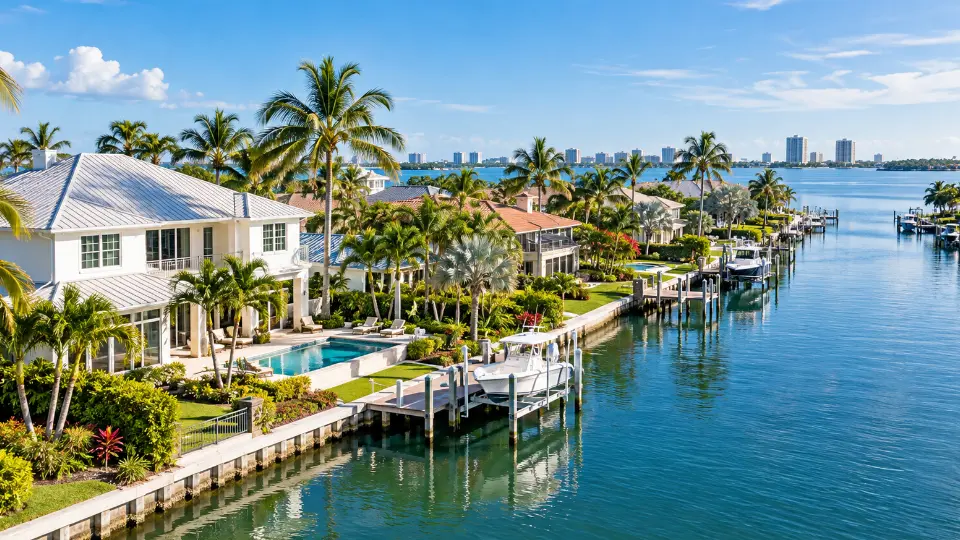
Not every Florida homeowner is legally required to carry flood insurance, but many buyers may need it because of their mortgage, flood-zone determination or insurance arrangements. A financed home in a FEMA Special Flood Hazard Area can trigger a federal flood-insurance requirement, and lenders may impose additional requirements. Flood insurance can also be worth evaluating when it is not mandatory because standard homeowners insurance generally does not cover flood damage and properties outside mapped high-risk areas can still flood. Florida buyers should check the exact property's current flood information and obtain property-specific guidance from their lender and a qualified insurance professional before closing.
Quick Answers About Flood Insurance for Florida Homes
Does Florida require every homeowner to have flood insurance?
No. Florida does not impose a general flood-insurance requirement on every homeowner. Requirements can arise from a mortgage lender, federal lending rules, Citizens Property Insurance Corporation eligibility rules or other property-specific circumstances.
When does a mortgage lender require flood insurance?
Federal mandatory-purchase rules generally apply to covered loans secured by buildings in FEMA Special Flood Hazard Areas in participating communities. A lender can also require flood coverage in circumstances where federal law does not independently require it, so the lender's determination should be verified for the specific property and loan.
Do I need flood insurance in FEMA Zone X?
Zone X generally does not trigger the federal mandatory-purchase requirement that applies to Special Flood Hazard Areas, but that does not mean the property cannot flood. A lender or insurer may have separate requirements, and buyers should still evaluate the property's actual flood exposure and available coverage.
Does homeowners insurance cover flooding in Florida?
Standard homeowners insurance generally does not cover flood damage. Flood coverage is typically obtained through a separate flood policy, although some private insurers may offer flood coverage through an endorsement or other policy arrangement.
Does a cash buyer need flood insurance?
A cash buyer does not have a mortgage lender imposing a loan-related flood-insurance requirement, but other insurance eligibility requirements can still matter. More importantly, paying cash does not eliminate flood exposure, so cash buyers should evaluate appropriate coverage with a qualified insurance professional before taking ownership.
Is a flood zone the same as a hurricane evacuation zone?
No. A flood zone and a hurricane evacuation zone answer different questions. FEMA flood maps address flood hazards and can affect insurance and lending requirements, while local evacuation zones are used for emergency planning and evacuation decisions.
Can a Florida home outside a high-risk flood zone still flood?
Yes. Flooding can occur outside FEMA's designated high-risk areas. Heavy rainfall, drainage conditions, storm surge, nearby waterways and other circumstances can affect individual properties, so a lower-risk map designation should not be interpreted as a guarantee that flooding cannot occur.
When should a Florida buyer investigate flood insurance?
Investigate it early, preferably before a purchasing decision depends on an assumed insurance cost. Once you are seriously considering a property, review current flood information and obtain property-specific insurance information early enough to address questions before applicable financing, insurance and contractual deadlines.
When Is Flood Insurance Required for a Florida Home?
Flood insurance is generally required under federal mandatory-purchase rules when an applicable federally regulated, supervised or insured lender makes a loan secured by a building located in a Special Flood Hazard Area in a community participating in the National Flood Insurance Program. Related requirements can also apply to certain federally backed loans and loans purchased by government-sponsored enterprises.
FEMA identifies the Special Flood Hazard Area as the area subject to the flood hazard represented on its Flood Insurance Rate Maps by zones beginning primarily with the letters A or V. Coastal V zones include additional wave-related hazards.
A lender can also require flood insurance as a condition of a loan even when federal mandatory-purchase rules do not independently require it. That is why a buyer should rely on the lender's current flood determination for the exact property rather than assuming that a particular zone automatically answers every financing question.
FEMA provides additional information about flood maps and insurance through the National Flood Insurance Program's FloodSmart website.
What Do FEMA Flood Zones Mean for Florida Buyers?
A FEMA flood zone identifies mapped flood-hazard conditions, but it is only one part of evaluating a Florida property's flood exposure. Buyers should consider the map together with the individual home's elevation, construction, drainage, location and available property history.
Common designations Florida buyers encounter include:
- Zone A and related A zones: These are within FEMA's Special Flood Hazard Area and represent areas with significant mapped flood risk. Applicable financed properties can be subject to mandatory flood-insurance requirements.
- Zone V and VE: These are coastal Special Flood Hazard Areas with additional hazards associated with storm waves. Applicable mandatory-purchase requirements also apply.
- Zone X: This designation is outside the Special Flood Hazard Area for purposes of the federal mandatory-purchase rule, although Zone X can include different mapped levels of flood risk and does not mean flooding is impossible.
Flood maps can change, so buyers should verify the current designation for the exact structure rather than relying on an old listing, a neighbor's flood zone or a map saved from a previous transaction.
Does Zone X Mean You Do Not Need Flood Insurance?
No. Zone X generally means the property is outside FEMA's Special Flood Hazard Area for the federal mandatory-purchase rule, not that the property has zero flood risk or that insurance will never be required.
Florida's Office of the Insurance Consumer Advocate states that approximately 25% of flood claims occur in lower-risk areas. FEMA's FloodSmart program similarly emphasizes that flood losses occur outside mapped high-risk areas.
A Zone X property can still experience flooding from intense rainfall, drainage problems and other flood events. A lender can also impose requirements beyond the federal minimum, and separate insurer eligibility rules may apply.
Hunt Brothers Realty's Florida flood zone versus evacuation zone guide explains why buyers should not interpret a single map designation as a complete property-risk analysis.
Does Standard Homeowners Insurance Cover Flood Damage?
Generally, no. The Florida Department of Financial Services states that flood damage is not covered by a standard homeowners insurance policy.
This distinction is especially important after hurricanes and tropical storms. A single storm can produce different causes of damage. Wind damage and flooding from rising water are separate insurance issues, and coverage depends on the applicable policies, exclusions, deductibles and facts of the loss.
Buyers should review both homeowners and flood coverage with a qualified insurance professional instead of assuming that a homeowners policy covers every type of storm-related water damage.
Where Can Florida Homeowners Buy Flood Insurance?
Florida homeowners can obtain flood coverage through the National Flood Insurance Program and through private-market options. Depending on the insurer, private flood coverage may be written as a stand-alone policy or offered through an endorsement or other approved arrangement.
The Florida Department of Financial Services flood insurance overview explains that Florida consumers can encounter NFIP policies, admitted private insurers and surplus-lines flood insurers.
Coverage, limits, deductibles, exclusions, pricing and other policy provisions can differ. A buyer comparing NFIP and private-market options should have a qualified insurance professional explain the material differences rather than selecting a policy based solely on premium.
Is There a Waiting Period for Flood Insurance?
Flood policies can have waiting periods, but important exceptions can apply when coverage is purchased in connection with a loan or transferred with a property. Florida DFS currently describes a general 30-day waiting period while identifying exceptions, including certain coverage obtained in connection with making, increasing, extending or renewing a loan.
Do not assume the general waiting period applies identically to every NFIP or private policy. Buyers should confirm the effective date of the proposed policy with their insurance professional and lender before closing.
Do Citizens Property Insurance Customers Need Flood Insurance?
Many Citizens residential policyholders are subject to separate flood-insurance requirements as a condition of Citizens eligibility, and those requirements have been phased in over time. They should not be confused with the federal mortgage requirement.
Current Florida Department of Financial Services guidance identifies the phase-in for applicable Citizens personal-lines residential properties outside specified high-risk areas as follows:
- Dwelling replacement cost of $600,000 or more: January 1, 2024
- Dwelling replacement cost of $500,000 or more: January 1, 2025
- Dwelling replacement cost of $400,000 or more: January 1, 2026
- Other applicable personal-lines residential property: January 1, 2027
Exceptions and policy-specific rules apply. Florida also changed the Citizens requirement so affected policyholders are generally required to maintain qualifying dwelling flood coverage rather than personal-contents flood coverage solely to satisfy the Citizens eligibility mandate.
Because Citizens rules and eligibility can change, buyers considering a Citizens policy should verify the current requirements directly with Citizens and their qualified insurance professional rather than relying on an older article or prior owner's coverage.
Is a Flood Zone the Same as a Hurricane Evacuation Zone?
No. A flood zone and a hurricane evacuation zone are separate designations used for different purposes.
- FEMA flood zones describe mapped flood hazards and can affect flood-insurance and lending requirements.
- Local hurricane evacuation zones or levels help emergency-management officials plan evacuations based on storm-surge and emergency conditions.
A home can therefore have one FEMA flood-zone designation and a separate local evacuation designation. Florida Gulf Coast buyers should check both using current official sources.
For a more detailed explanation, see Hunt Brothers Realty's Flood Zone vs. Evacuation Zone in Florida buyer guide.
Does Being Far From the Beach Mean You Do Not Need Flood Insurance?
No. Distance from the Gulf of Mexico alone does not determine whether a property can flood or whether flood insurance is required.
Florida flooding can be associated with coastal storm surge, but it can also result from rainfall, surface-water accumulation, overflowing waterways and drainage conditions. Inland properties can therefore have flood exposure even when they are miles from a beach.
Likewise, not every waterfront property has the same flood-zone designation, elevation or insurance requirement. Hunt Brothers Realty's guide to buying waterfront property in Florida explains why waterfront buyers should investigate flood risk at the individual-property level.
What Does an Elevation Certificate Tell a Florida Buyer?
An elevation certificate can document important elevation information about a building in relation to mapped flood data. It can provide useful information for understanding a property's physical flood characteristics and, in some situations, can affect insurance-rating or floodplain-management questions.
An elevation certificate should not be interpreted without context. Buyers may need assistance from a qualified insurance professional, surveyor, engineer or local floodplain authority to understand what the property's elevation information means for insurance, construction or purchasing decisions.
Should You Investigate a Home's Previous Flooding?
Yes. A current flood map is important, but a property's actual history can provide additional information that a map alone does not show.
Florida requires a statutory flood disclosure in residential real estate transactions. As Hunt Brothers Realty explains in its 2026 Florida waterfront homebuyer guide, the disclosure addresses specified information including the seller's knowledge of flooding that damaged the property during the seller's ownership, flood-related insurance claims and certain flood-related assistance.
A seller's disclosure is useful, but it is not a guarantee that a property has never flooded. A seller may not know everything that happened before acquiring the home. Buyers can also review inspection findings, repair records, permits and other available documentation when prior water intrusion is a concern.
Questions about the legal scope of a seller's disclosure obligations or a buyer's contractual rights should be reviewed with a qualified Florida real estate attorney when individualized legal guidance is needed.
Can a Property's Flood Zone Change?
Yes. FEMA flood maps can be revised, and changes can affect how a property is classified for flood-risk and insurance purposes.
That is another reason buyers should not rely on an old MLS listing, an outdated elevation document or what a seller remembers from a previous mortgage. Verify current map information and the lender's current determination for the specific transaction.
If there is a question about whether FEMA's mapped designation correctly applies to a particular structure, FEMA has formal map amendment and determination-review processes. A qualified surveyor, engineer, floodplain professional or other appropriate specialist can help with property-specific technical questions.
What About Flood Insurance for a Florida Condo?
Condominium buyers need to evaluate both the association's insurance arrangements and the coverage appropriate for the individual unit. A condominium building's master flood coverage does not necessarily answer every question about an owner's personal property, improvements, deductibles, assessments or other unit-level exposure.
Ask for current association insurance information and discuss it with a qualified insurance professional who understands condominium coverage. The lender may also have specific requirements for the building and unit.
Condo buyers should also review current association documents, budgets, deductibles and applicable insurance responsibilities rather than assuming the monthly condominium fee covers every flood-related financial exposure.
How Much Does Flood Insurance Cost in Florida?
There is no reliable single premium that applies to every Florida property. Flood-insurance pricing can depend on the individual property, coverage, insurer and flood-risk characteristics, so statewide averages should not be used as substitutes for a quote on the home you are considering.
Under FEMA's NFIP rating methodology, pricing considers multiple property-specific risk characteristics rather than relying solely on a flood-zone letter. Private insurers can use their own approved or applicable rating approaches.
Insurance availability, coverage, exclusions, deductibles and premiums can vary substantially by property. Obtain current quotes for the exact address and review them with a qualified insurance professional before making a purchasing decision that depends on an assumed flood-insurance cost.
Should You Rely on the Seller's Flood Insurance Premium?
No. The seller's existing premium can provide background information, but it should not be treated as a quote for the buyer.
Coverage amounts, policy type, rating information and other circumstances can differ. Some flood policies may also involve transfer or assumption considerations that should be discussed with the insurance professional before a buyer assumes anything about future pricing or coverage.
The same principle applies to homeowners insurance. Hunt Brothers Realty's Florida home insurance shopping guide explains why property-specific quotes are more useful than relying on what the seller currently pays.
What Should Florida Buyers Check Before Deciding About Flood Insurance?
Check the individual property rather than making the decision from its city, neighborhood or distance from the coast. A practical Florida flood review can include:
- The current FEMA flood-zone designation for the structure
- The lender's flood determination and insurance requirements
- Available elevation information or an elevation certificate
- Finished-floor elevation when relevant
- Drainage characteristics around the property
- Proximity to canals, bays, rivers, lakes and other waterways
- Available information about previous flooding or water intrusion
- The seller's required flood disclosure
- NFIP and available private flood-insurance options
- Coverage limits and deductibles
- What is and is not covered
- The effective date and any applicable waiting period
- Citizens flood-insurance requirements if Citizens coverage is being considered
- Condominium association flood coverage if purchasing a condo
For coastal properties, Hunt Brothers Realty's questions to ask before buying a home near the Florida coast provides a broader due-diligence framework covering flood exposure, insurance, elevation and waterfront infrastructure.
When Should You Get a Flood Insurance Quote?
Get a property-specific flood insurance quote early enough that the cost and coverage can inform your purchase decision. Waiting until the final days before closing can leave less time to investigate unexpected insurance, elevation or lender questions.
Once a buyer is under contract, insurance research should generally proceed alongside inspections, financing and other property due diligence. The applicable contract deadlines and legal consequences depend on the transaction, so buyers should review those deadlines with their licensed real estate professional and obtain legal guidance from a qualified Florida real estate attorney when needed.
Should You Buy Flood Insurance When the Lender Does Not Require It?
That is a property-specific insurance and financial decision, not something that can be answered from the flood-zone letter alone. A lender's decision not to require flood insurance means the loan does not have that particular requirement, not that the home cannot experience a flood loss.
Florida's insurance consumer guidance emphasizes that flooding can occur outside high-risk areas and that standard homeowners insurance generally excludes flood damage. Buyers should consider the home's flood exposure, available coverage, premium, deductibles and their ability to absorb an uninsured loss with a qualified insurance professional before deciding.
What Is the Bottom Line for Florida Homebuyers?
You do not automatically need flood insurance simply because a home is in Florida, but you should investigate flood insurance for the exact property before buying. A mortgage, FEMA flood-zone determination, lender rule or Citizens eligibility requirement can make coverage mandatory, while other buyers may choose to obtain coverage based on property-specific flood exposure.
Do not use Zone X as shorthand for "no flood risk," and do not assume a homeowners policy covers rising water. Check current maps, investigate the property itself, review the seller's flood disclosure and obtain actual insurance information.
The most useful question is not simply, "Is flood insurance required?" It is, "What is the flood exposure of this specific home, what coverage is available, what does my lender require, and what financial risk would I retain without coverage?"
Research Florida Homes With Hunt Brothers Realty
Hunt Brothers Realty helps Florida Gulf Coast buyers identify property characteristics that deserve further investigation before purchasing, including waterfront location, flood-zone information, association considerations, property condition and other ownership factors.
Start with the Florida Buyer Resource Center, review the Florida waterfront property buyer guide, compare flood zones and evacuation zones, or contact Hunt Brothers Realty to discuss your Florida home search.
This article is provided for general informational and educational purposes only and is not individualized insurance, legal, financial, lending, inspection, engineering, surveying or floodplain advice. Flood exposure, insurance requirements, policy eligibility, coverage, deductibles and premiums can vary substantially by property, lender and insurer. Buyers should obtain property-specific flood and homeowners insurance information from a qualified insurance professional and confirm financing requirements with their lender. Technical questions involving elevation, drainage, floodplain conditions or property improvements should be reviewed with the appropriate surveyor, inspector, engineer, contractor or local authority. Legal questions involving disclosures, contracts or ownership rights should be reviewed with a qualified Florida real estate attorney.
Sources
- National Flood Insurance Program, FloodSmart
- National Flood Insurance Program, Flood Insurance Eligibility and Federal Assistance
- Florida Office of the Insurance Consumer Advocate, Flood Insurance
- Florida Department of Financial Services, Flood Insurance Overview
- Florida Department of Financial Services, Homeowners Insurance Overview
- Florida Office of the Insurance Consumer Advocate, Property Insurance Changes and Citizens Flood Requirements
- Hunt Brothers Realty, Flood Zone vs. Evacuation Zone in Florida
- Hunt Brothers Realty, Buying Waterfront Property in Florida
- Hunt Brothers Realty, Questions to Ask Before Buying a Home Near the Coast
- Hunt Brothers Realty, When Should Florida Home Buyers Shop for Homeowners Insurance?
Hunt Brothers Realty
46 N. Washington Blvd, Ste 3, Sarasota, FL 34236
Phone: (941) 388-7017
Email: info@huntbrothersrealty.com
Website: HuntBrothersRealty.com
Categories
- All Blogs 2291
- Anna Maria Island 87
- Bird Key 4
- Bradenton 237
- Buying a Home 1340
- Casey Key 2
- Clearwater 13
- Condos & HOA Living 1259
- Ellenton 6
- Englewood 12
- First Time Homebuyers 1452
- Foreclosures 5
- Home Selling 7
- Homeownership 1480
- Lakewood Ranch 25
- Lido Key 28
- Longboat Key 80
- Luxury/Waterfront Properties 1421
- Market Updates & Trends 935
- Mortgages & Financing 69
- Move-Up Buyers 25
- Neighborhood Guides 1053
- New Construction 39
- Palmetto 4
- Parrish 6
- Port Charlotte 12
- Punta Gorda 86
- Real Estate Investing 1336
- Relocation to Florida 1372
- Safety Harbor 4
- Sarasota 95
- Sarasota - Downtown 165
- Selling a Home 146
- Siesta Key 92
- St. Petersburg 8
- Tierra Verde 5
- Vacation & Second Homes 1531
- Venice 209
- Wellen Park 20
Recent Posts