How Much House Can I Afford in Florida?
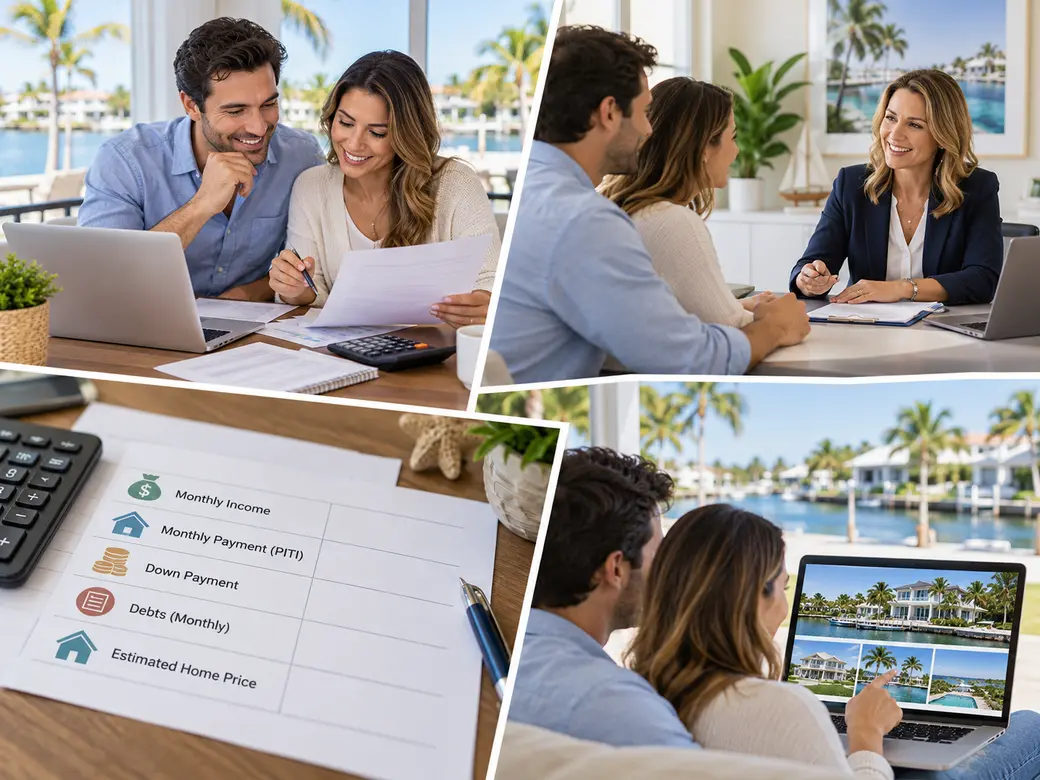
How much house you can afford in Florida depends on more than your income or the maximum mortgage a lender will approve. A realistic budget should account for the mortgage payment, property taxes, homeowners insurance, flood insurance when applicable, mortgage insurance, HOA or condominium fees, maintenance and the cash you want to keep after closing. Start by deciding what total monthly housing cost feels comfortable, then have a qualified mortgage lender determine which loan amount and purchase-price range fit your income, debts, credit, down payment and current financing options.
Quick Answers About How Much House You Can Afford in Florida
How Do I Calculate How Much House I Can Afford?
Start with the total monthly housing expense you can comfortably manage while still meeting other obligations and savings goals. Then subtract estimated taxes, insurance, association fees and other applicable housing expenses to determine how much room remains for mortgage principal and interest. A qualified lender can translate that budget into financing scenarios using your actual financial information.
Should I Buy the Maximum House My Lender Approves?
Not automatically. A mortgage approval measures financing qualification, while your personal budget also needs to accommodate maintenance, utilities, savings, lifestyle expenses and other financial priorities. Your comfortable spending limit may be below the maximum amount you qualify to borrow.
Do I Need 20% Down to Buy a Florida Home?
No. Some qualifying buyers may have conventional, FHA, VA or other financing options requiring less than 20% down. A smaller down payment can preserve cash but may change the mortgage payment, mortgage insurance, loan pricing and qualification, so compare scenarios with a qualified lender.
Do Florida Property Taxes Affect How Much House I Can Afford?
Yes. Property taxes are part of the ongoing ownership cost and can materially affect the monthly budget. Do not assume the seller's current tax bill predicts what you will pay after purchasing because exemptions, assessed value and ownership circumstances can change.
How Much Does Florida Homeowners Insurance Affect Affordability?
Potentially a great deal. Insurance availability and premiums can differ substantially between properties based on characteristics such as location, roof, construction, wind mitigation, coverage and underwriting. Obtain a property-specific insurance quote before making a purchasing decision that depends on the estimated premium.
Do HOA and Condo Fees Reduce How Much Home I Can Afford?
They can. Recurring association assessments add to the cost of owning the property and may also be considered during mortgage qualification. A lower-priced condominium with a substantial monthly assessment can therefore have a higher total monthly cost than a more expensive property with lower recurring expenses.
How Much Savings Should I Have Left After Buying a House?
There is no universal amount for every buyer. The Consumer Financial Protection Bureau uses at least three to six months of expenses as a general emergency-cushion starting point when determining available cash for a purchase, while also recommending that buyers separately consider moving, renovations and other initial expenses. Your appropriate reserve depends on your household, property and financial circumstances.
Start With the Monthly Payment, Not the Maximum Home Price
Many buyers begin by asking, "What price house can I buy?" A more useful starting question is, "What total monthly housing expense can I comfortably carry?"
That distinction matters because a home's listing price does not tell you what it will cost each month.
Depending on the property and financing, your total monthly housing cost can include:
- Mortgage principal
- Mortgage interest
- Property taxes
- Homeowners or condominium insurance
- Flood insurance when applicable or desired
- Mortgage insurance when applicable
- HOA or condominium assessments
- Other recurring property-specific expenses
Your household budget should also make room for utilities, routine maintenance, repairs, landscaping, pool care and other expenses that may not appear in a lender's mortgage-payment calculation.
What Is the Difference Between What I Qualify For and What I Can Afford?
Mortgage qualification and personal affordability answer different questions.
Mortgage qualification asks: Does the borrower meet the lender's requirements for this financing scenario?
Personal affordability asks: Does owning this particular home fit comfortably with the buyer's broader financial life?
A lender evaluates items such as income, qualifying debts, credit, assets, loan program and the property-related expenses included in underwriting. You may have additional priorities that do not determine the maximum loan approval, such as retirement savings, education expenses, travel, vehicle replacement or a larger emergency fund.
For that reason, treat a preapproval amount as financing information rather than an instruction to spend to the limit.
How Do Mortgage Rates Change How Much House You Can Afford?
Mortgage rates directly affect the principal-and-interest payment supported by a particular budget. When rates rise, the same loan amount costs more each month. When rates fall, the same payment can generally support a larger loan, assuming the borrower's other qualifications remain unchanged.
For example, consider a hypothetical buyer targeting approximately $2,500 per month for principal and interest on a 30-year fixed mortgage:
| Illustrative Interest Rate | Approximate Loan Supported by $2,500 Principal and Interest |
|---|---|
| 6.00% | About $417,000 |
| 6.50% | About $395,000 |
| 7.00% | About $376,000 |
| 7.50% | About $358,000 |
These are mathematical illustrations, not mortgage quotes or qualification estimates. They show principal and interest only and exclude taxes, homeowners insurance, flood insurance, mortgage insurance, association fees and other expenses. Actual rates and loan terms depend on the borrower, lender, property and market conditions.
For a deeper explanation, see How Mortgage Rates Affect Monthly Payments and Home Buying Power.
How Does Your Down Payment Affect Florida Home Affordability?
Your down payment affects both the amount borrowed and the cash remaining after closing. A larger down payment generally reduces the mortgage balance and monthly principal and interest, but it also commits more cash to the purchase.
Consider a hypothetical $500,000 purchase:
| Down Payment | Cash Down | Mortgage Before Other Financed Costs |
|---|---|---|
| 3% | $15,000 | $485,000 |
| 5% | $25,000 | $475,000 |
| 10% | $50,000 | $450,000 |
| 20% | $100,000 | $400,000 |
The table illustrates the arithmetic only. It does not show mortgage insurance, interest rate, lender requirements, closing costs or whether a particular buyer qualifies for a low-down-payment program.
Ask a qualified lender to compare several down-payment scenarios and show how each affects the interest rate, mortgage insurance, monthly payment, closing cash and remaining reserves.
How Much Cash Do You Need Beyond the Down Payment?
The amount you can afford to put down is not necessarily the same as the total cash you have available.
Before committing savings to a down payment, consider potential cash requirements for:
- Closing costs
- Inspections
- Appraisal when applicable
- Prepaid insurance
- Tax and insurance escrow funding when applicable
- Association-related charges when applicable
- Moving expenses
- Immediate repairs
- Furniture or appliances
- Post-closing savings
The Consumer Financial Protection Bureau uses approximately 2% to 5% of the purchase price as a broad early planning range for closing costs, excluding the down payment. This is not a Florida quote or guaranteed range for a specific transaction. Actual expenses depend on the mortgage, property, lender, insurance, title and settlement arrangements, contract and other circumstances.
See the Hunt Brothers Realty guide to Florida buyer closing costs for a detailed breakdown.
How Do Florida Property Taxes Affect Your Price Range?
Property taxes can materially affect affordability, and buyers should be careful about using the seller's current tax bill as their future estimate.
The current owner may have exemptions or an assessment history that will not apply to the buyer in the same way after the property changes ownership.
The Florida Department of Revenue states that an owner who owns Florida property and makes it a permanent residence may be eligible for homestead exemption benefits. The applicable county property appraiser determines whether a parcel qualifies for an exemption.
Homestead property may also receive Florida's Save Our Homes assessment limitation, and qualifying owners moving from another Florida homestead may be eligible for portability of an assessment difference under applicable rules.
Tax consequences and exemption eligibility depend on the owner and property. Buyers should obtain property-specific information from the applicable county property appraiser and consult a qualified tax professional or CPA regarding individualized tax questions.
Why Does Homeowners Insurance Matter So Much to Florida Affordability?
A home can fit your budget using a generic insurance estimate and fail to fit once you obtain a quote for the actual property. That is why insurance should become property-specific before you make a purchasing decision that depends on the estimated cost.
Factors that can affect insurance availability, coverage or premiums may include:
- Roof characteristics
- Age and construction of the property
- Wind-mitigation features
- Opening protection
- Location
- Selected coverage and deductibles
- Insurer underwriting requirements
Insurance availability, coverage, exclusions, deductibles and premiums can vary substantially by property. Buyers should obtain property-specific quotes and review coverage with a qualified insurance professional before making a purchasing decision.
Should Flood Insurance Be Included in Your Florida Home Budget?
Flood exposure and flood insurance should be investigated property by property. The Florida Department of Financial Services explains that flood insurance is generally separate from homeowners insurance, although some private homeowners insurers may offer flood coverage as an endorsement.
Do not assume that homeowners insurance automatically covers flood damage. Also avoid assuming that a home outside a particular high-risk flood designation has no flood exposure.
Buyers should review current official flood information, lender requirements and property-specific insurance options with the appropriate governmental and insurance professionals before relying on a flood-cost estimate.
How Do HOA, Condo and CDD Costs Affect Affordability?
Recurring community expenses can materially change the affordable purchase price. A buyer targeting a particular monthly budget has less room for mortgage principal and interest when a property carries substantial association or other recurring assessments.
For example, compare two similarly priced properties. One has no mandatory association assessment. The other has a substantial condominium assessment. Even if their mortgage amounts are identical, the second property can require a significantly larger total monthly housing budget.
Should I Look Beyond the Current Condo or HOA Fee?
Yes. The current assessment is only one part of association due diligence. Depending on the property, buyers may need to review budgets, reserves, insurance, current or approved special assessments, governing documents, meeting information, maintenance obligations and applicable inspection or engineering information.
Questions involving association financial condition, assessments, legal obligations, structural issues or future projects should be evaluated with the appropriate association, lender, Florida real estate attorney, CPA, inspector, engineer or other qualified professional before a buyer makes a decision requiring individualized expertise.
Why Can Two Florida Homes at the Same Price Have Different Affordability?
Imagine two homes listed for exactly $500,000. Their purchase prices tell you almost nothing about whether their complete ownership costs will be equal.
Home A might have:
- No mandatory HOA
- A newer roof
- A property-specific insurance quote that fits the buyer's budget
- Several aging appliances the buyer expects to replace
Home B might have:
- A monthly association assessment
- Different insurance characteristics
- Community amenities included in the assessment
- Fewer immediate maintenance projects
Neither property is automatically more affordable. The answer depends on the actual expenses, financing and buyer's priorities.
How Do Your Other Debts Affect How Much Home You Can Buy?
Income alone does not determine mortgage qualification. Lenders also evaluate applicable debts and other underwriting factors.
Depending on the circumstances, qualifying obligations can include items such as:
- Vehicle loans
- Student loans
- Credit-card obligations
- Personal loans
- Other mortgages
- Other qualifying recurring obligations
This is why a rule such as multiplying income by a fixed number cannot accurately determine every buyer's affordable Florida home price. Two households with the same income can have very different financing and personal affordability ranges.
A qualified mortgage professional should calculate loan qualification using the buyer's actual income, debts, assets, credit and selected loan program.
How Much Should You Keep in Savings After Closing?
Affordability should be measured using your expected financial position after closing, not simply whether you can produce enough money to complete the purchase.
The Consumer Financial Protection Bureau suggests subtracting an emergency cushion of at least three to six months of expenses when determining the cash available for a home purchase. It also recommends setting aside money for moving, renovations and other initial home expenses.
That three-to-six-month range is a general planning benchmark, not an individualized recommendation. Your appropriate reserve may differ based on factors such as income stability, other household obligations, property condition, insurance deductibles and known upcoming expenses.
For more planning guidance, read How Much Savings Should You Keep After Buying a House?
Should Maintenance Be Part of Your Affordability Calculation?
Yes. Mortgage affordability and household affordability are not identical. Even when a maintenance expense is not included in the lender's monthly housing calculation, the homeowner still has to pay it.
Potential expenses can include:
- Roof maintenance and eventual replacement
- HVAC service and replacement
- Plumbing and electrical repairs
- Appliances
- Exterior maintenance
- Landscaping
- Pool service and equipment
- Pest control
- Storm preparation
- Property-specific systems such as wells, septic systems, docks or seawalls
There is no single maintenance percentage that accurately predicts the needs of every Florida home. Age, size, construction, condition, location and property features all matter.
Can a More Expensive Home Actually Cost Less to Own?
Potentially. Purchase price is only one component of ownership cost.
A lower-priced home with substantial association expenses, expensive insurance and several major systems approaching replacement could potentially require more cash in the near term than a somewhat more expensive property with different recurring expenses and newer components.
That does not mean a buyer should automatically spend more. It means buyers should compare properties based on total ownership cost rather than listing price alone.
The Hunt Brothers Realty guide to the true cost of buying a home in Florida provides a detailed framework for making this comparison.
How Does Location Affect Affordability Across Florida's Gulf Coast?
Florida is not one uniform housing market, and affordability is not simply a statewide home-price calculation. Property types, association expenses, insurance considerations, flood exposure and maintenance profiles can vary considerably by location.
A downtown Sarasota condominium, Venice Island residence, Siesta Key property, Longboat Key condominium, Lakewood Ranch home and inland single-family property can each present a different ownership-cost structure.
Buyers willing to compare locations may discover different combinations of purchase price, property type and recurring expenses. Use the Hunt Brothers Realty Florida Gulf Coast community directory to compare areas before narrowing the search to individual properties.
Can Seller Concessions Improve Affordability?
Depending on the property, market and financing, buyers may be able to negotiate seller concessions toward allowable expenses. Potential uses can include eligible closing costs, prepaid expenses, discount points or certain rate-buydown structures.
A seller concession and a purchase-price reduction can affect affordability differently. A buyer who wants to preserve cash may value an allowable closing-cost credit differently from a buyer whose priority is reducing the amount financed.
Seller participation is negotiable, and loan programs can restrict the amount and permitted use of concessions. Have a qualified lender compare the actual financing scenarios before deciding which structure fits your circumstances. For additional background, review the 2026 Florida seller concessions guide.
How Should You Calculate a Realistic Florida Home Budget?
Instead of relying on one income multiple or generic affordability percentage, build the budget in stages.
- Choose a comfortable monthly housing budget. Consider your other obligations, savings goals and lifestyle expenses.
- Talk with a qualified mortgage lender. Have the lender evaluate your actual income, debts, credit, assets and financing options.
- Compare down-payment scenarios. Look at the effect on payment, mortgage insurance, closing cash and reserves.
- Estimate buyer-specific property taxes. Do not rely solely on the seller's current tax bill.
- Obtain property-specific insurance information. Replace generic assumptions with actual quotes as soon as a home becomes a serious candidate.
- Add HOA, condominium or other recurring assessments. Verify current amounts and what they cover.
- Estimate cash needed to complete the purchase. Include the down payment, closing expenses, inspections and other applicable costs.
- Protect post-closing savings. Account for moving, maintenance, known repairs and unexpected expenses.
- Recalculate for each serious property. Two homes with the same price can have different ownership costs.
What Should You Ask a Mortgage Lender Before Setting Your Price Range?
Before deciding on a home-search ceiling, ask a qualified lender to explain the numbers using your circumstances rather than a generic online example.
- Which mortgage programs might fit my circumstances?
- What interest rate and annual percentage rate are being estimated?
- How would different down payments change my monthly payment?
- Would mortgage insurance apply?
- What are the estimated closing costs and cash required?
- How would a higher HOA or insurance expense affect qualification?
- Does the loan require post-closing reserves?
- Are there assistance programs for which I may qualify?
- How would seller concessions affect the financing?
- What financial changes before closing could affect approval?
What Should You Do Before Looking at Homes in Your Price Range?
Once you have a preliminary affordability range, do not immediately treat every listing below that number as equally affordable.
Before serious touring, try to have:
- A comfortable total monthly housing budget
- A preliminary financing plan
- A current mortgage preapproval when appropriate
- A target for cash needed to close
- A post-closing reserve plan
- A list of must-have property characteristics
- Target communities or geographic areas
- A plan to verify taxes, insurance and association expenses for each serious property
For the complete preparation process, read What Should I Do Before Looking at Homes for Sale?
The Affordable Florida Home Is the One You Can Comfortably Own
The answer to "How much house can I afford in Florida?" is not simply a salary multiple, mortgage approval or maximum purchase price.
A more complete answer considers the mortgage, taxes, insurance, flood coverage when applicable, association expenses, maintenance, cash required for the purchase and the savings you want to preserve after closing.
Start with the monthly payment that fits your household comfortably. Then work with a qualified mortgage professional to establish financing scenarios and recalculate the total cost as you identify specific Florida properties.
Plan Your Florida Home Search With Hunt Brothers Realty
Hunt Brothers Realty helps buyers compare Florida Gulf Coast properties while considering the real estate characteristics that can affect ownership costs. Buyers can explore Florida Gulf Coast communities, review the true cost of buying a Florida home, learn how mortgage rates affect buying power, and understand Florida buyer closing costs.
When you have established your financing range and are ready to compare properties, contact Hunt Brothers Realty to discuss your Florida home search.
This article provides general real estate and educational information only. It is not individualized financial, lending, tax, insurance, legal, inspection, engineering or other professional advice. Mortgage qualification, loan terms, property taxes, insurance, flood coverage, association expenses, closing costs and appropriate financial reserves depend on the buyer, property and transaction. Buyers should verify property-specific information and consult the appropriate qualified mortgage lender or loan professional, insurance agent, tax professional or CPA, licensed real estate professional, Florida real estate attorney, home inspector, engineer, association, title or closing professional and governmental authority before making decisions requiring individualized guidance.
Sources
- Consumer Financial Protection Bureau, Figure Out How Much You Want to Spend
- Consumer Financial Protection Bureau, Determine Your Down Payment
- Florida Department of Revenue, Property Tax Exemptions and Additional Benefits
- Florida Department of Financial Services, Flood Insurance Consumer Information
- Hunt Brothers Realty, The True Cost of Buying a Home in Florida
- Hunt Brothers Realty, How Mortgage Rates Affect Monthly Payments and Home Buying Power
- Hunt Brothers Realty, How Much Savings Should You Keep After Buying a House?
Contact Hunt Brothers Realty
46 N. Washington Blvd, Ste 3, Sarasota, FL 34236
Phone: (941) 388-7017
Email: info@huntbrothersrealty.com
Website: HuntBrothersRealty.com
Categories
- All Blogs 2070
- Anna Maria Island 86
- Bird Key 4
- Bradenton 236
- Buying a Home 1131
- Casey Key 2
- Clearwater 11
- Condos & HOA Living 1049
- Ellenton 5
- Englewood 11
- First Time Homebuyers 1240
- Foreclosures 3
- Home Selling 3
- Homeownership 1263
- Lakewood Ranch 25
- Lido Key 28
- Longboat Key 80
- Luxury/Waterfront Properties 1204
- Market Updates & Trends 730
- Mortgages & Financing 42
- Move-Up Buyers 21
- Neighborhood Guides 842
- New Construction 34
- Palmetto 3
- Parrish 6
- Port Charlotte 10
- Punta Gorda 17
- Real Estate Investing 1121
- Relocation to Florida 1163
- Safety Harbor 2
- Sarasota 77
- Sarasota - Downtown 162
- Selling a Home 144
- Siesta Key 91
- St. Petersburg 8
- Tierra Verde 5
- Vacation & Second Homes 1313
- Venice 169
- Wellen Park 16
Recent Posts