What Should I Do Before Looking at Homes for Sale?
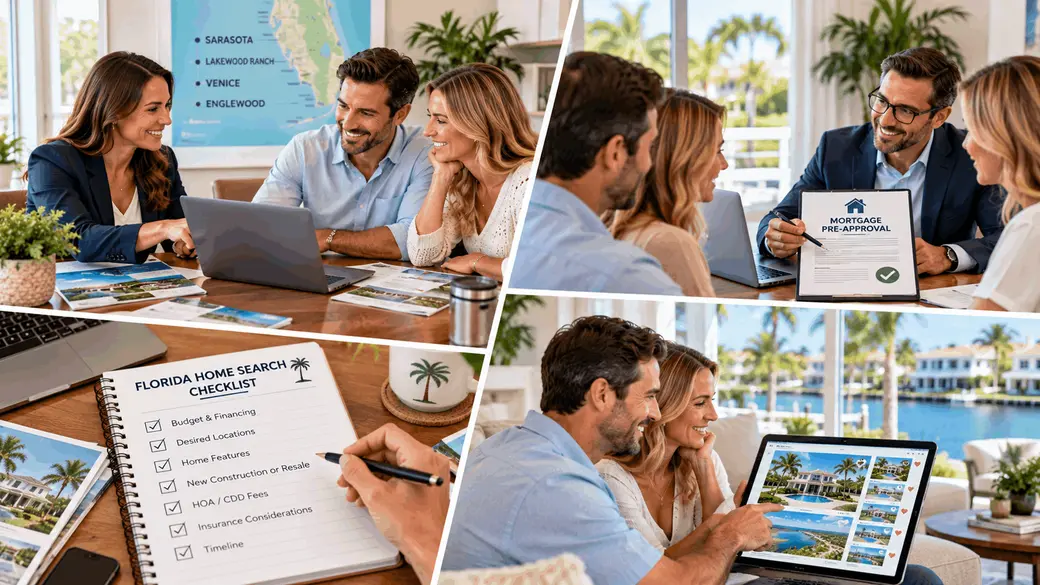
Before looking at homes for sale, establish a comfortable total housing budget, prepare your financing if you will use a mortgage, define your must-have property features and choose the real estate professional you want to work with. You should also understand the written buyer agreement before an agent-led tour and identify Florida-specific expenses such as property taxes, homeowners insurance, flood insurance when applicable, HOA or condominium assessments and maintenance. Doing this work first helps you search within a realistic price range and compare homes based on what they will actually cost to own, not simply their listing prices.
Quick Answers About Preparing to Look at Homes for Sale
Should I Get Preapproved Before Looking at Homes?
If you expect to finance your purchase, mortgage preparation should generally happen before serious home shopping. A preapproval can help establish a potential financing range and show a seller that a lender has conducted a preliminary review of your finances, although it is not a guaranteed loan offer.
Should I Find a Real Estate Agent Before I Start Touring?
Choosing a real estate professional before serious touring gives you time to discuss your goals, search criteria, local market and buyer-representation arrangement. Current industry rules generally require Realtors and MLS participants working with a buyer to have a written buyer agreement before touring a residential home with that buyer.
How Do I Know What Price Range to Search?
Base your search on what you can comfortably afford to own, not automatically on the maximum amount a lender may preapprove. Include taxes, insurance, association expenses, maintenance and other recurring costs when deciding your personal price range.
Should I Make a List of Must-Haves Before Touring Homes?
Yes. Separate genuine requirements from preferences before touring. Location, property type, bedroom count, garage needs, accessibility, waterfront requirements and other difficult-to-change characteristics usually deserve priority over cosmetic finishes.
Should I Research Neighborhoods Before Looking at Houses?
Yes. Research locations based on objective factors that matter to your household, such as housing type, distance to places you regularly visit, transportation, amenities, association structure and property restrictions. Narrowing the geographic search first can prevent wasted showings.
Should Florida Buyers Research Insurance Before Touring Homes?
You do not need an insurance quote for every home before the first showing, but Florida buyers should understand that roof age, construction, wind mitigation, flood exposure and other property characteristics can materially affect insurance. Once a property becomes a serious candidate, obtain property-specific information promptly from a qualified insurance professional.
How Much Cash Should I Have Available Before Home Shopping?
Think beyond the down payment. Depending on the transaction, buyers may need funds for deposits, closing costs, inspections, appraisal, prepaid insurance, escrow funding, moving expenses and immediate property needs. Your lender and other appropriate professionals can provide transaction-specific estimates.
Why Should You Prepare Before You Start Touring Homes?
The purpose of preparing is not to make the home search complicated. It is to keep the search focused on properties that can realistically work.
Without preparation, buyers can spend weekends touring homes that exceed their comfortable budget, discover late that a property type has expenses they did not anticipate, or become emotionally attached to a house before understanding financing and ownership costs.
A more productive sequence is to establish the framework first, then use showings to compare individual properties inside that framework.
1. Decide Whether You Are Financially Ready to Buy
Before deciding which homes you like, determine whether purchasing fits your current financial circumstances.
The Consumer Financial Protection Bureau recommends reviewing your finances, credit and current spending before shopping for a home. Buyers should also consider the cash needed for the purchase and the expenses that continue after closing.
Questions to consider include:
- Is my income reasonably stable?
- What are my current monthly obligations?
- How much cash am I comfortable using for the purchase?
- How much cash do I want to retain after closing?
- Can I comfortably handle ongoing maintenance?
- Am I prepared for insurance and property taxes?
- Does buying fit my expected plans for the property?
These questions are personal financial decisions. A qualified lender and, when appropriate, financial or tax professionals can help you evaluate the parts requiring individualized guidance.
2. Build a Total Homeownership Budget, Not Just a Purchase-Price Budget
One of the most useful things you can do before opening a real estate search is decide what total monthly and annual ownership cost feels comfortable.
A Florida homeownership budget may need to include:
- Mortgage principal and interest
- Property taxes
- Homeowners or condominium insurance
- Flood insurance when applicable
- Mortgage insurance when applicable
- HOA or condominium assessments
- CDD or other applicable assessments
- Utilities
- Pool and landscaping expenses
- Routine maintenance
- Future repairs and replacements
- Other property-specific expenses
This matters because two homes with identical prices can have very different ownership costs. One may have higher association assessments, another higher insurance, and another substantial maintenance needs.
For a more detailed framework, read The True Cost of Buying a Home in Florida.
3. Check Your Credit and Avoid Unnecessary Financial Changes
Financed buyers should review their credit early enough to identify potential errors or issues before they are trying to make an offer.
The Consumer Financial Protection Bureau also advises prospective buyers to be cautious about taking on new loans, making large credit-card purchases or applying for unnecessary new credit before purchasing a home. Those changes can affect credit and mortgage qualification.
Once you begin working with a lender, discuss significant credit, employment, income or asset changes with that lender before assuming they will have no effect on financing.
4. Speak With Mortgage Lenders Before Serious Home Shopping
If you are financing the purchase, investigate mortgage options before finding a home you want to buy. This gives you time to understand potential loan programs, documentation requirements, down-payment choices and financing limitations.
The Consumer Financial Protection Bureau recommends comparing lenders rather than assuming the first mortgage option is the best one. Interest rates are only one part of the comparison. Loan terms, fees, points, mortgage insurance and other costs can also matter.
What Does a Mortgage Preapproval Actually Tell You?
A preapproval is a lender's preliminary indication that it may be willing to lend up to a stated amount based on assumptions and information reviewed at that time. It is not a final loan approval or guarantee.
A preapproval can help you search more efficiently and may provide documentation a seller expects when considering a financed offer. It can also reveal financing questions before you are under a purchase contract.
Does Preapproval Determine How Much You Should Spend?
No. The Consumer Financial Protection Bureau specifically emphasizes that the buyer determines how much is personally comfortable to spend. A lender's maximum preapproval amount does not automatically account for every financial goal or expense in your life.
Use qualified mortgage professionals to understand loan options and qualification, then establish a personal budget that accounts for the complete cost of owning the property.
5. Know How Much Cash You Want Available for the Purchase
Do not allocate every available dollar to the down payment before understanding the other cash requirements associated with buying and moving into a home.
Depending on the transaction, cash needs may include:
- Down payment
- Contract deposits
- Loan-related closing costs
- Title and settlement expenses as applicable
- Inspection expenses
- Appraisal when applicable
- Prepaid insurance
- Initial tax and insurance escrow funding when applicable
- Association-related charges when applicable
- Moving expenses
- Immediate repairs or improvements
- Cash reserves after closing
For preliminary planning, review the Hunt Brothers Realty guide to Florida buyer closing costs. Actual closing costs depend on the specific loan, property, contract and settlement arrangements, so buyers should use lender and closing-professional estimates for transaction-specific decisions.
6. Choose Your Real Estate Professional Before Serious Touring
Selecting a real estate professional before touring gives you an opportunity to have a buyer consultation rather than trying to establish the relationship at the front door of the first property.
A useful buyer consultation can cover:
- Your goals and timing
- Target locations
- Property types
- Price range
- Financing status
- Must-have features
- Showing process
- Local market conditions
- Buyer-representation agreement
- Brokerage compensation
A buyer consultation is also a chance to determine whether the real estate professional's communication style, geographic knowledge and approach fit what you need from the relationship.
7. Understand the Buyer Agreement Before Your First Agent-Led Tour
The process for working with a real estate professional has changed from what some previous buyers may remember.
Florida Realtors confirms that Realtors and MLS participants working with a buyer generally need a written buyer agreement before that buyer tours a residential home with them. Florida Realtors currently provides different agreement formats, including exclusive and nonexclusive options.
The agreement can address matters such as:
- Services the brokerage will provide
- Duration
- Properties or geographic scope
- Whether the arrangement is exclusive or nonexclusive
- Brokerage relationship
- Compensation terms
Brokerage compensation is negotiable. Read the agreement carefully and ask questions before signing it. Because the buyer agreement is a contract, questions about contractual rights, obligations, termination or legal effect should be reviewed with a qualified Florida real estate attorney when legal advice is required.
8. Separate Your Must-Haves From Your Nice-to-Haves
A useful home search begins with priorities, not a giant list of features. Before touring, divide what you want into three categories: requirements, strong preferences and optional features.
What Are True Home-Buying Requirements?
Requirements are characteristics that determine whether the property can realistically work for you. Examples might include a minimum bedroom count, an appropriate accessibility feature, sufficient garage space, a particular property type or a location that fits an objective need.
What Are Strong Preferences?
These are features you value but might trade for something more important. A pool, larger lot, renovated kitchen, additional garage bay, lake view or newer construction could fall into this category depending on your priorities.
What Features Should Usually Be Lower Priority?
Cosmetic characteristics that can be changed relatively easily should generally receive less weight than location, lot, floor plan and other difficult-to-change features. Paint colors, light fixtures and some finishes may be far easier to alter than a poor location or unsuitable layout.
9. Decide Which Florida Property Type Fits Your Plans
A condominium, villa, townhome and detached single-family home can offer very different ownership experiences even when they are located within a few miles of one another.
Before touring, think about your preferences regarding:
- Exterior maintenance
- Private yard space
- Shared walls
- Community amenities
- Association assessments
- Architectural restrictions
- Pet rules
- Rental restrictions
- Parking and storage
- Insurance responsibilities
Do not assume that terms such as "villa" or "maintenance-free" establish a particular legal ownership structure or exact maintenance obligation. Verify the actual ownership and governing documents for a specific property before relying on those descriptions.
10. Research Locations Before You Research Individual Houses
Location is one of the hardest characteristics to change after closing. Researching locations before individual listings can dramatically reduce the number of homes you need to tour.
Objective questions can include:
- How far is the property from places I expect to visit regularly?
- What types of homes are available?
- Are there HOA or condominium associations?
- Are there CDD or other assessments?
- Are golf, boating, beaches or downtown access important to me?
- What flood and evacuation information is available?
- What transportation routes would I use?
- What property restrictions could affect how I expect to use the home?
Start comparing locations through the Hunt Brothers Realty community directory.
11. Understand Florida Property Taxes Before Setting Your Budget
A common mistake is looking at the seller's current tax bill and assuming that amount will continue after the purchase.
Florida property taxes depend on factors that can change with ownership and the buyer's eligibility for exemptions. The Florida Department of Revenue states that qualifying owners who make a property their permanent residence may be eligible for a homestead exemption that can reduce taxable value by as much as $50,000. Qualifying homestead property also receives the Save Our Homes assessment limitation.
Eligible Florida homeowners moving from an existing homestead may also be able to transfer, or port, some or all of their assessment difference, subject to applicable requirements.
Tax consequences and exemption eligibility depend on the individual owner and property. Use information from the applicable county property appraiser and consult a qualified tax professional or CPA when individualized tax guidance is needed.
12. Put Florida Insurance on Your Home-Search Checklist Early
You generally cannot determine the actual insurance cost of a home you have not identified yet. However, you can enter the search understanding which property characteristics may require additional insurance investigation.
For individual properties, relevant questions can involve:
- Roof age and type
- Construction characteristics
- Wind-mitigation features
- Windows and opening protection
- Flood exposure
- Prior permitted improvements and available documentation
- Condominium master insurance when applicable
Insurance availability, coverage, deductibles and premiums can vary substantially by property. Once a home becomes a serious candidate, obtain property-specific quotes and review coverage with a qualified insurance professional before making a purchasing decision that depends on those costs.
13. Understand That Flood Risk Is Property-Specific
Florida buyers should be prepared to investigate flood information for individual properties rather than making broad assumptions about an entire city or community.
When a property becomes a serious candidate, relevant information can include the current FEMA flood map designation, available elevation information, lender requirements and property-specific flood insurance options.
A flood-zone designation is one piece of information, not a complete prediction of whether a property will ever experience flooding. Buyers should use current official flood information and qualified insurance professionals when flood exposure or coverage materially affects the purchase decision.
14. Decide How You Feel About HOAs and Condominiums Before Touring Them
If you are considering planned communities or condominiums, decide in advance which association characteristics matter to you.
Think about issues such as:
- Monthly or quarterly assessments
- Maintenance responsibilities
- Community amenities
- Pet restrictions
- Rental restrictions
- Vehicle and parking rules
- Architectural controls
- Association approval requirements
- Reserve funding
- Potential special assessments
You will not know every association detail before identifying a property. The goal is to know which rules or expenses could make a home unsuitable so that those questions can be investigated promptly.
15. If You Already Own a Home, Decide How the Sale and Purchase Fit Together
Existing homeowners have an additional planning question: what happens to the current home?
Before shopping seriously, understand your current property's likely market position and estimated net proceeds. Then discuss financing and transaction timing with the appropriate real estate and lending professionals.
Questions may include whether you need sale proceeds for the next purchase, whether financing depends on selling first and how you would handle the timing between the two transactions.
For a more detailed planning framework, review the move-up buyer checklist from Hunt Brothers Realty.
16. Create a System for Comparing Homes Before the First Showing
Properties become surprisingly difficult to remember after several showings. Decide how you will compare them before the first tour.
A simple scorecard can include:
- Location
- Floor plan
- Room sizes
- Storage
- Garage and parking
- Outdoor space
- Visible condition
- Association considerations
- Estimated ownership costs
- Questions requiring follow-up
- Overall fit with your priorities
Once touring begins, use the same categories for every property. Hunt Brothers Realty's guide to what to look for during a Florida home showing provides a detailed framework for evaluating individual homes.
17. Know What to Bring When You Start Touring Homes
Once the preparation is complete, keep the actual showing process simple. You do not need to arrive with a home inspector's toolkit.
Useful items can include:
- Your phone
- A short list of must-haves
- Notes or a showing scorecard
- Important furniture dimensions
- Vehicle dimensions if garage fit matters
- A tape measure when dimensions are important
- A list of property-specific questions
See What Should You Bring to a Home Showing? for a practical showing-day checklist.
What Should You Not Do Before Looking at Homes?
Preparation also means avoiding actions that can make the search less productive or interfere with financing.
- Do not automatically shop at your maximum preapproval. Establish your own comfortable budget.
- Do not ignore total ownership costs. Taxes, insurance, associations and maintenance can change affordability.
- Do not make unnecessary major credit changes. Discuss significant financial changes with your lender when financing is involved.
- Do not search too broadly. Narrow the location, property type and priorities first.
- Do not confuse wants with requirements. Decide which features are truly necessary.
- Do not assume the seller's tax bill will become yours. Investigate buyer-specific property tax implications.
- Do not treat insurance as an afterthought. Property characteristics can affect coverage and premiums.
- Do not sign documents you do not understand. Read buyer agreements and other contracts carefully and obtain appropriate legal guidance when needed.
A Simple Checklist Before Looking at Homes for Sale
Before scheduling serious home tours, try to have these items addressed:
- I understand my current finances and spending.
- I have established a comfortable total housing budget.
- I know how much cash I want available for the purchase.
- I have considered the cash I want to retain after closing.
- If financing, I have spoken with qualified mortgage professionals.
- I have obtained appropriate preapproval documentation when ready to shop seriously.
- I have selected a real estate professional.
- I understand the buyer agreement and compensation arrangement before agent-led tours.
- I have separated must-haves from preferences.
- I know which property types I am willing to consider.
- I have narrowed the geographic search.
- I understand that taxes, insurance and association expenses need property-specific research.
- If I already own a home, I understand how its sale may affect the next purchase.
- I have a consistent system for comparing homes.
When Are You Ready to Start Looking at Homes?
You do not need every detail of the eventual transaction solved before seeing your first home. You should, however, know enough to recognize whether a property realistically fits your finances, location requirements and lifestyle.
A prepared buyer generally knows the comfortable budget, financing approach, target locations, acceptable property types and most important features. The buyer also understands how the real estate professional relationship will work and which Florida-specific costs require additional research when an individual property becomes a serious candidate.
That preparation turns home touring from casual browsing into a useful comparison process.
Prepare for Your Florida Home Search With Hunt Brothers Realty
Hunt Brothers Realty helps buyers organize the real estate side of a Florida Gulf Coast home search before serious touring begins. Start by comparing Florida Gulf Coast communities, reviewing the true cost of buying a Florida home, learning what to look for during a home showing and preparing with the home showing checklist.
When you are ready to define your search and begin evaluating properties, contact Hunt Brothers Realty.
This article provides general real estate and educational information only. It is not individualized legal, financial, tax, insurance, lending, inspection, engineering, title or other professional advice. Mortgage qualification, property taxes, insurance, flood exposure, association obligations, contract rights and the suitability of an individual property depend on the buyer, property and transaction. Buyers should verify material property information and consult the appropriate licensed real estate professional, mortgage lender, insurance agent, tax professional or CPA, Florida real estate attorney, home inspector, engineer, contractor, title or closing professional, surveyor, homeowners or condominium association and governmental authority before making decisions requiring individualized guidance.
Sources
- Consumer Financial Protection Bureau, Preparing to Shop for Your Mortgage
- Consumer Financial Protection Bureau, Get a Preapproval Letter
- Consumer Financial Protection Bureau, Shopping for a Mortgage
- Florida Realtors, Written Buyer Agreement Guidance
- Florida Realtors, 2026 Buyer Representation Guidance
- Florida Department of Revenue, Property Tax Exemptions and Homestead Information
- Hunt Brothers Realty, The True Cost of Buying a Home in Florida
Contact Hunt Brothers Realty
46 N. Washington Blvd, Ste 3, Sarasota, FL 34236
Phone: (941) 388-7017
Email: info@huntbrothersrealty.com
Website: HuntBrothersRealty.com
Categories
- All Blogs 2070
- Anna Maria Island 86
- Bird Key 4
- Bradenton 236
- Buying a Home 1131
- Casey Key 2
- Clearwater 11
- Condos & HOA Living 1049
- Ellenton 5
- Englewood 11
- First Time Homebuyers 1240
- Foreclosures 3
- Home Selling 3
- Homeownership 1263
- Lakewood Ranch 25
- Lido Key 28
- Longboat Key 80
- Luxury/Waterfront Properties 1204
- Market Updates & Trends 730
- Mortgages & Financing 42
- Move-Up Buyers 21
- Neighborhood Guides 842
- New Construction 34
- Palmetto 3
- Parrish 6
- Port Charlotte 10
- Punta Gorda 17
- Real Estate Investing 1121
- Relocation to Florida 1163
- Safety Harbor 2
- Sarasota 77
- Sarasota - Downtown 162
- Selling a Home 144
- Siesta Key 91
- St. Petersburg 8
- Tierra Verde 5
- Vacation & Second Homes 1313
- Venice 169
- Wellen Park 16
Recent Posts