How to Evaluate a Seawall Before Buying Waterfront Property
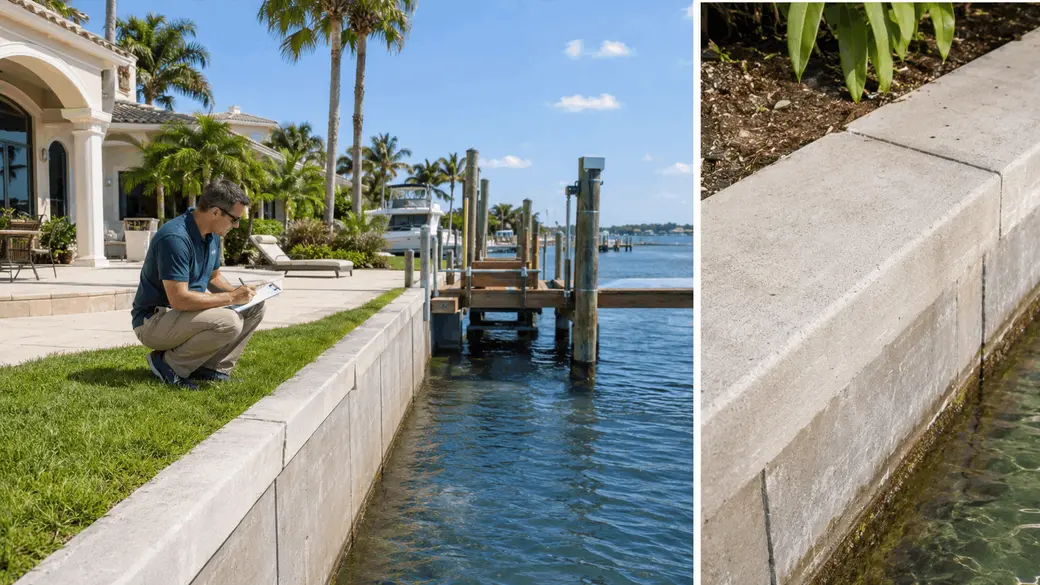
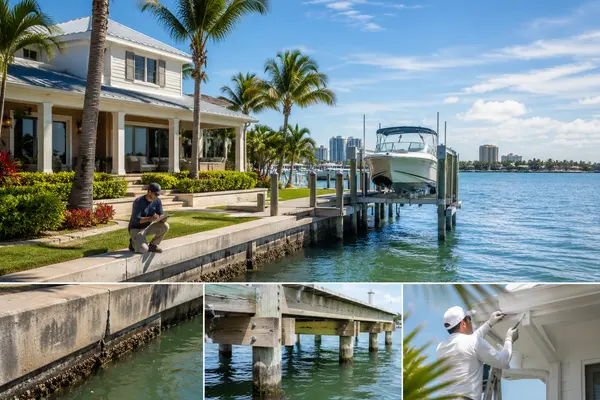
Before buying a Florida waterfront property with a seawall, evaluate the wall as a separate piece of waterfront infrastructure rather than assuming a standard home inspection tells you everything you need to know. Look for cracking, leaning or bowing, separated joints, deterioration at the cap, rust staining, erosion, soft or sunken ground behind the wall, and evidence of previous repairs. Then have the seawall evaluated by an appropriately qualified marine contractor, structural engineer, or other specialist when warranted. Buyers should also investigate permits, repair history, ownership responsibility, and the condition of connected docks or other marine improvements.
For buyers exploring Florida Gulf Coast real estate with Hunt Brothers Realty, the seawall deserves attention early in the due-diligence process. A waterfront home's kitchen, roof, and interior may be easy to see during a showing. Some of the most important components of a seawall can be behind the wall, below grade, or near and below the waterline.
Quick Answers About Evaluating a Seawall
Should a seawall be inspected before buying a waterfront home?
Yes. A buyer should investigate the seawall separately when it is a material part of the property. A general home inspection may not provide the specialized structural, marine, or below-water evaluation necessary to determine the condition of a seawall. Ask the home inspector what is and is not included in the inspection, then engage the appropriate seawall professional when needed.
What are common warning signs of seawall problems?
Visible warning signs can include cracks, bowing or leaning, displaced sections, gaps between panels, deterioration of the cap, rust staining, erosion, soil loss, depressions or soft areas behind the wall, and evidence that the wall or surrounding ground has moved. These observations do not establish the cause or severity, so concerning conditions should be evaluated by an appropriately qualified professional.
Can a seawall look good but still have problems?
Yes. Important seawall components and failure mechanisms may not be visible from the yard. Anchoring systems can be behind the wall, while deterioration, scour, or other conditions can occur near or below the waterline. Surface appearance alone should not be treated as proof of structural condition.
Who should evaluate a seawall?
The appropriate professional depends on the seawall, observed conditions, location, and scope of evaluation. Buyers may need a qualified marine contractor, structural engineer, coastal professional, or other specialist with relevant seawall experience. Ask what portions of the structure will be evaluated, whether the water side will be observed, and whether the professional can provide written findings and recommendations.
Should buyers check seawall permits?
Yes. Buyers should investigate available permit and repair records for seawall work and other waterfront improvements. Depending on the location and project, marine construction can involve local, state, and potentially other regulatory requirements. The relevant governmental or permitting authorities should be consulted regarding a particular property's records and future work.
Should the dock be inspected at the same time?
The dock, pilings, boat lift, electrical service, and seawall should all be considered when they are part of the waterfront property. They are different components, but deterioration or planned construction involving one can affect how a buyer evaluates the waterfront as a whole.
Why Is the Seawall So Important to a Waterfront Purchase?
A seawall is part of the infrastructure separating and retaining the upland property along the water's edge, so its condition can affect much more than appearance. Problems can involve soil retention, erosion, drainage, waterfront improvements, landscaping, patios, pools, docks, and other improvements near the shoreline.
Florida seawalls are exposed to conditions that can include water, changing water levels, salt, drainage, soil pressure, boat wakes, weather, and storm events. The materials and construction methods also vary. Concrete panels, sheet piling, masonry, wood, steel components, caps, anchors, and other systems do not necessarily deteriorate in the same way.
Buyer takeaway: Do not evaluate a waterfront home as though the property stops at the back patio. The shoreline infrastructure can be an important part of what you are purchasing and maintaining.
Start by Walking the Ground Behind the Seawall
The soil immediately behind a seawall can provide visible clues that material is moving or washing through or around the structure. Before focusing exclusively on the concrete or panels, look carefully at the yard along the waterfront edge.
Conditions worth professional evaluation include:
- Dips or depressions in the lawn
- Soft or unusually loose ground near the wall
- Small holes or apparent voids
- Sunken or uneven pavers
- Settlement around a patio or pool deck
- Visible erosion
- Gaps developing between the soil and seawall cap
- Standing water or apparent drainage problems
Depressions and settlement can have different causes, so buyers should not diagnose a seawall based on appearance alone. However, soil loss behind a seawall is a condition worth investigating rather than dismissing as ordinary landscaping settlement.
Look for Cracks, Separation, and Deterioration
Cracks deserve context rather than an automatic conclusion that a seawall has failed. Their location, orientation, width, movement, surrounding deterioration, and relationship to other symptoms can matter.
During an initial visual review, look at the seawall face, panel joints, and cap. Note areas with:
- Cracking through the cap or wall
- Sections of concrete breaking or flaking away
- Exposed or corroded reinforcement
- Rust staining
- Gaps between panels or sections
- Open or deteriorated joints
- Previous patches that appear to be separating
- Sections of cap that no longer align
A recently patched wall also deserves questions. Ask what was repaired, when the work occurred, who performed it, whether permits were required, and whether documentation is available. A repair may be entirely appropriate, but fresh cosmetic work should not replace understanding the underlying condition.
Check Whether the Seawall Is Leaning or Bowing
A seawall that visibly leans, bows, rotates, or moves out of alignment warrants professional evaluation. Seawalls must resist forces from the retained soil and water conditions, and movement can be associated with problems involving anchoring, deterioration, drainage, soil conditions, or other structural factors.
Stand where you can safely look along the length of the seawall. Changes in alignment may be easier to see from that perspective than when standing directly in front of one section.
Do not attempt to determine structural adequacy yourself. Visible movement is a reason to obtain qualified evaluation of the wall, anchoring system, surrounding soil, and any affected waterfront improvements.
Understand the Tiebacks and Anchoring System
Some of the components that help stabilize a seawall may be buried behind it, which is one reason a visual walk-through cannot establish the wall's complete condition.
Depending on its design, a seawall can use tie rods, anchors, deadmen, or other systems to resist movement. These components may deteriorate or fail without being directly visible to a buyer standing in the yard.
Visible leaning, cap movement, rust staining, settlement, or other symptoms may lead a qualified professional to investigate the anchoring system more closely. The appropriate method depends on the construction and circumstances of the specific wall.
Drainage Behind the Wall Matters
Water and soil pressure behind a seawall are part of the structural environment the wall must handle, making drainage an important part of a professional evaluation.
Some seawall systems incorporate drainage features intended to relieve water pressure. Buyers may hear terms such as weep holes, drainage media, or filters during an inspection. Blockage, deterioration, or inadequate drainage can be relevant depending on the wall's design.
Drainage is another reason not to evaluate a seawall solely by whether its exposed face looks clean. The relationship among the wall, groundwater, soil, backfill, drainage, and anchoring system is a technical question for an appropriately qualified professional.
Do Not Ignore What Is Happening at the Waterline
The yard side is only one side of a seawall. Conditions at the waterline and below it may provide information that cannot be seen during a casual property showing.
Depending on access and the wall type, a professional may evaluate the water-facing side for deterioration, gaps, erosion or scour near the base, marine exposure, displaced components, and other relevant conditions. Water level and tide can affect what is visible at a particular moment.
Buyer takeaway: A seawall that appears orderly from the lawn has not necessarily been evaluated where some important deterioration can occur. Ask the professional performing the assessment what portions of the wall were actually observable.
Ask About the Seawall's Age and Repair History
Age is useful context, but age alone does not determine whether a seawall is serviceable. Material, original construction, exposure, maintenance, repairs, storm history, soil conditions, drainage, and other factors can influence condition.
When records are available, buyers can ask for:
- Original construction information
- Permit records
- Engineering or marine-contractor reports
- Repair invoices
- Descriptions of previous repairs
- Information about tieback or anchor work
- Cap repairs or replacement
- Panel or sheet-pile repairs
- Post-storm repair documentation
- Available warranties or transferable documentation
A lack of documentation does not automatically mean the wall is defective, but it can increase the importance of current professional evaluation and permit research.
Verify Permits Before Assuming Previous Work Was Properly Authorized
Existing seawall work should not be assumed to have the necessary permits simply because it has been in place for years. Buyers should research available records and verify questions with the appropriate permitting authorities.
Florida waterfront construction can involve different regulatory requirements depending on location and scope. The Florida Department of Environmental Protection Beaches, Inlets and Ports Program, for example, administers coastal permitting programs applicable to certain activities. Florida DEP also provides tools for determining whether coastal property lies seaward of the state's Coastal Construction Control Line.
The applicable rules for a canal-front property can differ from those affecting an exposed Gulf-front property. Buyers should therefore verify the specific parcel, existing improvements, permit history, and contemplated future work rather than applying a general permitting assumption to every Florida seawall.
Who Is Responsible for Maintaining the Seawall?
Do not assume seawall maintenance responsibility without reviewing the property's ownership and governing documents. Responsibility may depend on property boundaries, easements, association documents, shared waterfront arrangements, recorded agreements, and other legal factors.
This question can be particularly important in condominium, homeowners association, townhome, or shared-waterfront settings. A seawall may serve multiple properties even though an individual buyer is purchasing only one residence.
Review the survey, title information, association documents, and available maintenance agreements as appropriate. Questions involving ownership, easements, maintenance obligations, or legal responsibility should be reviewed with the appropriate title professional and a qualified Florida real estate attorney when legal interpretation is required.
Inspect the Dock, Pilings, and Boat Lift Too
A seawall inspection should not cause buyers to overlook the rest of the property's marine infrastructure. A dock, pilings, boat lift, electrical equipment, seawall, and shoreline can present different maintenance and permitting questions.
Depending on the property, waterfront due diligence may include evaluating:
- Dock framing and decking
- Pilings and connections
- Marine growth or deterioration around the waterline
- Boat-lift condition and rated capacity
- Electrical equipment serving the dock or lift
- Dock and lift permits
- Water depth
- Tidal limitations
- Bridge clearance and fixed bridges
- The actual route to navigable or open water
If boating is a major reason for purchasing the property, the physical condition of the seawall is only part of the analysis. Hunt Brothers Realty's guide to Gulf access and Florida waterfront property explains why buyers should also investigate water depth, bridges, navigation routes, and whether a property actually works for the boat they intend to use.
A Standard Home Inspection and a Seawall Evaluation Serve Different Purposes
Buyers should ask their home inspector exactly how far the inspection extends into waterfront structures. The presence of a seawall in an inspection report does not necessarily mean the wall received a specialized structural or marine evaluation.
A home inspector may identify visible conditions and recommend further evaluation. A seawall specialist or engineer can then focus on the marine structure, its construction, observed deterioration, movement, soil conditions, anchoring, drainage, and other issues within that professional's scope.
For a broader look at residential due diligence, read Hunt Brothers Realty's What to Look for During a Florida Home Inspection. Inspection findings involving a seawall should be evaluated with the appropriate licensed inspector, marine contractor, structural engineer, or other qualified professional before the buyer makes a purchasing decision.
Get Repair or Replacement Information Before Making Assumptions About Cost
There is no reliable universal per-foot price that tells a buyer what a particular seawall will cost to repair or replace. Cost can depend on wall length, height, material, water depth, access, engineering, permitting, demolition, disposal, anchoring, adjacent improvements, environmental requirements, contractor availability, and the repair method ultimately approved.
A limited repair can be a very different project from replacing a substantial waterfront wall. Likewise, a contractor's preliminary estimate is different from an engineered scope of work with known permitting requirements.
When an inspection identifies significant concerns, buyers should obtain property-specific professional opinions and estimates rather than relying on generic online cost ranges. They should also ask whether the proposed work could affect the dock, pool, patio, landscaping, utilities, or access to the property.
Consider the Seawall Alongside Flood and Insurance Due Diligence
A seawall should not be treated as proof that a waterfront property will not flood or sustain storm damage. Seawall condition, flood exposure, storm surge, property elevation, drainage, insurance, and hurricane protection are separate but related due-diligence topics.
A seawall's presence does not establish a property's flood zone, expected flood depth, insurance requirements, or protection during a particular storm. Buyers should obtain property-specific flood and insurance information through appropriate authoritative sources and insurance professionals.
Insurance availability, coverage, exclusions, deductibles, and premiums can vary substantially by waterfront property. Buyers should obtain property-specific quotes and discuss flood, wind, waterfront structures, and other relevant coverage with a qualified Florida insurance professional before making a purchasing decision.
Buyers can also review Hunt Brothers Realty's guide to hurricane protection features for Florida home buyers when evaluating the property beyond its shoreline infrastructure.
What Should You Ask a Seawall Professional?
A useful seawall evaluation should help the buyer understand what was observed, what could not be observed, what concerns exist, and what additional investigation or work is recommended.
Questions can include:
- What type of seawall is this?
- What portions of the wall were inspected?
- Was the water-facing side evaluated?
- Are there signs of movement?
- Is soil being lost behind or beneath the wall?
- What is the condition of the cap and joints?
- Are there signs of anchoring or tieback problems?
- Are drainage conditions a concern?
- Is there evidence of scour or deterioration near the base?
- Do previous repairs appear relevant to the current condition?
- Is additional engineering or investigation recommended?
- Does the wall appear to need maintenance, repair, or replacement?
- Can you provide written findings?
- What limitations applied to the inspection?
What If the Seawall Inspection Finds a Problem?
A seawall concern does not automatically mean a buyer should abandon the property, but the buyer should understand the condition and its implications before deciding how to proceed.
The appropriate response depends on the inspection findings, purchase contract, severity of the condition, estimated scope of work, permitting requirements, financing, insurance, and the buyer's objectives. A minor maintenance item presents a different decision from structural movement or a recommendation for substantial reconstruction.
Buyers should work with their licensed real estate professional to understand the transaction process. Questions involving contractual rights, repair obligations, cancellation rights, title, easements, or other legal issues should be reviewed with a qualified Florida real estate attorney when individualized legal guidance is needed.
A Practical Waterfront Seawall Checklist
Before completing due diligence on a waterfront property, confirm that the seawall has been considered from physical, financial, ownership, and permitting perspectives.
- Walk the ground behind the wall for settlement or soil loss
- Look for cracking and concrete deterioration
- Check for gaps and separation at joints
- Look for visible leaning, bowing, or displacement
- Note rust staining or exposed reinforcement
- Ask about drainage and anchoring systems
- Have the water-facing side evaluated when appropriate
- Ask about seawall age and previous repairs
- Request available engineering and contractor records
- Research available permits
- Determine who owns and maintains the wall
- Evaluate connected docks, pilings, and lifts
- Obtain property-specific repair estimates when concerns exist
- Review flood and insurance considerations separately
- Use qualified professionals for structural, marine, legal, permitting, and insurance questions
The Waterfront View Is Only Part of the Property
Waterfront property can offer something an inland home cannot reproduce: direct proximity to a canal, bay, river, lake, Intracoastal waterway, or the Gulf. That unique location also means buyers may be purchasing infrastructure that an inland property simply does not have.
A seawall should be evaluated with the same seriousness buyers bring to other major property components. Its visible condition matters, but so do the ground behind it, the water-facing side, drainage, anchoring, previous repairs, permitting, maintenance responsibility, and relationship to the dock and other waterfront improvements.
The goal is not to find a seawall that has never aged or required maintenance. The goal is to understand what you are buying, what condition it is in, who is responsible for it, and what qualified professionals say should happen next.
Evaluate Florida Waterfront Property With Hunt Brothers Realty
A waterfront purchase involves more than comparing bedrooms, kitchens, and views. Hunt Brothers Realty can help buyers evaluate Florida Gulf Coast real estate while coordinating the property-specific due diligence that may involve inspectors, marine contractors, engineers, insurance professionals, lenders, surveyors, title professionals, attorneys, and permitting authorities.
Browse current Sarasota and Gulf Coast properties for sale, explore Florida Gulf Coast communities, review Hunt Brothers Realty buyer resources, or visit HuntBrothersRealty.com to discuss your waterfront property search.
Informational notice: This article provides general real estate and educational information and is not individualized engineering, structural, construction, inspection, legal, financial, insurance, permitting, environmental, lending, title, or other professional advice. Seawall design, condition, repair options, permitting requirements, ownership responsibility, insurance considerations, and construction costs vary by property and location. Buyers should have material seawall concerns evaluated by the appropriate qualified marine contractor, structural engineer, inspector, surveyor, insurance professional, Florida real estate attorney, title professional, local or state permitting authority, or other qualified specialist before making a purchasing decision.
Sources
- Florida Department of Environmental Protection: Beaches, Inlets and Ports Program
- Florida Department of Environmental Protection: Determining Whether Property Is Seaward of the Coastal Construction Control Line
- Florida Department of Environmental Protection: Coastal Construction Control Line Permitting
- Florida Lifts & Docks: Signs of Seawall Deterioration
- Hunt Brothers Realty
- Hunt Brothers Realty: What Is Gulf Access and Why Does It Matter?
- Hunt Brothers Realty: What to Look for During a Florida Home Inspection
- Hunt Brothers Realty: What Buyers Should Know About Hurricane Protection Features
Contact Hunt Brothers Realty
46 N Washington Blvd, Ste #3, Sarasota, Florida 34236
Phone: (941) 388-7017
Email: info@huntbrothersrealty.com
Website: HuntBrothersRealty.com
Categories
- All Blogs 1950
- Anna Maria Island 83
- Bird Key 4
- Bradenton 234
- Buying a Home 1020
- Casey Key 2
- Clearwater 9
- Condos & HOA Living 931
- Ellenton 5
- Englewood 9
- First Time Homebuyers 1124
- Foreclosures 3
- Home Selling 1
- Homeownership 1144
- Lakewood Ranch 20
- Lido Key 27
- Longboat Key 78
- Luxury/Waterfront Properties 1085
- Market Updates & Trends 614
- Mortgages & Financing 42
- Move-Up Buyers 20
- Neighborhood Guides 737
- New Construction 32
- Palmetto 3
- Parrish 6
- Port Charlotte 10
- Punta Gorda 15
- Real Estate Investing 1002
- Relocation to Florida 1046
- Safety Harbor 2
- Sarasota 71
- Sarasota - Downtown 157
- Selling a Home 143
- Siesta Key 89
- St. Petersburg 6
- Tierra Verde 5
- Vacation & Second Homes 1193
- Venice 96
- Wellen Park 10
Recent Posts