What Should You Ask About Insurance Before Making an Offer?
Before making an offer on a Florida home, ask whether the specific property appears insurable, what coverage may cost, which deductibles apply, whether flood insurance should be considered, and whether the insurer will require roof, four-point or wind-mitigation documentation. Do not rely on the seller's current premium as a prediction of your cost. Florida insurers use property-specific underwriting criteria, and two similarly priced homes can have very different insurance profiles. A property-specific quote from a qualified insurance professional can reveal issues worth understanding before your contract deadlines begin.
Quick Answers About Insurance Before Making an Offer
Should I get an insurance quote before making an offer?
It can be very useful, especially for older, coastal, waterfront or flood-exposed Florida homes. At minimum, discuss the property with a qualified insurance professional early enough to identify potential underwriting issues. A preliminary quote can still change after inspections, underwriting and additional documentation.
Is the seller's insurance premium a good estimate of what I will pay?
No. The seller may have different coverage, deductibles, discounts, claims history and underwriting circumstances. Ask for a property-specific quote based on your intended coverage and occupancy rather than budgeting from the seller's current premium.
Why does the roof matter so much for Florida insurance?
Florida's Department of Financial Services says insurers may consider the roof's age, type and construction during underwriting. An insurer may also request a roof inspection or documentation about remaining useful life. Ask the insurance professional what documentation the specific carrier will require.
What is a four-point inspection?
For an older home, an insurer may request a four-point inspection addressing the roof, plumbing, electrical system and heating and air-conditioning system. Florida's Department of Financial Services notes that failure to provide an inspection requested by an insurer can affect coverage availability.
What is a wind-mitigation inspection?
A wind-mitigation inspection documents qualifying construction and storm-protection features that may affect available windstorm premium credits. Florida uses the Uniform Mitigation Verification Inspection Form, and buyers should ask whether a current valid inspection exists or whether a new one would be useful.
Does homeowners insurance cover flooding?
Standard homeowners insurance generally does not cover rising-water flooding. Flood coverage is separate. Buyers should investigate the property's flood exposure and ask an insurance professional whether flood coverage is required by the lender, recommended based on the property or otherwise appropriate for their circumstances.
What deductible should I ask about in Florida?
Ask about every deductible that could apply, particularly the hurricane deductible and all-other-perils deductible. Depending on the policy, additional deductibles may apply to certain roof or water losses. A low premium can be misleading if the buyer has not compared deductibles and coverage.
Can insurance affect whether I qualify for a mortgage?
It can. A lender may require acceptable property insurance as a condition of financing, and insurance expenses can affect the overall housing-cost calculation. Financing and insurance requirements should be confirmed with the buyer's lender and insurance professional for the specific transaction.
Why Ask About Insurance Before You Make an Offer?
Insurance is part of the cost and feasibility of owning a Florida home. Waiting until shortly before closing can create unnecessary pressure if the property requires additional inspections, documentation or repairs before a carrier will provide the coverage you need.
The Florida Department of Financial Services explains that homeowners insurers may consider factors including the home's construction, year built, roof, location, use, square footage, wind-mitigation characteristics, prior claims history and prior insurance when evaluating eligibility and premium.
That is why Hunt Brothers Realty recommends beginning the insurance conversation during property selection, particularly when comparing older homes, coastal properties, waterfront homes and newer construction. Read the full Florida home insurance guide for Gulf Coast buyers.
1. Ask: Is This Specific Home Insurable?
Start with eligibility, not price. Before asking which company has the cheapest premium, ask whether qualified insurance professionals see potential underwriting concerns with the specific home.
Useful questions include:
- Does the home's age create additional underwriting requirements?
- Does the roof require additional documentation?
- Will a four-point inspection be required?
- Are there electrical, plumbing or HVAC characteristics that could affect eligibility?
- Will the insurer require an underwriting inspection after the policy is issued?
- Could unrepaired property damage affect coverage?
An initial conversation is not a guarantee that a carrier will ultimately issue or maintain a policy. Final eligibility depends on the insurer's underwriting process and the information it receives.
2. Ask for a Property-Specific Insurance Quote
Do not estimate your insurance expense from a statewide average, neighborhood average or the seller's policy. Insurance is priced for a particular property and applicant under a particular carrier's underwriting and rating rules.
Ask the insurance professional to explain what assumptions are built into the quote. For example, does it assume a particular wind-mitigation credit, roof condition or deductible? Is the quote subject to an inspection or additional underwriting approval?
Florida's Department of Financial Services specifically cautions that an insurance quote is an estimate and may change based on current rating factors and underwriting guidelines.
3. Ask Exactly What the Policy Covers
A premium number is not enough information to compare policies. Ask what coverage is actually included and what important limitations or exclusions apply.
Questions for the insurance professional can include:
- What dwelling coverage is included?
- Is personal property covered at replacement cost or actual cash value?
- What liability coverage is included?
- What additional living expense coverage is provided?
- What exclusions or coverage limitations should I understand?
- Are there separate limits for water damage, roof losses or other categories?
- What endorsements should I consider for this property?
Florida's Office of the Insurance Consumer Advocate recommends making an apples-to-apples comparison between policies, including whether coverage uses replacement cost or actual cash value.
4. Ask About the Hurricane Deductible
A Florida buyer should understand the hurricane deductible before focusing on the annual premium. Florida homeowners policies commonly distinguish between an all-other-perils deductible and a hurricane deductible.
Ask the insurance professional to translate the hurricane deductible into an actual dollar amount for the proposed coverage. Also ask when that deductible applies and whether other deductibles could apply to roof, water or other types of losses under the policy being considered.
A higher deductible may reduce the premium, but it can also increase the amount the homeowner must fund after a covered loss. The appropriate balance depends on the buyer's individual financial circumstances and should be discussed with the insurance professional.
5. Ask About the Roof Before Making the Offer
The roof deserves early attention because insurers may evaluate its age, type, construction, condition and remaining useful life. The relevant question is not simply, “How old is the roof?” It is also, “How will prospective insurers evaluate this roof?”
Before making an offer on an older home, try to determine:
- Approximate roof age
- Roof covering type
- Whether permits or replacement records are available
- Whether an insurer will require a roof inspection
- Whether the carrier has additional documentation requirements
- Whether visible or known damage needs repair
Do not assume that a roof's age alone determines insurability, and do not assume that a recently replaced roof automatically produces a specific premium. Carrier underwriting requirements vary.
6. Ask Whether a Four-Point Inspection Will Be Required
Florida's Department of Financial Services explains that an insurer may require a four-point inspection when insuring an older home. It focuses on four major areas:
- Roof
- Plumbing
- Electrical wiring
- Heating and air conditioning
The insurance purpose of a four-point inspection is different from a comprehensive buyer's home inspection. Buyers should not treat one as a substitute for the other.
If a four-point inspection identifies an issue, discuss the finding with the appropriate inspector, contractor or tradesperson and ask the insurance professional how the issue affects underwriting. Do not assume that every finding has the same insurance consequence with every carrier.
7. Ask Whether Wind-Mitigation Features Could Affect the Premium
Florida homeowners may qualify for insurance credits based on documented hurricane-loss-mitigation features. A wind-mitigation inspection can document qualifying construction characteristics and storm-protection features for the insurer.
Ask whether the seller has a current wind-mitigation report and whether it is usable by the carrier you are considering. Florida approved a revised Uniform Mitigation Verification Inspection Form in 2026, and the Department of Financial Services states that the new form must be used for inspections performed on or after April 1, 2026.
A completed wind-mitigation form can generally remain valid for up to five years if no material structural changes have occurred and no inaccuracies are found, according to current Florida consumer guidance. The insurance professional should confirm whether the documentation is acceptable for the proposed policy.
8. Ask About Flood Insurance Separately
Homeowners insurance and flood insurance are not the same coverage. Standard homeowners policies generally exclude rising-water flooding, so buyers should investigate flood exposure separately even when the home is not directly on the water.
Start by reviewing the property's current FEMA flood-zone information, but do not stop there. Flood Zone X, for example, does not mean zero flood risk. Heavy rainfall, drainage conditions, storm surge, creeks, canals and other factors can create flooding outside the highest-risk mapped areas.
Hunt Brothers Realty's guide to how Florida flood zones work explains Zones AE, VE and X and why the mapped zone is only one part of a buyer's flood-risk investigation.
Ask the insurance professional whether separate flood coverage is available, what it would cover, what deductible applies, whether the lender requires it and whether additional property information such as elevation documentation would be useful.
9. Ask About Previous Claims, but Do Not Draw Conclusions From Them Alone
Prior claims history can be relevant to insurance underwriting, but buyers should distinguish between the property's history, the seller's insurance history and their own insurance profile.
Ask what information the prospective insurer needs and whether any known prior damage has been fully repaired. If a prior loss involved the roof, water intrusion, electrical damage or structural work, available permits, invoices and repair documentation may also be relevant to the buyer's broader due diligence.
Florida buyers also receive a statutory residential flood disclosure in covered transactions. The disclosure includes specified questions about known flood damage during the seller's ownership, certain flood insurance claims and certain federal flood assistance. Buyers should still conduct their own flood and insurance investigation rather than treating the disclosure as a complete risk assessment.
10. Ask Whether Your Intended Use of the Home Changes the Insurance
How you intend to use the property can matter. Tell the insurance professional whether the home will be your primary residence, second home, seasonal residence or rental property.
Do not request a quote based on one occupancy type when you intend another. Florida's Department of Financial Services advises consumers to answer insurance application questions accurately, and incorrect application information can create serious coverage problems.
11. Ask Different Questions When Buying a Florida Condo
Condo insurance requires looking at both the individual unit and the condominium association. The association's master insurance policy and the buyer's individual unit-owner policy serve different purposes.
Ask what the master policy covers and what the unit owner must insure separately. Also investigate the association's insurance expenses, deductibles and any recent or proposed assessments that may relate to insurance or major building work.
A condo on an upper floor can still have building-level flood and storm exposure through parking areas, elevators, electrical equipment, mechanical systems and common elements. Review the association's insurance and financial information along with your individual coverage options.
12. Ask More Questions for Waterfront and Coastal Homes
A waterfront or barrier-island home can introduce additional considerations involving wind exposure, flood risk, elevation and waterfront infrastructure.
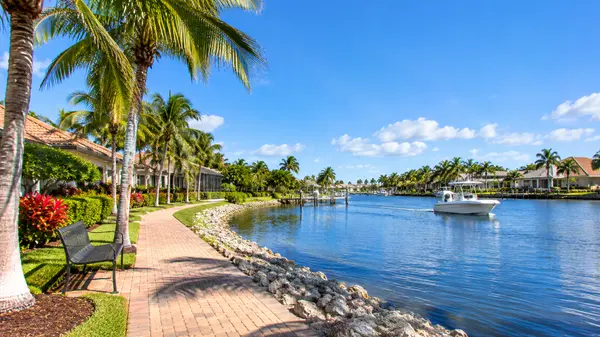
Ask whether docks, boat lifts, seawalls, detached structures, pools and other improvements are covered, excluded or subject to specific limits under the policy being considered. Do not assume that coverage for the main residence automatically extends to every waterfront improvement.
Buyers considering coastal property can also review Hunt Brothers Realty's guide to buying a waterfront home in Florida.
13. Ask Whether the Quote Is Final or Still Subject to Underwriting
A preliminary quote should not automatically be treated as a final commitment to insure the property. Ask what still needs to happen before coverage can be bound.
For example:
- Does the insurer still need a four-point inspection?
- Does it need a wind-mitigation report?
- Does it require roof documentation?
- Will photographs or an underwriting inspection be required?
- Are repairs required before coverage begins?
- Could the premium change after underwriting?
- When can the policy actually be bound?
This distinction is particularly important when insurance availability or cost is material to the buyer's decision.
A Florida Home Insurance Checklist Before Making an Offer
| Question | Why It Matters |
|---|---|
| Does this property appear insurable? | Eligibility matters before comparing premiums. |
| What is the estimated annual premium? | Helps build a realistic ownership budget. |
| What coverage does the quote include? | A low premium may reflect different coverage. |
| What is the hurricane deductible? | Determines potential out-of-pocket exposure after a covered hurricane loss. |
| Are there other deductibles? | Roof, water or other deductibles may apply depending on the policy. |
| Does the roof create an underwriting issue? | Roof age, condition, type and documentation can affect eligibility and pricing. |
| Is a four-point inspection required? | Older homes may require additional underwriting documentation. |
| Is a wind-mitigation report available? | Documented mitigation features may affect available credits. |
| What is the flood exposure? | Homeowners coverage generally does not cover rising-water flooding. |
| Should I obtain a flood insurance quote? | Flood coverage and cost should be evaluated separately. |
| Is the quote subject to further underwriting? | The initial quote may not be the final premium or approval. |
Should You Choose a House Based on Insurance Cost Alone?
No, but insurance can be an important part of comparing two properties. Purchase price, condition, location, maintenance, taxes, association costs, financing and insurance all contribute to the ownership picture.
A lower-priced older home may require repairs or carry different insurance expenses. A newer home may have documented wind-mitigation features but carry HOA or CDD assessments. A coastal condo may shift exterior building responsibilities to the association while introducing association insurance and reserve considerations.
Compare the complete ownership picture rather than optimizing one expense in isolation.
When Should Florida Buyers Start the Insurance Conversation?
Start before insurance becomes a deadline problem. For a property where insurance availability or cost could materially affect your decision, contacting a qualified insurance professional before making the offer can provide useful information. At the latest, the buyer should understand the applicable contract deadlines and complete insurance due diligence within the time permitted by the contract.
Contract rights, cancellation provisions and deadlines are legal matters. Buyers with questions about their rights or obligations under a Florida real estate contract should consult a qualified Florida real estate attorney or other appropriate legal professional.
For the broader purchase sequence, see Hunt Brothers Realty's 2026 guide to starting the Florida home-buying process.
The Bottom Line: Ask About Insurability, Not Just the Premium
Before making an offer on a Florida home, the most useful insurance question is not simply, “What will insurance cost?” Ask whether the specific property appears eligible for appropriate coverage, what inspections and documentation are required, how the roof affects underwriting, what the hurricane and other deductibles are, whether separate flood insurance should be considered, and whether the quote remains subject to additional underwriting.
That information can help a buyer compare homes based on a more realistic picture of ownership rather than discovering an important insurance issue late in the transaction.
Buying a Home on Florida's Gulf Coast?
Hunt Brothers Realty can help buyers compare Gulf Coast properties while identifying property questions that deserve investigation during the home-buying process. Buyers can then work directly with qualified insurance, inspection, lending and other professionals for individualized guidance within their respective areas of expertise.
Explore Florida Gulf Coast communities, review the Florida home insurance guide, learn how Florida flood zones work, or contact Hunt Brothers Realty to discuss your home search.
Informational notice: This article is provided for general real estate and educational purposes only and is not insurance, legal, financial, lending, inspection or engineering advice. Insurance eligibility, coverage, exclusions, deductibles and premiums vary by property, applicant, insurer and policy. Buyers should obtain property-specific quotes and review coverage with a qualified, licensed insurance professional before making a decision that depends on insurance availability or cost. Inspection findings should be evaluated with the appropriate licensed inspector, contractor, engineer or other qualified professional. Financing questions should be reviewed with the buyer's lender, and questions involving contract rights or legal obligations should be reviewed with a qualified Florida real estate attorney or other appropriate legal professional.
Sources
- Florida Department of Financial Services, Homeowners Insurance Overview
- Florida Department of Financial Services, Purchasing Insurance
- Florida Office of the Insurance Consumer Advocate, Tips for Shopping for Homeowners Insurance
- Florida Department of Financial Services, Mitigation Notices, Inspections and Forms
- FEMA, National Flood Insurance Program
- Hunt Brothers Realty, Florida Home Insurance: What Gulf Coast Buyers Should Know
- Hunt Brothers Realty, How to Start the Home Buying Process in Florida
Hunt Brothers Realty
Hunt Brothers Realty
46 N. Washington Blvd, Ste 3, Sarasota, FL 34236
Phone: (941) 388-7017
Email: info@huntbrothersrealty.com
Website: HuntBrothersRealty.com
Categories
- All Blogs 2533
- Anna Maria Island 90
- Bird Key 4
- Bradenton 241
- Buying a Home 1567
- Casey Key 2
- Clearwater 15
- Condos & HOA Living 1492
- Ellenton 6
- Englewood 14
- First Time Homebuyers 1683
- Foreclosures 4
- Home Selling 7
- Homeownership 1719
- Lakewood Ranch 32
- Lido Key 29
- Longboat Key 80
- Luxury/Waterfront Properties 1661
- Market Updates & Trends 1169
- Mortgages & Financing 78
- Move-Up Buyers 24
- Neighborhood Guides 1291
- New Construction 43
- Palmetto 4
- Parrish 34
- Port Charlotte 36
- Punta Gorda 164
- Real Estate Investing 1574
- Relocation to Florida 1606
- Safety Harbor 4
- Sarasota 125
- Sarasota - Downtown 170
- Selling a Home 146
- Siesta Key 94
- St. Petersburg 9
- Taxes and Homestead 3
- Tierra Verde 7
- Vacation & Second Homes 1767
- Venice 219
- Wellen Park 24
Recent Posts