Is Now a Good Time to Buy a House in Florida? What Buyers Should Know in 2026
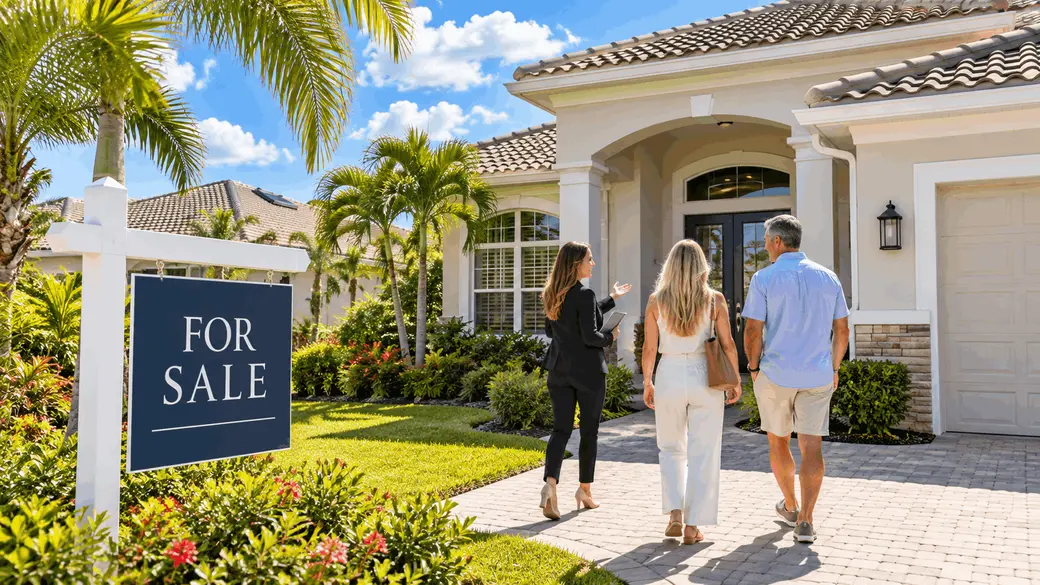
Is now a good time to buy a house in Florida? For some buyers, 2026 offers a more workable market than the intensely competitive pandemic years, but the answer depends on the property, location, financing and your expected ownership timeline. Florida buyers are seeing more negotiating opportunities in some markets, while statewide sales have strengthened and single-family inventory has recently tightened. Mortgage rates remain a significant affordability challenge, and insurance, flood exposure, property taxes, HOA fees and condominium assessments can materially change the true cost of a home.
The most useful question in 2026 is therefore not whether every Florida home is a good buy. It is whether a specific property makes sense at its current price, given its condition, comparable sales, ownership costs and your financial plans. For Gulf Coast buyers, Hunt Brothers Realty's analysis of the 2026 housing market provides additional context for understanding why today's conditions should not automatically be compared with the 2008 housing crisis.
Quick Answers About Buying a House in Florida in 2026
Is 2026 a Buyer's Market in Florida?
Not uniformly. Florida Realtors reported 4.5 months of statewide single-family supply in July 2026, while condo-townhouse supply was substantially higher at 7.8 months. Local conditions can differ considerably by city, neighborhood, price range and property type, so statewide labels can be misleading.
Are Florida Home Prices Falling in 2026?
Not statewide. Florida Realtors reported a July 2026 median sale price of $425,000 for existing single-family homes, up 3.7% from July 2025. The statewide condo-townhouse median was $295,000, unchanged from a year earlier. Individual Florida markets can still experience price declines even when the statewide median rises.
What Are Mortgage Rates in 2026?
Freddie Mac reported that the average U.S. 30-year fixed mortgage rate was 6.71% on September 3, 2026, while the average 15-year fixed rate was 6.04%. Actual rates and loan costs depend on the borrower, lender, loan program, property and market conditions.
Are Florida Buyers Getting More Negotiating Room?
Some are, particularly when a property has been on the market longer, needs repairs, has competing inventory or is priced above recent comparable sales. Negotiating leverage is property-specific, however, and well-priced homes can still attract strong buyer interest.
Should I Wait for Mortgage Rates to Fall?
There is no reliable way to know when or how far mortgage rates will move. Waiting for a lower rate also means accepting uncertainty about home prices, inventory and competition. Buyers should compare today's payment and loan options with a qualified mortgage professional rather than basing a purchase on an assumed future rate.
Should Florida Buyers Worry About Insurance?
Insurance should be investigated early in the purchase process. Availability, premiums, deductibles and required coverage can vary substantially by property based on factors including location, construction, roof condition, wind-mitigation features and flood exposure. Obtain property-specific quotes rather than estimating insurance from another home.
Is Buying a Florida Condo Different in 2026?
Yes. Condo buyers should evaluate the individual unit and the association, including current fees, reserves, insurance, special assessments, structural information and applicable milestone inspection and Structural Integrity Reserve Study requirements. Florida's statewide condo-townhouse supply is also higher than single-family supply, creating a different market dynamic.
What Is the Best Reason to Buy Now?
A strong reason to buy is that you find a property that fits your needs, can comfortably afford the complete cost of ownership and expect to own it long enough for purchasing to make sense for your circumstances. Trying to identify the exact bottom of a housing or mortgage-rate cycle is much less reliable.
What Is Happening in the Florida Housing Market in 2026?
Florida's housing market entered the second half of 2026 with improving sales activity. Florida Realtors reported 23,870 closed single-family sales in July, up 5.1% from the same month in 2025. Existing condo and townhouse sales reached 8,194, an 11% year-over-year increase.
New pending sales also increased. Single-family pending sales rose 2.4% year over year in July, marking the twelfth consecutive year-over-year increase in that measure. Florida Realtors reported that closed sales had increased year over year for 11 consecutive months through July.
Those numbers matter because they show that buyers are participating even though borrowing costs remain considerably higher than during the ultra-low-rate years. Florida Realtors has characterized the recent trend as a reason for cautious optimism rather than a new housing boom.
Are Florida Home Prices Going Down?
Statewide data does not show broad single-family price declines as of the latest available 2026 report. Florida Realtors reported a $425,000 statewide median sale price for existing single-family homes in July, 3.7% higher than one year earlier. The second-quarter median was also $425,000, up 2.4% year over year.
Condominiums tell a different story. The statewide July median for condo-townhouse properties was $295,000, unchanged from July 2025, and supply remained higher than for single-family homes.
Statewide medians also hide significant local differences. A Gulf-front condominium in Sarasota, an inland home in Englewood, new construction in Wellen Park and a single-family residence in Lakewood Ranch do not compete in one interchangeable market. Buyers should use recent comparable sales for the specific location and property type they are considering.
Does Florida Have More Homes for Buyers to Choose From?
Compared with the extremely tight pandemic-era market, many Florida buyers have encountered more selection and more time to evaluate properties. But inventory has recently begun tightening again in many areas.
Florida Realtors reported 4.5 months of statewide single-family supply in July 2026. Condo-townhouse inventory stood at 7.8 months. The difference is important because buyers may encounter substantially different negotiating conditions depending on whether they are shopping for a house or condominium.
Florida Realtors also reported in August that active listings had declined from the previous year and described statewide single-family inventory as roughly within balanced-market territory. Condo and townhouse inventory remained more elevated. This is another reason buyers should avoid assuming that conditions from early 2026 remain unchanged later in the year.
Do Buyers Have More Negotiating Power in 2026?
In some transactions, yes. A more normalized market can give buyers time to investigate the property, compare alternatives and negotiate based on condition, days on market, price history and recent comparable sales.
Negotiation can involve more than the sale price. Depending on the transaction and seller, buyers may negotiate repairs, closing-cost contributions, credits or other contract terms. What is realistic depends on the property and competing demand.
The strongest leverage usually comes from property-specific facts rather than a general claim that Florida is a buyer's market. A house that has been listed for months and competes with several similar homes creates a different negotiating situation from a newly listed property in a neighborhood with little available inventory.
How Are Mortgage Rates Affecting Florida Buyers?
Mortgage rates remain one of the biggest affordability constraints in 2026. Freddie Mac reported an average 30-year fixed mortgage rate of 6.71% for the week ending September 3, up from 6.50% one year earlier. The average 15-year fixed rate was 6.04%.
Rates matter because relatively small changes can materially affect the monthly principal and interest payment on a large mortgage. But the advertised or national average rate is not necessarily the rate an individual buyer will receive.
Loan program, credit profile, down payment, points, lender fees and property type can all affect financing. Buyers should compare loan structures and total borrowing costs with qualified mortgage lenders. Hunt Brothers Realty's 2026 guide to homebuyer down payments also explains why the amount put down should be considered alongside cash reserves and the total cost of ownership.
Should You Wait for Mortgage Rates to Drop?
Waiting solely because mortgage rates might decline requires predicting something that cannot be known in advance. Rates could fall, remain near current levels or move higher. Housing inventory and buyer competition can also change while you wait.
A lower future mortgage rate does not necessarily mean a better future buying environment. If falling rates bring more buyers into the market, competition could increase. Conversely, rates could remain elevated while an individual seller offers an attractive price or favorable negotiation opportunity today.
Financed buyers should focus on whether the payment and complete ownership cost work under today's terms. Future refinancing may be possible in some circumstances, but buyers should not purchase a home they cannot comfortably afford today based on an assumption that refinancing will later become available or economical.
Why the Purchase Price Is Only Part of a Florida Home's Cost
One of the biggest mistakes a Florida buyer can make is comparing homes only by asking price. Two properties priced at $500,000 can have materially different monthly and long-term ownership costs.
Depending on the property, the complete housing budget can include mortgage principal and interest, property taxes, homeowners insurance, flood insurance when applicable, HOA or condominium fees, special assessments, utilities, landscaping, pool maintenance and repairs to major systems.
A less expensive older coastal home that needs a roof and carries higher insurance costs may ultimately create a different financial picture from a more expensive newer home. Similarly, a condominium with a lower asking price can have substantial association fees or upcoming assessments. Hunt Brothers Realty's mortgage preapproval guide explains why buyers should establish a housing budget that goes beyond the lender's principal-and-interest calculation.
Why Should Florida Buyers Investigate Insurance Before Making a Decision?
Insurance is property-specific in Florida. A buyer should not assume that the premium on one home predicts the cost or availability of coverage on another, even if both properties have similar prices and are located in the same general area.
Roof age and condition, construction characteristics, wind-mitigation features, prior claims, location, flood exposure and other underwriting considerations can affect available coverage and cost. Mortgage lenders can also have insurance requirements that affect a financed purchase.
Insurance availability, coverage, deductibles and premiums can vary substantially by property. Buyers should obtain property-specific homeowners, wind and flood insurance quotes as applicable and review coverage with a qualified insurance professional before making a purchasing decision.
What Should Buyers Know About Flood Risk?
Flood considerations are important in Florida, especially for coastal, waterfront and low-lying properties, but buyers should investigate the specific parcel rather than making assumptions based only on distance from the beach.
Florida law requires a seller of residential real property to provide a flood disclosure to the purchaser at or before execution of the sales contract. The statutory disclosure addresses the seller's knowledge of flooding during ownership, flood-related insurance claims and flood assistance received by the seller.
That disclosure should not replace a buyer's independent investigation. Buyers should review current flood information, available elevation documentation, insurance requirements, drainage conditions and other property-specific factors. Hunt Brothers Realty's questions to ask before buying a home near the coast provides additional due-diligence considerations.
Is 2026 a Better Time to Buy a Florida Condo?
Condo buyers may find more selection than single-family buyers in some Florida markets. Statewide condo-townhouse inventory stood at 7.8 months of supply in July 2026, compared with 4.5 months for single-family homes. The statewide condo-townhouse median price was $295,000, unchanged from one year earlier.
More inventory can create negotiating opportunities, but price alone does not determine whether a condo is attractive. Association finances and building condition can materially affect both ownership costs and future obligations.
Florida's condominium requirements also make document review especially important. The Florida Department of Business and Professional Regulation explains that qualifying condominium buildings are subject to milestone inspection requirements, while Structural Integrity Reserve Studies address reserve planning for specified structural components. Applicable requirements depend on the building and circumstances.
What Should You Review Before Buying a Florida Condo?
A Florida condominium purchase involves evaluating both the residence and the association. Depending on the property, buyers should investigate:
- Current condominium fees and what they include
- Association budget and financial statements
- Reserve balances and applicable reserve studies
- Current and proposed special assessments
- Applicable milestone inspection information
- Master insurance coverage and deductibles
- Recent association meeting minutes
- Rental and pet restrictions
- Completed and planned capital projects
- Condition and insurance needs of the individual unit
Association documents, structural reports and financial records can raise legal, engineering, insurance and financial questions. Buyers should review property-specific issues with the appropriate qualified professionals before making a decision.
What About Florida Property Taxes?
Property taxes should be estimated based on the buyer's anticipated ownership rather than simply copying the current owner's tax bill. A sale can affect assessed value, and exemptions available to the existing owner may not apply to the purchaser.
The Florida Department of Revenue states that an owner who makes a Florida property a permanent residence may be eligible for a homestead exemption that can reduce taxable value by as much as $50,000. Qualifying homestead property also receives the Save Our Homes assessment limitation. An eligible Florida homeowner moving from one homestead to another may also be able to transfer, or port, part or all of the assessment difference, subject to applicable requirements.
Eligibility and tax consequences depend on the owner and property. Buyers should obtain a property-specific tax estimate from the appropriate county property appraiser and consult a qualified tax professional regarding their individual circumstances.
Should First-Time Buyers Purchase in Florida in 2026?
First-time buyers face real affordability challenges in 2026, particularly from mortgage rates, home prices and the cash needed for down payment, closing and reserves. But a buyer does not necessarily need to wait simply because the market is imperfect.
Different conventional and government-backed mortgage programs can have different down-payment and qualification requirements. Buyers should discuss available programs with qualified lenders rather than assuming a 20% down payment is always required.
Hunt Brothers Realty's 2026 first-time homebuyer roadmap covers down payments, financing preparation and the broader ownership costs buyers should consider before beginning a serious home search.
Should You Wait for a Florida Housing Crash?
Waiting for a housing crash is another form of market timing. Florida prices can decline, and individual markets or property types can experience meaningful corrections, but there is no reliable way to know whether a future decline will occur, how large it will be or whether lower prices would coincide with attractive mortgage rates and sufficient inventory.
Current statewide data does not show a repeat of the broad conditions associated with the 2008 housing crisis. Hunt Brothers Realty's 2026 Is Not 2008 housing market analysis examines homeowner equity, mortgage underwriting, foreclosure activity, inventory and other differences between the two periods.
That does not mean prices cannot fall. It means a buyer should distinguish between a local price correction and a nationwide financial crisis before making a major purchasing decision based on predictions of a crash.
When Might Buying in Florida in 2026 Make Sense?
Market conditions are only one part of the timing decision. Buying may deserve serious consideration when you have stable finances, sufficient funds for the transaction and reserves, can comfortably manage the complete ownership cost, find a property that meets your needs and expect to own it for an appropriate period for your circumstances.
A property with a motivated seller, reasonable asking price, acceptable inspection results, manageable insurance costs and favorable comparable sales can present a compelling opportunity even when mortgage rates are higher than a buyer would prefer.
Conversely, a seemingly attractive purchase price may not represent good value if the home requires major repairs, insurance is difficult or expensive, an association faces significant assessments or the buyer would be financially stretched after closing.
When Might Waiting Make More Sense?
Waiting can be reasonable when the issue is personal readiness rather than a prediction about the market. A buyer who needs time to improve credit, establish emergency savings, build a down payment, reduce other debt or clarify where they expect to live may benefit more from strengthening their financial position than from rushing to purchase because of a market forecast.
Waiting can also make sense when the available homes do not fit the buyer's needs or when property-specific costs make the current options unattractive. There is a meaningful difference between patiently waiting for the right property and trying to predict the exact bottom of the Florida housing market.
What Should Florida Buyers Compare Before Making an Offer?
Instead of asking only whether 2026 is a good year to buy, evaluate the facts surrounding the specific home:
- Recent comparable sales for the neighborhood and property type
- Current competing listings
- Days on market and price-reduction history
- Inspection results and deferred maintenance
- Roof, HVAC, plumbing, electrical and window condition
- Property-specific insurance availability and cost
- Flood information and elevation considerations when applicable
- Estimated property taxes after purchase
- HOA or condominium fees and assessments
- Current mortgage terms and total monthly payment
- Cash remaining after closing for reserves and repairs
- Your expected ownership timeline and intended use
These factors can reveal why two homes with the same asking price are not necessarily equivalent purchases.
Why Local Florida Market Data Matters More Than a National Headline
Florida is not one housing market. Conditions in Miami can differ from Orlando, Tampa, Sarasota, Naples or Jacksonville. Even within the same county, beachfront condominiums, golf-community homes, new construction and established single-family neighborhoods can behave differently.
The same is true along Florida's Gulf Coast. Hunt Brothers Realty's Sarasota and Manatee County 2026 housing market guide explains how inventory, pricing and negotiation conditions can vary within a regional market.
Current local comparable sales, active competition and property-specific ownership costs provide more useful information for an individual purchase than a national prediction that home prices will rise or fall.
So, Is Now a Good Time to Buy a House in Florida?
For a financially prepared buyer who finds the right property at a supportable price, 2026 can be a reasonable time to buy in Florida. Buyers in many markets have more ability to investigate properties and negotiate than they did during the most competitive pandemic years. At the same time, recent statewide sales growth and tightening single-family inventory show why buyers should not assume that waiting automatically produces lower prices or better choices.
Mortgage rates remain an important obstacle, and Florida buyers must pay particular attention to insurance, flood considerations, taxes, property condition and association costs. Those expenses can matter as much as a modest change in the purchase price.
The strongest buying decision is therefore based on today's property-specific facts and the buyer's financial position, not on confidence that anyone can predict next year's home price or mortgage rate.
Explore Florida Gulf Coast Homes With Hunt Brothers Realty
The 2026 Florida market is giving buyers different opportunities depending on location, price point and property type. Understanding current comparable sales, seller competition, insurance, property condition and total ownership costs can help separate an attractive opportunity from a home that simply has an appealing asking price.
Hunt Brothers Realty helps buyers evaluate homes and communities across Sarasota and Florida's Gulf Coast using current market information and property-specific research. First-time buyers can begin with the 2026 first-time homebuyer roadmap, while buyers evaluating financing can review how much to put down on a house. To discuss current homes, local market conditions or a property-specific search, contact Hunt Brothers Realty.
Informational notice: This article provides general real estate and homebuying information for educational purposes and is not individualized legal, financial, tax, insurance, lending, inspection, engineering, construction, title or association advice. Housing conditions, mortgage terms, taxes, insurance, flood information, association obligations and property condition vary by buyer and property and can change over time. Buyers should verify current property-specific information and consult the appropriate licensed real estate professional, mortgage lender, insurance agent, home inspector, engineer, Florida real estate attorney, tax professional, title professional or other qualified professional before making a purchasing decision.
Sources
- Florida Realtors, Florida's Housing Market: Closed Sales and New Pending Sales Rise in July 2026
- Florida Realtors, Florida Housing Market Shows Broader Signs of Strength
- Freddie Mac, Primary Mortgage Market Survey
- Florida Department of Revenue, Property Tax Exemptions and Additional Benefits
- Florida Department of Business and Professional Regulation, Condominium Milestone Inspections and Structural Integrity Reserve Studies
- Florida Senate, 2026 Florida Statutes Section 689.302, Disclosure of Flood Risks to Prospective Purchaser
- Hunt Brothers Realty, 2026 Is Not 2008: Why This Housing Market Is Different
- Hunt Brothers Realty, Early 2026 Sarasota & Manatee County Housing Market Trends
- Hunt Brothers Realty, How Much Should You Put Down on a House?
Contact Hunt Brothers Realty
Hunt Brothers Realty
46 N. Washington Blvd, Ste 3
Sarasota, FL 34236
Phone: (941) 388-7017
Email: info@huntbrothersrealty.com
Website: HuntBrothersRealty.com
Categories
- All Blogs 1346
- Anna Maria Island 44
- Bird Key 3
- Bradenton 39
- Buying a Home 508
- Casey Key 2
- Clearwater 5
- Condos & HOA Living 416
- Ellenton 4
- Englewood 4
- First Time Homebuyers 579
- Foreclosures 3
- Homeownership 551
- Lakewood Ranch 14
- Lido Key 24
- Longboat Key 65
- Luxury/Waterfront Properties 494
- Market Updates & Trends 247
- Mortgages & Financing 24
- Move-Up Buyers 20
- Neighborhood Guides 390
- New Construction 21
- Palmetto 2
- Parrish 4
- Port Charlotte 7
- Punta Gorda 9
- Real Estate Investing 421
- Relocation to Florida 473
- Safety Harbor 2
- Sarasota - Downtown 103
- Selling a Home 132
- Siesta Key 87
- St. Petersburg 3
- Tierra Verde 3
- Vacation & Second Homes 606
- Venice 19
- Wellen Park 7
Recent Posts