
Is Now a Good Time to Sell a House in Florida? What the 2026 Market Means for Sellers
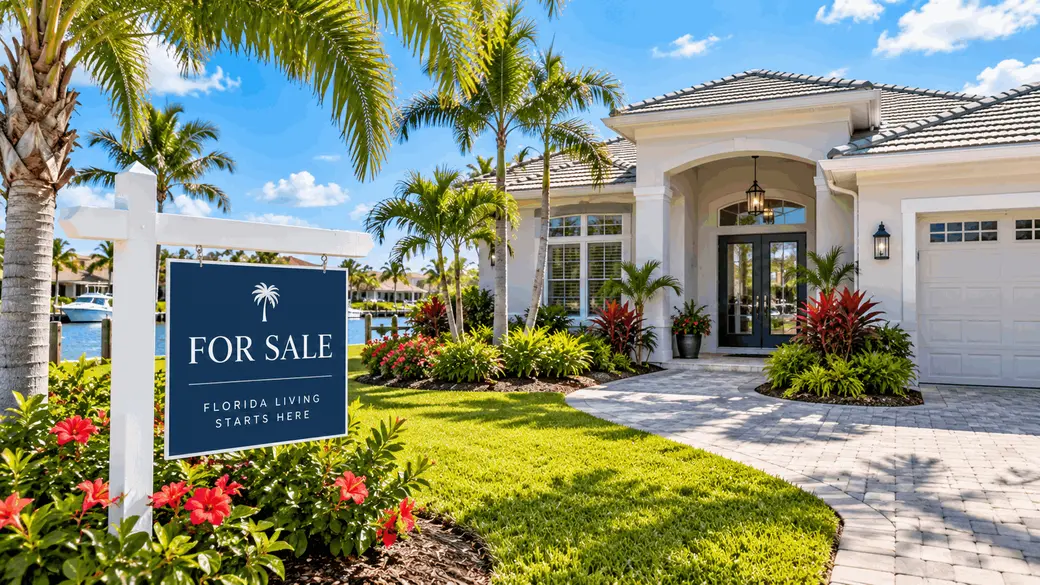
For many Florida homeowners, the second half of 2026 can be a reasonable time to sell, especially if the property is well maintained, accurately priced and competing against limited inventory. Florida Realtors reported that statewide single-family sales increased 5.1% year over year in July, the median sale price rose 3.7% to $425,000 and single-family inventory declined almost 13.5% from a year earlier. But this is not the pandemic-era market where sellers could assume almost any listing would attract immediate competition. Buyers remain price-conscious, and property condition, insurance costs, days on market and competing listings can have a major effect on the outcome.
The opportunity also varies considerably by property type and location. Statewide single-family supply stood at 4.5 months in July 2026, while condo-townhouse supply was considerably higher at 7.8 months. On Florida's Gulf Coast, Sarasota County single-family inventory tightened substantially during the summer. The practical question for sellers is therefore not simply whether Florida is a seller's market. It is how your specific home compares with the properties buyers can choose from today.
Quick Answers About Selling a House in Florida in 2026
Is 2026 a Good Time to Sell a House in Florida?
It can be. Florida single-family sales and prices were higher year over year in July 2026, while inventory was lower. Those conditions can help sellers, but results depend heavily on location, property type, condition, price range and how accurately the home is positioned against current competition.
Are Florida Home Prices Rising in 2026?
At the statewide level, single-family prices were higher in the latest data. Florida's July 2026 median existing single-family sale price was $425,000, up 3.7% from July 2025. The condo-townhouse median was $295,000, unchanged year over year. Individual communities and properties can move differently from statewide medians.
Are Florida Home Sales Increasing?
Yes. Florida Realtors reported 23,870 existing single-family closed sales in July 2026, up 5.1% year over year. Condo-townhouse sales increased 11% to 8,194. July marked the eleventh consecutive month of year-over-year increases in closed sales for both categories.
Is Florida a Seller's Market Right Now?
Not uniformly. Statewide single-family supply was 4.5 months in July, which Florida Realtors has described as roughly balanced territory. Condo-townhouse supply was 7.8 months, giving buyers more choices in many condo markets. Some neighborhoods and price ranges can favor sellers even when broader statistics look balanced.
Are Florida Buyers Negotiating in 2026?
Yes. Buyers can have leverage when a property is overpriced, has been listed for an extended period, needs repairs or competes against substantial inventory. Sellers should expect informed buyers to compare recent sales, price reductions, condition and total ownership costs before making an offer.
Should You Wait Until 2027 to Sell?
There is no reliable rule that 2027 will produce higher prices, lower mortgage rates or better selling conditions. Waiting can make sense for property-specific or personal reasons, but homeowners should compare today's market with their goals rather than assuming next year will automatically be better.
Should You Renovate Before Selling a Florida Home?
Not automatically. Cleaning, decluttering, landscaping, addressing obvious maintenance issues and making targeted repairs may be more practical than completing a major renovation. Improvement decisions should be based on the home's condition, competing listings, cost, timing and likely market effect.
What Matters Most When Selling in 2026?
Accurate pricing, strong presentation and understanding current competition are especially important. Buyers have more information than ever and can quickly compare your home with active listings, recent sales and properties that have already reduced their prices.
What Is Happening in Florida's Housing Market in 2026?
Florida's latest housing data contains several encouraging signals for sellers. July 2026 closed sales of existing single-family homes totaled 23,870, a 5.1% increase from July 2025, according to Florida Realtors.
Existing condo and townhouse sales increased even more, rising 11% year over year to 8,194. July represented the eleventh consecutive month of year-over-year closed-sales increases for both categories.
The pipeline also remained active. New pending single-family sales increased 2.4% year over year in July, the twelfth consecutive month of year-over-year growth in that measure. Condo-townhouse new pending sales increased 3.8%.
For sellers, those numbers matter because they indicate that buyers have not disappeared despite affordability challenges and elevated mortgage rates. Florida Realtors Chief Economist Brad O'Connor noted that buyers appear to be returning to the market even without a major improvement in mortgage rates.
Are Florida Home Prices Helping Sellers?
Statewide single-family pricing has strengthened during 2026. Florida's median sale price for existing single-family homes reached $425,000 in July, 3.7% higher than a year earlier.
June was stronger at $432,000, up 4.9% year over year. For the entire second quarter of 2026, the statewide single-family median was $425,000, up 2.4% from the second quarter of 2025.
Sellers should be careful about applying those percentages directly to their own property. A statewide median describes the midpoint of completed transactions. It does not mean every Florida home increased 3.7% in value.
Property type, location, condition, waterfront access, renovations, insurance considerations, association costs and price range can all influence value. The most relevant pricing evidence usually comes from recent sales of genuinely comparable properties in the local market.
Why Is Falling Inventory Important for Florida Sellers?
Inventory determines how many alternatives buyers have. When several comparable homes compete for the same buyer, each seller has to work harder on price, condition and presentation. When competing inventory declines, a properly positioned listing can stand out more easily.
Florida Realtors reported that statewide single-family inventory was down almost 13.5% year over year in July 2026. Condo and townhouse inventory was down just under 13%.
Single-family homes had 4.5 months of supply statewide. That is substantially different from a market where sellers face an expanding backlog of unsold homes.
However, the statewide condo-townhouse market still had 7.8 months of supply. That means condo sellers may face more competition even though the total number of listings has declined from a year earlier.
Does Tight Inventory Mean Sellers Can Name Their Price?
No. Tightening inventory can improve a seller's position, but it does not eliminate buyer price sensitivity.
Today's buyers can quickly see competing listings, recent sales, days on market and price reductions. Many are also balancing the purchase price against mortgage costs, homeowners insurance, flood insurance when applicable, property taxes, HOA or condo fees and potential repair expenses.
Pricing substantially above recent comparable sales to create "negotiating room" can work against a seller. A listing that misses its initial period of buyer attention can accumulate market time while correctly priced alternatives sell.
Hunt Brothers Realty's 2026 housing market analysis explains why pricing accuracy and property preparation have become increasingly important as Florida moves away from the unusual conditions of the pandemic-era housing market.
What Is Happening in Sarasota County?
Sarasota County provides a useful example of why some Gulf Coast sellers may be looking at a more favorable supply picture than they were earlier in 2026.
July 2026 single-family active inventory fell 23.4% year over year to 2,736 homes, according to local market data discussed in Hunt Brothers Realty's Southwest Florida summer versus fall market guide. Months of supply declined from 5.6 months a year earlier to 3.9 months.
The median single-family sale price was $493,500, 5% higher than July 2025. Homes reached contract in a median 52 days compared with 63 days one year earlier.
Those numbers are encouraging for sellers, but they do not mean every Sarasota property will sell quickly. Sellers received a median 94.2% of their original asking price, showing that price adjustments and negotiation remained part of the market even as inventory tightened.
What Does a 94.2% Sale-to-Original-List-Price Ratio Mean for Sellers?
A 94.2% median sale-to-original-list-price ratio does not necessarily mean buyers negotiated 5.8% off the seller's asking price when they submitted an offer.
The statistic compares the final sale price with the property's original listing price. A seller may have reduced the asking price one or more times before the successful buyer made an offer.
For example, imagine a hypothetical Sarasota home initially listed at $800,000. After limited buyer activity, the seller reduces it to $750,000 and ultimately accepts $740,000. The final sale price is 92.5% of the original list price, but the successful buyer negotiated only $10,000 below the asking price that existed at the time of the offer.
For sellers, the lesson is important. An ambitious initial price can create a larger eventual gap between original list price and sale price. Starting closer to market-supported value may help a listing capture buyer attention earlier.
Why Is Pricing Strategy So Important in 2026?
A seller's first few weeks on the market can be important because that is when a listing is new to the buyers already searching in the price range. Overpricing can reduce the number of buyers who see value in scheduling a showing or submitting an offer.
A later reduction can generate new attention, but it does not completely recreate the property's first appearance on the market. Buyers may also see the listing history and recognize that the property has already struggled at a higher price.
An evidence-based pricing analysis should consider recent comparable closed sales, current competing listings, pending properties when useful, days on market, condition, location and features that genuinely distinguish the home.
As Hunt Brothers Realty explains in its 2026 Sarasota seller timing guide, pricing correctly can be more important than trying to identify a single perfect week to list.
Which Florida Sellers May Be in the Strongest Position?
The strongest seller position generally develops when the home offers buyers something that is difficult to replace at the same price. That can happen when:
- Comparable inventory is limited
- The asking price is supported by recent sales
- The property is well maintained and presented
- Major components have been maintained or updated
- The home has features buyers cannot easily find elsewhere
- The property enters the market without competing against several close substitutes
- Ownership costs compare favorably with competing properties
- Property information and available documentation help buyers complete due diligence efficiently
A newly listed home with those characteristics can produce a very different selling experience from a property that enters the market substantially above comparable sales.
Which Florida Sellers May Face More Competition?
Sellers can face a more difficult market when buyers have several close alternatives or when the property's complete ownership costs create additional objections.
This can be especially relevant for some condominium sellers. Statewide condo-townhouse supply was 7.8 months in July 2026 compared with 4.5 months for single-family homes. Florida Realtors has also identified assessments, new regulatory requirements and building-insurance challenges as factors that have affected Florida's condo market in recent years.
A condo seller may therefore be competing not only on asking price but also on monthly association fees, special assessments, building condition, reserves, insurance and the financial position of the association.
Sellers should obtain current association information and understand what documentation may be relevant to a transaction. Questions about association obligations, assessments, disclosures, structural matters or legal rights should be reviewed with the association and the appropriate Florida real estate attorney, engineer, insurance professional or other qualified professional.
Are Buyers Expecting Sellers to Negotiate?
Negotiation remains a normal part of many Florida transactions in 2026. The important question is how much leverage the individual buyer and seller have on a particular property.
An older listing with several price reductions can invite more aggressive negotiation. A correctly priced home that has just reached the market with limited competition may give the seller considerably more leverage.
Hunt Brothers Realty's Sarasota and Manatee negotiation guide identifies extended days on market, price reductions, property condition and competing inventory as important indicators of buyer leverage.
Sellers should evaluate an offer as a complete package. Price matters, but financing, inspection provisions, closing timing and other contract terms can also affect the transaction. Legal questions involving contract rights or obligations should be reviewed with a qualified Florida real estate attorney.
Should Sellers Expect Requests for Closing-Cost Contributions?
Some buyers may request seller contributions toward allowable closing costs, particularly when affordability is a major concern. A request does not automatically mean a seller should accept it or that every financing program permits the requested amount.
The seller can evaluate the net economics of the entire offer. A higher purchase price accompanied by a closing-cost request may produce a different net result than a lower price with no requested contribution.
Financing rules, appraisal considerations and contract terms can affect how concessions work. Buyers should verify loan requirements with their lender, while sellers should review transaction-specific financial and contractual implications with the appropriate qualified professionals.
Should You Renovate Before Selling Your Florida Home?
A major renovation is not automatically necessary before selling. In many situations, preparing the existing home exceptionally well can be more practical than committing substantial money and time to remodeling.
Hunt Brothers Realty's guide to renovating before selling a Florida home recommends evaluating improvements according to current condition, buyer expectations, project cost, completion time and the likely market benefit rather than assuming every renovation will recover its cost.
Before undertaking a major remodel, sellers can consider whether the property would benefit from:
- Professional cleaning
- Decluttering and furniture editing
- Landscape cleanup
- Pressure washing where appropriate
- Touch-up or fresh paint where needed
- Repairing obvious maintenance issues
- Improving lighting
- Preparing pools, lanais and outdoor areas
- Professional photography
- Organizing available permits, warranties and improvement records
Construction, permitting and repair questions should be evaluated with qualified contractors, tradespeople, engineers and local permitting authorities as appropriate. Sellers considering major improvements may also want to discuss potential tax consequences with a qualified tax professional.
Should You Get a Pre-Listing Inspection?
A pre-listing inspection can be useful in some circumstances because it may identify property issues before a buyer's inspection, but it is not automatically necessary for every seller.
An older property, a home with known maintenance concerns or a seller who wants additional information before setting a repair strategy may have different considerations from a recently constructed or extensively updated property.
Inspection findings should be evaluated with an appropriately licensed inspector, contractor, engineer or other qualified professional. Sellers should also obtain appropriate legal guidance regarding disclosure obligations and other legal questions rather than assuming an inspection determines what must be disclosed.
Should You Sell Your Florida Home As-Is?
Selling as-is can make sense for some homeowners who prefer not to undertake repairs before closing, but the term should not be confused with a guarantee that the transaction will involve no inspection or negotiation.
A well-maintained home can be sold as-is, just as an inherited or renovation property can. The appropriate approach depends on the seller's goals, property condition and proposed contract.
Hunt Brothers Realty's guide to what sold as-is means in Florida real estate explains why buyers can still have inspection and due-diligence rights when the contract provides for them. The legal meaning and consequences of an as-is contract should be reviewed with a qualified Florida real estate attorney when legal guidance is needed.
How Do Insurance and Roof Condition Affect Florida Sellers?
Florida buyers increasingly investigate insurance early in the purchasing process. Roof age and condition, construction characteristics, wind-mitigation features, flood exposure and other property-specific factors can influence available coverage and premiums.
That means a property's insurability can become part of the selling conversation. A buyer may compare two similarly priced homes differently if one has a newer roof or other characteristics that produce materially different insurance options.
Sellers should avoid making assumptions about what a future buyer will pay for coverage. Insurance availability, underwriting, deductibles and premiums vary by property and purchaser. Property-specific insurance questions should be verified with a qualified insurance professional.
What Should Coastal Florida Sellers Prepare For?
Coastal buyers may ask additional questions about flood history, flood zones, elevation, insurance, roofs, storm protection, seawalls, docks and property condition. Sellers who can efficiently provide accurate information and available records can help buyers complete their own due diligence.
That does not mean sellers should provide technical conclusions outside their expertise. Survey questions should be reviewed with a qualified surveyor, structural issues with an appropriate engineer, insurance questions with an insurance professional, flood information with appropriate official sources and legal disclosure questions with a qualified Florida real estate attorney.
Hunt Brothers Realty's coastal homebuyer guide can also help sellers understand the kinds of property-specific questions today's Gulf Coast buyers may investigate.
Is September or Fall a Good Time to Sell in Florida?
Fall should not automatically be treated as a weak selling season, particularly in Southwest Florida. Sarasota's seasonal housing patterns differ from many northern markets because seasonal residents and visitors begin returning later in the year.
Hunt Brothers Realty's Best Time to Sell a Home in Sarasota: 2026 Seller Guide explains that the better question is how much competing inventory exists when the property enters the market.
A well-prepared home entering a market with limited competition in September can potentially stand out more effectively than the same property competing against numerous similar listings during a busier spring period.
The September 2026 Sarasota and Manatee market pulse similarly notes that early fall can work well when competing inventory is limited and a property is positioned correctly.
Should You Wait Until Spring 2027 to Sell?
Spring is traditionally an active housing season, and waiting may be appropriate for a homeowner who needs additional time to prepare a property or whose personal timeline favors a later move. But waiting solely because spring must produce a higher price is not supported by a reliable rule.
By 2027, mortgage rates, inventory, buyer demand and competing listings could all be different. A seller who has relatively little competition today could face substantially more similar listings next spring. The reverse is also possible.
Rather than trying to forecast every housing variable, sellers can compare current market conditions with the practical benefit of waiting. If additional time allows the home to be properly prepared or better fits the owner's circumstances, waiting can have a clear purpose. If the only reason is a prediction that prices will definitely be higher next year, the decision depends on an uncertain forecast.
Should You Wait for Mortgage Rates to Fall Before Selling?
Lower mortgage rates could improve purchasing power and bring additional buyers into the market. That sounds favorable for sellers, but there is no guarantee that rates will fall substantially or that other market conditions will remain unchanged if they do.
Florida's current market already demonstrates that buyers can return without a dramatic rate decline. July 2026 marked 11 consecutive months of year-over-year closed-sales increases, while new pending single-family sales increased for a twelfth consecutive month.
A seller should therefore compare today's actual demand and competition with the uncertainty of a future rate environment rather than assuming lower mortgage rates are required for a successful sale.
What Should Florida Sellers Review Before Listing?
Before choosing a listing date or asking price, sellers can build a clearer picture of their position by reviewing:
- Recent comparable closed sales
- Current competing listings
- Pending sales when useful and available
- Days on market for comparable properties
- Price reductions among competing listings
- The home's current condition
- Roof, HVAC, plumbing, electrical and other major components
- Insurance-related property characteristics
- Flood considerations for applicable properties
- HOA or condominium fees and assessments
- Association documents when applicable
- Permits and records for completed improvements
- Presentation, cleaning and landscaping needs
- Estimated transaction expenses
- The seller's preferred timeline and next move
A property-specific market analysis can then help determine how the home fits into the current competitive set.
Why the Seller's Next Move Matters
Whether 2026 is a good time to sell also depends on what happens after the sale. A homeowner selling a Florida property and buying another home faces a different calculation from an owner selling a second home without making a replacement purchase.
A seller moving locally may benefit from the same negotiating opportunities available to today's buyers. Someone relocating out of state will need to compare Florida selling conditions with the housing market at the destination. An owner selling an investment, inherited property or second residence can have different financial and tax considerations.
Tax consequences depend on the individual owner, property and transaction. Sellers should consult a qualified tax professional or CPA regarding capital gains, exclusions, basis and other tax questions relevant to their circumstances. Legal questions involving ownership, title, contracts or estate matters should be reviewed with an appropriate Florida real estate attorney or other qualified legal professional.
Is the 2026 Florida Market Another 2008?
Current data does not show a repeat of the conditions that produced the 2008 housing crisis. That does not mean every Florida home will increase in value or that local price declines cannot occur.
The present market includes genuine challenges, including affordability pressures, mortgage rates, insurance expenses and higher costs affecting some condominium associations. But Florida's latest statewide numbers show increasing sales, rising single-family median prices and declining inventory rather than a broad collapse in buyer activity.
For sellers, the more useful approach is to evaluate current local demand instead of basing a decision on comparisons with a past housing crisis. Hunt Brothers Realty's 2026 Is Not 2008 analysis examines those differences in greater detail.
When Might Selling a Florida House Now Make Sense?
Selling in the current market may deserve serious consideration when several factors line up:
- Comparable inventory is limited
- Recent sales support a price that meets your goals
- Your home is ready to compete on condition and presentation
- Buyer activity is healthy in your property's price range
- Your personal timeline supports a move now
- You have evaluated the financial implications of selling
- Waiting does not provide a clear property-specific or personal advantage
These factors are more useful than trying to decide whether every Florida seller should list simply because statewide sales are rising.
When Might Waiting to Sell Make More Sense?
Waiting can also be reasonable when it produces a concrete benefit. For example:
- The property needs time for important maintenance or preparation
- Several close substitutes are currently competing for buyers
- Your personal relocation timeline is uncertain
- Selling now would create an undesirable replacement-housing situation
- You need time to resolve title, estate, permitting or ownership issues with the appropriate professionals
- You have not yet evaluated tax or financial consequences that could materially affect the decision
Waiting because it improves the property or solves a personal constraint is different from waiting because of a prediction that the market will definitely be better next year.
So, Is Now a Good Time to Sell a House in Florida?
For many Florida single-family homeowners, current 2026 conditions provide legitimate reasons to consider selling. Statewide sales have increased, new pending sales remain positive, single-family prices are higher than a year ago and inventory has tightened. Sarasota County's summer data shows an even more pronounced decline in single-family inventory.
But today's market rewards preparation more than assumption. Buyers remain selective, negotiation is still common and an overpriced listing can struggle even when broader supply conditions favor sellers. Condo owners may face additional competition because that segment continues to carry more months of inventory.
The most useful question is therefore not simply, "Is Florida a good place to sell right now?" It is, "How would my property compete if it were listed today?" Recent comparable sales, current competition, condition, pricing and the seller's own timeline can provide a much more meaningful answer.
Plan Your Florida Gulf Coast Sale With Hunt Brothers Realty
A successful 2026 selling strategy starts with understanding where your home fits into today's market. Recent comparable sales, competing listings, days on market, price reductions, condition and current buyer activity can help establish realistic expectations before the property is listed.
Hunt Brothers Realty works with homeowners throughout Sarasota and Florida's Gulf Coast to evaluate current market conditions, pricing and property positioning. Sellers can also review the firm's 2026 Sarasota seller timing guide, Florida pre-sale renovation guide and September 2026 Sarasota and Manatee market pulse. To discuss a property-specific selling strategy, contact Hunt Brothers Realty.
Informational notice: This article provides general real estate and home-selling information for educational purposes and is not individualized legal, financial, tax, insurance, inspection, engineering, construction, title or association advice. Market conditions, property values, transaction expenses, tax consequences, insurance considerations, disclosure obligations, inspection findings, association requirements and contract terms vary by seller and property and can change over time. Sellers should verify current property-specific information with a licensed real estate professional and consult the appropriate Florida real estate attorney, CPA or tax professional, insurance agent, home inspector, engineer, contractor, title or closing professional, condominium or homeowners association, surveyor, permitting authority or other qualified professional when individualized guidance is required.
Sources
- Florida Realtors, Florida's Housing Market: Closed Sales and New Pending Sales Rise in July 2026
- Florida Realtors, Florida Home Sales Rise for 11th Straight Month
- Florida Realtors, Florida's Housing: Closed and Pending Sales, Median Prices Up in June and Second Quarter 2026
- Hunt Brothers Realty, September 2026 Sarasota and Manatee Market Pulse
- Hunt Brothers Realty, Summer vs. Fall: Best Time to Buy in Southwest Florida
- Hunt Brothers Realty, Best Time to Sell a Home in Sarasota: 2026 Seller Guide
- Hunt Brothers Realty, Should You Renovate Before Selling Your Florida Home?
- Hunt Brothers Realty, What Does Sold As-Is Mean in Florida Real Estate?
- Hunt Brothers Realty, 2026 Is Not 2008: Why This Housing Market Is Different
Contact Hunt Brothers Realty
Hunt Brothers Realty
46 N. Washington Blvd, Ste 3
Sarasota, FL 34236
Phone: (941) 388-7017
Email: info@huntbrothersrealty.com
Website: HuntBrothersRealty.com
Categories
- All Blogs 1346
- Anna Maria Island 44
- Bird Key 3
- Bradenton 39
- Buying a Home 508
- Casey Key 2
- Clearwater 5
- Condos & HOA Living 416
- Ellenton 4
- Englewood 4
- First Time Homebuyers 579
- Foreclosures 3
- Homeownership 551
- Lakewood Ranch 14
- Lido Key 24
- Longboat Key 65
- Luxury/Waterfront Properties 494
- Market Updates & Trends 247
- Mortgages & Financing 24
- Move-Up Buyers 20
- Neighborhood Guides 390
- New Construction 21
- Palmetto 2
- Parrish 4
- Port Charlotte 7
- Punta Gorda 9
- Real Estate Investing 421
- Relocation to Florida 473
- Safety Harbor 2
- Sarasota - Downtown 103
- Selling a Home 132
- Siesta Key 87
- St. Petersburg 3
- Tierra Verde 3
- Vacation & Second Homes 606
- Venice 19
- Wellen Park 7
Recent Posts