Is It Better to Buy a Move-In Ready Home or a Fixer-Upper?
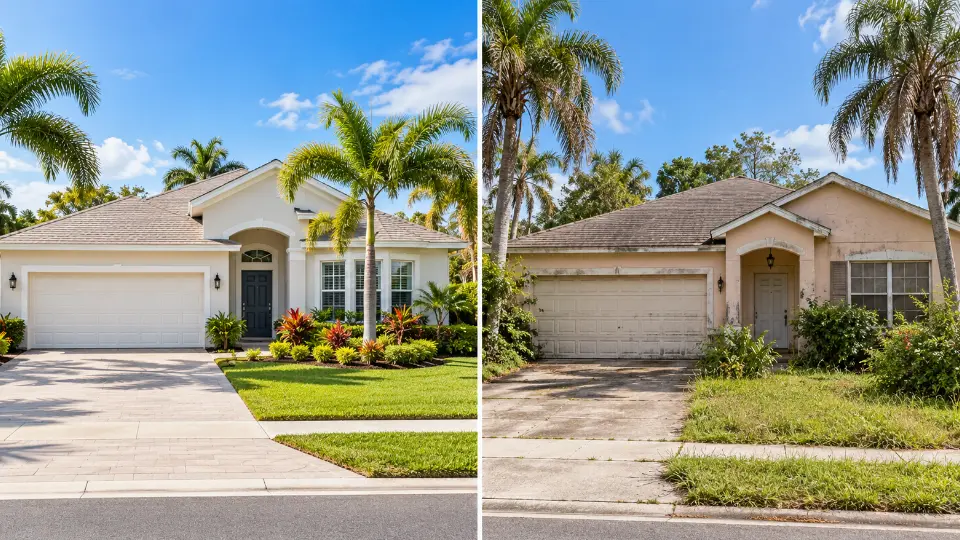
Neither a move-in ready home nor a fixer-upper is automatically the better purchase. A move-in ready home may make more sense if you want predictable near-term costs, quicker occupancy, and fewer major projects after closing. A fixer-upper may be worth considering when the purchase price leaves enough room for realistic renovation costs and you have the financing, reserves, time, and tolerance to manage the work. Florida buyers should compare total cost rather than price alone, including the roof, HVAC, plumbing, electrical systems, insurance, inspections, permits, contractor estimates, temporary housing, and unexpected repairs before deciding which option offers the better fit.
Quick Answers About Move-In Ready Homes vs. Fixer-Uppers
Is a fixer-upper always cheaper than a move-in ready home?
No. A fixer-upper may have a lower purchase price, but renovations, permits, professional services, financing, insurance, temporary housing, and unexpected repairs can change the total cost substantially. Compare the purchase price plus realistic improvement costs with comparable move-in ready alternatives.
What is the main advantage of a move-in ready home?
The primary advantage is convenience and potentially greater near-term cost predictability. Buyers may be able to occupy the property shortly after closing without coordinating major renovation projects, although a move-in ready appearance does not eliminate the need for inspection and due diligence.
What is the main advantage of buying a fixer-upper?
A fixer-upper can give a buyer an opportunity to purchase a property at a lower initial price and choose renovations rather than paying for another owner's finishes. Whether that produces a financial advantage depends on the purchase price, actual renovation cost, financing, property condition, and completed value.
Can I get a mortgage on a Florida fixer-upper?
Possibly, but financing depends on the property's condition and the loan program. FHA's 203(k) program is one example that can combine eligible acquisition and rehabilitation expenses, while other financing options have their own property-condition and borrower requirements. Buyers should discuss the specific property and proposed work with a qualified lender before making financing assumptions.
Can an older fixer-upper be harder to insure in Florida?
Property condition can affect insurance eligibility and pricing. Florida's Department of Financial Services notes that insurers may evaluate the age and condition of the roof, plumbing, electrical system, HVAC, construction, location, and other factors, and an insurer may request a 4-point or specialized inspection.
Does move-in ready mean the home has no problems?
No. "Move-in ready" is not a guarantee of structural condition, code compliance, remaining system life, insurability, or workmanship. A recently renovated property still deserves appropriate inspections, permit research, insurance review, and documentation of significant improvements.
Which option is better for a first-time home buyer?
There is no universal answer. A buyer with limited post-closing cash or little renovation experience may value the predictability of a well-maintained move-in ready property, while another buyer may be comfortable managing improvements. Financing, reserves, inspection results, and the actual repair scope should guide the decision.
How should I compare a fixer-upper with a renovated home?
Compare the total expected cost of each property, not just the listing prices. Include financing, taxes, insurance, immediate repairs, renovation estimates, permits, carrying costs, major system condition, and a reasonable contingency for discoveries during construction.
What Does Move-In Ready Actually Mean?
Move-in ready generally describes a home that can be occupied without the buyer first completing major repairs or renovations. It does not mean the property is new, defect-free, recently renovated, or guaranteed to meet a particular buyer's standards.
One move-in ready property may have a newer roof, updated electrical system, modern HVAC equipment, and recently renovated interiors. Another may simply be clean and functional while retaining older systems that could require replacement in the coming years.
Buyers should therefore look beyond finishes. Fresh paint, new flooring, and an updated kitchen can make a strong visual impression, but the roof, electrical system, plumbing, HVAC, drainage, structure, windows, permits, and insurance characteristics can have greater financial significance.
What Counts as a Fixer-Upper?
A fixer-upper is a property requiring repairs, updating, renovation, or some combination of those projects. The term covers an enormous range, from a structurally sound home with dated finishes to a property requiring major work before it is practical or financeable for ordinary occupancy.
That distinction is critical. Replacing flooring and cabinets is fundamentally different from addressing roof failure, outdated electrical equipment, deteriorated plumbing, structural movement, extensive moisture damage, or major unpermitted alterations.
Before treating a property as an inexpensive renovation opportunity, buyers should determine whether the work is primarily cosmetic, involves major building systems, or requires structural and professional evaluation.
Is a Fixer-Upper Really Less Expensive?
A lower purchase price does not necessarily make a fixer-upper the less expensive choice. The meaningful comparison is the property's acquisition cost plus the money and time required to reach the condition the buyer actually wants.
A useful comparison can include:
- Purchase price
- Closing costs
- Inspection and specialist evaluations
- Architectural, engineering, or design services when needed
- Contractor labor and materials
- Permits and related project expenses
- Renovation financing costs
- Homeowners and flood insurance when applicable
- Temporary housing or overlapping housing costs
- Storage and moving expenses
- Unexpected repairs discovered after work begins
- Time required to manage the project
Hunt Brothers Realty's fixer-upper vs. move-in ready home guide uses this total-cost approach rather than assuming the lower-priced property is automatically the better deal.
When Can a Move-In Ready Home Make More Sense?
A move-in ready property can make more sense when immediate occupancy, simpler budgeting, and avoiding major post-closing construction are high priorities. This can be particularly relevant when a buyer has limited cash available beyond the down payment and closing costs.
Reasons a buyer might favor move-in ready condition include:
- The buyer needs to occupy the home soon after closing.
- Post-closing cash reserves are limited.
- The buyer does not want to manage contractors and construction schedules.
- Major building systems have documented remaining useful life.
- Insurance and financing are easier to arrange for the particular property.
- The buyer prefers the existing layout and finishes.
- The price difference compared with a fixer-upper is smaller than the expected renovation expense.
The important qualification is that appearance is not condition. A polished home should still receive appropriate inspection and insurance review.
When Can Buying a Fixer-Upper Make Sense?
A fixer-upper can make sense when the buyer understands the work, has realistic estimates and adequate reserves, and the acquisition price leaves sufficient room for the expected renovation. It can also appeal to buyers who would otherwise pay for renovations they do not like in a finished home.
Potential reasons to consider one include:
- The purchase price reflects the property's condition.
- Independent inspections have helped define the repair scope.
- Qualified contractors have provided realistic estimates.
- The buyer has adequate funds or suitable renovation financing.
- The buyer can tolerate construction delays and disruptions.
- The location, lot, layout, or other difficult-to-change features fit the buyer's objectives.
- The buyer wants greater control over materials, finishes, and improvements.
A renovation should not be assumed to create a guaranteed increase in value. Future market value depends on the property, quality and appropriateness of improvements, location, market conditions, and other factors.
Which Fixer-Upper Problems Are More Than Cosmetic?
Problems involving major systems, structure, water intrusion, or safety can turn a cosmetic renovation into a substantially larger project. Buyers should distinguish improvements they want from repairs the property actually needs.
Items deserving particular attention can include:
- Roof condition and remaining useful life
- Electrical wiring, service, and panels
- Supply and drain plumbing
- HVAC condition and age
- Foundation or structural concerns
- Moisture intrusion and resulting damage
- Termite or other wood-destroying organism concerns
- Drainage and grading
- Windows, exterior doors, and storm protection
- Septic or well systems when applicable
- Pools, seawalls, docks, and other property-specific improvements
- Previous additions or alterations that require permit research
Inspection findings should be evaluated with the appropriate licensed home inspector, contractor, structural engineer, electrician, plumber, roofer, pest-control professional, pool professional, marine contractor, or other qualified specialist before a buyer decides whether the project fits the budget and risk tolerance.
Why Does Insurance Matter When Comparing the Two?
Insurance can materially change the comparison because a home's age and condition may affect eligibility, coverage, inspections, and premiums. Florida's Department of Financial Services states that insurers may consider the age of the home, roof, plumbing, electrical wiring, HVAC, construction, condition, location, and other underwriting factors.
For an older home, an insurer may require a buyer-paid 4-point inspection addressing the roof, plumbing, electrical wiring, and heating or air-conditioning system. An insurer can also request specialized inspections depending on the property.
Florida law also places specific limitations on decisions based solely on roof age. Current state consumer guidance explains that an insurer cannot refuse to issue or renew a homeowners policy solely because a roof is less than 15 years old. For a roof 15 years or older, the homeowner must be given an opportunity for an authorized inspection before replacement is required solely because of age, and coverage cannot be refused solely because of roof age when that inspection shows at least five years of useful life.
Those rules do not mean every older roof or fixer-upper will qualify for every policy. Insurance eligibility, coverage, deductibles, exclusions, inspection requirements, and premiums remain property-specific. Buyers should obtain quotes and review the actual property with a qualified insurance professional before relying on an ownership-cost estimate.
Should You Get an Inspection on a Move-In Ready Home?
A move-in ready appearance is not a substitute for appropriate inspection. New flooring, cabinets, paint, appliances, or landscaping do not establish the condition of components that are concealed or less visually obvious.
A buyer may want to investigate the roof, HVAC, electrical system, plumbing, structure, moisture conditions, drainage, windows, doors, appliances, pool, septic system, seawall, dock, or other applicable components. The appropriate inspection scope depends on the property.
Recently renovated homes deserve particular attention to the quality and documentation of completed work. Buyers should verify relevant permits and available records rather than assuming that visible renovation establishes code compliance or professional workmanship.
Why Should Buyers Check Renovation Permits?
Permit research can help a buyer understand whether work requiring local approval was documented and properly closed out. Permit requirements depend on the type of project and the applicable local building authority, so buyers should not assume that every improvement required a permit or that visible work was permitted.
For a renovated home, compare seller information, inspection observations, available invoices, contractor records, and public permit records where relevant. For a fixer-upper, determine which proposed projects require permits before building the renovation schedule and budget around assumptions.
Questions about required permits, inspections, code compliance, and project close-out should be verified with the applicable local building or permitting authority and appropriately licensed contractors or design professionals.
How Can You Finance a Fixer-Upper?
Financing a fixer-upper can be more complicated than financing a property that already satisfies the lender's condition requirements. Buyers may use cash for improvements, separate financing, or a qualifying renovation loan depending on their circumstances and the property.
One option worth discussing with an approved lender is the Federal Housing Administration's FHA 203(k) Rehabilitation Mortgage Insurance Program. HUD currently offers Limited and Standard 203(k) versions for different rehabilitation scopes.
HUD states that the Limited 203(k) can finance up to $75,000 of eligible repairs or improvements, while the Standard 203(k) is designed for major rehabilitation and repair and has additional requirements. The program involves estimates, lender underwriting, applicable consultants or inspections, draw procedures, and required permitting.
Loan programs, limits, eligibility, rates, property requirements, down payments, timelines, and borrower qualifications can change and vary. Buyers should review the specific property and renovation plan with an FHA-approved or other qualified mortgage lender rather than assuming a renovation loan will be available.
What Hidden Costs Can Come With a Fixer-Upper?
The largest renovation surprises often come from work that could not be fully evaluated before construction began. Opening walls, removing old finishes, or replacing major systems can reveal conditions that were not visible during an ordinary inspection.
Potential additional costs can include:
- Additional electrical or plumbing work
- Water or termite damage discovered after demolition
- Structural repairs
- Engineering or architectural services
- Permit revisions
- Material price changes
- Contractor change orders
- Project delays
- Temporary housing
- Storage and additional moving expenses
- Insurance changes during or after renovation
- Improvements needed to satisfy financing or insurance requirements
A renovation contingency should be based on the actual project and professional estimates rather than a universal percentage. The uncertainty surrounding a cosmetic project can be very different from a whole-house renovation.
Can a Move-In Ready Home Have Hidden Costs Too?
Yes. A move-in ready home can still have aging systems, deferred maintenance, insurance concerns, or renovations that need further investigation. The difference is that these expenses may be less obvious because the property presents well cosmetically.
A buyer should ask when major systems were installed or replaced, whether relevant work was permitted, and what documentation is available. A recently remodeled kitchen does not tell the buyer how old the roof is, and new flooring does not establish the condition of plumbing beneath it.
For a broader ownership-cost comparison, Hunt Brothers Realty's guide to the true cost of buying a Florida home explains why buyers should evaluate expenses beyond the mortgage payment.
Which Improvements Should Matter Most in Florida?
Functional and building-envelope improvements can deserve more attention than cosmetic upgrades when they affect condition, insurance, durability, or near-term ownership cost. The priorities still depend on the individual property.
Buyers may want to investigate documentation and condition for:
- Roof replacement or repair
- Electrical upgrades
- Plumbing replacement
- HVAC replacement
- Impact-rated or other storm-protection improvements
- Exterior doors and garage doors
- Drainage and moisture corrections
- Structural repairs
- Waterproofing and exterior-envelope work
A qualified insurance professional can explain whether documented wind-mitigation features affect a specific policy. A licensed inspector, contractor, engineer, or other appropriate professional should evaluate the condition and adequacy of improvements when those issues are material to the purchase.
Should You Buy Based on Potential Resale Value?
Buyers should not assume that renovating a fixer-upper will produce a particular profit or future resale price. Renovation cost and future market value are different calculations.
Some improvements may be desirable to future buyers, while others primarily reflect the current owner's personal preferences. The amount spent on a renovation is not automatically added dollar for dollar to market value.
When future value is important to the decision, buyers should review appropriate comparable sales and current market information with a licensed real estate professional. Formal valuation questions may require an appropriately qualified appraiser, and no future appreciation or investment return should be assumed.
How Should You Compare Two Homes Before Deciding?
Compare the homes on total cost, property condition, location, financing, insurance, and how well each property works for your intended use. The comparison should extend well beyond the difference between the two asking prices.
A practical side-by-side comparison can include:
- Purchase price: What will each property actually cost to acquire?
- Immediate work: What needs to be completed during the first year?
- Major systems: What is known about the roof, HVAC, electrical, plumbing, and structure?
- Renovation budget: Are estimates based on qualified contractor input?
- Financing: Can the property and planned work be financed on acceptable terms?
- Insurance: What coverage is available and at what quoted cost?
- Permits: What existing and proposed work requires verification?
- Carrying costs: Will temporary housing or overlapping housing expenses be necessary?
- Location: Which home's difficult-to-change location characteristics better fit the buyer's priorities?
- Time: How much project management and disruption can the buyer realistically accept?
The less expensive listing can become the more expensive ownership decision once the complete repair and renovation picture is considered.
What Should You Verify Before Buying a Fixer-Upper?
The key is to reduce uncertainty before committing to a renovation project. A buyer may not be able to eliminate every surprise, but thorough due diligence can clarify the likely scope, cost, financing, and timing.
- Arrange an appropriate home inspection.
- Obtain specialist evaluations for material issues identified during inspection.
- Investigate roof age, condition, and available documentation.
- Review electrical, plumbing, HVAC, and structural concerns.
- Research relevant permit history.
- Identify which planned renovations require permits or professional plans.
- Obtain realistic contractor estimates for significant work.
- Obtain property-specific insurance quotes.
- Confirm financing before assuming renovation costs can be included in the loan.
- Estimate temporary housing and carrying costs if the property cannot be occupied during work.
- Include an appropriate project contingency based on the actual renovation scope.
- Review flood, association, title, survey, septic, well, waterfront, or other property-specific issues when applicable.
What Should You Verify Before Buying a Move-In Ready Home?
A move-in ready buyer should verify the condition and history behind the finished appearance. The objective is to determine whether the home is genuinely well maintained or simply cosmetically appealing.
- Arrange an appropriate inspection.
- Verify the age and condition of major systems.
- Research permits for significant renovations when relevant.
- Ask for available invoices, warranties, and contractor information.
- Obtain property-specific insurance quotes.
- Investigate flood risk when applicable.
- Review HOA or condominium documents when the property is association-governed.
- Identify maintenance that may be due soon even if no immediate renovation is required.
So, Is a Move-In Ready Home or Fixer-Upper Better?
A move-in ready home is generally the stronger fit when convenience, faster occupancy, and greater near-term predictability matter most. A fixer-upper can be the stronger fit when the buyer has adequate resources, understands the renovation scope, and the purchase price justifies the additional work and uncertainty.
The decision should not be reduced to "finished costs more" and "fixer-upper costs less." A well-priced move-in ready home may cost less overall than a discounted property requiring extensive work. A carefully evaluated fixer-upper may offer features or customization opportunities that are difficult to find in finished homes.
The better choice is the property whose verified total cost, condition, financing, location, insurance, renovation demands, and ownership responsibilities best fit the buyer's actual circumstances.
Compare Florida Homes With Hunt Brothers Realty
Hunt Brothers Realty can help buyers compare move-in ready properties and homes needing renovation based on current real estate information and property characteristics. Read the complete Hunt Brothers Realty fixer-upper vs. move-in ready guide, review the true cost of buying a Florida home, and use the Hunt Brothers Realty Buyer Resource Center for additional home-buying information.
When you are ready to compare actual properties, contact Hunt Brothers Realty to discuss the real estate considerations surrounding the homes on your shortlist.
This article is provided for general informational and educational purposes only. It is not individualized legal, financial, tax, insurance, lending, inspection, engineering, construction, title, association, survey, permitting, appraisal, or other professional advice. Property condition, renovation costs, permits, insurance availability, financing, repair requirements, timelines, and future market value vary by property and circumstances. Buyers should verify material information with a licensed real estate professional and the appropriate qualified lender, insurance professional, home inspector, contractor, engineer, architect, electrician, plumber, roofer, appraiser, title or closing professional, surveyor, local building or permitting authority, Florida real estate attorney, or other qualified professional before making a purchasing or renovation decision.
Sources
- Florida Department of Financial Services, Homeowners Insurance Overview
- Florida Department of Financial Services, Property Insurance Changes
- U.S. Department of Housing and Urban Development, FHA 203(k) Rehabilitation Mortgage Insurance Program
- Hunt Brothers Realty, Fixer-Upper vs. Move-In-Ready Home: Which Should You Buy?
- Hunt Brothers Realty, The True Cost of Buying a Home in Florida
- Hunt Brothers Realty, Buyer Resource Center
Hunt Brothers Realty
46 N. Washington Blvd, Ste 3, Sarasota, FL 34236
Phone: (941) 388-7017
Email: info@huntbrothersrealty.com
Website: HuntBrothersRealty.com
Categories
- All Blogs 2252
- Anna Maria Island 86
- Bird Key 4
- Bradenton 237
- Buying a Home 1303
- Casey Key 2
- Clearwater 12
- Condos & HOA Living 1223
- Ellenton 6
- Englewood 12
- First Time Homebuyers 1415
- Foreclosures 5
- Home Selling 7
- Homeownership 1441
- Lakewood Ranch 25
- Lido Key 28
- Longboat Key 80
- Luxury/Waterfront Properties 1382
- Market Updates & Trends 900
- Mortgages & Financing 66
- Move-Up Buyers 25
- Neighborhood Guides 1016
- New Construction 37
- Palmetto 3
- Parrish 6
- Port Charlotte 12
- Punta Gorda 69
- Real Estate Investing 1297
- Relocation to Florida 1335
- Safety Harbor 3
- Sarasota 94
- Sarasota - Downtown 165
- Selling a Home 146
- Siesta Key 92
- St. Petersburg 8
- Tierra Verde 5
- Vacation & Second Homes 1492
- Venice 209
- Wellen Park 20
Recent Posts