Should I Buy a Fixer-Upper or a Move-In-Ready Home?
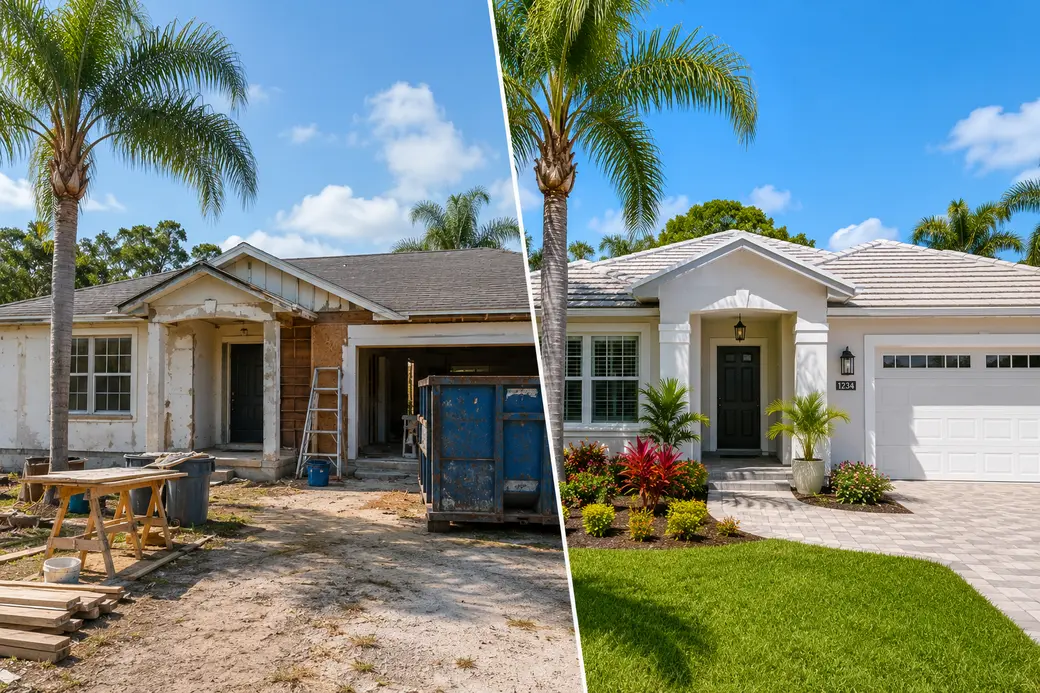
A fixer-upper may be the better choice if you can buy at a price that leaves enough room for realistic renovation costs, have the time and tolerance to manage projects, and can finance both the purchase and improvements. A move-in-ready home may be better if you value predictable costs, want to occupy the property quickly, or prefer to avoid major construction after closing. Neither option is automatically the better investment. Florida buyers should compare the total cost of ownership, including the roof, HVAC, plumbing, electrical systems, insurance, permits, renovation contingencies and immediate repairs, rather than comparing purchase prices alone.
Quick Answers About Fixer-Uppers vs. Move-In-Ready Homes
Is a fixer-upper always cheaper?
No. A fixer-upper may have a lower purchase price, but renovation costs, permits, professional fees, financing, temporary housing and unexpected repairs can substantially change the total cost. Compare the purchase price plus realistic improvement costs with comparable move-in-ready homes.
What is the biggest advantage of a fixer-upper?
A fixer-upper can give you greater control over finishes, layout and improvements while potentially providing access to a location or property type that would cost more in renovated condition. The financial outcome depends on the individual purchase and renovation, however, and increased value should never be assumed.
What is the biggest advantage of a move-in-ready home?
Predictability. A move-in-ready home can reduce the amount of immediate construction, contractor coordination and renovation budgeting required after closing. Buyers should still investigate the condition and age of major systems because attractive finishes do not guarantee that every component is new or problem-free.
Can you finance renovations when buying a fixer-upper?
Potentially. Programs such as Fannie Mae HomeStyle Renovation, FHA 203(k) and Freddie Mac CHOICERenovation can provide renovation financing for eligible borrowers and properties. Requirements differ, and not every lender offers every program.
Should I get a home inspection on a move-in-ready home?
A polished appearance is not a substitute for investigating property condition. Buyers should consider appropriate inspections based on the home and transaction and have material findings evaluated by qualified inspectors, contractors, engineers or other professionals before making property-specific decisions.
Can renovating a fixer-upper create equity?
It can, but it is not guaranteed. The eventual market value depends on the property, location, quality and cost of improvements, market conditions and buyer demand. Renovation spending does not automatically produce an equal or greater increase in market value.
Which is better for a first-time buyer?
Either can work. A first-time buyer who has sufficient reserves, appropriate financing and a manageable renovation may be comfortable with a fixer-upper. Someone who wants fewer immediate projects and more predictable post-closing expenses may prefer move-in-ready condition.
The Real Comparison Is Total Cost, Not Asking Price
Fixer-uppers attract buyers partly because the initial asking price may be lower than that of renovated homes nearby. That price difference matters, but it is only the beginning of the comparison.
A realistic fixer-upper budget may need to account for:
- Purchase price
- Closing costs
- Inspections and specialized evaluations
- Design or architectural work when needed
- Permits
- Contractor labor and materials
- Renovation financing costs when applicable
- A reserve for unforeseen conditions
- Temporary housing or storage when necessary
- Insurance considerations during renovation
- Landscaping and exterior work
- Immediate maintenance after closing
A $50,000 difference between two purchase prices does not necessarily mean the fixer-upper is $50,000 cheaper. You need a realistic scope of work and credible estimates before making that comparison.
When a Fixer-Upper Can Make Sense
A fixer-upper can be attractive when the property has the location, lot, floor plan or other characteristics you want but needs updating or repairs that you are prepared to undertake.
It may deserve serious consideration when:
- The purchase price appropriately reflects the property's condition
- You have a realistic renovation scope
- Qualified professionals have evaluated major concerns
- You have sufficient funds or appropriate renovation financing
- Your budget includes room for unforeseen work
- You can tolerate the project's expected timeline
- The improvements fit the property and surrounding market
- You want greater control over finishes and design
The key is buying a project you understand, not simply buying the least expensive house in the search results.
When a Move-In-Ready Home Can Make More Sense
Move-in-ready homes appeal to buyers who want the property to function for their needs without an immediate major renovation. That convenience can be especially important when work, family responsibilities, relocation timing or financing make a construction project undesirable.
A move-in-ready home may be a better fit when:
- You need to occupy the home soon after closing
- You prefer more predictable initial expenses
- You do not want to manage contractors and construction
- The existing finishes already suit your needs
- You have limited cash available beyond closing
- You are relocating and cannot easily supervise work
- Major systems have been appropriately maintained or updated
You may pay more upfront for completed improvements, but that premium can purchase convenience and reduce the number of projects demanding attention immediately after closing.
Do Not Confuse Cosmetic Work With Major Rehabilitation
Not all fixer-uppers are alike. A home that needs interior paint, flooring, lighting and cabinet hardware is a very different project from a property requiring a roof, HVAC replacement, plumbing work, electrical upgrades, structural repairs and extensive moisture remediation.
A useful first step is to separate potential work into three categories:
Cosmetic improvements
Examples can include paint, flooring, fixtures, hardware and other finish changes. These may be relatively straightforward, although costs can still become substantial across an entire home.
Functional improvements
These can include kitchen or bathroom remodeling, window replacement, HVAC work, pool improvements, exterior repairs or changes intended to make the home function better for the owner.
Major repair or rehabilitation
Structural conditions, significant water intrusion, extensive plumbing or electrical work, major roof issues and other complex conditions can require specialized evaluation, permitting and substantial professional involvement.
The more the project moves from cosmetic updating toward major rehabilitation, the more important professional inspections, written estimates, financing analysis and contingency planning become.
Florida Fixer-Uppers Require Extra Attention to Major Systems
In Florida, buyers should avoid spending their entire renovation budget on kitchens and flooring before understanding the home's major systems.
Important areas to investigate can include:
- Roof age and condition
- HVAC equipment
- Plumbing materials and condition
- Electrical systems
- Windows and exterior doors
- Moisture or water intrusion
- Drainage
- Pool and pool equipment when applicable
- Exterior deterioration
- Seawalls, docks and other waterfront infrastructure when applicable
Hunt Brothers Realty's Florida renovation guidance emphasizes addressing property-condition concerns before concentrating on cosmetic improvements. That principle applies equally well when evaluating a fixer-upper as a buyer.
Inspection findings should be evaluated with the appropriate licensed inspector, contractor, structural engineer or other qualified professional before you make a property-specific purchasing or renovation decision.
A Move-In-Ready Home Still Needs Due Diligence
Fresh paint, new flooring and an updated kitchen can make a property look completely renovated. Those visible improvements do not tell you the age or condition of every system behind the walls, above the ceiling or outside the home.
A move-in-ready home can still have an older roof, aging HVAC equipment, plumbing concerns, drainage problems or other conditions that deserve investigation. Buyers should also determine whether significant renovations were appropriately permitted when permits were required.
Do not let attractive finishes cause you to skip the same property-condition questions you would ask about a visibly dated home.
How Can You Finance a Fixer-Upper?
Financing can be one of the biggest differences between buying a fixer-upper and buying a move-in-ready property. A conventional mortgage designed for a home already meeting the lender's requirements may not solve the problem of paying for substantial improvements after closing.
Depending on the borrower and property, renovation financing may provide another path.
Fannie Mae HomeStyle Renovation
Fannie Mae HomeStyle Renovation allows eligible borrowers to combine a home purchase and qualifying improvements into a single conventional mortgage.
For purchase transactions, Fannie Mae currently permits renovation costs up to 75% of the lesser of the purchase price plus renovation costs or the property's as-completed appraised value, subject to the program's other eligibility and loan-to-value requirements.
FHA 203(k)
HUD's FHA 203(k) Rehabilitation Mortgage Insurance Program provides renovation financing for eligible properties and borrowers. HUD currently describes two program types.
- Limited 203(k): Currently permits up to $75,000 to finance qualifying repairs, improvements and upgrades.
- Standard 203(k): Supports major rehabilitation and repair, including qualifying structural work, with a minimum rehabilitation cost of $5,000 and other FHA requirements.
Freddie Mac CHOICERenovation
Freddie Mac CHOICERenovation is another conventional option that allows eligible borrowers to finance a home purchase and renovation costs through a single-closing transaction.
Renovation loans have specific underwriting, appraisal, contractor, documentation and project requirements. Availability also varies by lender. Buyers should have a qualified mortgage professional compare actual financing options before assuming a particular property or renovation qualifies.
Renovation Financing Can Add More Steps
The ability to finance improvements can make a fixer-upper possible, but buyers should understand that renovation financing can involve more coordination than an ordinary purchase mortgage.
For example, Fannie Mae's HomeStyle Renovation process can involve contractor selection, renovation plans, lender review, an as-completed appraisal, escrowed renovation funds, project draws and lender oversight while the work is underway.
That does not make renovation financing undesirable. It simply means the financing structure itself should be part of the fixer-upper decision. Ask the lender about expected documentation, closing requirements, contractor requirements, project deadlines, inspections, draws and contingency reserves before writing an offer that depends on renovation financing.
How Much Contingency Should You Build Into a Renovation?
There is no single contingency percentage that is appropriate for every renovation. The likelihood of unexpected work depends on the home's age, project scope, accessibility of existing systems and what professionals discover once work begins.
Renovation loan programs may also impose their own reserve requirements in particular circumstances. Fannie Mae, for example, has specific contingency-reserve rules within HomeStyle Renovation and allows lenders to establish reserves in additional situations.
For your own budget, obtain detailed written estimates and discuss potential hidden conditions with qualified contractors before determining an appropriate reserve. Do not assume that the first estimate represents the maximum possible cost.
Think About Time as Part of the Cost
Renovation decisions are not purely financial. Construction takes time, and managing it requires attention.
A fixer-upper may involve:
- Obtaining contractor bids
- Selecting materials
- Applying for permits
- Waiting for materials
- Scheduling multiple trades
- Responding to unforeseen conditions
- Completing required inspections
- Living around construction or arranging temporary housing
A buyer who enjoys renovation may view this as part of creating a personalized home. A buyer with an intensive job, young family, long-distance relocation or limited project-management experience may place a much higher value on move-in-ready condition.
Permits Matter Before and After You Buy
A fixer-upper may require permits for some of the work you intend to complete. A renovated move-in-ready home may raise a different question, whether previous improvements that required permits were properly permitted and completed.
Permit requirements depend on the work and local jurisdiction. Before beginning renovations, verify applicable requirements with the local building or permitting authority and appropriate licensed contractors. When evaluating prior renovations, available permit records can be one part of your due diligence.
Do Not Assume Every Renovation Dollar Comes Back at Resale
A common fixer-upper mistake is assuming that spending $100,000 on renovations automatically increases the home's market value by at least $100,000. Real estate markets do not work according to a guaranteed dollar-for-dollar formula.
Market value can be influenced by:
- Location
- Lot and view
- Home size and functional layout
- Quality of improvements
- Buyer preferences
- Comparable sales
- Competing inventory
- Overall market conditions
Before committing to an extensive renovation based on expected resale value, obtain property-specific market information from a licensed real estate professional and cost estimates from qualified contractors. An appraiser may also be appropriate when an independent valuation opinion is needed.
Insurance Can Affect the Fixer-Upper Decision in Florida
Before buying a Florida property that needs significant work, investigate insurance early. Do not assume a property will qualify for the coverage, premium or terms you expect simply because you plan to replace or repair components after closing.
Roof condition, electrical systems, plumbing, occupancy during renovation and other property characteristics can be relevant to an insurer's underwriting. Requirements vary by carrier and property.
Insurance availability, coverage and premiums can vary substantially by property. Buyers should obtain property-specific quotes and review the proposed renovation and occupancy circumstances with a qualified insurance professional before making a purchasing decision.
Compare Two Homes With an All-In Budget
Suppose you are comparing a $450,000 fixer-upper with a $550,000 move-in-ready home. The $100,000 price difference may initially make the fixer-upper look like the obvious value.
Now suppose professional estimates indicate the fixer-upper needs $70,000 in planned improvements, and you also need to account for financing expenses, permits, a contingency reserve and temporary living arrangements. The financial difference between the homes may become considerably smaller.
The opposite can also occur. A dated home may need mostly cosmetic work that a buyer can complete gradually, while the move-in-ready alternative commands a substantial premium for renovations that are not particularly important to that buyer.
The numbers are hypothetical, but the lesson is practical: compare the complete scenarios rather than assuming one category is always cheaper.
A Practical Fixer-Upper vs. Move-In-Ready Checklist
A fixer-upper may fit you better if:
- You prioritize location or lot over finishes
- You want to personalize the property
- You understand the likely scope of work
- You have realistic contractor estimates
- You have appropriate cash reserves or renovation financing
- You can tolerate construction delays and disruption
- The property's major systems have been professionally evaluated
A move-in-ready home may fit you better if:
- You want to move in quickly
- You prefer fewer immediate projects
- You value greater initial cost predictability
- You do not want to coordinate contractors
- The existing design already suits you
- Your post-closing cash reserves are limited
- Professional due diligence supports the home's apparent condition
Which One Should You Buy?
Buy the fixer-upper when the location and underlying property are compelling, the condition is understood, the renovation numbers are realistic, financing is workable and you genuinely want to manage the project.
Choose the move-in-ready home when reducing construction uncertainty and getting settled quickly are worth paying for, provided your inspections and other due diligence support the home's condition.
Most importantly, do not compare a fixer-upper's purchase price with a move-in-ready home's purchase price and stop there. Compare the total cost, condition, financing, time commitment, location and the amount of uncertainty you are comfortable accepting.
Comparing Florida Homes in Different Conditions?
Hunt Brothers Realty helps Florida Gulf Coast buyers compare homes based on more than finishes and asking prices. Understanding location, comparable properties, renovation potential, major systems, insurance considerations and total ownership costs can help buyers make more informed comparisons between a dated property and a renovated alternative.
Buyers can also review Hunt Brothers Realty's Florida renovation guide or visit HuntBrothersRealty.com to begin comparing Florida Gulf Coast properties.
Informational notice: This article provides general real estate and home-buying information for educational purposes and is not individualized lending, financial, legal, tax, insurance, inspection, engineering, construction or permitting advice. Property condition, renovation costs, financing eligibility, insurance availability and permit requirements vary by property and transaction. Buyers considering a fixer-upper should obtain appropriate property inspections, written contractor estimates, property-specific insurance information and financing guidance before making a purchasing decision. Structural or technical concerns should be evaluated by the appropriate qualified engineer, contractor, inspector or other professional, and legal questions should be reviewed with a qualified Florida real estate attorney.
Sources
- Fannie Mae, HomeStyle Renovation Mortgage
- Fannie Mae, HomeStyle Renovation Program
- Fannie Mae Selling Guide, HomeStyle Renovation Mortgages
- Fannie Mae Selling Guide, HomeStyle Renovation Collateral Considerations
- Fannie Mae Selling Guide, Renovation Costs and Escrow Accounts
- U.S. Department of Housing and Urban Development, FHA 203(k) Rehabilitation Mortgage Insurance Program
- Freddie Mac, CHOICERenovation Mortgages
- Hunt Brothers Realty, Should You Renovate Before Selling Your Florida Home?
Contact Hunt Brothers Realty
46 N. Washington Blvd, Ste 3, Sarasota, FL 34236
Phone: (941) 388-7017
Email: info@huntbrothersrealty.com
Website: HuntBrothersRealty.com
Categories
- All Blogs 2112
- Anna Maria Island 86
- Bird Key 4
- Bradenton 236
- Buying a Home 1171
- Casey Key 2
- Clearwater 11
- Condos & HOA Living 1088
- Ellenton 5
- Englewood 11
- First Time Homebuyers 1280
- Foreclosures 5
- Home Selling 6
- Homeownership 1304
- Lakewood Ranch 25
- Lido Key 28
- Longboat Key 80
- Luxury/Waterfront Properties 1244
- Market Updates & Trends 766
- Mortgages & Financing 48
- Move-Up Buyers 22
- Neighborhood Guides 879
- New Construction 34
- Palmetto 3
- Parrish 6
- Port Charlotte 10
- Punta Gorda 17
- Real Estate Investing 1160
- Relocation to Florida 1200
- Safety Harbor 3
- Sarasota 81
- Sarasota - Downtown 162
- Selling a Home 146
- Siesta Key 91
- St. Petersburg 8
- Tierra Verde 5
- Vacation & Second Homes 1353
- Venice 193
- Wellen Park 19
Recent Posts