Older vs. Newer Florida Condos: Which Is the Better Fit for Your Priorities?
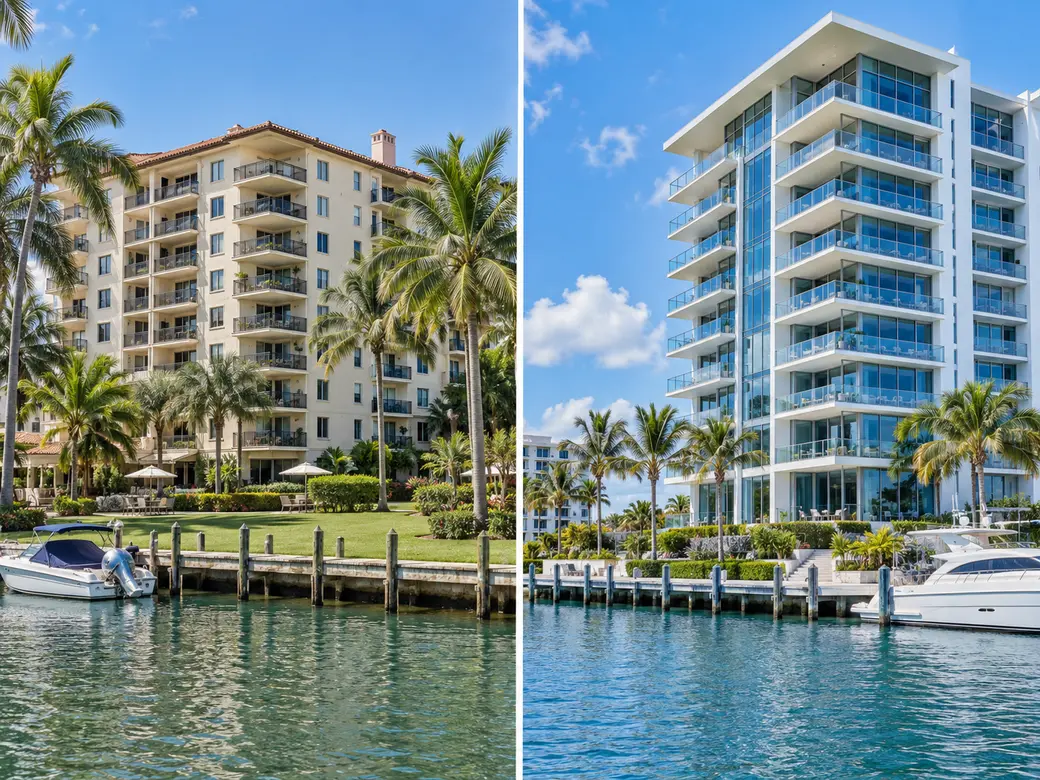
Neither an older nor a newer Florida condo is automatically the better purchase. Established condominiums may offer desirable locations, larger residences, mature grounds or substantial completed improvements, while newer buildings may offer contemporary layouts, newer common systems and modern amenities. The more useful comparison is the individual unit plus the condominium association behind it. Buyers considering Sarasota real estate and other Florida Gulf Coast condominiums should compare building condition, reserves, assessments, insurance, fees, inspections, maintenance history, amenities, rules and total ownership costs rather than using building age as a shortcut for quality.
Quick Answers About Older vs. Newer Florida Condos
Is an older Florida condo automatically riskier to buy?
No. Building age is one factor, not a conclusion about condition or financial health. An established condominium may have completed substantial roof, structural, mechanical, waterproofing or other capital work, while a newer building can still have construction, insurance, association or financial issues requiring investigation.
Is a newer Florida condo automatically less expensive to maintain?
No. Newer components may reduce some near-term replacement concerns, but the association can still have substantial operating, insurance, staffing, amenity and reserve expenses. Compare the complete association budget and anticipated obligations rather than assuming newer means lower monthly costs.
Do older Florida condos have to complete structural inspections?
Certain Florida condominium buildings are subject to milestone inspection requirements based on criteria established by current Florida law. Buyers should verify whether the particular building is subject to those requirements, whether an inspection has been completed and what the resulting reports say rather than relying solely on the building's age.
What is a Structural Integrity Reserve Study?
A Structural Integrity Reserve Study, commonly called a SIRS, is a reserve-planning study required for applicable Florida condominium buildings. It addresses specified building components, their estimated remaining useful lives, anticipated replacement or deferred-maintenance costs and a recommended reserve funding plan. A SIRS and a milestone inspection are different requirements.
Are newer condos better for buyers who want modern amenities?
Newer developments may offer contemporary amenity packages, technology and layouts, but amenities vary substantially by building. Established Florida condominiums can also have extensive pools, fitness facilities, club spaces, tennis or pickleball facilities, beach access, boat facilities and other features, depending on the community.
Does a lower condo fee make an older or newer building a better value?
Not necessarily. Compare what the fee covers, the association's reserve contributions, insurance, amenities, staffing and anticipated projects. A low regular assessment can provide an incomplete picture if substantial expenses are funded separately or major future obligations are approaching.
What matters more than the age of a Florida condo?
Current condition, maintenance history, association finances, reserves, insurance, special assessments, inspection findings, completed and planned projects, governing documents and the unit itself usually provide more useful information than age alone. Buyers should evaluate the condominium as both a residence and a shared financial structure.
Why Building Age Is Only the Beginning of the Comparison
Two Florida condominiums built decades apart can offer very different ownership experiences, but age alone does not explain why. Location, construction, maintenance, association governance, reserve planning, renovations and capital projects can all influence the current condition and economics of a condominium.
An established building may have replaced major systems, restored exterior components and accumulated decades of maintenance history for a buyer to review. A recently completed building starts with newer components but has a shorter operating history and may still be transitioning from developer control, depending on the development.
That is why Hunt Brothers Realty's guide to buying a Florida condo in 2026 recommends investigating both the individual residence and the association responsible for the building and common property.
What Can Be Appealing About an Older Florida Condo?
Established Florida condominiums can offer characteristics that are difficult to reproduce in new construction. Depending on the specific property, these can include established locations, mature landscaping, larger floor plans, existing waterfront positions or a long operating history that gives buyers more association records and project history to investigate.
Potential advantages worth investigating can include:
- Established locations where developable land may be limited
- Mature landscaping and established common areas
- Potentially larger residences or different floor-plan styles
- A documented history of association budgets and financial statements
- A longer record of maintenance, repairs and capital projects
- Completed building improvements that may have addressed aging components
- Existing community amenities that can be evaluated in their current condition
The important word is "potentially." These characteristics vary by condominium and should be confirmed for the building and residence under consideration.
What Should Concern You About an Older Condo?
An older building can have major components approaching repair or replacement, but that does not tell you whether the association is unprepared for those expenses. The more useful questions are what work is needed, what has already been completed, what reserves exist and how future projects are expected to be funded.
Depending on the building, buyers may need to investigate the condition and funding of:
- Roof systems
- Structural components
- Waterproofing and exterior finishes
- Plumbing and electrical systems
- Windows and exterior doors
- Elevators
- Parking structures
- Pools and other common amenities
- Seawalls, docks or waterfront infrastructure when applicable
Do not turn the age of a component into your own engineering conclusion. Inspection reports, engineering findings and significant building conditions should be evaluated with the appropriate licensed inspector, engineer, contractor or other qualified professional.
What Can Be Appealing About a Newer Florida Condo?
Newer condominiums may appeal to buyers prioritizing contemporary design, newer common components, modern building systems and current amenity concepts. Depending on the development, residences may feature open layouts, newer windows and doors, current kitchens and bathrooms, modern technology or recently completed common spaces.
Possible characteristics can include:
- Contemporary floor plans and finishes
- Newer mechanical and common building systems
- Current amenity designs
- Newer elevators, roofs and common-area components
- Current technology and access-control systems when offered
- Less immediate need for an individual buyer to renovate a newly finished unit
These are possibilities, not assumptions that should be applied to every newer condominium. Review the actual specifications, warranties, association responsibilities and condition of the property being considered.
What Should You Investigate in a Newer Condo?
Newer does not mean due diligence can be skipped. Buyers should investigate construction history, association finances, insurance, warranties, governance, rules and any unresolved building or unit issues just as they would with an established condominium.
Questions can include whether control has transferred from the developer to unit owners, what warranties may still apply, whether owners have reported recurring construction issues, how the association budget was established and whether current assessments realistically reflect ongoing operating expenses.
A newer building has less history, which can be both appealing and limiting. Fewer years of wear may exist, but buyers also have fewer years of budgets, insurance renewals, maintenance records and capital-project history to examine.
How Do Florida's SIRS Requirements Affect the Comparison?
Florida's Structural Integrity Reserve Study requirements make reserve information particularly important when evaluating applicable condominium buildings. Under current Florida law, a residential condominium association generally must complete a SIRS at least every 10 years after the condominium's creation for each building that is three habitable stories or higher.
According to the Florida Department of Business and Professional Regulation condominium inspection resources, a SIRS is a reserve-planning tool addressing specified building components and the funding needed for anticipated major repairs and replacements. Current Florida law identifies components including the roof, structural systems, fireproofing and fire protection, plumbing, electrical systems, waterproofing and exterior painting, windows and exterior doors, plus certain other qualifying structural-integrity-related items.
For buyers, the practical question is not simply whether a SIRS exists. Review what it says about remaining useful lives, anticipated expenses and recommended reserve funding, then compare that information with the association's current reserves, budget and planned projects. Technical and financial findings should be reviewed with the appropriate engineer, inspector, CPA, attorney or other qualified professional when they could materially affect a purchase.
Is a Milestone Inspection the Same as a SIRS?
No. A milestone inspection and a Structural Integrity Reserve Study address different issues. DBPR describes a milestone inspection as a structural inspection of an applicable building, while a SIRS addresses specified components and reserve funding. The requirements can intersect in certain circumstances, but buyers should not treat one document as automatically equivalent to the other.
For an older building subject to these requirements, completed reports can provide valuable information for due diligence. They should not be reduced to a simple "passed" or "failed" label without understanding the actual findings, recommended work and subsequent repairs.
How Should You Compare Condo Fees?
Compare what the assessments fund rather than comparing the numbers alone. A higher regular assessment does not automatically mean poor financial management, and a lower assessment does not automatically mean better value.
One condominium's assessment might include substantial reserve contributions, building insurance, water, cable, internet, management, staffed services and extensive amenities. Another might include fewer services or rely on owners to pay certain costs separately.
For both older and newer condos, ask:
- What does the regular assessment include?
- How much is being contributed to reserves?
- How have assessments changed in recent years?
- What major projects are anticipated?
- Are special assessments approved, proposed or being discussed?
- Does the association have debt?
- What are the association's current insurance costs and deductibles?
Hunt Brothers Realty's Florida condo special assessment guide explains why an assessment should be evaluated alongside reserves, building condition, insurance, association finances and planned projects rather than in isolation.
Are Special Assessments Mainly an Older-Condo Problem?
No. Older buildings may face substantial repair and replacement projects as components age, but special assessments are not exclusive to older condominiums. Assessments can arise from capital projects, insurance expenses, storm damage, unexpected repairs or other association obligations.
A special assessment should prompt investigation rather than an automatic conclusion about the condominium. Determine what the assessment funds, whether the scope and cost are established, how much applies to the residence, what has already been paid and whether additional projects could follow. Hunt Brothers Realty's guide to buying a condo with a pending special assessment provides a more detailed framework.
How Does Insurance Affect Older and Newer Condos?
Insurance should be investigated for either age category. The association's master insurance and the individual unit owner's insurance address different exposures, and the building's age is only one of many factors that can affect availability, coverage and cost.
Review the association's current coverage, applicable deductibles, wind and flood considerations, recent claims information when available and the individual coverage appropriate for the unit. Buyers considering a renovated residence should also make sure the insurance professional understands significant interior improvements when evaluating coverage.
Hunt Brothers Realty's guide to condo association insurance versus HO-6 insurance in Florida explains why buyers should evaluate these two layers together. Insurance availability, coverage, deductibles and premiums vary substantially by property, so obtain property-specific information and review it with a qualified insurance professional before making a purchasing decision.
Does an Older Condo Offer a Better Location?
Sometimes established condominiums occupy locations developed long before newer projects arrived, but location advantages should be evaluated property by property. On Florida's Gulf Coast, a buyer may encounter older and newer options with very different relationships to downtown districts, beaches, bays, marinas, shopping, dining and major roads.
For some buyers, being closer to a beach or established downtown district may matter more than having the newest finishes. Another buyer may prioritize newer construction and amenities even if it means choosing a different location. Buyers can use Hunt Brothers Realty's Florida Gulf Coast community guide to compare areas before narrowing the search to individual condominium buildings.
Should You Buy a Renovated Unit in an Older Building?
A renovated residence can offer contemporary interiors within an established condominium, but the unit renovation and the building's condition are separate parts of the purchase. New flooring, cabinetry and countertops do not tell you about the association's reserves, roof, structural components, insurance or planned capital projects.
Investigate whether significant unit renovations received any required permits and association approvals. Buyers should also inspect the work and understand which components belong to the unit owner versus the association. Permit, construction and inspection questions should be verified with the appropriate association, local permitting authority, licensed inspector, contractor or other qualified professional.
Which Condo Documents Matter Regardless of Building Age?
Whether a condominium is five years old or several decades old, buyers should review the association records and governing documents applicable to the purchase. A beautiful unit does not provide enough information to understand the shared obligations that come with condominium ownership.
Depending on the property and transaction, useful records can include:
- Declaration of condominium and amendments
- Articles, bylaws and current rules
- Current association budget
- Recent financial statements
- Reserve information
- Applicable SIRS documentation
- Applicable milestone inspection information
- Recent board and association meeting minutes
- Approved and proposed special assessments
- Master insurance information and deductibles
- Information about completed and planned capital projects
- Pet, rental and renovation rules
- Parking and storage information
For a more detailed checklist, review Hunt Brothers Realty's guide to condo documents buyers should review before closing. Questions involving the legal meaning of governing documents, contract rights or ownership obligations should be reviewed with a qualified Florida real estate attorney.
How Should You Compare the Total Cost of Ownership?
Purchase price and monthly condo fees are only part of the comparison. A more useful analysis estimates the complete cost of owning the specific residence within the specific association.
Depending on the property, compare:
- Purchase price
- Regular association assessments
- Approved or anticipated special assessments
- Individual unit-owner insurance
- Property taxes
- Utilities not included in association assessments
- Parking or storage expenses when separate
- Maintenance responsibilities inside the residence
- Renovation or furnishing costs
- Financing costs when applicable
A newer condo with a higher purchase price and extensive amenities can produce one ownership-cost profile. An older condo with a lower purchase price but upcoming renovations or assessments can produce another. Neither should be assumed to cost more without property-specific numbers.
Which Is the Better Fit for Your Priorities?
Instead of beginning with "old or new," begin with what matters most to you and then investigate the buildings that satisfy those priorities. The right comparison is between specific condominium opportunities, not broad age categories.
If location is your priority
Compare the actual locations available within your budget. An established condominium may offer a location you value more, while a newer building may provide another combination of access, views and amenities. Do not assume either category has the location advantage without comparing actual properties.
If modern finishes are your priority
New construction may reduce the amount of immediate interior work you want to undertake, but renovated units in established buildings can offer another option. Compare renovation quality, approvals, insurance needs and the building itself rather than evaluating the interior in isolation.
If financial predictability is your priority
Focus on current budgets, reserve information, insurance, capital plans, inspection reports and assessments. Neither building age guarantees future costs. The association's documented obligations and funding plan provide more useful information.
If amenities are your priority
Compare what you will actually use and what those amenities cost to operate. A long list of amenities is not automatically more valuable if several have little relevance to your lifestyle, while an established community may offer the particular facilities you care about most.
The Better Question Is Not "How Old Is the Condo?"
Building age matters, but it should lead to questions rather than conclusions. For an established condominium, investigate what has been maintained, replaced, inspected and funded. For a newer condominium, investigate construction history, warranties, association finances, insurance, governance and how realistic current operating costs appear to be.
An older condominium with documented capital improvements and thoughtful financial planning may align well with one buyer's priorities. A newer building with contemporary design and amenities may align better with another buyer's priorities. The important task is understanding exactly what you are purchasing, both inside the residence and beyond its front door.
Compare Florida Condos With the Full Ownership Picture in Mind
Hunt Brothers Realty can help Florida Gulf Coast condo buyers compare individual residences, buildings, association information and locations without reducing the decision to building age alone. Explore Florida Gulf Coast communities, review Hunt Brothers Realty's Florida condo buyer guide, or contact Hunt Brothers Realty to discuss the priorities shaping your condominium search.
Informational notice: This article provides general real estate information and is not individualized legal, financial, insurance, lending, inspection, engineering, construction, tax or association advice. Condominium condition, reserve requirements, inspection status, association finances, insurance, assessments and governing documents vary by property and can change. Buyers should review current property-specific records and consult the appropriate qualified professionals, including a lender, insurance professional, inspector, engineer, CPA or financial professional, condominium association and qualified Florida real estate attorney when those matters could materially affect a purchasing decision.
Sources
- Florida Department of Business and Professional Regulation, Condominium Inspections and Structural Integrity Reserve Studies
- Florida Department of Business and Professional Regulation, Condominium Information and Resources FAQs
- Florida Legislature, Chapter 718, Florida Condominium Act
- Hunt Brothers Realty, Buying a Condo in Florida in 2026: 12 Questions to Ask Before You Make an Offer
- Hunt Brothers Realty, What Condo Documents Should Buyers Review Before Closing?
- Hunt Brothers Realty, Florida Condo Special Assessments: How to Protect Yourself Before You Buy
- Hunt Brothers Realty, Condo Association Insurance vs. HO-6 Insurance in Florida
Contact Hunt Brothers Realty
46 N Washington Blvd, Ste #3, Sarasota, Florida 34236
Phone: (941) 388-7017
Email: info@huntbrothersrealty.com
Website: HuntBrothersRealty.com
Categories
- All Blogs 1546
- Anna Maria Island 68
- Bird Key 3
- Bradenton 112
- Buying a Home 687
- Casey Key 2
- Clearwater 5
- Condos & HOA Living 594
- Ellenton 4
- Englewood 5
- First Time Homebuyers 766
- Foreclosures 3
- Homeownership 749
- Lakewood Ranch 15
- Lido Key 24
- Longboat Key 66
- Luxury/Waterfront Properties 686
- Market Updates & Trends 352
- Mortgages & Financing 33
- Move-Up Buyers 20
- Neighborhood Guides 499
- New Construction 27
- Palmetto 2
- Parrish 4
- Port Charlotte 7
- Punta Gorda 11
- Real Estate Investing 620
- Relocation to Florida 670
- Safety Harbor 2
- Sarasota 4
- Sarasota - Downtown 134
- Selling a Home 138
- Siesta Key 87
- St. Petersburg 3
- Tierra Verde 4
- Vacation & Second Homes 802
- Venice 21
- Wellen Park 7
Recent Posts