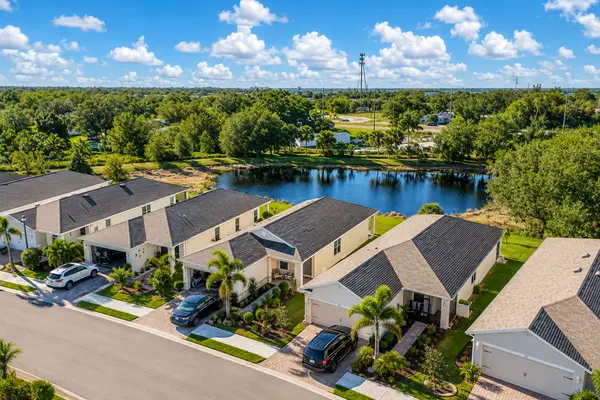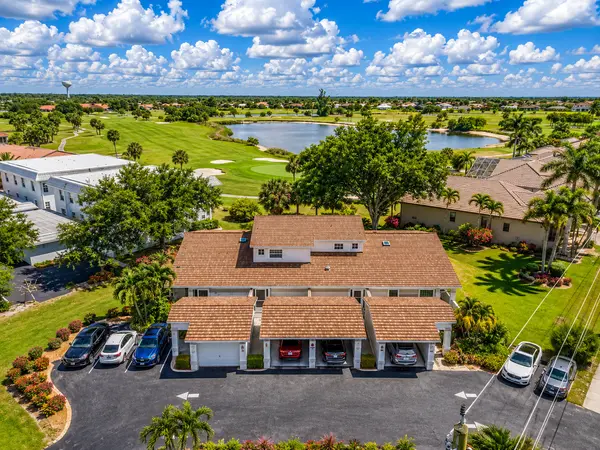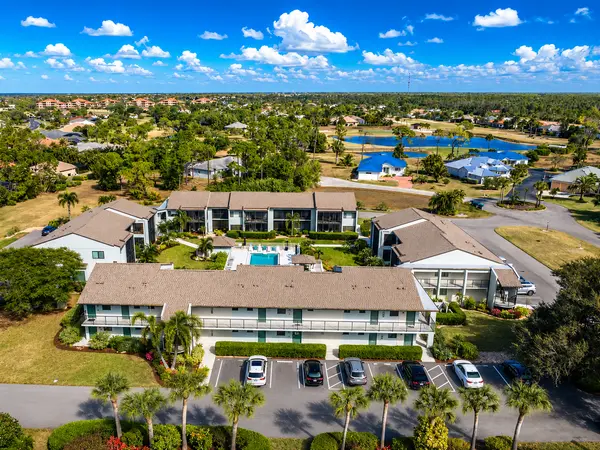
What Are Deed Restrictions and How Do They Affect a Property?
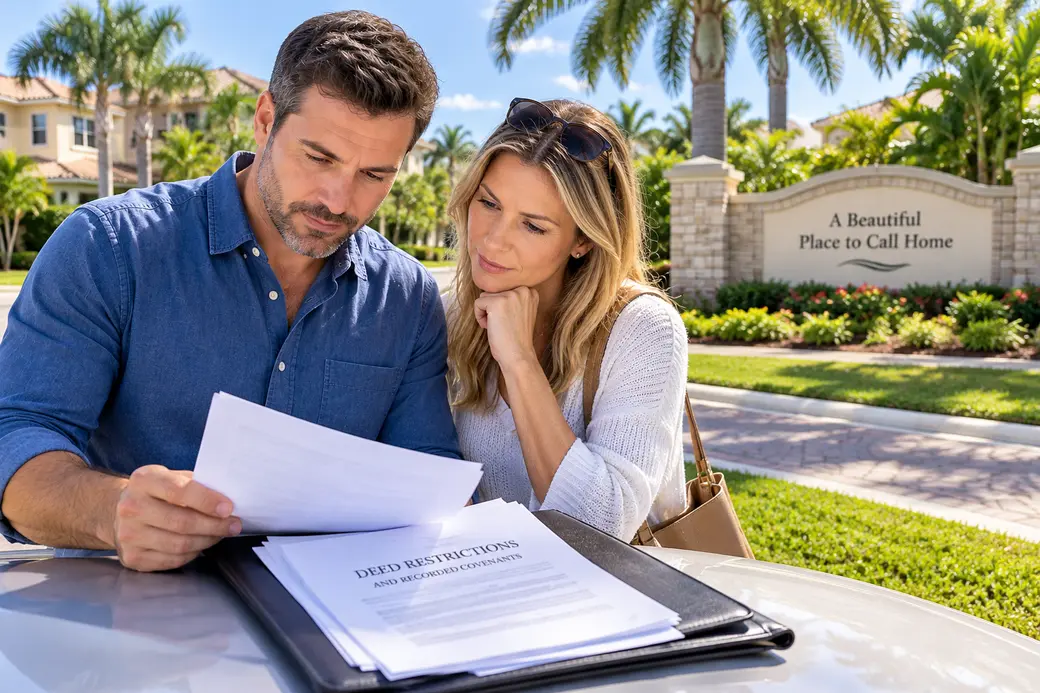
Deed restrictions are private restrictions or covenants that can limit or regulate how a property is used. Depending on the property and the applicable documents, they may address exterior changes, fences, landscaping, parking, leasing, signs, pets, architectural standards or other uses. In a Florida homeowners association community, important restrictions are commonly contained in a recorded declaration of covenants and related governing documents. Buyers should understand these restrictions before purchasing because they can affect what an owner may do with the property after closing. The actual recorded documents, not assumptions about the neighborhood, determine what applies to a particular property.
Deed restrictions are especially important when a buyer already has specific plans for a home. If you want to install a fence, park a particular vehicle, rent the property, substantially change the exterior or build an addition, discovering a restriction after closing can create an unwelcome surprise. Hunt Brothers Realty's guide to what an HOA actually does in Florida provides additional context for buyers considering association-governed communities.
Quick Answers About Deed Restrictions and Property Ownership
What is a deed restriction?
A deed restriction generally refers to a private covenant or restriction affecting the use of real property. In a Florida HOA community, the declaration of covenants is a recorded instrument containing covenants that subject property within the community to the association's jurisdiction and control. The precise legal effect depends on the actual recorded documents and applicable law.
Do deed restrictions stay with the property when it is sold?
Some recorded covenants are intended to run with the land and affect successive owners rather than only the person who originally agreed to them. Florida law specifically defines an HOA declaration as recorded covenants running with the land. Whether a particular restriction remains valid and enforceable requires review of the specific restriction, title history and current law.
Are deed restrictions the same as HOA rules?
Not exactly. Recorded covenants can establish property restrictions and an association's authority, while an HOA may also operate under bylaws, articles and other applicable rules or standards. Florida law defines HOA governing documents to include the recorded declaration and amendments as well as the association's articles of incorporation and bylaws and their amendments.
Can deed restrictions affect renovations?
Yes. Depending on the governing documents, an owner may need association approval before making certain exterior improvements. Fences, exterior colors, additions, major landscaping changes and other visible improvements can be subject to architectural standards or approval procedures.
Can deed restrictions limit rentals?
Community documents may contain leasing or rental provisions where permitted by applicable law. A buyer planning to rent a property should verify the current recorded restrictions, association rules and applicable local regulations rather than relying on a listing description or verbal statement.
Does every deed-restricted property have an HOA?
Do not assume that every recorded restriction means a property is part of the same type of mandatory HOA. Property restrictions and association structures vary. Buyers should determine which recorded documents affect the specific parcel, whether association membership is mandatory and who, if anyone, has authority to administer or enforce applicable restrictions.
Should I read deed restrictions before buying a house?
Yes. Restrictions can directly affect how you intend to use or modify a property. Buyers should obtain the current recorded documents and review questions involving legal rights, title, enforceability or interpretation with a qualified Florida real estate attorney or appropriate title professional before making a decision that depends on those rights.
What Does Deed Restricted Mean in Florida Real Estate?
When a property is described as deed restricted, the important point is that private restrictions may affect ownership or use in addition to requirements imposed by government. The phrase itself does not tell you what those restrictions actually say.
For a Florida homeowners association governed by Chapter 720, state law defines a declaration of covenants as a recorded written instrument or instruments containing covenants running with the land that subject the community to the jurisdiction and control of an association. Florida law also defines a homeowners association, for purposes of that chapter, as an organization in which membership is a mandatory condition of parcel ownership and which is authorized to impose assessments that may become a lien if unpaid.
Those statutory definitions are useful, but buyers should not assume every property described as deed restricted falls into exactly the same legal structure. The individual property and documents must be examined.
What Can Deed Restrictions Control?
Restrictions vary considerably by community and property. Some declarations are extensive, while others may contain a much narrower set of requirements. Depending on the applicable documents and current law, restrictions or association standards may address matters such as:
- Exterior paint colors
- Fences and gates
- Roof materials or exterior alterations
- Landscaping modifications
- Additions and other exterior improvements
- Parking and certain vehicle matters, subject to applicable law
- Leasing or rental matters where legally permitted
- Signs
- Pets, subject to applicable law
- Use of common amenities
- Property maintenance standards
- Other community-specific property uses
The list above is illustrative, not a statement that every Florida community regulates every item. Current law can also limit an association's authority in particular areas, so buyers should use the current documents and current law when a restriction is important to the purchase.
How Are Deed Restrictions Different From Zoning?
Deed restrictions and zoning are not the same thing. Zoning and land-development regulations come from governmental authorities. Deed restrictions and restrictive covenants are private property restrictions arising from recorded documents or other applicable private agreements.
That distinction matters because satisfying one requirement does not necessarily satisfy the other. A project that is permitted by local zoning or building regulations may still require association approval under applicable private covenants. Likewise, association approval does not necessarily replace a government permit or other regulatory approval.
Before undertaking a significant property improvement, owners should verify both private restrictions and governmental requirements with the association, appropriate permitting authority and qualified professionals as applicable.
Are Deed Restrictions the Same as HOA Rules?
The terms are sometimes used casually as though they mean the same thing, but buyers should distinguish among the documents that govern a community. A recorded declaration can contain restrictive covenants and establish association authority. An association can also have articles, bylaws and other rules or standards that operate within the authority provided by the governing documents and applicable law.
This is why reading only a one-page list of community rules may not provide the full picture. A buyer should understand the complete set of current documents that applies to the property.
For more background on association responsibilities, assessments and community governance, see What Does an HOA Actually Do in Florida?
Can Deed Restrictions Affect a Renovation or Addition?
Yes, and this is one of the most practical reasons to investigate restrictions before purchasing. A buyer may love a house specifically because there appears to be room for a fence, addition, expanded patio or other improvement, but the ability to make that change should not be assumed.
Some communities have an architectural review committee or similar approval process. Florida law addresses architectural control covenants and certain parcel-owner improvements in Section 720.3035, but the requirements for a particular property depend on the governing documents and current law.
If a planned improvement is important to your decision to purchase, obtain the current requirements before closing. Do not rely on the fact that another house in the neighborhood already has a similar improvement because that property may have different circumstances, approvals or rights.
Can Deed Restrictions Affect Parking and Vehicles?
Community covenants and rules may address parking and vehicle matters, but current Florida law can also affect what an association is permitted to regulate. Buyers with a work vehicle, recreational vehicle, boat, trailer or other specific parking need should investigate the exact current rules rather than relying on a general statement that a community is or is not restrictive.
Also consider the physical property. Even when a particular vehicle is permitted, driveway dimensions, garage clearance, street rules and local ordinances can create separate practical limitations.
Can Deed Restrictions Affect Renting the Property?
Potentially. Community documents may contain provisions affecting leasing or rental use where legally permitted. These can be especially important for a buyer purchasing a second home, seasonal residence or property that may eventually be rented.
Do not assume that seeing rental listings in a neighborhood proves your intended rental plan will be allowed. The current restrictions, amendments, approval procedures and applicable local regulations should be checked for the specific property.
If rental rights are material to your purchase, have the applicable documents and legal questions reviewed by a qualified Florida real estate attorney before relying on a particular interpretation.
Can Deed Restrictions Affect Pets?
Community documents can include pet-related provisions, but those provisions vary and must operate within applicable law. If keeping a particular pet is important to your purchase, verify the current documents rather than relying on an older property listing or informal description of the community.
Legal protections applicable to qualifying assistance animals are a separate issue from ordinary pet restrictions. Buyers with questions about rights or legal protections should seek guidance from an appropriate qualified legal professional rather than treating general HOA information as legal advice.
Can Deed Restrictions Require HOA Assessments?
In a mandatory Florida homeowners association governed by Chapter 720, association membership is tied to parcel ownership, and the association can be authorized to impose assessments. Florida law provides that unpaid assessments can result in a lien against a parcel when statutory and governing-document requirements are met.
A buyer should therefore investigate more than the restrictions on property use. The financial obligations associated with the community also matter. Review the current assessment, budget, applicable financial information and any known or proposed special assessments before purchasing.
Current assessments should not be assumed to remain unchanged. Hunt Brothers Realty explains this issue in more detail in Can HOA Fees Increase After You Buy a Home in Florida?
Can Deed Restrictions Expire?
This is a legal and title question that should be evaluated carefully rather than answered by looking only at the age of a neighborhood. Florida's Marketable Record Title Act, Chapter 712 of the Florida Statutes, contains provisions concerning the extinguishment and preservation of certain interests, covenants and restrictions.
Current Florida law provides procedures through which qualifying property owners associations can preserve community covenants or restrictions from potential extinguishment under the Act. Florida law also contains procedures concerning covenant revitalization in certain circumstances.
The important buyer takeaway is not to assume that an old restriction has expired or that an old community has no enforceable covenants. Questions about whether a particular restriction remains valid, was properly preserved, has been amended or can be enforced should be reviewed with a qualified Florida real estate attorney or title professional.
Can Deed Restrictions Change After You Buy?
Community governing documents can contain amendment procedures, and Florida law also addresses amendments in HOA communities. Buyers should not assume that every provision in effect on the day they purchase will necessarily remain unchanged forever.
At the same time, an association's ability to amend or enforce restrictions is subject to its governing documents and applicable law. The effect of a particular amendment on an existing owner can involve legal questions that depend on the provision and circumstances.
Are Deed Restrictions Always a Negative?
No. Whether restrictions are appealing depends heavily on the buyer. Some owners value communities with established architectural and maintenance standards. Others place a higher priority on flexibility to modify, park vehicles on or use their property with fewer private restrictions.
Neither preference is inherently better. The important issue is compatibility between the community's current requirements and the buyer's intended use of the property.
This can be particularly important in Sarasota, where association structures vary considerably among neighborhoods. Hunt Brothers Realty's guide to living West of the Trail in Sarasota, for example, explains that neighborhood associations, deed restrictions and architectural requirements can vary by property and community rather than following one uniform structure.
What Should Buyers Review Before Purchasing a Deed-Restricted Property?
Start by identifying the restrictions and obligations that actually apply to the property. Depending on the community and transaction, relevant information may include:
- The recorded declaration of covenants and restrictions
- Recorded amendments to the declaration
- Association articles and bylaws
- Current association rules and architectural standards
- Current assessments and applicable financial information
- Existing or proposed special assessments
- Architectural approval requirements
- Rental or leasing provisions
- Parking and vehicle provisions
- Pet provisions
- Restrictions affecting planned improvements or additions
- Title information concerning restrictions, easements and other recorded matters
The appropriate documents vary with the property. Buyers should also determine whether there are unresolved violations affecting the property and whether a planned use requires association or governmental approval.
What If You Plan to Make a Major Change After Closing?
If a future improvement is important enough that you would not purchase the property without it, investigate the issue before buying. This is especially important for plans involving an addition, fence, gate, major landscaping project, exterior redesign, significant outdoor feature or another improvement potentially subject to private restrictions or permitting.
Seeing a similar improvement elsewhere in the neighborhood is not a substitute for verifying your rights. Another owner may have received approval under different circumstances, the documents may have changed or the properties may be subject to different restrictions.
For buyers considering properties where architectural standards are particularly important, Hunt Brothers Realty's guide to buying a gated estate in Sarasota discusses why buyers should understand exactly what the HOA controls before purchasing.
Questions to Ask About Deed Restrictions Before Buying
- What recorded restrictions currently affect this property?
- Is membership in an HOA or another association mandatory?
- What are the current assessments?
- Are any special assessments pending or approved?
- What exterior changes require prior approval?
- Would my planned fence, addition or other improvement be subject to restrictions?
- What parking and vehicle provisions apply?
- What rental provisions apply?
- Are there pet-related provisions relevant to my household?
- Are there existing violations associated with the property?
- Have the recorded covenants been amended?
- Are there legal or title questions that should be reviewed before closing?
Frequently Asked Questions About Deed-Restricted Property
Can I ignore a deed restriction if other neighbors do?
Do not assume that another property's apparent use determines your legal rights or obligations. Enforcement, approvals, amendments and individual property circumstances can differ. Questions about enforceability or your rights under a particular covenant should be reviewed by a qualified Florida real estate attorney.
Does a deed restriction show up in the physical deed I receive?
Do not assume that all restrictions affecting a parcel will be fully explained in the new deed itself. Relevant covenants and other matters can exist elsewhere in the public records or title history. A title professional or Florida real estate attorney can help identify and evaluate recorded matters affecting a particular property.
Can deed restrictions be removed?
Whether a restriction can be amended, terminated, extinguished or otherwise cease to apply is a property-specific legal question. The answer can depend on the restriction, governing documents, amendment procedures, title history and Florida law. Buyers should obtain legal guidance rather than assuming a restriction can easily be changed after purchase.
Are deed restrictions permanent?
Not necessarily. Florida law includes provisions concerning the preservation and potential extinguishment of certain covenants, and governing documents may contain amendment provisions. Whether a specific restriction remains effective requires review of the current documents, public records and applicable law.
Should I avoid buying a deed-restricted home?
Not simply because restrictions exist. The better question is whether the restrictions, association obligations and ownership costs are compatible with your plans. A community's requirements may be acceptable to one buyer and too limiting for another.
The Bottom Line: Understand the Restrictions Before You Buy
Deed restrictions matter because buying a property does not necessarily mean you can use or modify it in every way you might expect. Recorded covenants and related governing documents can affect renovations, exterior appearance, leasing, parking, pets, maintenance and other aspects of ownership, depending on the property and applicable law.
The best time to discover a restriction that conflicts with your plans is before closing, not after. Obtain the current documents, compare them with how you expect to use the property and investigate any restriction that materially affects your purchasing decision.
Buying a Florida Home With Hunt Brothers Realty
Association structures and deed restrictions can vary significantly from one Sarasota-area property to another. If you are comparing homes in deed-restricted communities, gated neighborhoods or areas with fewer private restrictions, Hunt Brothers Realty can help you identify relevant real estate considerations and obtain available property and association information during your home search. You can also contact Hunt Brothers Realty to discuss your Sarasota or Florida Gulf Coast home search.
Informational notice: This article provides general real estate and educational information and is not individualized legal, title, financial, tax, insurance or association advice. The existence, validity, enforceability, interpretation, amendment or expiration of a deed restriction depends on the specific recorded documents, title history, property and applicable law. Buyers should obtain current documents and have questions involving covenants, title, property rights, enforceability or other legal matters reviewed by a qualified Florida real estate attorney or appropriate title professional before making a purchasing decision.
Sources
- Florida Legislature, Section 720.301, Definitions for Homeowners Associations
- Florida Legislature, Chapter 720, Homeowners Associations
- Florida Legislature, Chapter 712, Marketable Record Titles to Real Property
- Hunt Brothers Realty, What Does an HOA Actually Do in Florida?
- Hunt Brothers Realty, Can HOA Fees Increase After You Buy a Home in Florida?
- Hunt Brothers Realty, Living West of the Trail in Sarasota: Buyer's Guide
- Hunt Brothers Realty, Buying a Gated Estate in Sarasota
Contact Hunt Brothers Realty
46 N. Washington Blvd, Ste 3
Sarasota, FL 34236
Phone: (941) 388-7017
Email: info@huntbrothersrealty.com
Website: HuntBrothersRealty.com
Categories
- All Blogs 2192
- Anna Maria Island 86
- Bird Key 4
- Bradenton 237
- Buying a Home 1249
- Casey Key 2
- Clearwater 11
- Condos & HOA Living 1163
- Ellenton 6
- Englewood 11
- First Time Homebuyers 1358
- Foreclosures 5
- Home Selling 6
- Homeownership 1383
- Lakewood Ranch 25
- Lido Key 28
- Longboat Key 80
- Luxury/Waterfront Properties 1323
- Market Updates & Trends 843
- Mortgages & Financing 59
- Move-Up Buyers 25
- Neighborhood Guides 958
- New Construction 37
- Palmetto 3
- Parrish 6
- Port Charlotte 10
- Punta Gorda 30
- Real Estate Investing 1240
- Relocation to Florida 1278
- Safety Harbor 3
- Sarasota 91
- Sarasota - Downtown 163
- Selling a Home 146
- Siesta Key 92
- St. Petersburg 8
- Tierra Verde 5
- Vacation & Second Homes 1432
- Venice 209
- Wellen Park 20
Recent Posts