What Should I Know Before Buying a Home Near the Beach in Florida?
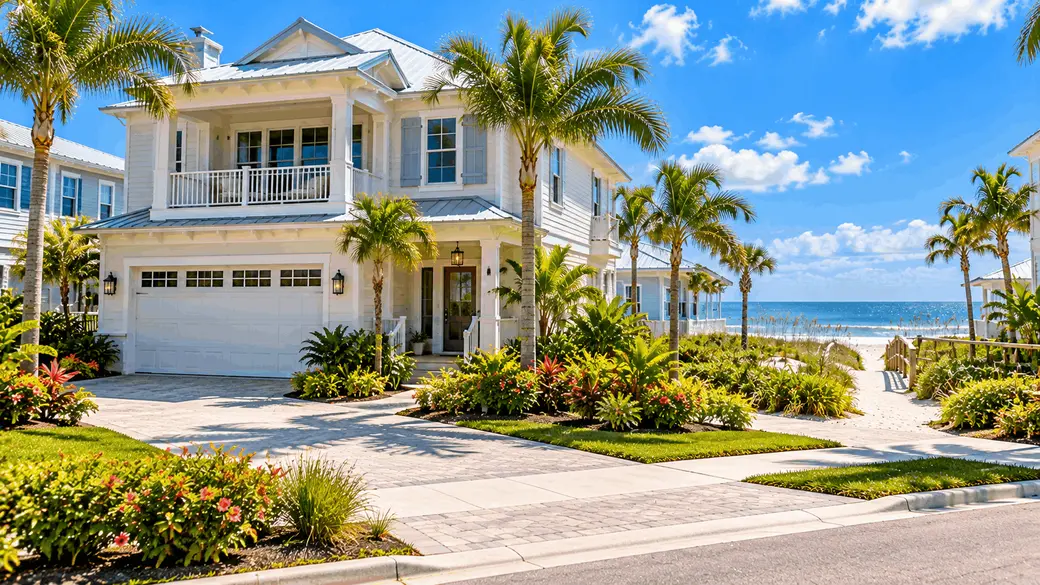
Before buying a home near the beach in Florida, evaluate much more than the distance to the sand. Flood exposure, homeowners and flood insurance, hurricane evacuation zones, storm history, roof condition, salt-air maintenance, beach access, association rules, coastal construction restrictions, and future ownership costs can all affect whether a property is a good fit. Two homes that appear equally close to the Gulf can have very different risk profiles and expenses. The goal is not to avoid coastal property, but to understand the specific home before making a purchasing decision.
Quick Answers About Buying a Home Near the Beach in Florida
Is buying a home near the beach in Florida a good idea?
It can be an excellent lifestyle choice if the location, condition, insurance costs, flood exposure, maintenance requirements, and total ownership expenses fit your needs. Beach proximity by itself should not determine the decision.
Do all Florida beach-area homes require flood insurance?
No. Flood-insurance requirements depend on the property, flood designation, financing, insurer, and policy circumstances. However, standard homeowners insurance does not cover flood damage, so buyers should evaluate flood coverage even when a lender does not require it.
Are homes near the beach more expensive to insure?
They can be, but beach proximity alone does not determine the premium. Location, construction, roof condition, replacement cost, wind mitigation features, flood exposure, deductibles, and insurer underwriting can materially affect coverage availability and cost. Obtain property-specific quotes rather than relying on averages.
Does being near the beach mean I can walk to it?
Not necessarily. A home may be geographically close to the Gulf but separated from public beach access by private property, waterways, roads, bridges, or limited access points. Verify the actual legal and practical route to the beach.
Do coastal Florida homes need more maintenance?
Some coastal properties can experience increased wear from salt, humidity, wind-driven rain, intense sun, and severe weather. Exterior metals, HVAC equipment, fasteners, railings, doors, windows, coatings, roofs, and other exposed components deserve careful inspection and ongoing maintenance.
Is a flood zone the same as a hurricane evacuation zone?
No. FEMA flood zones identify mapped flood hazards for purposes that include floodplain management and insurance. Hurricane evacuation zones are used by emergency-management agencies to identify areas that may need to evacuate because of storm surge and related hazards. Check both separately.
What should I investigate first?
Start with the exact location, legal beach access, FEMA flood information, evacuation zone, insurance quotes, elevation information when relevant, storm history, roof and exterior condition, association obligations, and expected ownership costs. Those items can quickly reveal whether further investigation is warranted.
1. Verify What “Near the Beach” Actually Means
Florida real estate can be described as near the beach even when the everyday experience varies considerably.
A property could be directly beachfront, across the street from the Gulf, several blocks from a public access point, across a bridge on the mainland, or a short drive from the coast. Those locations can offer very different combinations of convenience, exposure, maintenance, traffic, parking, and insurance considerations.
Before paying a premium for proximity, determine:
- Where the nearest legal public beach access is located
- Whether you can realistically walk or bicycle there
- Whether a bridge or major road separates the property from the beach
- What parking is available at nearby access points
- Whether the property has documented private beach-access rights
- Whether access or parking has applicable restrictions
Buyers comparing Sarasota, Siesta Key, Longboat Key, Lido Key, Venice, Englewood, and other Gulf Coast locations can begin with Hunt Brothers Realty's Florida community guide.
2. Check the FEMA Flood Zone, but Do Not Stop There
Flood exposure is one of the most important property-specific issues to investigate near Florida's coast.
Start with the FEMA Flood Map Service Center and verify the current map information for the exact property.
Common designations encountered in coastal Florida include:
- Zone AE: Generally identifies Special Flood Hazard Areas with a 1% annual chance of flooding where base flood elevations have been determined.
- Zone VE: Identifies coastal high-hazard areas that include additional hazards associated with storm-induced waves.
- Zone X: Includes mapped areas outside certain high-risk flood designations. Zone X should not be interpreted as meaning that flooding cannot occur.
A flood-zone designation is only one part of the analysis. Elevation, drainage, nearby water, building design, prior flooding, and local conditions can also matter.
For a broader explanation, see Hunt Brothers Realty's questions to ask before buying a home near the Florida coast.
3. Ask Whether an Elevation Certificate Is Available
An Elevation Certificate documents certain elevation characteristics of a structure and can provide useful information when evaluating a property in or near a flood-prone area.
Ask whether the seller has an existing certificate. If one is unavailable or outdated, a licensed surveyor and qualified insurance professional can help determine whether obtaining updated elevation information would be useful for your transaction.
Do not interpret elevation information without context. Its significance can depend on the structure, current flood maps, applicable floodplain requirements, and insurance considerations.
4. Check the Hurricane Evacuation Zone Separately
A FEMA flood zone and a hurricane evacuation zone answer different questions.
Florida's Division of Emergency Management notes that evacuation zones have been designated in most coastal counties because of storm-surge exposure. Buyers can use the state's disaster preparedness and evacuation-zone resources and should consult the applicable county emergency-management agency for current local information.
For a beach-area home, investigate:
- The property's evacuation zone
- Available evacuation routes
- Whether access depends on bridges or causeways
- Local emergency notification procedures
- Your plan for securing the property if you are a seasonal owner
During an actual emergency, follow current instructions from the appropriate local emergency-management authorities rather than relying on general real estate information.
5. Obtain Homeowners and Flood Insurance Quotes Early
Insurance can materially change the affordability of a Florida beach-area property, so it should be investigated early rather than shortly before closing.
The Florida Department of Financial Services confirms that flood damage is not covered by a standard homeowners insurance policy. Flood coverage must be obtained separately when desired or required.
For the exact property, ask a qualified insurance professional to review:
- Homeowners coverage availability
- Wind coverage
- Flood coverage
- Coverage limits
- Hurricane deductible
- Other applicable deductibles
- Replacement-cost assumptions
- Roof and age-related underwriting considerations
- Wind-mitigation information
- Policy exclusions and limitations
Insurance availability, premiums, deductibles, and coverage can vary substantially from one property to another. Obtain property-specific quotes and review them with a qualified insurance professional before making a purchasing decision or before applicable contract deadlines expire.
6. Understand the Hurricane Deductible
Do not compare homeowners policies based only on the annual premium.
Florida homeowners policies can have a separate hurricane deductible. The Florida Department of Financial Services explains that hurricane deductibles can be percentage-based and are identified as a dollar amount on the policy declarations.
A percentage deductible can translate into a significant out-of-pocket amount. Ask your insurance professional to show you the deductible in dollars, not just as a percentage, so you can determine whether you could comfortably fund that amount after a covered hurricane loss.
7. Know About Citizens Flood Insurance Requirements
Buyers considering Citizens Property Insurance Corporation should understand its current flood-insurance requirements.
According to Citizens' current flood guidance, most qualifying personal residential policies that include wind coverage are being phased into flood-coverage requirements.
Properties within a FEMA Special Flood Hazard Area that have applicable Citizens wind coverage are already subject to flood-coverage requirements. For qualifying properties outside those areas, the 2026 phase applies when Coverage A is $400,000 or more. Citizens states that the phase expands to all applicable properties regardless of value beginning January 1, 2027. Certain policy types are excluded from the requirement.
Citizens eligibility and flood requirements are policy-specific and can change. Verify current requirements directly with Citizens and a qualified Florida insurance professional rather than relying on a general summary when making a purchase.
8. Review Florida's Required Flood Disclosure
Florida law requires a seller of residential real property to provide a statutory flood disclosure to a prospective purchaser at or before execution of the sales contract.
Under Florida Statutes Section 689.302, the disclosure addresses the seller's knowledge of flooding that damaged the property during the seller's ownership, flood-related insurance claims, and specified flood-related assistance.
The disclosure is important, but it should not be interpreted as a guarantee that the property has never flooded. A seller may not know what occurred before the seller's ownership, and the absence of a prior claim does not establish the absence of flood risk.
Review the disclosure together with inspections, available repair records, permits, flood maps, elevation information, and insurance research. Questions about the seller's disclosure obligations or a buyer's legal rights should be reviewed with a qualified Florida real estate attorney.
9. Investigate Previous Storm and Water Damage
A Florida coastal home's history can be just as important as its current appearance.
Ask about known hurricane, wind, flood, and water-intrusion damage and investigate how repairs were completed. Depending on the property's history, relevant concerns can include:
- Roof damage
- Floodwater intrusion
- Window and door damage
- Drywall and flooring replacement
- Electrical-system exposure
- HVAC damage
- Moisture or mold concerns
- Foundation or structural repairs
- Drainage or erosion problems
Request available permits, invoices, warranties, inspection reports, and repair documentation. Significant findings should be evaluated by the appropriate licensed inspector, contractor, electrician, roofer, structural engineer, mold professional, or other qualified specialist before you make a purchasing decision.
10. Pay Special Attention to the Roof, Windows, Doors, and Garage Door
The building envelope deserves particular attention when buying near Florida's coast.
Investigate:
- Roof age, material, installation records, and current condition
- Evidence of previous roof leaks or repairs
- Window and exterior-door condition
- Documented impact protection or storm shutters
- Garage-door condition and applicable wind features
- Roof-to-wall attachment and other documented wind-mitigation features
Ask whether a current wind-mitigation inspection report is available. A qualified inspector can document applicable construction features, while your insurance professional can explain whether those features affect underwriting or potential discounts for the policy you are considering.
11. Look for Salt-Air and Moisture-Related Deterioration
Salt exposure is one of the less dramatic but persistent realities of coastal ownership.
The amount of exposure varies by location and building design, but buyers should pay attention to corrosion and deterioration involving:
- Exterior HVAC equipment
- Railings and fasteners
- Exterior light fixtures
- Door and window hardware
- Screens and enclosures
- Electrical components
- Exterior coatings and finishes
- Metal roofing and flashing components
Visible corrosion does not by itself establish the condition or remaining life of a component. Have questionable systems evaluated by the appropriate inspector, HVAC contractor, electrician, roofer, engineer, or other qualified tradesperson.
12. Find Out Whether the Property Is Seaward of Florida's Coastal Construction Control Line
For properties very close to Florida's sandy beaches, the Coastal Construction Control Line can be important if you plan to build, renovate, excavate, install certain improvements, or substantially modify the property.
The Florida Department of Environmental Protection explains that the CCCL identifies an area where special siting and design requirements apply because of coastal storm forces and the need to protect beaches and dunes.
The CCCL is not simply a conventional setback line. It establishes a jurisdictional area. Unless an exemption applies, construction and excavation seaward of the line can require a Florida DEP permit.
Florida DEP provides an online CCCL mapping resource that buyers and property owners can use as a starting point.
If future improvements are important to your purchasing decision, verify their feasibility with Florida DEP, the applicable local permitting authority, a qualified contractor or design professional, and a Florida real estate attorney when legal rights or restrictions are involved before relying on the project being approved.
13. Beachfront Ownership Can Raise Additional Erosion and Shoreline Questions
A home that is directly on or immediately adjacent to the beach requires additional investigation beyond a typical near-beach property.
Potential questions include:
- Is the area identified as critically eroded or otherwise subject to coastal-management programs?
- Where is the CCCL in relation to the property?
- Are there dunes or protected coastal vegetation?
- Are existing structures properly permitted?
- What restrictions could affect additions, pools, decks, walkovers, landscaping, lighting, or other improvements?
- Are there recorded easements or public-access issues affecting the property?
These issues can involve surveying, engineering, environmental regulation, permitting, title, and legal questions. Obtain guidance from the appropriate qualified professionals and government agencies before purchasing based on assumptions about future use or construction.
14. Verify Beach Access Rights Instead of Assuming Them
A view of the Gulf, a road ending near the beach, or a path that neighbors appear to use does not automatically establish a legal private access right for the property you are buying.
If private or deeded beach access is important, verify it through reliable title and recorded-property information. Determine whether the right belongs to the individual parcel, an association, or another entity, and whether conditions or restrictions apply.
Questions involving easements, access rights, title, boundaries, or ownership should be reviewed with the appropriate title professional, licensed surveyor, and qualified Florida real estate attorney.
15. Review HOA or Condominium Responsibilities Carefully
Many Florida beach communities include condominiums or homeowners associations. Association living can shift some exterior maintenance responsibilities away from the individual owner, but it can also introduce assessments, reserves, insurance issues, use restrictions, and shared financial obligations.
Depending on the property type, review applicable:
- Regular assessments
- Special assessments
- Budgets and reserves
- Association insurance
- Maintenance responsibilities
- Storm-damage repairs
- Rental restrictions
- Pet restrictions
- Renovation rules
- Beach-access rights where applicable
Condominium buyers should also complete the appropriate Florida condo-specific due diligence rather than assuming the association's responsibilities eliminate the need for property and financial review.
16. Do Not Assume You Can Use the Home as a Short-Term Rental
Beach areas often attract buyers interested in seasonal or vacation rentals, but rental rights should never be assumed.
Potential restrictions can arise from local ordinances, zoning, licensing requirements, condominium documents, HOA rules, deed restrictions, and other regulations.
If rental income is important to your purchasing decision, verify current rental eligibility and operating requirements with the association, applicable local government, and qualified legal and tax professionals before purchasing. Do not rely solely on the fact that another nearby property appears on a vacation-rental website.
17. Estimate the Full Cost of Coastal Ownership
The mortgage payment is only one part of the budget for a Florida beach-area home.
| Expense | What to Verify |
|---|---|
| Property taxes | Estimate post-purchase taxes rather than relying on the seller's bill |
| Homeowners insurance | Obtain property-specific coverage and premium quotes |
| Flood insurance | Review coverage, limits, deductibles, requirements, and pricing |
| HOA or condo assessments | Review regular and potential special assessments and what they cover |
| Exterior maintenance | Account for coastal exposure and actual building materials |
| HVAC maintenance | Evaluate condition and exposure of outdoor equipment |
| Storm preparation | Understand shutters, impact protection, seasonal preparation, and property-management needs |
| Long-term reserves | Plan for roof, exterior, mechanical, and other major replacements |
Hunt Brothers Realty's Florida waterfront home buyer's guide provides additional due-diligence considerations for properties directly on the water.
18. Consider Beachfront, Walkable Near-Beach, and Short-Drive Locations Separately
You do not necessarily need direct beachfront ownership to build your Florida lifestyle around the beach.
| Location Type | Potential Lifestyle Benefit | Issues to Investigate |
|---|---|---|
| Direct beachfront | Immediate coastal setting and potential Gulf views | Flood, insurance, erosion, CCCL, storm exposure, maintenance, access rights |
| Walkable near-beach | Frequent beach visits without direct beachfront ownership | Actual access route, flood exposure, insurance, traffic, parking, association rules |
| Short drive to beach | Broader housing choices while remaining close to the coast | Travel time, parking, bridge traffic, flood and insurance conditions for the individual home |
| Farther inland | Different housing choices with beaches still accessible by car | Longer beach trips, while flood, wind, insurance, and storm issues still require property-specific review |
These are general comparisons, not guarantees about price, insurance, safety, maintenance, or future value. Compare the actual properties rather than assuming one location category is automatically better.
19. Questions to Ask Before Making an Offer Near a Florida Beach
- Where is the nearest legal beach access?
- Can I realistically walk or bicycle to the beach?
- Does the property have documented private beach-access rights?
- What is the current FEMA flood-zone designation?
- Is the structure in a Special Flood Hazard Area?
- Is an Elevation Certificate available?
- What is the hurricane evacuation zone?
- Has the property experienced known flooding or storm damage?
- Are repair records and permits available?
- What homeowners insurance is available?
- What flood insurance is available?
- What are the hurricane and other applicable deductibles?
- How old is the roof and what is its documented condition?
- Is a current wind-mitigation report available?
- Is there evidence of salt-related deterioration?
- Is the property seaward of the Coastal Construction Control Line?
- Could coastal regulations affect my renovation plans?
- Are there open permits or unresolved code issues?
- What HOA or condominium assessments apply?
- Are special assessments pending or under consideration?
- Are rentals permitted under all applicable rules?
- How might property taxes change after purchase?
- What long-term maintenance should I reserve for?
20. Build the Right Professional Team for Coastal Due Diligence
A coastal purchase can involve questions that extend beyond the scope of a real estate brokerage. The right professional depends on the issue being investigated.
| Issue | Professional or Source to Consult |
|---|---|
| General property condition | Qualified home inspector |
| Roof condition | Qualified inspector or licensed roofing contractor |
| Structural concerns | Licensed structural engineer |
| Flood information | FEMA, local floodplain authority, licensed surveyor, qualified insurance professional |
| Insurance availability and cost | Qualified Florida insurance professional |
| Elevation and boundaries | Licensed surveyor |
| Coastal construction | Florida DEP, local permitting authority, qualified design and construction professionals |
| Beach access, easements, title | Title professional, licensed surveyor, qualified Florida real estate attorney |
| Association obligations | Condominium or homeowners association and qualified Florida attorney when needed |
| Financing | Qualified mortgage lender or loan professional |
| Property taxes | County property appraiser and qualified tax professional when individualized advice is needed |
The Bottom Line: Look Beyond the Beach Before You Buy
A home near a Florida beach can offer convenient access to the Gulf, outdoor recreation, coastal scenery, and a distinctive way of life. The strongest purchasing decision, however, considers both the lifestyle and the property-specific responsibilities that come with the location.
Before buying, investigate flood exposure, evacuation requirements, insurance availability, deductibles, storm history, elevation, roof condition, salt exposure, beach access, coastal permitting, association obligations, property taxes, and long-term maintenance.
If you plan to renovate, rent the property, rely on private beach access, or make improvements close to the shoreline, verify those plans before making a financial commitment. A home can be close to the same beach as another property while presenting a very different ownership profile.
Explore Florida Gulf Coast Homes With Hunt Brothers Realty
Hunt Brothers Realty helps buyers compare coastal communities and properties throughout Sarasota and Florida's Gulf Coast. The goal is not simply to find a home close to the water, but to understand the location, property condition, ownership structure, and due-diligence questions that matter before buying.
Start by exploring Florida Gulf Coast communities, then review Hunt Brothers Realty's coastal homebuyer questions and Florida waterfront home buyer's guide.
This article is provided for general informational and educational purposes only and is not individualized legal, financial, tax, insurance, lending, inspection, engineering, construction, title, association, environmental, or other professional advice. Flood conditions, insurance availability, coverage, deductibles, coastal regulations, property condition, beach-access rights, association obligations, taxes, and permitting requirements vary by property. Buyers should verify material issues with the appropriate qualified insurance professional, lender, home inspector, contractor, structural engineer, surveyor, title or closing professional, Florida real estate attorney, tax professional, condominium or homeowners association, Florida DEP, FEMA, and applicable local government authorities before making a purchasing decision.
Sources
- FEMA, Flood Map Service Center
- Florida Division of Emergency Management, Disaster Preparedness and Evacuation Zone Maps
- Florida Department of Financial Services, Homeowners Insurance Overview
- Florida Department of Financial Services, Florida's Hurricane Deductible
- Citizens Property Insurance Corporation, Flood Insurance Requirements
- Florida Legislature, Section 689.302, Disclosure of Flood Risks to Prospective Purchasers
- Florida Department of Environmental Protection, Coastal Construction Control Line Program
- Florida Department of Environmental Protection, Locate the Coastal Construction Control Line
- Hunt Brothers Realty, Questions to Ask Before Buying a Home Near the Coast
- Hunt Brothers Realty, What Should I Know Before Buying a Waterfront Home in Florida?
- Hunt Brothers Realty, Explore Florida Communities
46 N. Washington Blvd, Ste 3, Sarasota, FL 34236
Categories
- All Blogs 2212
- Anna Maria Island 86
- Bird Key 4
- Bradenton 237
- Buying a Home 1266
- Casey Key 2
- Clearwater 11
- Condos & HOA Living 1183
- Ellenton 6
- Englewood 12
- First Time Homebuyers 1375
- Foreclosures 5
- Home Selling 7
- Homeownership 1402
- Lakewood Ranch 25
- Lido Key 28
- Longboat Key 80
- Luxury/Waterfront Properties 1343
- Market Updates & Trends 862
- Mortgages & Financing 60
- Move-Up Buyers 25
- Neighborhood Guides 978
- New Construction 37
- Palmetto 3
- Parrish 6
- Port Charlotte 10
- Punta Gorda 41
- Real Estate Investing 1258
- Relocation to Florida 1296
- Safety Harbor 3
- Sarasota 91
- Sarasota - Downtown 164
- Selling a Home 146
- Siesta Key 92
- St. Petersburg 8
- Tierra Verde 5
- Vacation & Second Homes 1452
- Venice 209
- Wellen Park 20
Recent Posts