What to Look for During a Florida Home Inspection
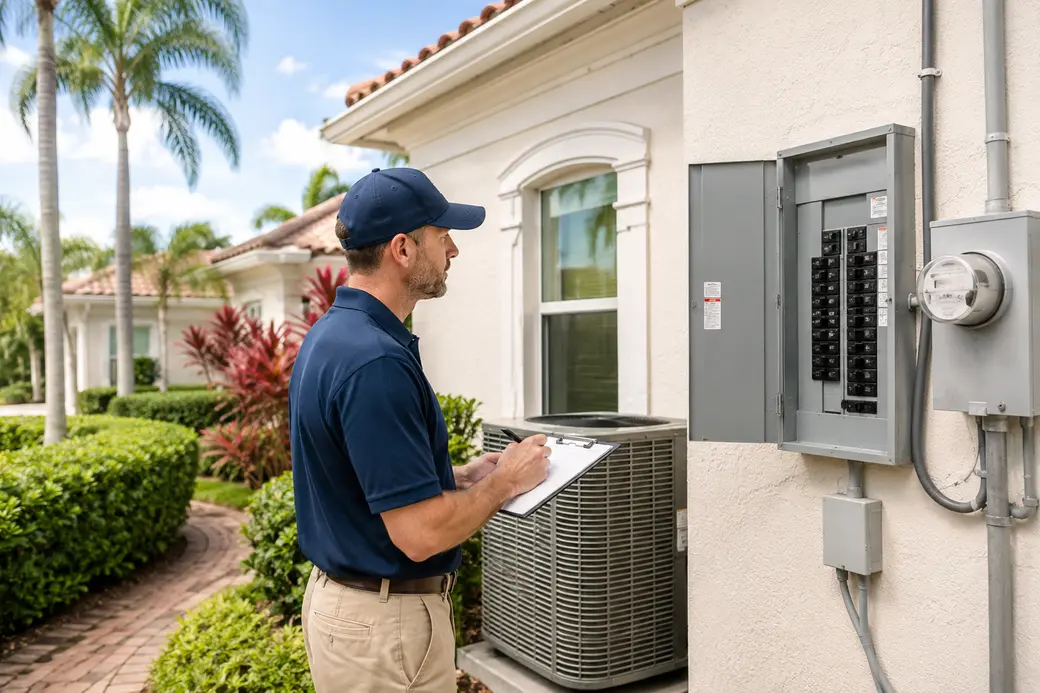
A Florida home inspection is one of the most important opportunities a buyer has to learn about the physical condition of a property before completing a purchase. The roof may look fine from the driveway. The air conditioning may feel cold. The kitchen may have been beautifully renovated. But those first impressions do not tell you what is happening in the attic, electrical panel, plumbing system, HVAC equipment, structure, or other parts of the home.
Florida also creates some inspection considerations that buyers relocating from other states may not expect. Roof age and condition, wind-mitigation features, moisture, air-conditioning systems, insurance underwriting, pools, seawalls, and other coastal or climate-related issues can become important depending on the property.
The goal is not to find a flawless house. It is to understand the property you are considering well enough to make an informed decision with help from the appropriate licensed inspectors, contractors, engineers, insurance professionals, and other qualified specialists when needed.
Quick Answers About Florida Home Inspections
What does a Florida home inspector inspect?
Florida law defines home inspection services as a limited visual examination of readily accessible installed systems and components, including the structure, electrical system, HVAC system, roof covering, plumbing system, interior components, exterior components, and site conditions affecting the structure. The purpose is to provide a written professional opinion about the home's condition.
Are Florida home inspectors licensed?
Florida regulates home inspectors through the Department of Business and Professional Regulation. Before contracting for or beginning an inspection, a Florida home inspector must provide the consumer with a copy of the inspector's license and a written disclosure describing the scope and exclusions of the inspection.
Is a home inspection the same as a 4-point inspection?
No. A general home inspection evaluates a broader range of accessible systems and components for the buyer. A 4-point inspection is commonly associated with homeowners insurance underwriting and focuses on four areas: the roof, electrical system, plumbing system, and heating and air-conditioning system. An insurer may request one, particularly for an older home.
What is a Florida wind mitigation inspection?
A wind mitigation inspection documents qualifying construction and wind-resistance features that an insurer reviews when determining applicable hurricane-loss-mitigation premium credits. It is different from a general home inspection. Buyers should discuss property-specific insurance requirements and potential credits with a qualified Florida insurance professional.
Should buyers attend the home inspection?
When practical and permitted, attending at least part of the inspection can be valuable. It gives the buyer an opportunity to see significant findings firsthand, learn where important components are located, and ask the inspector questions about observations that will appear in the report.
Does passing a home inspection mean a house has no problems?
A home inspection is not a pass-or-fail test and cannot guarantee that a property has no defects. Florida's statutory definition specifically describes a home inspection as a limited visual examination of readily accessible components. Buyers should understand the inspection's scope, exclusions, limitations, and any recommendations for additional evaluation.
1. Start With the Roof
The roof deserves particular attention when purchasing a Florida home. In addition to protecting the structure from rain and storms, roof condition and remaining useful life can matter to insurance underwriting.
Depending on the roof type and what is safely accessible, an inspector may identify visible deterioration, damaged or missing materials, flashing concerns, evidence of previous repairs, drainage issues, penetrations, or signs that further evaluation is appropriate.
Roof questions Florida buyers should ask
- What type of roof covering is installed?
- What is known about the roof's age?
- Are there visible signs of deterioration or damage?
- Is there evidence of prior repair?
- Are there visible signs of leakage in the attic or interior?
- Are gutters, drainage, flashing, and roof penetrations showing concerns?
- Does the inspector recommend evaluation by a licensed roofing contractor?
- Does the insurer require additional roof documentation or inspection?
Buyer takeaway: Do not evaluate a Florida roof based only on whether it currently leaks. Condition, documentation, remaining service life, repair needs, and insurance acceptability can all matter. Obtain property-specific guidance from the inspector, qualified roofing contractor, and insurance professional before making a decision.
2. Pay Close Attention to the HVAC System
Air conditioning is not a minor convenience in Florida. HVAC equipment operates in a hot, humid climate and plays an important role in indoor comfort and moisture control.
A home inspection may identify observable issues involving the equipment, operation, condensate drainage, accessible ductwork, filters, thermostat, or other visible components within the inspection's scope.
What should buyers investigate about the HVAC?
- Approximate age of the equipment
- Visible condition of indoor and outdoor components
- Whether the system operated during the inspection
- Condition of accessible condensate lines and drain pans
- Visible condition of accessible ductwork
- Evidence of corrosion, leakage, or moisture concerns
- Whether further HVAC evaluation is recommended
A general home inspector is not necessarily providing the same diagnostic evaluation as a licensed HVAC contractor. If the inspection identifies a material concern, buyers should consider further evaluation by the appropriate qualified HVAC professional before relying on assumptions about repairability, remaining service life, or replacement cost.
3. Look for Moisture and Signs of Water Intrusion
Water can enter a Florida home from more than one direction. Roof leaks, plumbing leaks, exterior openings, drainage problems, air-conditioning condensate, windows, doors, and storm-related damage can all create moisture concerns.
During the inspection, pay attention to observations involving staining, damaged drywall or ceilings, deteriorated materials, musty conditions, visible microbial-like growth, corrosion, moisture around plumbing fixtures, and evidence of previous repairs.
A general inspection cannot necessarily determine the source, duration, extent, or health significance of every moisture-related condition. If a concern is discovered, appropriate follow-up may involve a licensed contractor, roofer, plumber, HVAC contractor, engineer, qualified indoor environmental professional, or other specialist depending on the finding.
4. Inspect the Electrical System Carefully
Electrical condition can affect safety, repair planning, renovations, and potentially insurance underwriting. This becomes especially important when considering an older Florida property that may have undergone additions or remodeling over several decades.
Within the inspection's scope, the inspector may examine accessible electrical components such as the service equipment, panels, visible wiring, receptacles, switches, and installed safety devices.
Electrical issues worth understanding
- Condition of the electrical panel and accessible components
- Visible wiring concerns
- Improperly functioning outlets or switches
- Observed grounding or bonding concerns
- GFCI or other safety-device concerns where applicable
- Evidence of amateur or improper modifications
- Conditions requiring evaluation by a licensed electrician
Electrical defects should be evaluated by the appropriate licensed professional when recommended. Buyers should also verify property-specific insurance requirements rather than assuming that an electrical system acceptable for current use will automatically meet a particular insurer's underwriting guidelines.
5. Understand the Plumbing System
Plumbing deserves more attention than simply turning on the faucets. Buyers should understand the visible condition of the water-supply and drainage components included in the inspection, along with the water heater and accessible fixtures.
- Visible supply and drain piping
- Leaks or evidence of previous leakage
- Water pressure or functional-flow observations
- Drainage performance at accessible fixtures
- Water-heater condition and approximate age
- Visible corrosion or deterioration
- Toilets, sinks, tubs, and showers
- Exterior hose connections and other accessible components
A general inspection may not reveal concealed piping conditions or problems deep inside drain or sewer lines. Depending on the home's age, observed conditions, and inspector's recommendations, a buyer may want a licensed plumber or other qualified specialist to conduct additional evaluation.
6. Do Not Overlook the Attic
When safely accessible, the attic can provide useful information about a Florida home. Conditions that are not obvious from the living area may become visible above the ceiling.
Depending on access and inspection scope, observations may involve roof framing, evidence of leakage, insulation, ventilation, visible electrical components, ductwork, moisture staining, or alterations to structural components.
Attic access can be limited by construction, stored belongings, insulation, unsafe conditions, or other obstacles. Review the report carefully for areas the inspector could not access or inspect and the reason for the limitation.
7. Examine the Structure and Exterior
Walk around the property and pay attention to more than curb appeal. The inspector may identify visible conditions involving walls, foundations or slabs, exterior finishes, windows, doors, drainage, grading, porches, lanais, decks, and other accessible exterior components.
Exterior observations that may deserve follow-up
- Cracking or displacement
- Deteriorated exterior finishes
- Water staining or drainage concerns
- Window and door deterioration
- Damaged screens or enclosures
- Evidence of previous repairs
- Conditions affecting exterior drainage toward or away from the structure
A home inspector can identify visible concerns but is not necessarily determining the engineering significance or cause of structural movement. Material structural findings should be evaluated by a qualified structural engineer or other appropriate professional when recommended.
8. Check Windows, Doors and Storm-Protection Features
Windows and exterior doors deserve extra attention in Florida because they affect weather resistance, security, energy use, and potentially wind-mitigation characteristics.
Buyers may encounter impact-rated windows and doors, shutters, panels, or combinations of different protection systems. Do not assume a window is impact rated because it looks newer, or that the presence of some shutters means every opening has qualifying protection.
If storm protection is important to your purchasing or insurance decision, ask for available documentation and have qualifying features evaluated through the appropriate wind-mitigation inspection and insurance process.
9. Understand Wind Mitigation Before You Buy
Florida's wind-mitigation inspection is separate from the general home inspection. It documents specific construction characteristics that may qualify a property for hurricane-loss-mitigation insurance credits.
Depending on the property and applicable form, the inspection can document characteristics involving the roof, roof-to-wall connections, roof geometry, secondary water resistance, opening protection, and other qualifying construction information.
Florida's Department of Financial Services states that a valid Uniform Mitigation Verification Inspection Form can be used by insurers when determining applicable mitigation credits. Beginning April 1, 2026, new inspections use the revised OIR-B1-1802 (Rev. 04/26) form.
Important: A wind-mitigation inspection does not guarantee a particular insurance premium or discount. Insurance availability, underwriting, coverage, deductibles, exclusions, and premiums vary by property and insurer. Buyers should obtain property-specific quotes and review the results with a qualified Florida insurance professional before making a purchasing decision.
10. Know When a 4-Point Inspection May Matter
Buyers sometimes hear “4-point inspection” and assume it is simply another name for the buyer's home inspection. It is not.
According to the Florida Department of Financial Services, an insurer may require a 4-point inspection when insuring an older home. It focuses on four major areas:
- Roof
- Electrical wiring
- Plumbing
- Heating and air conditioning
Because insurance underwriting requirements differ, buyers should contact an insurance professional early enough in the purchase process to determine what documentation or inspections may be required for the specific property.
11. Pools and Spas Deserve Their Own Attention
Pools are common features in Florida homes, but they add equipment and surfaces that need evaluation. Depending on the scope of the inspection, buyers may want to investigate the pool shell or finish, pump, filter, heater, visible plumbing, lights, decking, cage or screen enclosure, and safety-related features.
A general home inspector's pool inspection may have limitations. If significant concerns appear or the pool is an important part of the property's value to you, consider having a qualified pool professional evaluate the system before making a final decision.
12. Waterfront Homes Require Additional Due Diligence
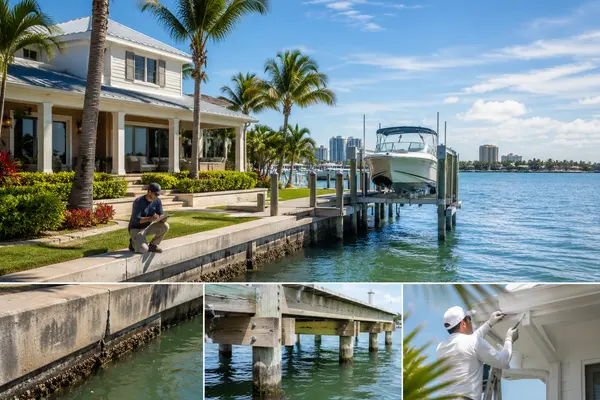
A standard home inspection is only part of the investigation when buying a waterfront property. Seawalls, docks, boat lifts, pilings, shoreline conditions, water depth, navigation, permits, and other marine improvements can involve expertise outside a general home inspection.
Hunt Brothers Realty's guide to buying waterfront property in Florida explains additional questions involving seawalls, docks, boat lifts, bridges, water depth, navigation, insurance, and permitting.
Waterfront infrastructure should be evaluated by the appropriate marine contractor, engineer, surveyor, permitting authority, or other qualified professional when material to the purchase. A standard home inspection should not be assumed to establish the structural condition, permitting status, or suitability of marine improvements.
13. New Construction Still Deserves an Inspection
A newly built home may have warranties, recent permits, and new systems, but “new” does not necessarily mean that an independent inspection has no value. Construction involves many trades, components, installations, and finishing details.
Depending on the construction stage, contract, builder procedures, and access rights, buyers may consider independent inspections at appropriate points in the process. The inspection schedule and scope should be coordinated with the builder, licensed inspector, real estate professional, and other appropriate professionals.
14. Do Not Confuse a Home Inspection With a Code Inspection
A buyer's home inspection, municipal building inspection, insurance inspection, appraisal, and specialist evaluation serve different purposes. One should not automatically be treated as a substitute for another.
A home inspector provides an opinion about observable property conditions within the agreed scope. Questions involving code compliance, permits, engineering, insurability, valuation, or legal rights may require separate verification from the appropriate authority or professional.
15. Read the Entire Inspection Report, Not Just the Summary
The summary is useful, but it should not replace reading the complete report. Florida law requires a compensated home inspector to provide the client with a written report. The report must address inspected systems or components the inspector considers significantly deficient or near the end of their service lives and identify systems or components that were present but not inspected, including why they were not inspected.
Pay particular attention to:
- Significant deficiencies
- Components described as approaching the end of service life
- Safety-related observations
- Evidence of active or previous moisture intrusion
- Recommendations for specialist evaluation
- Areas that could not be inspected
- Limitations and exclusions
- Photos and supporting observations
Florida law does not require the home inspector to provide repair-cost estimates. When costs are material to your decision, obtain appropriate estimates from qualified contractors or tradespeople rather than relying on informal assumptions.
What Happens When the Inspection Finds Problems?
Almost every home inspection identifies something. The important issue is understanding the significance of the findings rather than simply counting how many items appear in the report.
A loose door handle and evidence of structural movement should not receive equal attention simply because each occupies one line in an inspection report. Buyers should focus on conditions that could materially affect safety, property condition, insurability, planned renovations, ownership cost, or their willingness to purchase the home.
What options a buyer has after an inspection depends on the purchase contract, applicable deadlines, the inspection findings, and the circumstances of the transaction. Buyers should review contractual rights and deadlines with their licensed real estate professional and obtain legal advice from a qualified Florida real estate attorney when legal interpretation is needed. Technical findings should be evaluated by the appropriate licensed inspector, contractor, engineer, or tradesperson.
Florida Home Inspection Checklist for Buyers
Use this checklist as a starting point when planning your inspection and follow-up due diligence:
- Verify that the home inspector holds the required Florida license
- Review the inspection scope and exclusions
- Attend the inspection when practical
- Evaluate the roof and available roof-age documentation
- Review HVAC condition and age
- Look for moisture and water-intrusion concerns
- Review accessible electrical components
- Review plumbing and water-heater observations
- Review attic findings and access limitations
- Evaluate visible structural and exterior concerns
- Review windows, exterior doors, and storm protection
- Ask whether a wind-mitigation inspection is appropriate
- Ask your insurance professional whether a 4-point or other inspection is required
- Inspect pool and spa components when applicable
- Arrange specialized waterfront evaluations when applicable
- Consider appropriate pest or wood-destroying-organism evaluation when relevant
- Investigate septic and well systems when applicable
- Read the complete inspection report
- Follow up on recommendations for specialist evaluation
- Obtain qualified repair estimates when costs matter to your decision
- Obtain property-specific insurance information early
- Track all contractual inspection and notice deadlines
What Are the Biggest Home Inspection Mistakes Florida Buyers Make?
- Skipping an inspection because the home looks recently renovated
- Assuming new construction cannot have defects
- Reading only the report summary
- Ignoring components that could not be inspected
- Treating every inspection item as equally significant
- Assuming a general inspection replaces a 4-point or wind-mitigation inspection
- Waiting too long to investigate insurance requirements
- Assuming the inspector can determine the cause and repair cost of every defect
- Failing to obtain specialist evaluations when recommended
- Overlooking seawalls, docks, pools, wells, septic systems, or other property-specific features
- Missing contractual inspection or notice deadlines
A Florida Home Inspection Is About Understanding Risk, Not Finding Perfection
A good inspection helps turn an attractive property into a more understandable property. It gives buyers information about visible conditions, systems approaching the end of their service lives, areas requiring specialist attention, and components that could not be evaluated.
For Florida buyers, the inspection process also connects with other parts of due diligence. Roof condition can intersect with insurance. Storm-protection features can affect wind-mitigation documentation. Waterfront improvements may require marine expertise. Association properties introduce another layer of shared-building or community responsibilities.
If you are buying in an association-governed neighborhood, read Hunt Brothers Realty's guide to Florida HOA communities. Buyers relocating to the state can also use the Moving to Florida From Out of State home buyer checklist to identify additional Florida-specific issues to investigate.
Buying a Home on Florida's Gulf Coast?
Hunt Brothers Realty helps buyers navigate Florida Gulf Coast real estate from the property search through due diligence and closing. A real estate professional can help coordinate the transaction and identify questions that deserve investigation, while licensed inspectors and other qualified professionals evaluate matters within their respective areas of expertise.
Browse Florida Gulf Coast homes for sale, explore communities with Hunt Brothers Realty, review the Hunt Brothers Realty Florida buyer resources, or visit HuntBrothersRealty.com to discuss your home search.
Informational notice: This article provides general educational and real estate information and is not individualized legal, financial, insurance, inspection, engineering, construction, environmental, tax, lending, title, or other professional advice. The appropriate inspections and specialist evaluations depend on the particular property and transaction. Buyers should review inspection findings with a qualified licensed home inspector and obtain additional evaluation from the appropriate roofing contractor, HVAC contractor, electrician, plumber, structural engineer, pool professional, marine contractor, insurance professional, pest professional, septic or well specialist, Florida real estate attorney, local government or permitting authority, or other qualified professional when applicable. Contract rights and deadlines should be confirmed through the applicable purchase agreement and appropriate real estate or legal professionals.
Sources
- Florida Legislature: Section 468.8311, Home Inspection Definitions
- Florida Legislature: Section 468.8321, Home Inspector Disclosures
- Florida Legislature: Section 468.8323, Home Inspection Reports
- Florida Department of Financial Services: Homeowners Insurance Overview and Inspections
- Florida Department of Financial Services: Wind Mitigation Notices, Inspections and Forms
- Hunt Brothers Realty: Buying Waterfront Property in Florida
- Hunt Brothers Realty: What Buyers Should Know About Florida HOA Communities
- Hunt Brothers Realty: Florida Buyer Resources
Contact Hunt Brothers Realty
46 N. Washington Blvd, Ste 3, Sarasota, FL 34236
Phone: (941) 388-7017
Email: info@huntbrothersrealty.com
Website: HuntBrothersRealty.com
Categories
- All Blogs 1950
- Anna Maria Island 83
- Bird Key 4
- Bradenton 234
- Buying a Home 1020
- Casey Key 2
- Clearwater 9
- Condos & HOA Living 931
- Ellenton 5
- Englewood 9
- First Time Homebuyers 1124
- Foreclosures 3
- Home Selling 1
- Homeownership 1144
- Lakewood Ranch 20
- Lido Key 27
- Longboat Key 78
- Luxury/Waterfront Properties 1085
- Market Updates & Trends 614
- Mortgages & Financing 42
- Move-Up Buyers 20
- Neighborhood Guides 737
- New Construction 32
- Palmetto 3
- Parrish 6
- Port Charlotte 10
- Punta Gorda 15
- Real Estate Investing 1002
- Relocation to Florida 1046
- Safety Harbor 2
- Sarasota 71
- Sarasota - Downtown 157
- Selling a Home 143
- Siesta Key 89
- St. Petersburg 6
- Tierra Verde 5
- Vacation & Second Homes 1193
- Venice 96
- Wellen Park 10
Recent Posts