Will My Property Taxes Increase After I Buy a Home in Florida?
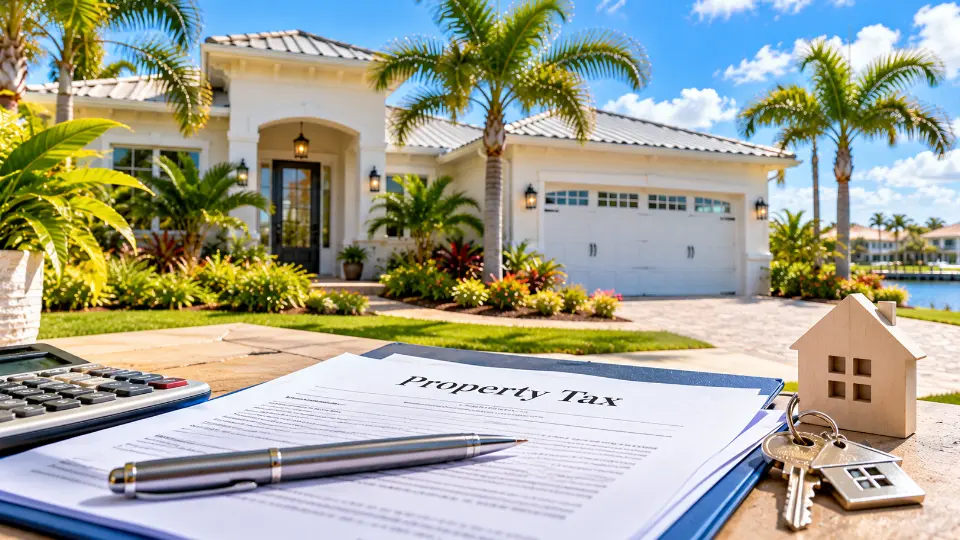
Yes, your property taxes can increase after you buy a home in Florida, sometimes substantially. A major reason is that the seller may have a protected assessed value from years of Homestead Exemption and Save Our Homes benefits. After a qualifying ownership change, the property is generally reassessed at just value for the following tax year, so the seller's current bill may be a poor estimate of what you will eventually pay. Your actual taxes depend on the new assessment, exemptions, possible portability, local tax rates and property-specific assessments. Before buying, use the applicable county property appraiser's estimator rather than budgeting from the seller's tax bill.
Quick Answers About Florida Property Taxes After Buying a Home
Will my property taxes automatically increase after I buy?
Not necessarily in every case, but an increase is possible and can be significant. A qualifying ownership change generally causes the previous owner's exemptions and Save Our Homes assessment benefit to be removed, with the property assessed at just value following the change in ownership.
Will I pay the same property taxes as the seller?
Do not assume you will. The seller may have owned and homesteaded the property for many years, creating a substantial difference between market value and assessed value. Your post-purchase assessment and exemptions can be different.
Does the 3 percent Save Our Homes cap prevent a large increase after purchase?
No. Save Our Homes generally limits future annual increases in the assessed value of qualifying homestead property after the benefit applies. It does not protect a new buyer from the initial reassessment associated with a qualifying ownership change.
Does Florida Homestead Exemption transfer from the seller to me?
No. A buyer must independently qualify for the buyer's own Homestead Exemption. Florida homeowners who make a qualifying property their permanent residence may be eligible for homestead property-tax benefits.
Can I transfer my own Save Our Homes benefit to the new home?
Potentially. Florida portability provisions may allow an eligible homeowner moving from one Florida homestead to another to transfer some or all of the homeowner's accumulated assessment difference. Eligibility and the amount transferred should be confirmed with the county property appraiser.
Does my purchase price automatically become my assessed value?
Do not assume it will. Florida property appraisers determine just value under state law. A recent arm's-length sale can be relevant to that valuation, but the county property appraiser determines the official assessment.
How should I estimate my future Florida property taxes?
Use the appropriate county property appraiser's tax-estimation resources when available. Estimate the property under your expected ownership circumstances, including the potential post-purchase assessment, Homestead Exemption eligibility, portability and applicable property-specific assessments.
Can higher property taxes increase my mortgage payment?
They can when property taxes are paid through a mortgage escrow account. If the actual tax obligation becomes higher than the amount initially estimated for escrow, a later escrow analysis can affect the required monthly payment or create an escrow shortage.
Why Can Property Taxes Increase After You Buy a Florida Home?
Property taxes can increase because the seller's assessed value may be substantially below the property's current just value. Florida's Save Our Homes system can create this difference over years of qualifying homestead ownership.
The Florida Department of Revenue's Save Our Homes guidance explains that after the first year a home receives Homestead Exemption and is assessed at just value, annual increases in assessed value are generally limited to the lesser of 3 percent or the applicable change in the Consumer Price Index.
Over a long period, that limitation can create a considerable gap between a home's current market value and its assessed value. That gap is commonly called the Save Our Homes assessment difference or benefit.
When a qualifying change of ownership occurs, the previous owner's Save Our Homes benefit generally does not remain attached to the property for the new buyer. The assessment is reset to just value as provided by Florida law.
Hunt Brothers Realty's guide to how much property taxes can change after buying a house explains why this reassessment can make the seller's historical bill misleading for a new Florida homeowner.
Why Shouldn't You Use the Seller's Current Tax Bill?
The seller's current tax bill reflects the seller's assessment history, exemptions and ownership circumstances, not necessarily yours. This is one of the most important property-tax concepts for Florida buyers to understand.
A seller who purchased a home many years ago may have accumulated a large Save Our Homes assessment difference. The property's market value may have risen considerably while the assessed value increased more slowly.
Florida property appraisers explicitly warn buyers about this issue. For example, the Sarasota County Property Appraiser advises purchasers of existing homestead property that the seller's exemptions and Save Our Homes adjustments are removed following a sale and that buyers should not rely on the seller's current taxes as their estimate.
The Broward County Property Appraiser provides similar guidance, cautioning buyers that a change in ownership can reset assessed value to market value and result in higher property taxes.
When Does the Property Tax Reassessment Happen?
Florida property is assessed as of January 1 each year. Following a qualifying change of ownership, homestead property that had been protected by Save Our Homes generally loses the prior owner's benefit and is assessed at just value as of the following January 1.
This timing can make the year of purchase confusing. The tax information visible when you buy may still reflect the seller's prior assessment and exemption circumstances.
For example, a buyer who closes during the year may see a tax bill based largely on the assessment established before the sale. That should not be interpreted as a guarantee of what the property will be assessed at after the ownership change takes effect for the next applicable assessment year.
Does the Purchase Price Become the New Taxable Value?
Not automatically. The county property appraiser determines the property's just value under Florida law, and taxable value is a separate concept that can reflect applicable exemptions and assessment limitations.
A recent arm's-length sale can provide important evidence of market value, but buyers should not assume that purchasing a home for $600,000 means the county will simply enter exactly $600,000 as the final taxable value.
The more useful approach is to use the tax-estimation tool provided by the property appraiser for the county where the home is located, when available. That can provide a planning estimate based on the county's methodology rather than a simple purchase-price calculation.
What Is the Difference Between Market, Assessed and Taxable Value?
Market or just value, assessed value and taxable value are related, but they are not interchangeable. Understanding the difference makes Florida property-tax records much easier to interpret.
- Just or market value: The value determined by the county property appraiser under Florida law.
- Assessed value: The value after applicable assessment limitations are considered.
- Taxable value: Generally the assessed value after applicable exemptions are deducted for the relevant taxing authority.
The Florida Department of Revenue's property-tax guide for homebuyers specifically warns that new Florida homeowners may pay more than previous owners because a change in ownership can remove prior exemptions and trigger reassessment.
How Does Florida Homestead Exemption Affect Your Taxes?
Florida Homestead Exemption can reduce taxable value for qualifying owners who make the property their permanent residence. It can also qualify the property for the Save Our Homes assessment limitation.
The Florida Department of Revenue explains that qualifying homeowners may receive homestead benefits that reduce taxable value. The exact tax savings depend on assessed value, applicable exemptions and the taxing authorities involved.
Homestead is not automatically inherited from the seller. The new owner must qualify and apply based on the new owner's circumstances.
For current qualification, filing and exemption information, see Hunt Brothers Realty's Florida Homestead Exemption 2026 Guide and verify your eligibility directly with the county property appraiser.
What Does Save Our Homes Actually Cap?
Save Our Homes limits increases in assessed value for qualifying homestead property, not necessarily the percentage increase in the final property tax bill.
Under current Florida law, after the limitation applies, the annual increase in assessed value is generally limited to the lesser of:
- 3 percent of the prior year's assessed value, or
- The applicable percentage change in the Consumer Price Index.
This distinction matters. Referring to Save Our Homes simply as a "3 percent property tax cap" can be misleading because the limitation applies to assessed value. Changes in millage rates, exemptions, improvements and other factors can affect the final tax bill.
Can Your Tax Bill Rise by More Than 3 Percent With Homestead?
Potentially, yes. The Save Our Homes limitation should not be interpreted as a guarantee that the total property tax bill can never increase by more than 3 percent.
Property taxes involve more than the assessed value. Taxing authorities establish millage rates, different exemptions can apply to different taxing authorities, and property improvements or other assessment changes can affect the calculation.
For budgeting purposes, treat Save Our Homes as an assessment limitation rather than a guaranteed ceiling on your complete annual property-tax bill.
What Is Save Our Homes Portability?
Portability may allow an eligible Florida homeowner to transfer some or all of the assessment difference from the homeowner's previous Florida homestead to a new Florida homestead. It does not mean the buyer receives the seller's Save Our Homes benefit.
This distinction is important. The seller's accumulated benefit belongs to the seller's homestead history. A buyer who previously owned a qualifying Florida homestead may have a separate portability benefit based on the buyer's own circumstances.
The Florida Department of Revenue states that eligible homeowners must apply for the new Homestead Exemption and file the applicable portability documentation. Requirements and deadlines apply, so buyers should confirm eligibility and filing requirements directly with the county property appraiser.
Could Property Taxes Increase by Thousands of Dollars?
Yes, a substantial increase is possible when the seller's assessed value is far below the property's post-purchase just value. There is no responsible universal dollar amount or percentage that applies to every Florida purchase.
Consider a simplified example. Suppose a longtime owner's home has a current market value around $600,000 but a much lower assessed value because of years of Save Our Homes limitations. A new buyer acquiring the property at current market conditions should not expect the seller's protected assessed value to remain in place after a qualifying ownership change.
That example illustrates the concept only. It is not a tax calculation. The actual post-purchase assessment, taxable value and tax bill must be determined for the individual property and owner.
Why Can Two Similar Florida Homes Have Different Property Taxes?
Two homes with similar market values can have very different property-tax bills because their ownership, assessment and exemption histories can be different.
For example:
- One owner may have homesteaded the property for many years.
- Another owner may have purchased recently.
- One owner may qualify for exemptions that the other does not.
- One owner may have transferred a portability benefit from another Florida homestead.
- Properties may be subject to different taxing districts or property-specific assessments.
For the same reason, a neighbor's tax bill is not a reliable substitute for a property-specific estimate based on your expected ownership circumstances.
What If the Florida Home Is a Second Home or Investment Property?
A second home or investment property generally does not qualify for Homestead Exemption simply because you own the property. Florida applies different assessment rules to qualifying nonhomestead residential property.
Florida Department of Revenue guidance explains that qualifying nonhomestead property can be subject to a 10 percent annual assessment limitation after the applicable initial assessment, but that limitation does not apply in the same way to school district levies. A qualifying change of ownership can also cause reassessment at just value.
The 10 percent limitation should not be treated as a universal 10 percent ceiling on the entire tax bill. Buyers purchasing a seasonal home, vacation property or investment property should obtain a property-specific estimate and consult a qualified tax professional regarding their individual circumstances.
Can Property Taxes Increase Even If Market Value Falls?
Yes, assessed value can sometimes increase even when market value decreases or remains relatively unchanged. This can occur when the assessed value remains below the property's just value.
The Florida Department of Revenue explains that assessed value can continue increasing within the applicable assessment limitation until it reaches just value, even when market value has declined or remained stable. Assessed value cannot exceed just value.
This is another reason market value, assessed value and the final property-tax bill should not be treated as the same number.
Can a Property Tax Increase Affect Your Mortgage Payment?
Yes, if your mortgage servicer collects property taxes through escrow, a higher tax bill can eventually affect the amount collected as part of your monthly housing payment.
This is particularly important when an initial mortgage payment estimate uses the seller's historical property taxes or another amount that is lower than the eventual post-purchase obligation. Once the servicer performs an escrow analysis, the required payment can change, and an escrow shortage may also need to be addressed.
Ask your mortgage professional what property-tax amount is being used in the payment estimate and whether it reflects an anticipated post-purchase reassessment. Escrow requirements and payment calculations are loan-specific and should be reviewed with your lender or loan servicer.
What Are Non-Ad Valorem Assessments?
A Florida property tax bill can contain charges that are not calculated simply from the property's taxable value and millage rate. These are generally referred to as non-ad valorem assessments.
Depending on the property and jurisdiction, the tax bill may include assessments associated with services, districts or other authorized charges. A home may also be located within a Community Development District or another special district with property-specific financial obligations.
When estimating ownership costs, review the complete property tax record rather than focusing only on the ad valorem portion. Ask the applicable property appraiser, tax collector, district or other appropriate authority to explain charges that are material to your purchasing decision.
How Should You Estimate Property Taxes Before Buying?
Estimate taxes using the buyer's expected post-purchase circumstances rather than copying the seller's current bill. The applicable county property appraiser is generally the best starting point for a property-specific estimate.
Before relying on an ownership budget, investigate:
- The property's current just, assessed and taxable values
- The seller's current exemptions
- The potential post-purchase reassessment
- Whether the home will become your permanent Florida residence
- Potential Homestead Exemption eligibility
- Potential Save Our Homes portability from your previous Florida homestead
- Applicable millage rates
- Non-ad valorem assessments and special-district charges
- The tax assumption used by your mortgage lender for escrow
Hunt Brothers Realty's Florida Property Taxes After Buying a Home guide provides a more detailed explanation of this buyer-focused budgeting process.
Should Property Taxes Be Part of Your Home Comparison?
Yes. Property taxes should be evaluated as part of the total cost of owning each home rather than treated as a fixed number inherited from the seller.
Two similarly priced homes can produce different ownership costs because of taxing districts, special assessments, association obligations, insurance, maintenance and other property-specific factors. Comparing only principal and interest can therefore understate the difference between properties.
The Hunt Brothers Realty Buyer Resource Center provides additional information for evaluating the financial and practical considerations involved in a Florida home purchase.
What Property Tax Mistakes Should Florida Buyers Avoid?
The most common mistake is treating historical taxes as a forecast. Several other assumptions can also create unrealistic ownership budgets.
- Using the seller's tax bill as your estimate: The seller may have a protected assessed value that will not remain after the sale.
- Assuming Homestead transfers automatically: A new owner must independently qualify and apply.
- Confusing Homestead with portability: They are related but separate property-tax benefits.
- Calling Save Our Homes a 3 percent tax cap: It generally limits assessed-value growth, not the entire tax bill.
- Assuming purchase price always equals assessed value: The county property appraiser determines just value.
- Ignoring non-ad valorem assessments: Additional charges can appear on the tax bill.
- Assuming a lender's first payment estimate cannot change: Escrow amounts can be adjusted after actual taxes become known.
- Treating a tax estimator as a guarantee: Assessments, exemptions, millage rates and other factors can change.
What If You Disagree With the Property Appraiser's Assessment?
Florida property owners have procedures for questioning or challenging an assessment. The first step can include discussing the valuation with the county property appraiser, and Florida also provides a Value Adjustment Board process.
The Florida Department of Revenue explains that taxpayers may discuss an assessment with the property appraiser, file a petition with the county Value Adjustment Board, or pursue other remedies permitted by law.
Deadlines and legal requirements apply. Property owners considering an assessment challenge should verify current procedures with the county property appraiser and Value Adjustment Board, and obtain qualified legal or tax advice when appropriate.
What Is the Bottom Line for Florida Homebuyers?
Your Florida property taxes may be significantly different from the seller's after you purchase the home. A qualifying ownership change generally removes the previous owner's Save Our Homes benefit and results in reassessment under Florida's property-tax rules.
If the property becomes your qualifying permanent Florida residence, you may be eligible to apply for Homestead Exemption. If you are moving from another Florida homestead, you may also qualify to transfer some or all of your own Save Our Homes assessment difference through portability.
The practical rule for buyers is straightforward: do not use the seller's property tax bill as your future budget. Obtain a post-purchase estimate based on the specific property and your expected ownership circumstances.
Plan Your Florida Home Purchase With Hunt Brothers Realty
Hunt Brothers Realty helps buyers compare Florida Gulf Coast properties using more than the asking price. Property taxes, insurance, association expenses and other ownership costs can materially affect how two otherwise similar homes fit a buyer's budget.
Review Hunt Brothers Realty's property tax change guide, Florida Homestead Exemption guide, and Florida Buyer Resource Center as you prepare for a purchase.
This article is provided for general informational and educational purposes only and is not individualized tax, legal, financial, lending, accounting or other professional advice. Florida property-tax treatment depends on the property, ownership structure, exemptions, residency, portability, taxing jurisdiction and individual circumstances. Buyers should obtain a property-specific estimate from the applicable county property appraiser and consult a qualified tax professional or CPA regarding individualized tax consequences. Questions involving ownership, title, transfers or legal rights should be reviewed with a qualified Florida real estate attorney or other appropriate legal professional. Mortgage escrow calculations should be verified with the buyer's lender or loan professional.
Sources
- Florida Department of Revenue, Property Tax Information for Taxpayers
- Florida Department of Revenue, Property Tax Exemptions and Additional Benefits
- Florida Department of Revenue, Property Tax Information for First-Time Florida Homebuyers
- Florida Department of Revenue, Save Our Homes Assessment Limitation and Portability Transfer
- Sarasota County Property Appraiser, New Homeowner Information
- Broward County Property Appraiser, Home Buyer Property Tax Information
- Hunt Brothers Realty, How Much Can Property Taxes Change After Buying a House?
- Hunt Brothers Realty, Florida Property Taxes After Buying a Home
- Hunt Brothers Realty, Florida Homestead Exemption 2026 Guide
Hunt Brothers Realty
46 N. Washington Blvd, Ste 3, Sarasota, FL 34236
Phone: (941) 388-7017
Email: info@huntbrothersrealty.com
Website: HuntBrothersRealty.com
Categories
- All Blogs 2252
- Anna Maria Island 86
- Bird Key 4
- Bradenton 237
- Buying a Home 1303
- Casey Key 2
- Clearwater 12
- Condos & HOA Living 1223
- Ellenton 6
- Englewood 12
- First Time Homebuyers 1415
- Foreclosures 5
- Home Selling 7
- Homeownership 1441
- Lakewood Ranch 25
- Lido Key 28
- Longboat Key 80
- Luxury/Waterfront Properties 1382
- Market Updates & Trends 900
- Mortgages & Financing 66
- Move-Up Buyers 25
- Neighborhood Guides 1016
- New Construction 37
- Palmetto 3
- Parrish 6
- Port Charlotte 12
- Punta Gorda 69
- Real Estate Investing 1297
- Relocation to Florida 1335
- Safety Harbor 3
- Sarasota 94
- Sarasota - Downtown 165
- Selling a Home 146
- Siesta Key 92
- St. Petersburg 8
- Tierra Verde 5
- Vacation & Second Homes 1492
- Venice 209
- Wellen Park 20
Recent Posts